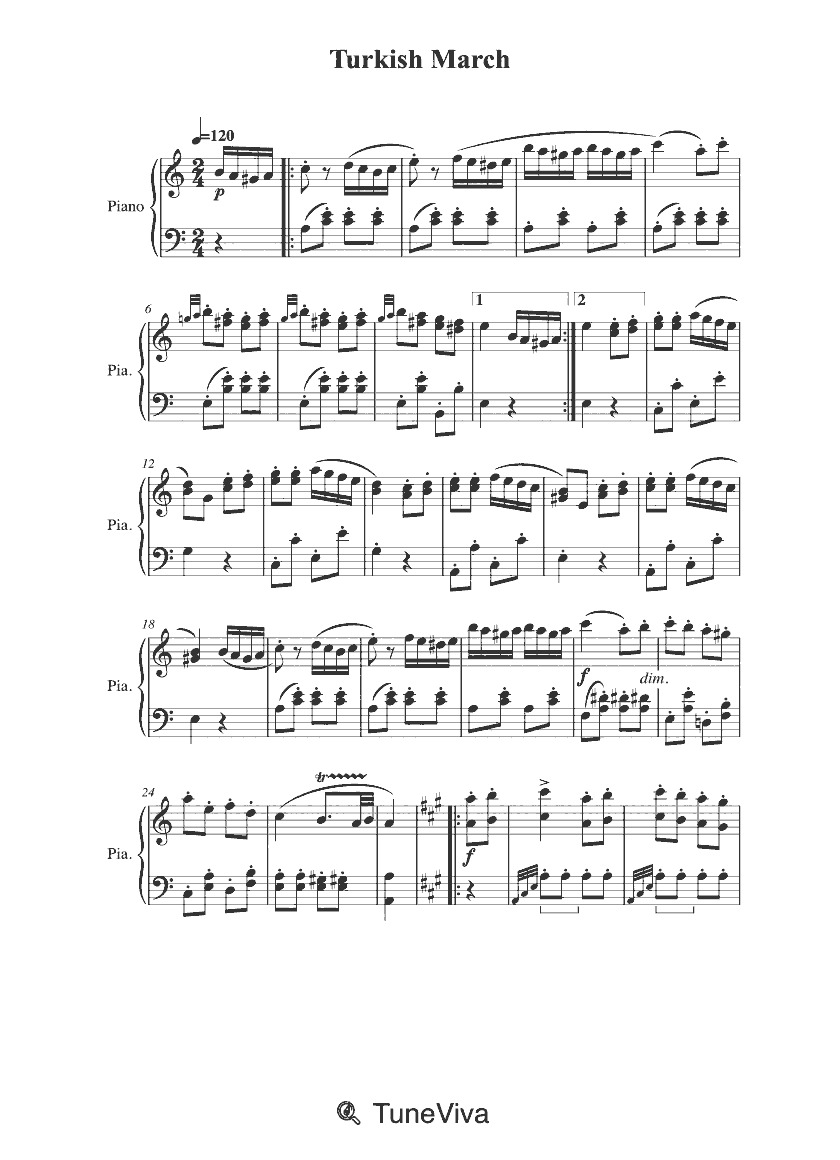
Turkish March
Wolfgang Amadeus Mozart
Follow the score, hear the music, then make it your own.
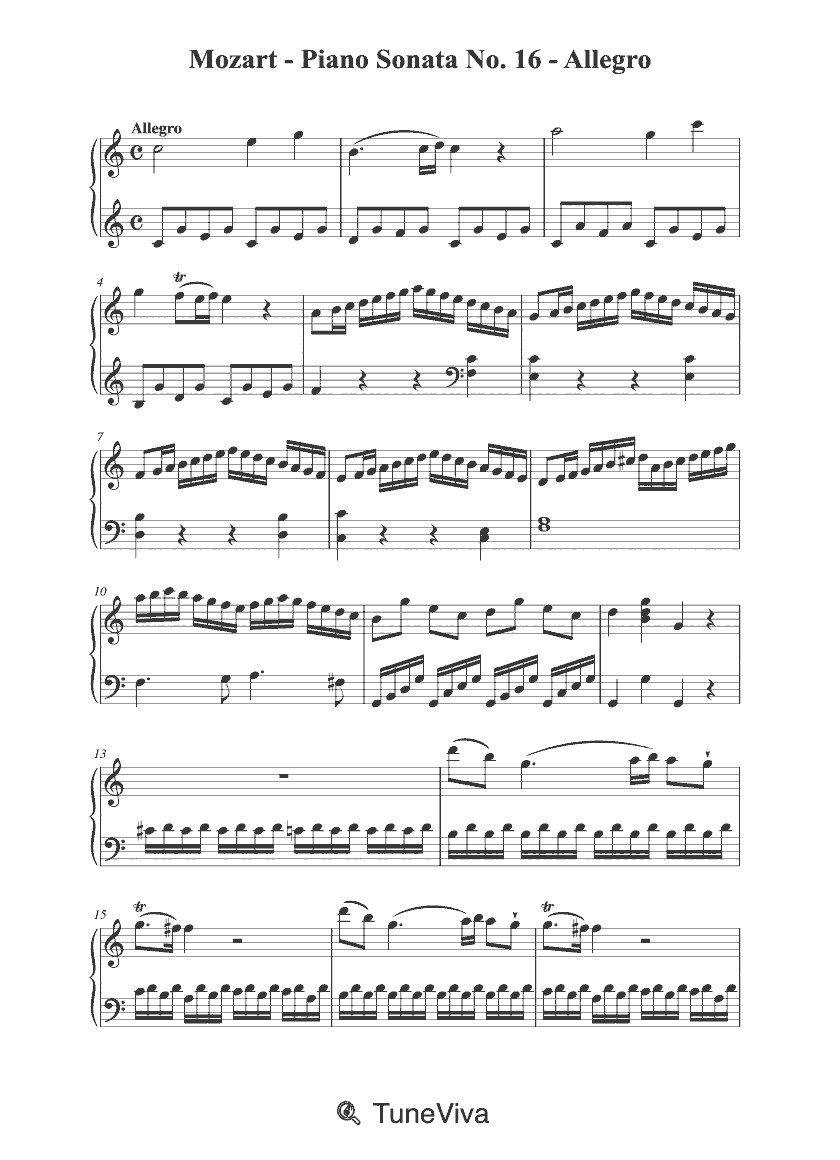
This solo piano score contains the Allegro from Mozart’s Piano Sonata No. 16 in C major. The opening pairs the right hand’s C–E–G figure with a left-hand broken-chord pattern. The first run of scales changes the movement under your fingers even though the pulse stays steady.
Score parts: Piano. Opening key signature: No sharps or flats. Opening time signature: 4/4. Opening tempo: 132 BPM. Estimated playback time: 4 min 25 sec. Listen while following the notation, adjust playback speed, or open this score in practice mode.
The left hand begins C–G–E–G, using the lowest chord note, the highest, the middle and the highest again. Practise that figure softly, allowing the fingers to release between notes. Then play the two hands together and hold the first right-hand C for its written length. The tune should stay perceptible over the eighth notes without needing a sharp accent.
The right hand moves from longer opening notes to running sixteenths in bar 5. Practise the end of bar 4 into the first few notes of the run before extending it. Use a fingering that leaves your hand ready to reverse direction. Later, play the cadence at the first backward repeat into the opening phrase, then practise the alternative continuation into the next section.
This is the opening Allegro from Mozart’s Piano Sonata No. 16. Look for the other movements separately if you want the complete sonata.
It is an Alberti bass. In the first bar it cycles through C–G–E–G underneath the right-hand melody.
Choose a pace at which the left hand can remain quiet and the right-hand sixteenths stay even. Increase it only after the transition into the run is secure.
Wolfgang Amadeus Mozart
Wolfgang Amadeus Mozart