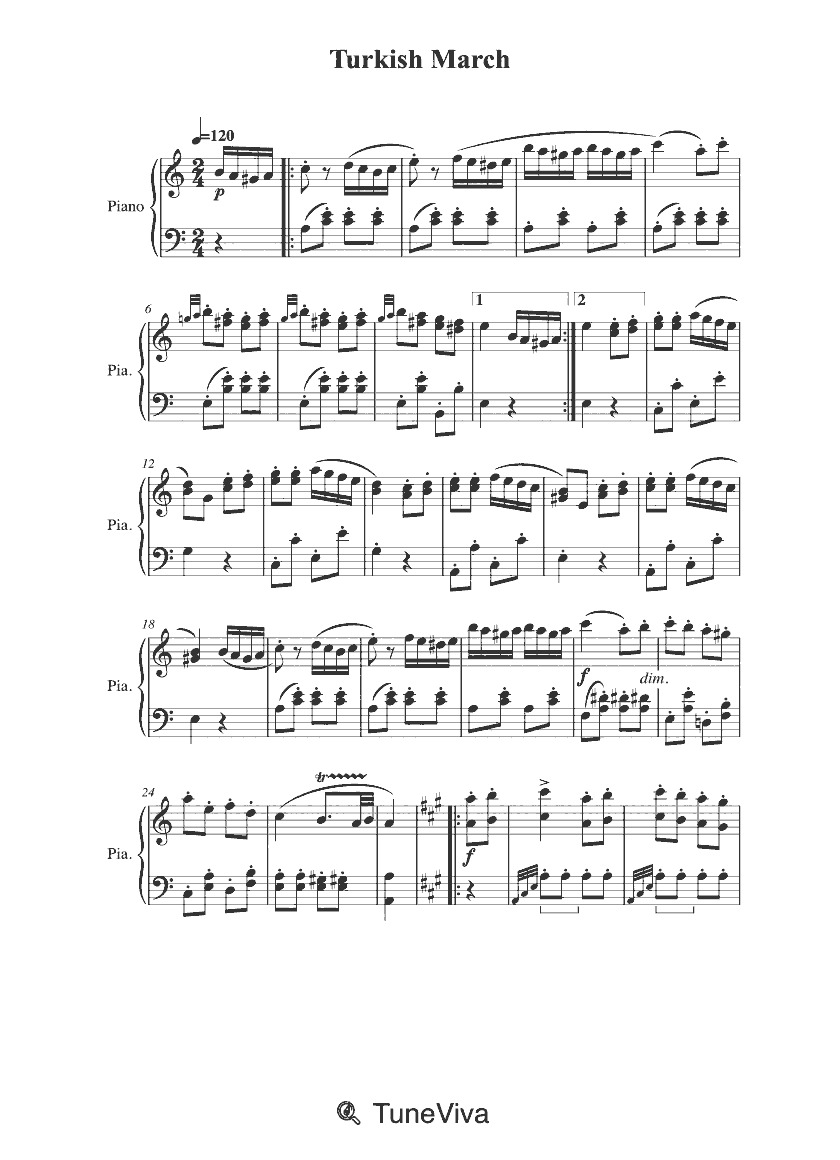
Turkish March
Wolfgang Amadeus Mozart
Follow the score, hear the music, then make it your own.
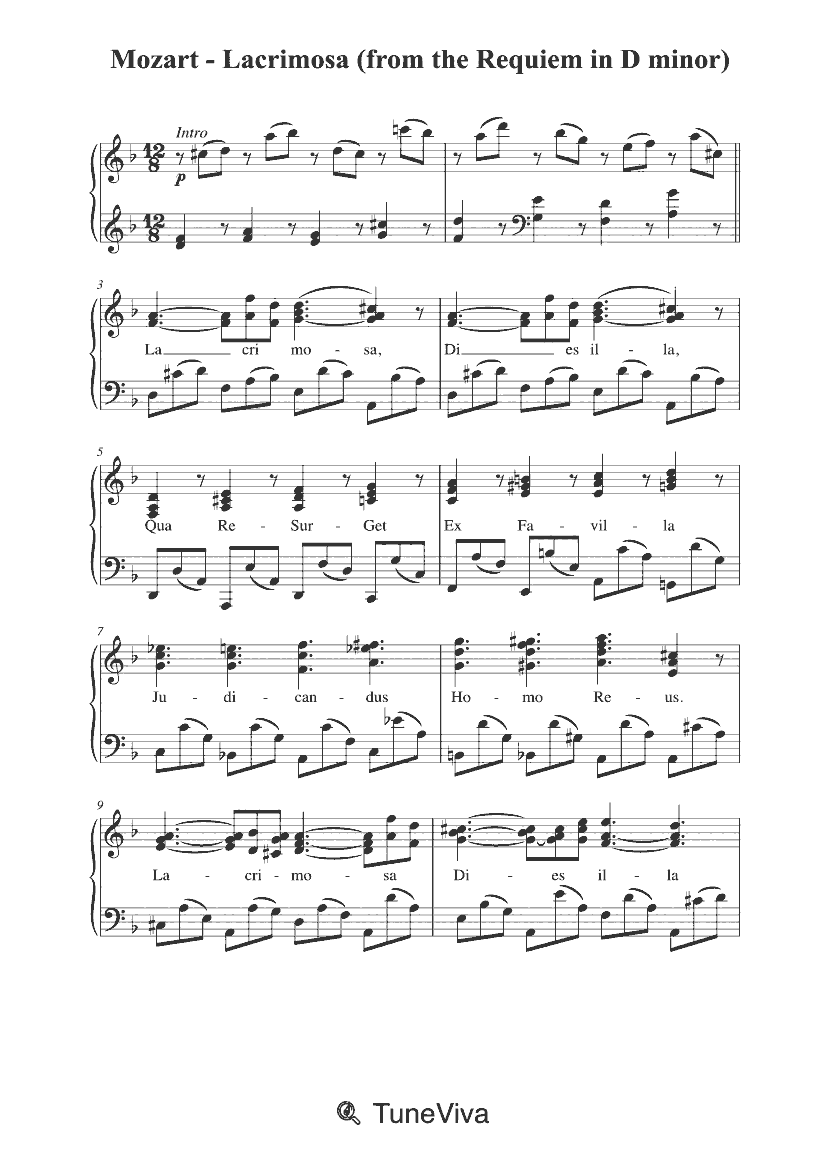
This version of the Lacrimosa from Mozart’s Requiem puts the music on two piano staves. It opens with a short introduction, one flat in the key signature and 12/8 time. The arrangement turns the layered music into a single player’s task: shape the main line while keeping the moving figures and harmony in balance.
Score parts: Piano. Opening key signature: 1 flat. Opening time signature: 12/8. Estimated playback time: 56 sec. Listen while following the notation, adjust playback speed, or open this score in practice mode.
The opening has short figures above lower chord tones. Start with four dotted-quarter beats in a full 12/8 bar and subdivide each into three. Play the higher figures on their own before adding the lower part. When you put the two together, avoid attaching a new accent to every eighth note. The first useful goal is to hear the phrase across the bar.
After the introduction, several pitches can sound at once in the piano reduction. Identify the line you want to hear and sing it before working out the hands. Practise only that line and the lowest note of each harmony, then restore the inner pitches. The last chord contains F♯ above D, so listen for the shift in colour from the minor sound heard earlier.
This page contains a solo piano arrangement. Choose a separate choral score if you need the vocal lines and text for rehearsal.
Feel four dotted-quarter beats in each full bar. Each of those beats contains three eighth notes, which you can count aloud at first.
The ending here uses an F♯ over a D bass. That major third changes the colour of the closing harmony compared with the minor opening.
La cri mosa, Di es illa, Qua ReSurGet Ex Favilla Judicandus Homo Reus. Lacrimosa Dies illa Qua Re sur get Ex Favilla, Ju di candus Ho mo Reus Huic Ergo Parce Deus Pie Jesu Domine. Do na Eis Re qui em Do na Eisqui em A men.
Wolfgang Amadeus Mozart
Wolfgang Amadeus Mozart