classical
1 tracks
Root was the most successful American songwriter of the Civil War years, and the catalogue is built from the short vocal pieces that made him famous: 143 scores, about 81 minutes of music and 38,387 notated notes. Eighty of the entries carry lyrics.
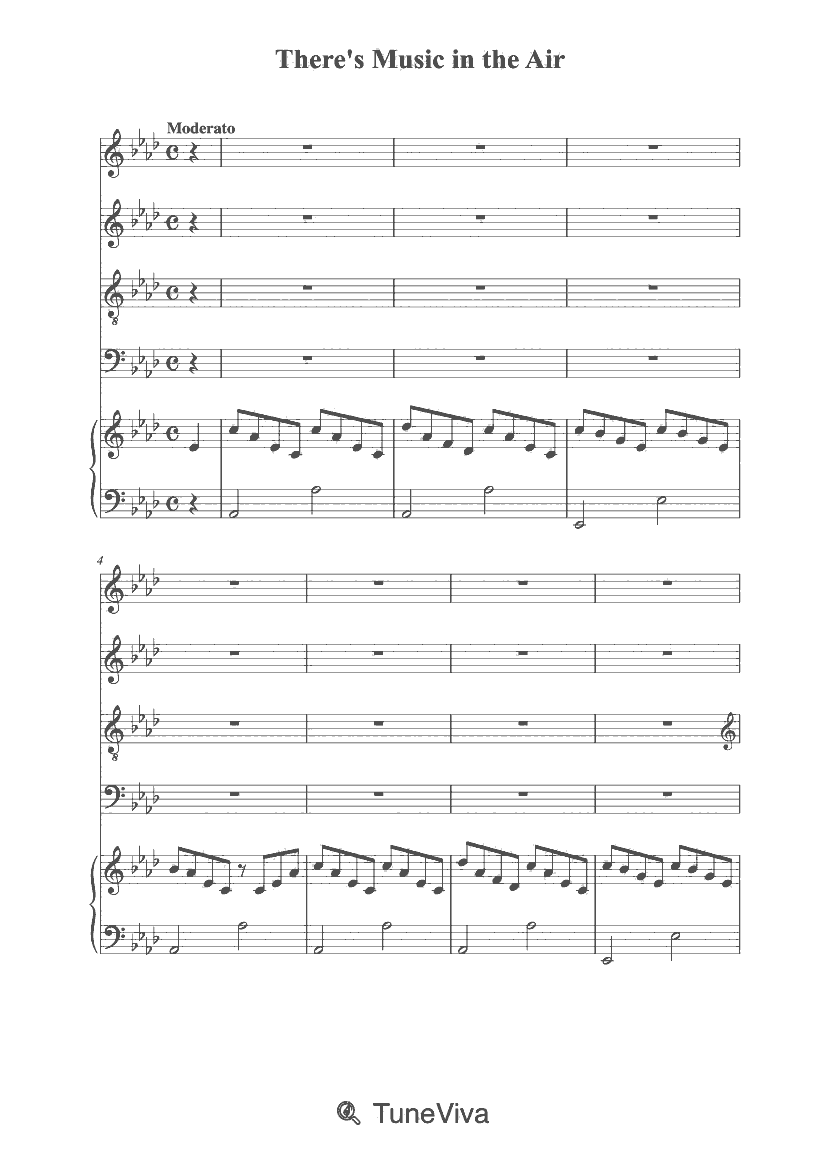
'The Battle Cry of Freedom' is far in front with more than 4,000 views, followed by 'Jesus Loves the Little Children' and two versions of 'There's Music in the Air'. Anthems, Sunday-school hymns and a handful of secular songs fill the rest. Difficulty is spread across the page: 79 entries at complexity index 0, 55 at index 1 and 9 at index 2.
George Frederick Root was born at Sheffield, Massachusetts, on 30 August 1820 and named after Handel. He left for Boston at eighteen hoping to join an orchestra, worked as a church organist, and from 1845 taught at the New York Institute for the Blind, where he met Fanny Crosby. A study trip to Europe in 1850 took him to Vienna, Paris and London. He later taught in Boston as an associate of Lowell Mason and helped Mason and William Bradbury set up the New York Normal Musical Institute in 1853.
His first big success was 'The Flower Queen' of 1851, a cantata with a libretto by Crosby that is often called the first secular cantata by an American. 'The Haymakers' followed in 1857. In 1859 he moved to Chicago to join his brother's publishing house, Root & Cady, and the war made him: 'The Battle Cry of Freedom' appeared in 1862, 'The Vacant Chair' set Henry Washburn's poem on the death of Lieutenant John William Grout, and 'Tramp! Tramp! Tramp!' became a marching song. He sometimes published light music as 'Wurzel', and he died at Bailey Island, Maine, on 6 August 1895.
The catalogue is dominated by the war songs and by the gospel hymns Root wrote for the Sunday-school market, often in collections he edited himself. It is broad rather than deep: 143 entries but only about 81 minutes, because most pieces are a verse and a refrain. Three entries are not filed as classical, and 63 carry no lyrics, some of them instrumental arrangements of the songs.
These are strophic songs, and the piano parts are deliberately simple, so most of the effect comes from the words being audible. Keep the war songs marching rather than triumphant; 'The Battle Cry of Freedom' was written for large groups of untrained voices and works best that way. The gospel hymns need a lighter touch and a clear refrain. If you are playing an SATB version, check whether the file is a period arrangement or a modern one before rehearsing.
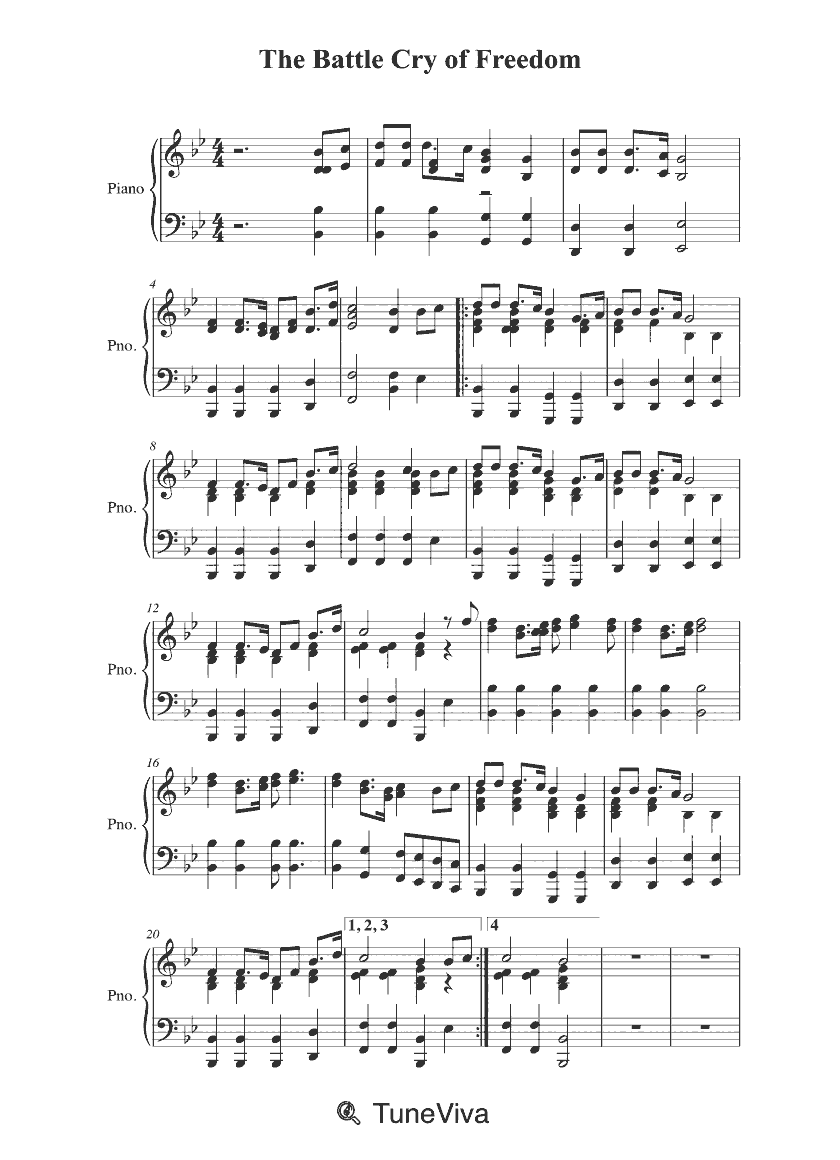
Written in 1862 and published by Root & Cady; it is estimated that over 700,000 copies of the sheet music circulated.
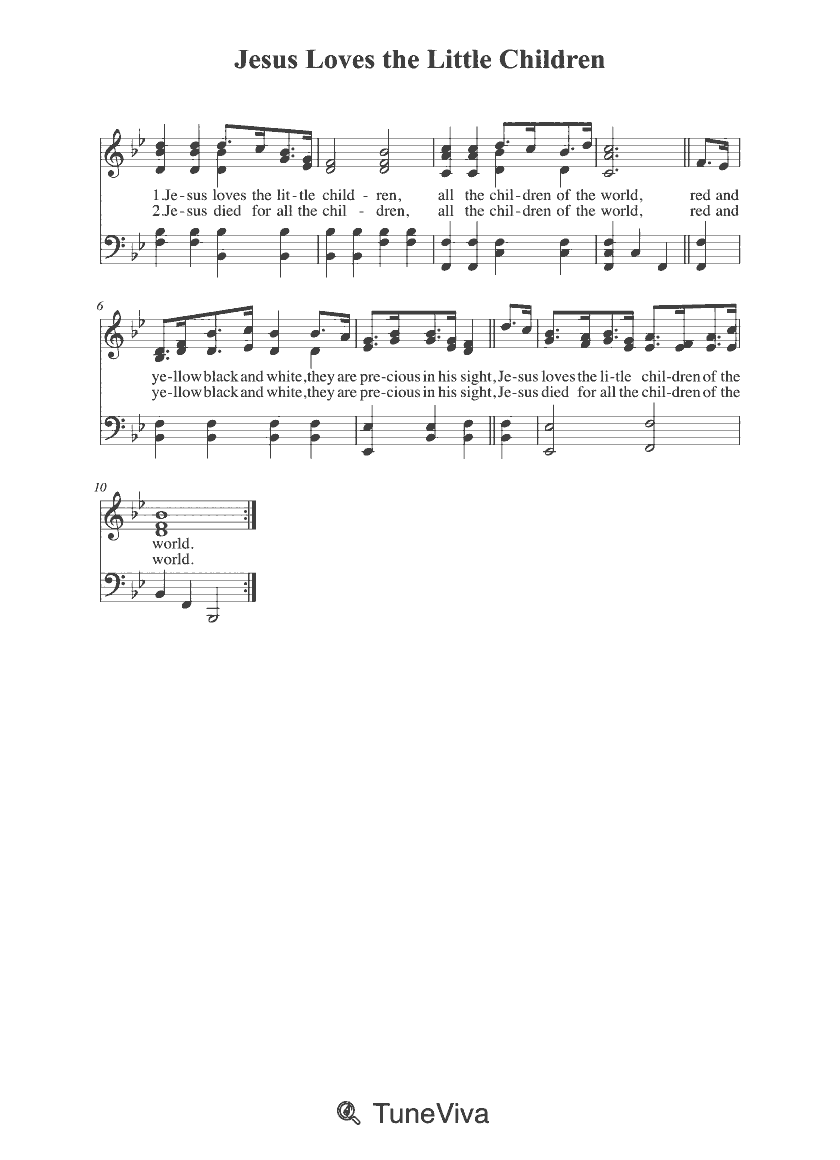
The tune is Root's, borrowed from 'Tramp! Tramp! Tramp!'; the words were added later by C. Herbert Woolston.
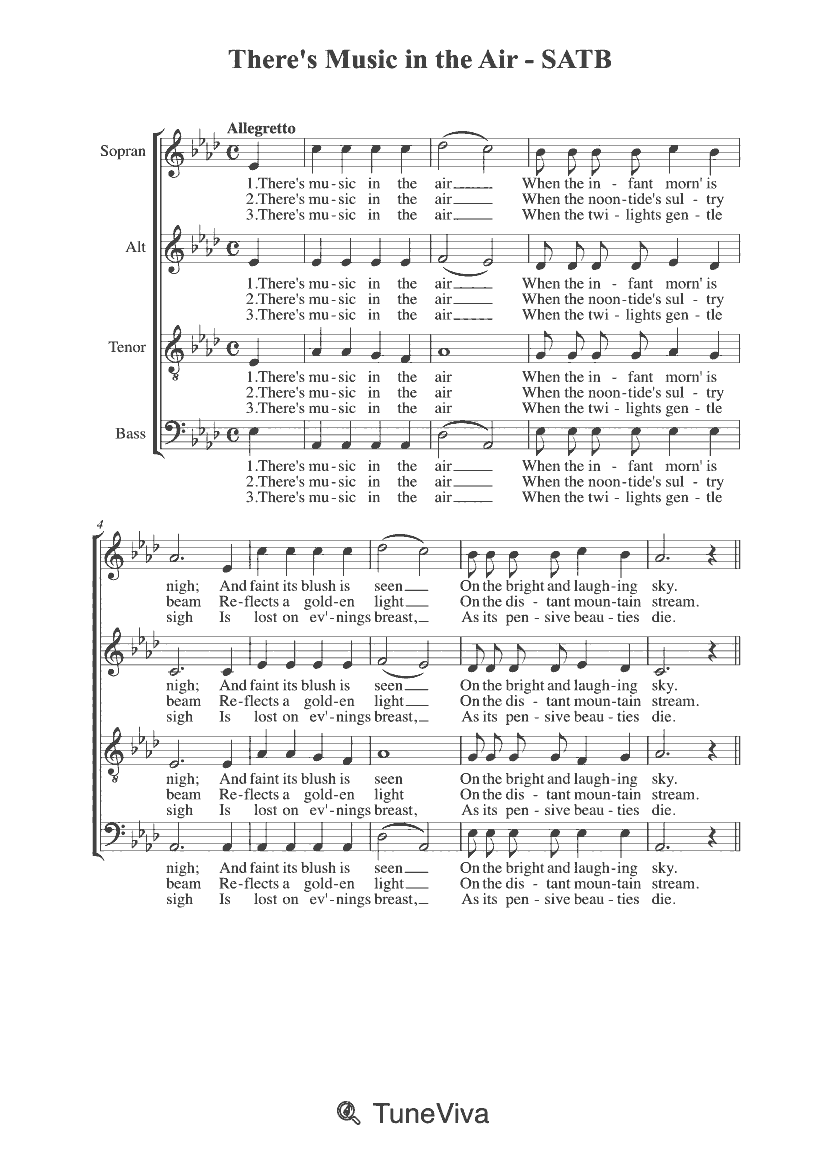
A choral setting of the song Root wrote to words by Fanny Crosby, one of the antebellum pieces his obituary singled out.
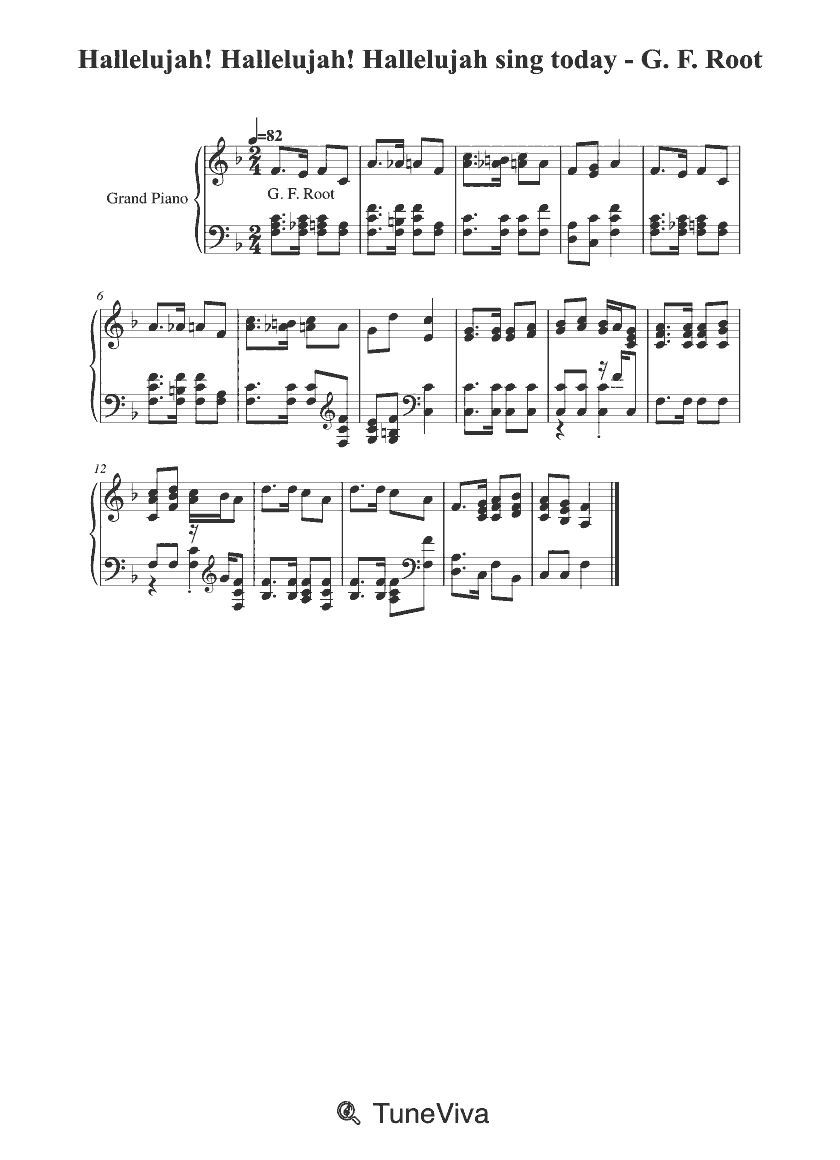
A gospel hymn in the revival idiom, with the refrain carrying most of the text.
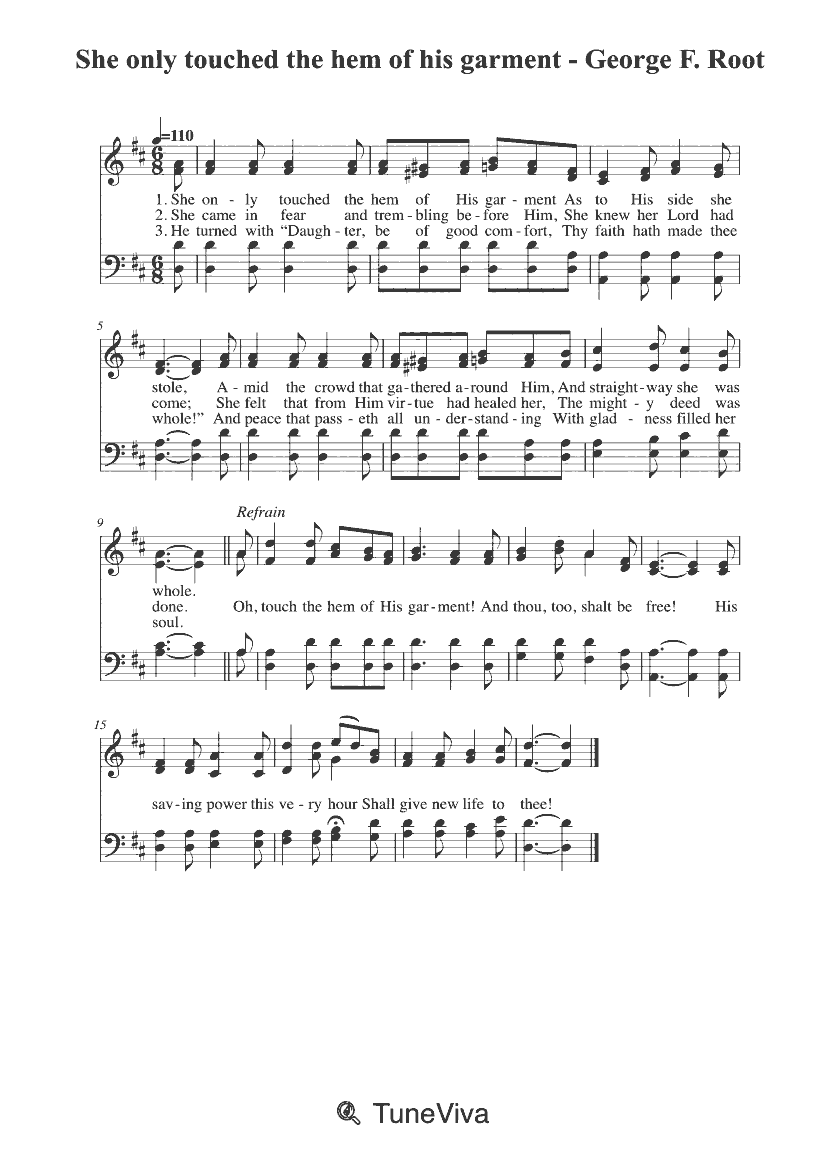
A gospel hymn on the woman healed in Matthew 9, printed in Faith Hymns (Boston, 1887).
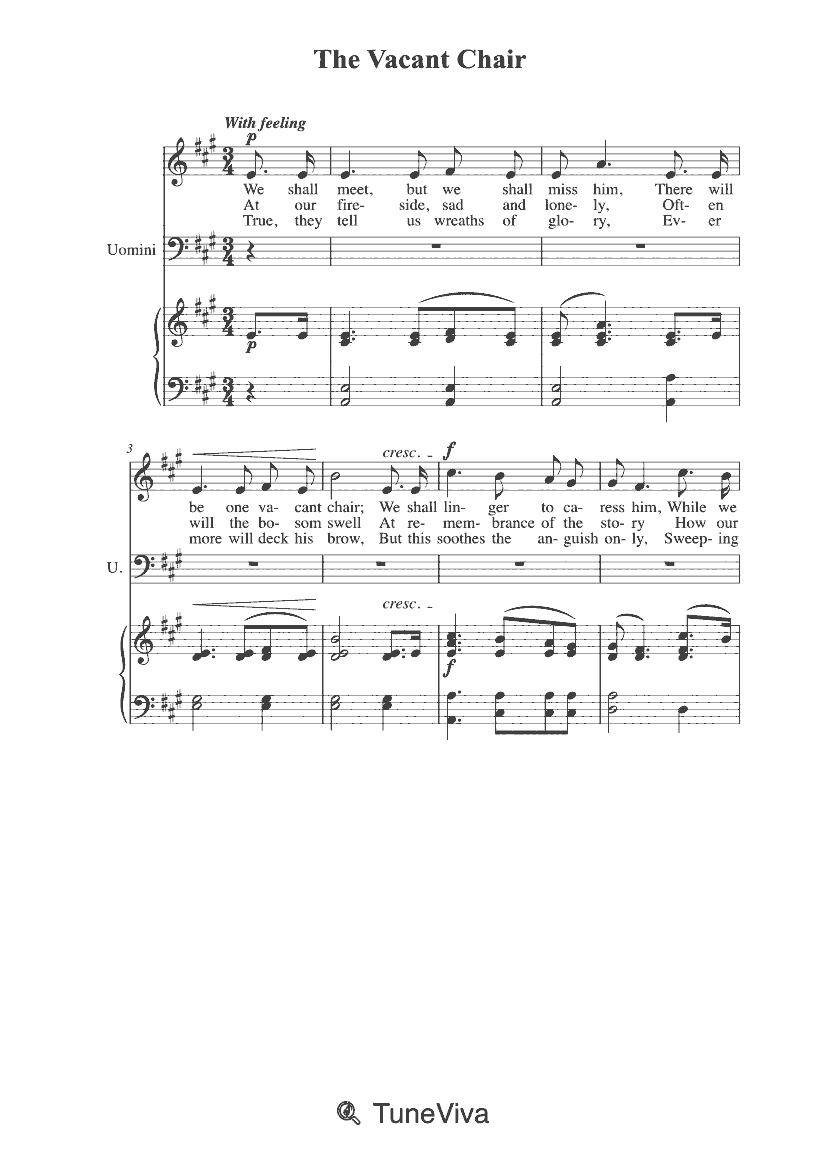
Henry Washburn's poem on Lieutenant John William Grout, set by Root in 1861 and sung on both sides of the Atlantic.
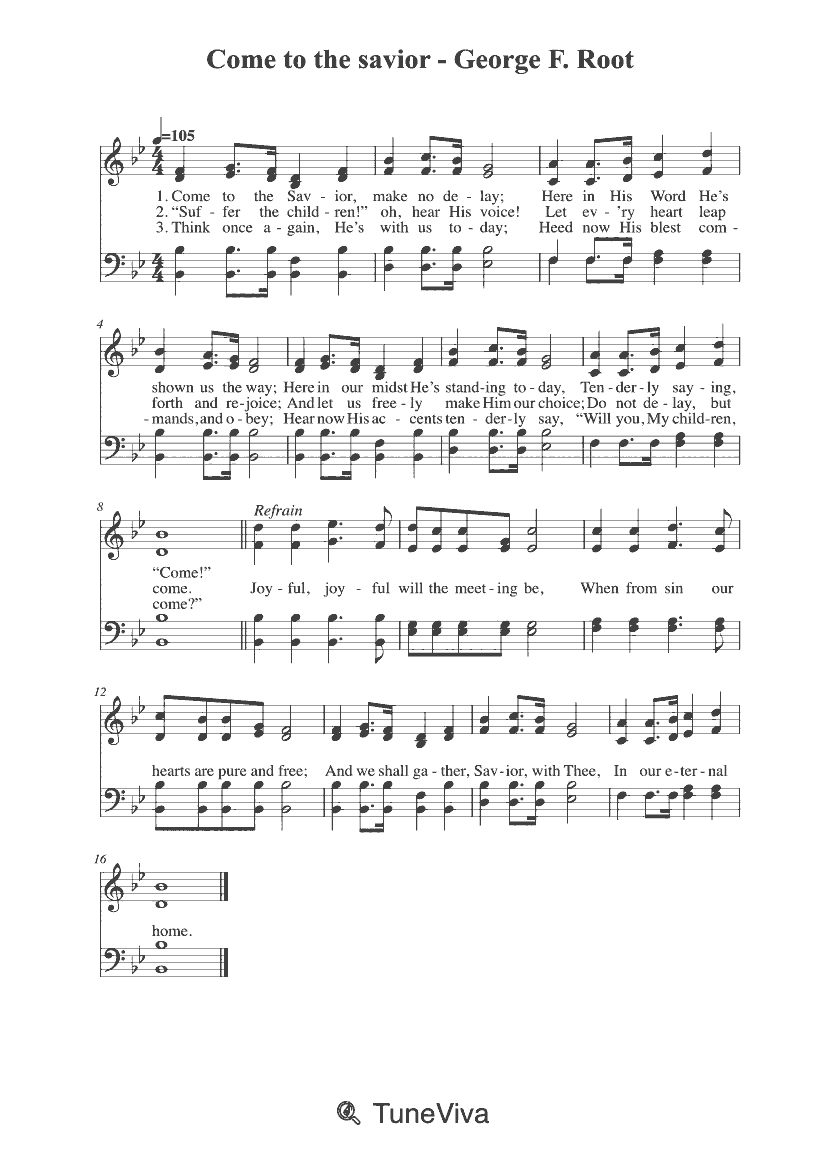
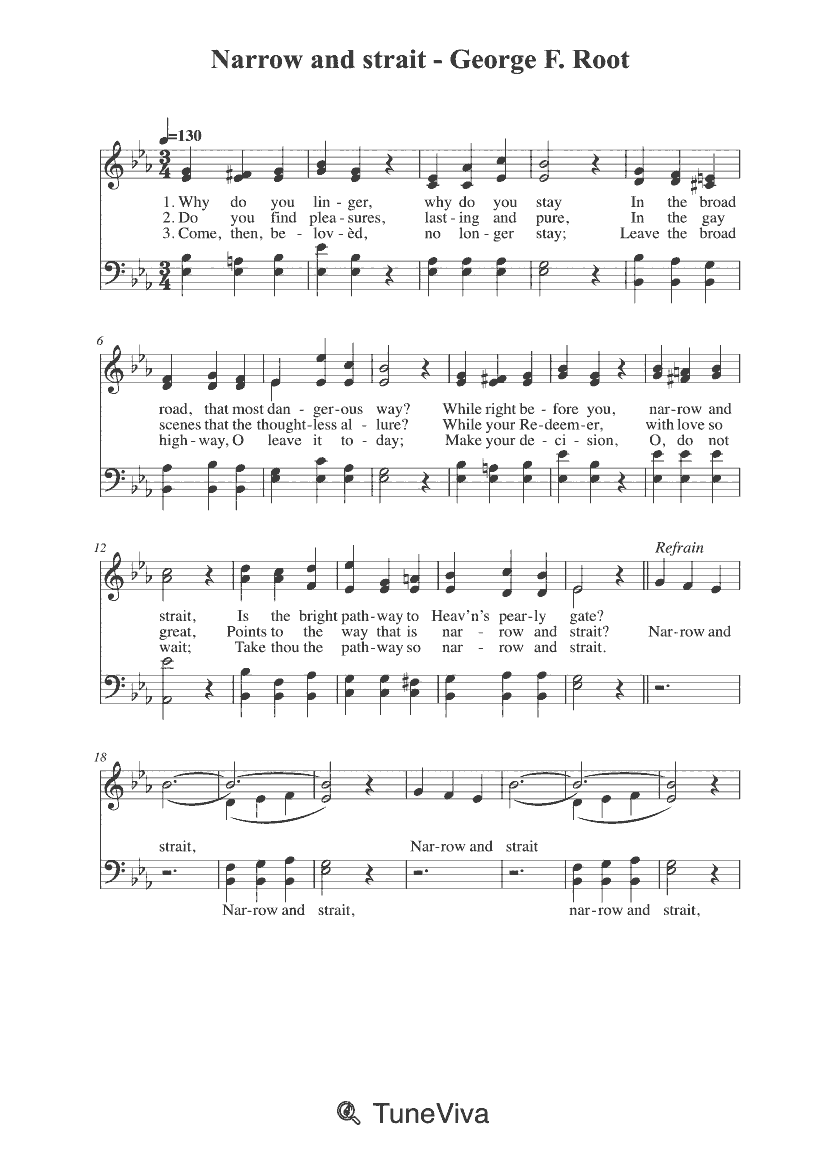
An invitation hymn of the kind Root supplied in quantity for Sunday-school and revival collections.
A Christmas anthem on the angels' song from Luke 2.
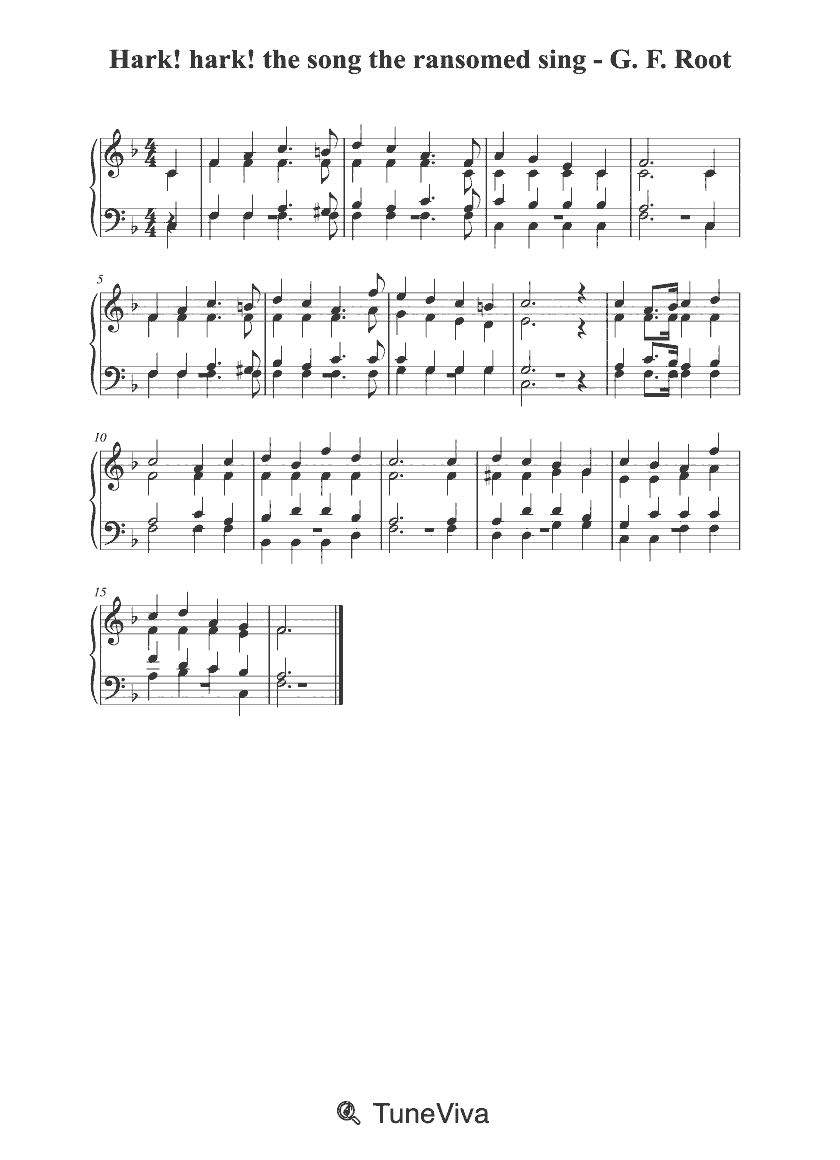
A hymn on the song of the redeemed, one of several entries here drawn from revival songbooks.
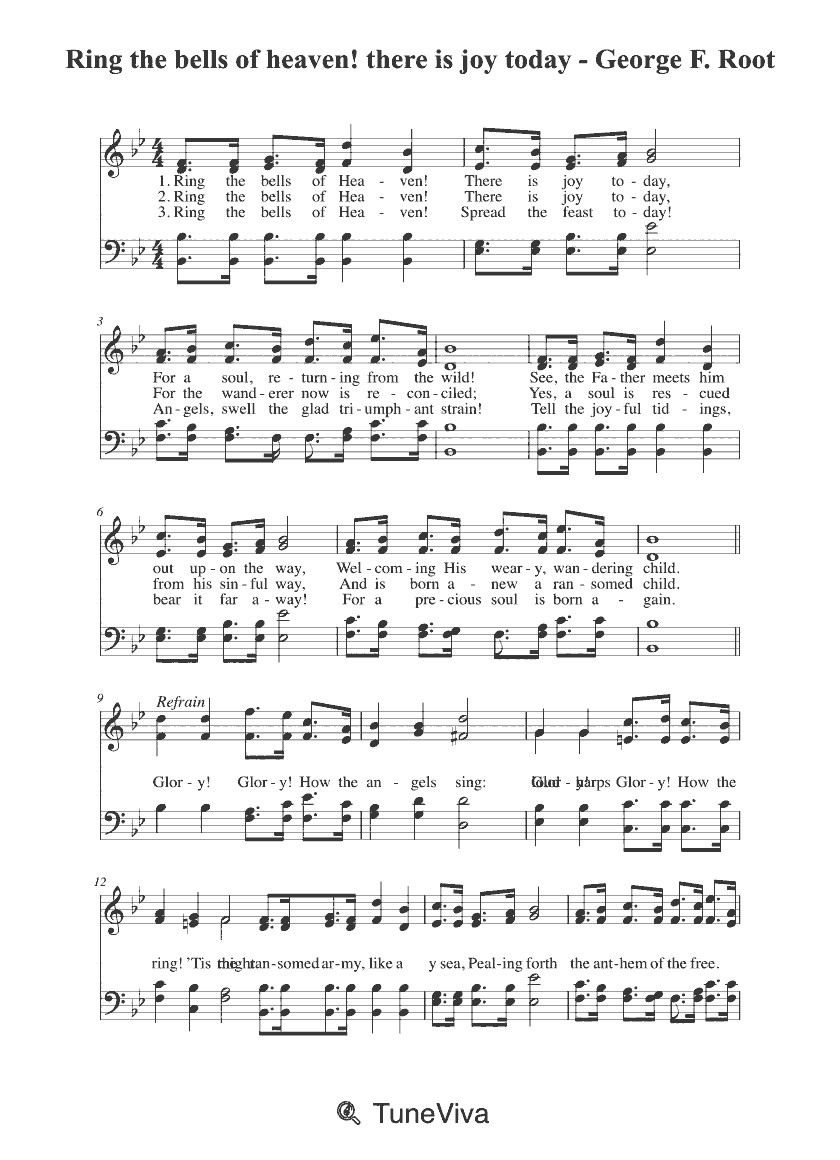
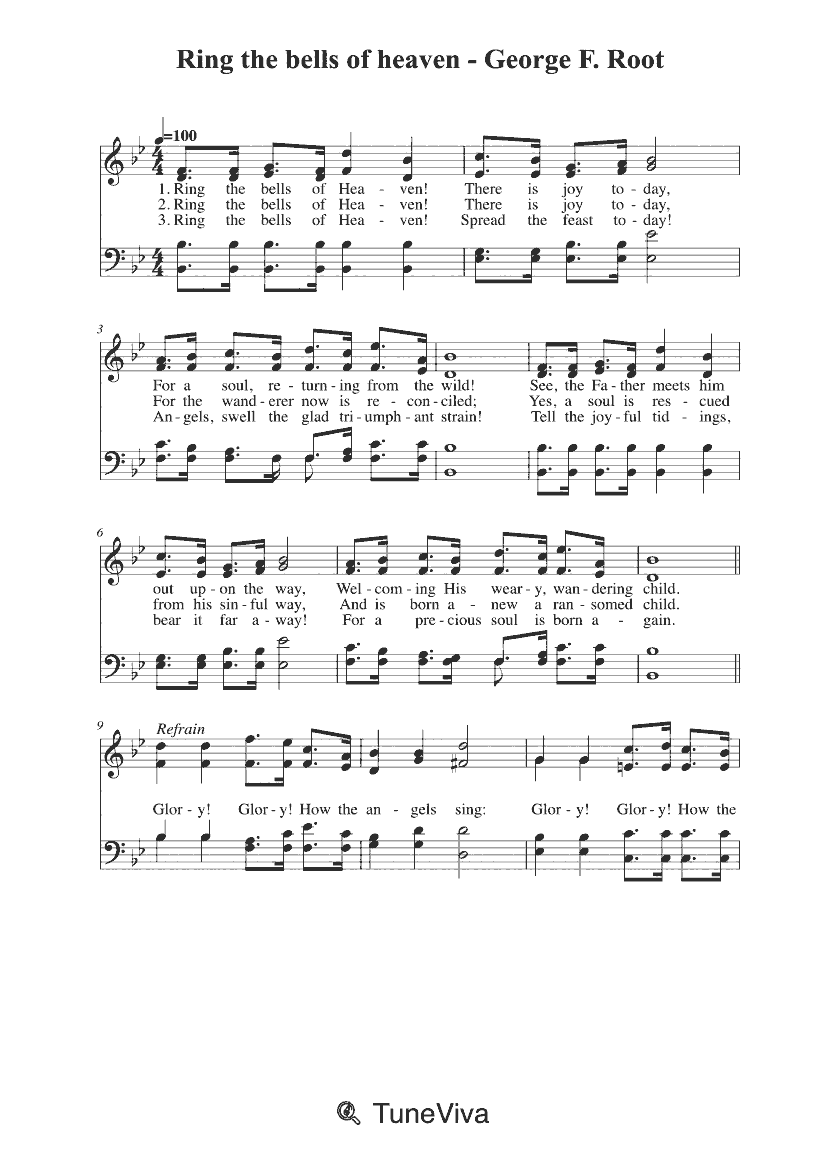
A gospel hymn on the joy of repentance, in the compact verse-and-refrain form Root used for the Sunday schools.
There are 143, running to about 81 minutes of music and 38,387 notated notes. Eighty of them have lyrics.
Sometimes, but not usually. 'The Vacant Chair' sets Henry Washburn's poem, 'There's Music in the Air' sets Fanny Crosby, and 'Jesus Loves the Little Children' acquired its words long after Root's tune.
Most are songs or hymns of a few verses, and the catalogue counts each as one entry; 81 minutes across 143 items averages well under a minute apiece.
It is German for 'root', a pseudonym Root used for light and minstrel songs, partly to profit from the fashion for German composers and partly to keep his serious name separate.
Catalog editions and arrangements attributed to George Frederick Root.
George F. Root
Voice and Piano
Voice (SATB) and Piano
O The Way Is Long and Weary