classical
1 tracks
Almost nothing is known about Harry Carleton beyond the tunes that carry his name, and the catalogue holds 21 of them: about 19 minutes of music and 4,956 notated notes. None has lyrics, and every entry sits at complexity index 1.
The titles are the giveaway. President Garfield's Hornpipe, Pres. Lincoln's Hornpipe, President Grant's Hornpipe, National Lancers' and Castle Garden Jig belong to the Boston fiddle repertoire of the 1880s, and the collection includes duplicate copies of the Garfield and Swanee River pieces under different spellings and capitalisations, so the count flatters the number of distinct tunes.
Carleton's name appears in Ryan's Mammoth Collection, the anthology of 1,050 reels, jigs, hornpipes and clogs issued in Boston in 1883 by Elias Howe's firm and later reissued in shortened form as Cole's 1000 Fiddle Tunes. He is credited there with a cluster of tunes whose titles point to the post-Civil War North: presidents, a volunteer militia troop, and New York's Castle Garden. Fiddle reference works describe him as a journeyman composer around Boston and add that the name may be a pseudonym; no birth, death or residence record has been attached to it.
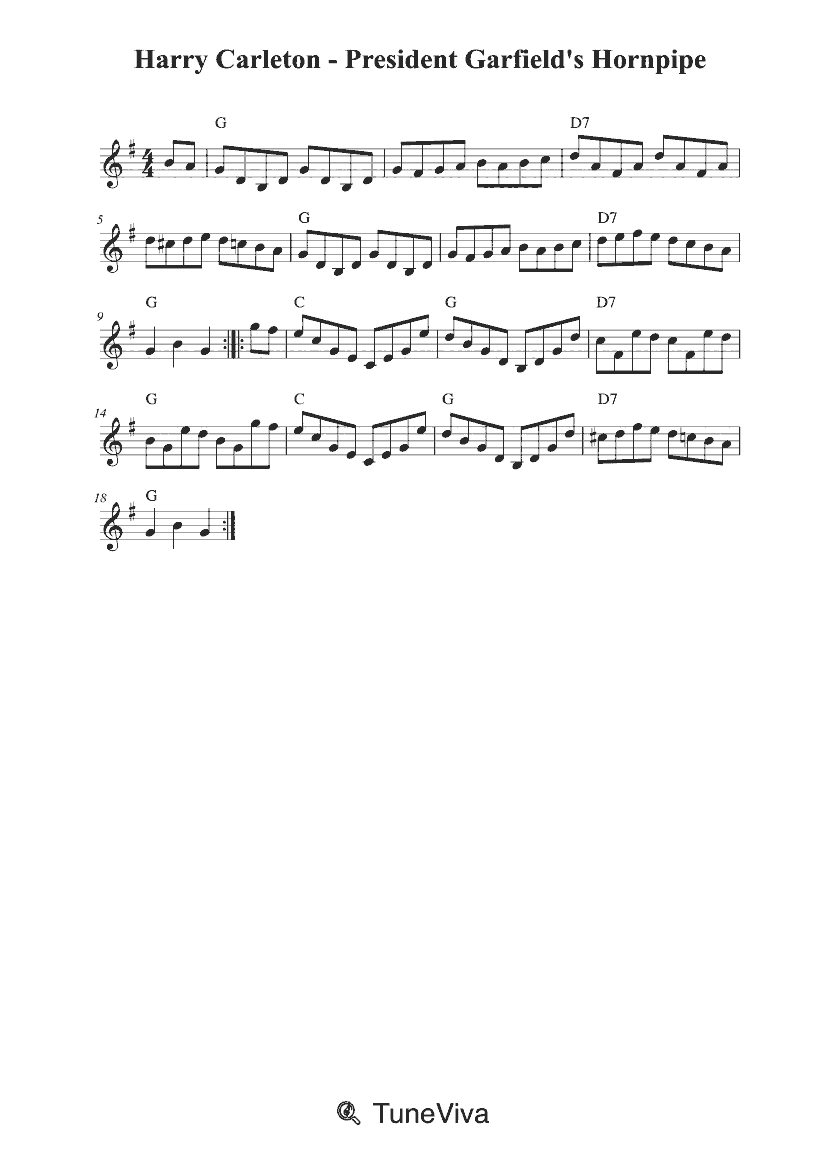
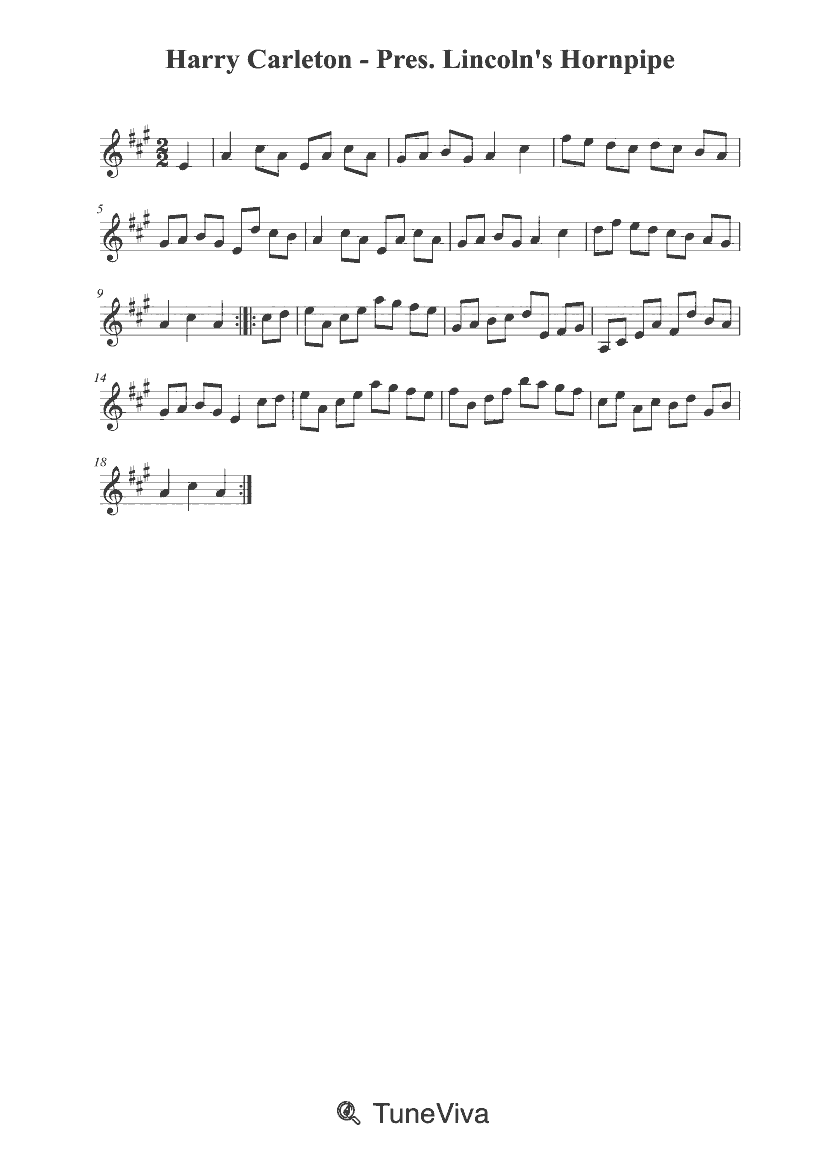
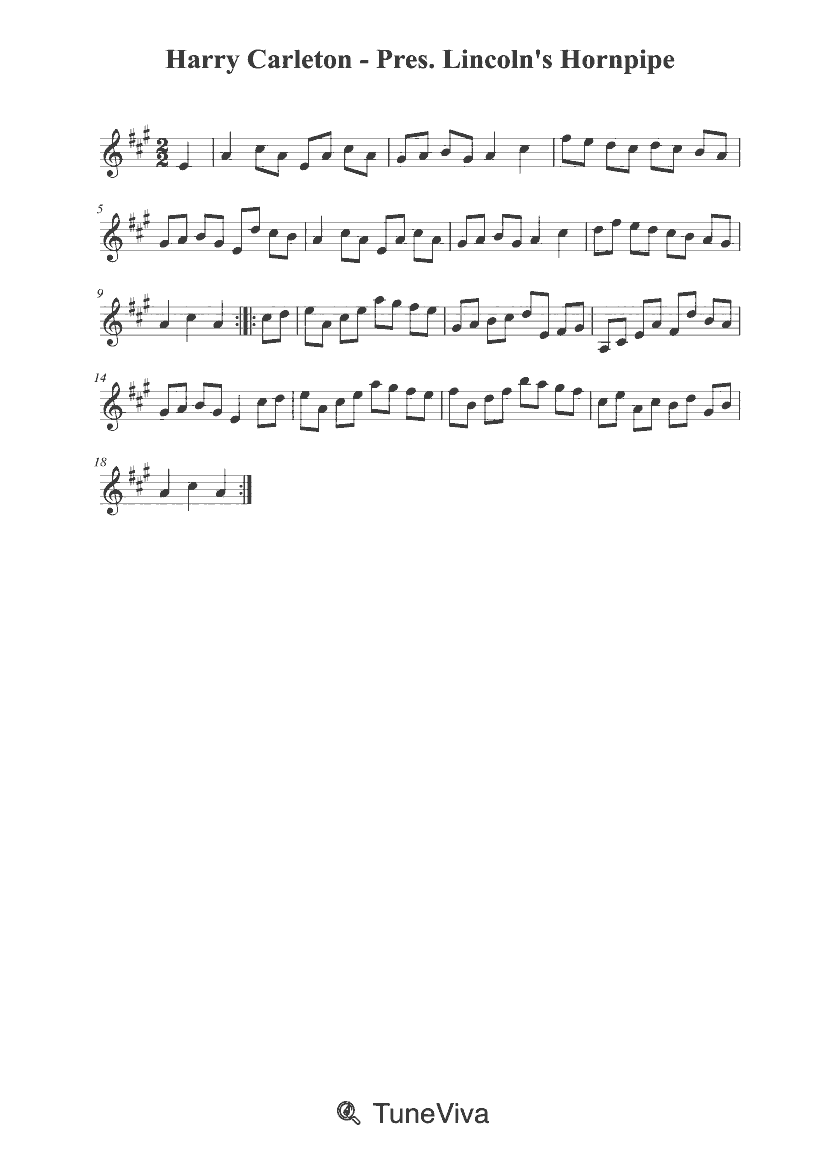
The tunes travelled far beyond Massachusetts. President Garfield's Hornpipe was taken up by Cape Breton, Prince Edward Island, Québec and Missouri fiddlers, and turns up in collections under such aliases as Garfield's Hornpipe, Blue Water Hornpipe and Reel du Lac Sergent. President Lincoln's Hornpipe follows the same pattern, printed in the 1883 book and then absorbed into the New England dance repertoire.
For a page built on a compiler's attribution rather than a documented life, the catalogue is unusually consistent. All 21 entries are single melodic lines at complexity index 1, with no lyrics and no separate accompaniment; the running time of about 19 minutes is simply the tunes played through. Keys vary between copies, one Garfield entry is marked (G) while the tune is normally set in B flat, and several pieces appear three or four times, so the page is best read as a tune list with duplicates rather than 21 distinct works.
These are dance tunes, not character pieces: two eight-bar strains, each repeated, with the second strain climbing higher than the first. Take the hornpipes at a pace that still lets the triplets speak, roughly crotchet equals 112 to 120, and keep the bowing even, because the notation marks few slurs. The jigs want a lighter, more pointed articulation than the hornpipes. Where the catalogue holds several copies of one tune, compare the first strain before choosing: the (G) Garfield is transposed, and the all-capitals entries are not always identical to the plain ones.
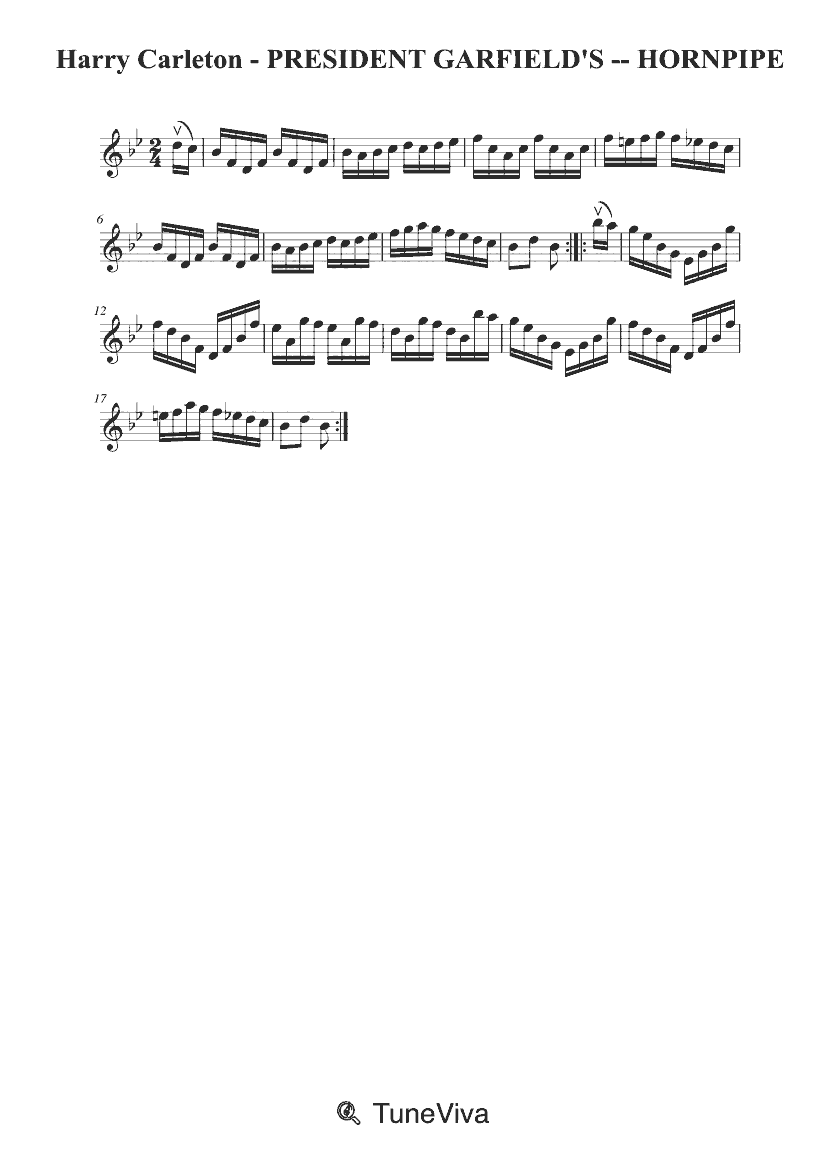
The most-viewed entry: a hornpipe printed in Ryan's Mammoth Collection (Boston, 1883) and still played in New England contra dance sets.
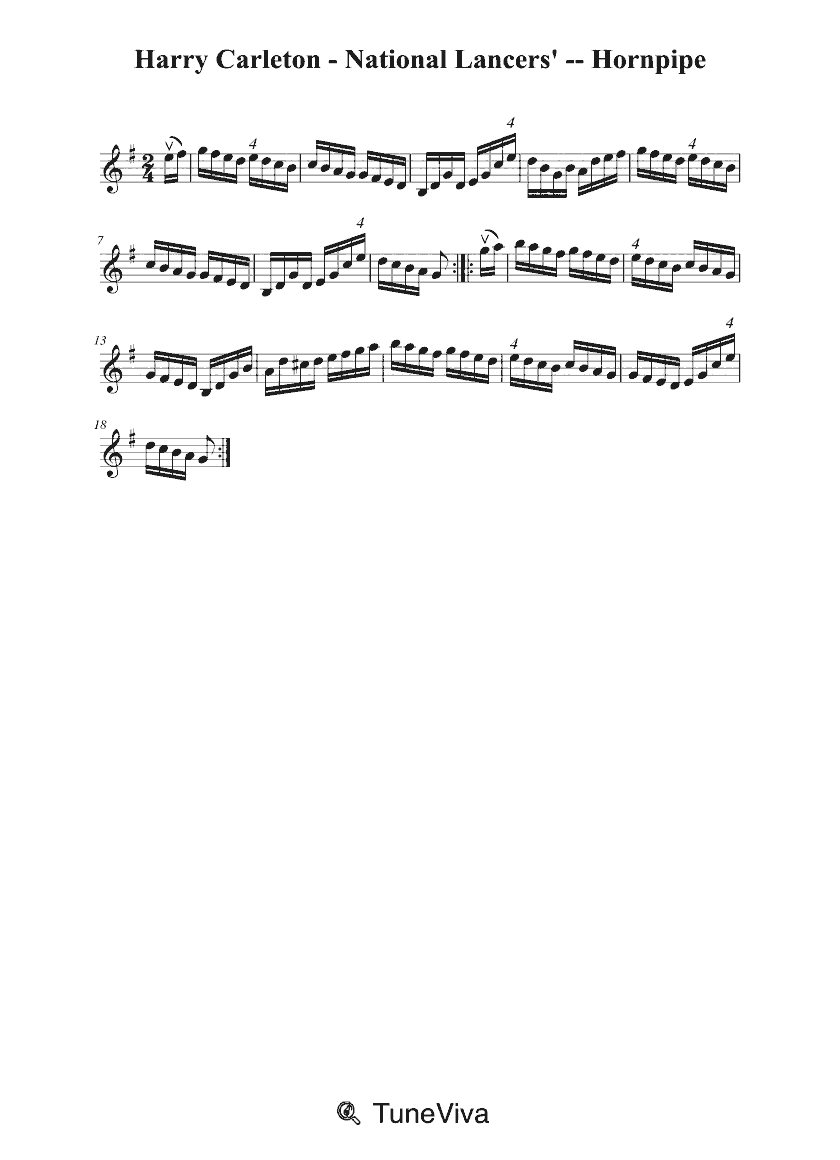
Named for the Massachusetts volunteer militia troop; one of the parade-ground titles Carleton contributed to the collection.
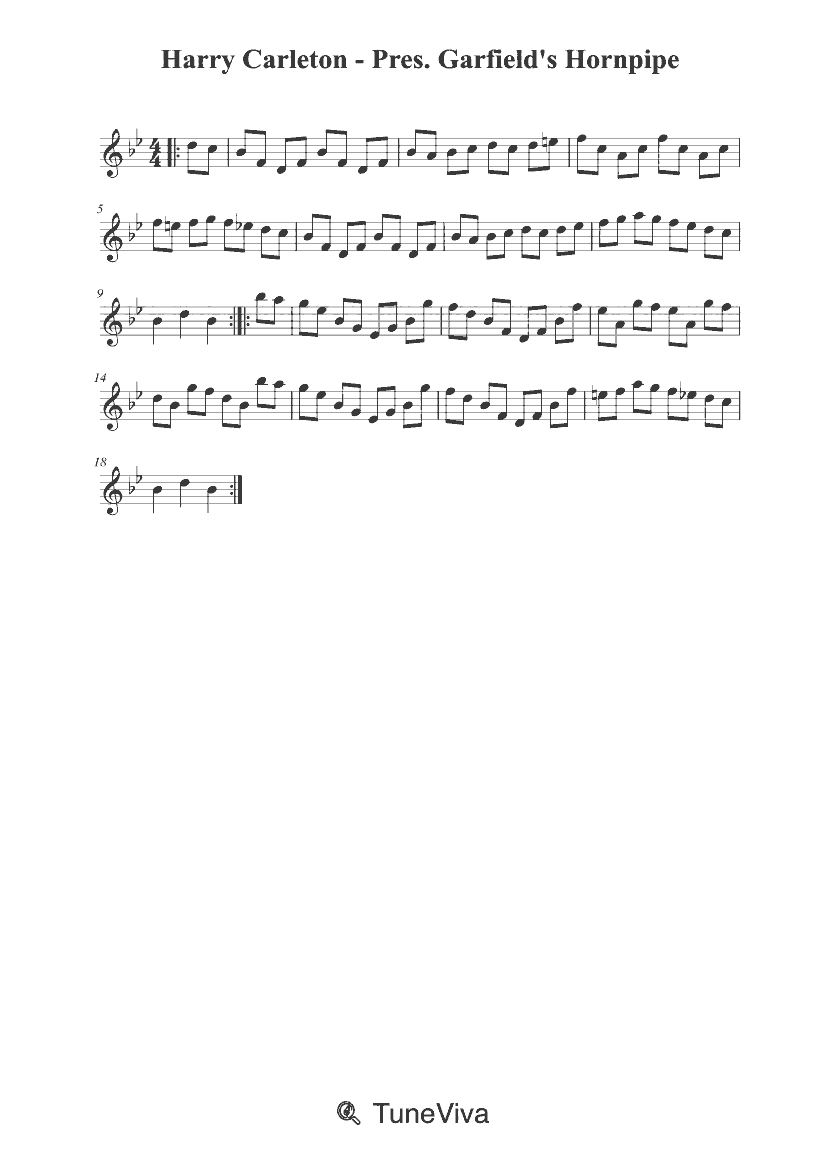
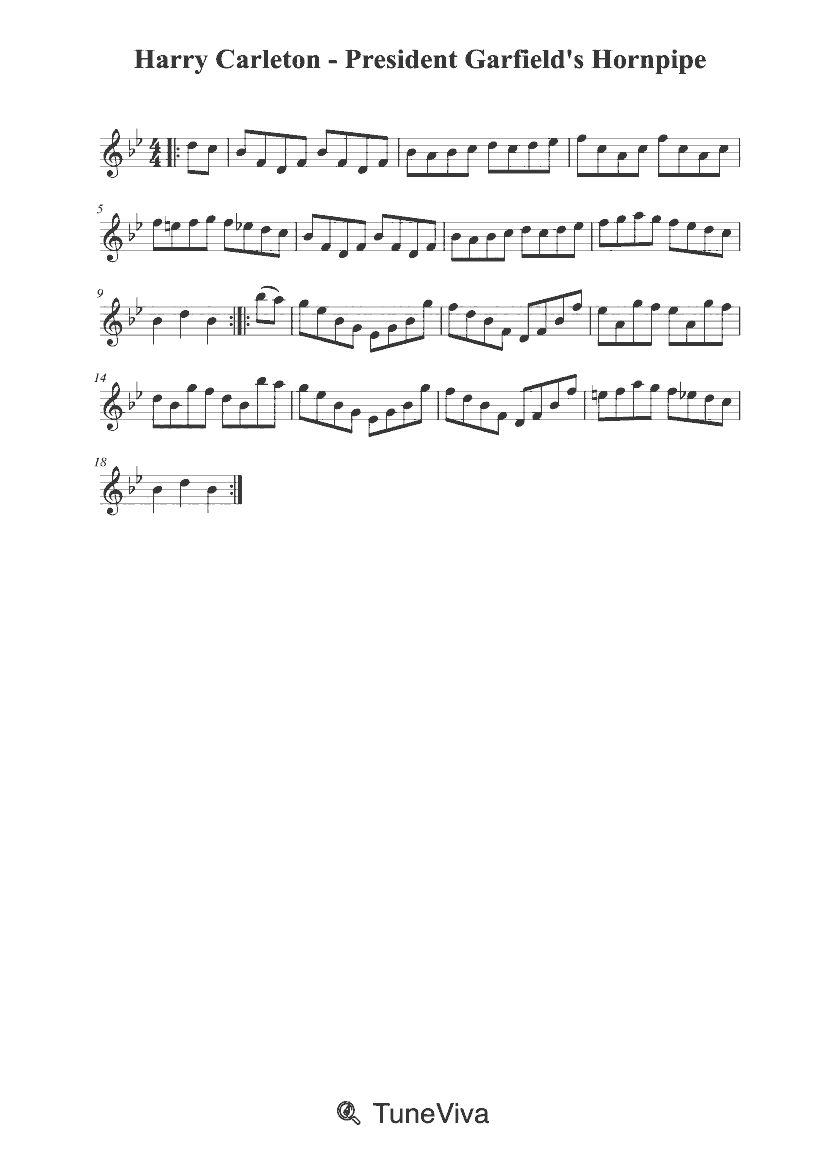
The tune that outgrew the book: normally in B flat, it reached Cape Breton, Prince Edward Island and Missouri repertoires under several titles.
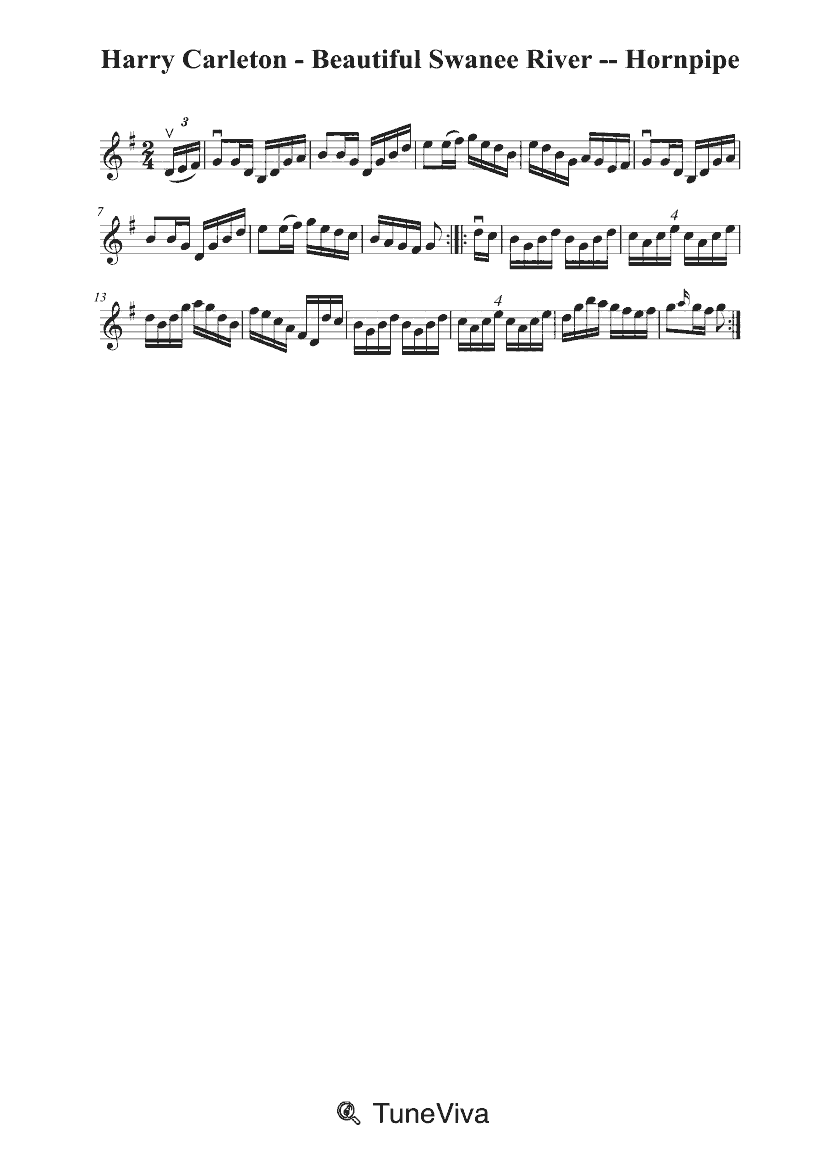
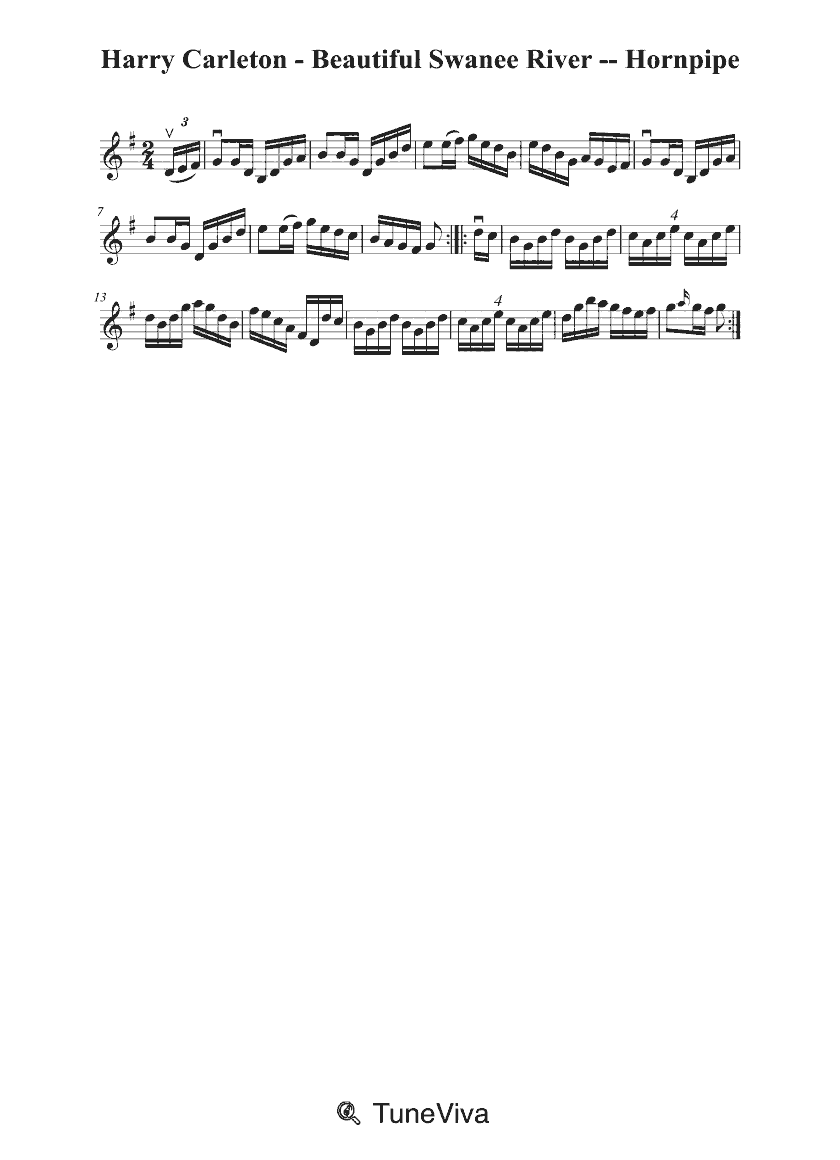
A hornpipe carrying a river title, one of the pieces the catalogue holds in duplicate under a second spelling.
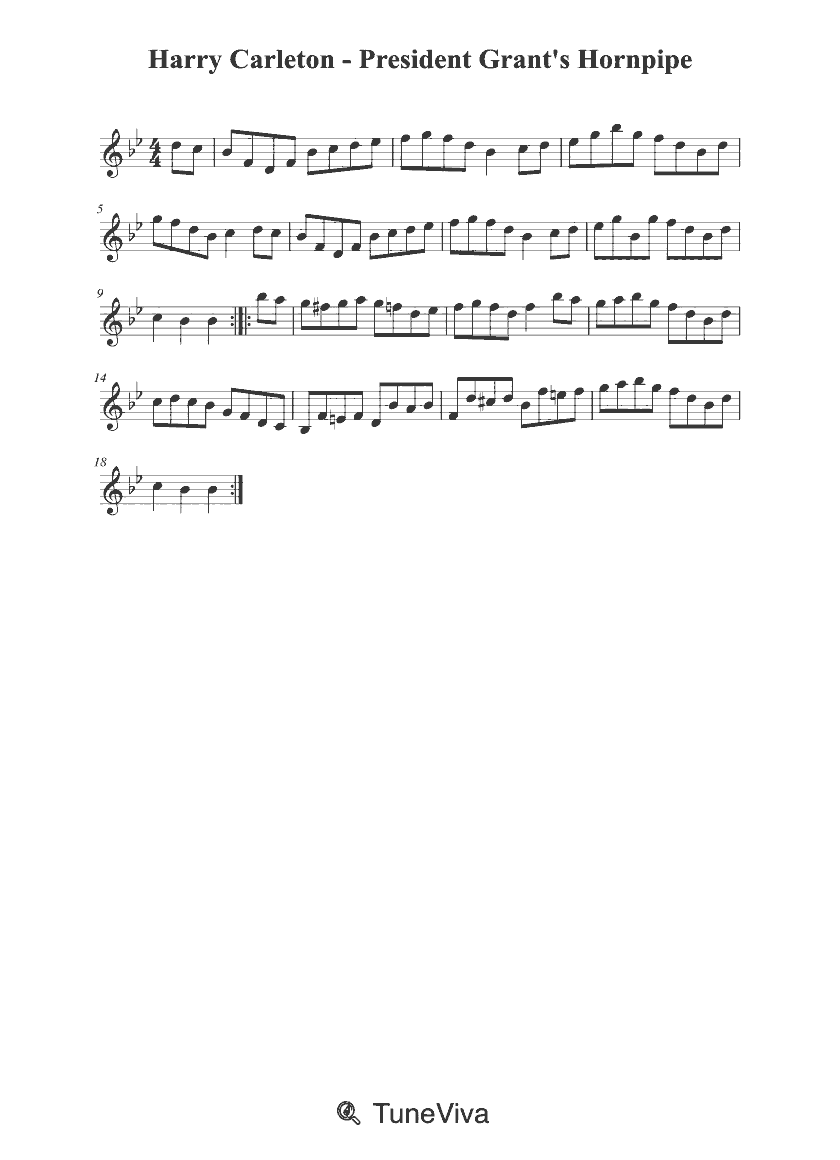
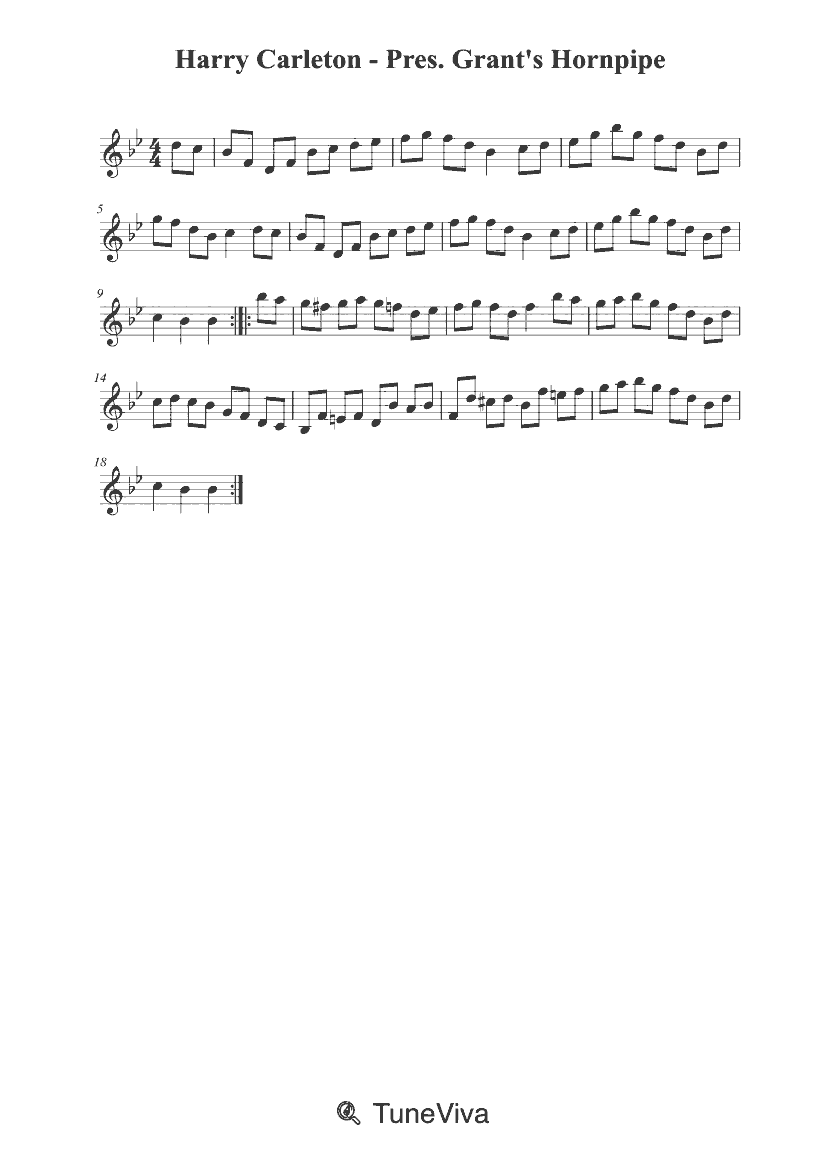
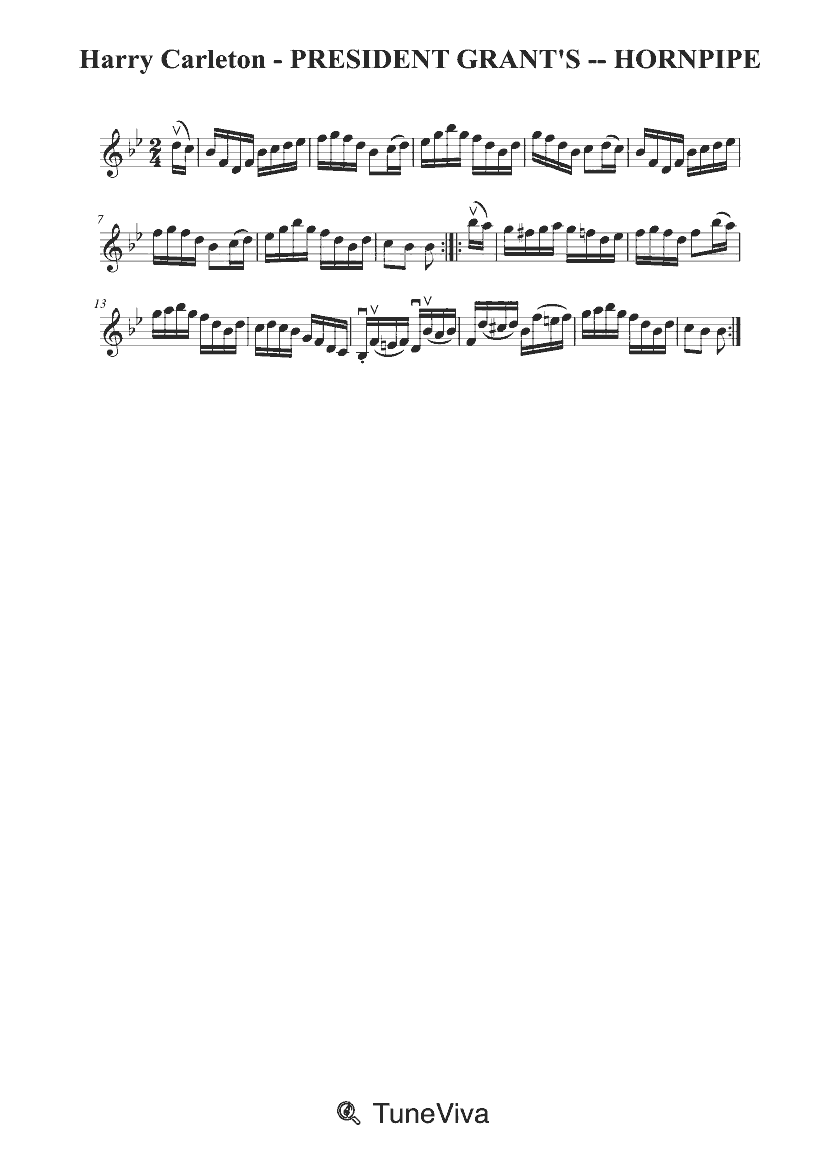
The third of the presidential hornpipes in the collection, named for Ulysses S. Grant and preserved in the same 1883 anthology.
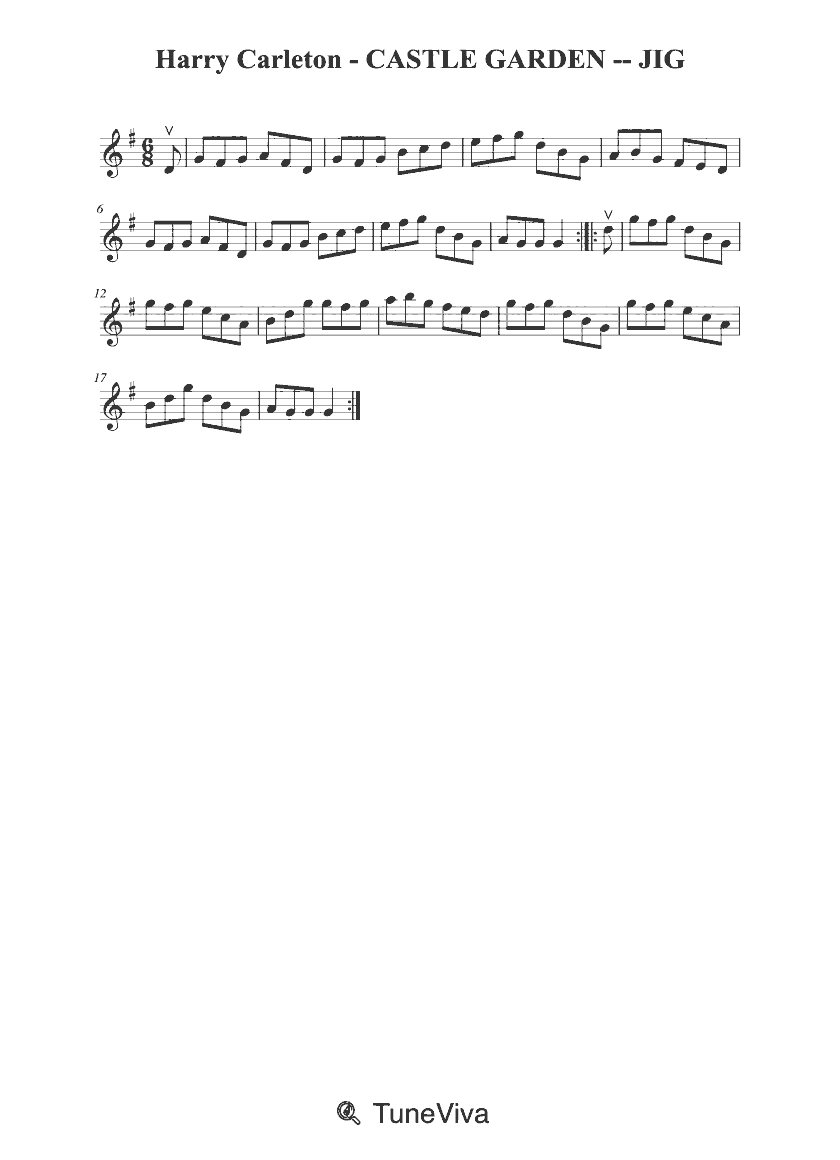
A jig rather than a hornpipe, titled for Castle Garden, the New York beer garden, exhibition hall and theatre at the Battery that later became the city's immigrant depot.
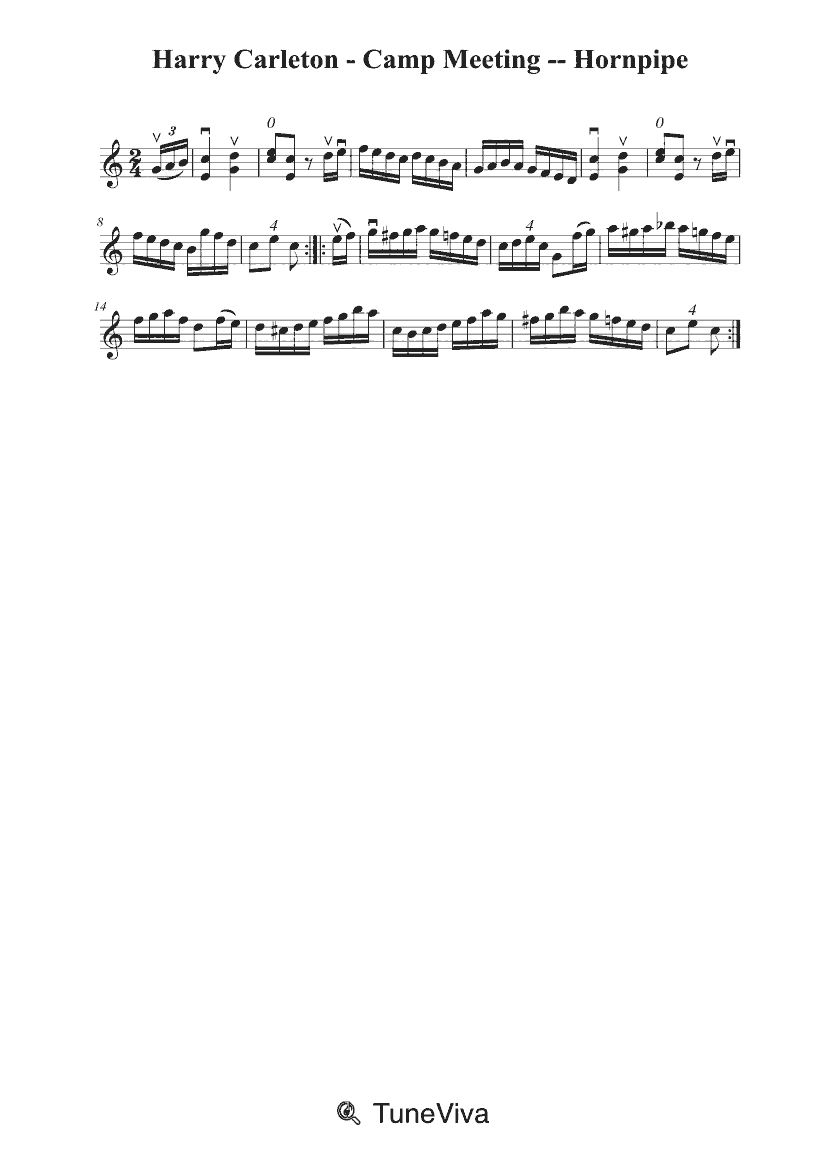
A revival-meeting title attached to a dance tune, a pairing common in nineteenth-century American fiddle books.
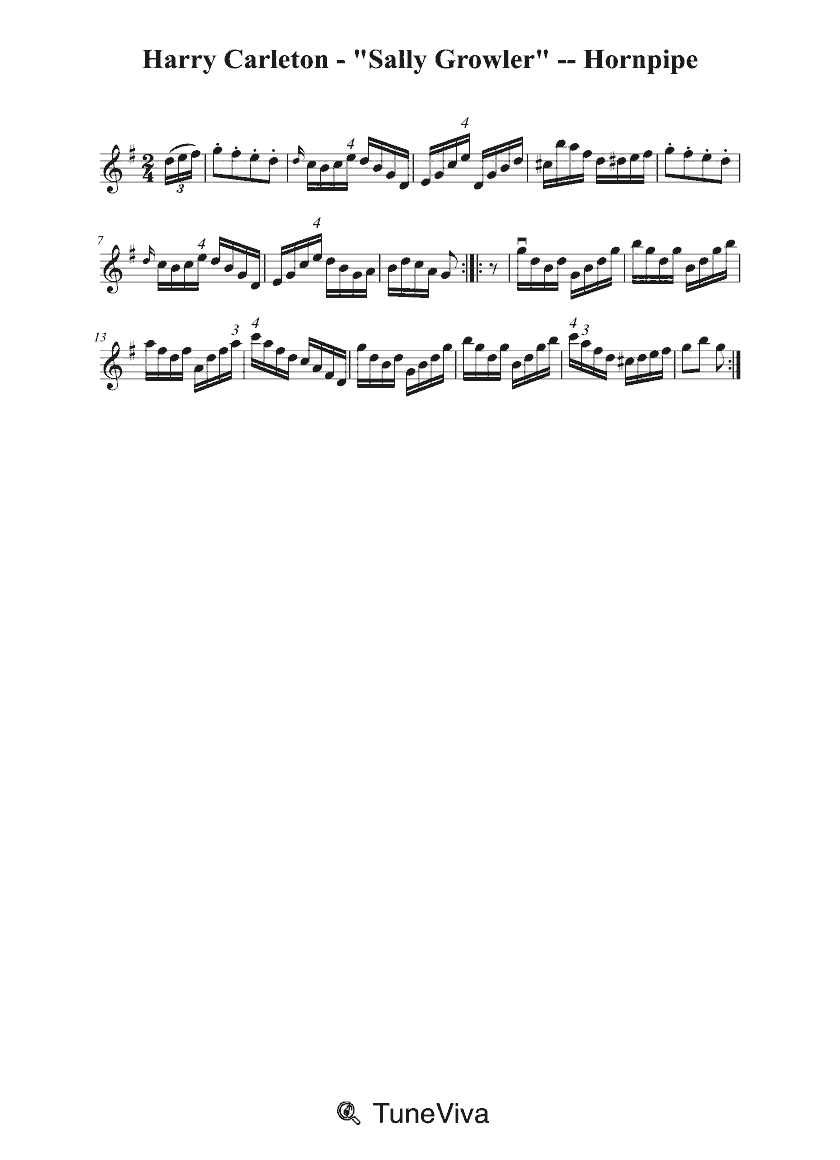
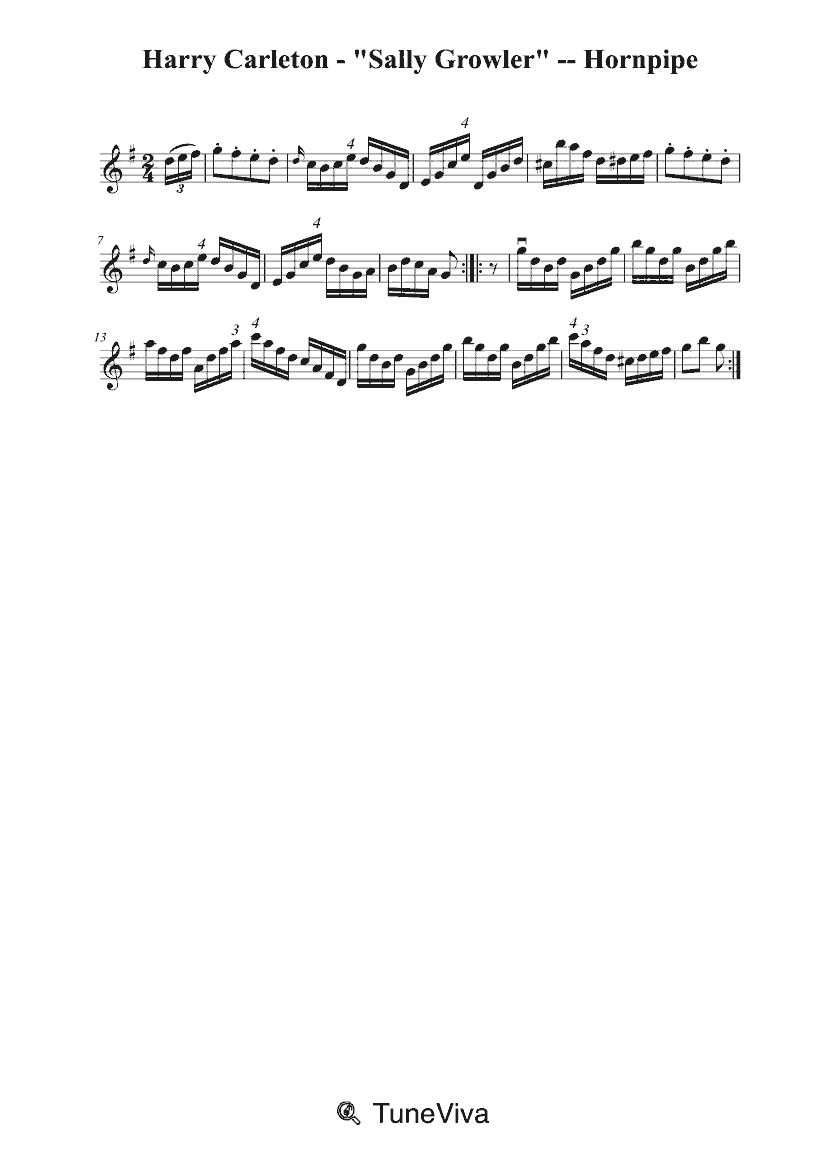
One of the collection's character titles, printed in the 1883 book with quotation marks around the nickname.
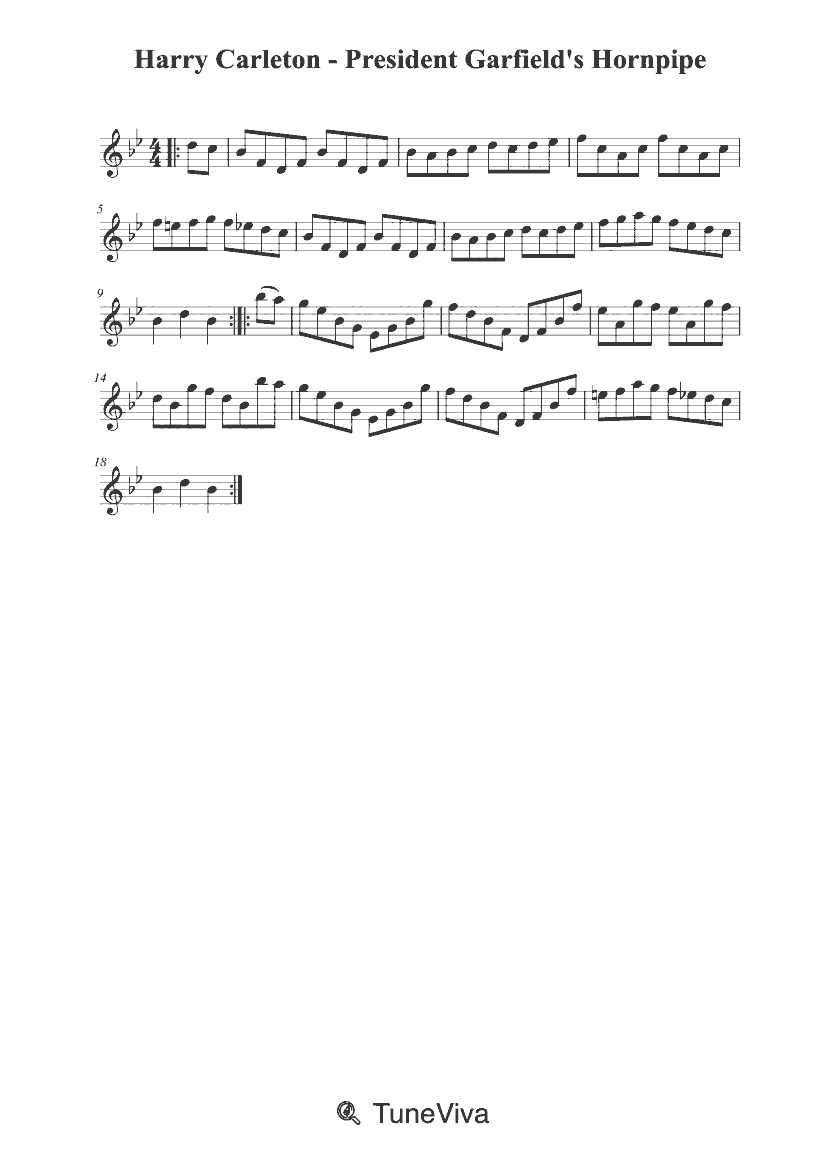
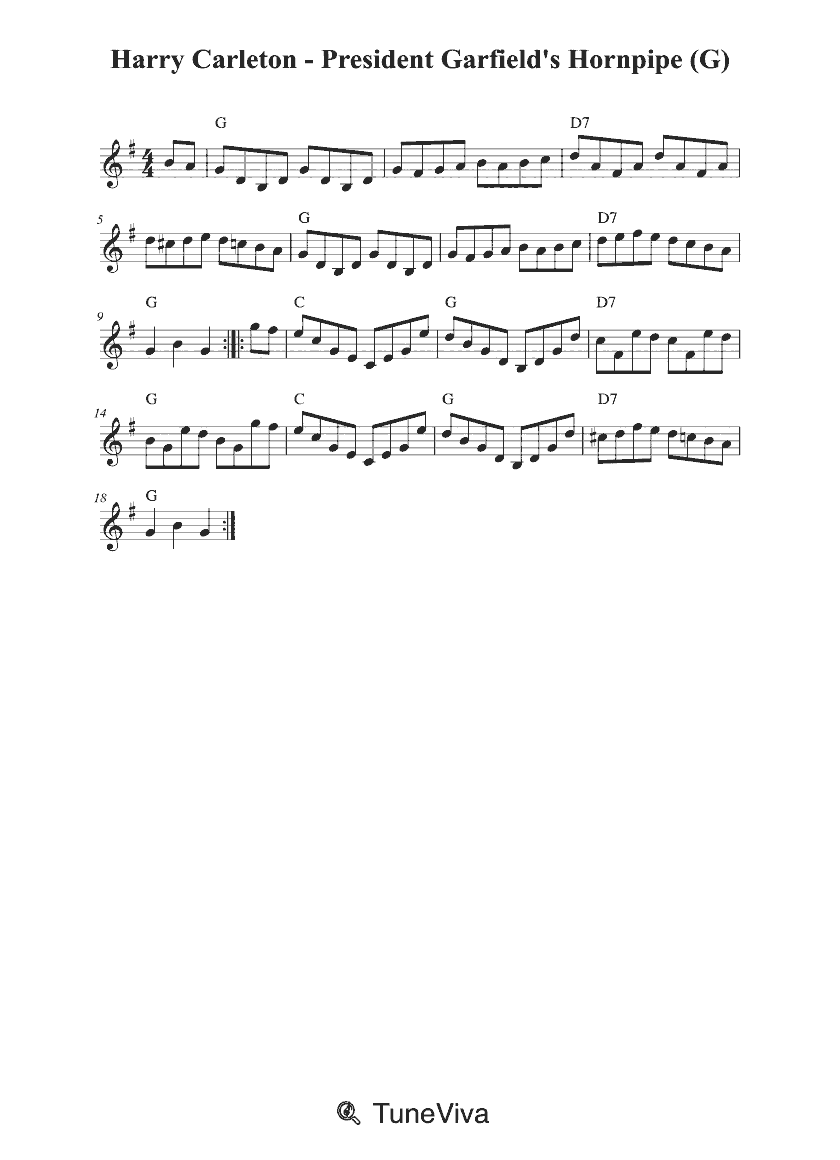
A transposed copy: the tune is normally notated in B flat, and the (G) in the title marks the key of this file.
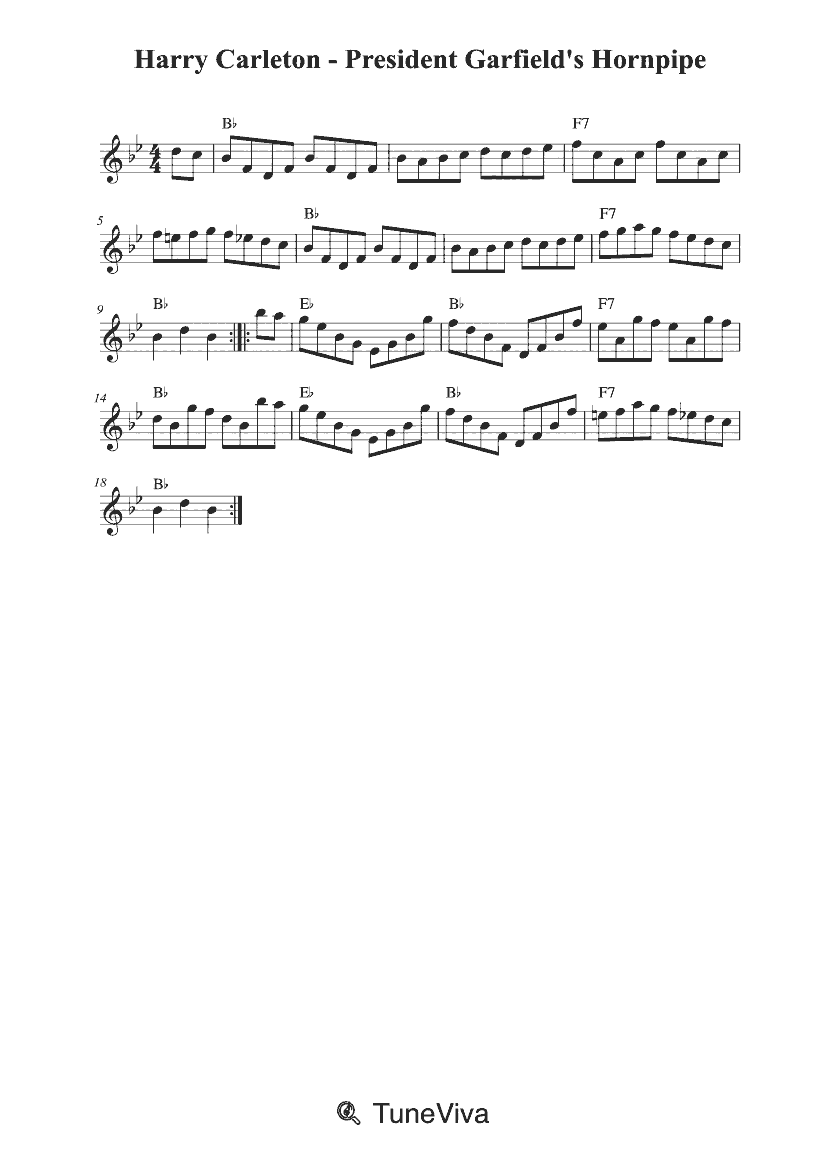
A second copy of the same tune, listed separately in the catalogue and filed with identical forces.
A composer credited with a group of hornpipes and jigs in Ryan's Mammoth Collection, published in Boston in 1883. Fiddle reference works describe him as a Boston-area journeyman and suggest the name may be a pseudonym; no dates are known.
21, running to about 19 minutes of music and 4,956 notated notes. All sit at complexity index 1 and none has lyrics.
The collection includes duplicate copies of the Garfield, Lincoln and Swanee River tunes, filed under different capitalisations, plus one Garfield marked (G) for its key.
President Garfield's Hornpipe, the most widely disseminated piece credited to Carleton; it also circulates as Garfield's Hornpipe, Blue Water Hornpipe and Reel du Lac Sergent.
Catalog editions and arrangements attributed to Harry Carleton.