classical
2 tracks
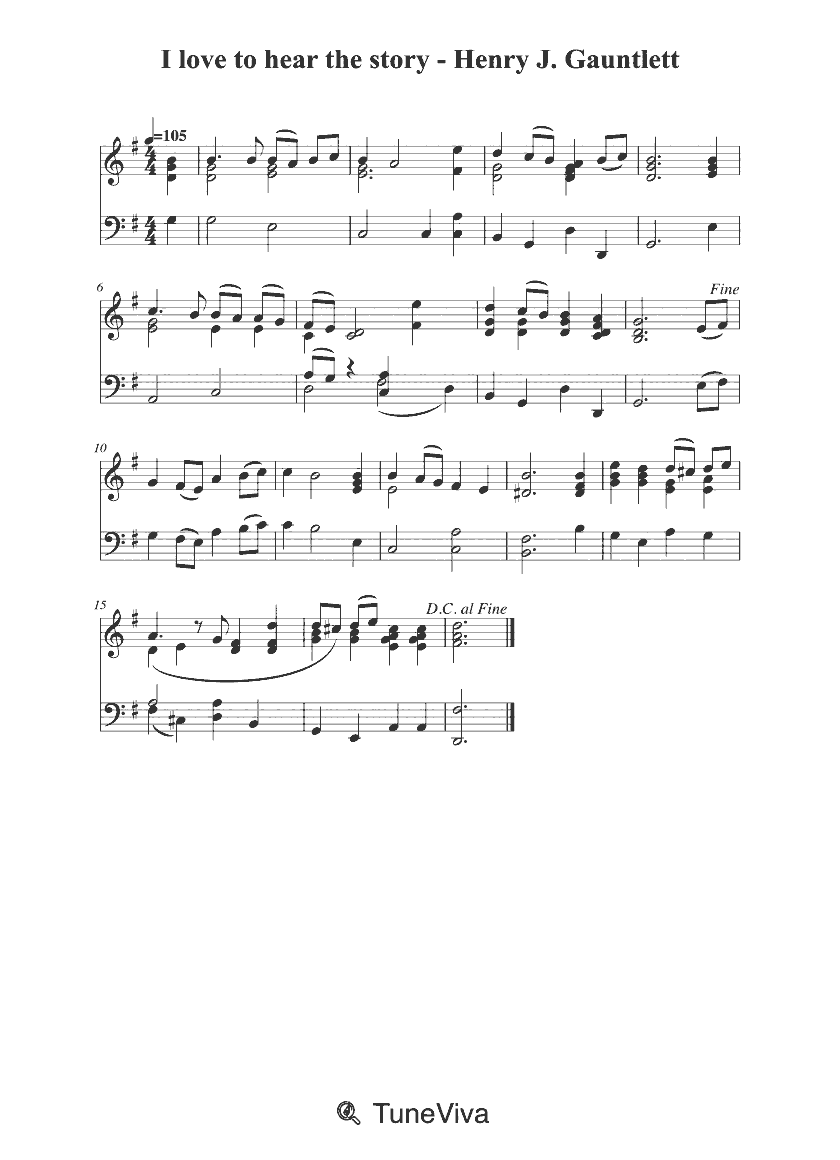
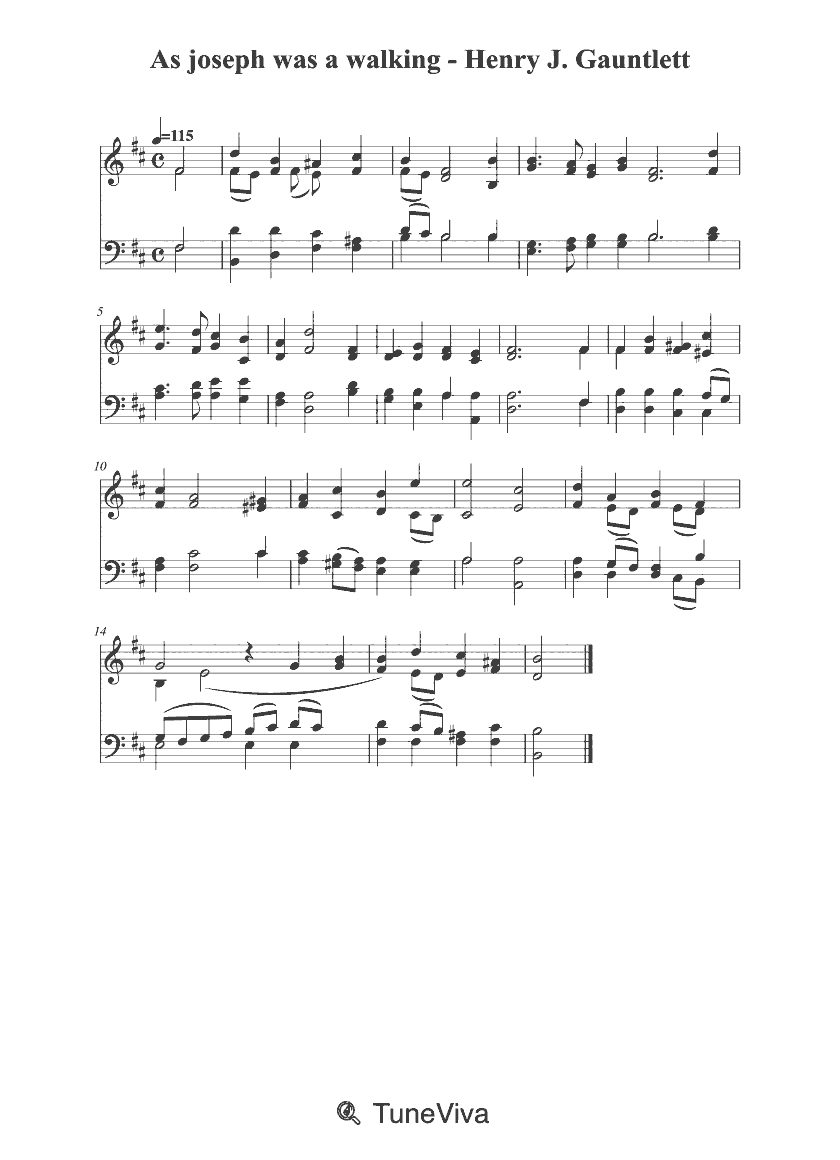
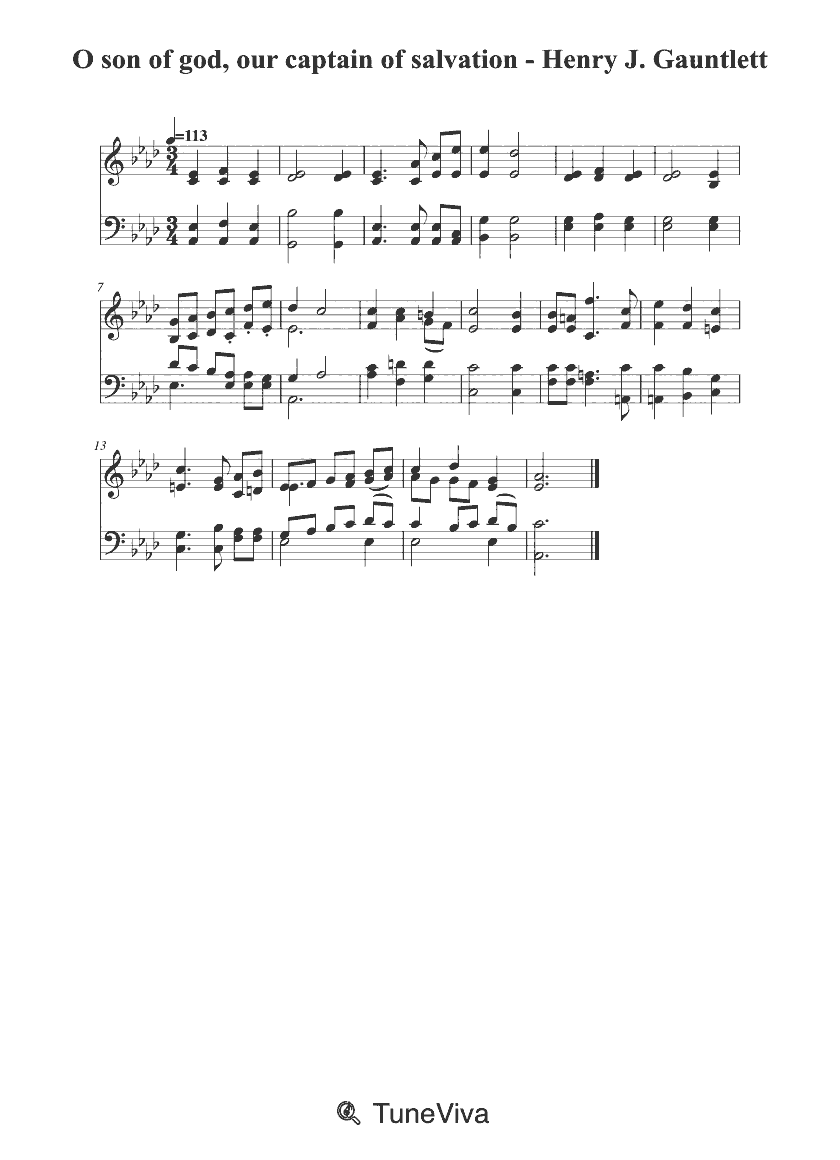
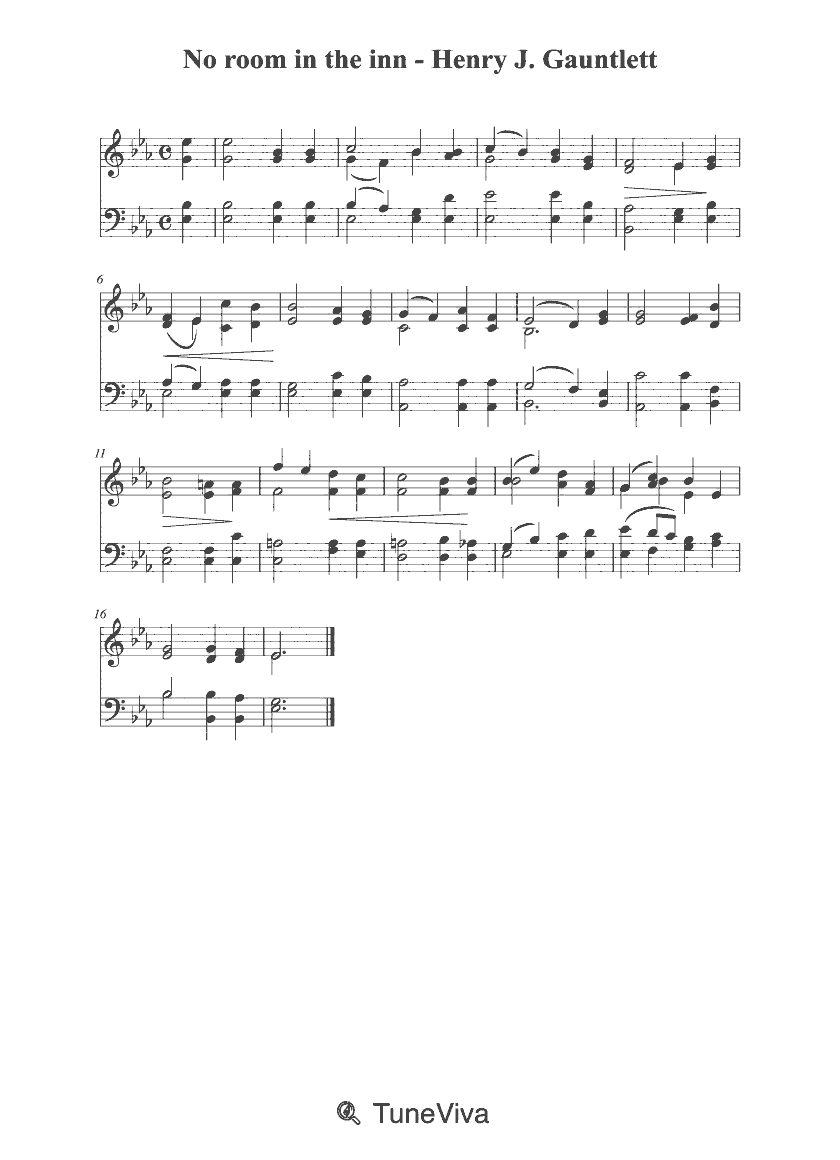
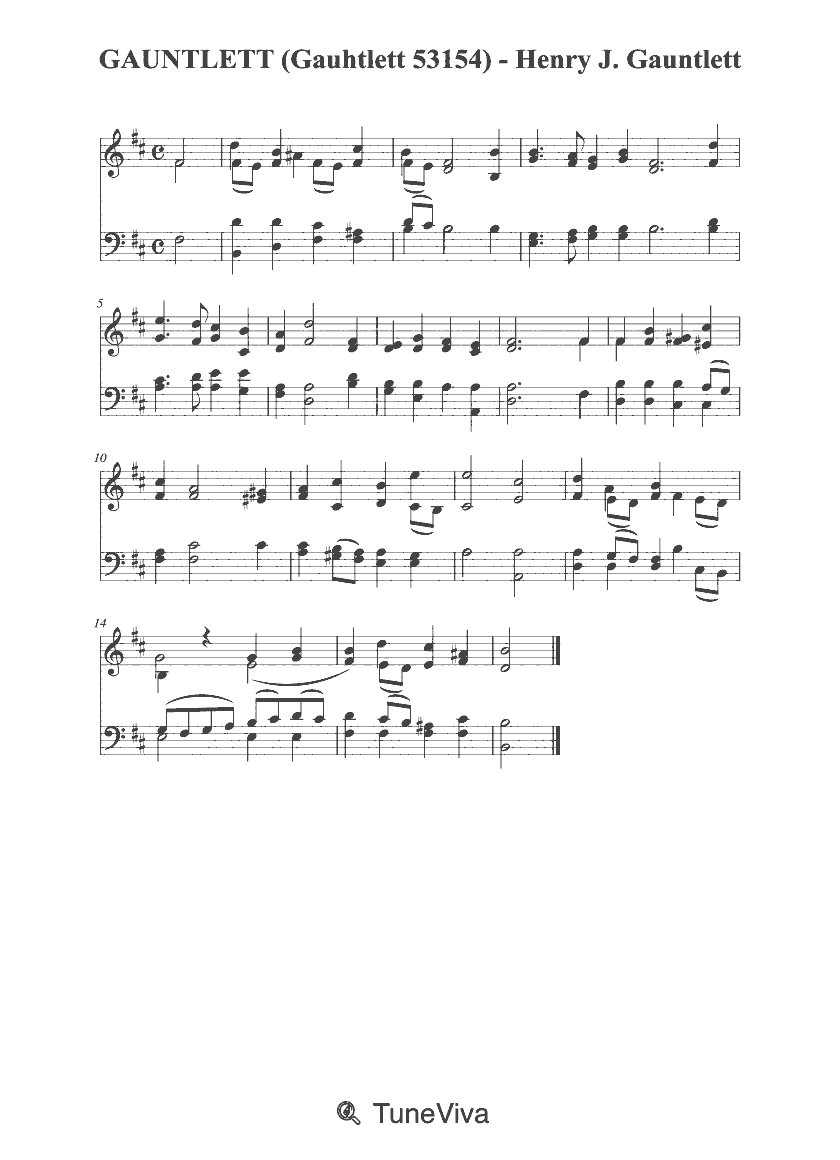
Gauntlett's page is made of short hymn tunes and carols: 48 scores, only about 20 minutes of music and 8,013 notated notes, with lyrics on seven entries. The most-viewed is Once in Royal David's City, followed by Oft in danger, oft in woe and I love to hear the story. Forty-seven entries are filed as classical and one as folk, and 47 sit at complexity index 0. The average duration is under half a minute, and even the longest entries on the page are still measured in minutes rather than hours.
Henry John Gauntlett was born at Wellington, Shropshire, on 9 July 1805. He was playing the organ at Olney by the age of nine, but trained as a lawyer and practised until he was nearly forty before turning to music full time. He was organist at St Olave's, Tooley Street, Southwark, from 1827 to 1846, and at Union Chapel, Islington, from 1852 to 1861, and he designed organs as well as played them; in 1852 he patented an electrical action for the instrument. He received a MusDoc from the Archbishop of Canterbury, and Mendelssohn chose him to play the organ at the first performance of Elijah in Birmingham in 1846. He died in London on 21 February 1876 and was buried at Kensal Green.
Gauntlett wrote more than a thousand hymn tunes and edited several hymnals. The best known is IRBY, written in 1849 for Cecil Frances Alexander's Christmas hymn Once in Royal David's City. UNIVERSITY COLLEGE, from about 1852, is the tune usually sung to Oft in danger, oft in woe.
The catalogue's 48 entries are mostly short hymn-tune settings rather than anthem-length works, which explains the 20-minute total. Forty-seven are classified as classical and one as folk; the lyric field is populated on only seven, so the metadata is thinner than the music itself.
Hymn-tune playing depends on registering the stanza rather than interpreting a long arc. Keep the four parts balanced, bring out the tenor where the tune lies there, and let the final line broaden without slowing the pulse. For the carols, a lighter registration and clear consonants will carry the text; for the more chromatic Victorian tunes, tune the inner parts carefully, since the harmony moves in semitones. Most of these pieces are one stanza long, so the repeat is the performance.
The most-viewed entry: Cecil Frances Alexander's 1848 Christmas hymn, sung to Gauntlett's tune IRBY (1849).
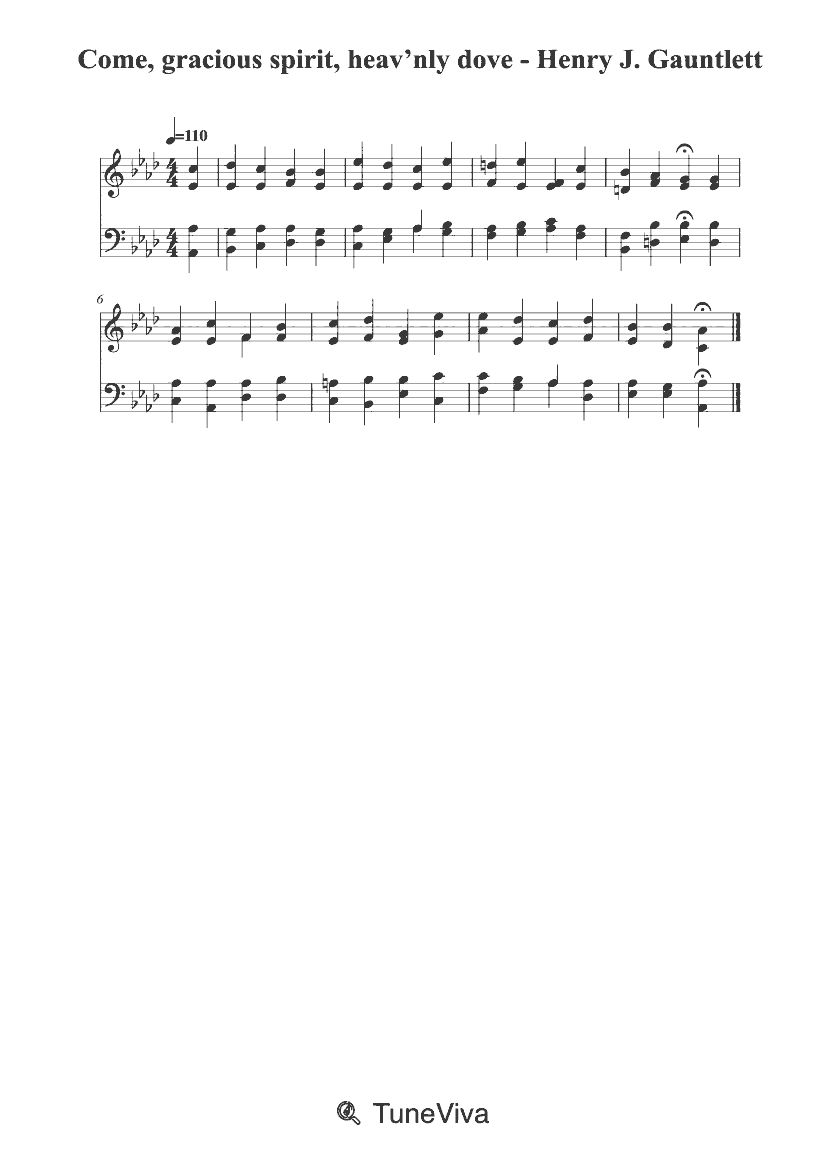
A hymn text after Henry Kirke White, expanded by Frances S. Colquhoun; Gauntlett's tune UNIVERSITY COLLEGE dates from about 1852.
A children's hymn; the catalogue credits Gauntlett with the setting but does not name the tune.
The Cherry Tree Carol, a traditional Nativity text; the file gives no tune name or source.
A hymn on Christ as captain of salvation; the catalogue does not record the text author or tune name.
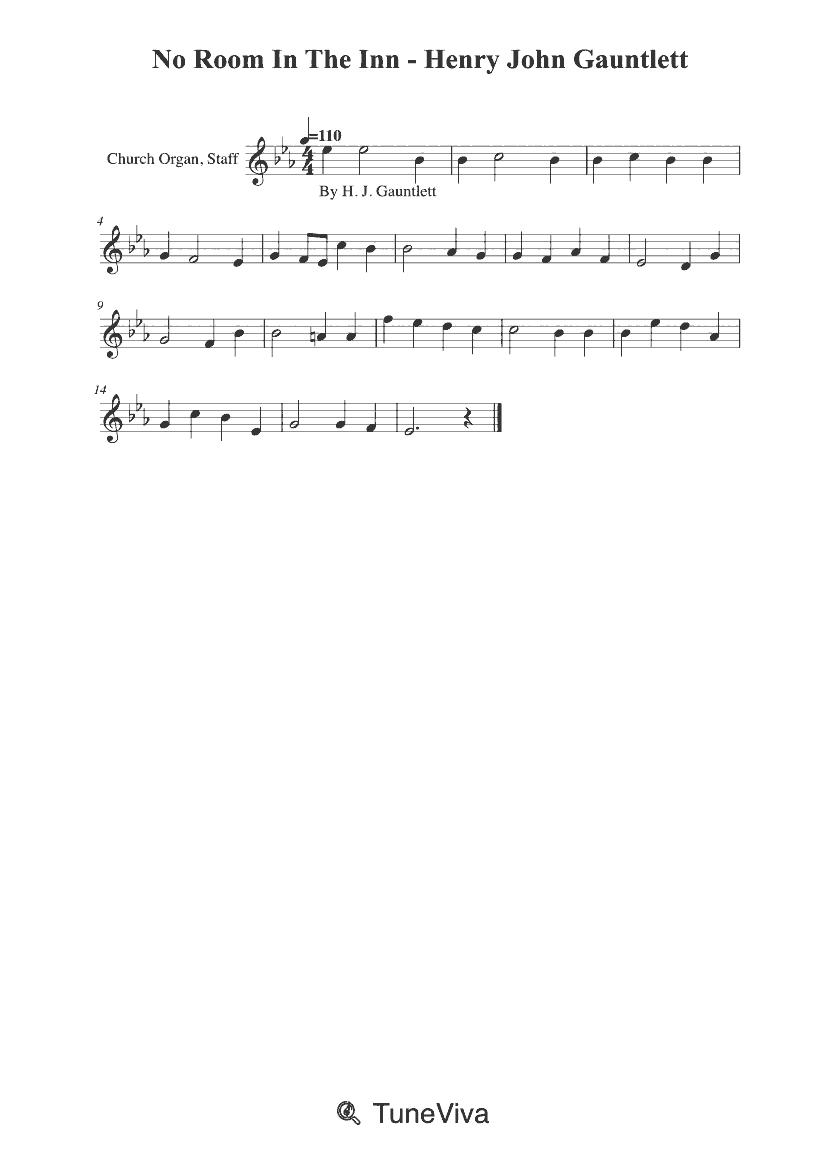
A Christmas carol on the inn at Bethlehem; it is one of several related entries on the same subject.
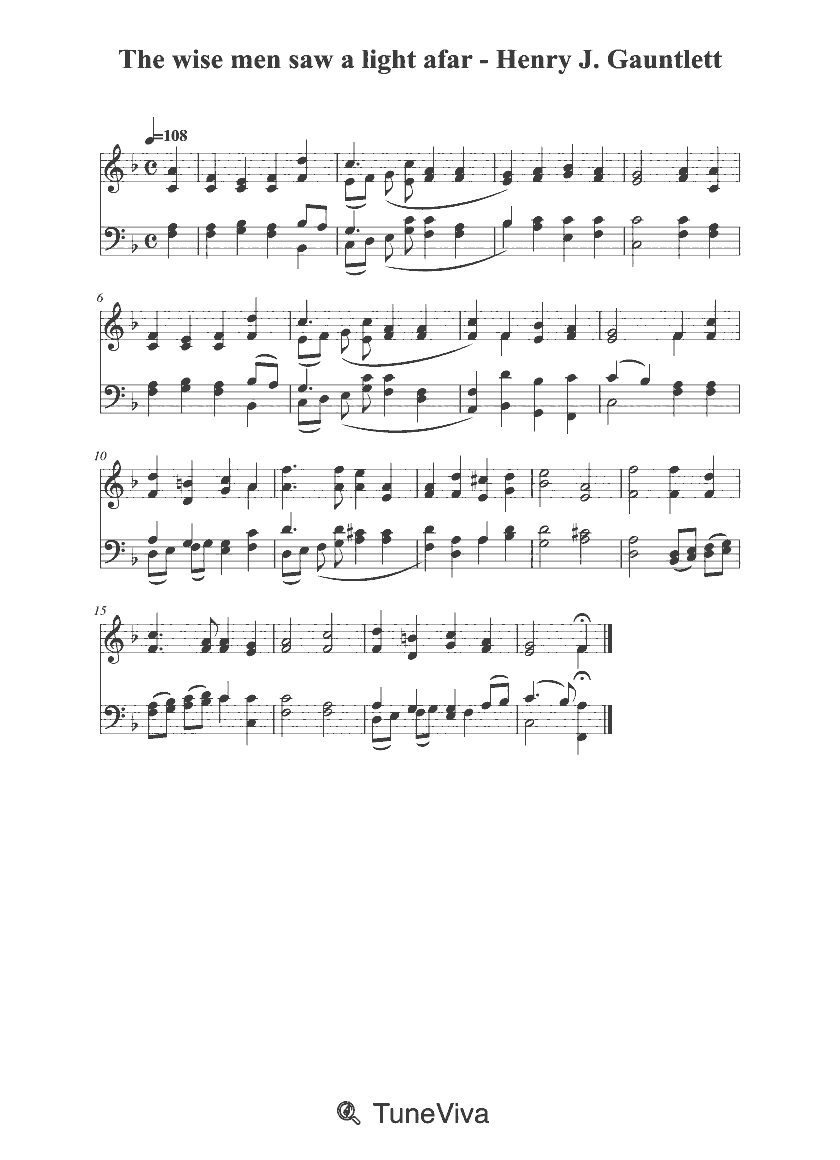
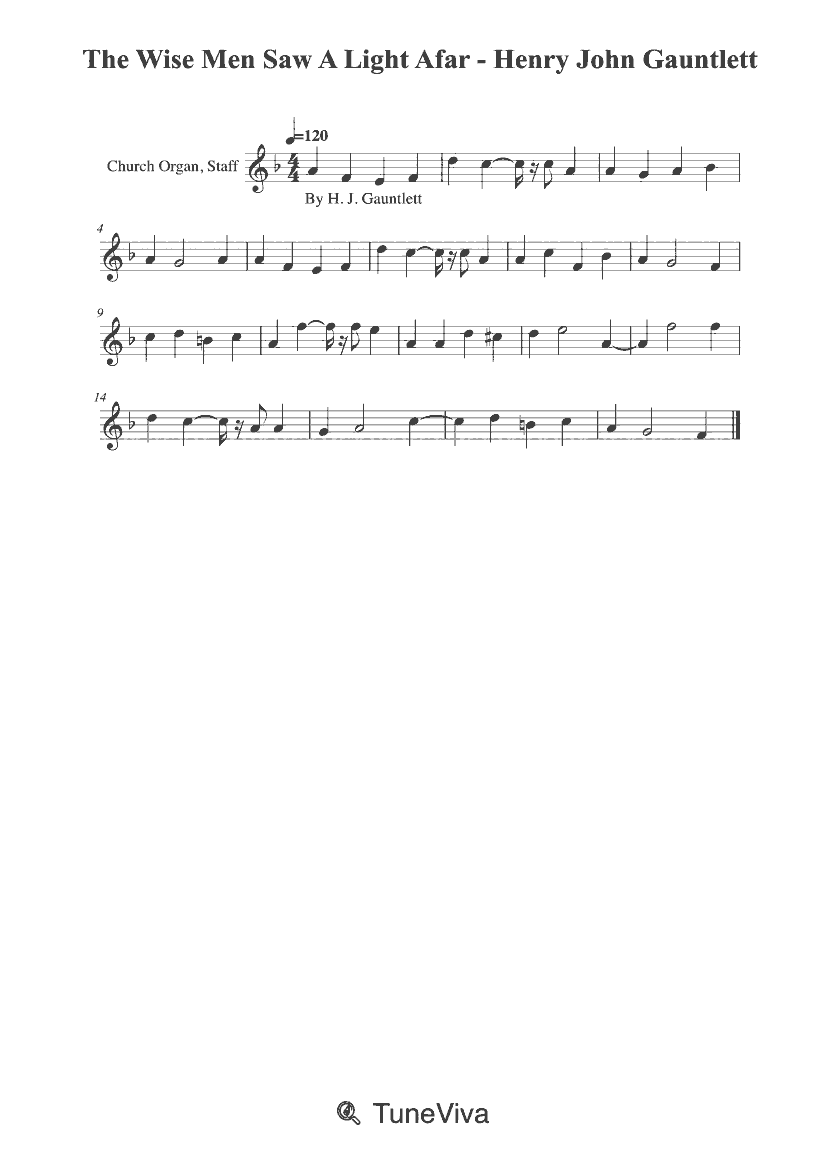
An Epiphany hymn on the Magi; no tune name is recorded.
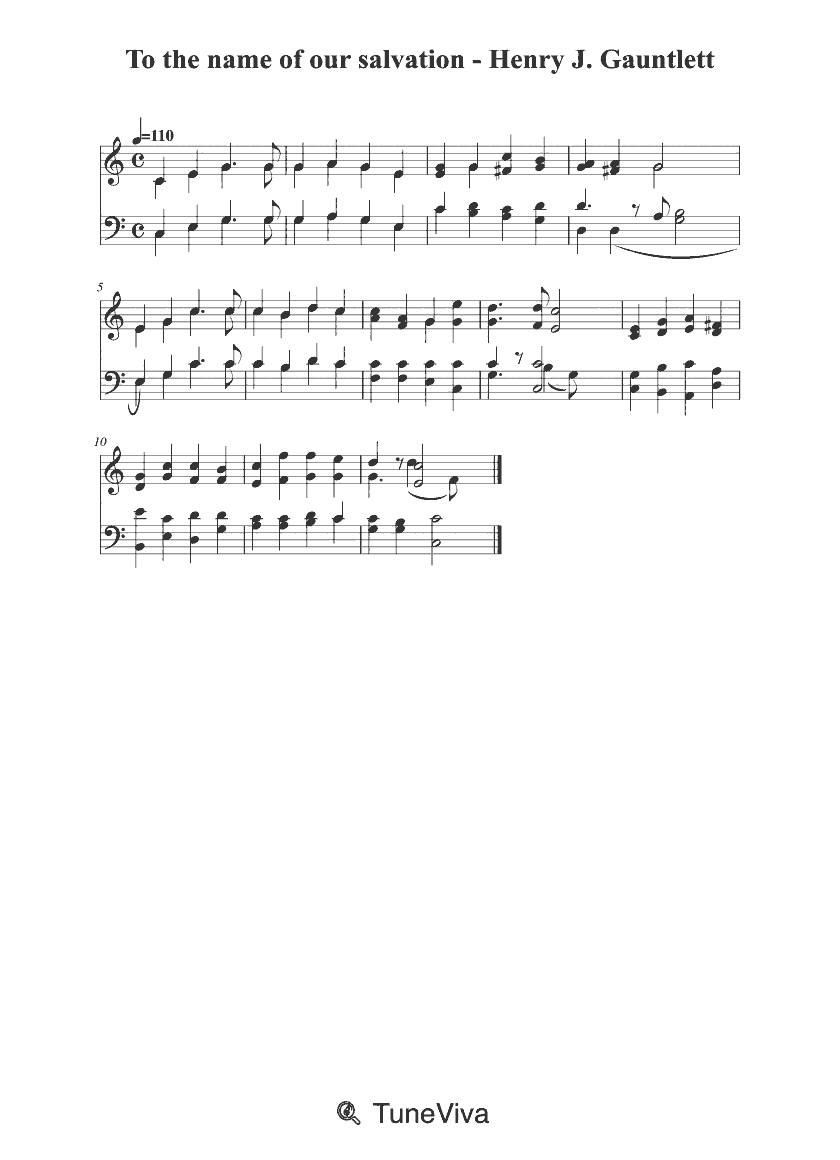
A hymn on the name of salvation; the catalogue gives no text author.
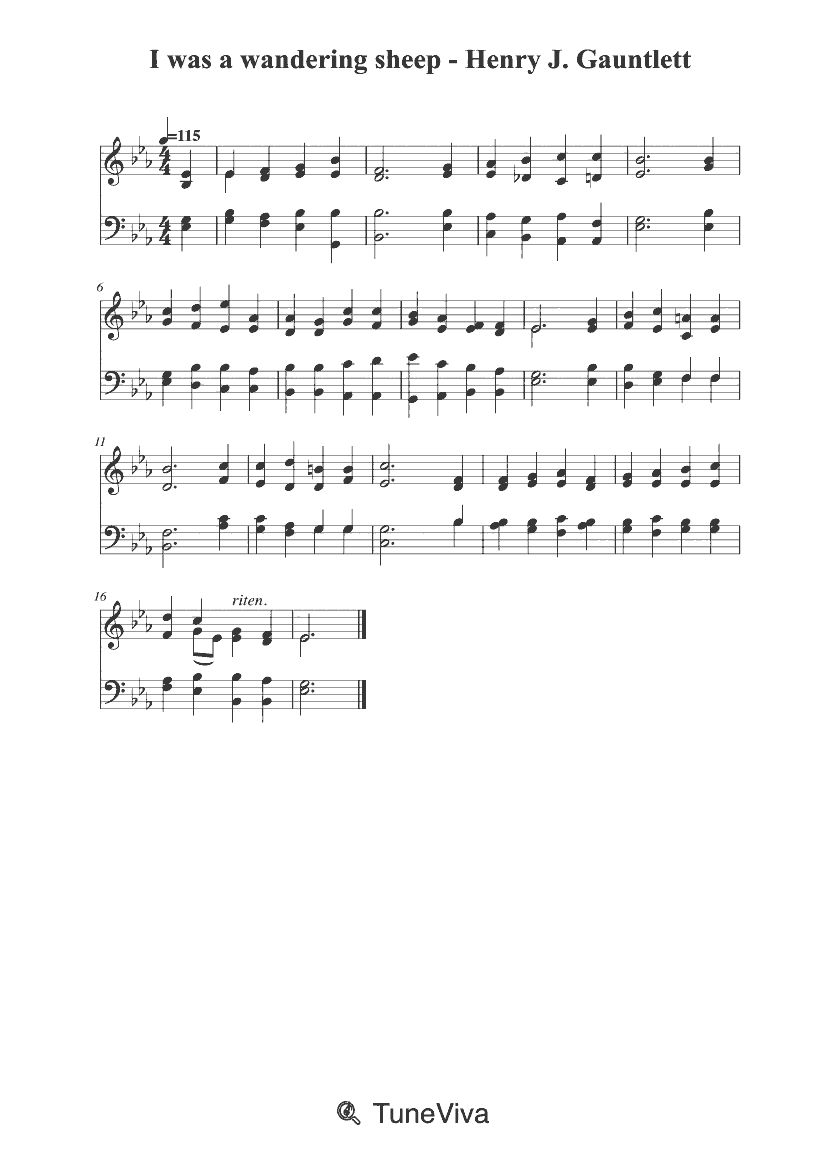
Horatius Bonar's hymn of the straying sheep, in a setting credited to Gauntlett.
A hymn to Christ as Prince of Peace; the entry has no composer credit in its title, but the catalogue places it under Gauntlett.
There are 48, running to about 20 minutes of music and 8,013 notated notes. Seven entries carry lyrics.
He wrote the tune IRBY in 1849. The words are Cecil Frances Alexander's, published in 1848; the catalogue entry names the carol rather than the tune.
No. He trained and practised as a lawyer until he was nearly forty, then worked as an organist and composer; he also designed organs and patented an electrical action in 1852.
Most are short hymn-tune settings rather than anthems. Forty-seven of the 48 sit at complexity index 0, and the whole page runs to about 20 minutes.
Catalog editions and arrangements attributed to Henry John Gauntlett.