2 tracks
Twenty gospel hymns by Horatio R. Palmer come to about 11 minutes of music and 6,720 notated notes, every entry with lyrics and every entry at complexity index 0. These are short, repeating pieces built for a room full of untrained singers.
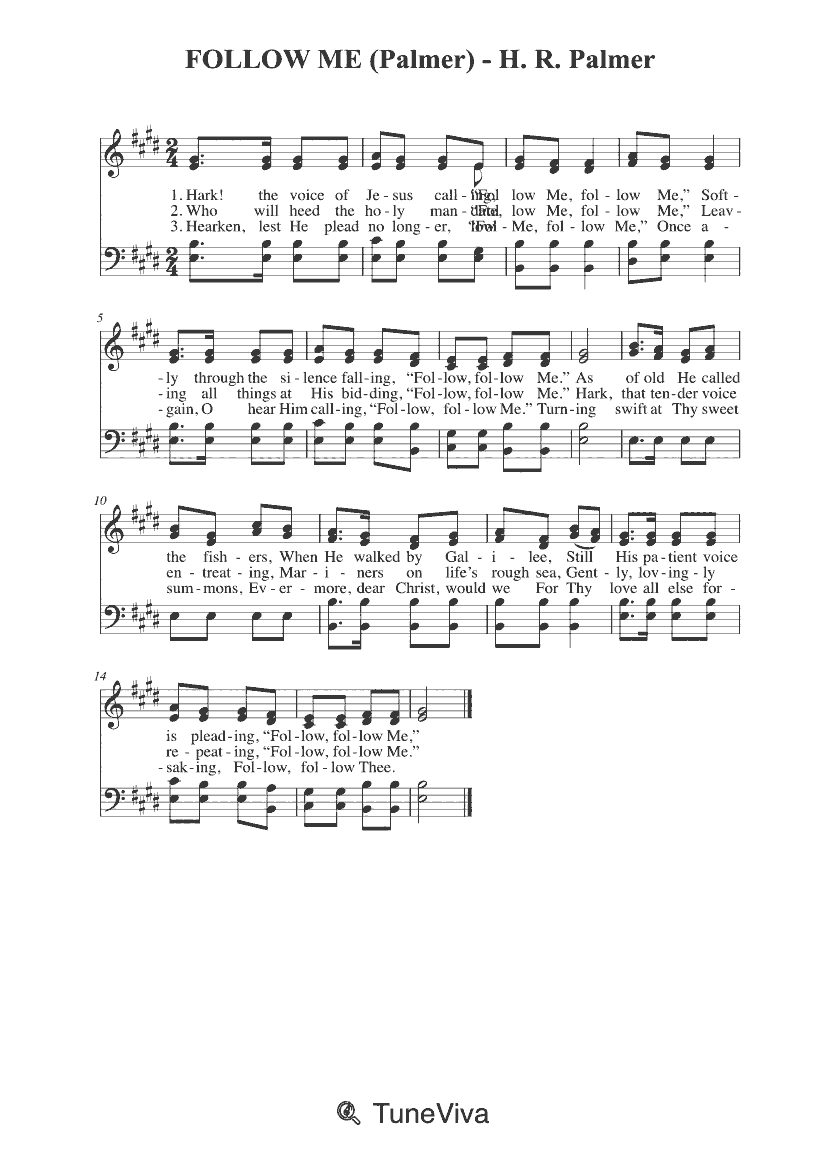
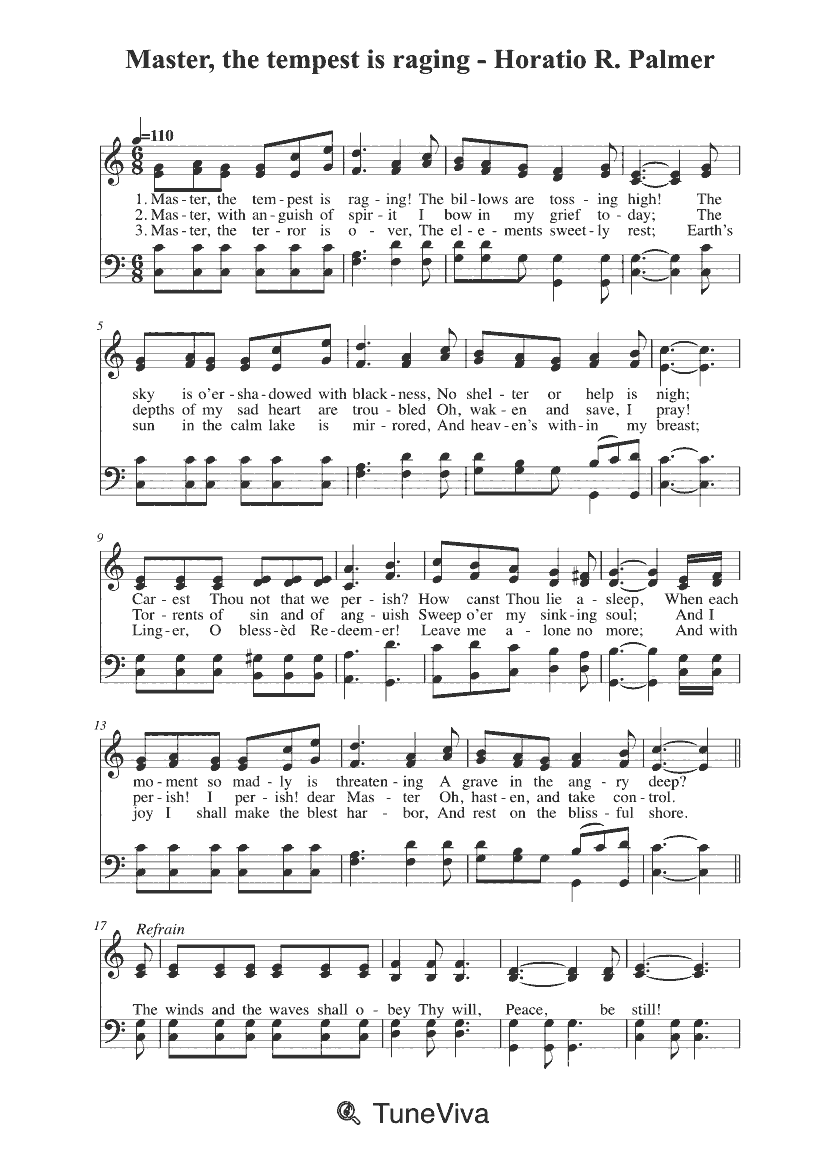
The most-viewed score by a wide margin is "Master, the tempest is raging", with "Praise ye the Lord, joyfully sound hosanna", "Angry words" and "Hark! the voice of Jesus calling" behind it. The list runs from storm and rescue to invitation and warning, which is the range of the American Sunday-school repertoire he helped to supply.
Palmer was born on 26 April 1834 at Sherburne, New York, into a minister's family, and sang in his father's church choir from the age of seven. He taught singing schools and conducted choirs in Chicago before moving to New York, where he led large festival choirs and became a familiar figure in the Sunday-school movement. The University of Chicago awarded him a Mus.Doc. in 1880, and he died in 1907.
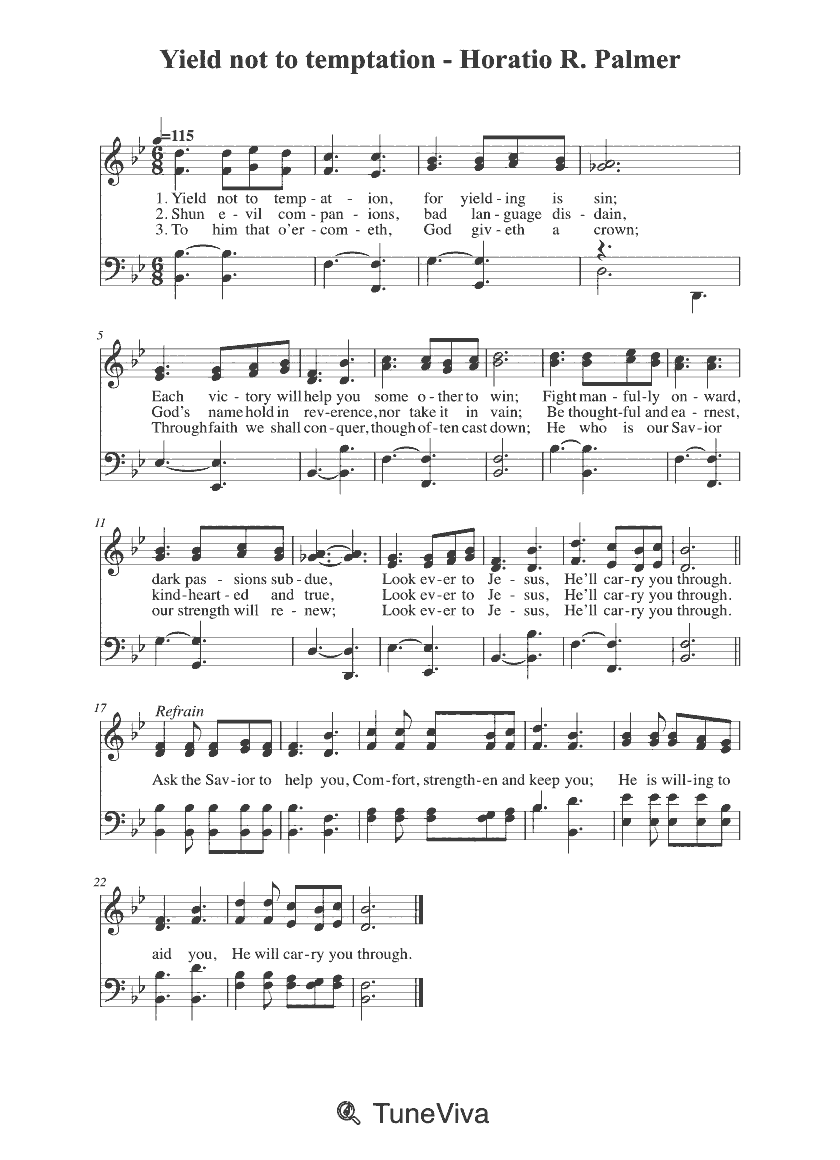
Two hymns carried his name into the twentieth century. "Yield not to temptation" was written in 1868, words and music both his, with the refrain "Ask the Saviour to help you". "Master, the tempest is raging" was written in 1874, when Mary Ann Baker, a Chicago Sunday-school teacher, supplied the words at Palmer's request for a series of lessons on Christ stilling the storm; he printed it that year in Songs of Love for the Bible School, and its tune is still indexed under the name PEACE BE STILL.
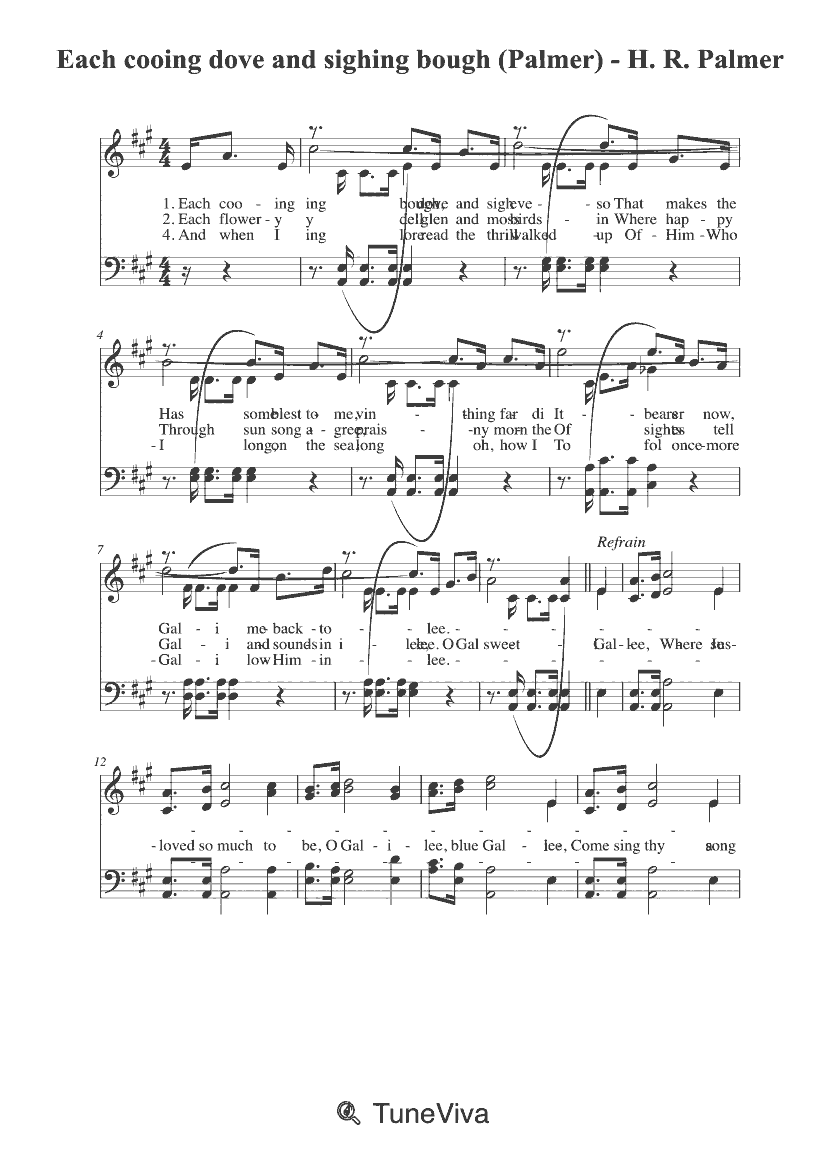
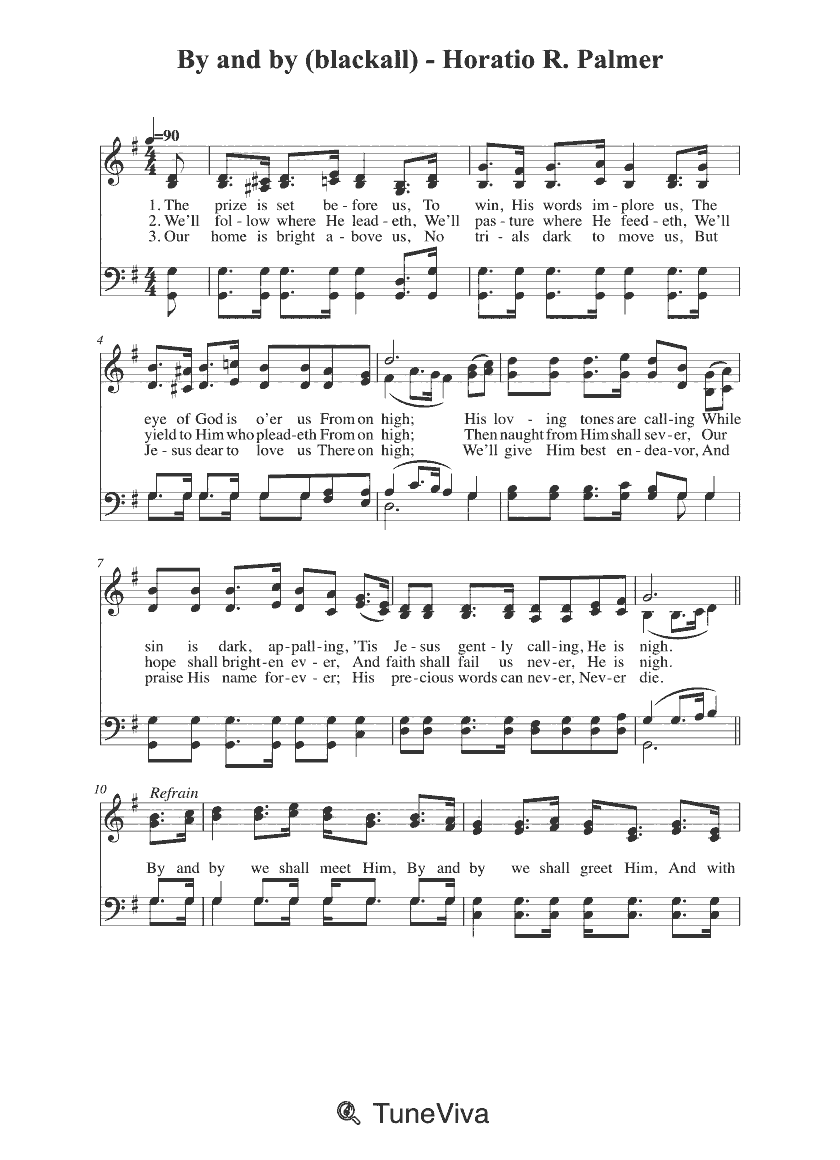
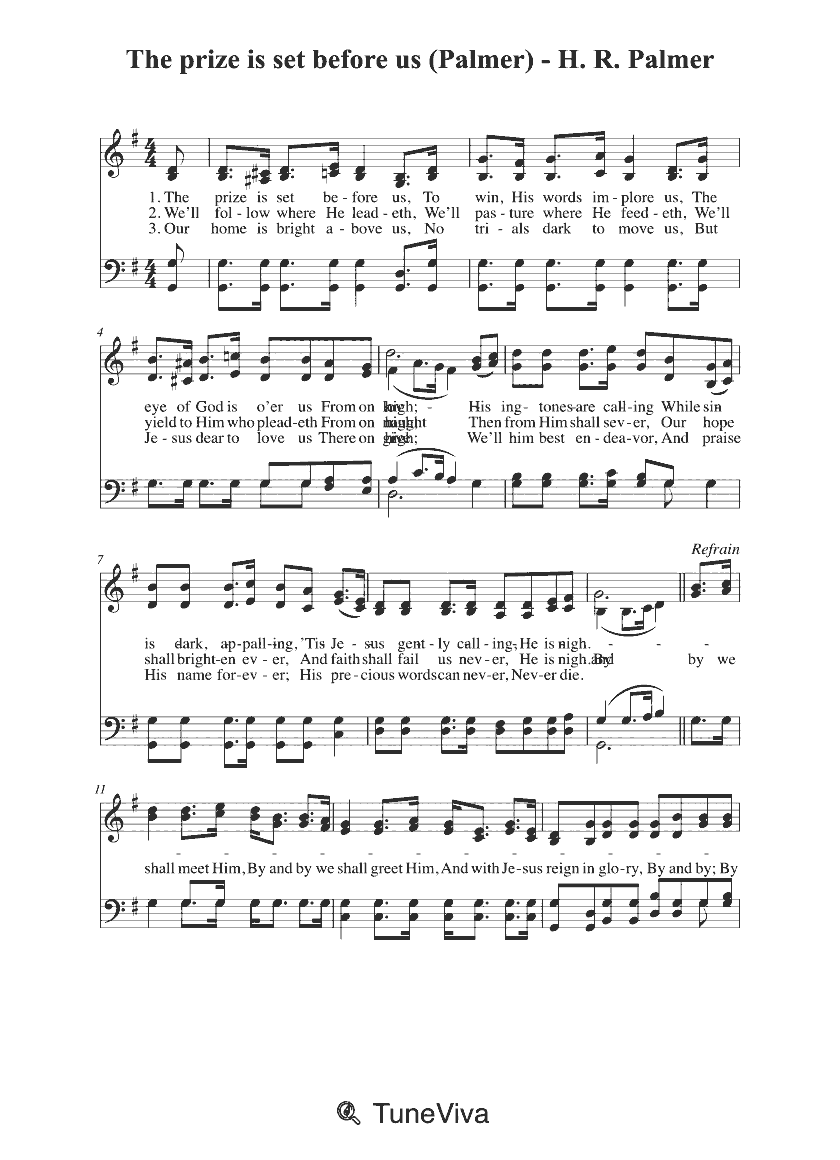
The catalogue's twenty entries follow the same pattern of short stanzas and refrain, which is why 6,720 notes take only about eleven minutes. At more than three hundred notes per piece, several files evidently carry a keyboard accompaniment as well as the vocal parts. A few titles attach a name in brackets — "(sleight)", "(blackall)", "(Palmer)" — marking tunes or arrangements filed under his name rather than works wholly his own.
Play these as they were meant to be sung: lightly, in strict time, with the refrain a little stronger than the verse. The tunes are built on repeated rhythmic figures, so vary the repeats with colour rather than with speed, and keep the accompaniment simple enough that the words stay clear. The harmony is largely primary chords and the soprano carries the tune; let the lower parts support without thickening. Where a refrain returns four times, save a little brightness for the last one.
The most-viewed score here: Mary Ann Baker's words of 1874, written for Sunday-school lessons on the stilling of the storm, set by Palmer and printed in Songs of Love for the Bible School.
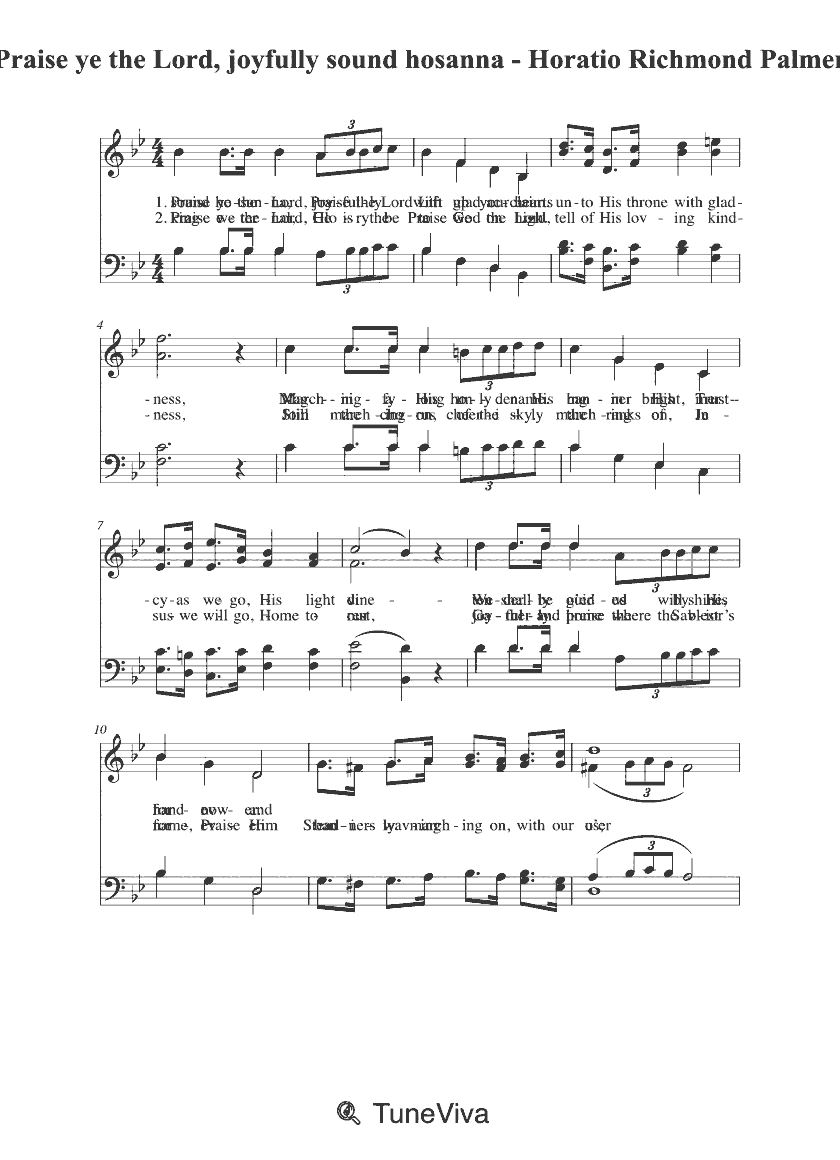
A festal anthem in the Sunday-school idiom, built on a repeated hosanna refrain.
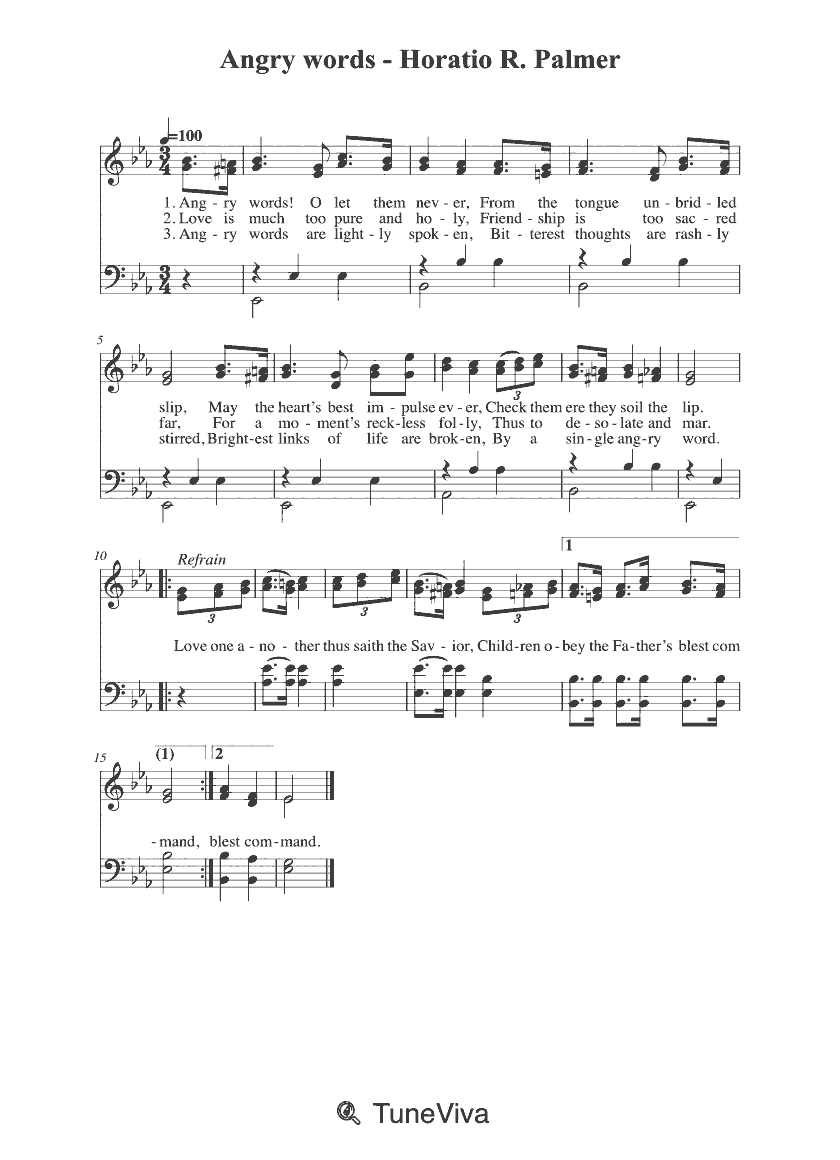
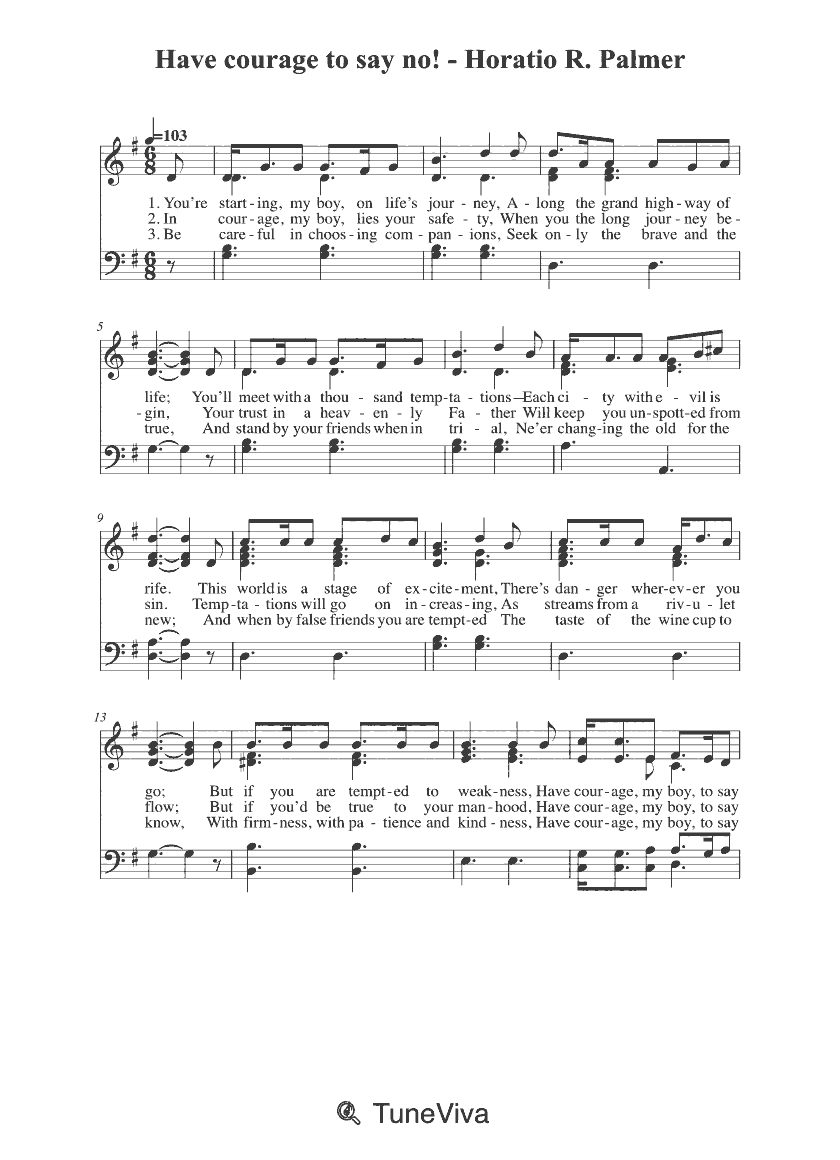
A warning against hasty speech, the kind of moral lesson the Sunday-school songbooks put in verse.
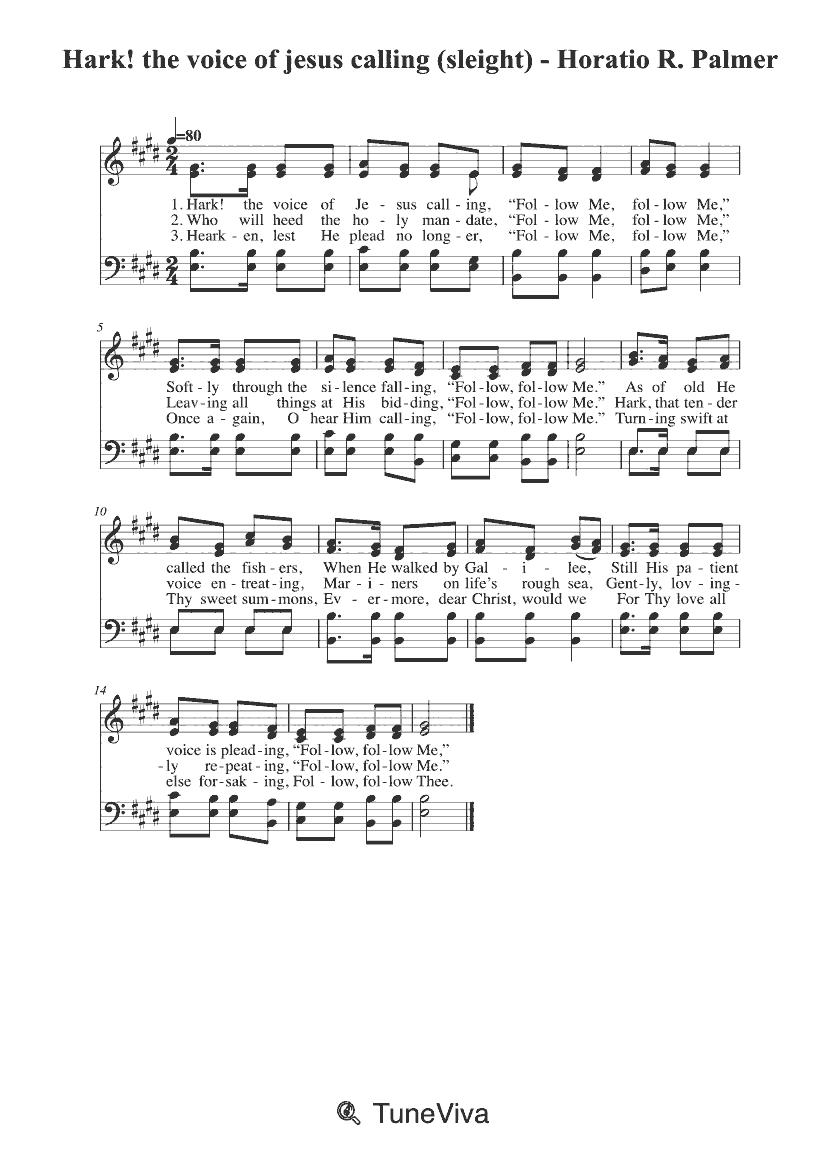
An invitation hymn calling labourers into the harvest; the bracketed "sleight" marks a tune or arrangement name attached to the entry.
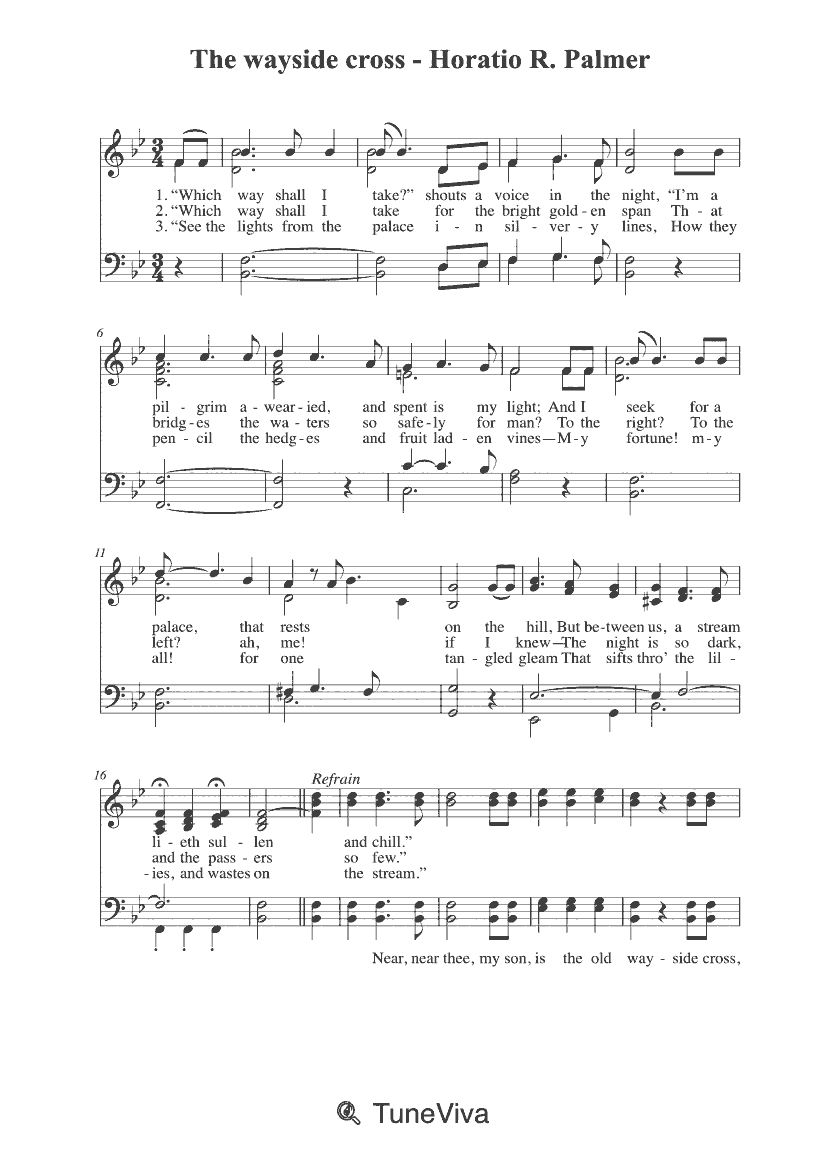
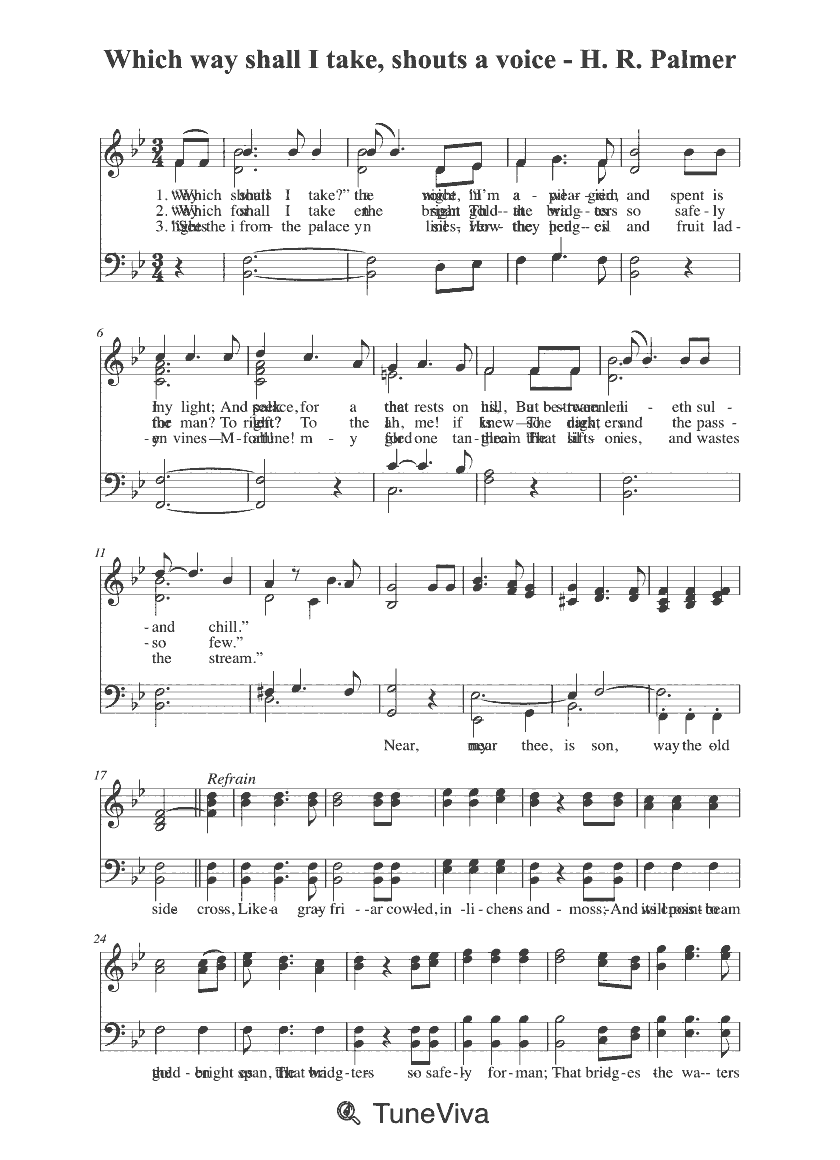
A devotional piece on the cross by the road, in the language of pilgrimage and invitation.
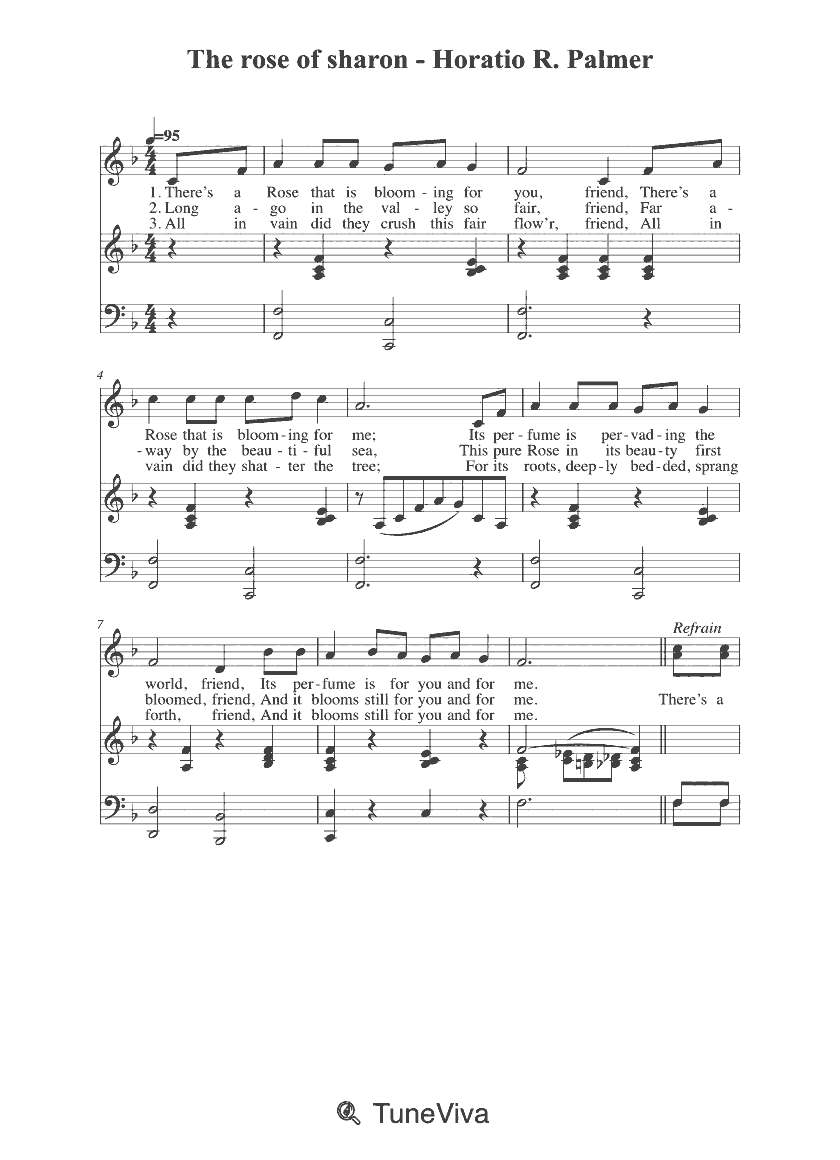
A hymn on the biblical image from the Song of Songs, applied to Christ.
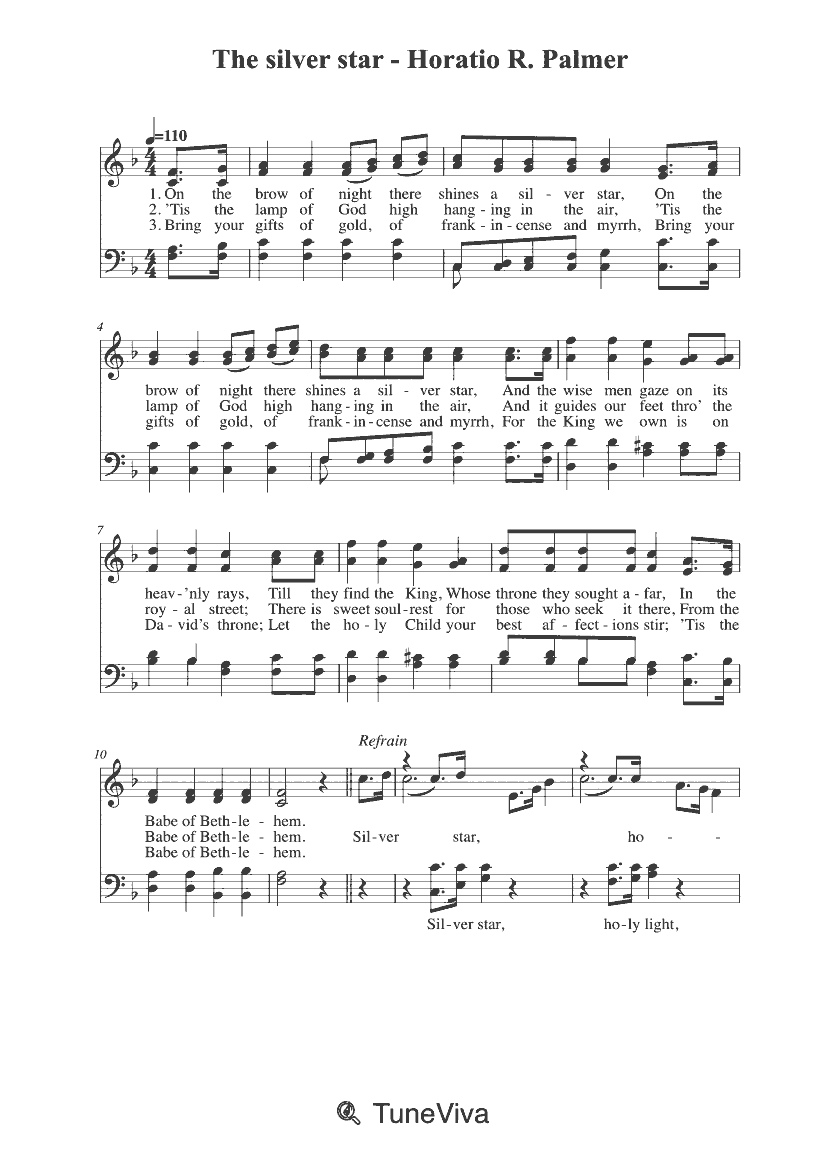
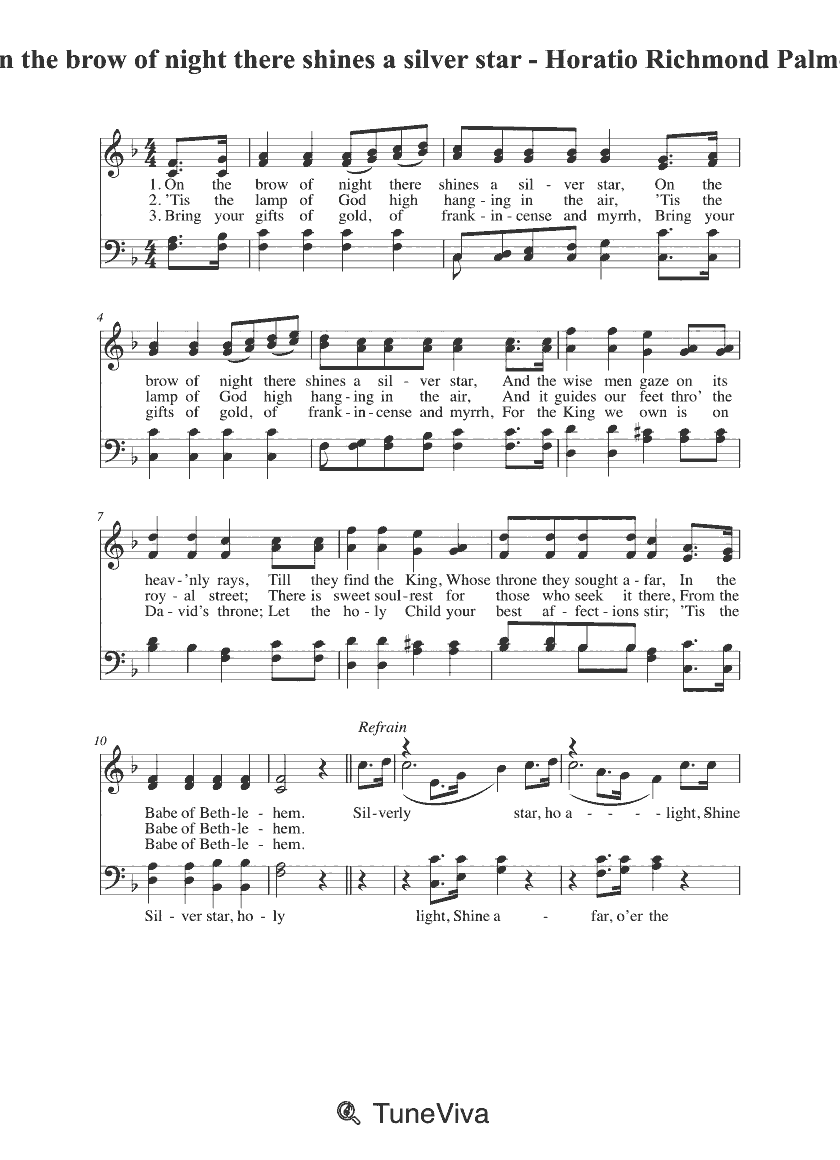
A short hymn using the star of Bethlehem as its central image.
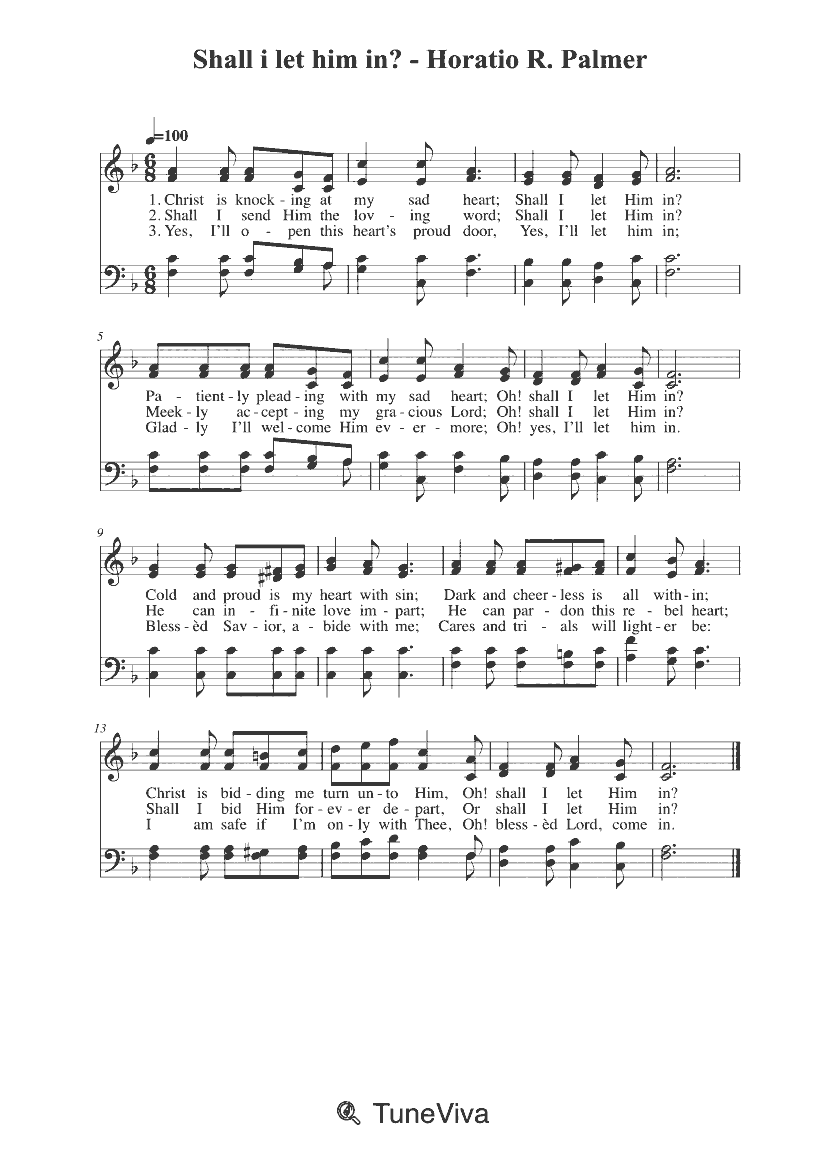
An invitation hymn on the text "behold, I stand at the door and knock", with the question as its refrain.
Written in 1868, words and music both by Palmer, and his most widely reprinted hymn.
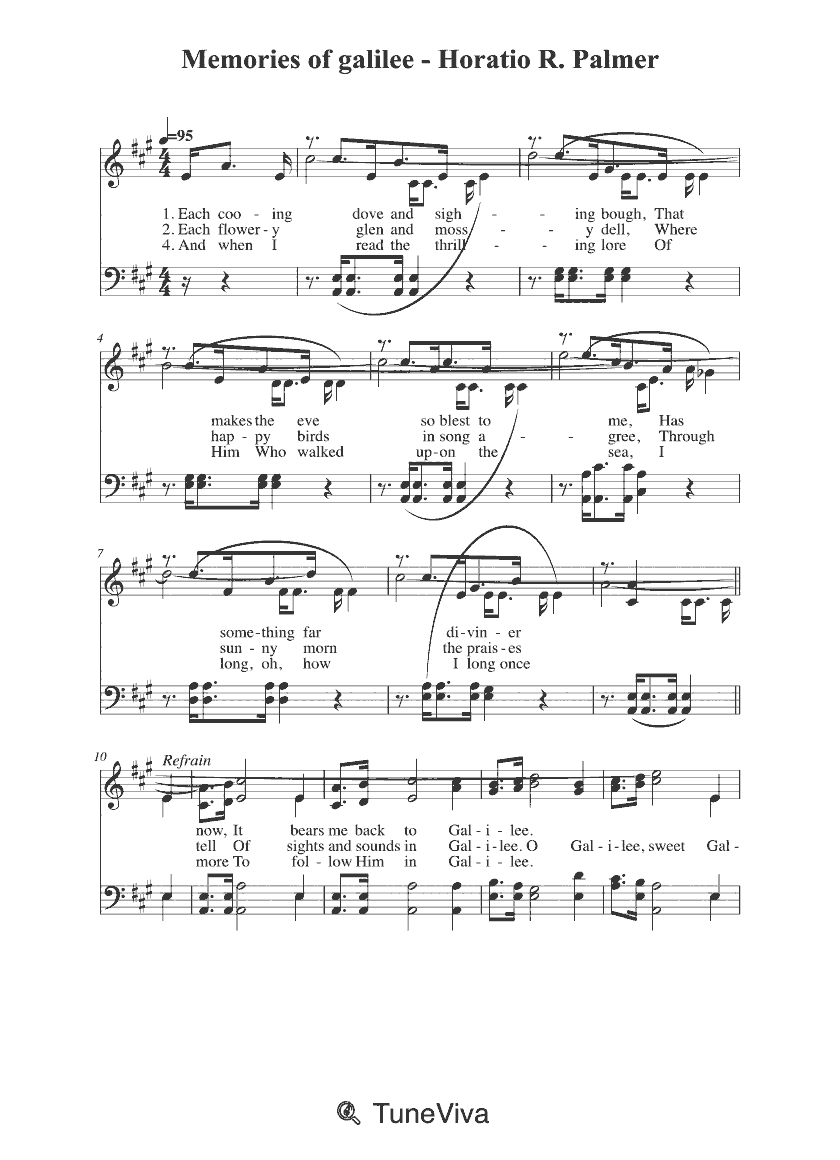
A reflective piece on the Gospel scenes set around the lake, a favourite Sunday-school subject.
Mary Ann Baker, a Chicago Sunday-school teacher, wrote them in 1874 at Palmer's request for lessons on Christ stilling the storm; Palmer supplied the music and printed the hymn that year.
Both. He wrote words and music for hymns such as "Yield not to temptation", and he edited collections for Sunday schools, which is where many of these pieces first appeared.
A doctorate in music, awarded by the University of Chicago in 1880 in recognition of his work in church and Sunday-school music.
They look like tune or arrangement names, such as "sleight" and "blackall", carried over from the source books. The catalogue does not explain them, so compare the files before assuming a different composer.
Catalog editions and arrangements attributed to Horatio Richmond Palmer.