classical
1 tracks
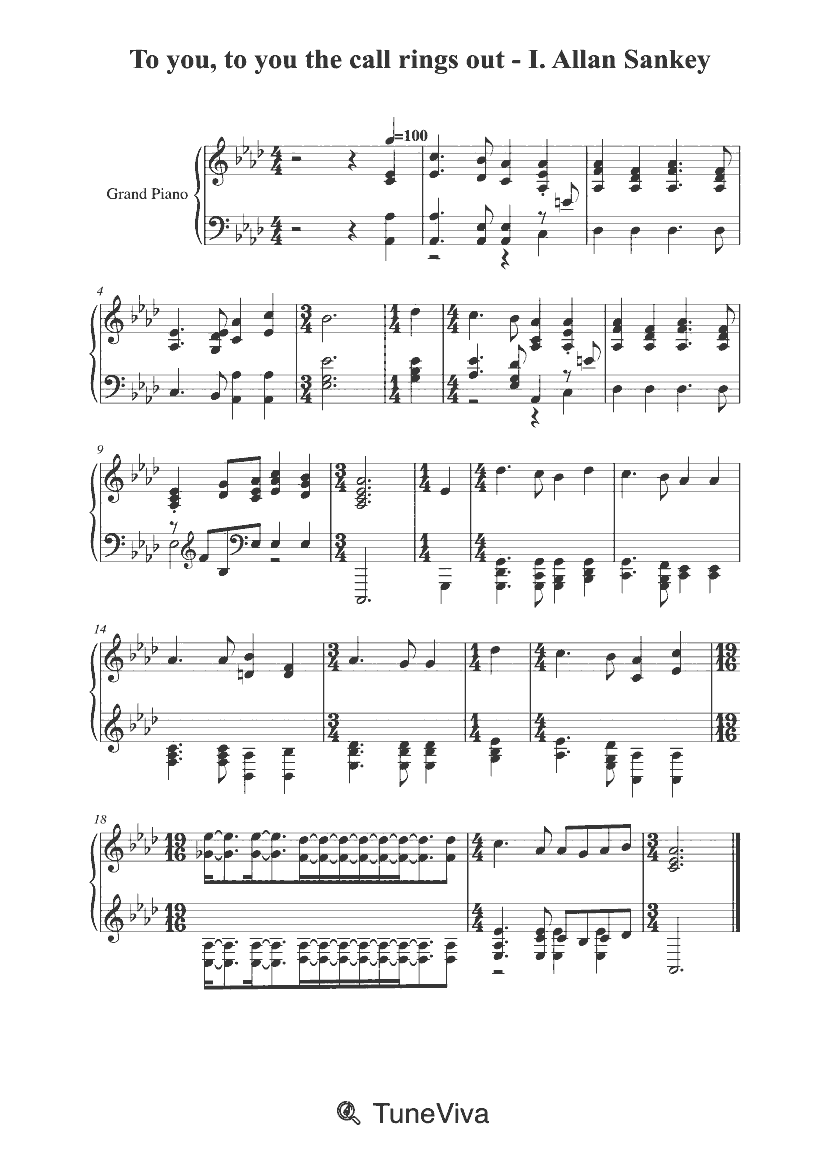
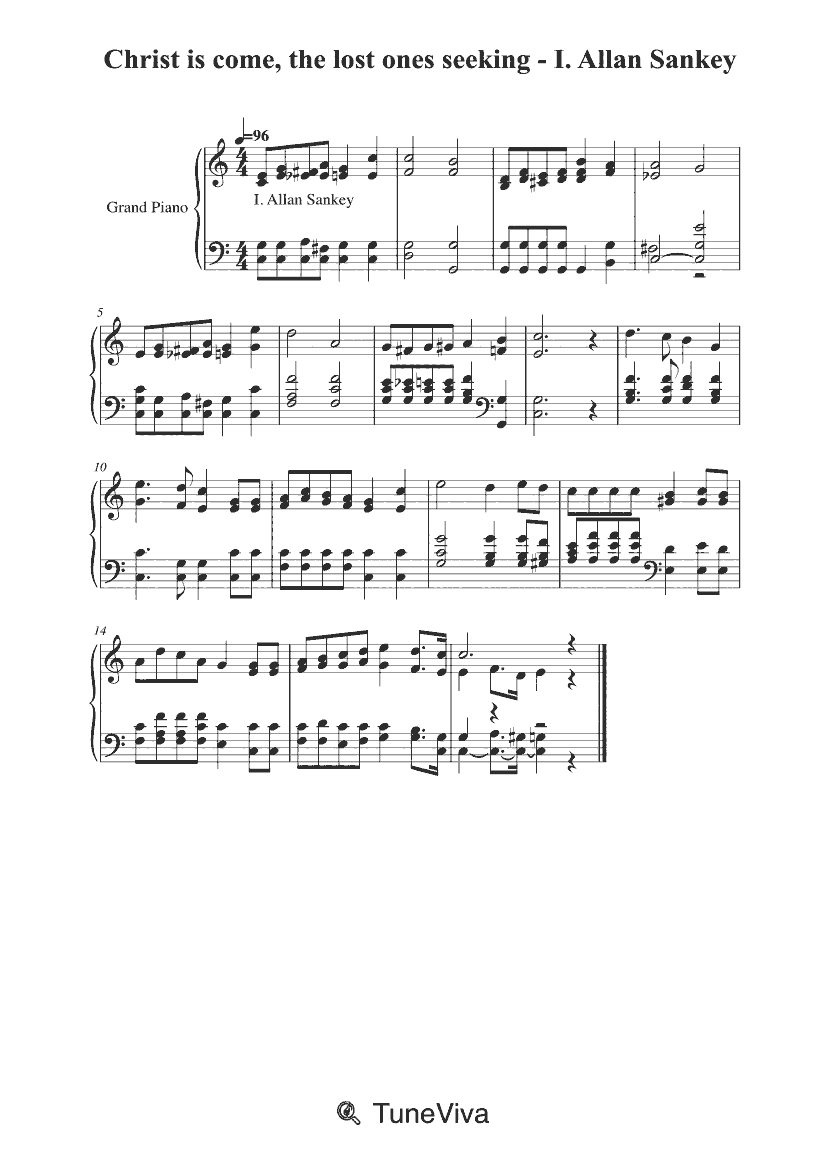
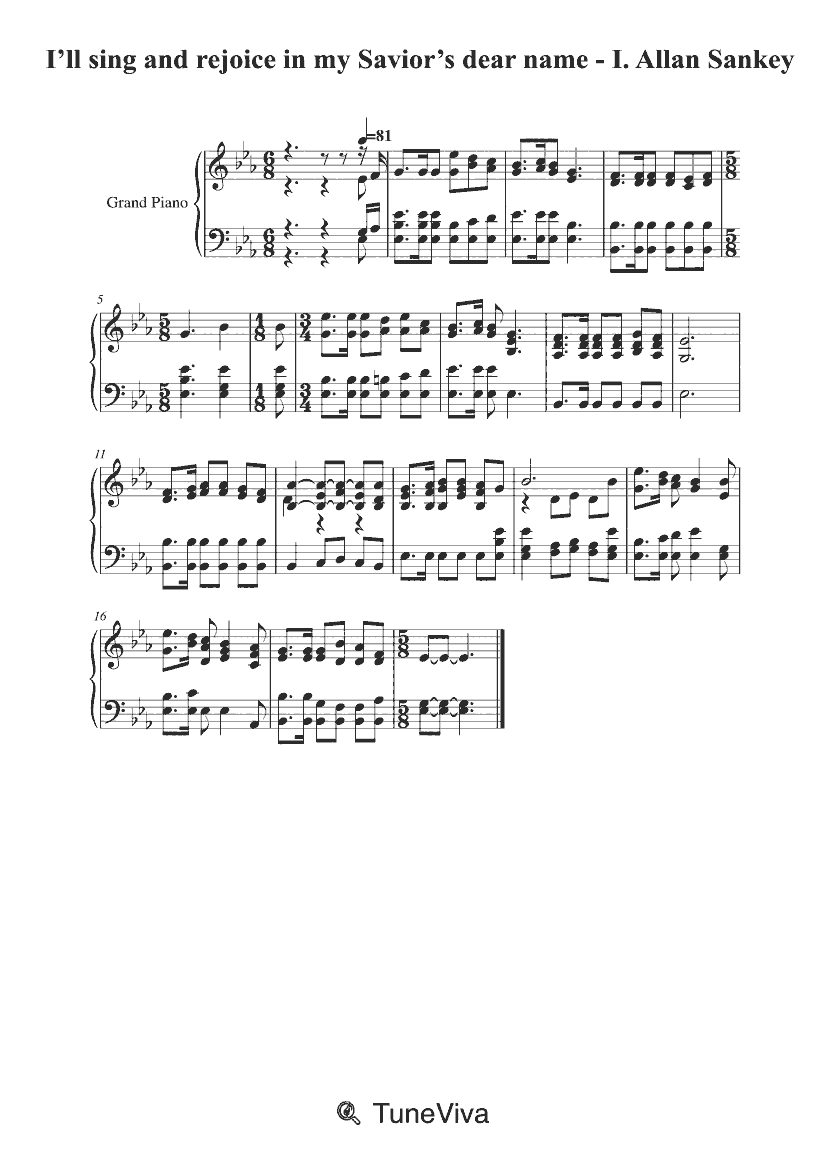
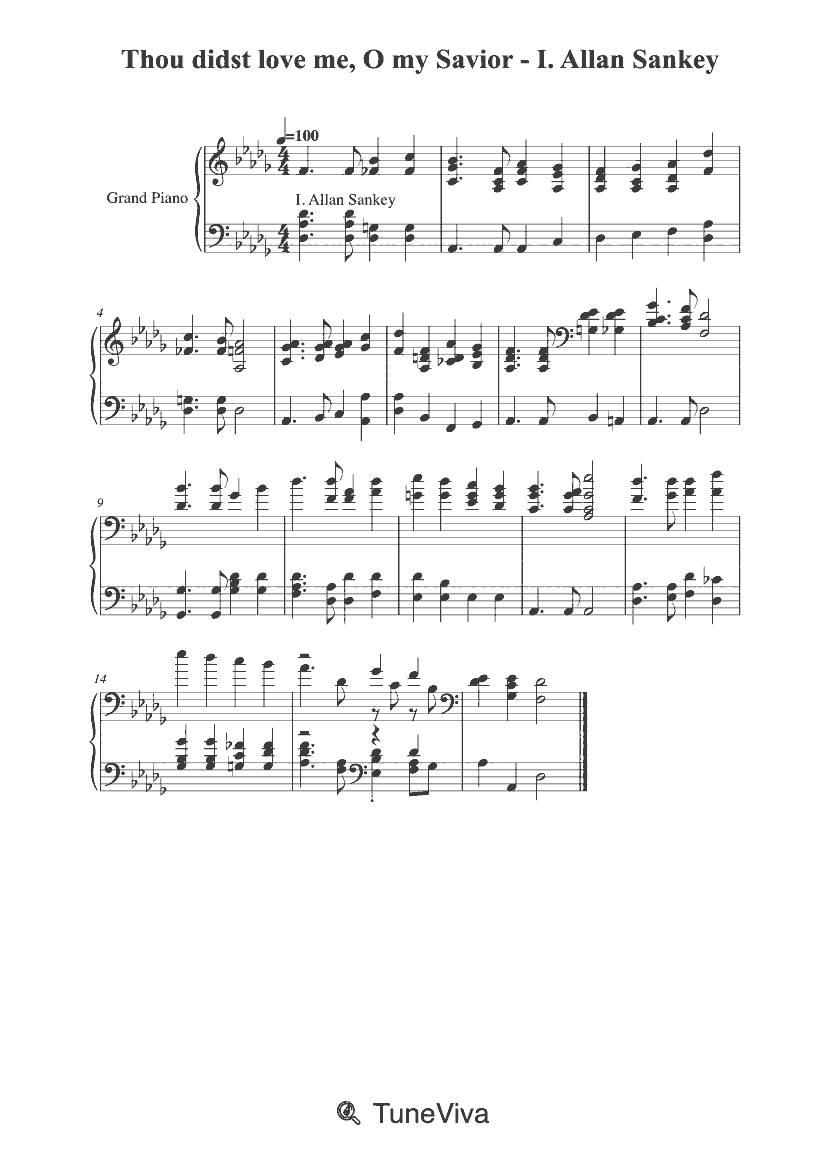
The catalogue’s Sankey is not the famous one. Ira Allan Sankey (1874–1915) worked a generation after Ira D. Sankey and Moody, and the twenty scores here come from a short career: about 12 minutes of music, 5,099 notated notes and ten entries with lyrics. “O love divine, amazing love” leads with 30 views, well ahead of the rest, which cluster between four and thirteen. Three settings sit at complexity index 0, thirteen at index 1 and four at index 2, so the page is mostly simple four-part writing for prayer meetings and Sunday schools.
Ira Allan Sankey worked for the Biglow & Main Company of Chicago and New York, the firm that dominated American gospel-song publishing in the late nineteenth century. He edited and compiled Hallowed Hymns, New and Old, issued by Biglow & Main in 1909 with a copyright date of 1907. The book shows the range of that office work: its first hundred numbers are new gospel songs, and after them come standard hymns, responsive readings and chants.
His collaborators were the leading text writers of the day. Fanny Crosby supplied words for “We are going forth” and “Never give up”; Edith G. Cherry wrote “I have heard Thy voice, Lord Jesus”; and George Washington Doane’s “Softly now the light of day” appears with a tune credited to Allan Sankey. The hymnal’s index also lists “I will not be weary, tho trials may” and “I’ll trust my loving Saviour”, two of the titles that recur in this catalogue.
The catalogue’s shape follows the hymnal: short strophic songs, ten of them with words, averaging a little over half a minute each. There is no large-scale choral work here and nothing instrumental. What the page offers is the working repertoire of an evangelistic publisher, where a song had to be learnable in a single hearing.
Play these as a song leader would: steady, unhurried, with the melody on top and the refrain slightly broader than the stanza. The accompaniments are written for organ or piano and need no sustaining pedal wash; a dry texture keeps the words audible. Four-part writing of this kind rewards good tuning of the thirds rather than volume, and the tenor line often carries the interesting step. Where a refrain repeats the same line four times, vary the registration between stanzas so the repetition sounds intentional rather than lazy.
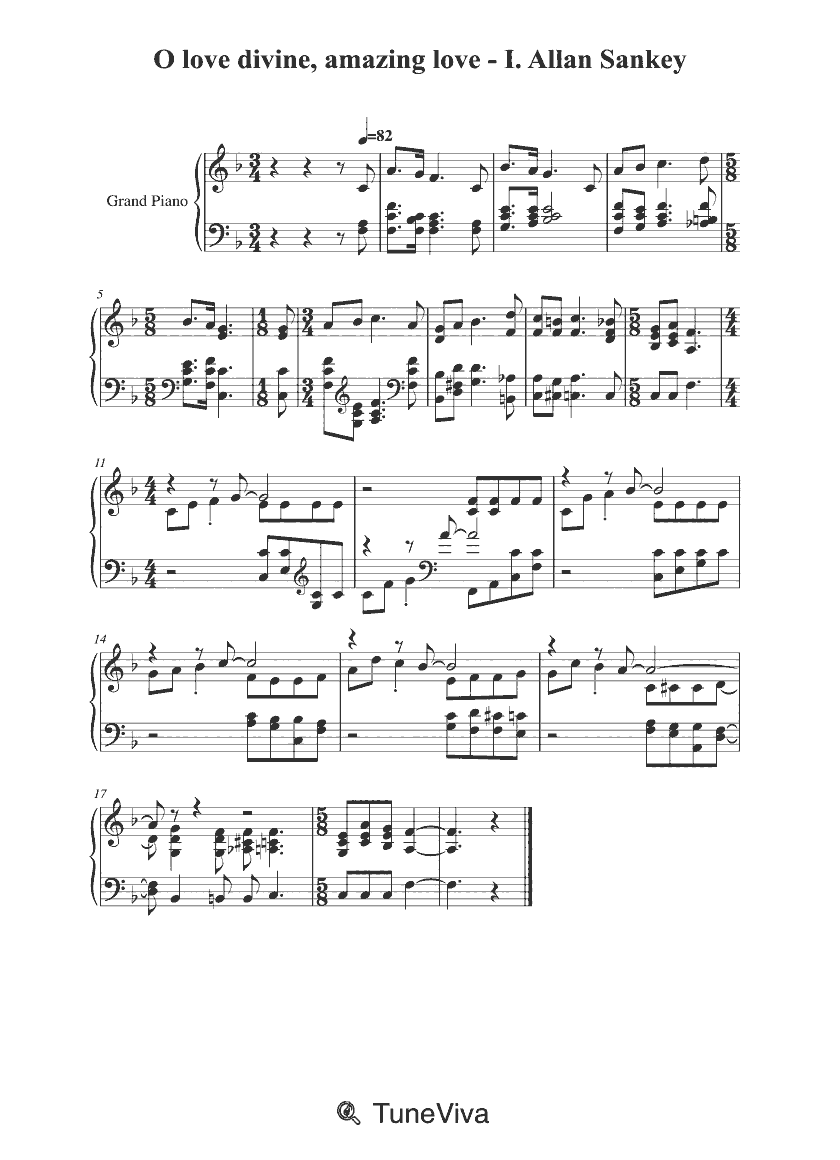
The most-viewed score on the page at 30 views, roughly twice the next entry, and listed in the 1909 Hallowed Hymns index.
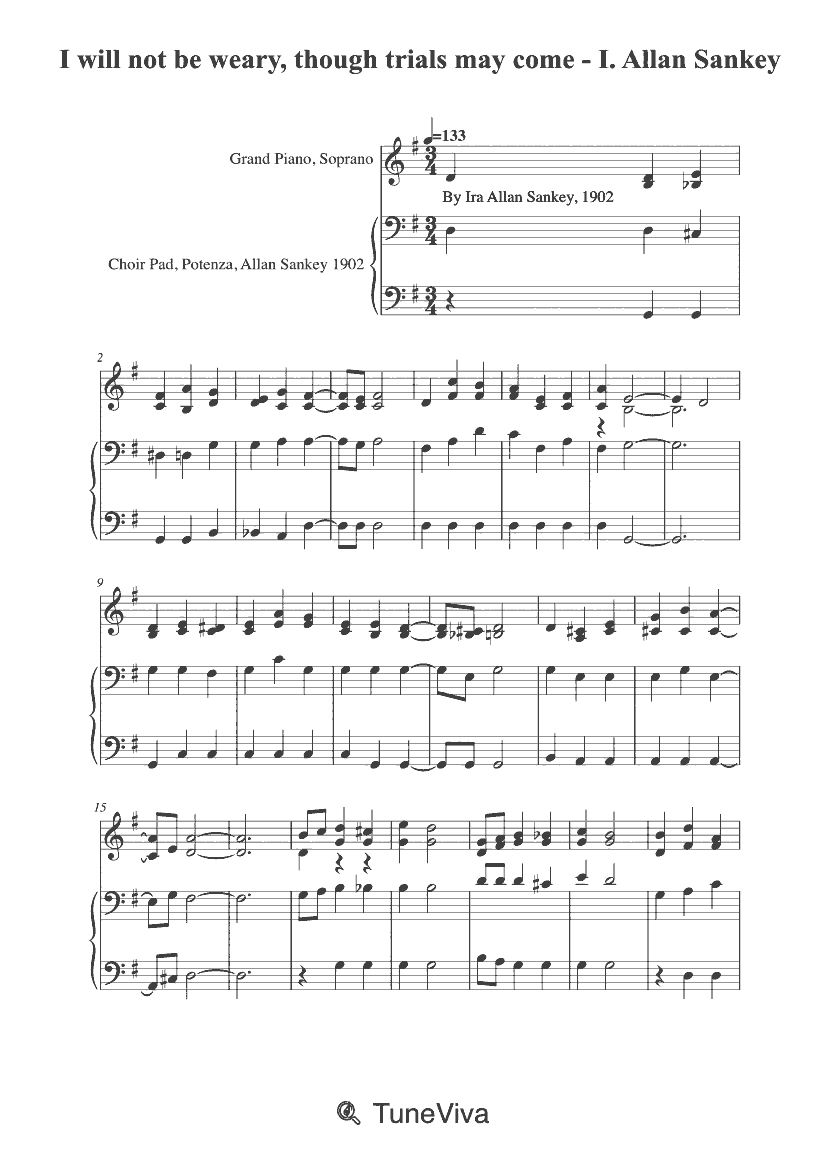
Appears in Hallowed Hymns, New and Old as “I will not be weary, tho trials may”.
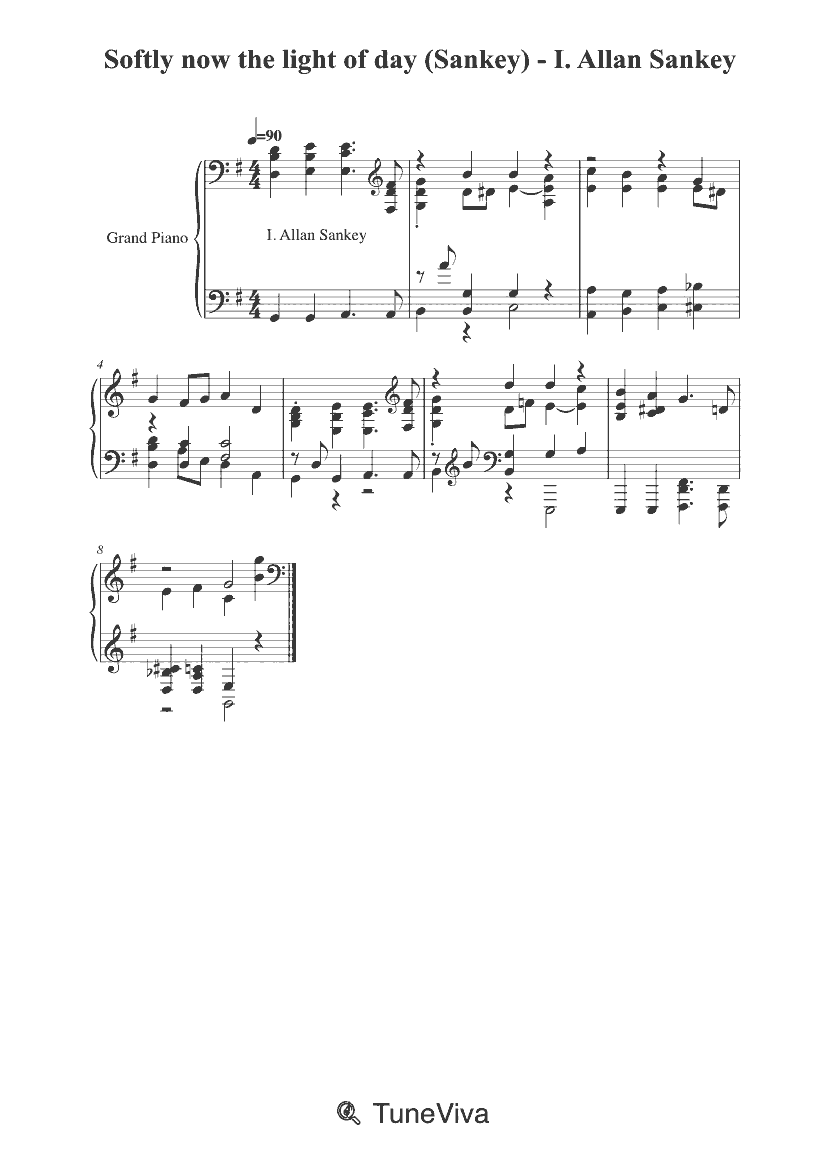
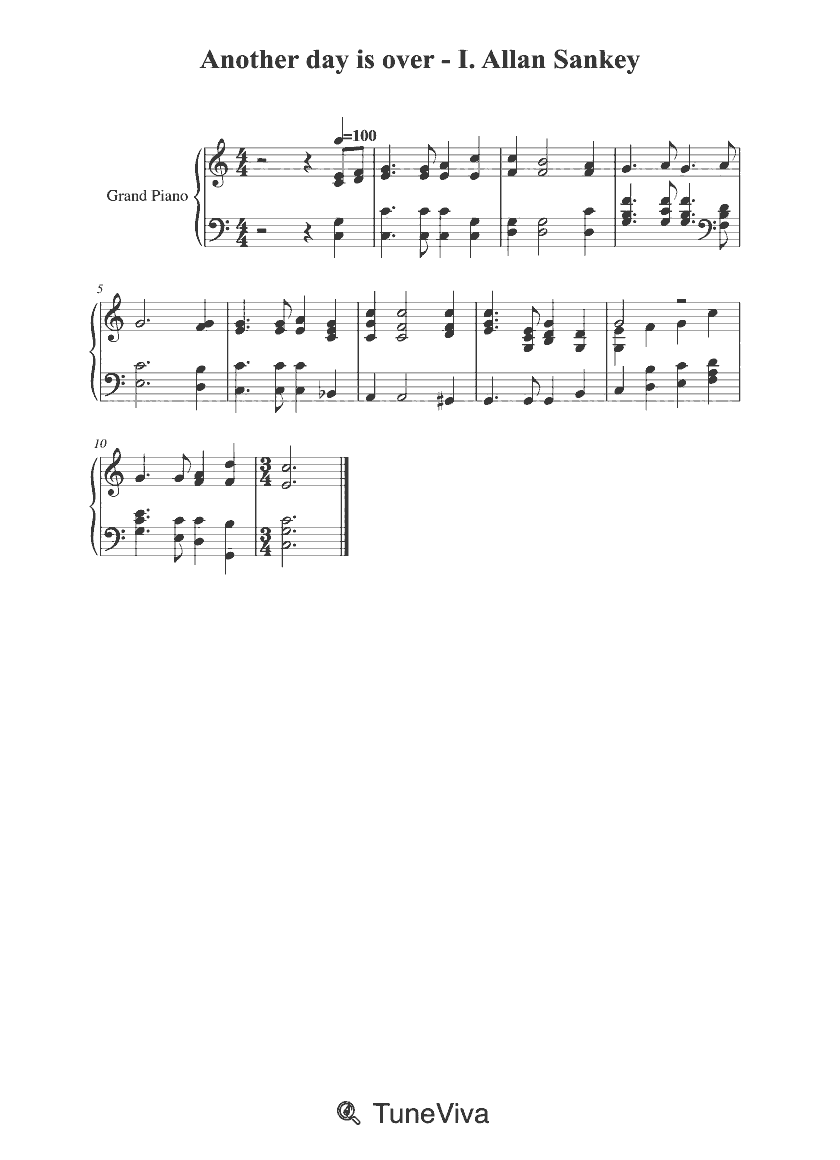
George Washington Doane’s evening hymn of 1824, here with a tune by Sankey.
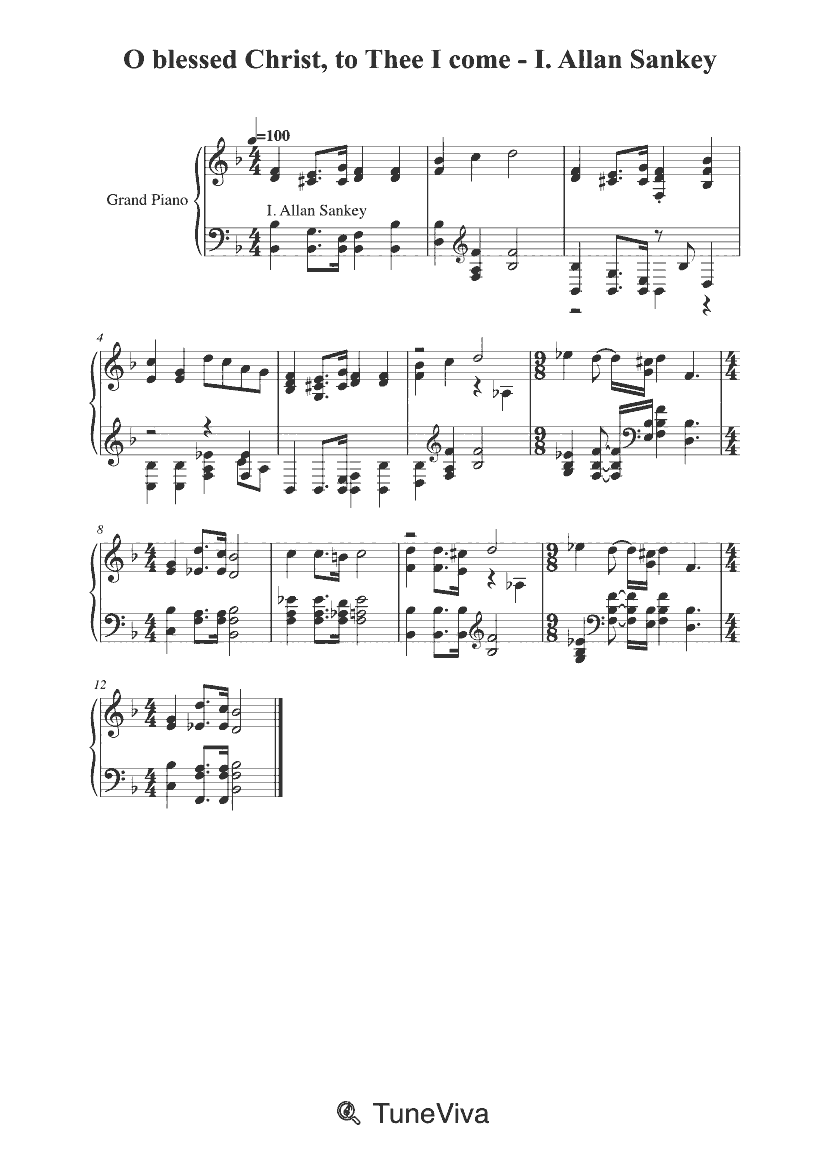
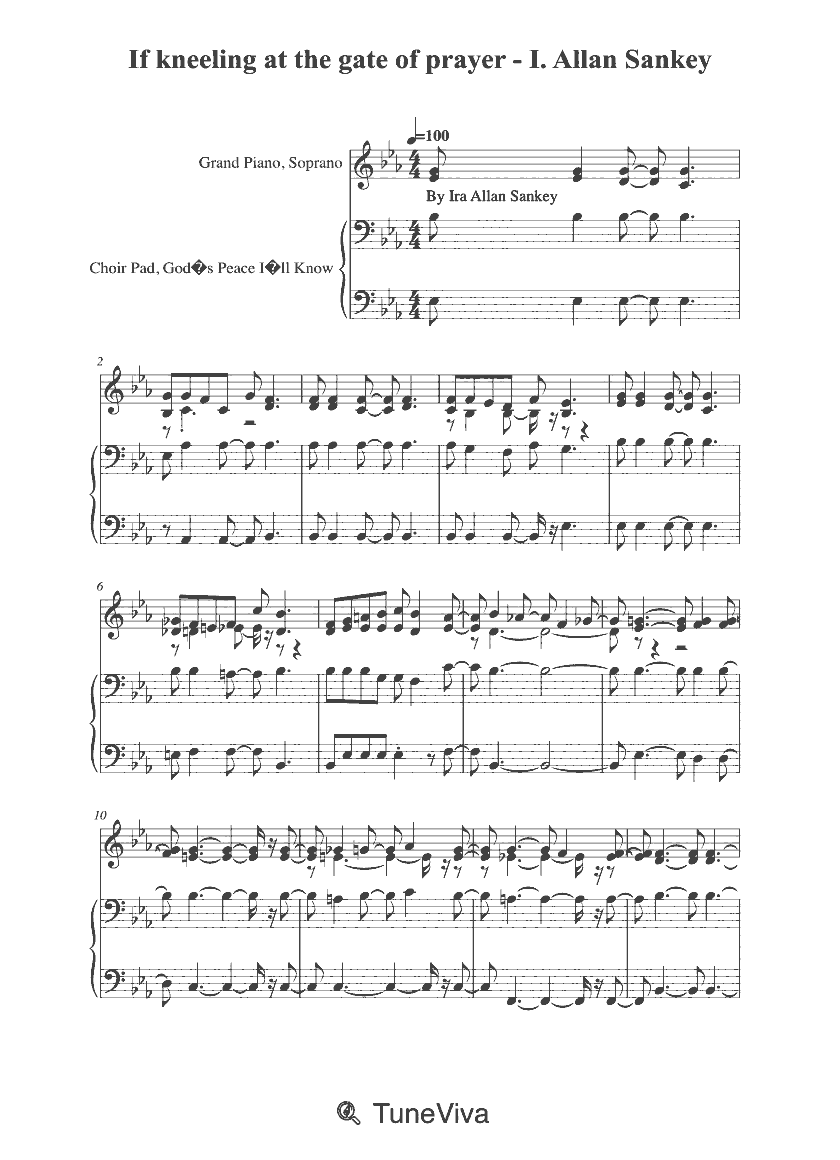
An invitation hymn in the same four-part style as the rest of the page, one of the ten entries with words.
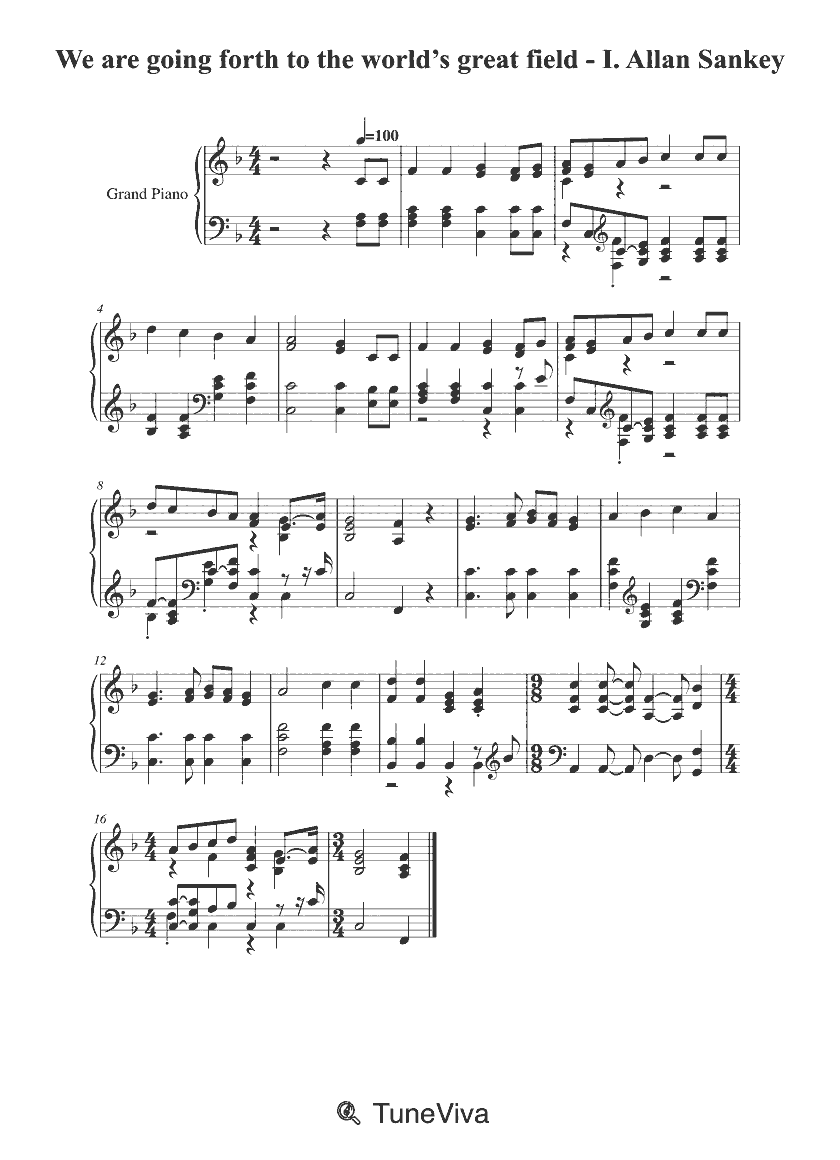
Words by Fanny Crosby, set by Sankey and printed in Hallowed Hymns as “We are going forth”.
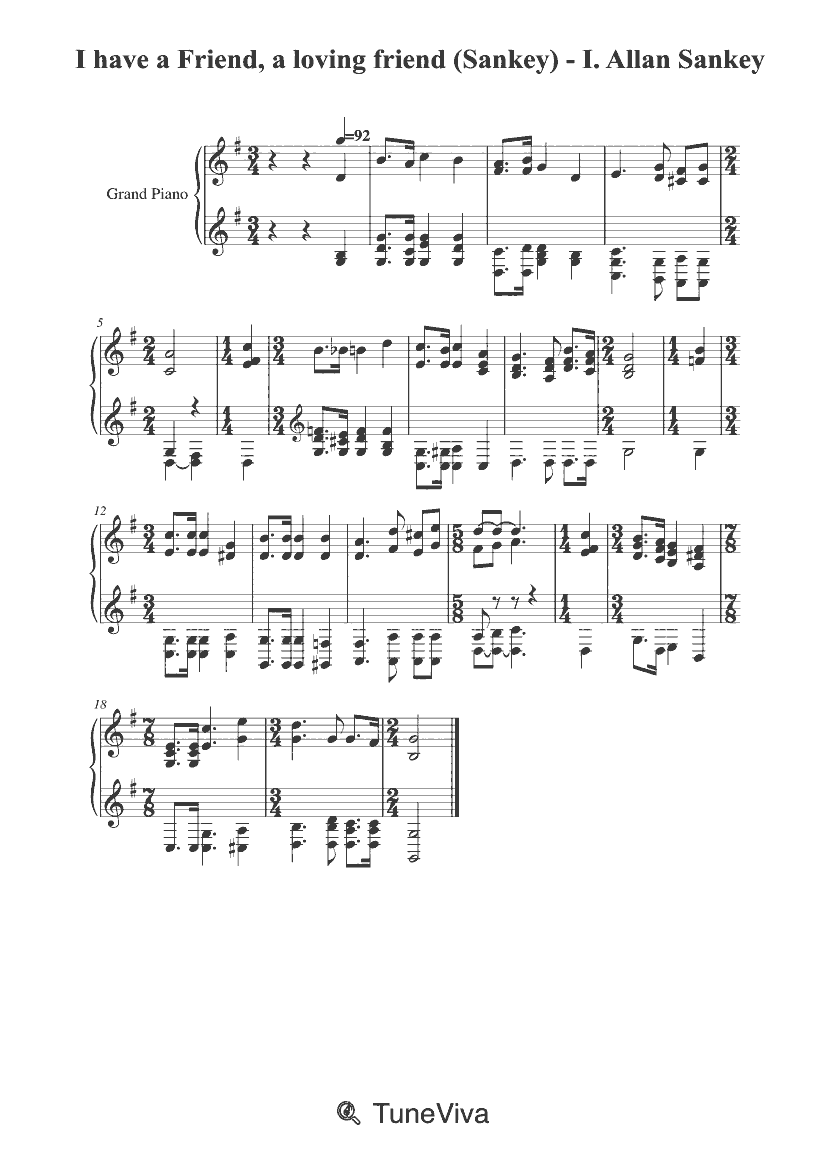
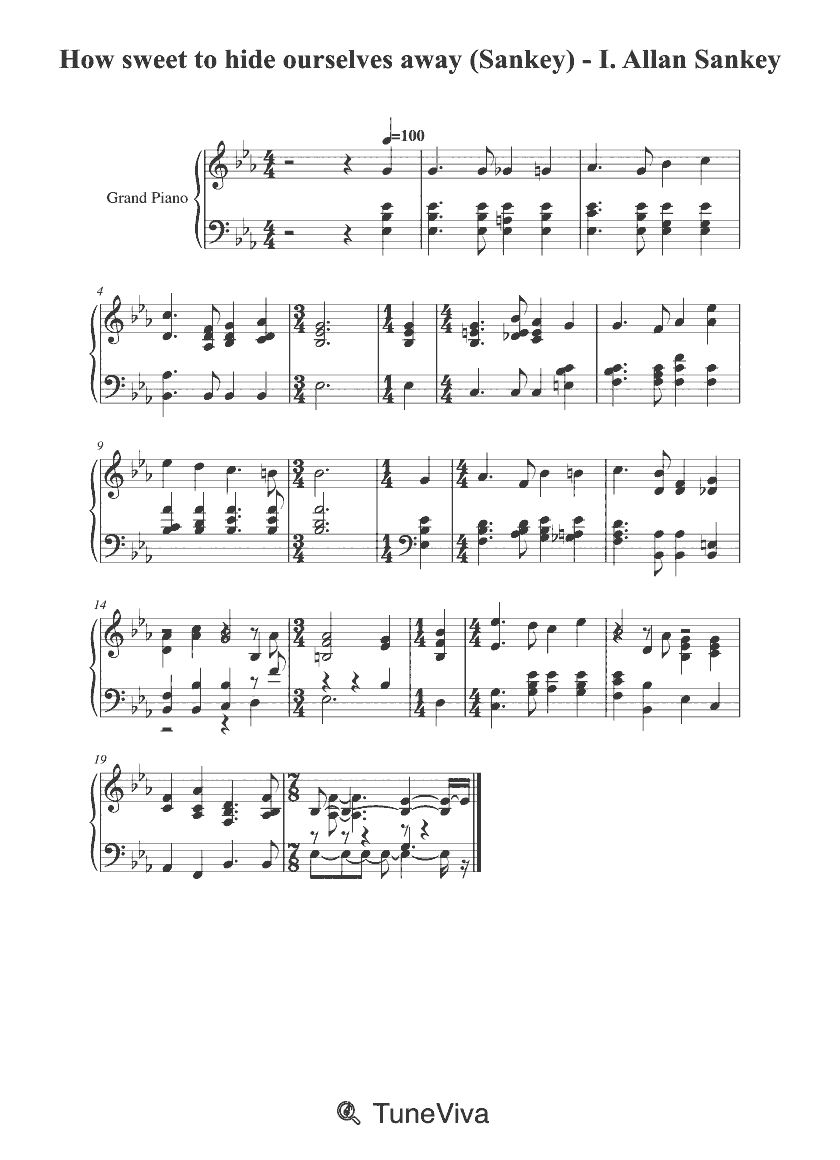
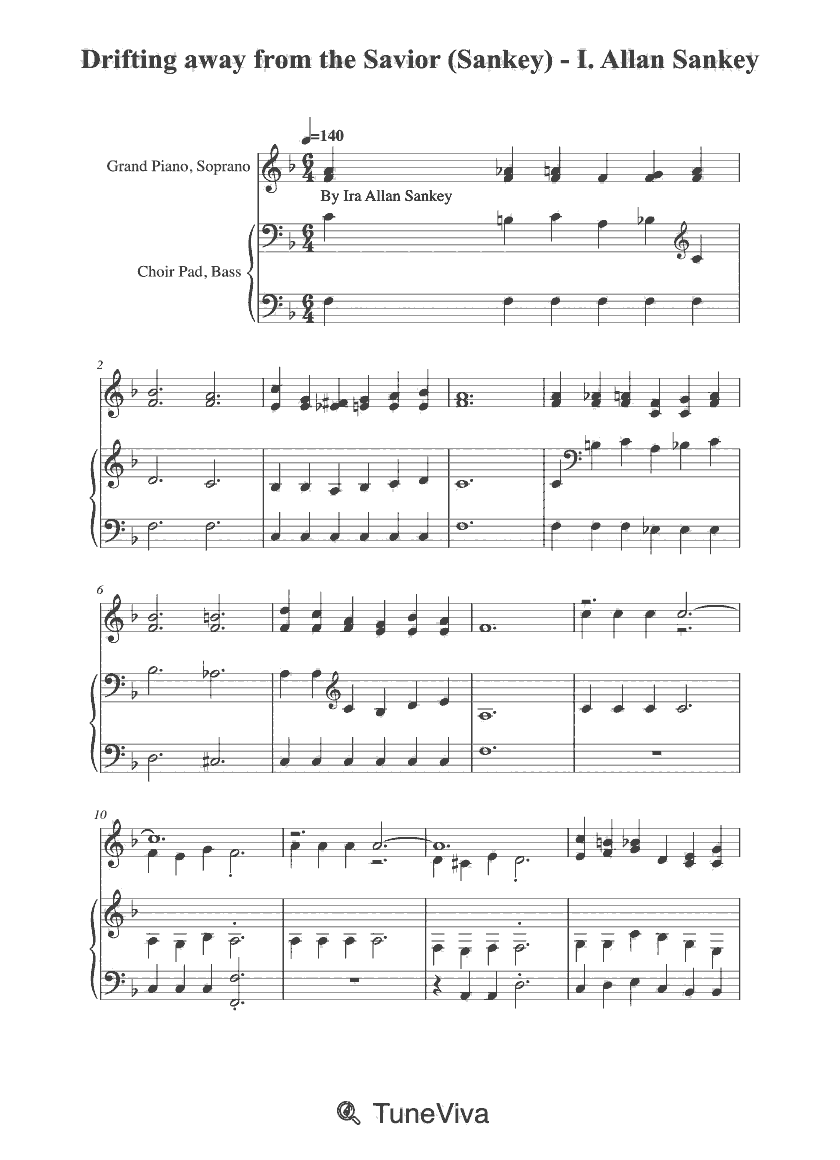
One of three entries the catalogue tags “(Sankey)”, presumably to separate it from another setting of the same text.
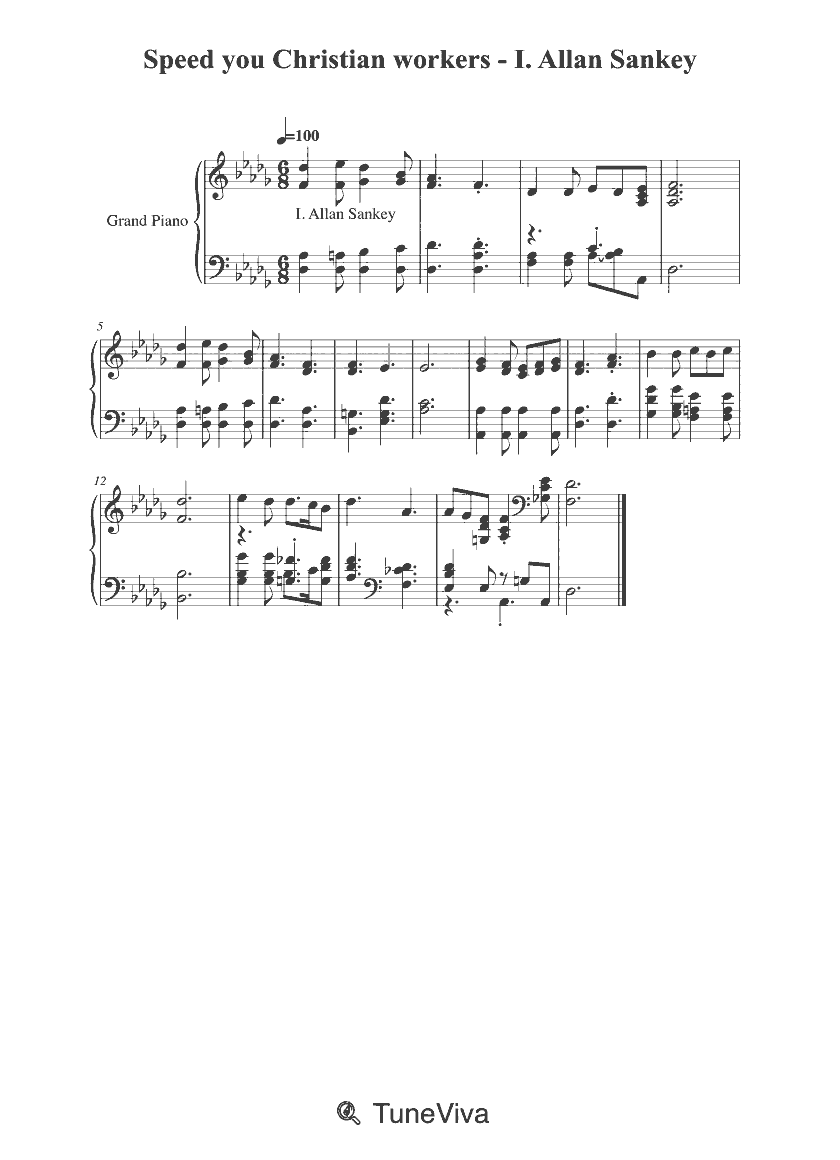
A missionary-marching song, one of the six entries tied at six views.
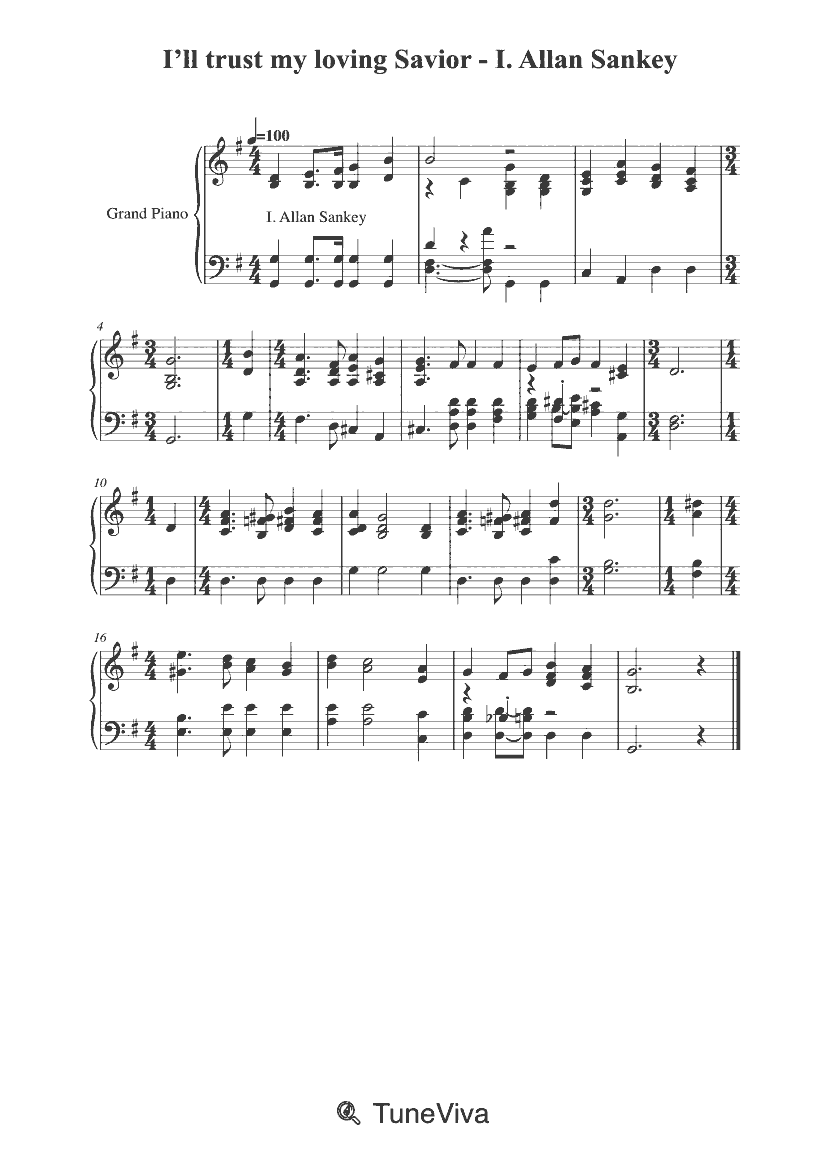
Also indexed in Hallowed Hymns, under the spelling “I’ll trust my loving Saviour”.
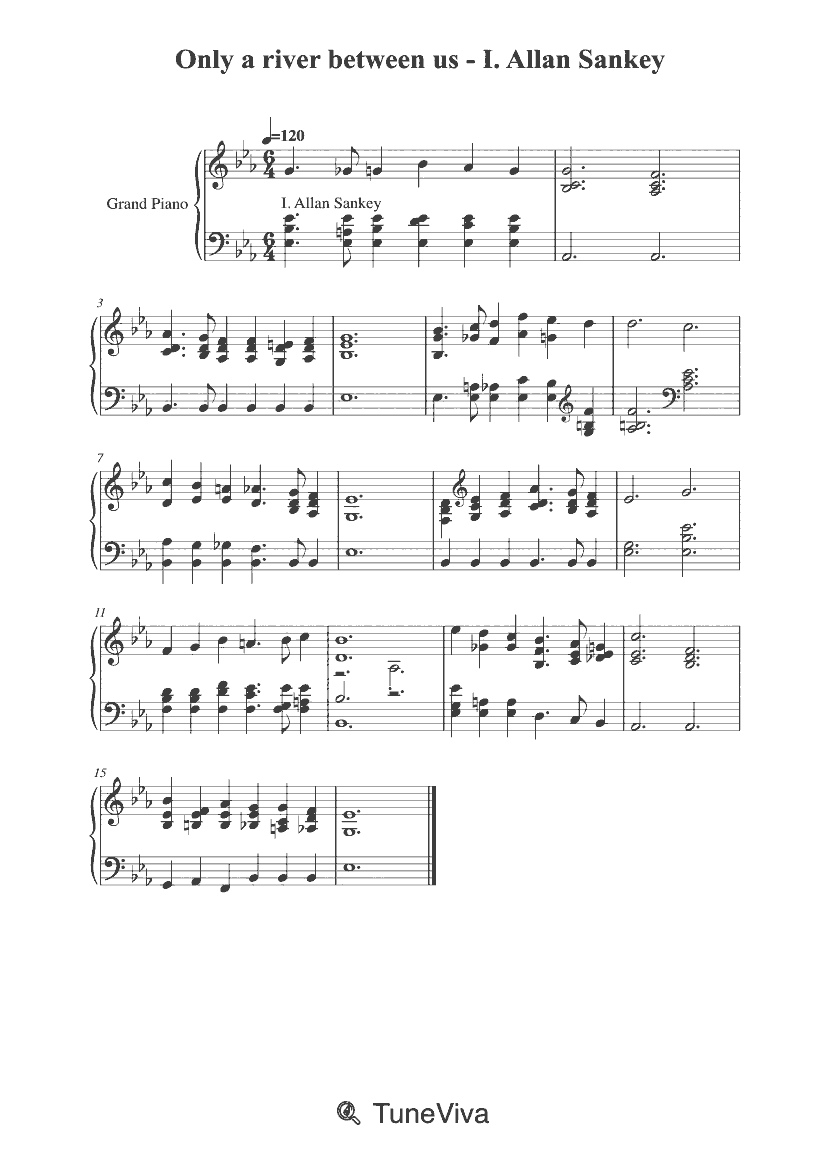
A heaven-and-parting song, the kind of text that filled the closing pages of gospel hymnals.
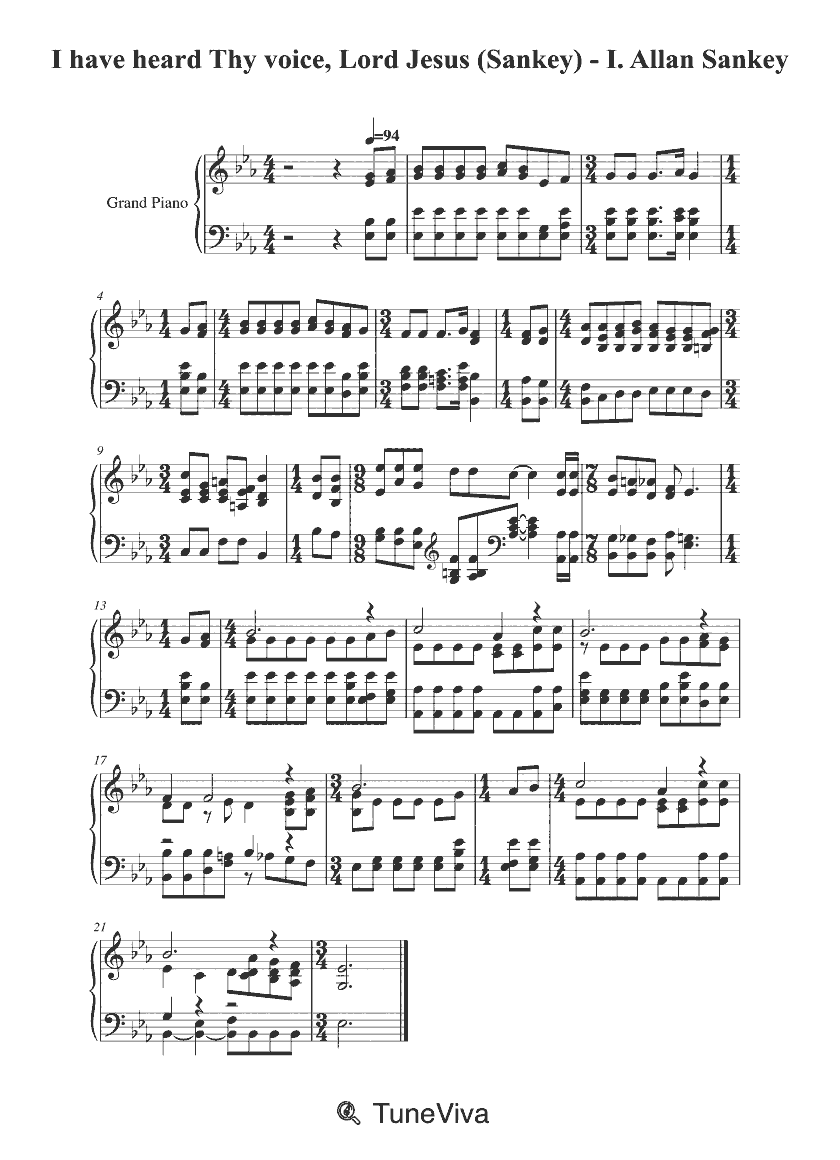
Words by Edith G. Cherry, printed in Hallowed Hymns with Sankey’s name against the music.
Twenty, amounting to about 12 minutes and 5,099 notated notes. Half of them carry lyrics.
No. Ira D. Sankey (1840–1908) was the singer and compiler associated with Moody; I. Allan Sankey (1874–1915) was a later editor at Biglow & Main. Reference works describe the younger man as his son, though the hymnal itself prints only the initials.
A 1909 collection from Biglow & Main, compiled by Sankey, combining new gospel songs with standard hymns, responsive readings and chants. Several titles on this page appear in its index.
They are strophic gospel songs of two or three verses and a refrain, written to be taught quickly at a mission service. The catalogue average is a little over half a minute per score.
Catalog editions and arrangements attributed to I. Allan Sankey.