
classical
1 tracks
Joseph Lowe's 31 scores run to about 18 minutes and 4,812 notated notes, an average of roughly half a minute each. None carries lyrics, all 31 are filed as classical, and every one sits at complexity index 1 rather than 0. These are short dance tunes: strathspeys, reels and jigs from the collections Lowe published for Scottish assemblies; later he taught the royal household at Balmoral.
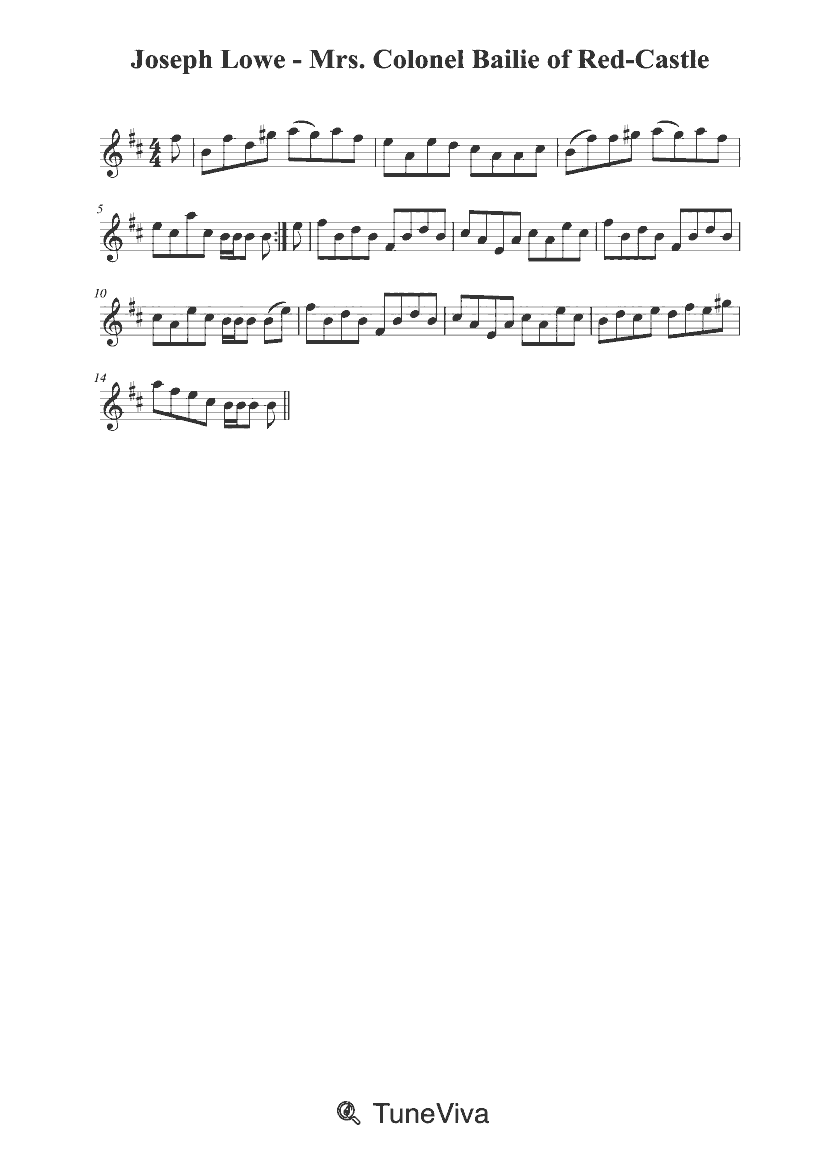
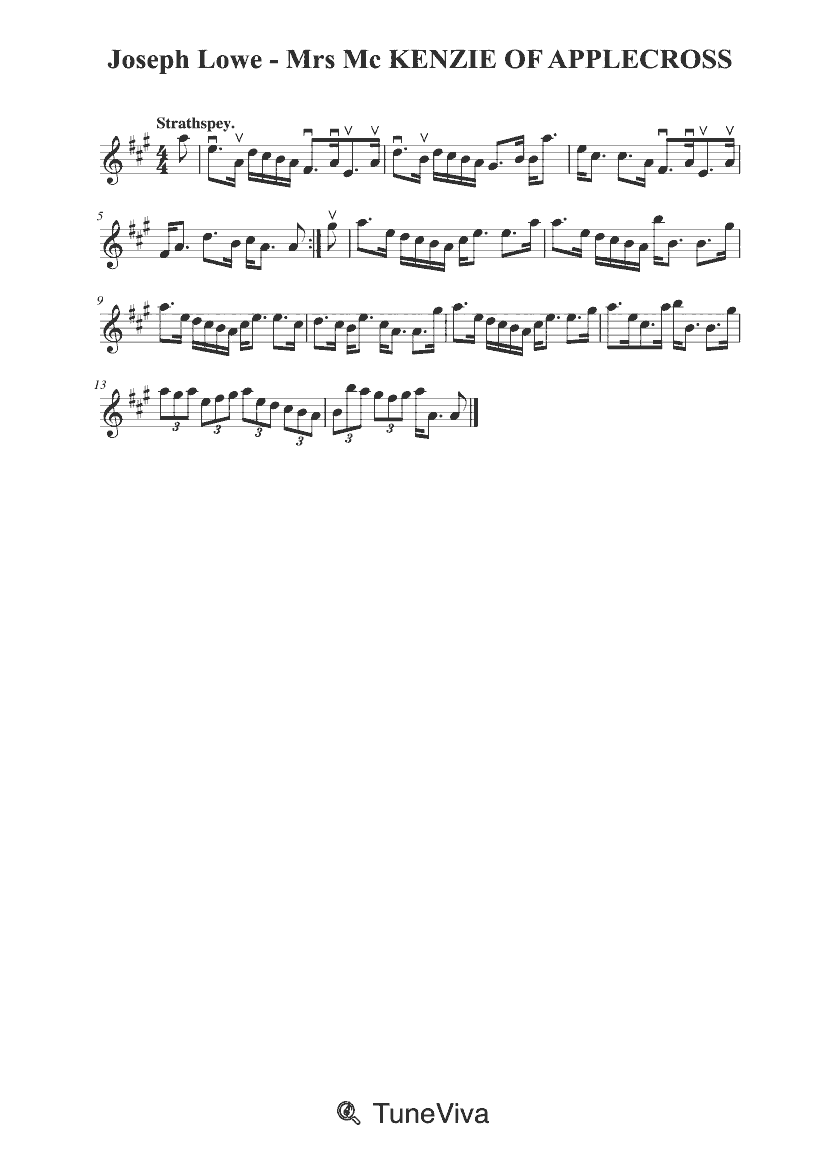
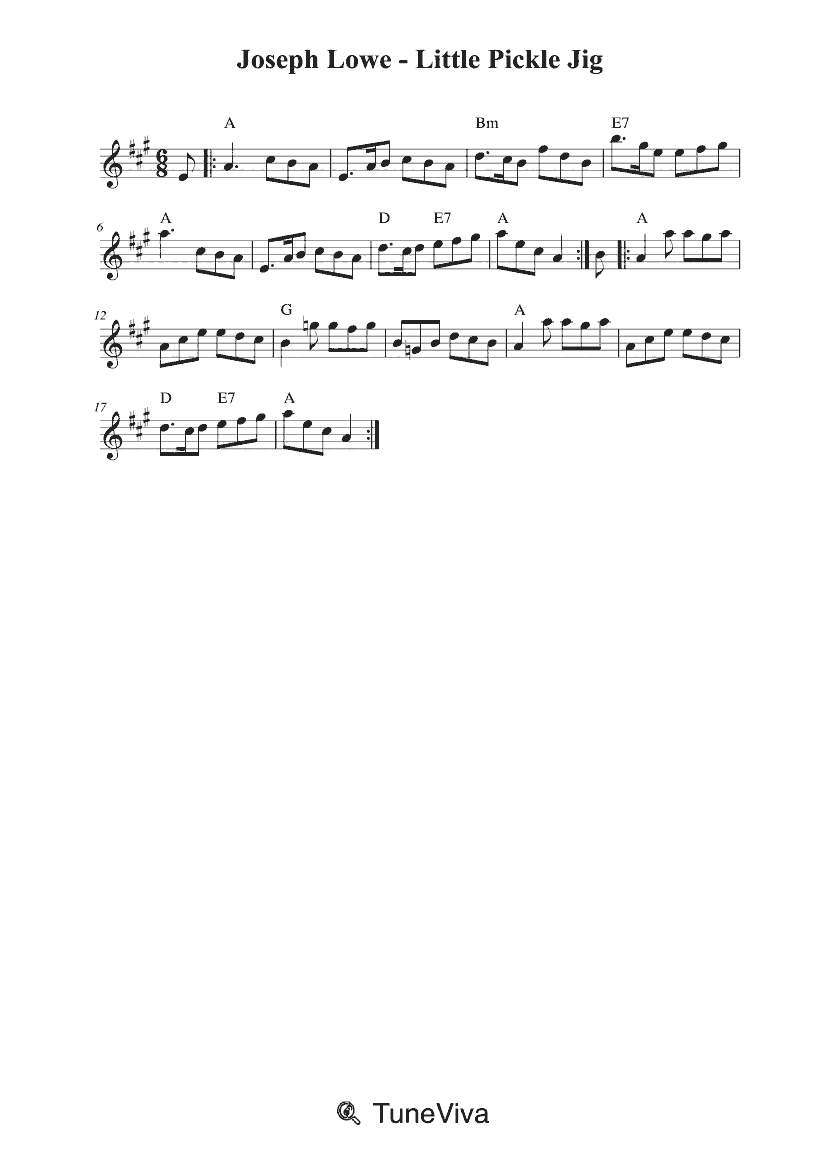
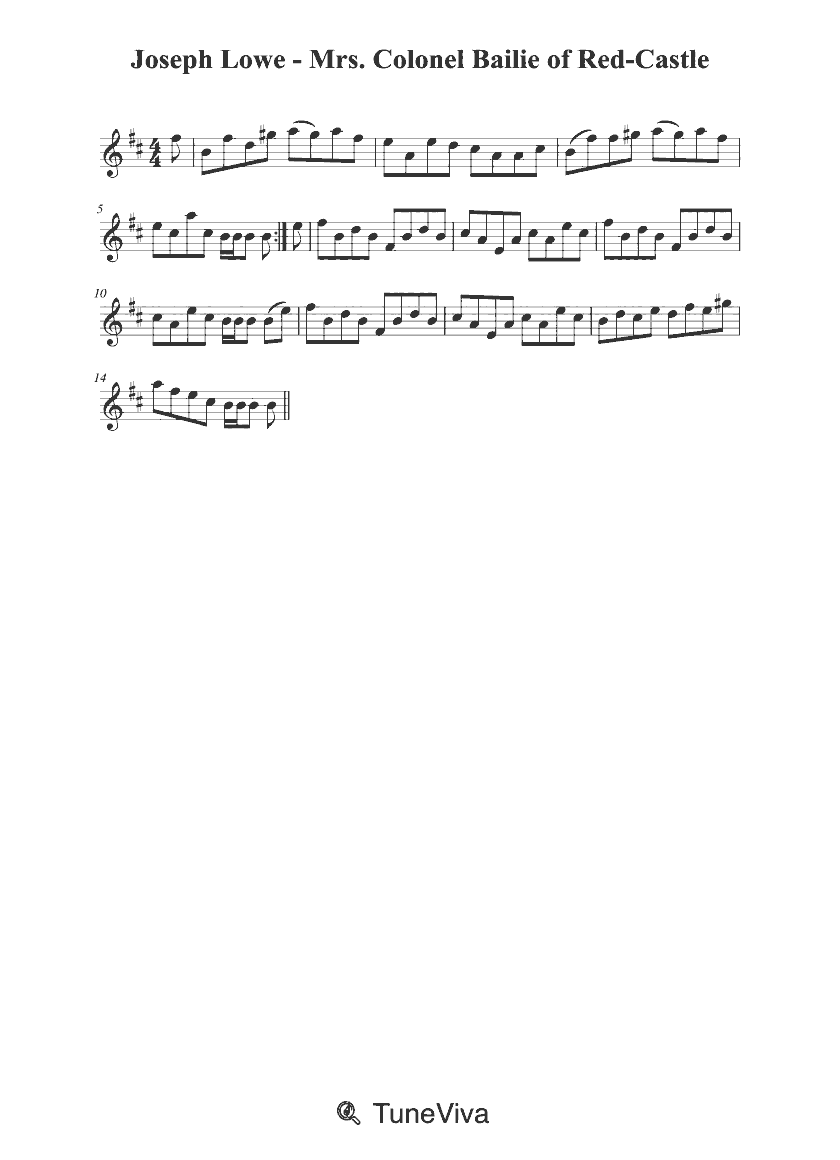
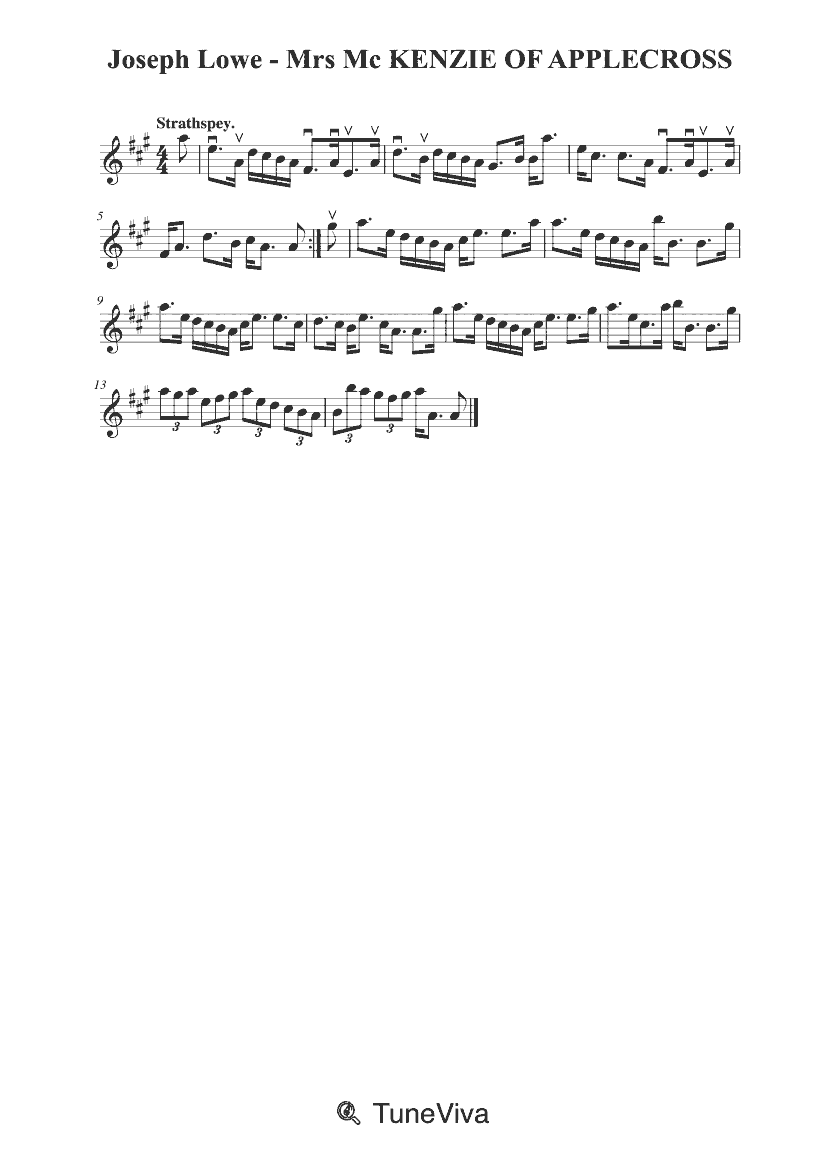
'Mrs. Colonel Bailie of Red-Castle' leads with eleven views, followed by 'Mrs Mc KENZIE OF APPLECROSS' at nine and 'Little Pickle Jig' at seven. Several titles appear twice under different spellings or capitalisation, so check the first page before choosing a setting.
Joseph Lowe was born in 1796 or 1797 into a musical family; his father, John Low, was a fiddler-composer at Marykirk in Kincardineshire. Apprenticed to a saddler, he abandoned the trade for music and joined his brother Robert at Brechin before establishing himself in Edinburgh and Inverness as a teacher of violin and dancing. His siblings taught music and dance in Perth, Arbroath, Elgin, Glasgow, Montrose, Brechin and Dundee.
Lowe published Lowe's Collection of Strathspeys, Jigs and Reels in six volumes in 1844-45, and the tunes circulated widely enough to be reprinted in later Scottish collections. In the 1850s he taught music and dancing to Queen Victoria's family at Balmoral and Windsor; his journal of those visits, kept between 1852 and 1860, was edited by Allan Thomas and published in 1992. He died in Edinburgh on 12 July 1866. The BnF gives his birth year as 1797, while the Traditional Tune Archive says 1796.
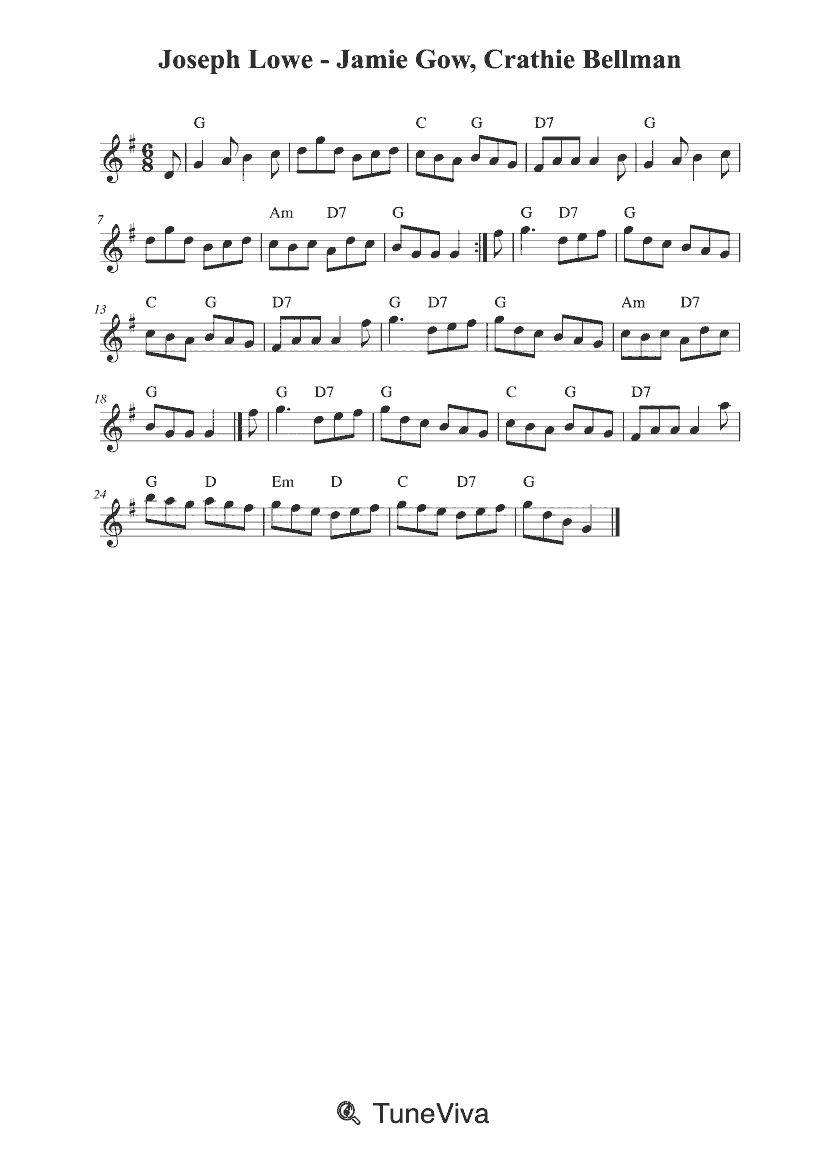
The catalogue is largely made up of named dance tunes from those collections. 'Mrs. Colonel Bailie of Red-Castle' appears on page 12 of book 6, and 'Jamie Gow, Crathie Bellman' is a jig printed in the Royal Collection of Reels, Strathspeys and Jigs. Many titles honour Scottish patrons and places, from Applecross and Cluny to Aviemore and Crathie. The 'classical' genre label is the catalogue's, not a description of the idiom.
These are functional dance tunes, so the pulse is the point. In a strathspey, place the Scotch snap cleanly without clipping the short note; in a jig, keep the six-eight lilt even and avoid accenting every beat. The reels can move faster than the strathspeys, but the phrase endings still need a little room. Ornaments are optional: a clean bare melody will carry better than a heavily decorated one at speed.
The most-viewed tune, printed on page 12 of book 6 of Lowe's Collection (1844-45); the Skye Collection prints it as a reel, so its dance type is not fixed.
A strathspey named for a Mrs Mackenzie of Applecross, on the west coast of Ross-shire; the catalogue's capitals follow the print.
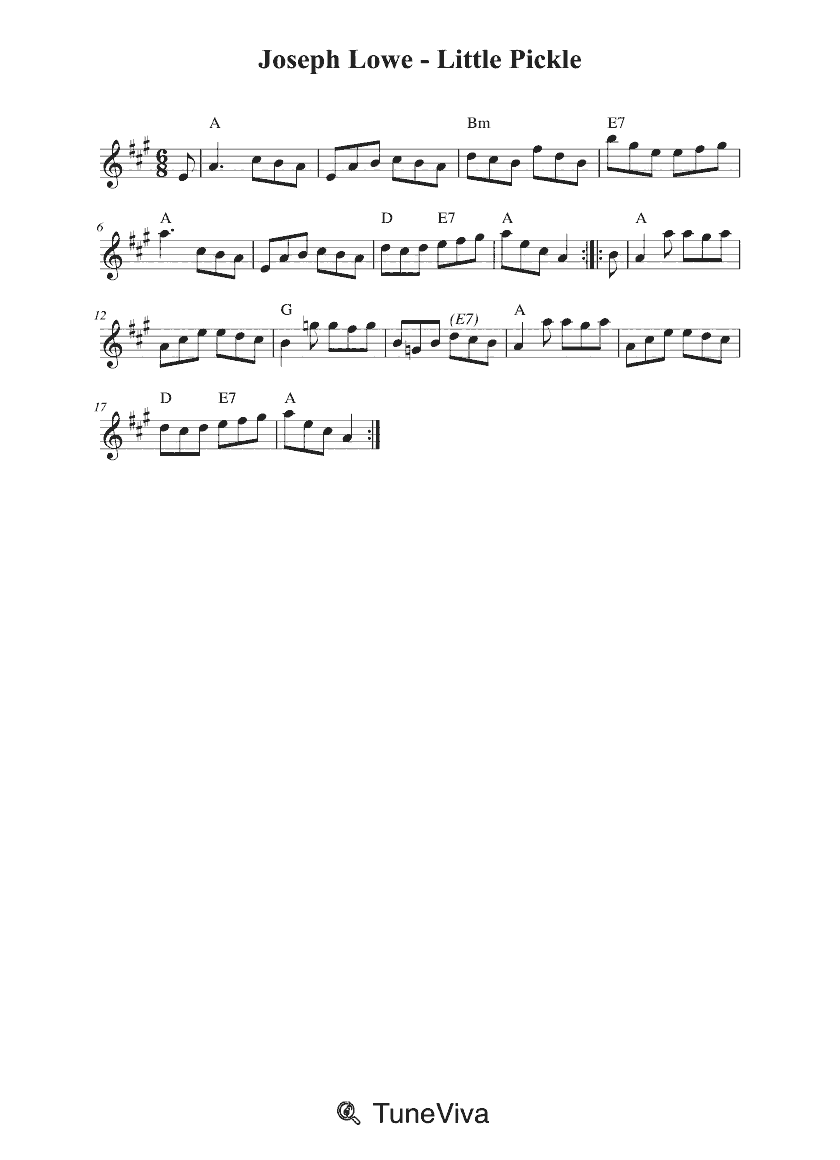
A jig and the third most-viewed title; a second entry, 'Little Pickle', appears to be the same tune under a shorter name.
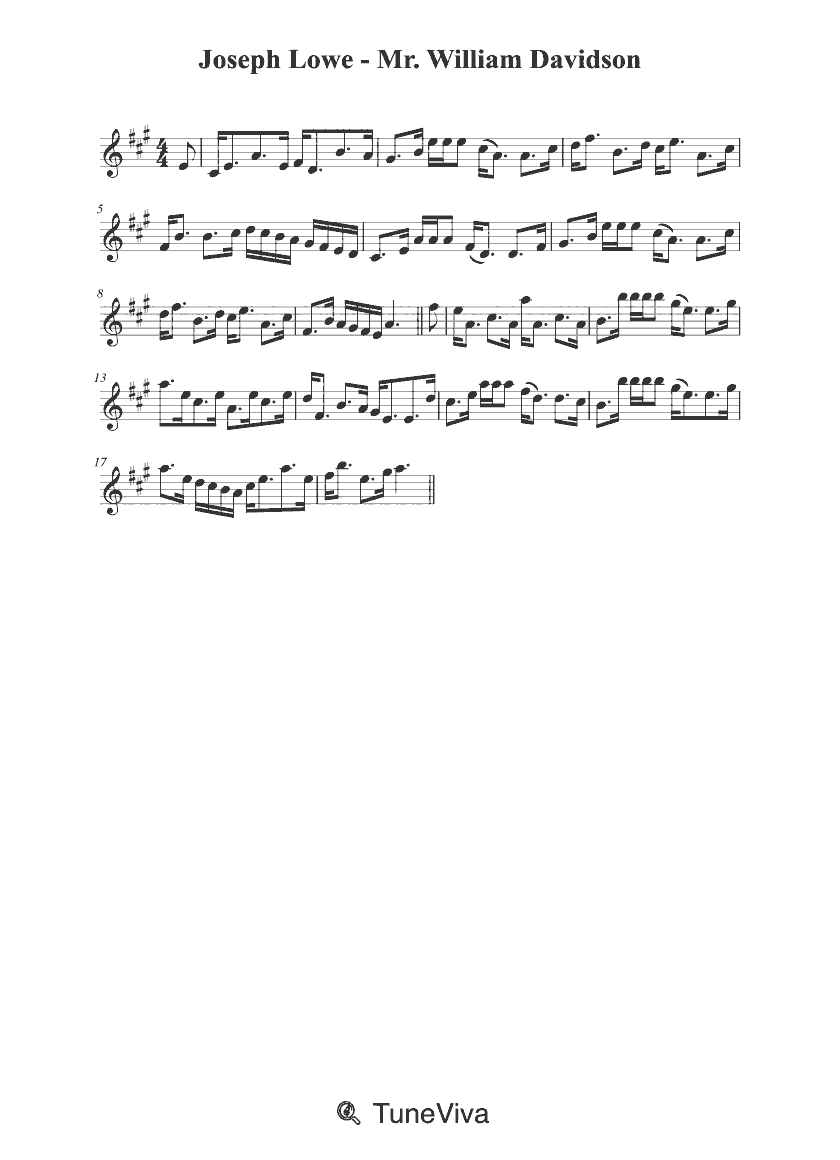
A tune named for a Mr William Davidson; the catalogue gives no further identification.
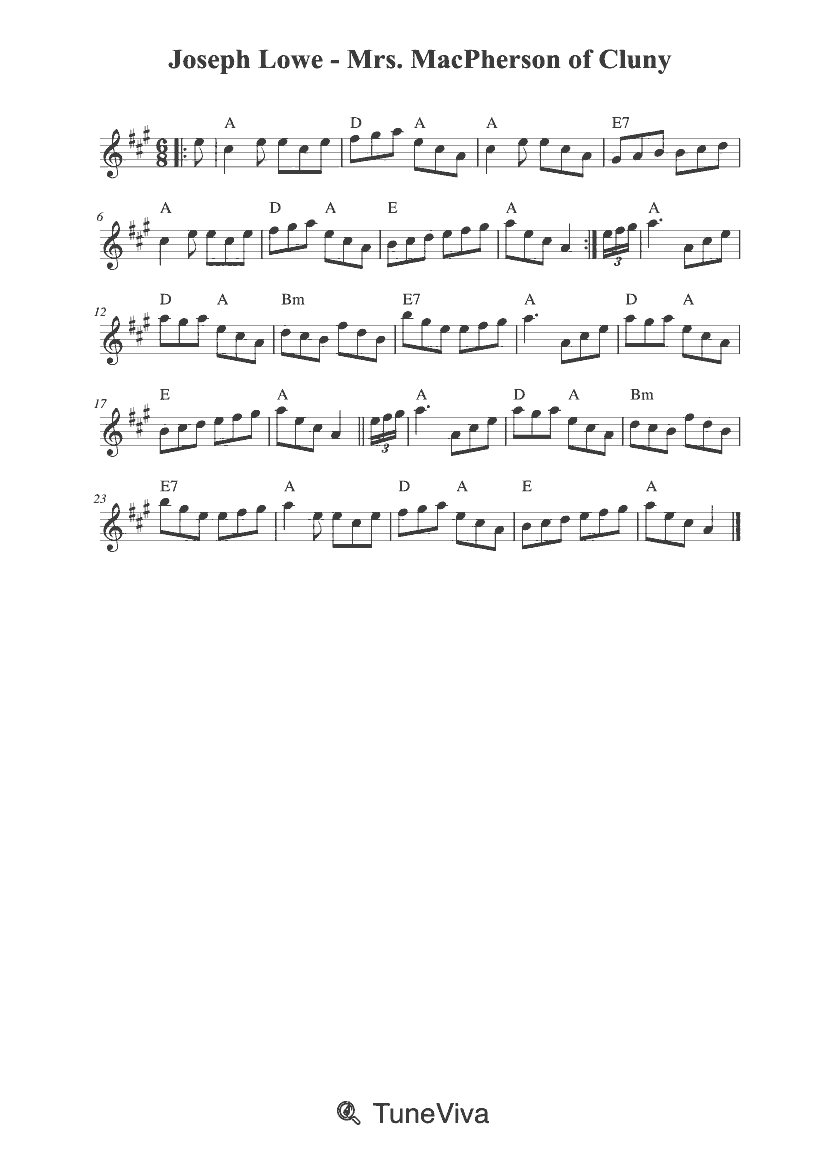
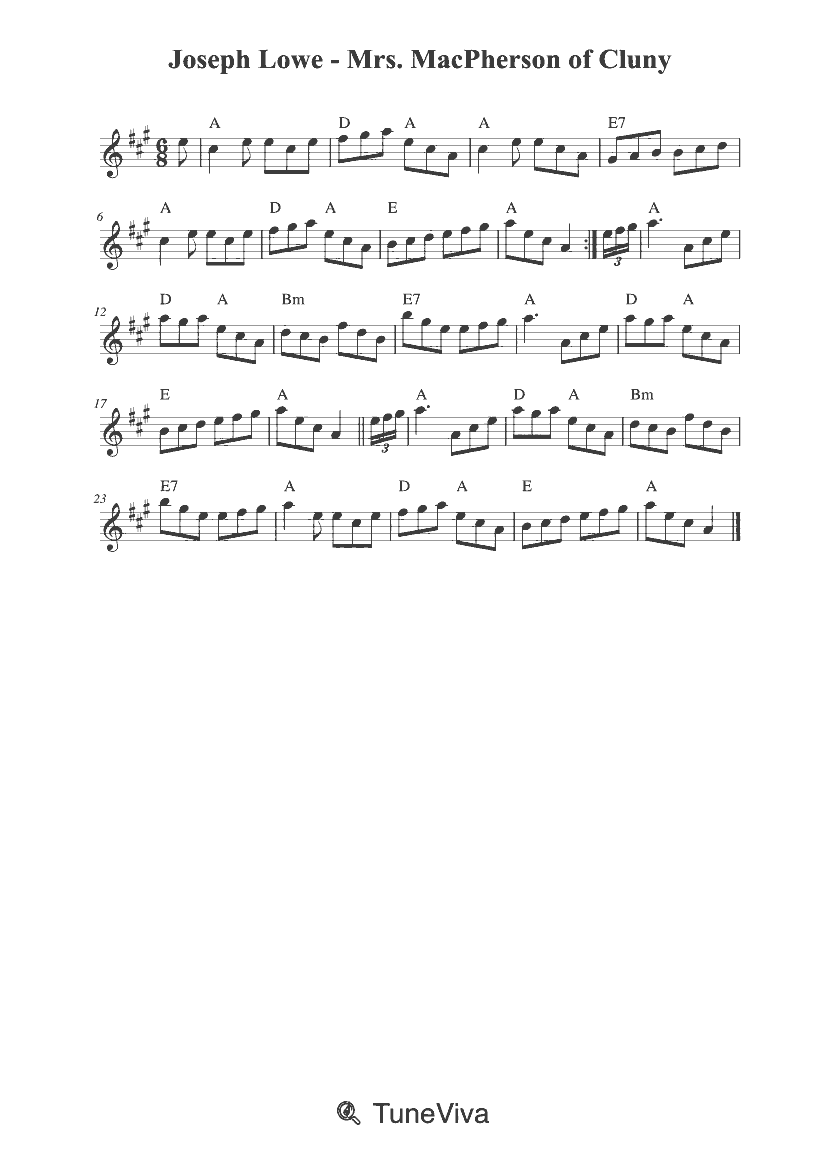
A tune named for a Mrs MacPherson of Cluny, near Newtonmore; the catalogue does not specify whether it is a strathspey or a reel.
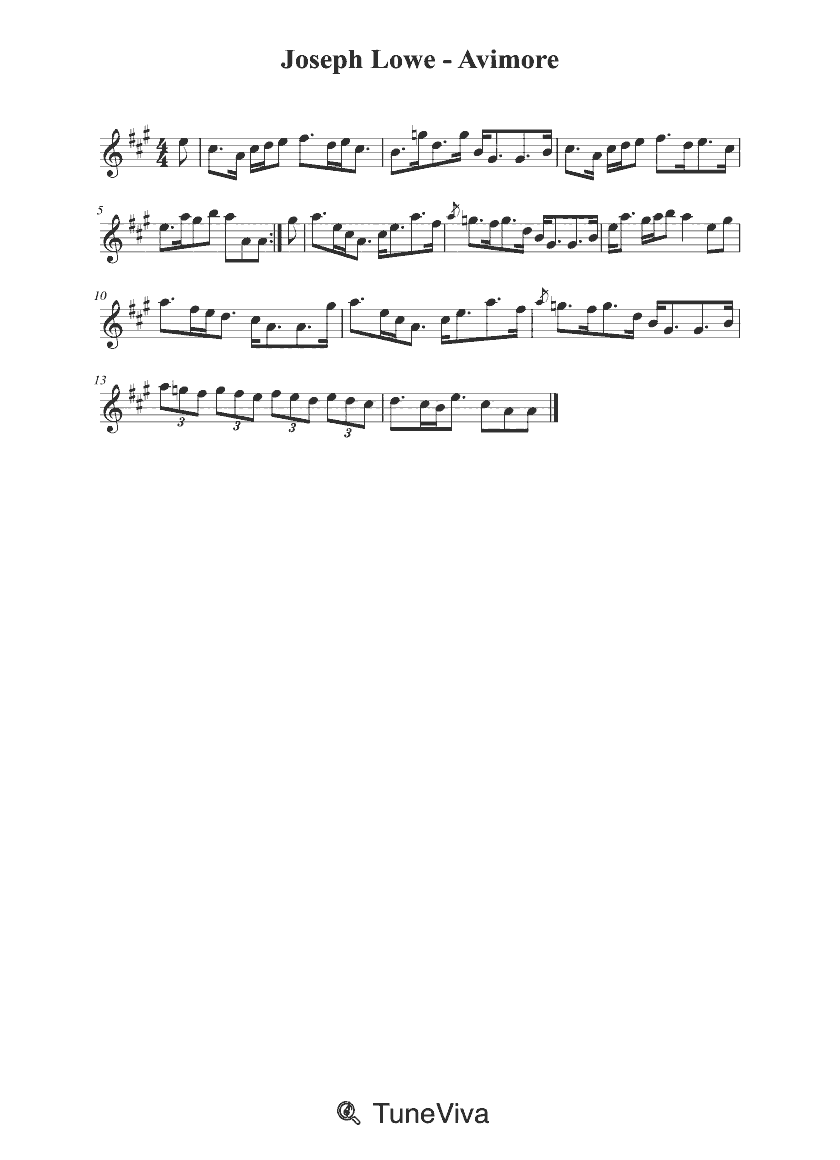
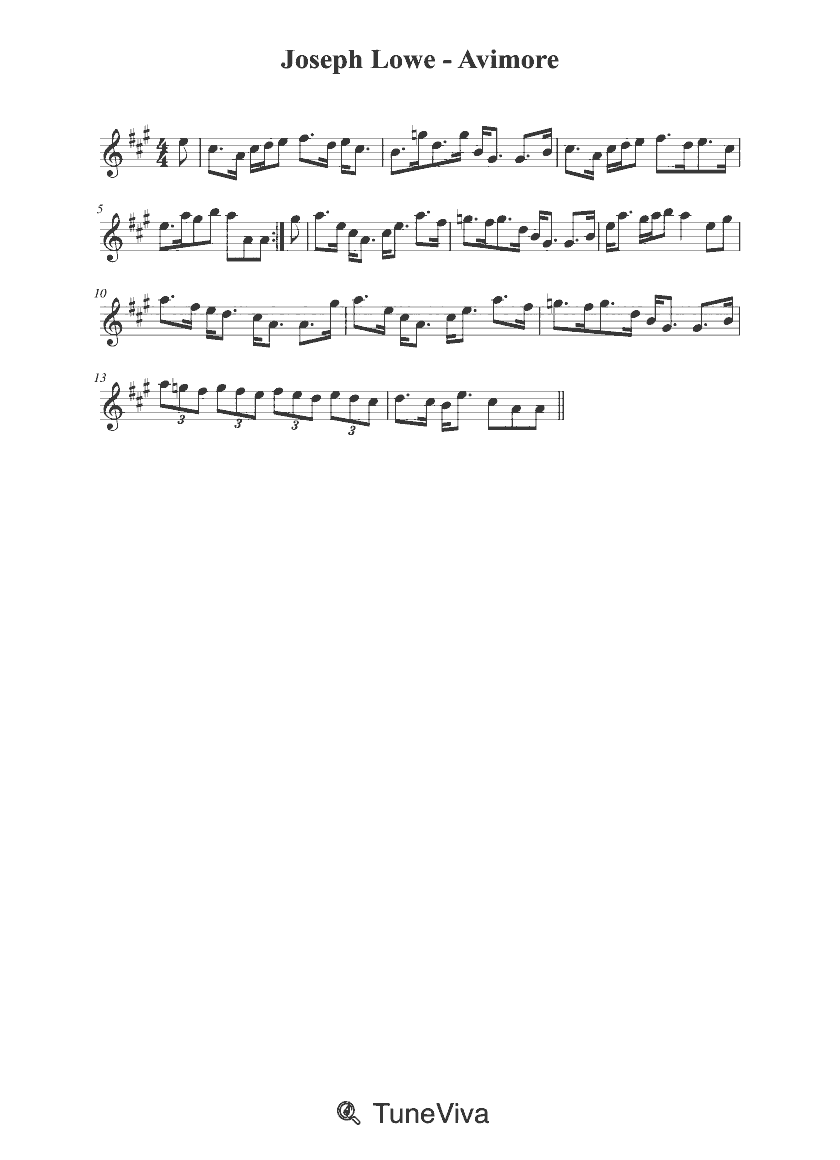
A tune named for the Highland village, spelled 'Avimore' in the catalogue; the modern spelling is Aviemore.
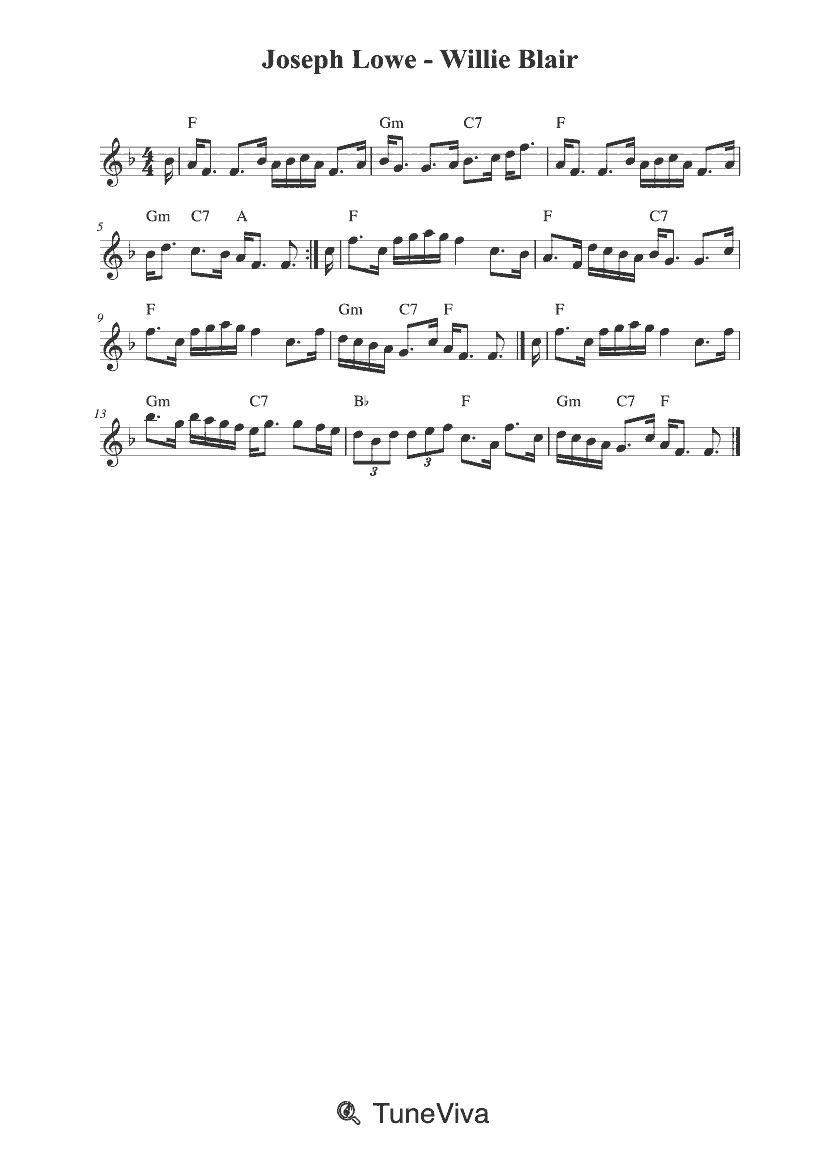
A strathspey named for William Blair, the fiddler associated with Queen Victoria's household at Balmoral, as the title states.
A short dance tune; the catalogue does not identify it as a strathspey, reel or jig.
A jig named for the bellman of Crathie church, near Balmoral; it appears in the Royal Collection of Reels, Strathspeys and Jigs.
A dance tune; the catalogue gives no key or dance type.
There are 31, running to about 18 minutes of music and 4,812 notated notes. None of them includes lyrics.
Dance music for Scottish assemblies: strathspeys, reels and jigs, published in his six-volume Lowe's Collection and in later collections. He was a dancing master and violinist, not a composer of concert works.
The catalogue holds multiple records of tunes such as 'Mrs. Colonel Bailie of Red-Castle' and 'Mrs McKenzie of Applecross' under different spellings or capitalisation. Check the first page to see whether the settings differ.
Yes. He taught the royal family at Balmoral and Windsor in the 1850s, and his journal of those visits covers 1852 to 1860.
Catalog editions and arrangements attributed to Joseph Lowe.
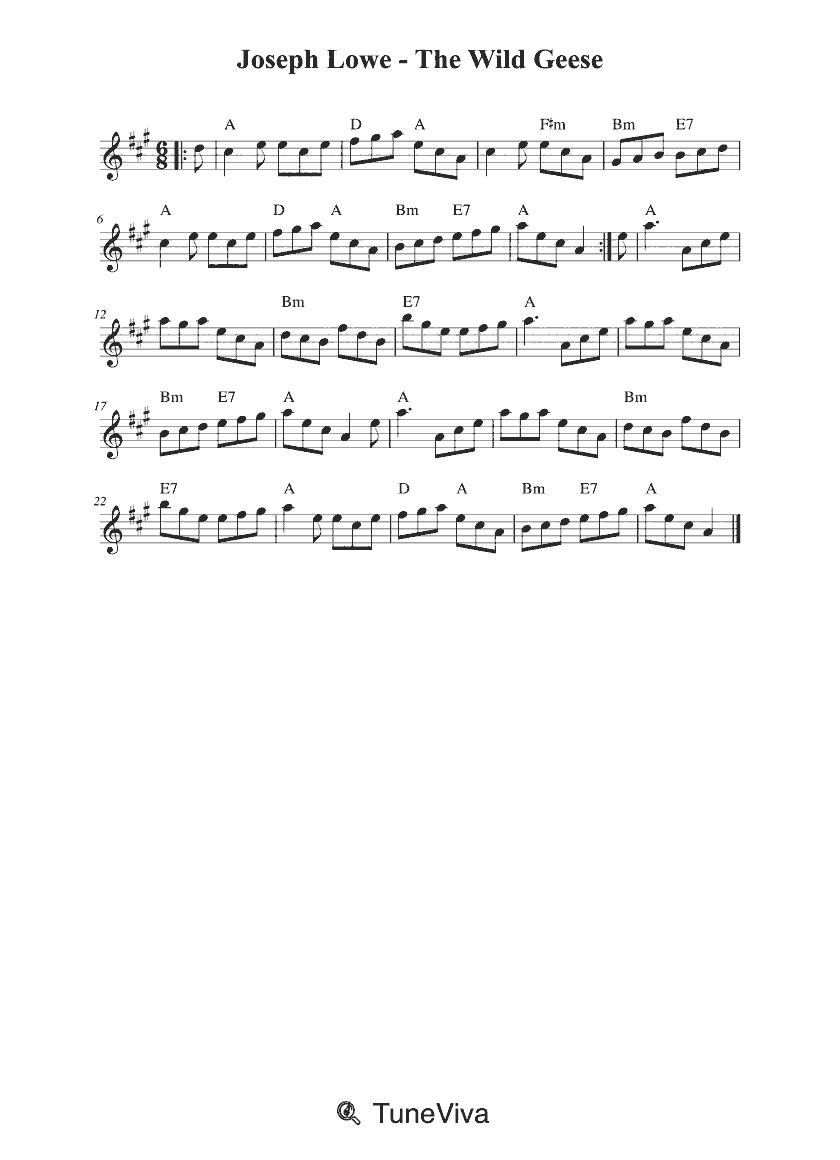
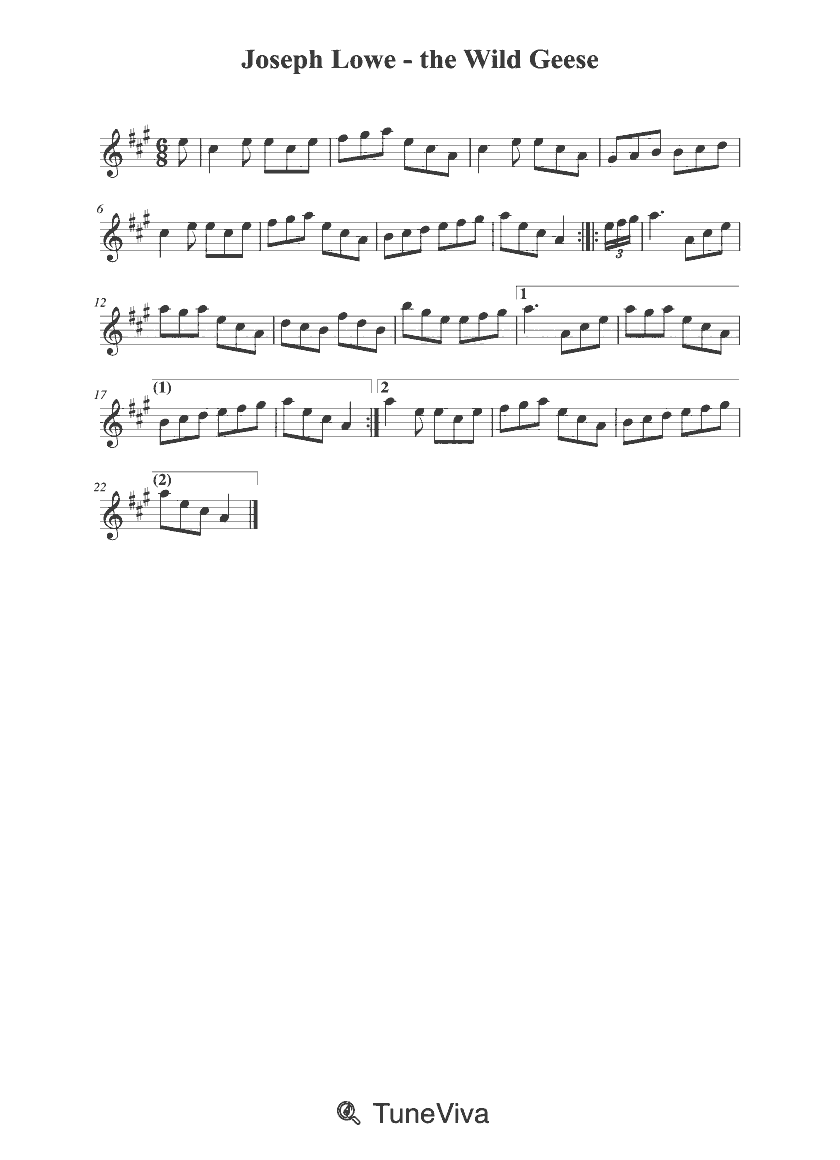
the Wild Geese
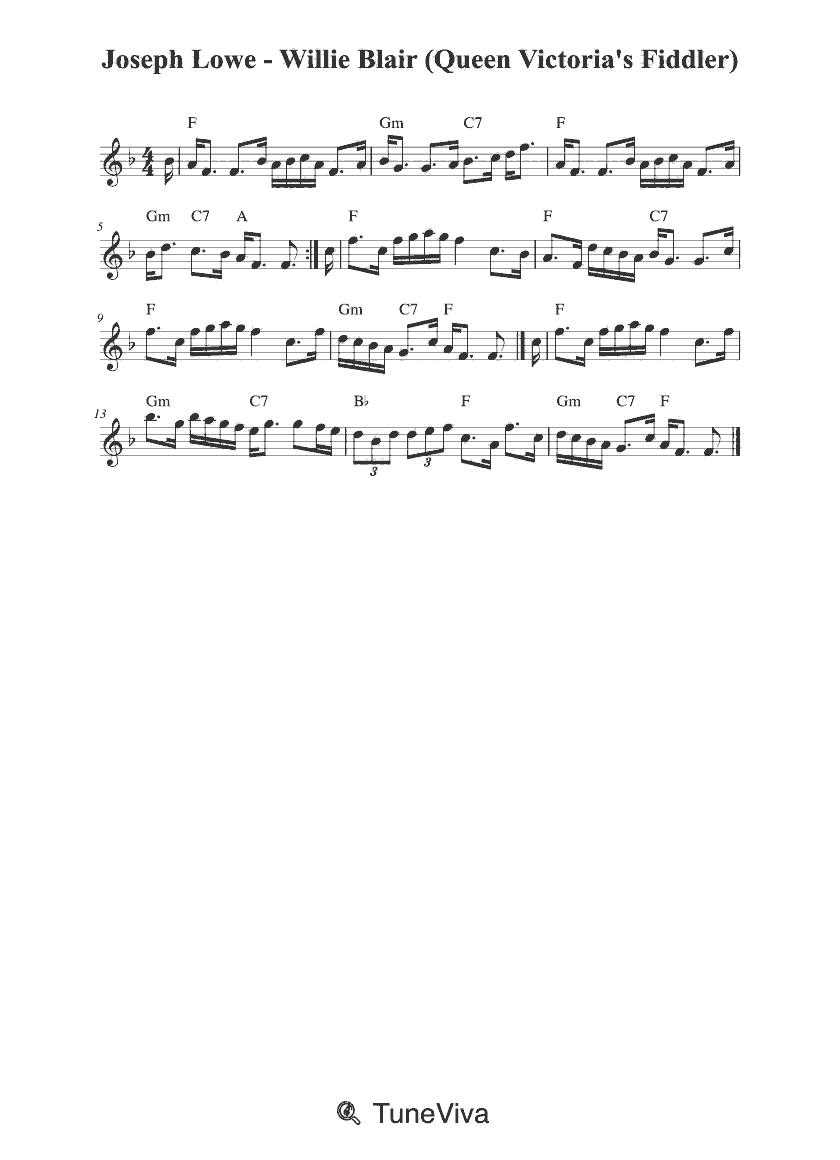

Queen Victoria's Fiddler
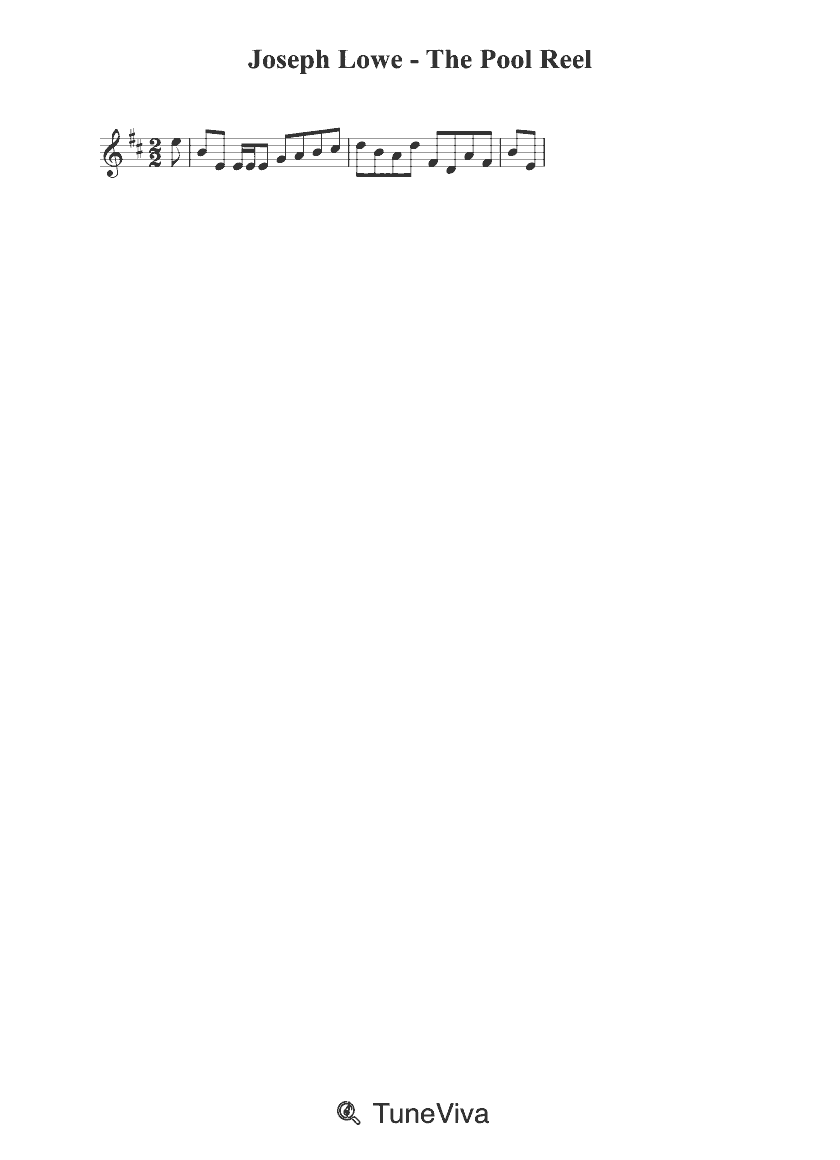
the Wild Geese
Mrs. MacPherson of Cluny