classical
2 tracks
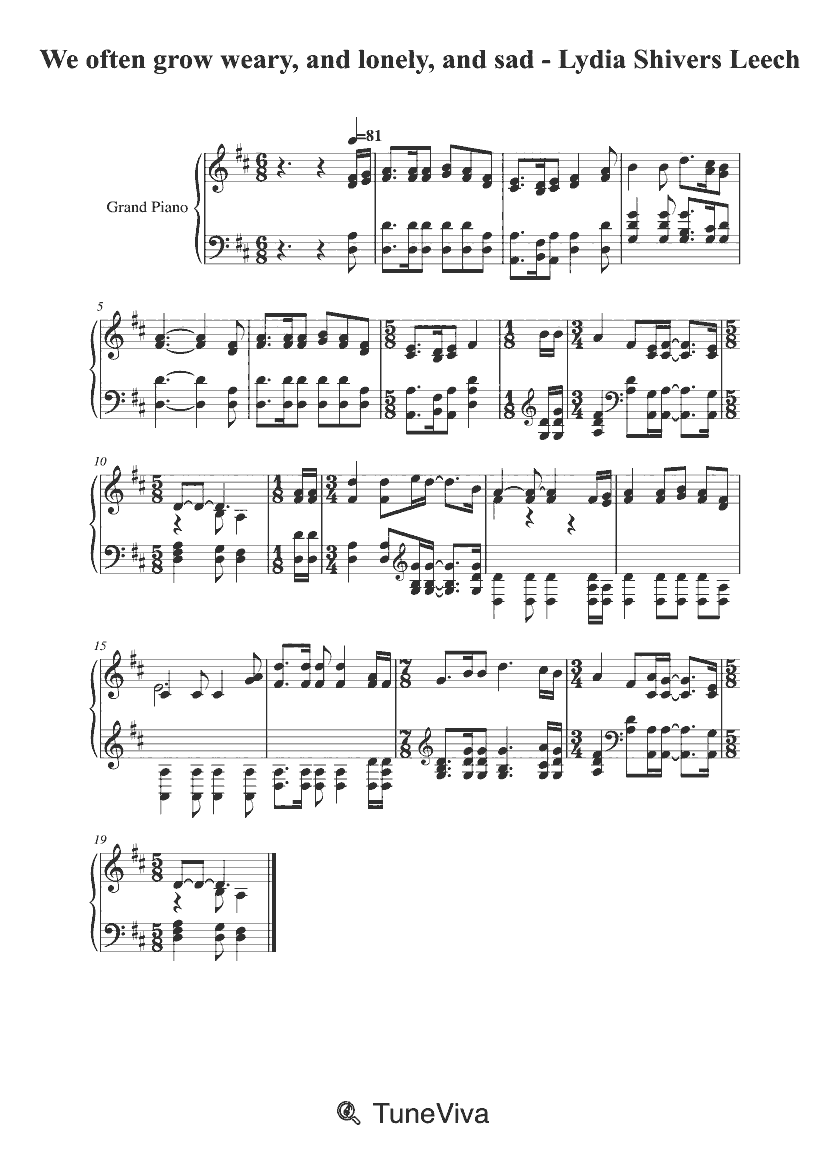
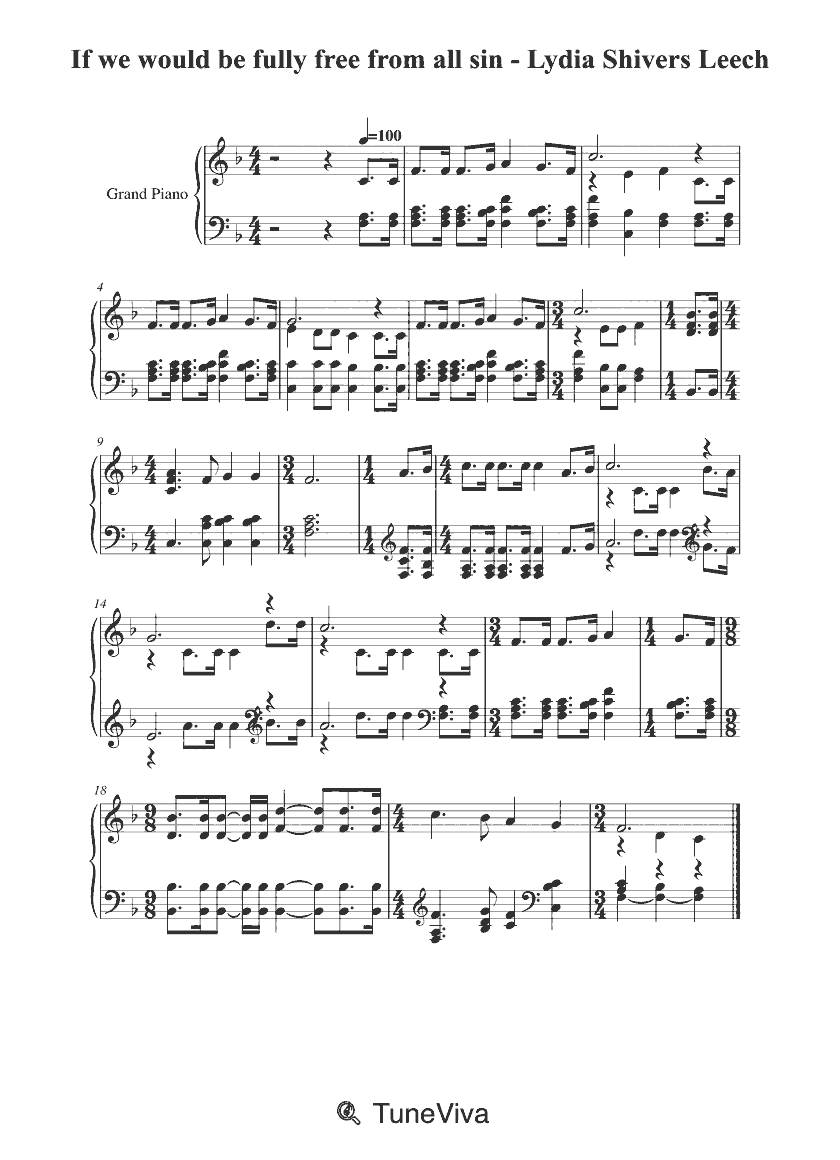
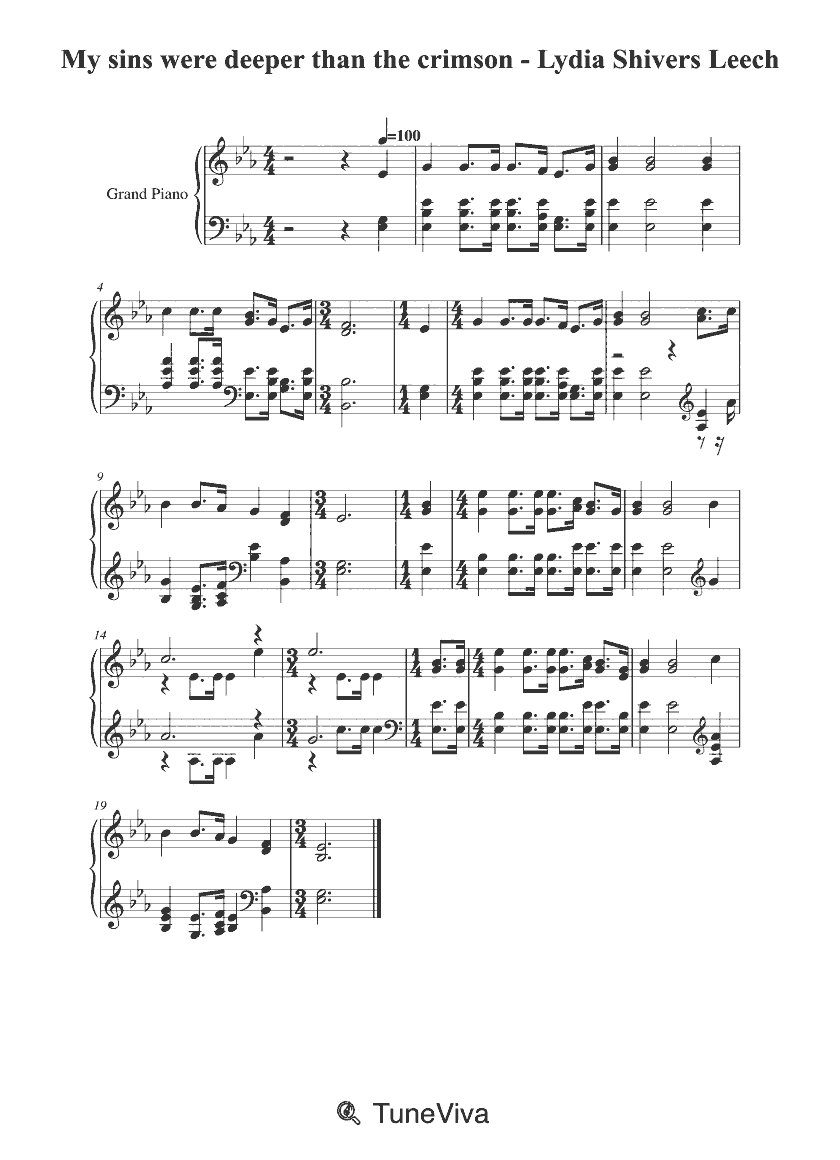
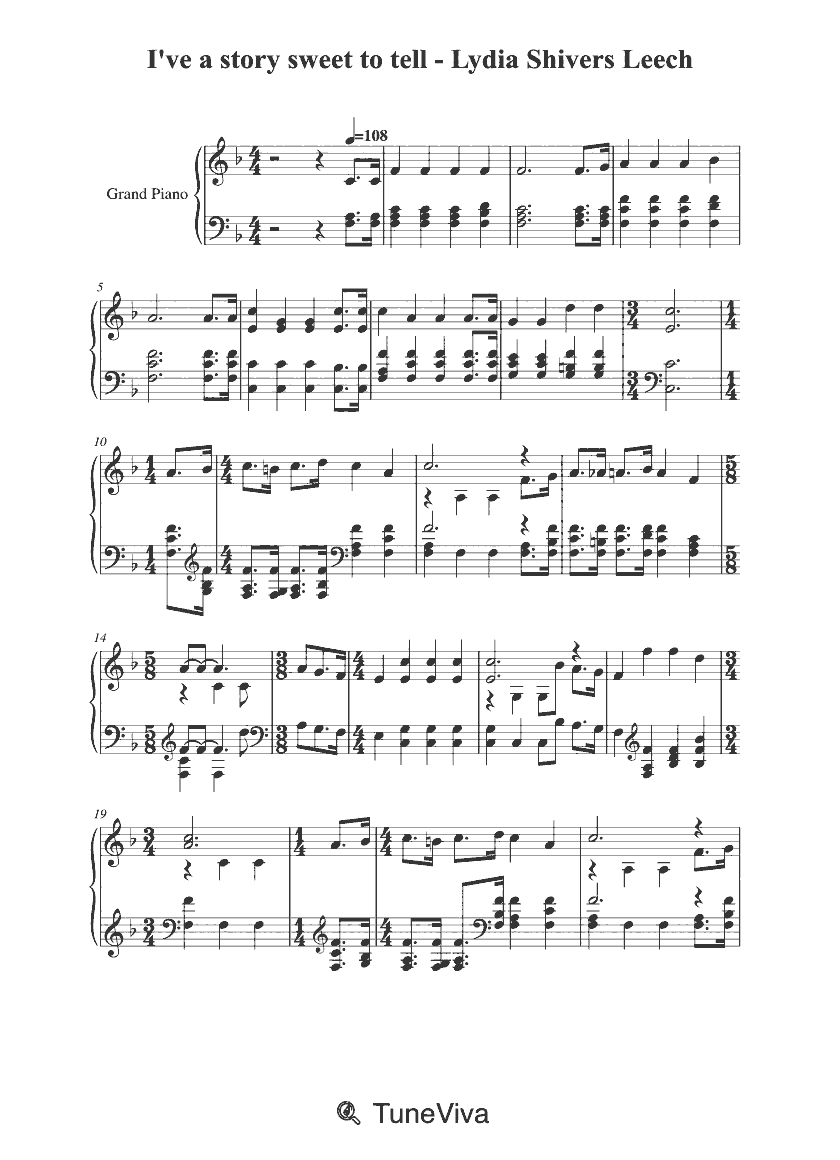
The catalogue holds 43 scores under Lydia Shivers Leech, about 26 minutes of music and 13,445 notated notes. Ten of them carry lyrics, which suits a writer who supplied both words and tunes to the gospel-song market. The most-viewed entry is "God's way", followed by a longer first-line version of what is probably the same hymn; "When the Gates Swing Open Wide" and "He Rescued Me" come next. Difficulty clusters in the middle: 26 scores at index 1, twelve at index 2 and five at index 0. All 43 are filed as classical, though the repertoire is revival and Sunday-school song.
Lydia Shivers Leech, usually credited as Lida S. Leech, was born on 12 July 1873 at Mayville, New Jersey, and grew up at Cape May Court House on the state's southern shore. She studied at Columbia University in New York and at Temple University in Philadelphia, then settled across the river in Camden, where she played the organ at Bethany Methodist Church and worked as an accompanist at evangelical services. She died on 4 March 1962 at Long Beach, California, and is buried at Forest Lawn Memorial Park in Cypress.
Hymnary indexes 186 hymn texts under her name, and the standard reference note puts her output at some 500 hymn tunes, which places her among the gospel writers who supplied both words and music. Her texts turn up in Sunday-school collections of the 1920s: "The Sweetest Song", for instance, was set by the Philadelphia composer Adam Geibel and printed in Jubilate (1917) and The Gospel in Song (1926). "God's Way" (1911) is the hymn behind the two most-viewed entries here; it is a different text from Charles W. Naylor's "God's Way Is Best".
The shape of the catalogue matters before you browse. Titles are first lines rather than settled hymn names, so "God's way is the best way, though I may not see" and the shorter "God's way" are almost certainly one piece, and "Heaven's not far away, so I've oft been told" is the hymn Hymnary files as "Only a Veil Between". Ten entries carry lyrics; the rest are instrumental or vocal scores without text. Only five sit at the easiest complexity index and none goes above index 2, so the writing is modest in demand but varied in arrangement.
Gospel-song accompaniment of this kind rewards restraint: a steady left hand, a right hand that carries the tune, and no thickening of the printed harmony. Keep the refrain a shade lighter than the verse so that its return feels like a lift rather than a repetition, and let the last phrase of each stanza breathe before the chorus. Where a score gives only a melody line, add chords sparingly and watch the parallel motion. For congregational use, choose a key the room can hold and keep the rhythm plain; these hymns were written to be sung without rehearsal.
The most-viewed entry, and a truncated one: the catalogue stops after two words of her 1911 hymn "God's Way".
The complete first line of the same hymn, "God's Way" (1911), not Naylor's separate "God's Way Is Best"; 51 views.
A heaven-and-home hymn, and the third most-opened score in the collection at 33 views.
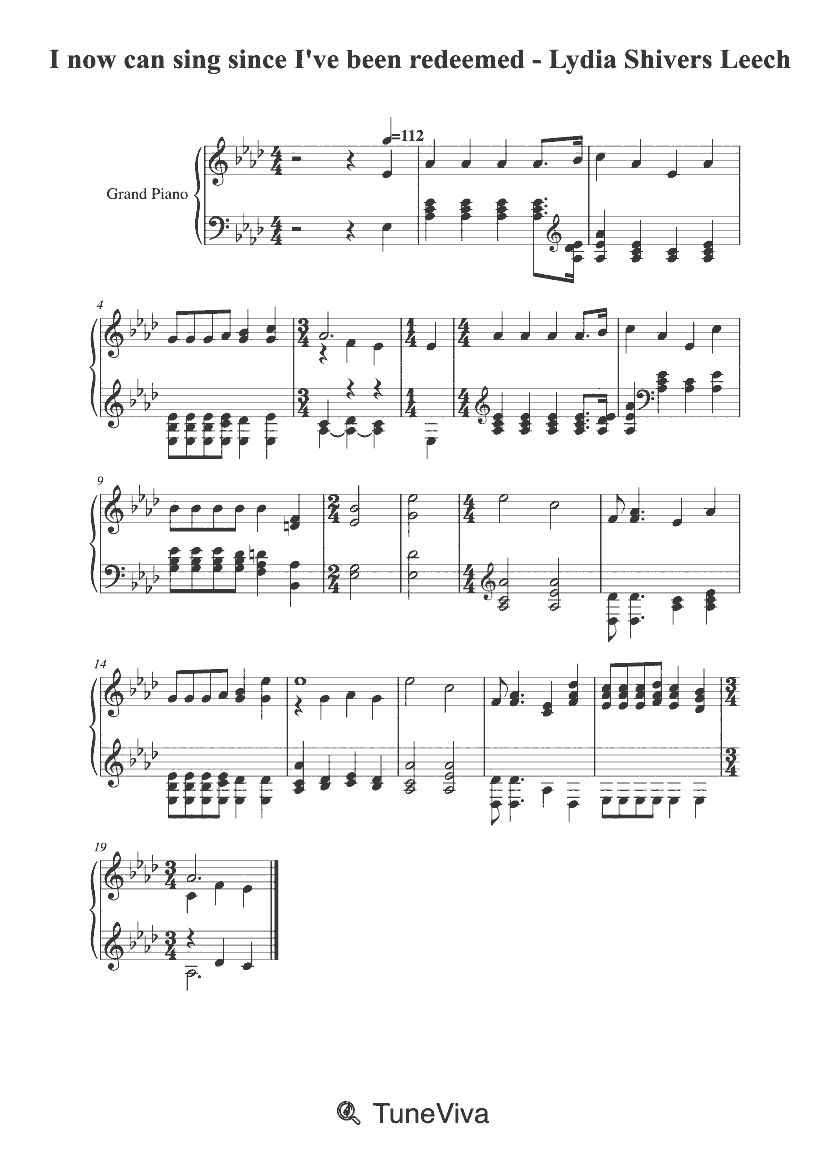
A short testimony hymn in the first person, one of the ten entries that carry text.
A conversion hymn; the catalogue keeps the whole stanza line as the title, so the file name runs long.
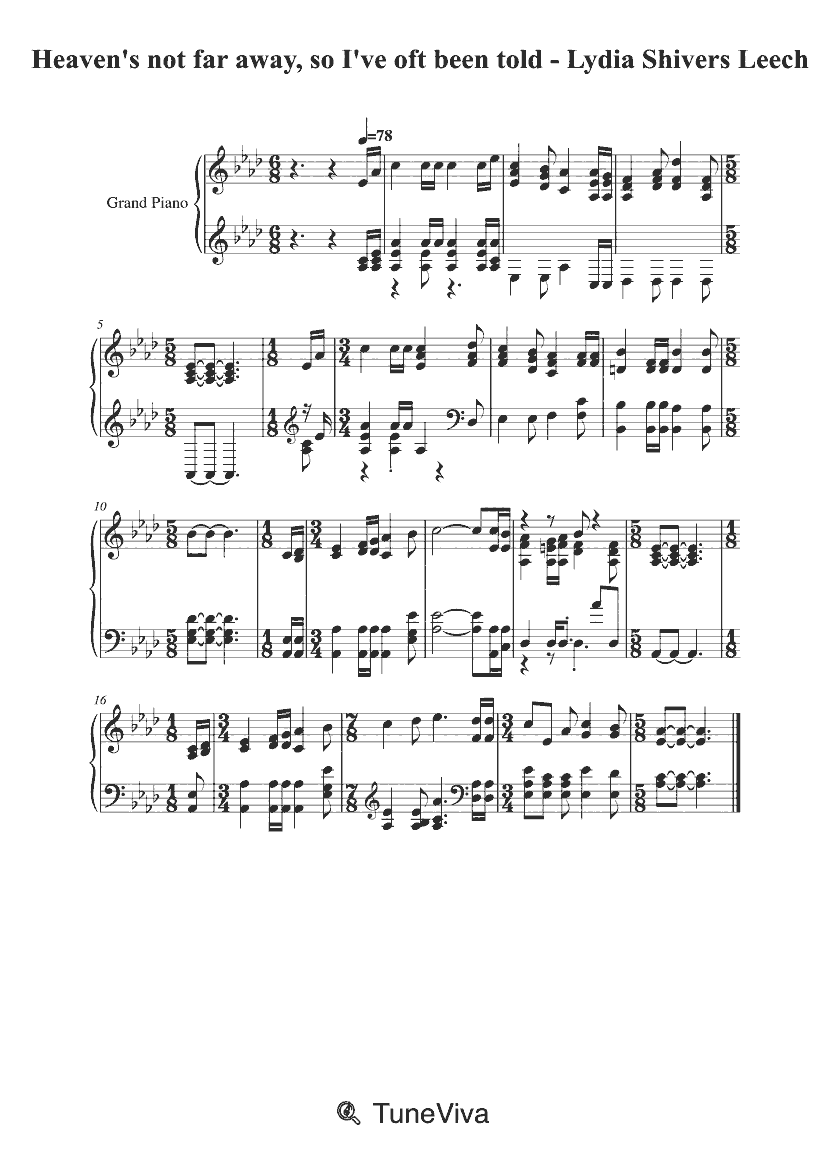
The opening line of the hymn Hymnary indexes as "Only a Veil Between", where the tune is credited to Leech.
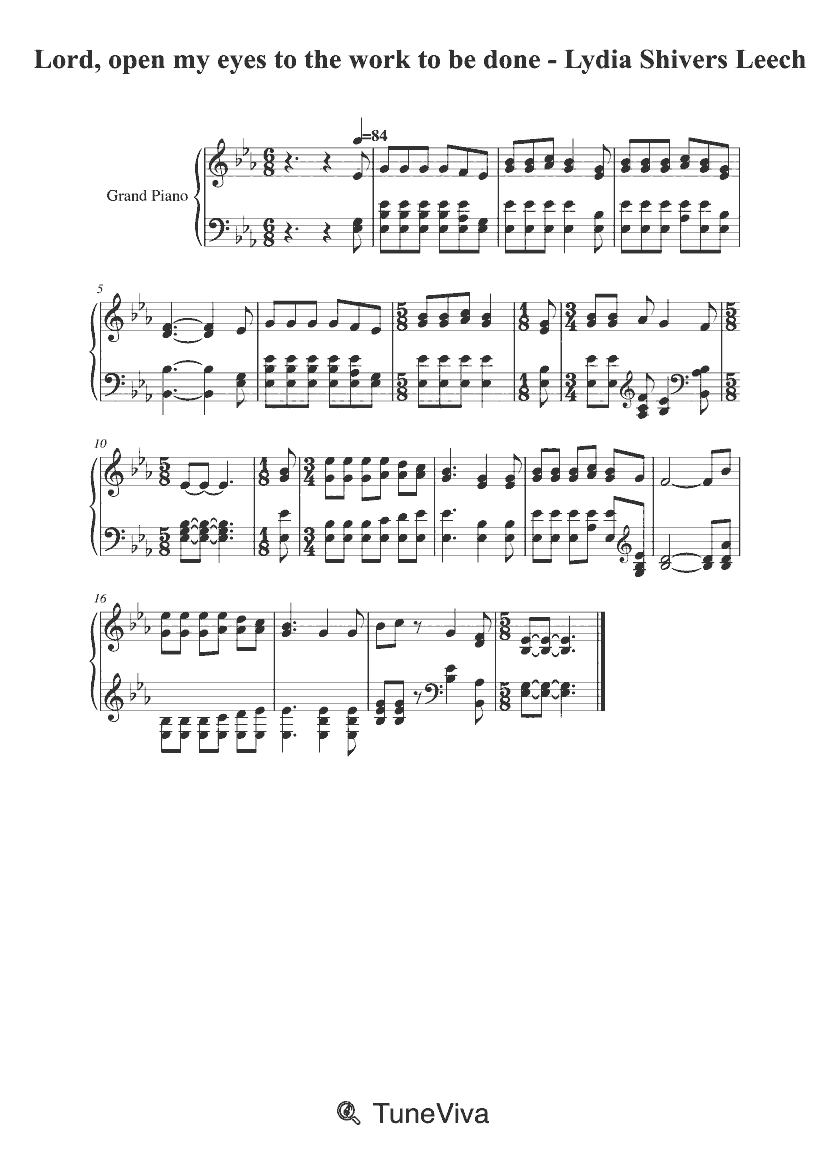
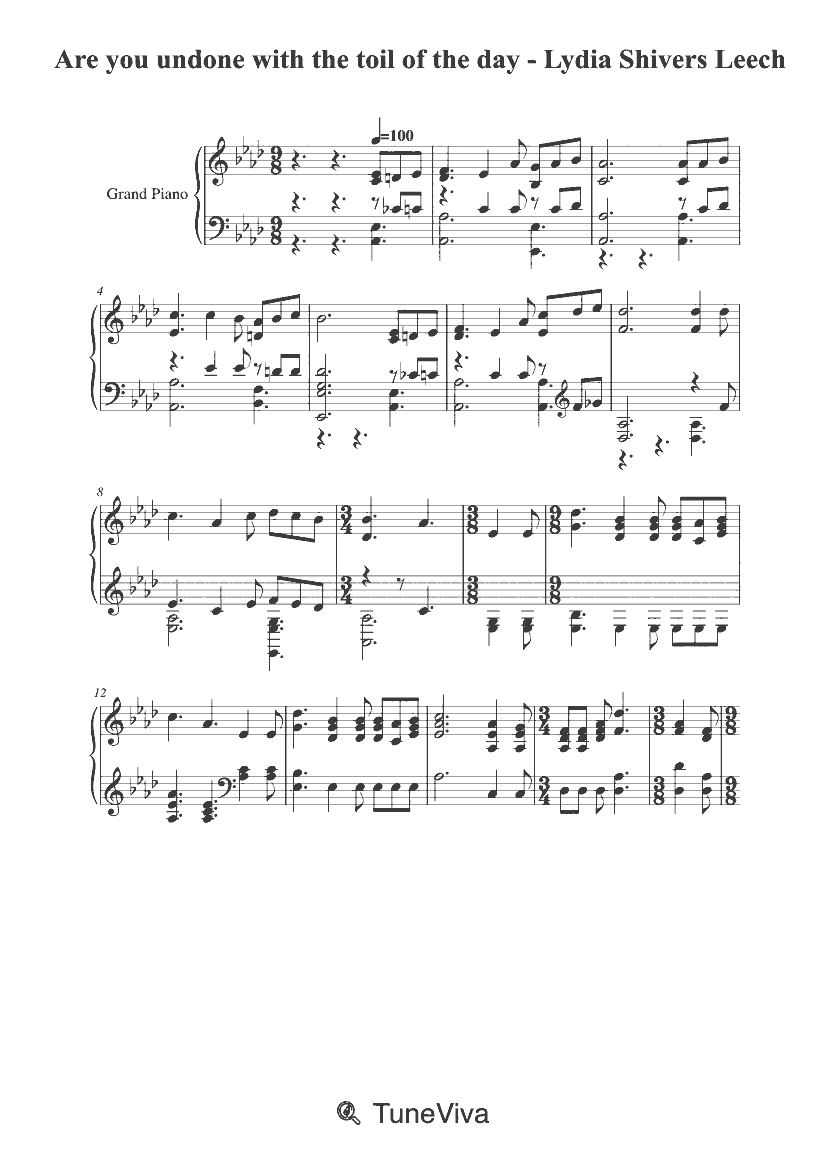
A prayer for service and sight, set at complexity index 1.
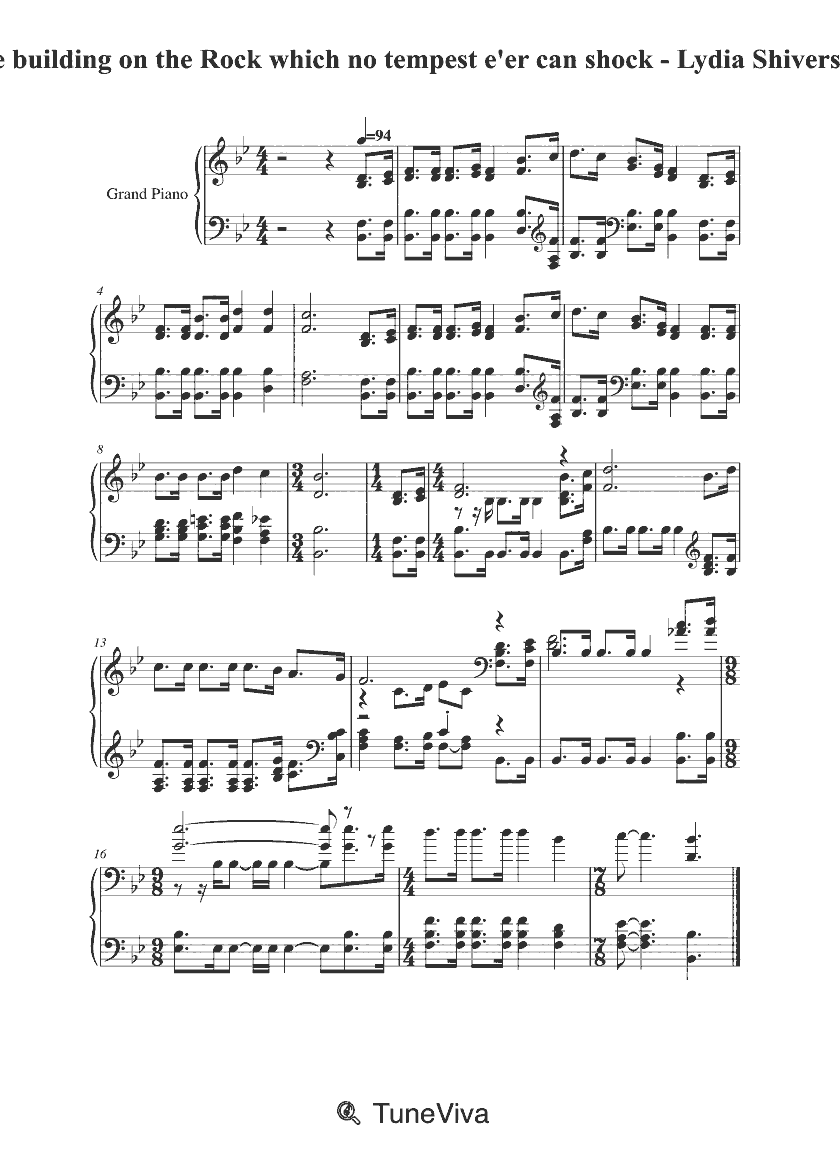
A Sunday-school hymn on the house founded on rock, with the full stanza line as its catalogue title.
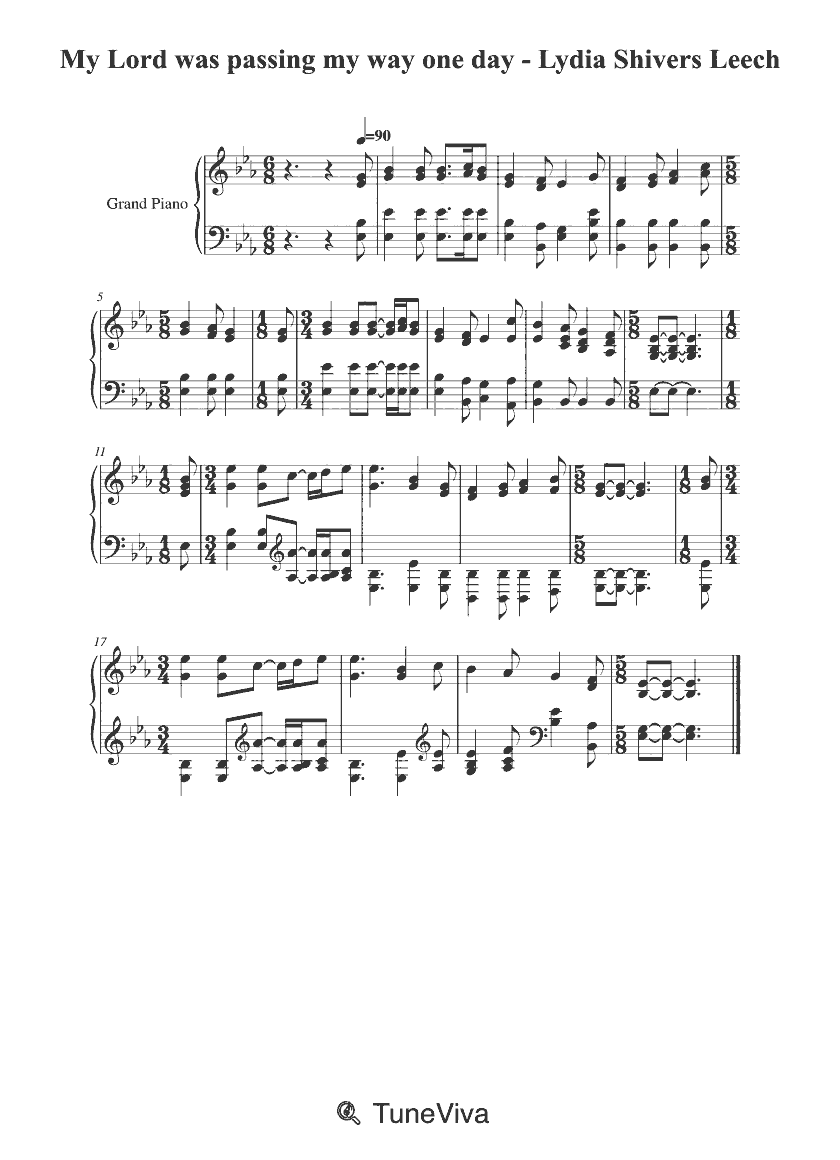
A narrative gospel song that tells a conversion in sequence rather than stating it.
A prayer for guidance, filed under the shorter Lida spelling of her name.
43, running to about 26 minutes of music and 13,445 notated notes. Ten of them include lyrics.
The catalogue uses first lines, not settled titles. "God's way" and "God's way is the best way, though I may not see" open the same text, and there is no field to mark one as a duplicate of the other.
Both appear. Hymnals and Hymnary usually print Lida S. Leech, while the catalogue's main heading uses Lydia; the merged group lida-shivers-leech collects the shorter form.
"God's Way" (1911) leads on views in both of its entries. "Only a Veil Between" is the other title likely to be recognised outside the catalogue, since it survives in several hymnals.
Catalog editions and arrangements attributed to Lydia Shivers Leech.