classical
2 tracks
Maltbie Davenport Babcock is remembered for one hymn, This Is My Father's World, but the catalogue holds something different: 21 scores, about 12 minutes and 6,503 notated notes, most of them Christmas carols and songs for children. Twelve entries carry words.
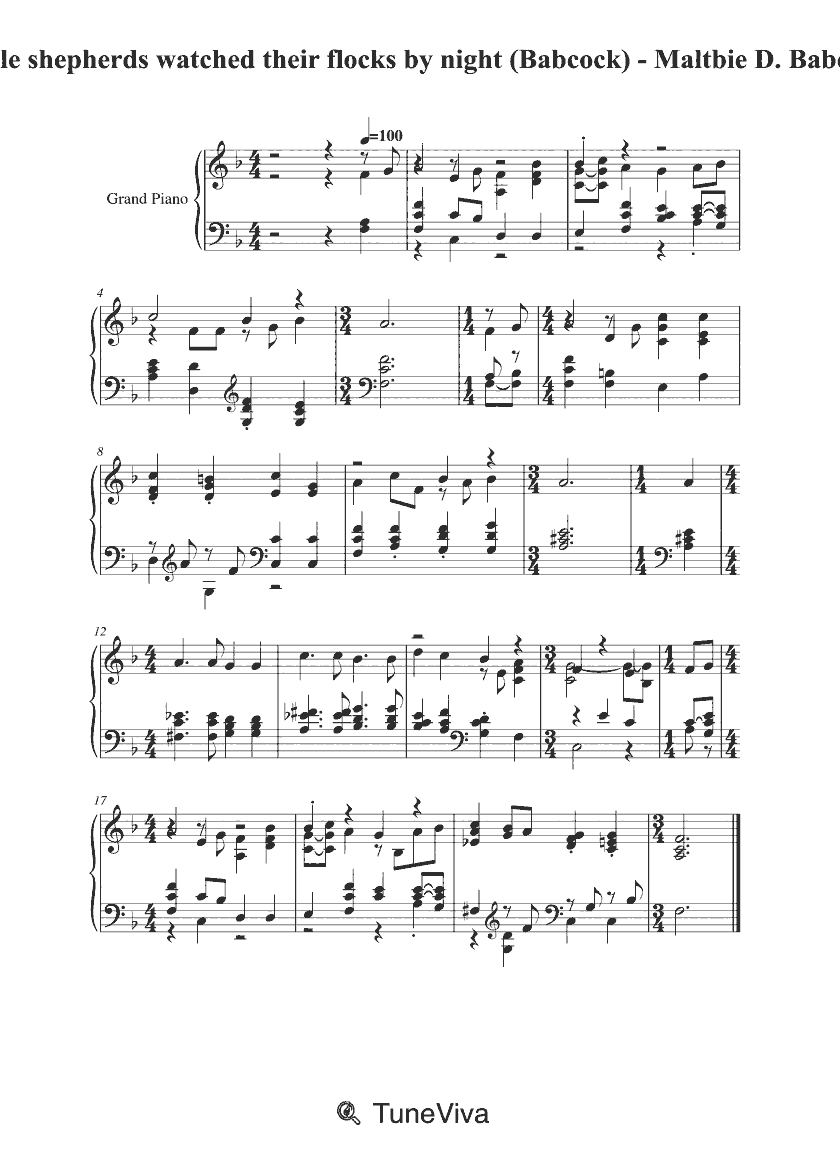
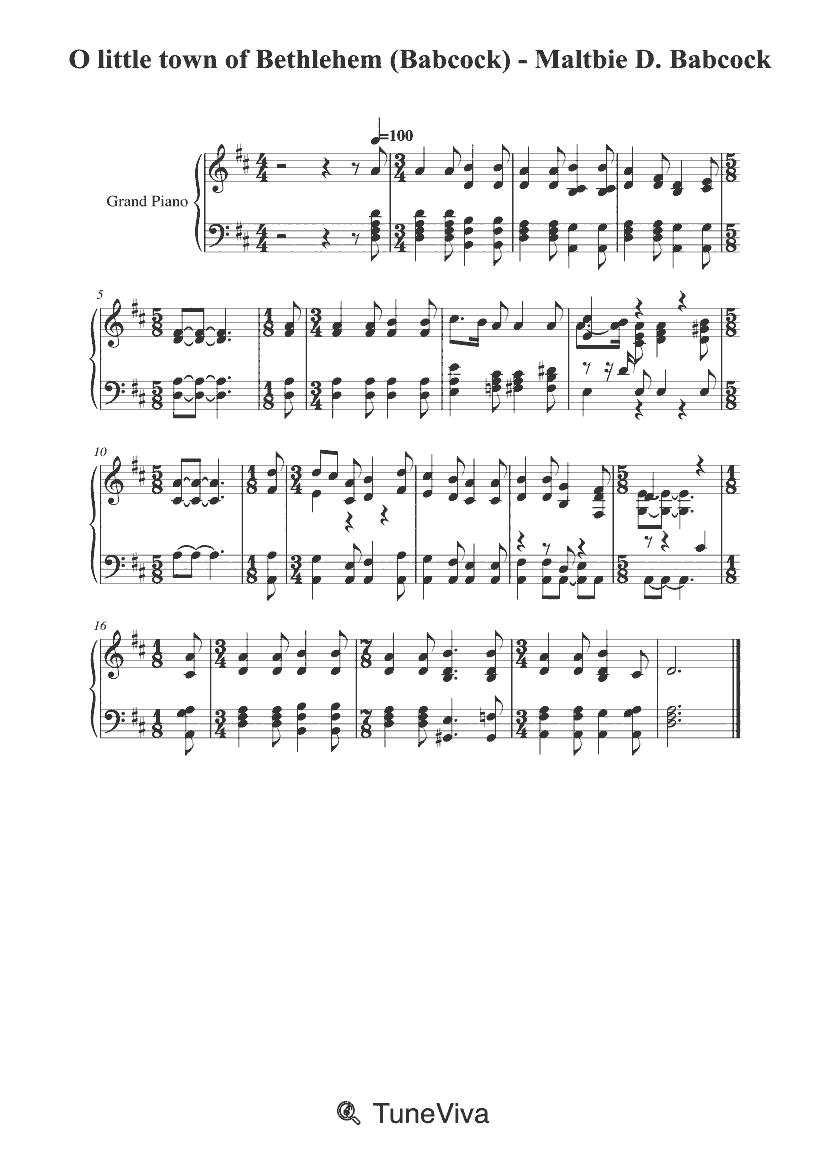
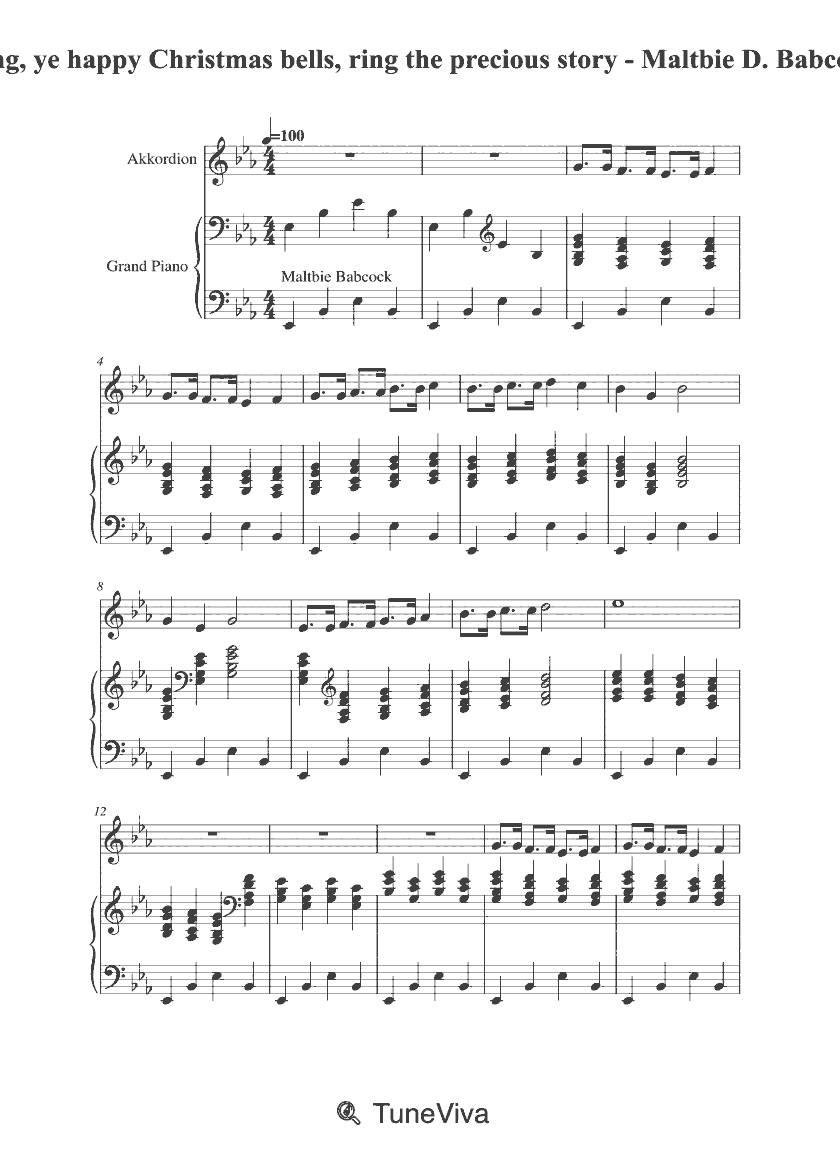
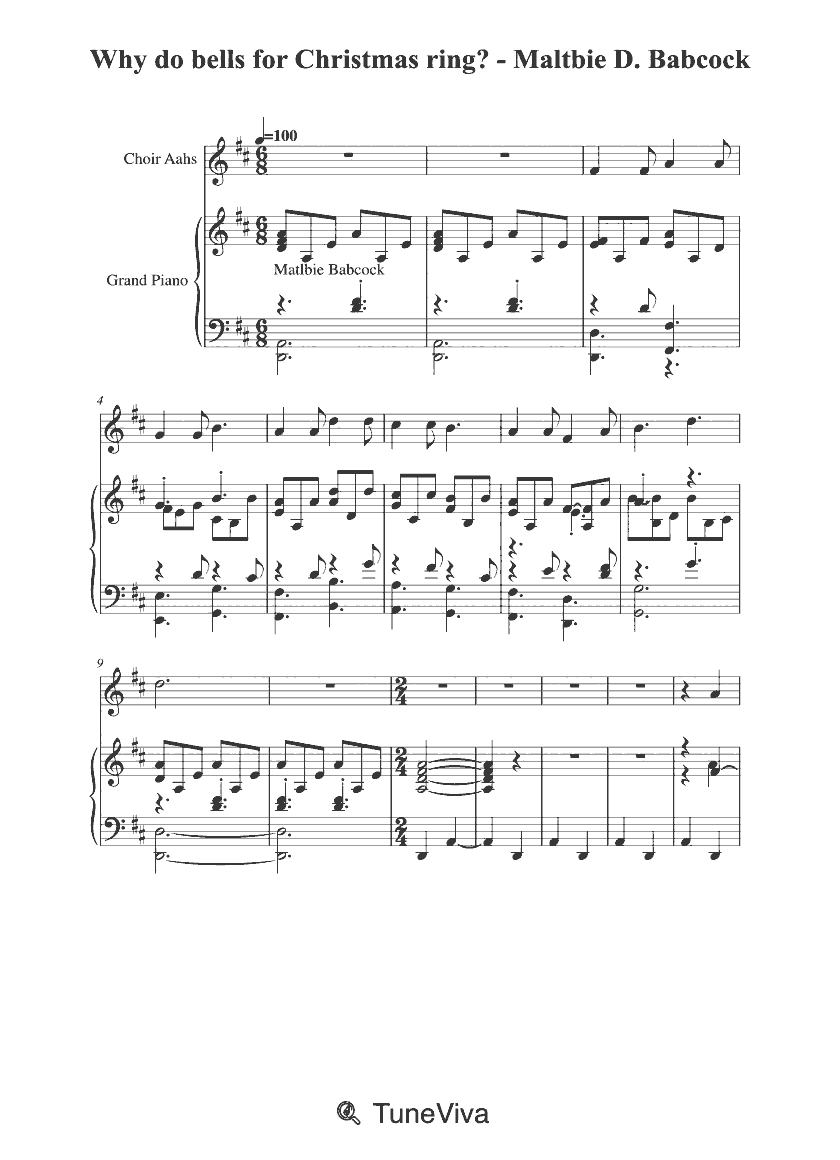
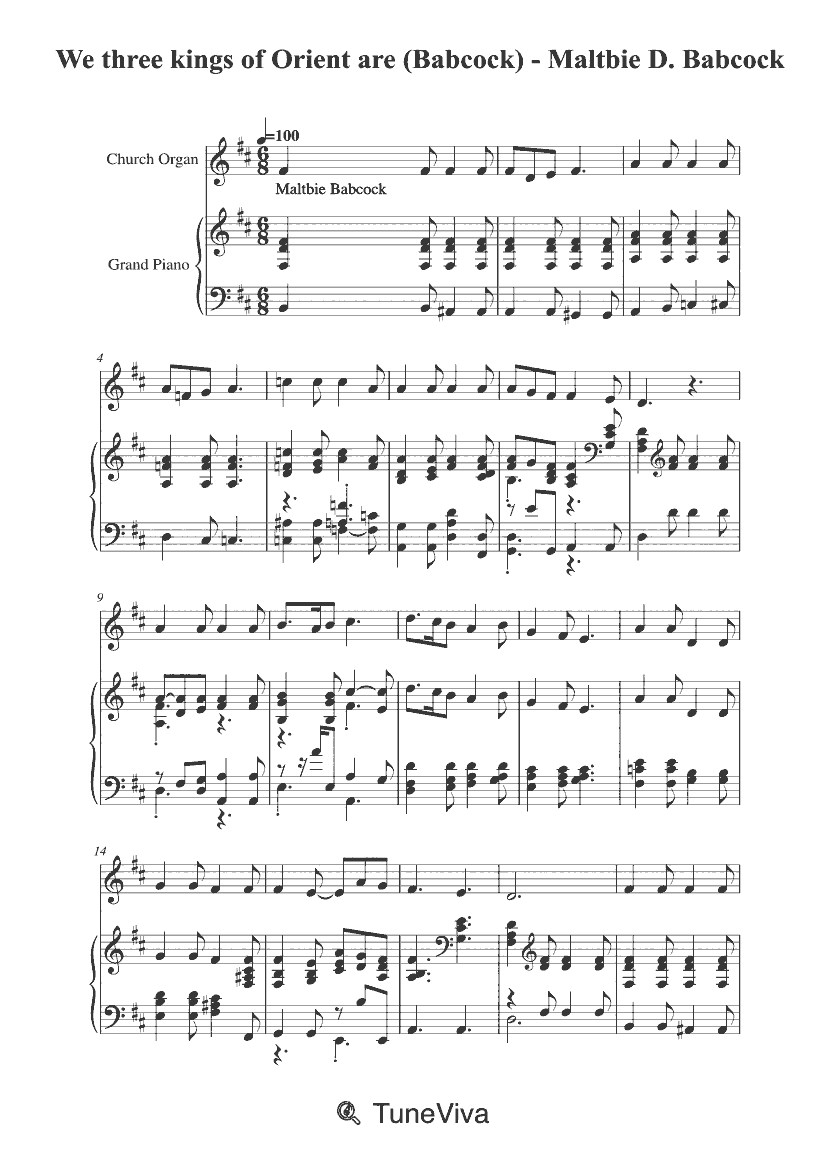
The most-viewed piece is a setting of We three kings of Orient are, followed by While shepherds watched and O little town of Bethlehem, each marked '(Babcock)' to distinguish the tune from the standard one. Around them sit his own carol texts, Ring, ye happy Christmas bells and Why do bells for Christmas ring? Difficulty is spread: seven entries at index 0, six at index 1 and eight at index 2.
Babcock was born in Syracuse, New York, on 3 August 1858, graduated from Syracuse University in 1879 and from Auburn Theological Seminary in 1882. He was pastor at Lockport, then from 1887 to 1900 at Brown Memorial Presbyterian Church in Baltimore, where his preaching made him one of the best-known ministers in the country; in 1900 he moved to the Brick Presbyterian Church in New York.
He died in Naples on 18 May 1901, aged 42, on the way home from a journey to Egypt and Palestine, and his verse was gathered after his death. This Is My Father's World, written at Lockport, appeared in print shortly after his death and became the hymn that carried his name. A collection called Hymns and Carols, issued in 1903, printed the carols that fill this page, among them Why do bells for Christmas ring? and Ring, ye happy Christmas bells.
The catalogue's labelling is worth reading closely. Entries such as We three kings of Orient are (Babcock) and O little town of Bethlehem (Babcock) use texts by other writers with a tune attributed to Babcock; the entries without a parenthetical name are his own words and music. Nothing here runs long: the whole page amounts to about twelve minutes of music.
These are short carols for unison or simple four-part singing, so intonation depends on the accompaniment rather than on virtuosity. Keep the tempo brisk enough for the words to stay intelligible, and do not let the bell figures in Ring, ye happy Christmas bells turn into a drumbeat. In a carol such as We three kings the tune is the argument, so give the melody one clear colour and hold the harmony back. If you are playing for a service, plan the last verse before you begin, because the pieces are too short to build an ending on the spot.
The most-viewed entry: John Henry Hopkins Jr's text with a tune the catalogue assigns to Babcock.
Nahum Tate's Christmas text to a Babcock tune, labelled to separate it from the standard setting.
Phillips Brooks's carol in a Babcock setting rather than the familiar St Louis or Forest Green.
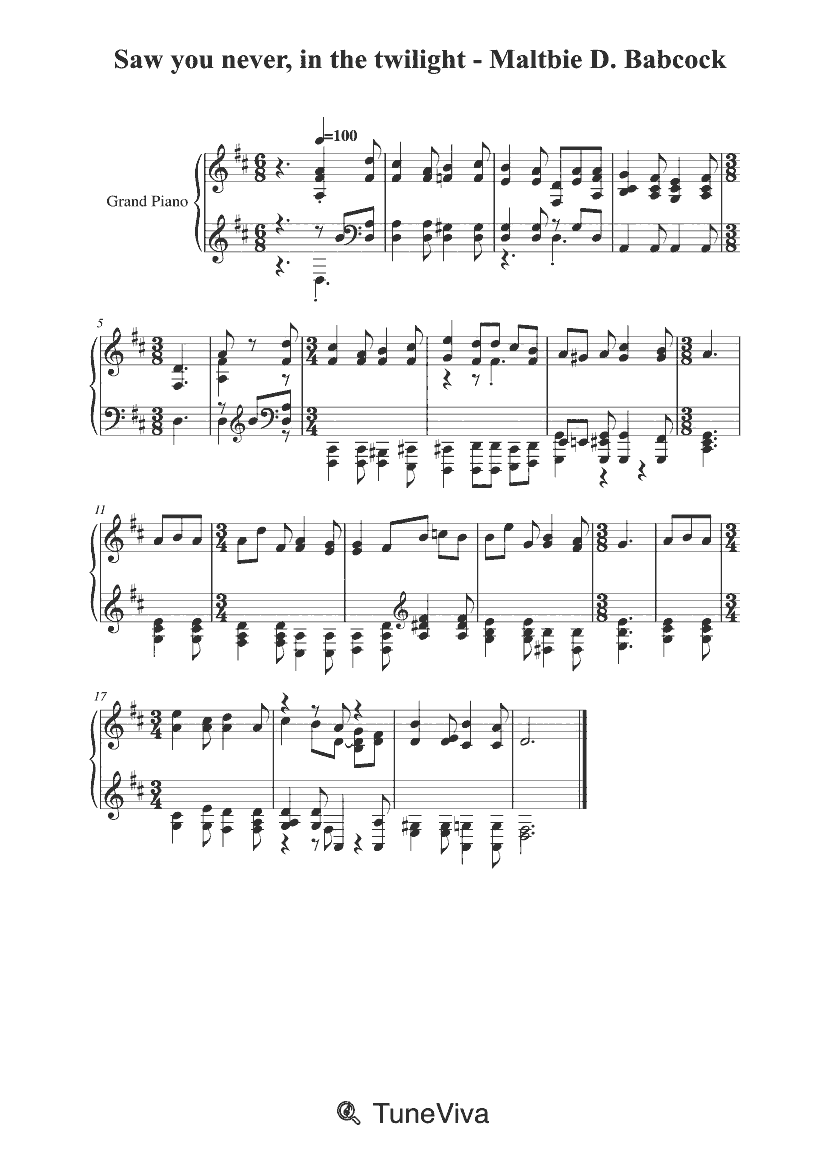
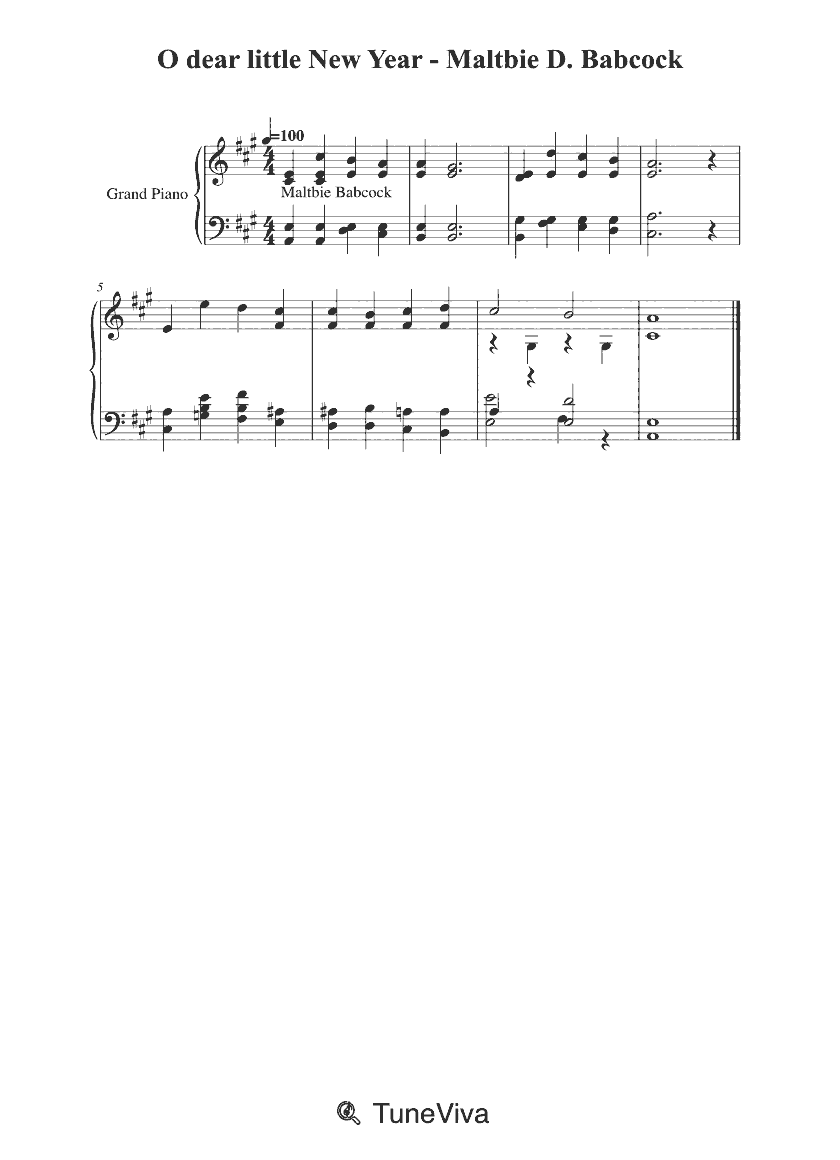
One of his own carols, with words and music printed in Hymns and Carols in 1903.
A carol for children, first printed in Hymns and Carols in 1903.
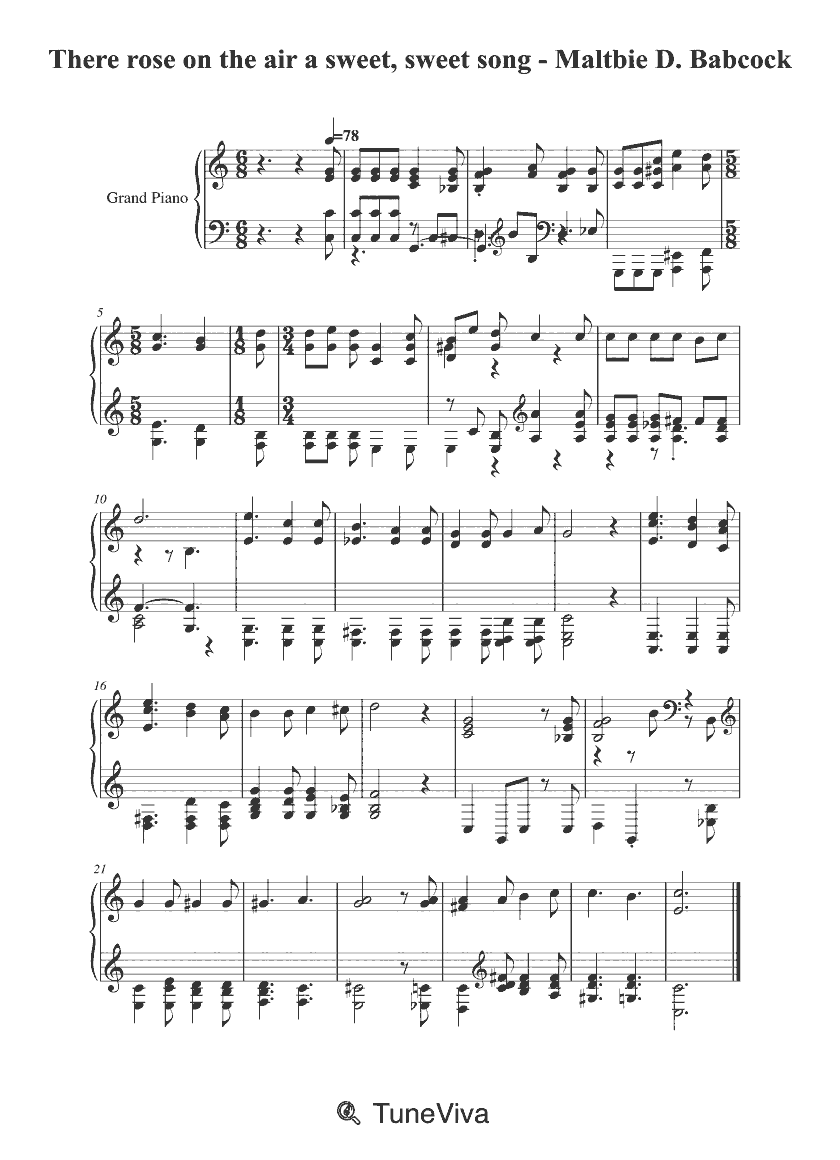
A short song outside the Christmas group, from the same posthumous collection.
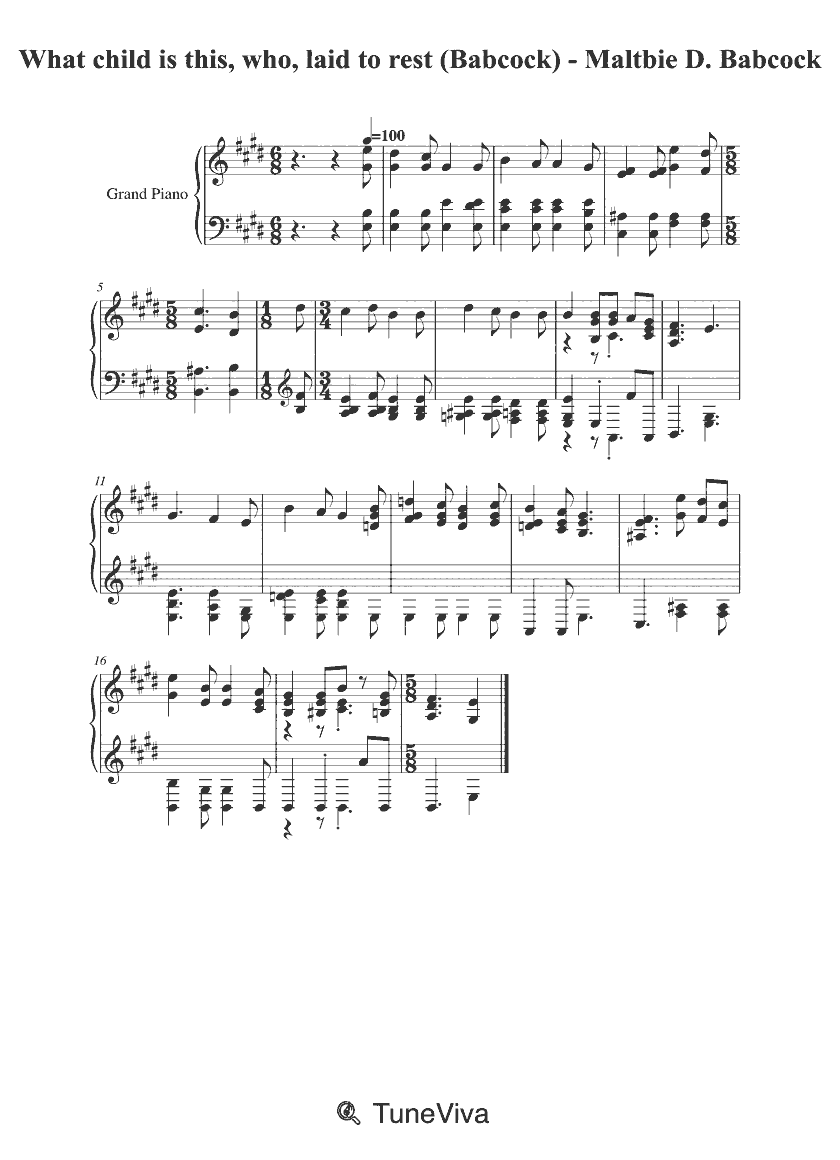
William Chatterton Dix's words to a tune attributed to Babcock, not the Greensleeves setting.
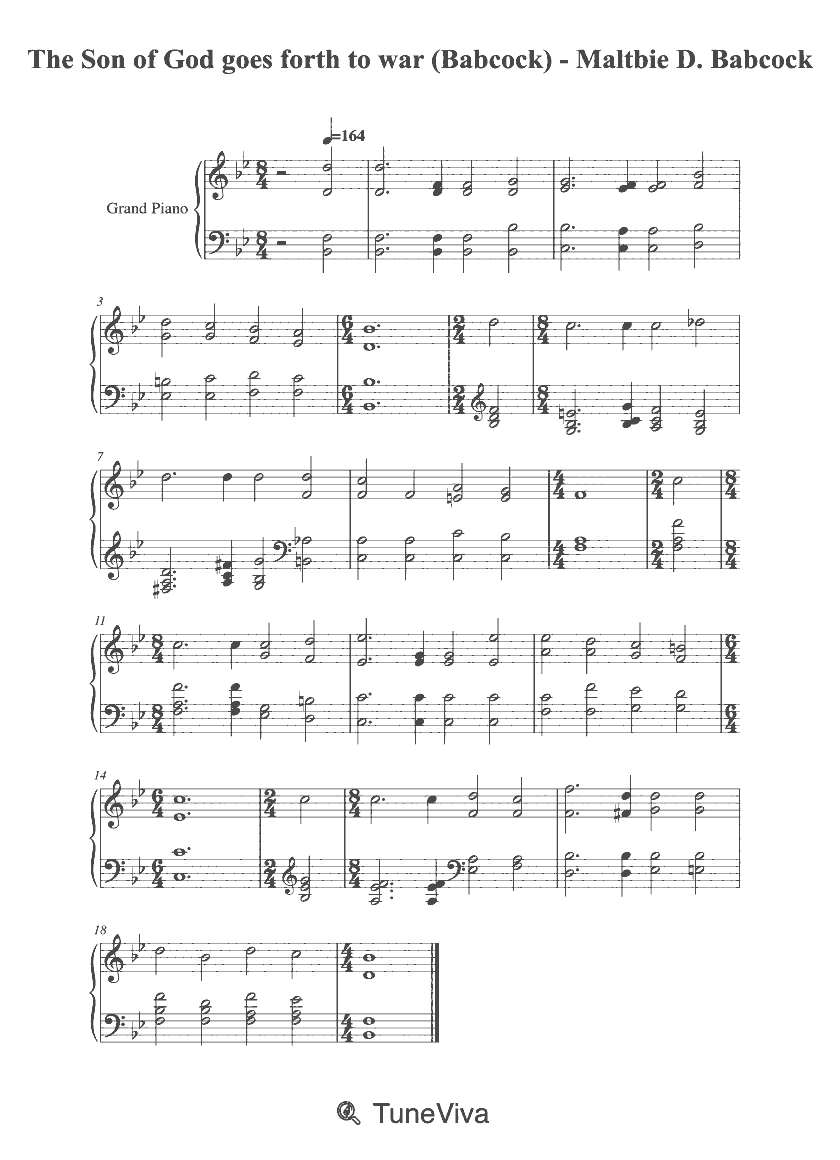
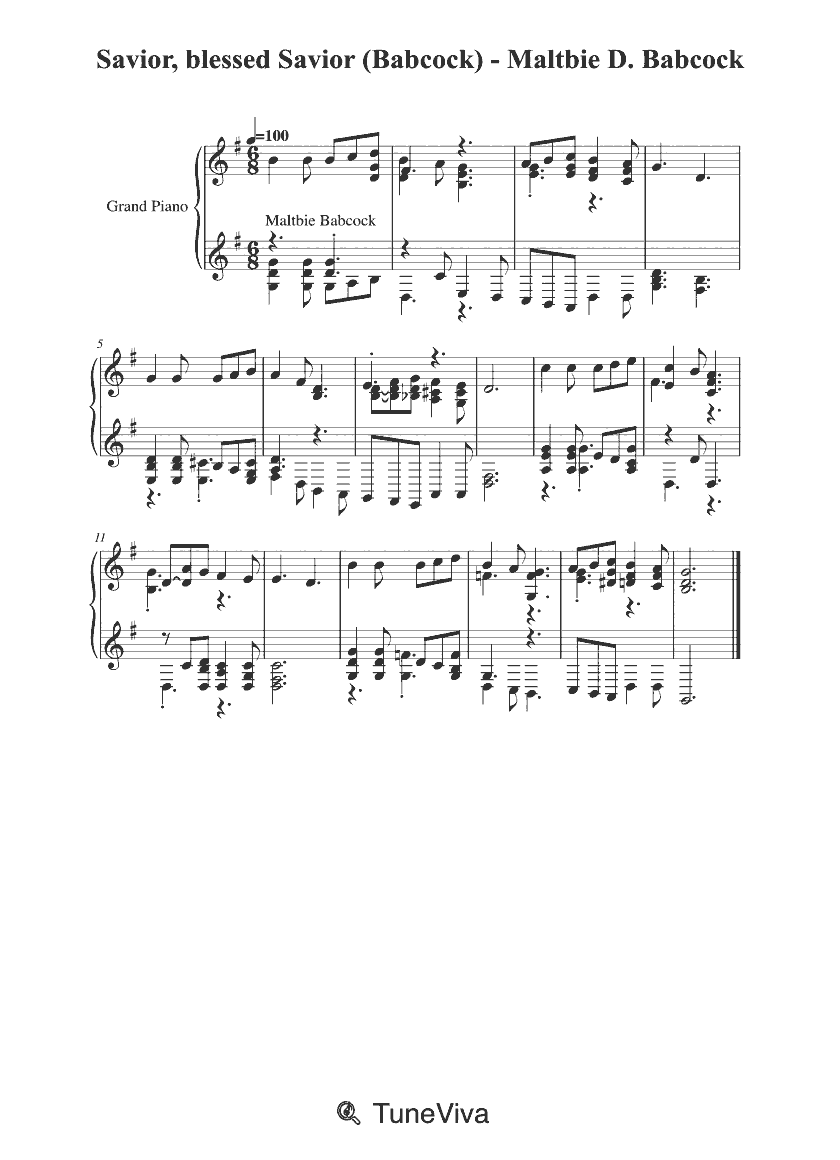
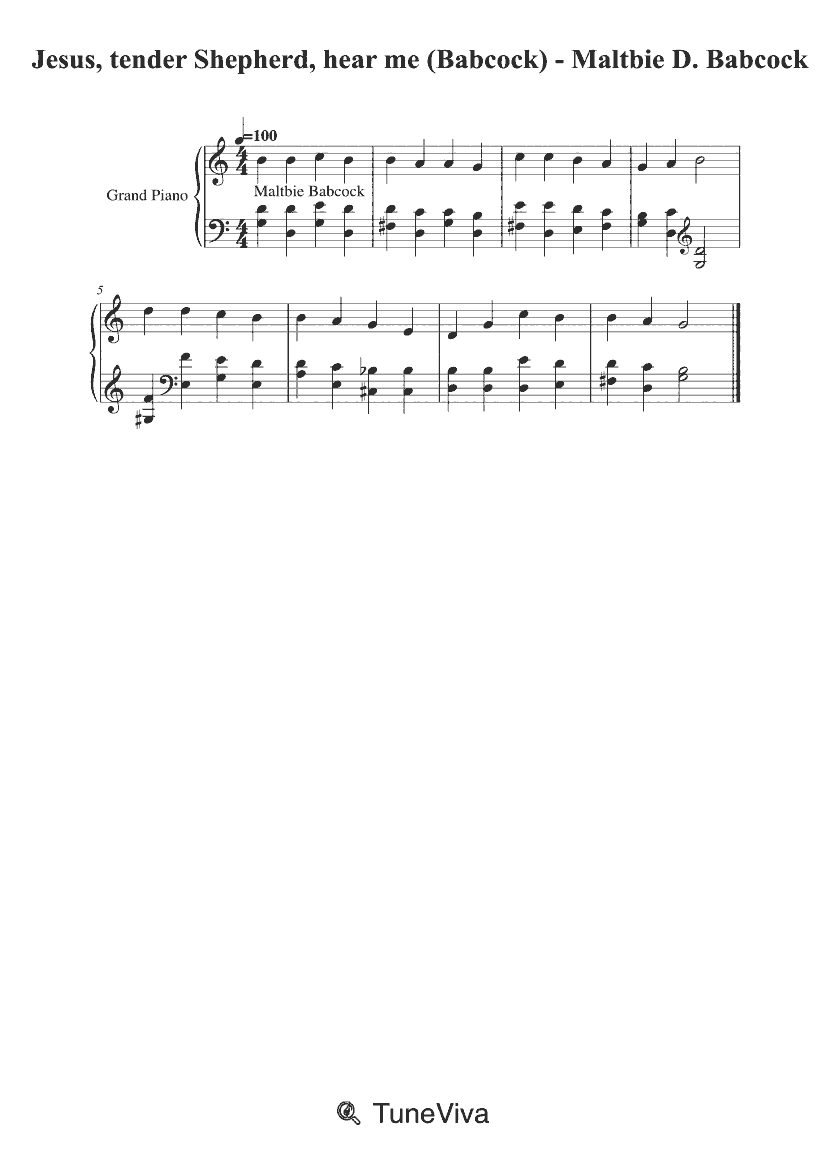
Reginald Heber's hymn of discipleship, one of the few entries not tied to Christmas.
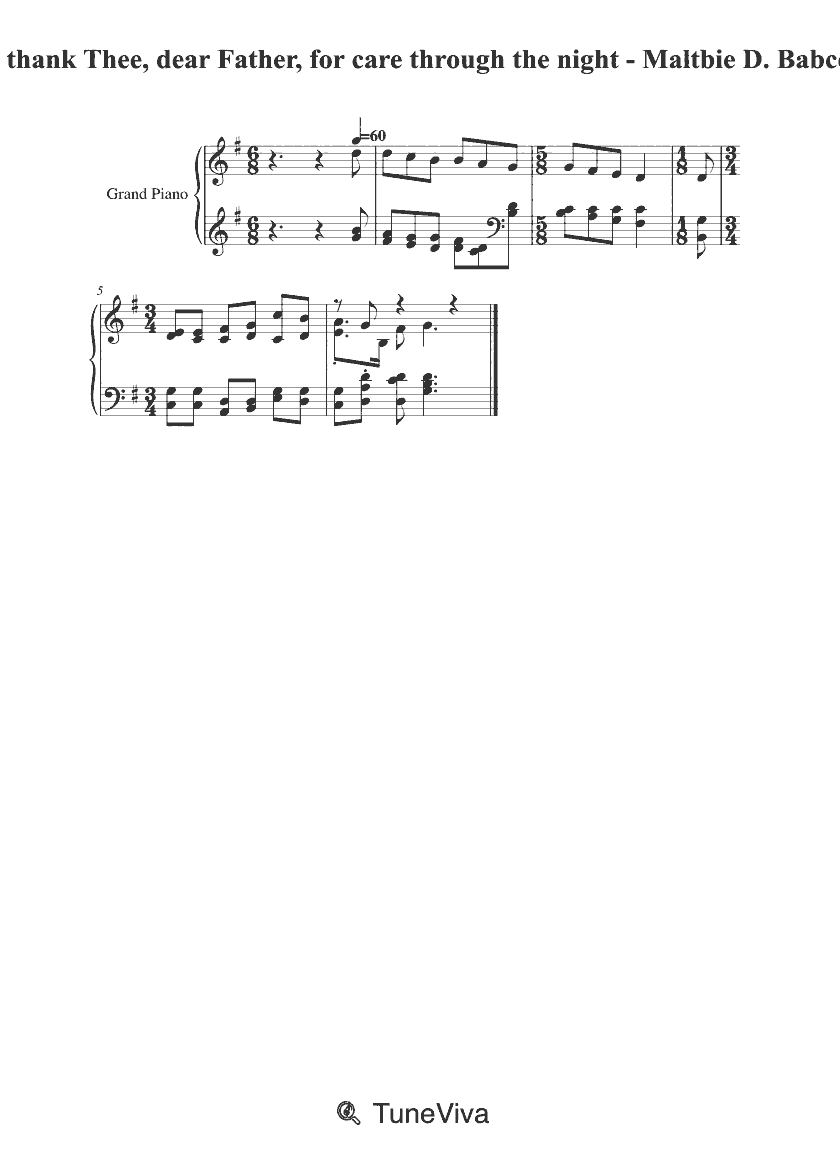
A children's hymn of thanks for the night, in the same simple strophic form.
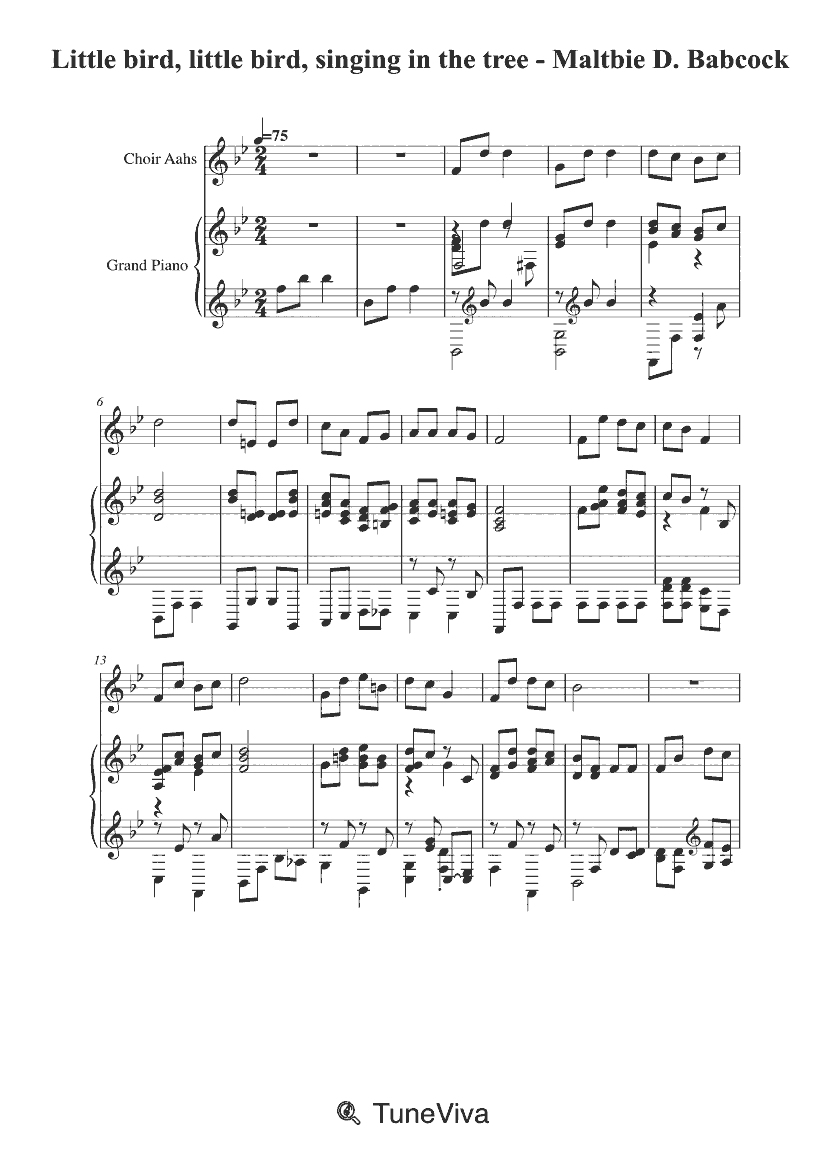
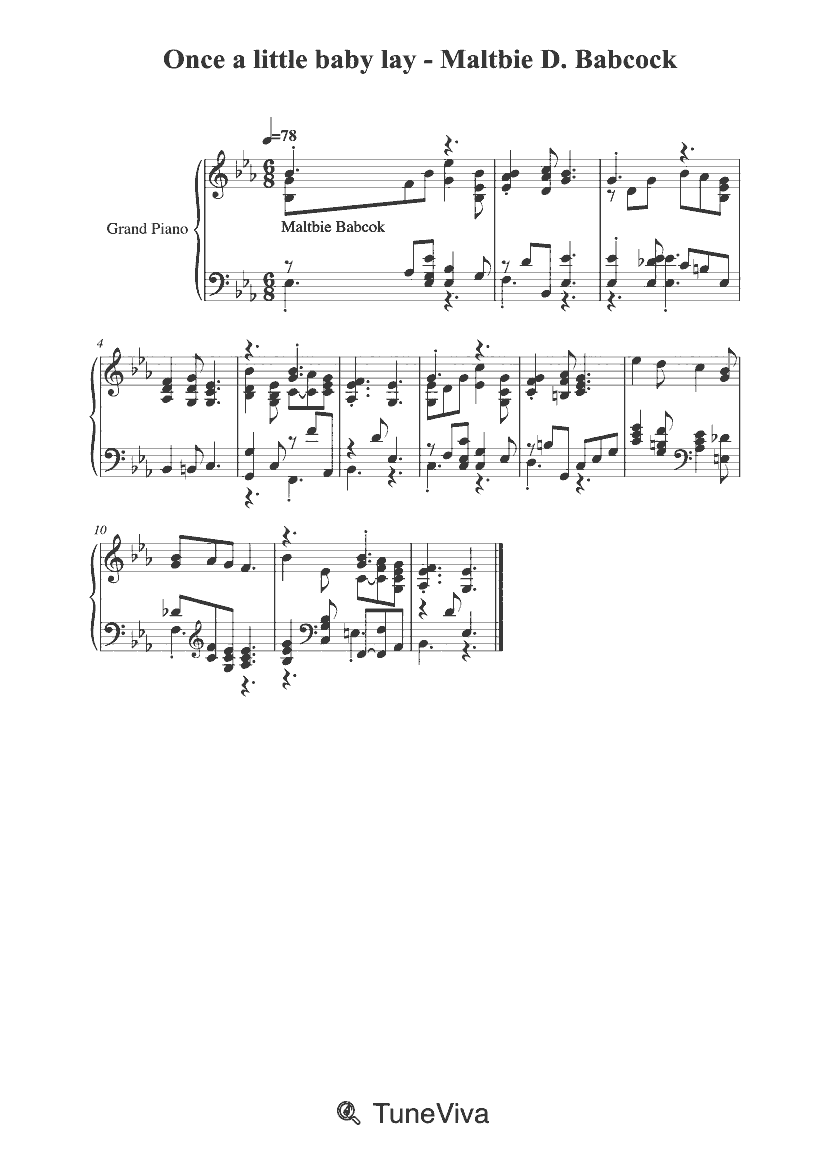
A Christmas carol on the shepherds, from the 1903 collection.
21, about 12 minutes of music and 6,503 notated notes. Twelve of the entries include lyrics.
The label separates a Babcock tune from the better-known setting of the same words, as with We three kings of Orient are and O little town of Bethlehem, whose texts he did not write.
No. The hymn that made his name is not among the 21 entries, which are carols, Christmas hymns and a handful of songs for children.
He was a capable musician as well as a preacher, and the carols were gathered in Hymns and Carols in 1903, two years after his death in Naples.
Catalog editions and arrangements attributed to Maltbie D. Babcock.