classical
1 tracks
Peter Milne was a working dance fiddler for most of his eighty-four years, and the catalogue holds what came out of that life: 54 scores, about 70 minutes and 11,618 notated notes. None carries lyrics, and every entry sits at complexity index 1, the level of a single-line dance tune with a written second part.
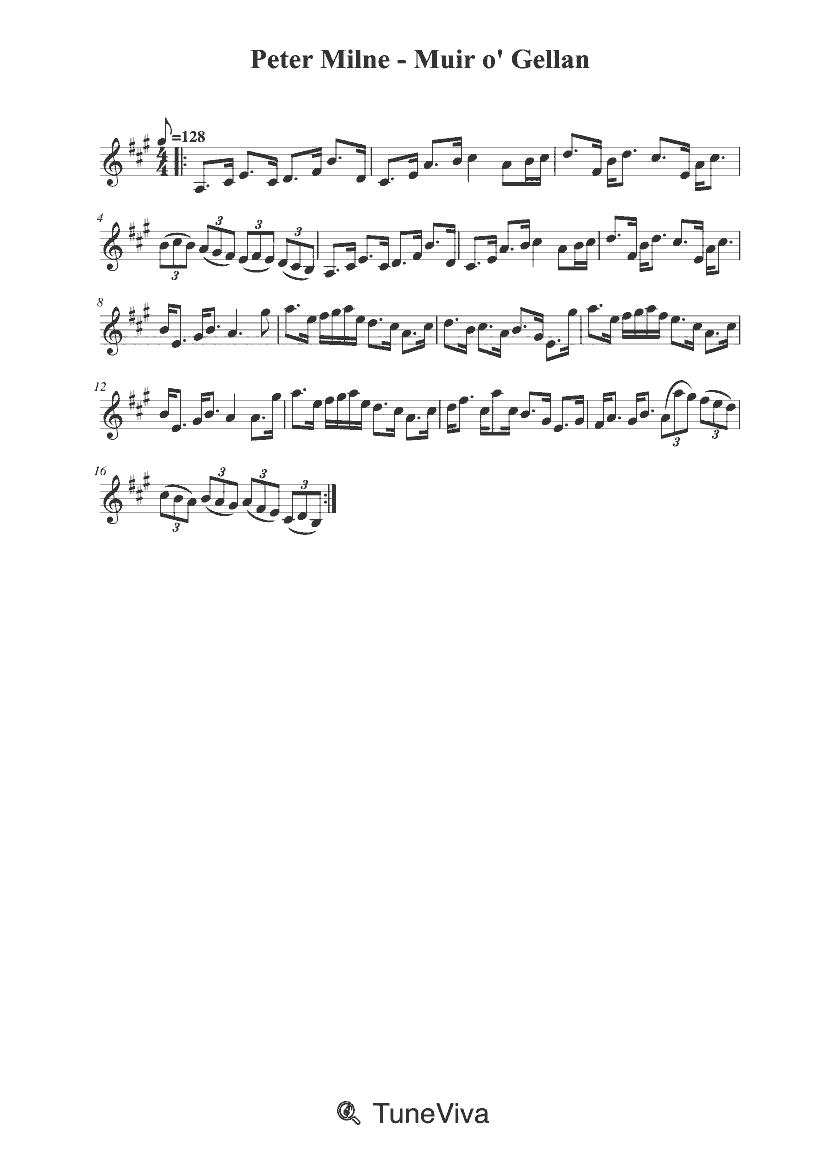
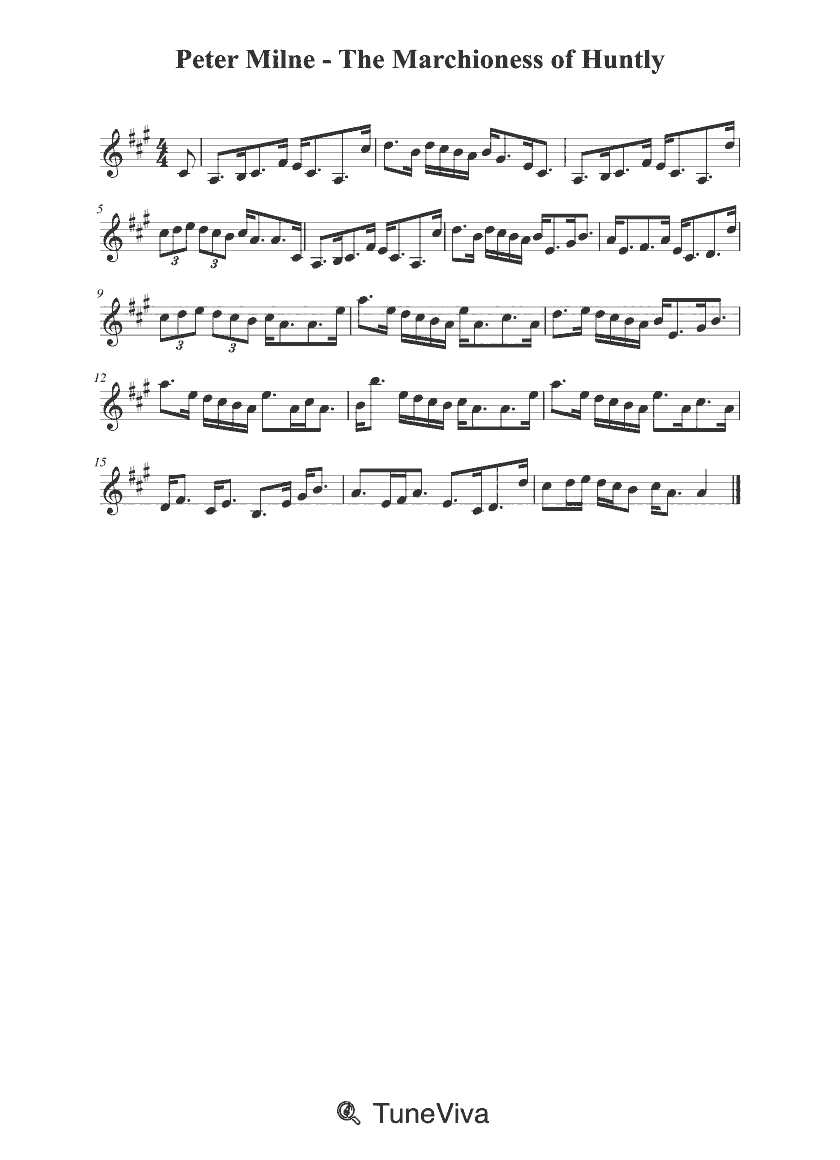
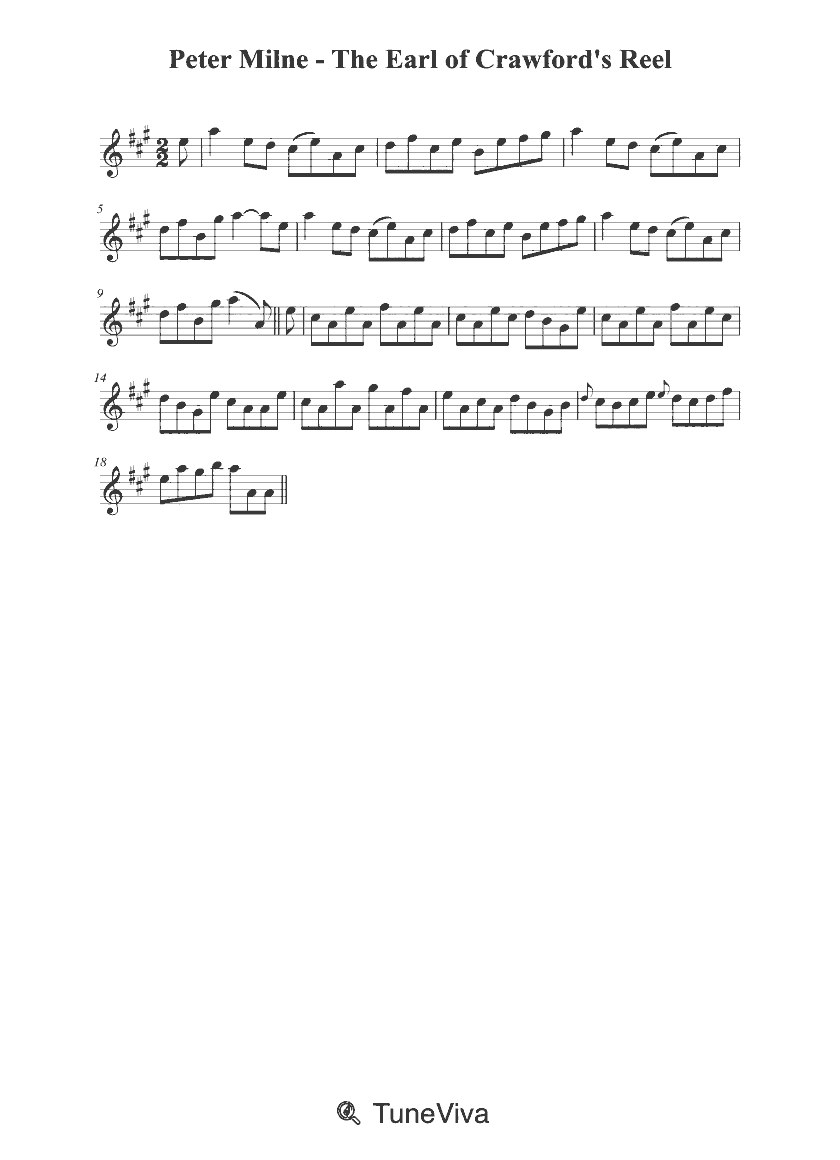
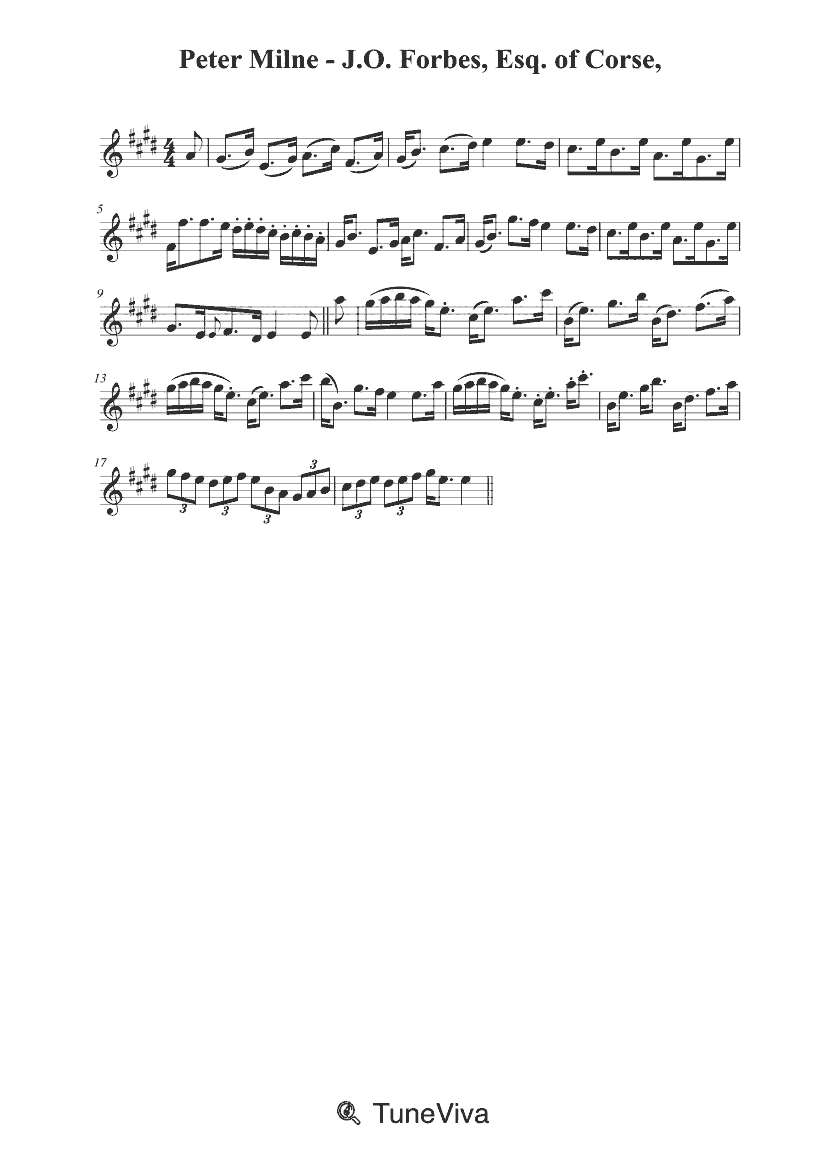
The list is dominated by reels and strathspeys for the ballroom: the Dean Brig Reel, Muir o' Gellan, J.O. Forbes of Corse, The Marchioness of Huntly, The Earl of Crawford's Reel. Several tunes appear twice, usually under slightly different titles rather than in different versions.
Milne was born at Kincardine O'Neil, on Deeside, on 30 September 1824, and taught himself the fiddle at about seventeen. Within a few years he was playing at the Theatre Royal in Aberdeen, and in his mid-twenties he was leading its band. He befriended the young James Scott Skinner and employed him as a cellist, and the two went to Edinburgh together, where Milne led theatre bands and toured England; he took opium for rheumatism during those tours and later worked the Forth ferries until the bridge opened in 1890.
He settled at Tarland, six miles north-west of Aboyne, and was known as the Tarland Minstrel. Skinner, who became the more famous of the two, called him the founder of the present style of strathspey playing and the best all-round player and composer of his day, a judgement recorded in Skinner's own manuscript notes and now held at the University of Aberdeen. Milne spent the last ten years of his life in hospital in Aberdeen after an accident and died in 1908.
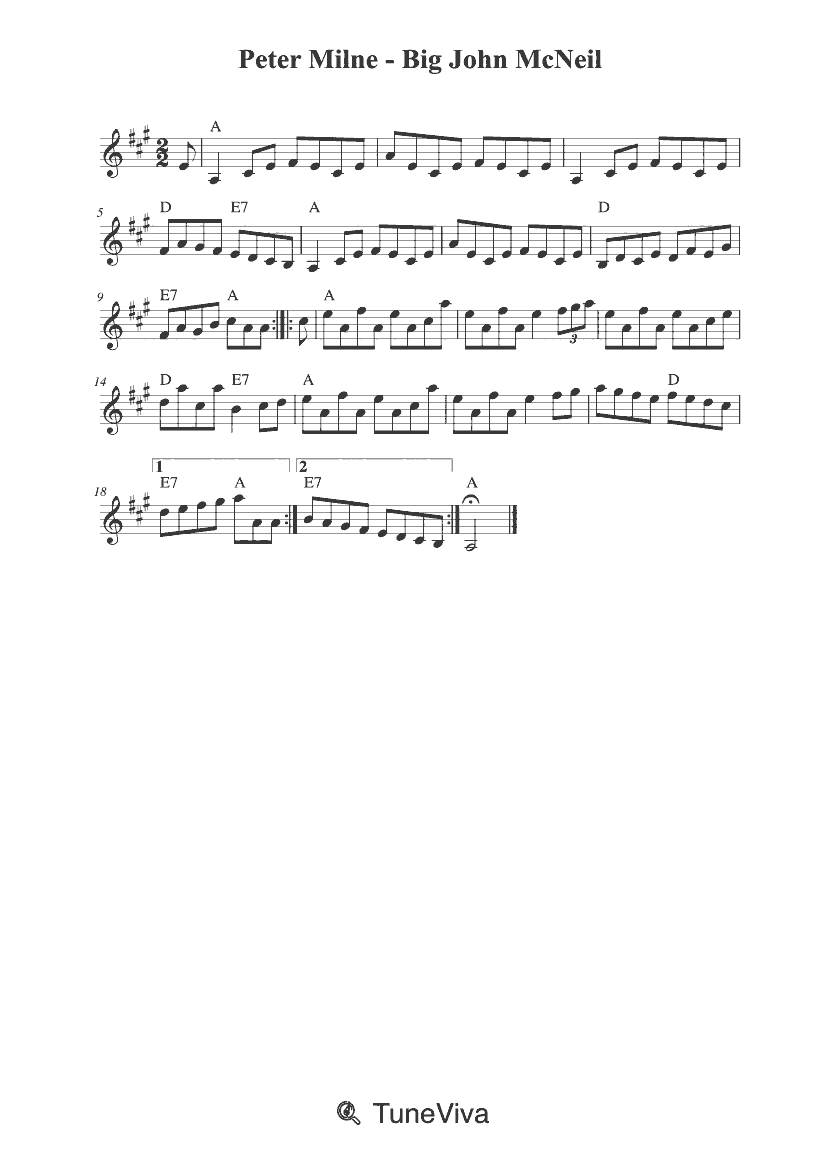
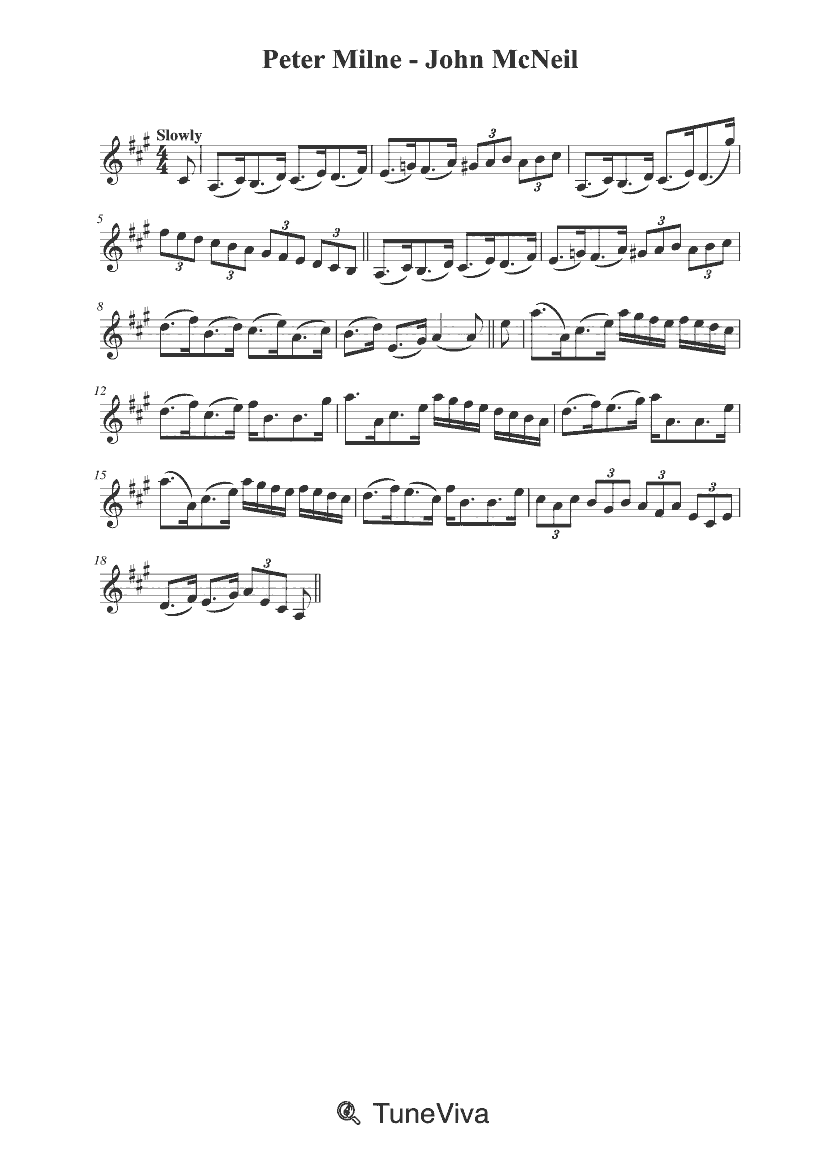
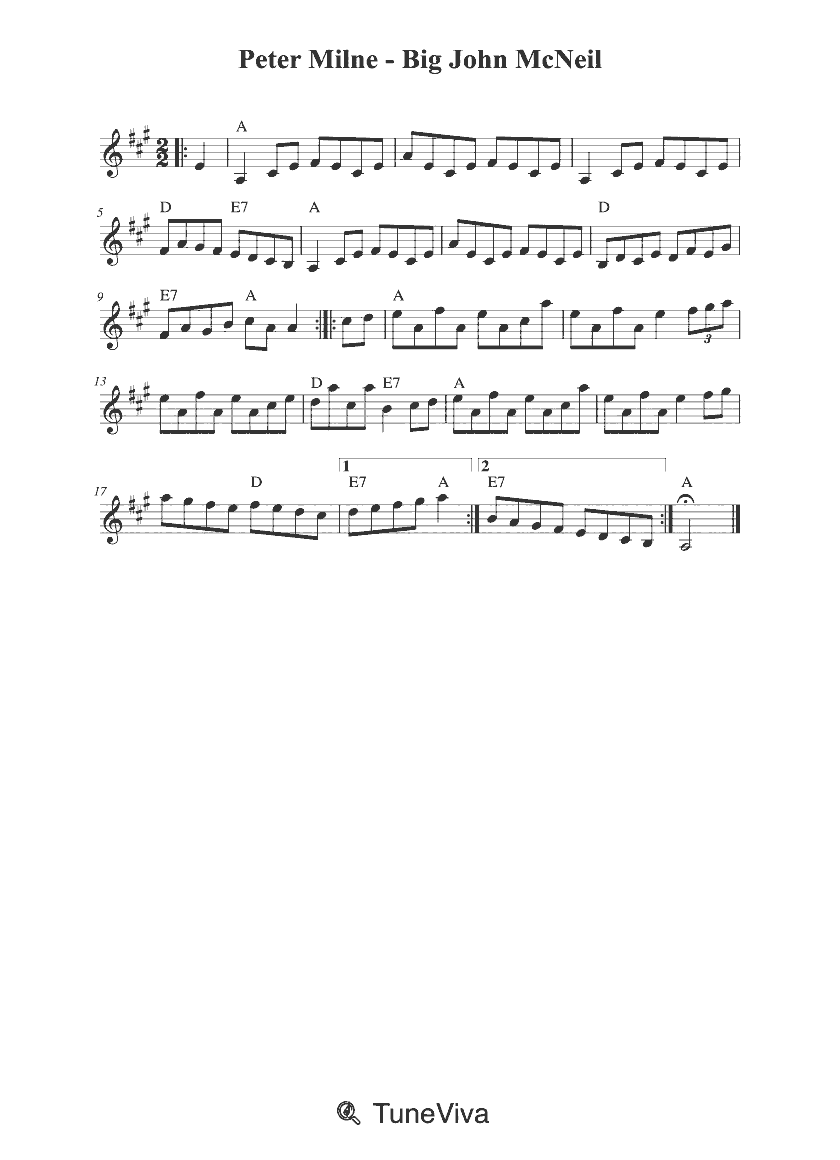
Only a few dozen tunes survive, and the catalogue reflects how they travelled: as fiddle settings, often without harmony, gathered from printed collections and manuscripts. John McNeil's Reel, better known as Big John McNeil, and Gillan's Reel, usually called Muir o' Gellan, are the two that went furthest. Where the catalogue holds several copies of one tune, the titles differ in wording rather than in music, so compare the first page before deciding that you have found a variant.
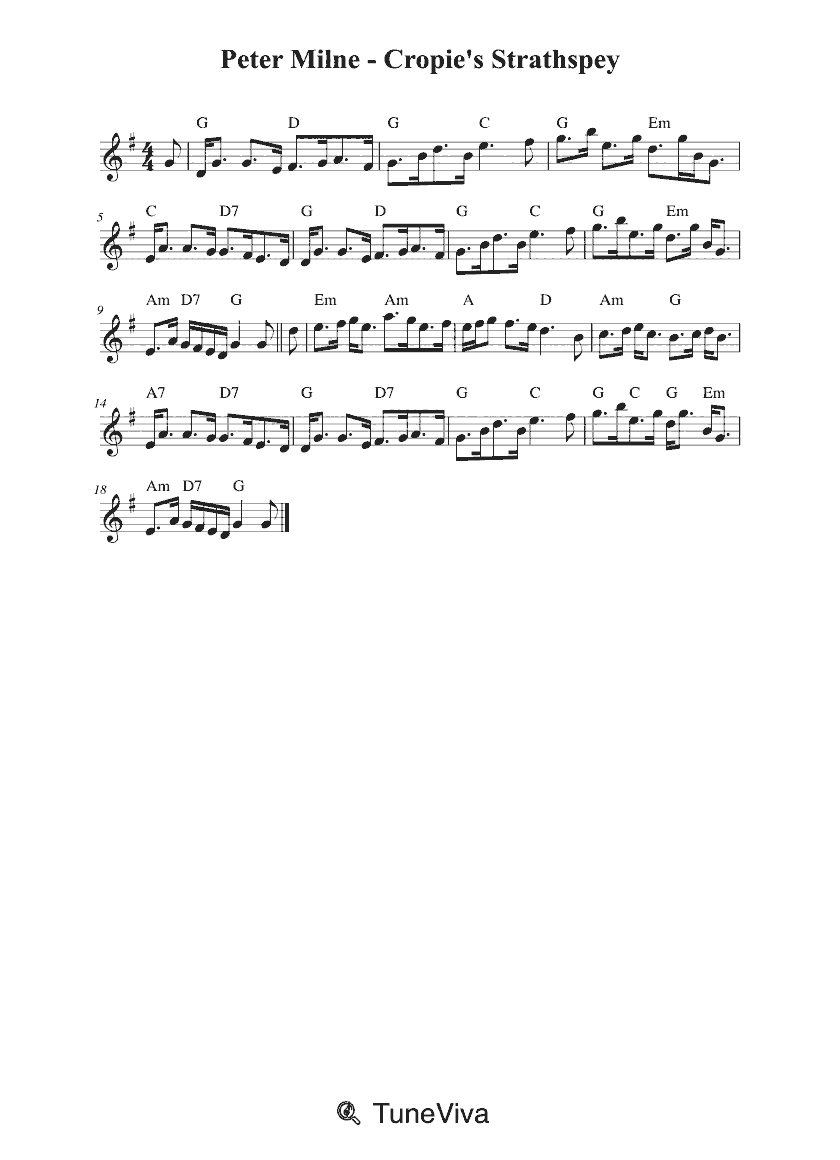
Strathspeys want the snap: the sixteenth-note pair after a dotted note is played short-long, and the effect comes from the bow rather than from tempo. Reels want the opposite, even quavers and a clear accent on the beat. In Milne's tunes the second part usually answers the first in the same register, so shape the phrase ends instead of adding dynamics. Play the written dotted rhythms literally: they are the style, not an ornament.
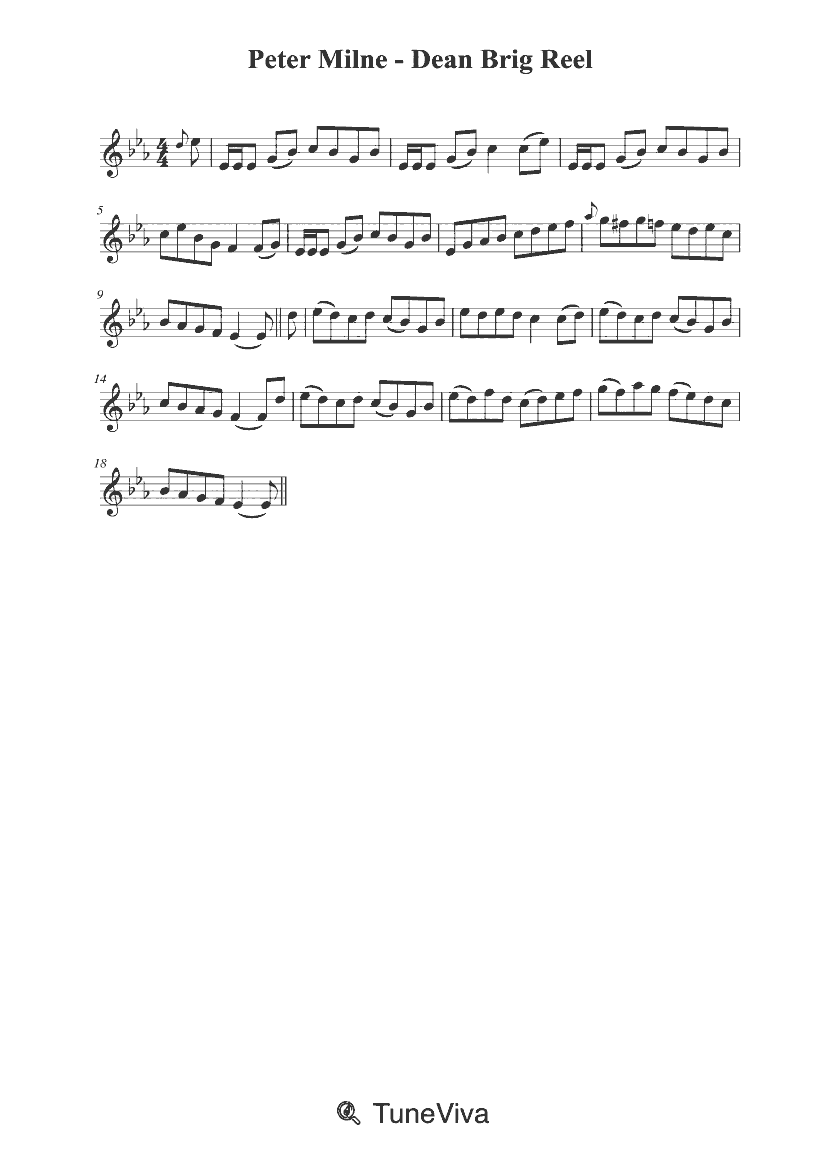
The most-viewed entry, and the tune Skinner insisted was Archie Allan's rather than Milne's.
Also printed as Gillan's Reel, and one of the two Milne tunes still played well outside Scotland.
A strathspey for the Forbes family of Corse, in the Aberdeenshire countryside where Milne worked.
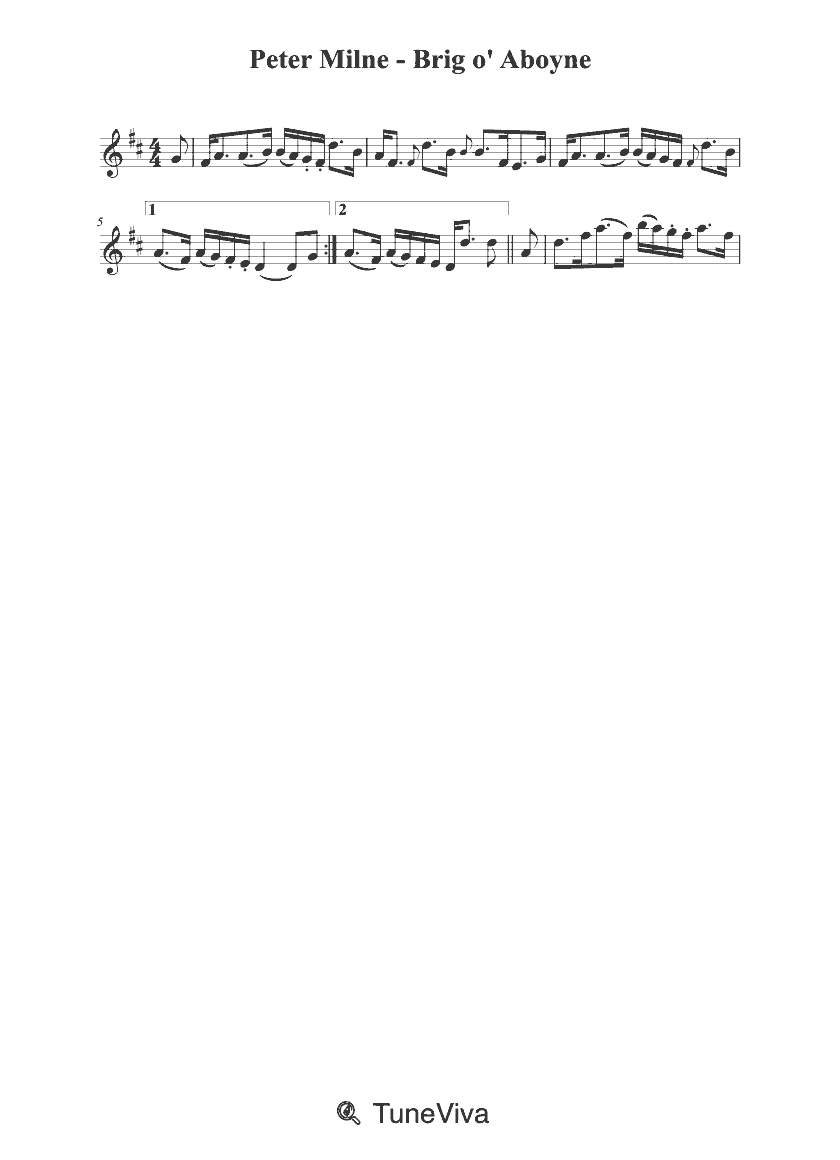
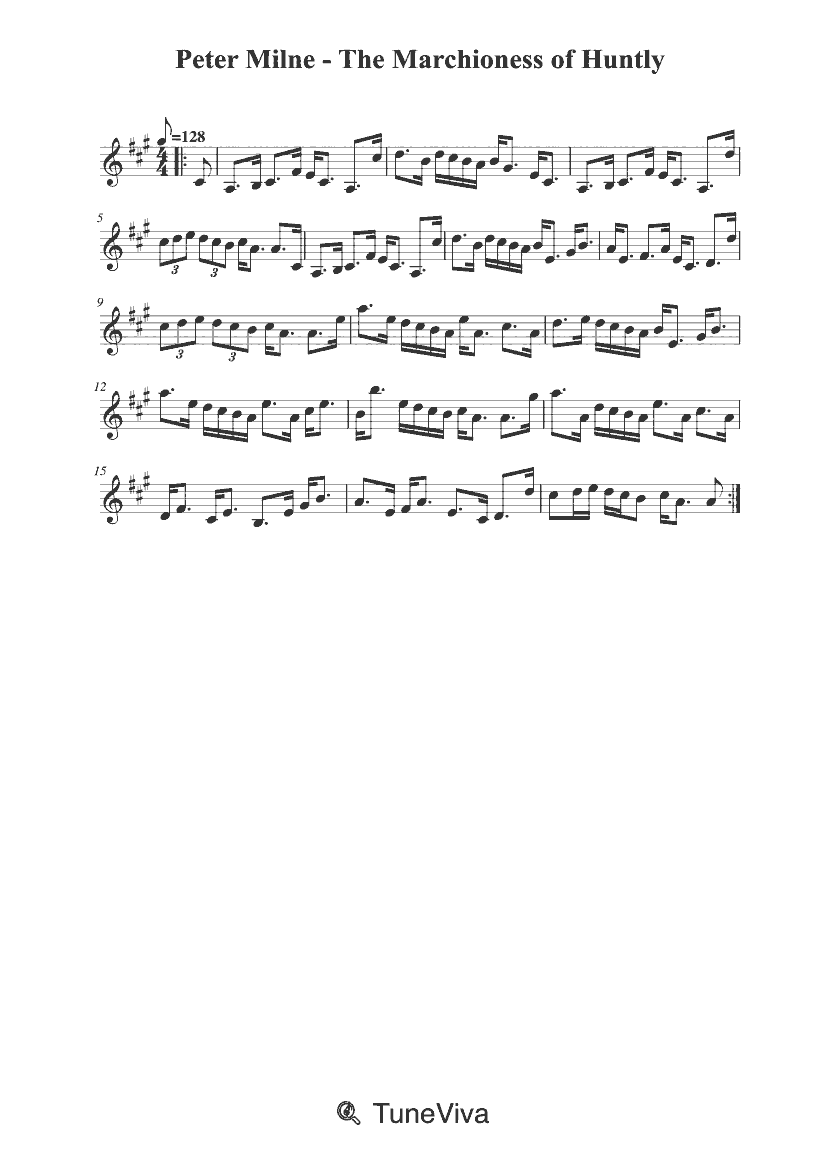
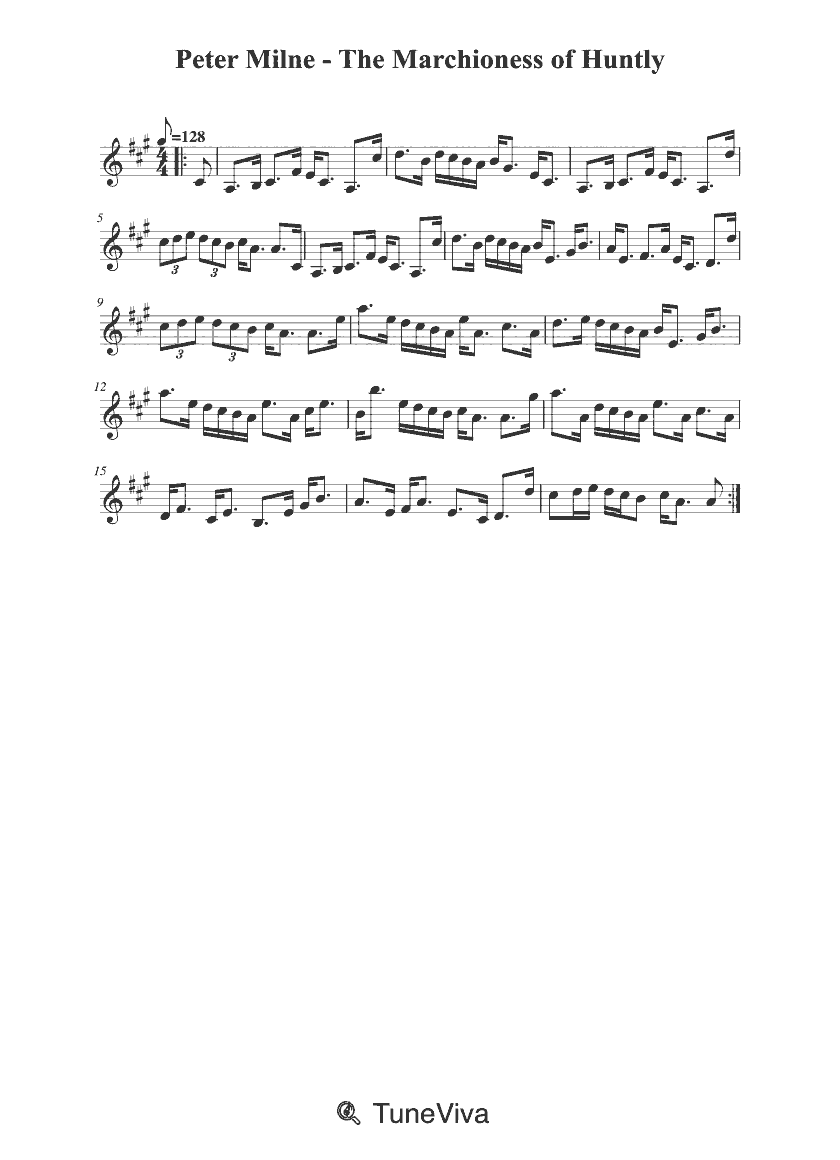
Named for the wife of the Gordon who owned Aboyne Castle, a few miles from Tarland; the catalogue holds three copies.
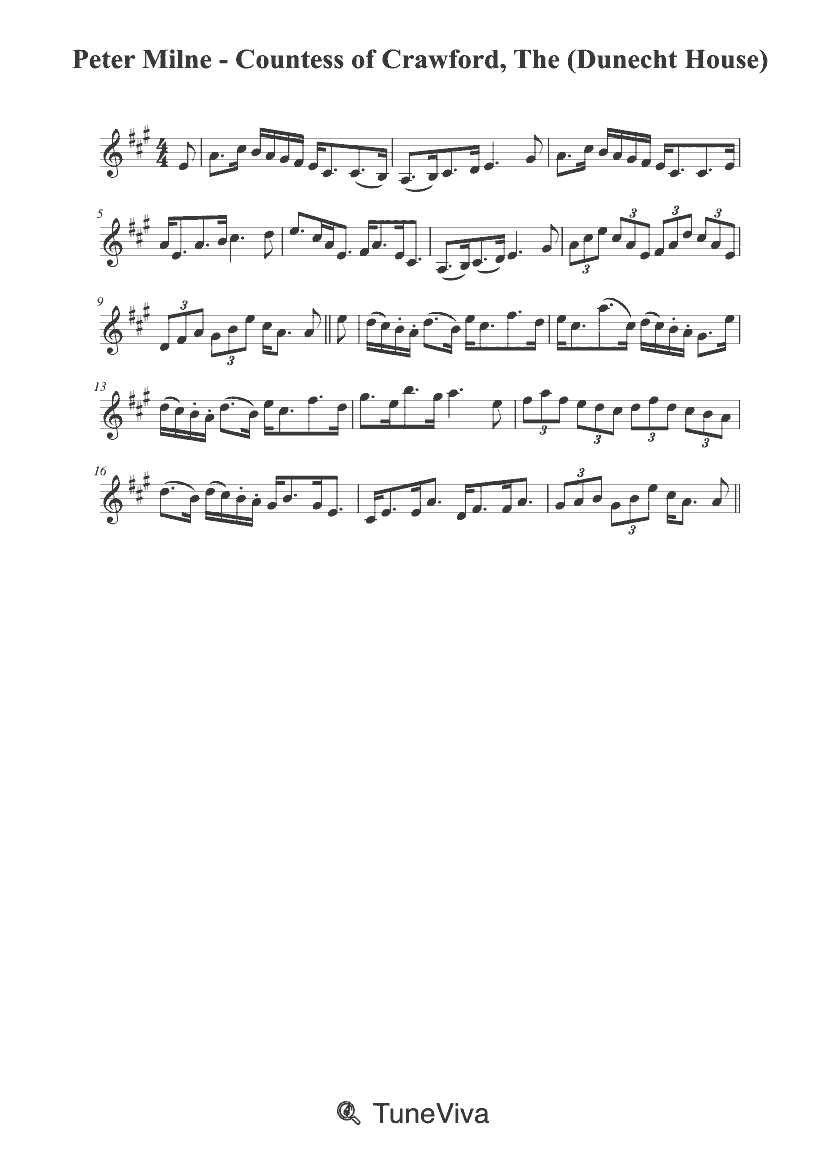
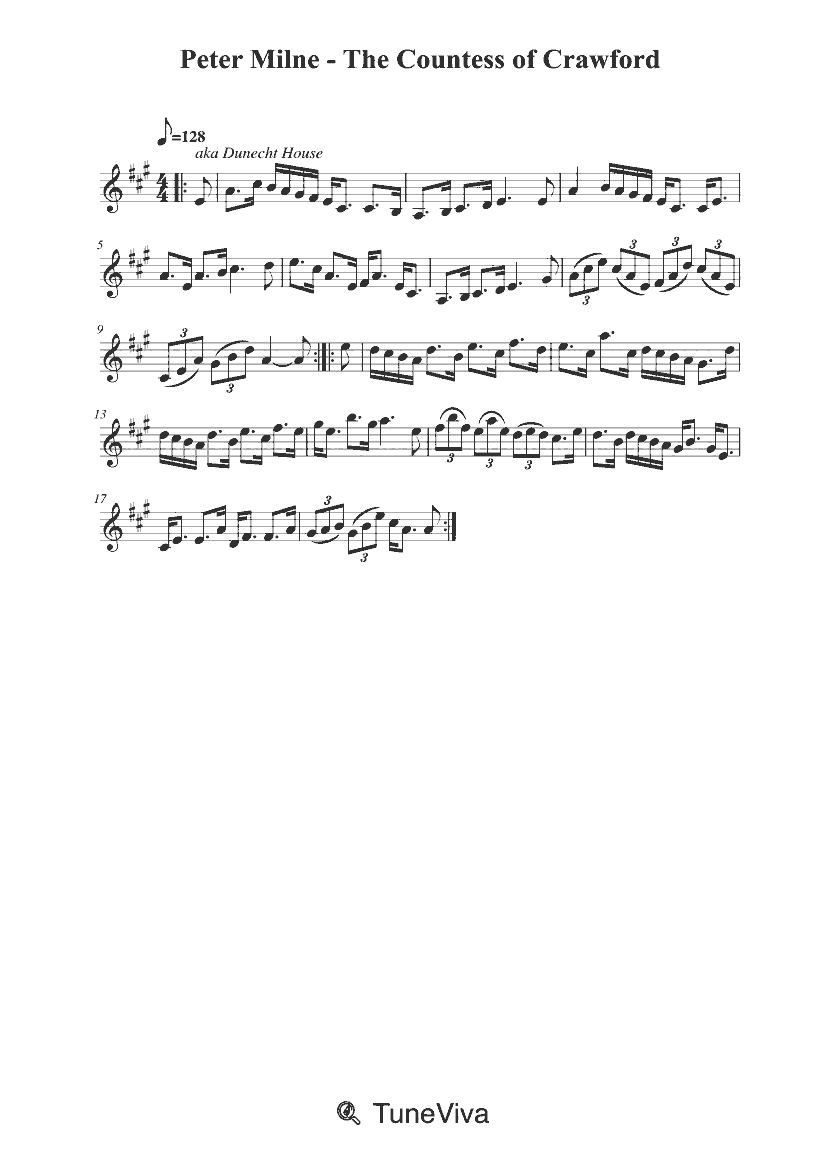
One of several tunes tying Milne's repertory to the Crawford family and their Dunecht estate.
A reel with a local name that does not appear in the usual lists of his compositions.
A strathspey named for a contemporary, in the habit of dedication that runs through his output.
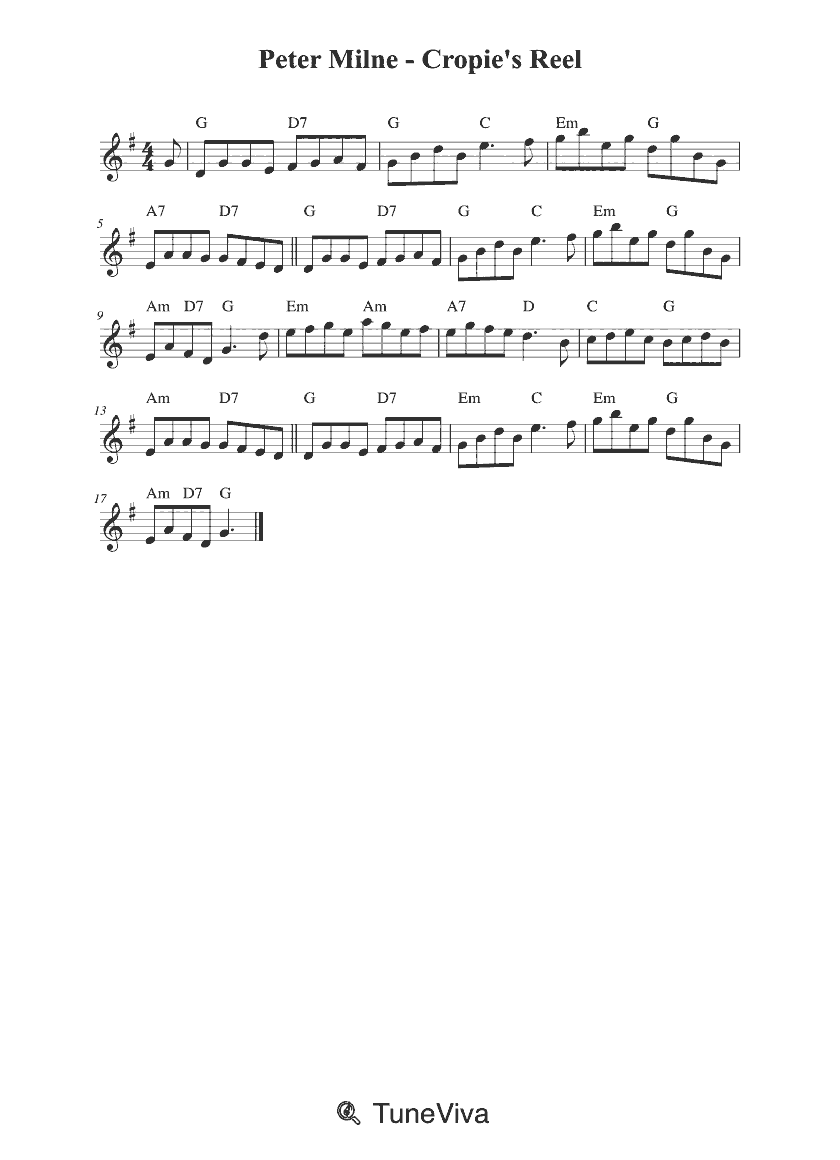
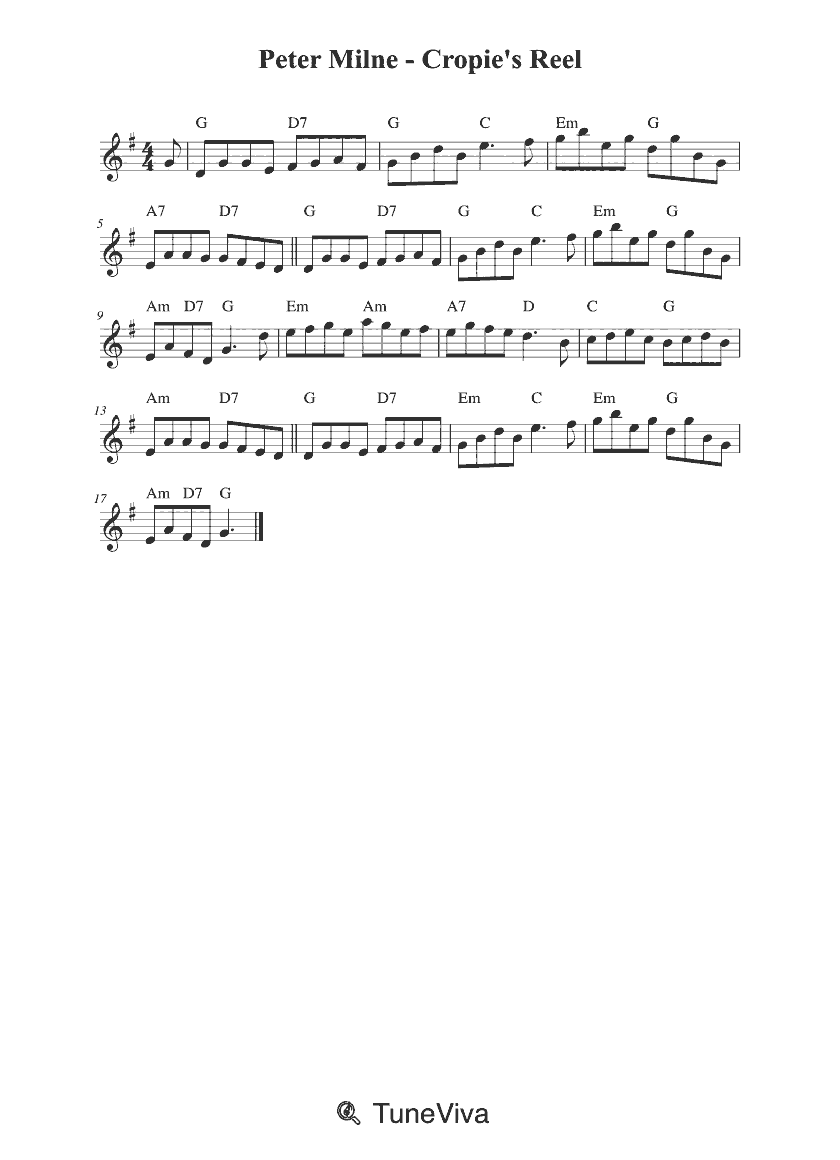
The strathspey counterpart of Cropie's Reel, and the clearest case of one tune filed twice.
Titled for Dunecht House, the Crawford seat west of Aberdeen, and set in the catalogue with the article displaced.
54, running to about 70 minutes of music and 11,618 notated notes. None of them has lyrics.
Skinner's manuscript note says not. He credits Archie Allan of Forfar, whose tune Mrs Gray of Carse was published at Aberdeen as The Dean Brig, and adds that the ascription to Milne was a publisher's error later withdrawn.
Muir o' Gellan is also printed as Gillan's Reel, and John McNeil's Reel as Big John McNeil. The catalogue keeps whichever title came with the source, so the same music can appear twice under different words.
These are fiddle settings, though many of the tunes were printed in collections with a piano accompaniment. Check the scoring named on the file before you assign it.
Catalog editions and arrangements attributed to Peter Milne.

Aboyne Castle
Aboyne Castle
Aboyne Castle