classical
8 tracks
Pierre de Manchicourt spent his last years in Madrid directing the Flemish chapel of Philip II, and the catalogue preserves both halves of his output: 26 scores, about 126 minutes of music and 20,530 notated notes. Every entry carries a text, and every one is logged at complexity index 0.
The most-viewed piece is the chanson Faulte d'argent, followed by Petit Jacquet and the Epiphany motet Reges terrae congregati sunt. French chansons dominate the rest of the list — L'Homme qui est, O cruault, Ung diable blanc, Allons, allons gay — which makes this one of the few places in the catalogue where a Franco-Flemish composer appears mainly as a secular songwriter.
Manchicourt was born at Béthune, in Artois, around 1510, and was a choirboy at Arras in 1525. The title pages of his prints record a succession of posts between 1539 and 1556 at Arras, Tours and Tournai; by the later 1550s he had moved to Spain as master of the capilla flamenca at Philip II's court. He died in Madrid on 5 October 1564 and was succeeded in the post by Jean de Bonmarché.
His surviving music is mostly masses, motets and chansons, and the motets are unusual in showing three stages of the early sixteenth-century motet at once: Ockeghem's influence in the earliest, Josquin's paired imitation in the middle period, and the dense pervasive imitation associated with Gombert in the late works. Modern recordings have circled the Masses — Missa Reges terrae, Missa Veni Sancte Spiritus, Missa Cuidez vous que Dieu, a Requiem — while the chansons have fared less well. Petit Jacquet survives in Susato's ninth book of four-voice chansons, printed at Antwerp in 1545, which shows how early some of this secular music is.
The catalogue's balance is therefore lopsided: most titles are French chansons, with the Epiphany motet and its secunda pars standing almost alone as sacred music. At roughly five minutes a piece the average is long for a chanson, so the files probably carry more than a single stanza. Nothing in the metadata helps: all 26 sit at complexity index 0 and all carry lyrics.
These are four-voice chansons in the northern manner: syllabic declamation, short imitative points and cadences that arrive quickly. The refrain forms repeat, so fix the tempo at the start or the later stanzas will drag. In the motet the imitation is denser and the lines longer, and the secunda pars should follow without a break. Text is the main expressive tool here, since the catalogue contains no instrumental music by Manchicourt, so settle French pronunciation before rehearsal, particularly the silent endings that the catalogue's spellings preserve.
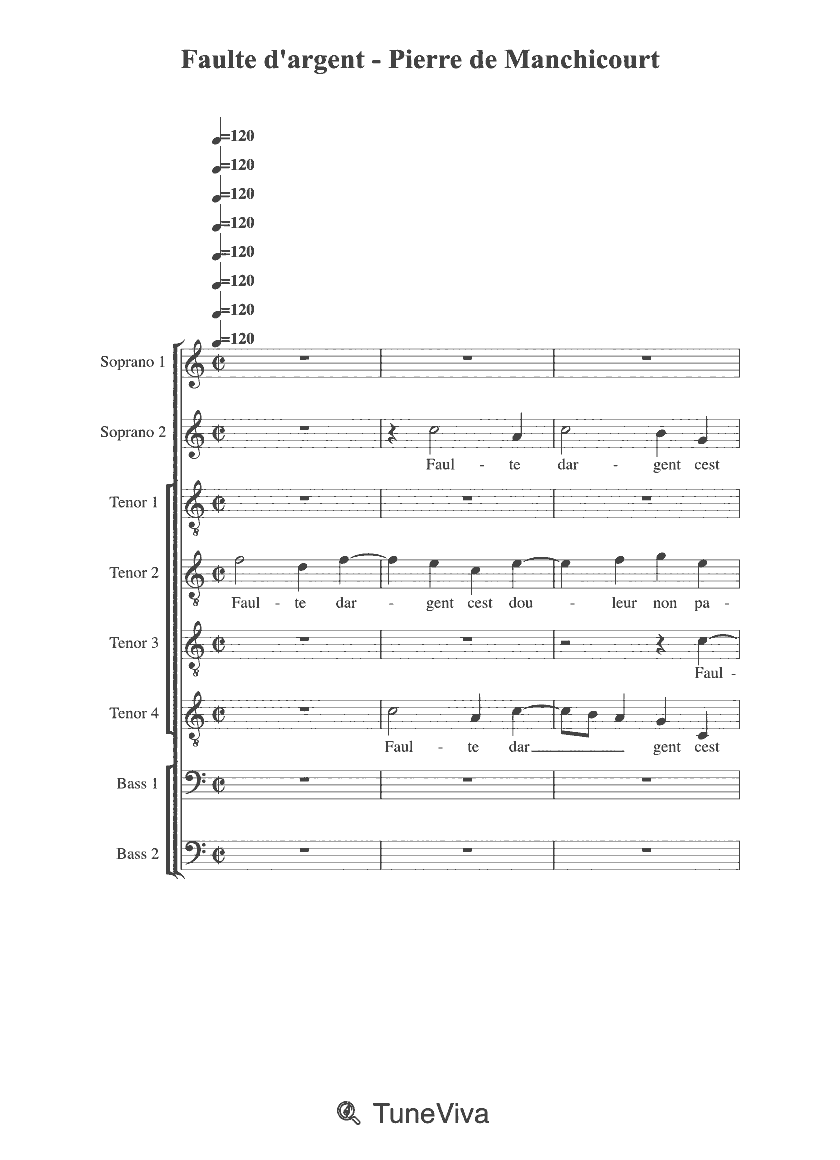
The most-viewed score here: a chanson on the miseries of being short of money, a text that several sixteenth-century composers set.
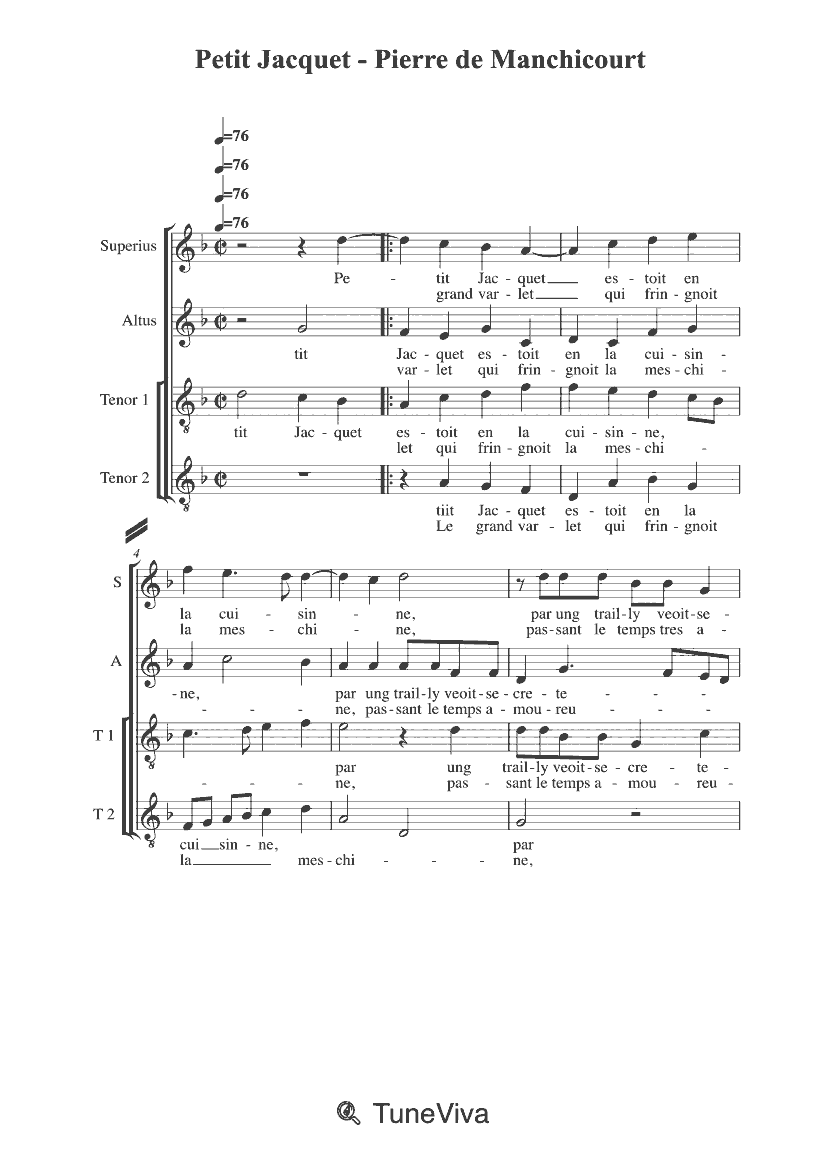
Printed in Susato's ninth book of four-voice chansons at Antwerp in 1545; the text is a kitchen scene, 'Petit Jacquet estoit en la cuisinne'.
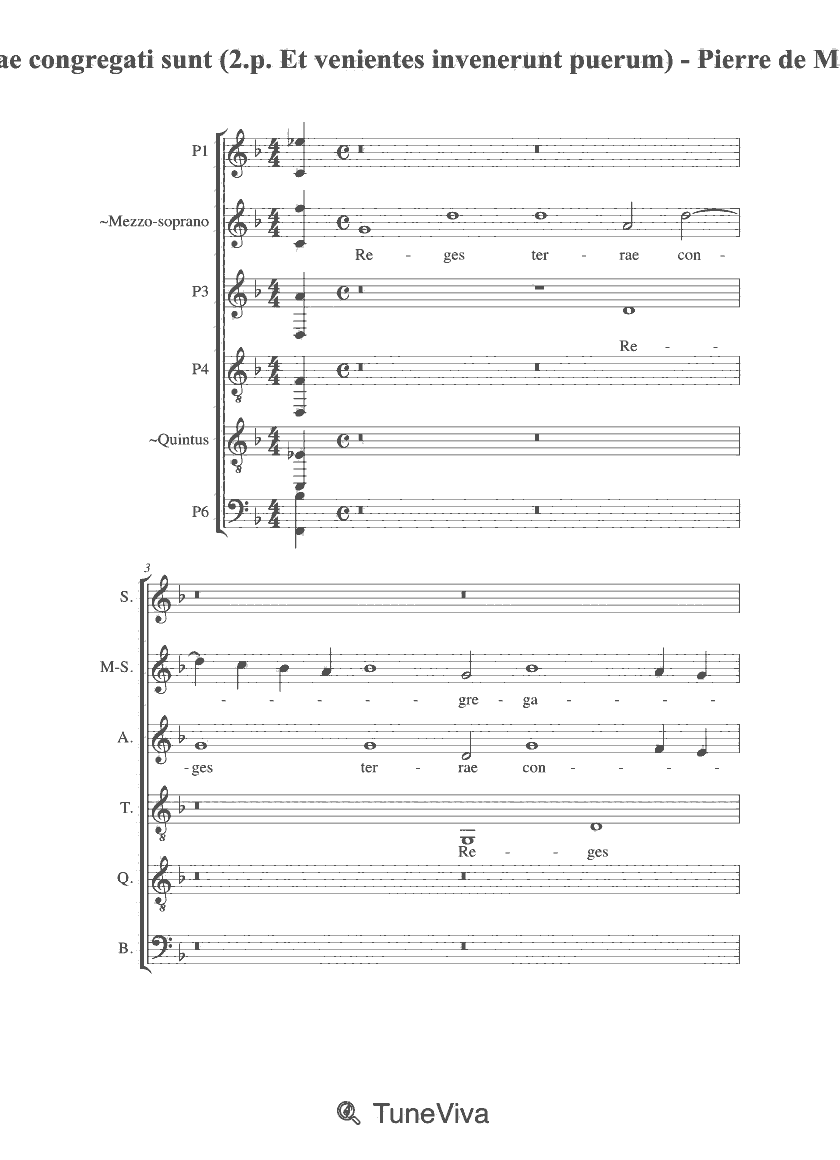
A two-part motet for Epiphany: the kings assemble, and the second part finds them with the child. The catalogue holds the motet, not the Mass on the same material.
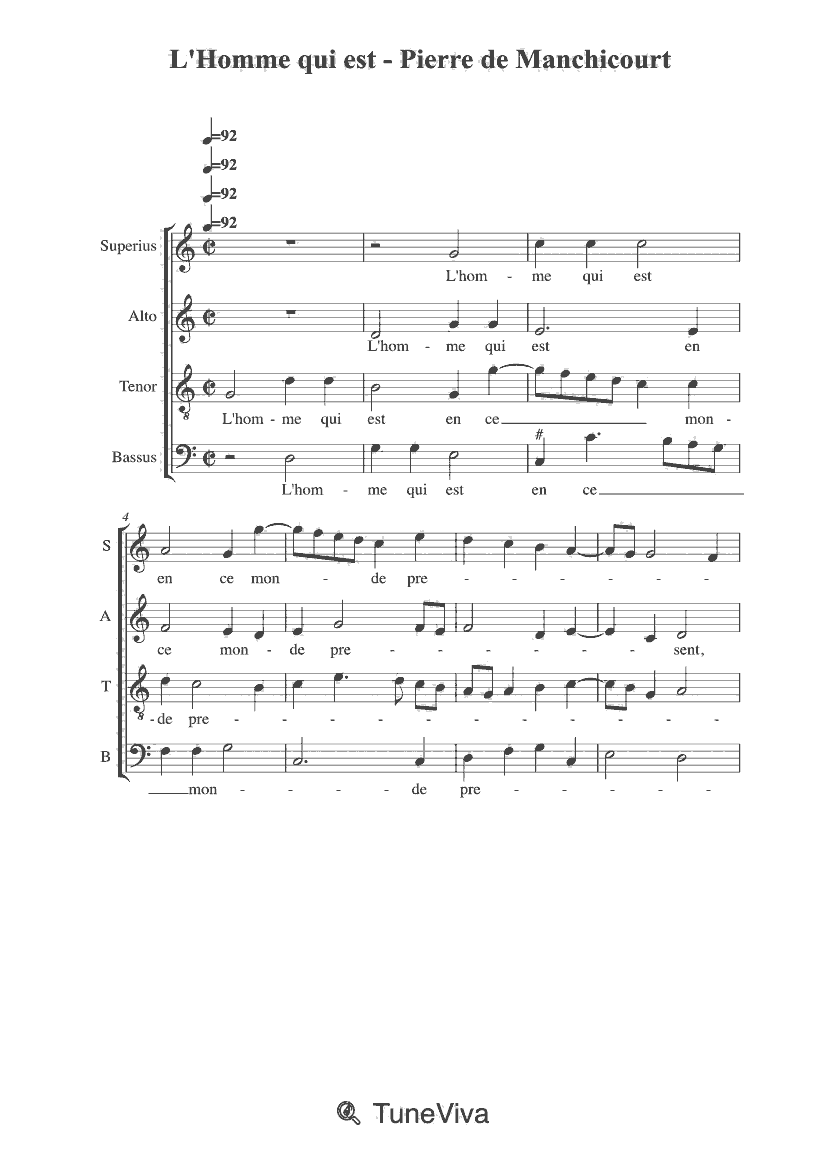
A four-voice chanson whose incipit is a riddle in itself; the file gives no further text.
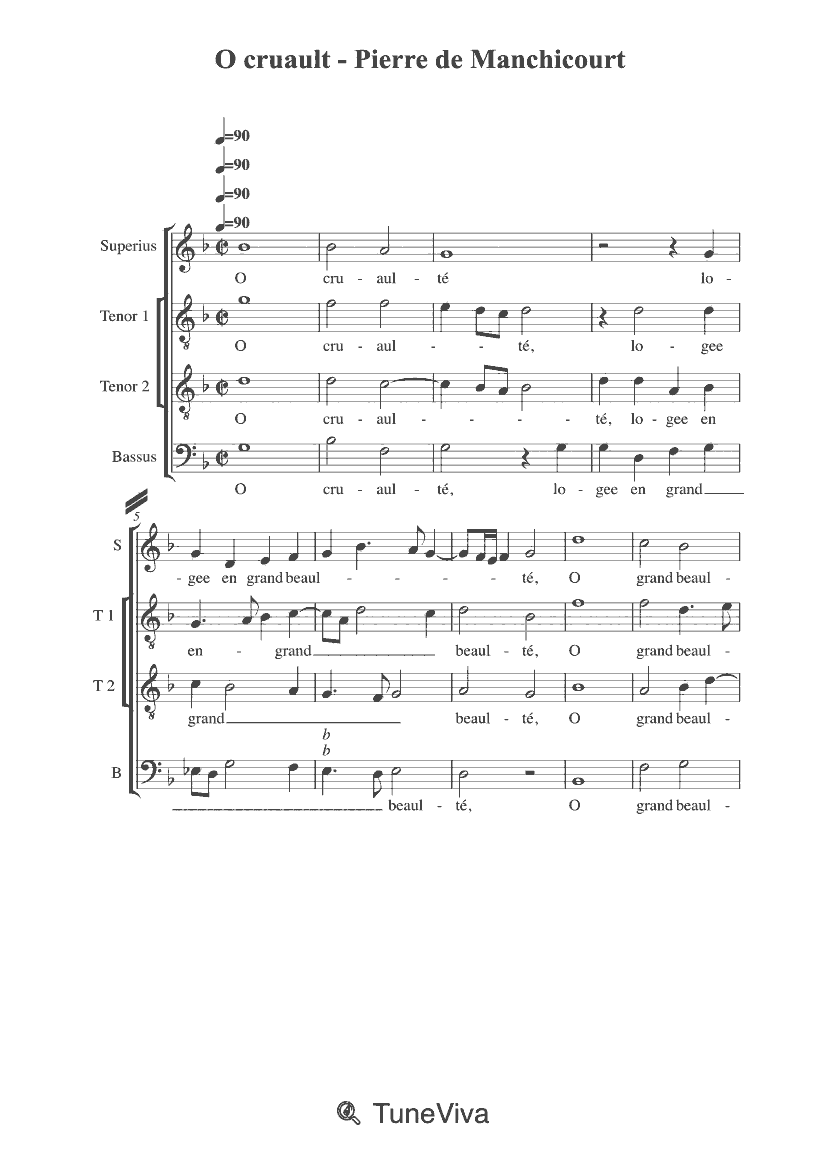
A chanson of complaint, almost certainly 'O cruaulté' in the original; the catalogue drops the final syllable.
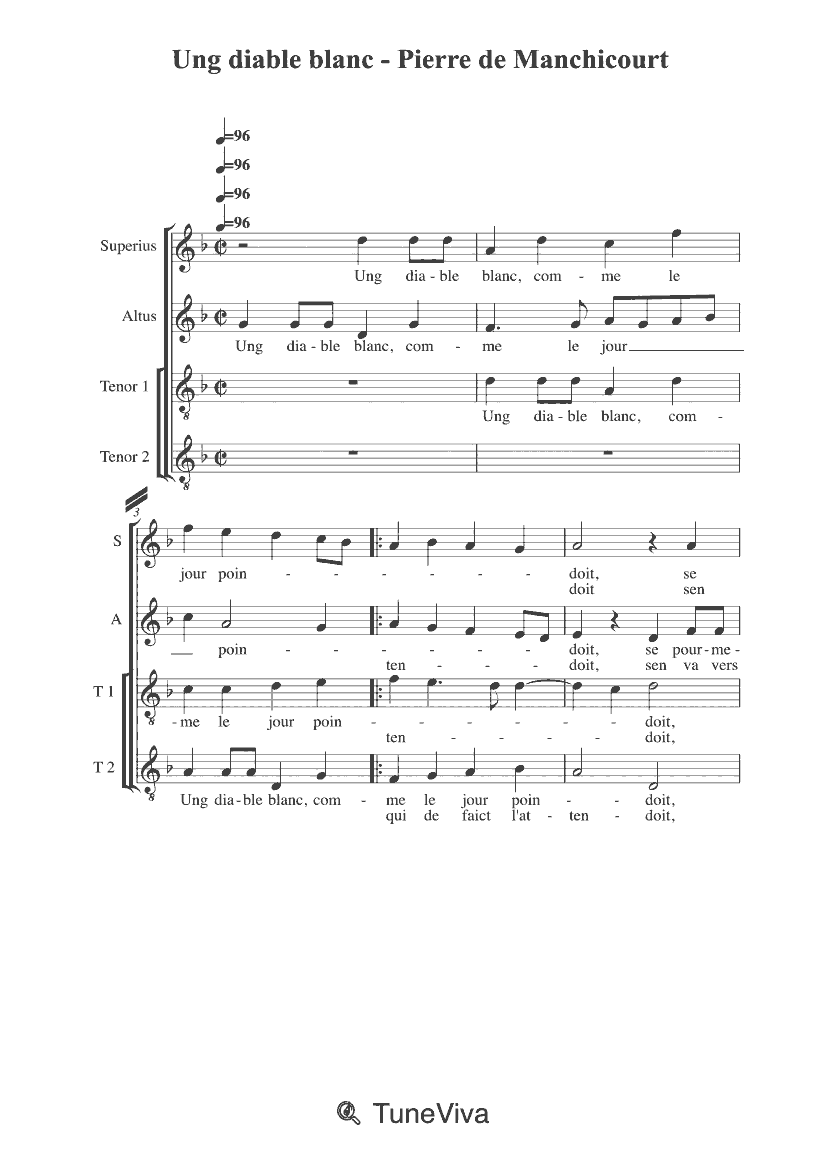
A comic chanson about a white devil, typical of the narrative and satirical texts in Manchicourt's secular output.
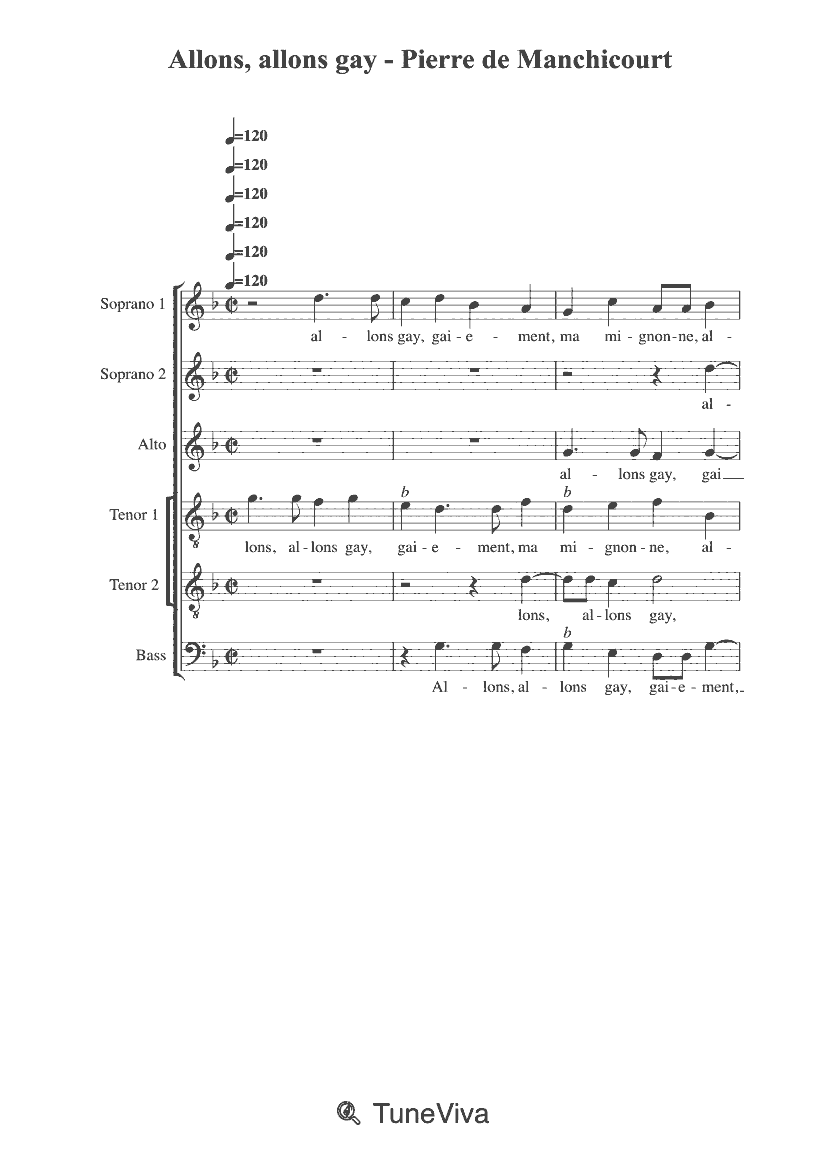
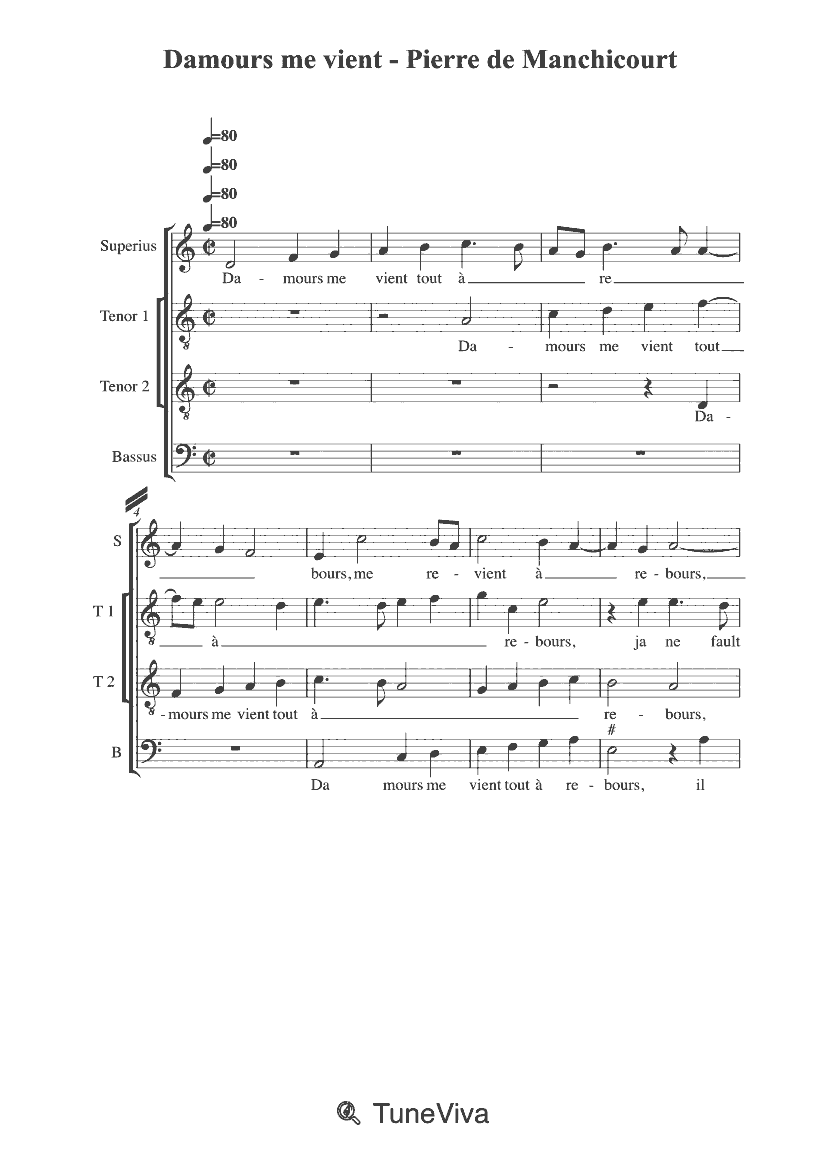
A refrain chanson also set by Adrian Willaert; the two settings circulate together in modern anthologies of theatrical chansons.
A chanson whose title survives only as a two-word incipit; the stanza it opens is not quoted on the file.
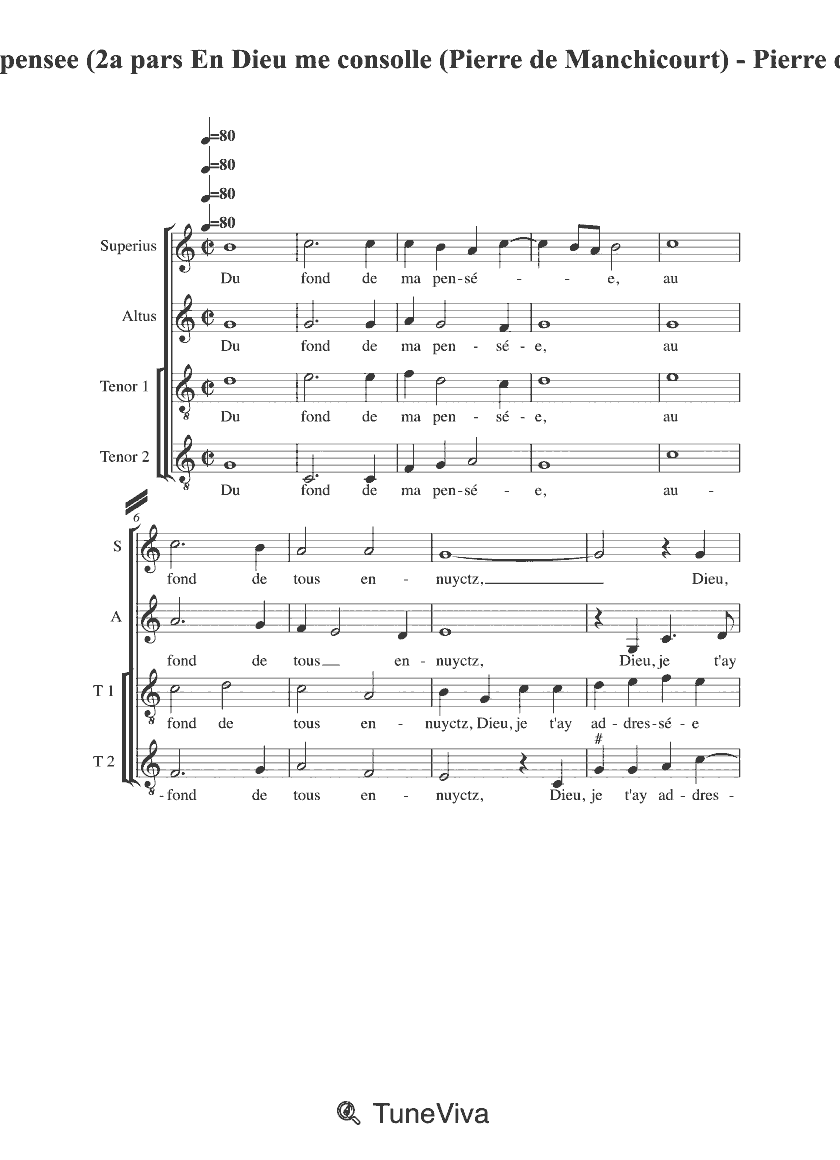
A setting in two partes of the French De profundis, 'Du fond de ma pensée', with the secunda pars 'En Dieu me consolle'.
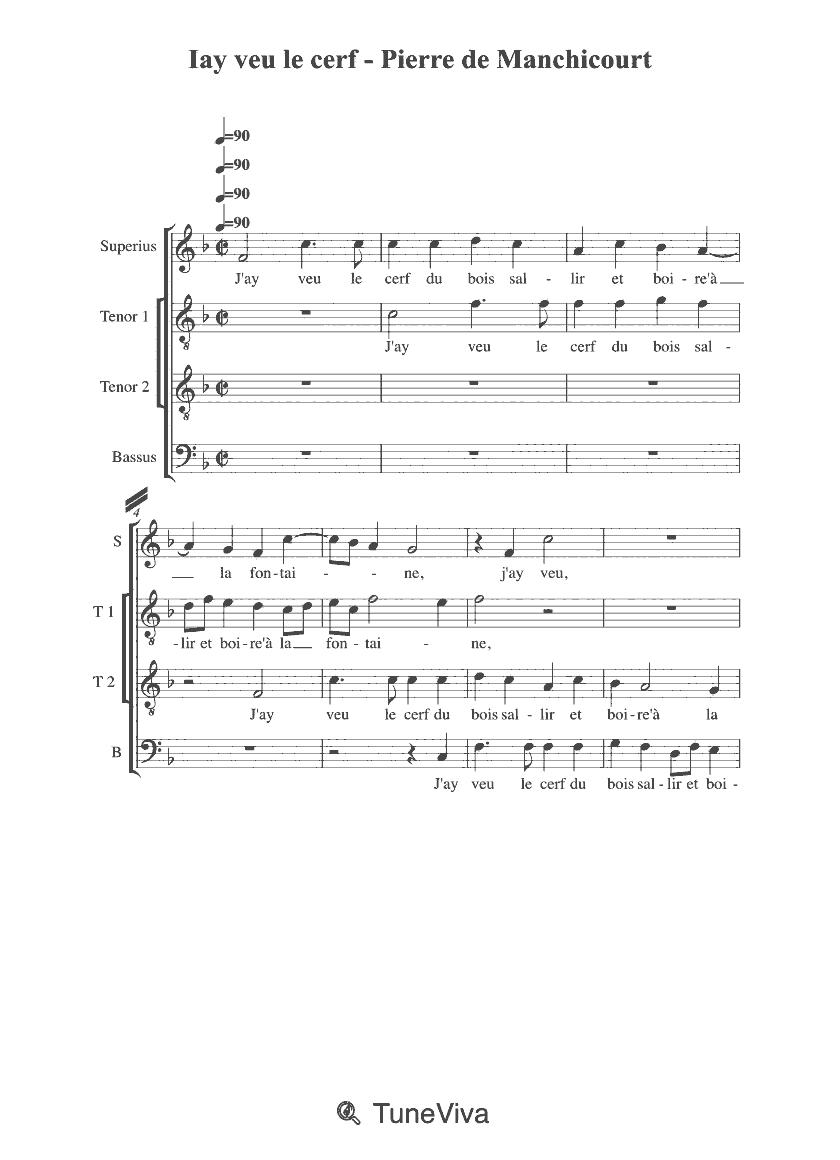
A hunting chanson, printed in pre-modern spelling as 'J'ay veu le cerf' in modern editions.
There are 26, running to about 126 minutes of music and 20,530 notated notes. Every one of them carries lyrics.
They preserve sixteenth-century orthography: 'Faulte d'argent', 'Ung diable blanc', 'Iay veu le cerf'. Modern editions would print 'faute', 'un' and 'j'ai vu'.
The file is the motet, and it includes the secunda pars 'Et venientes invenerunt puerum'. Manchicourt also wrote a Missa Reges terrae, but no part of that Mass is in the catalogue.
He trained as a choirboy at Arras, held church posts at Arras, Tours and Tournai, and ended his career in Madrid as master of Philip II's Flemish chapel, where he died in 1564.
Catalog editions and arrangements attributed to Pierre de Manchicourt.