classical
1 tracks
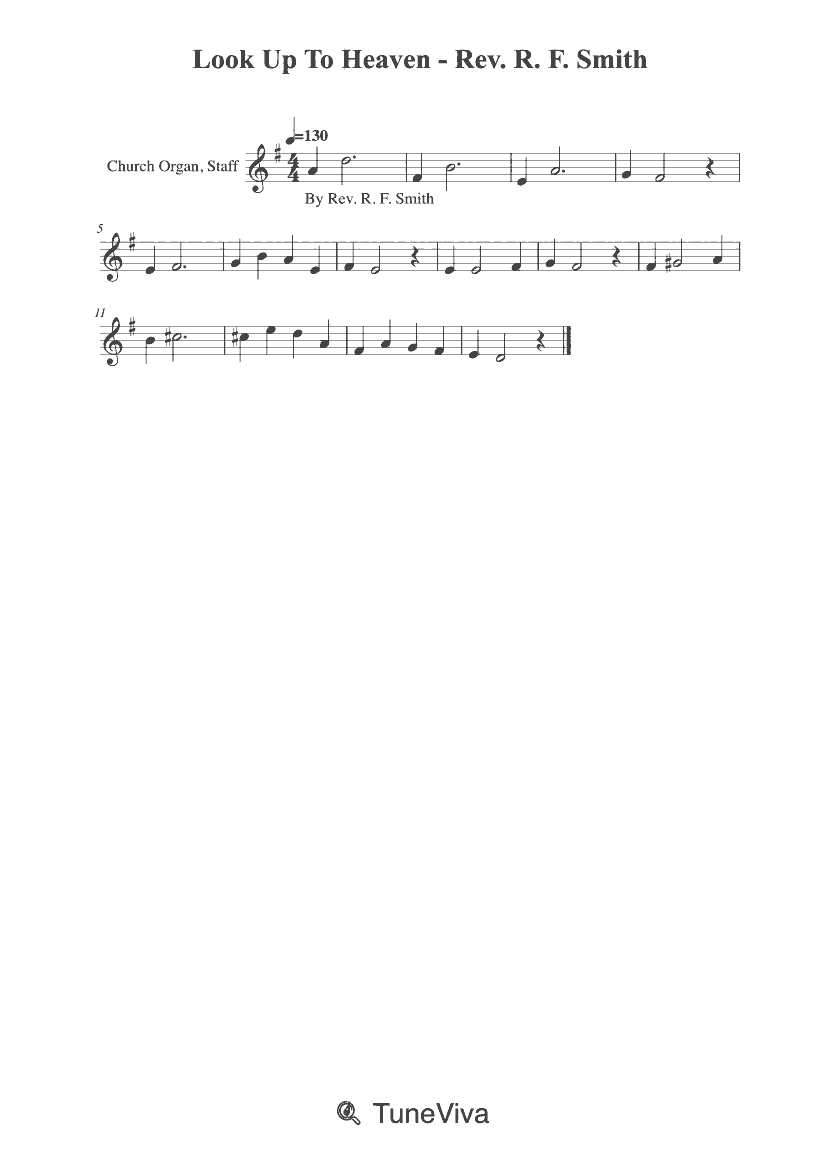
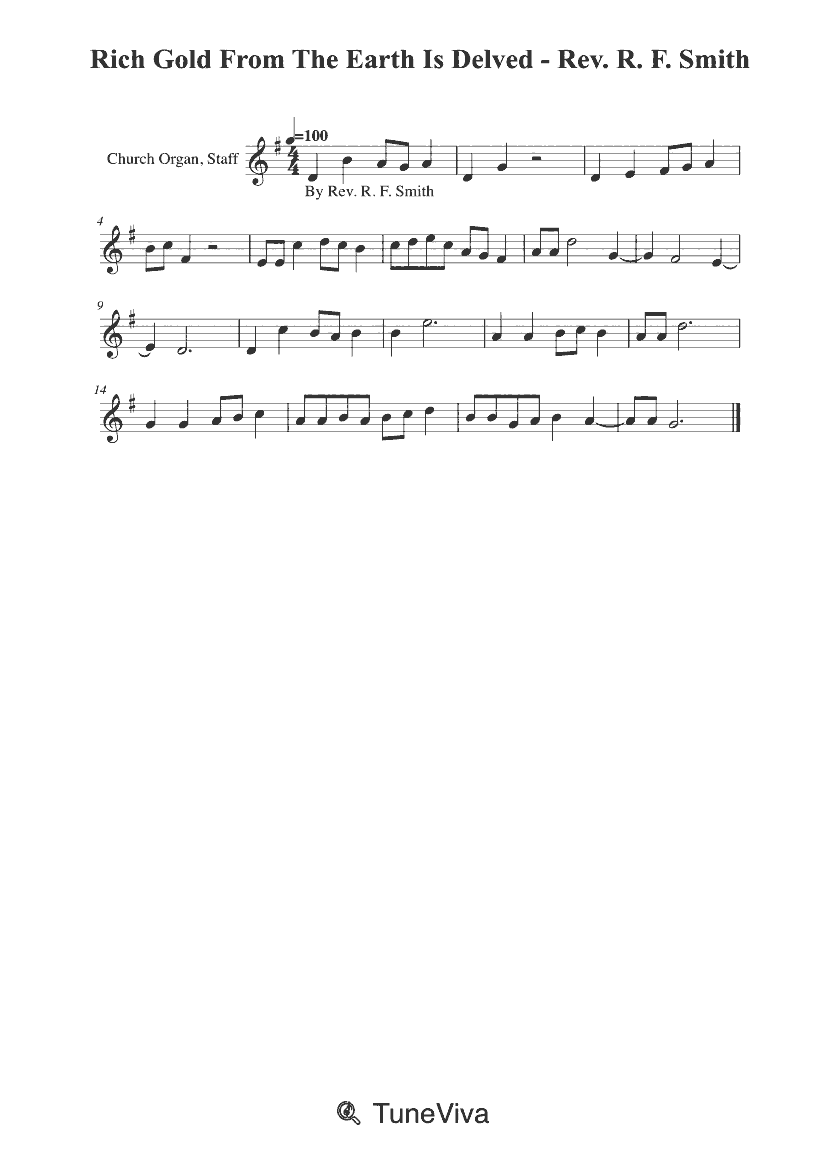
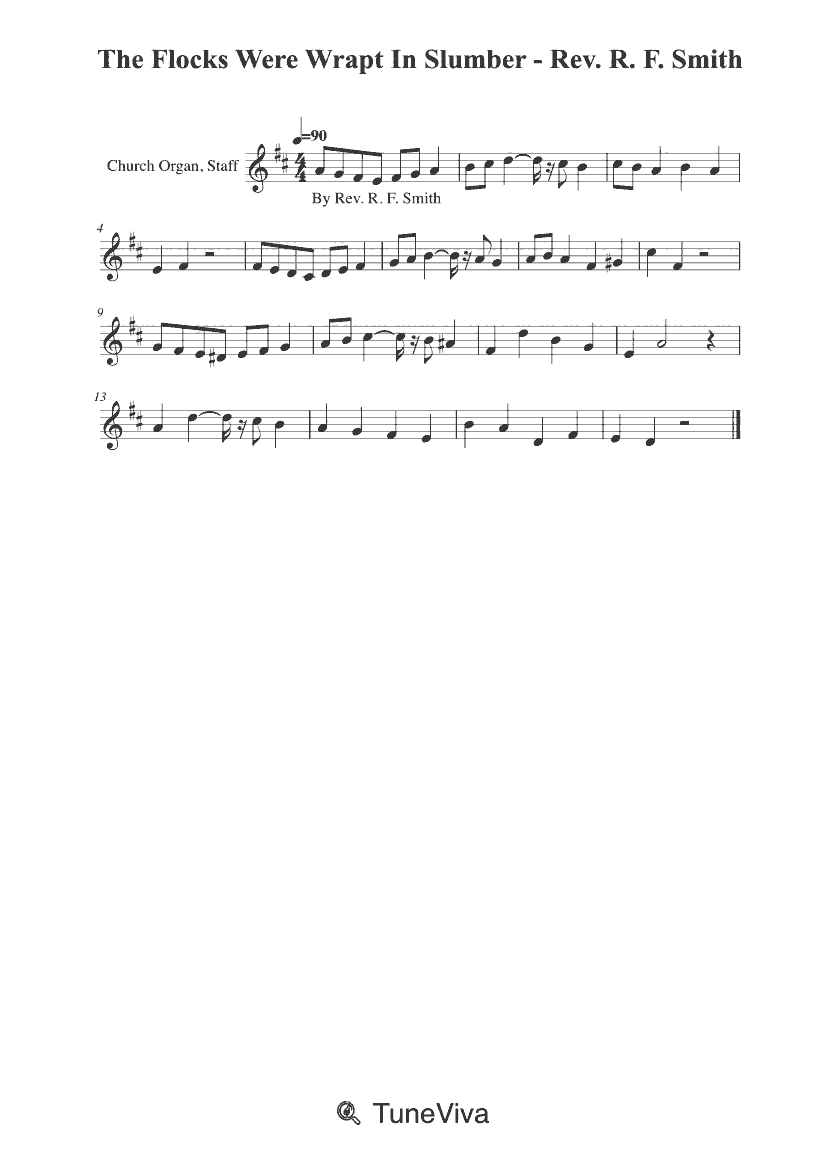
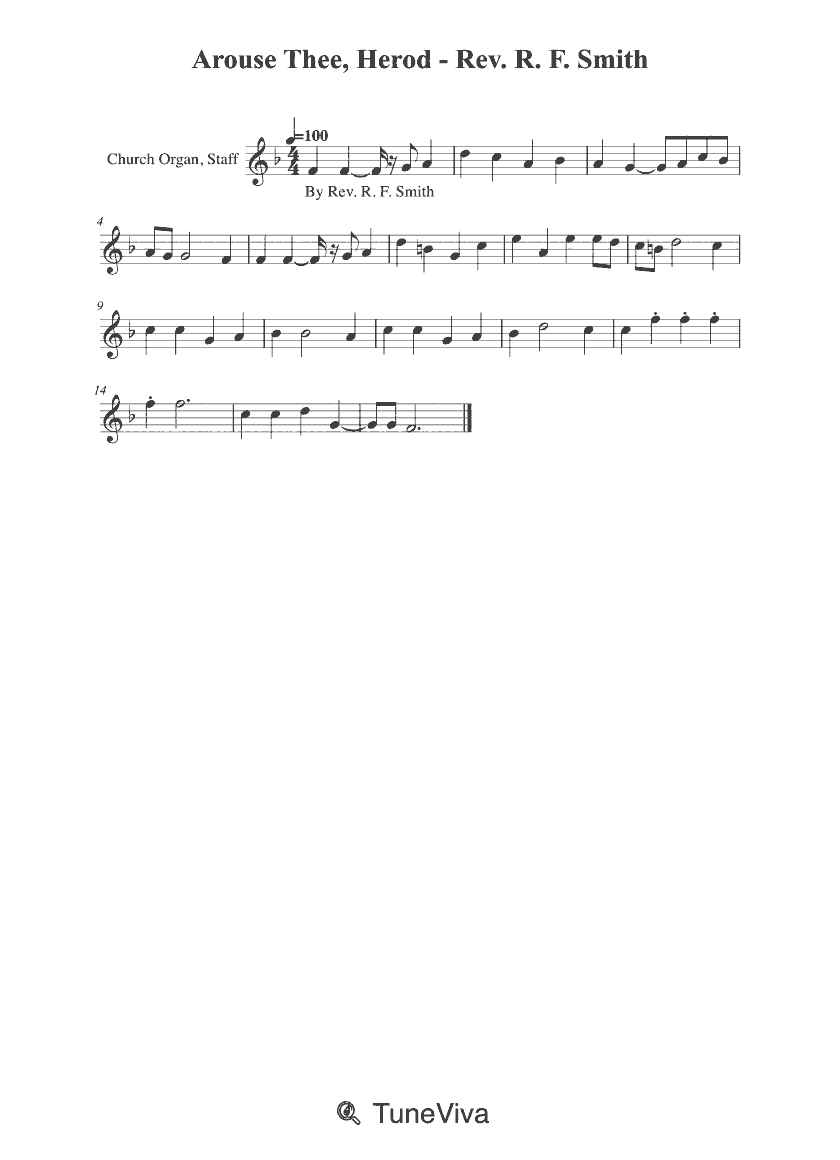
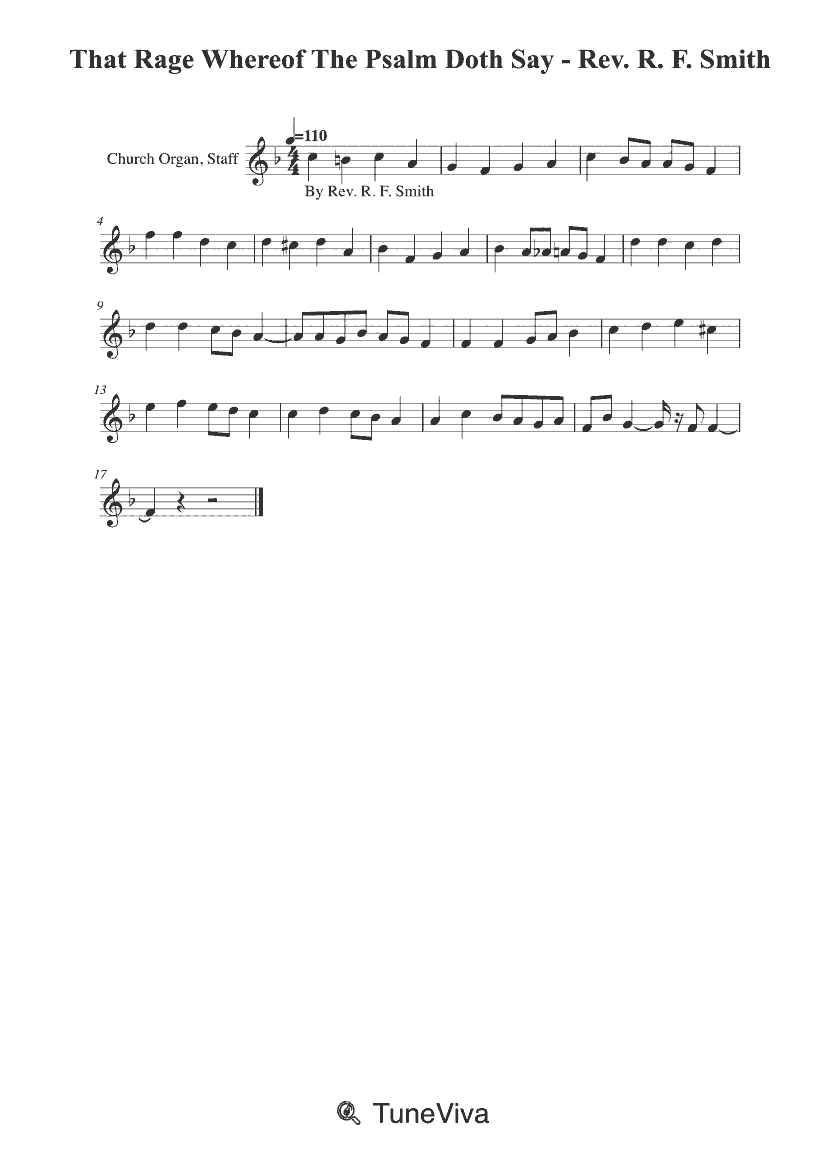
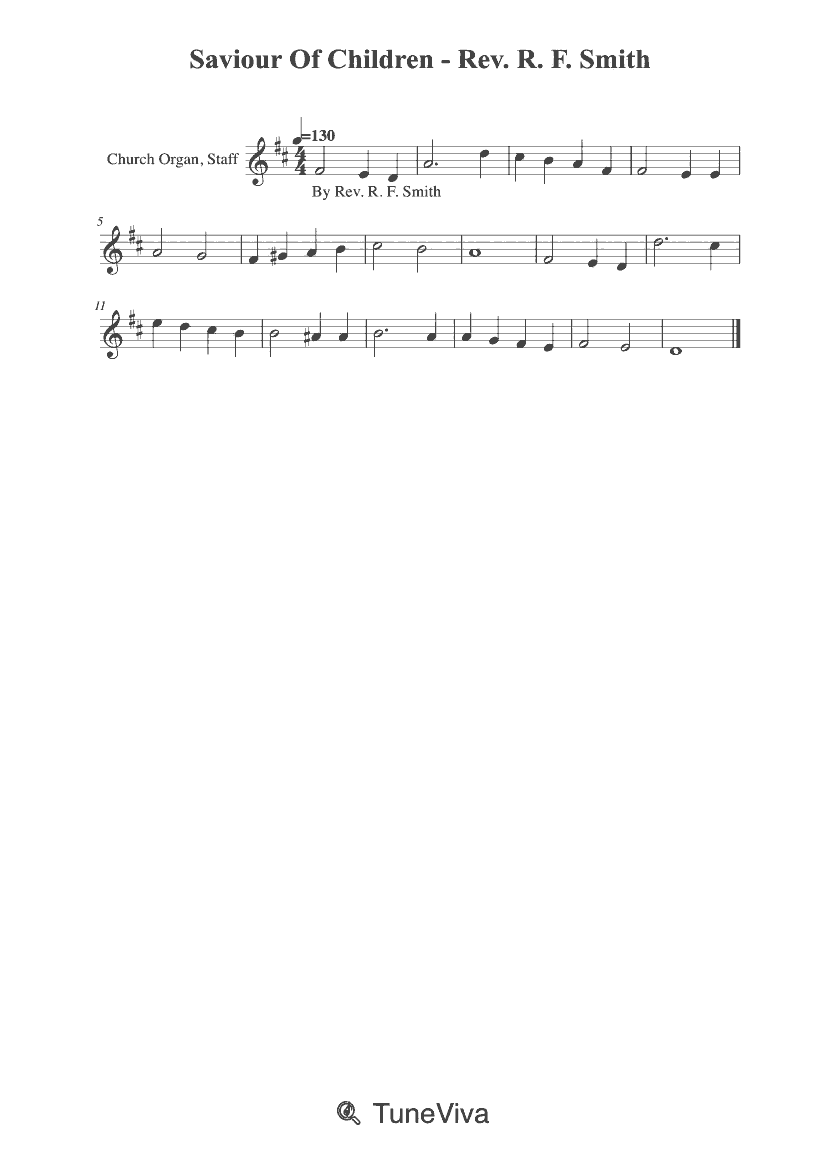
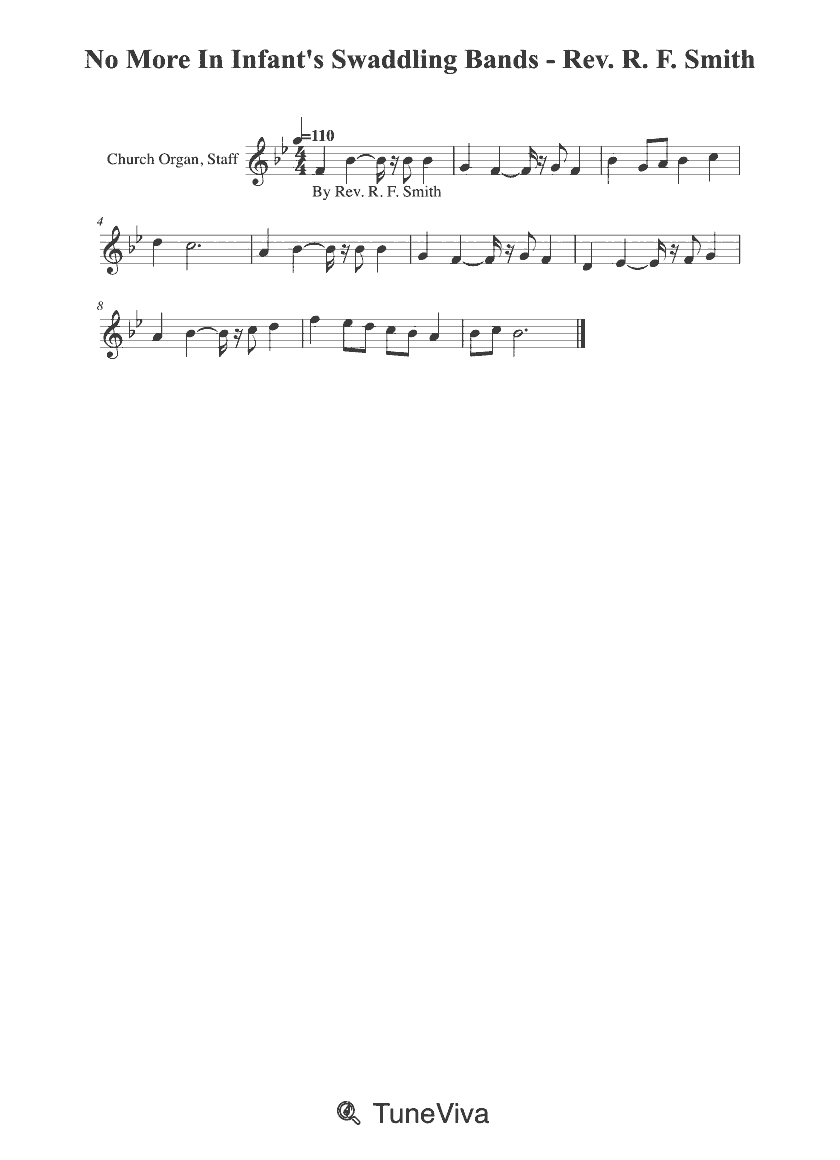
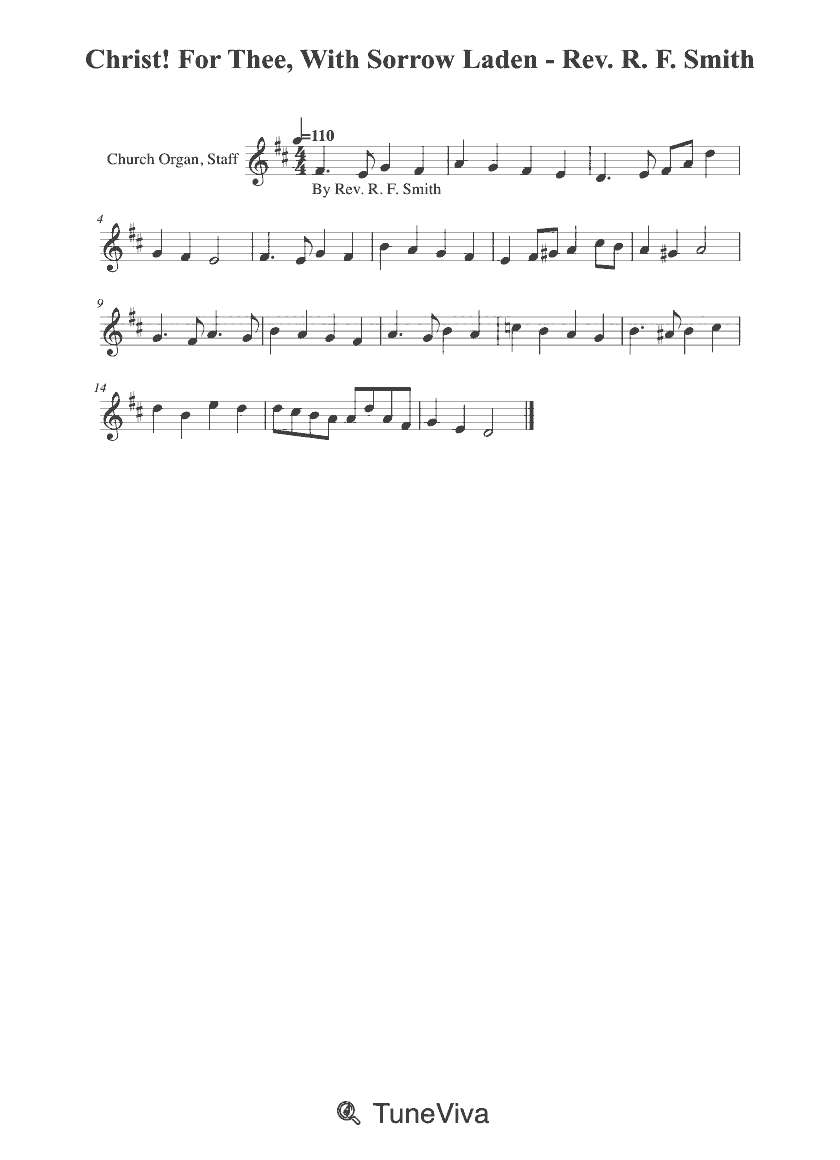
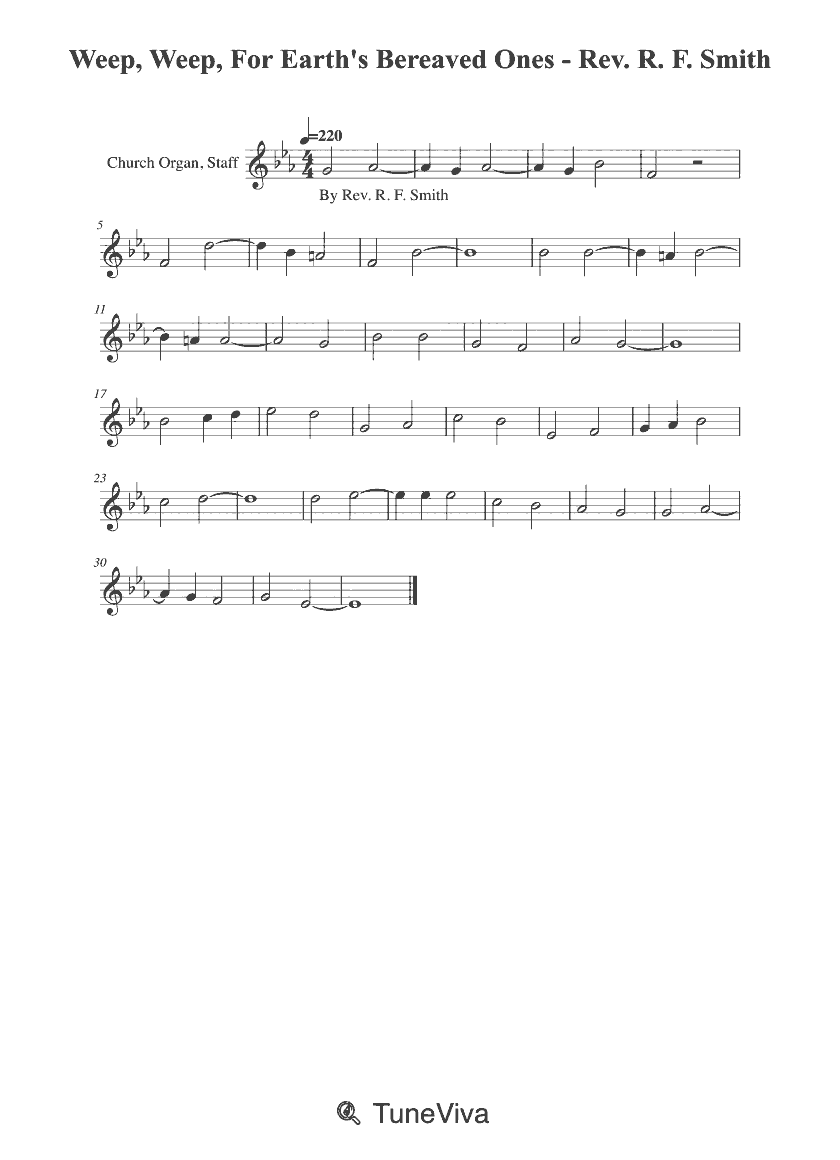
The catalogue files twenty short choral pieces under "Rev. R. F. Smith", and they run to about 11 minutes of music and 1,181 notated notes. Every entry has lyrics, and every entry sits at complexity index 0, so the pages are quick to read and quick to learn.
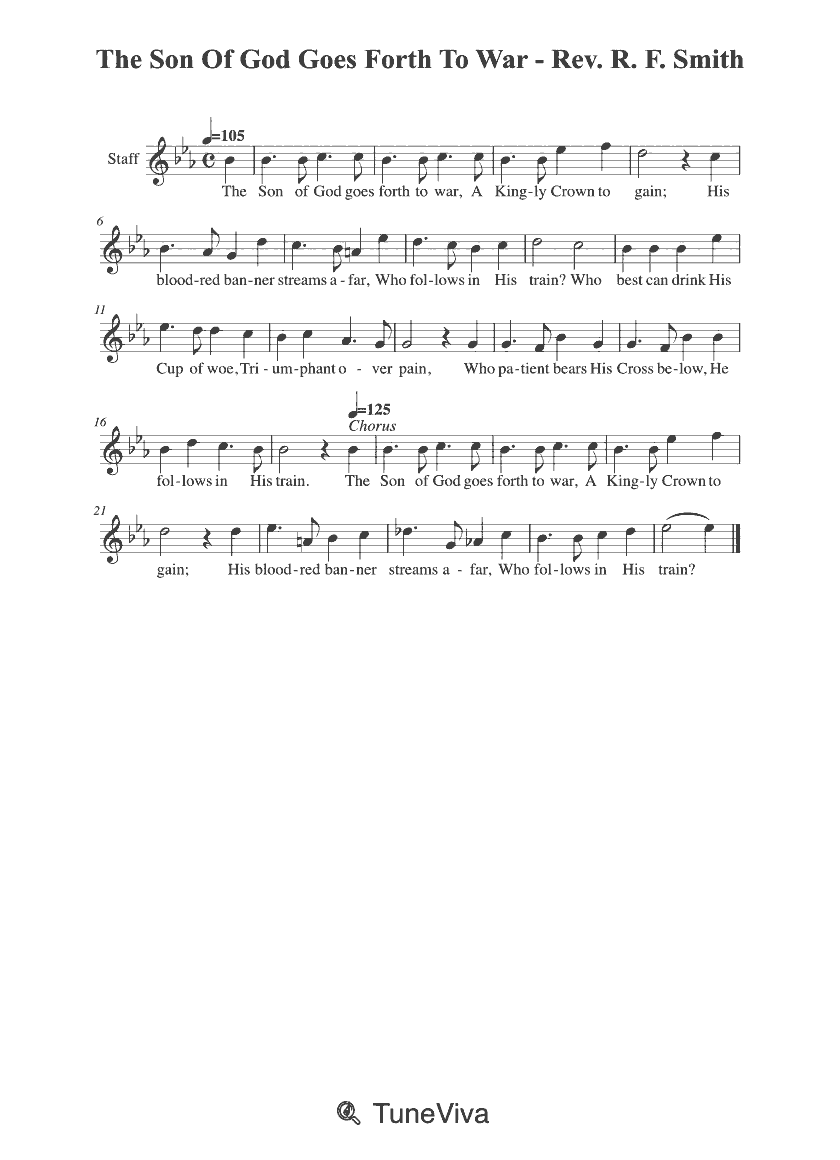
The most-viewed score is "The Son of God goes forth to war", followed by a Christmas piece, "Hark! The herald angels singing", and a run of carols: "One night in dark December", "The blasts of chill December", "Blithely from the moated churchyard". Most of them come from Victorian carol books compiled for parish choirs.
Robert Frederick Smith was born in Sheffield in 1833 and studied at Lincoln College, Oxford. He took orders and became vicar of Edingley-cum-Halam in Nottinghamshire, a country parish not far from Southwell, and he was made a canon of Southwell Minster. He died in 1905.
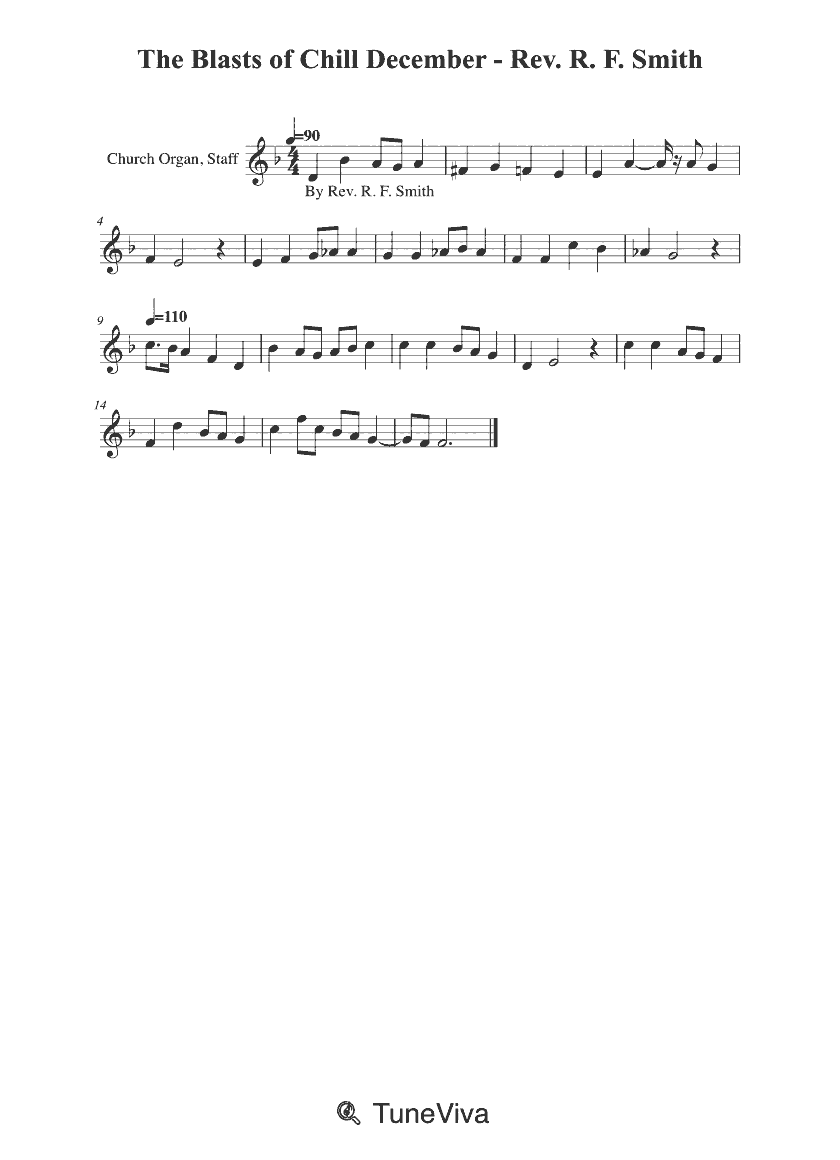
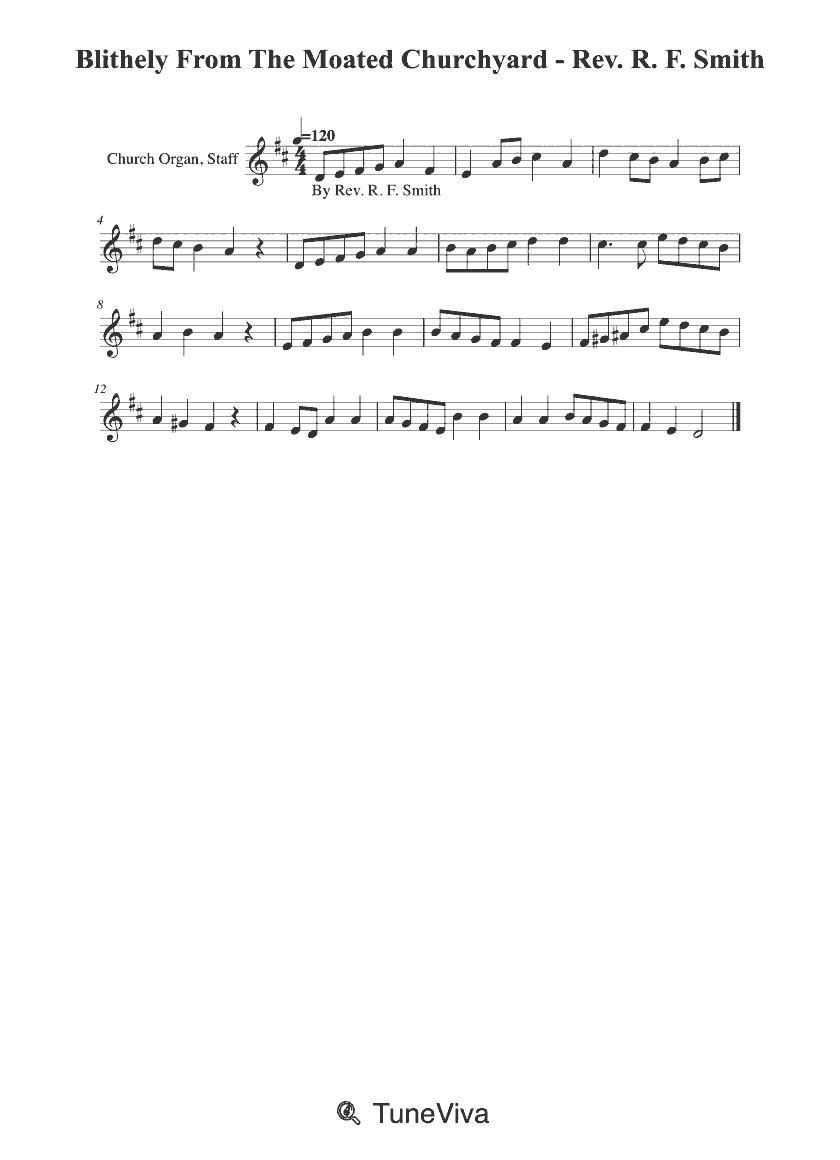
His music belongs to the Victorian parish revival and to the carol collections that fed it. He wrote tunes for Richard R. Chope's Carols for Use in Church, printed in London in 1894, where his setting carries the name CLYNE and serves the text "The blasts of chill December". He also appears in Carols Old and Carols New, the 1916 compilation, as the composer of "Blithely from the moated churchyard" and "As Mary walked in the garden green". The tunes are modest in compass and built for choirs with little rehearsal, which is why they survive in carol books rather than in anthem collections.
The best-known title in the catalogue is not his text: "The Son of God goes forth to war" is Reginald Heber's hymn of 1812, and the score presents a tune under Smith's name. The rest of the twenty are strophic carols and hymns, mostly four-part and mostly under a minute each, with subjects that run from Advent and Christmas to the boy Christ in the temple and the wedding at Cana.
These are strophic pieces, so the words set the tempo: keep the verse moving and let the last line broaden rather than slowing bar by bar. The harmony is conventional four-part writing, and it thins quickly if the tenor is pushed; aim for a blended, reedy tone with the melody clear on top. In the bell carol, mark the repeated notes lightly so the ringing figure does not turn into a thump, and pronounce the text plainly, since the narrative is the point.
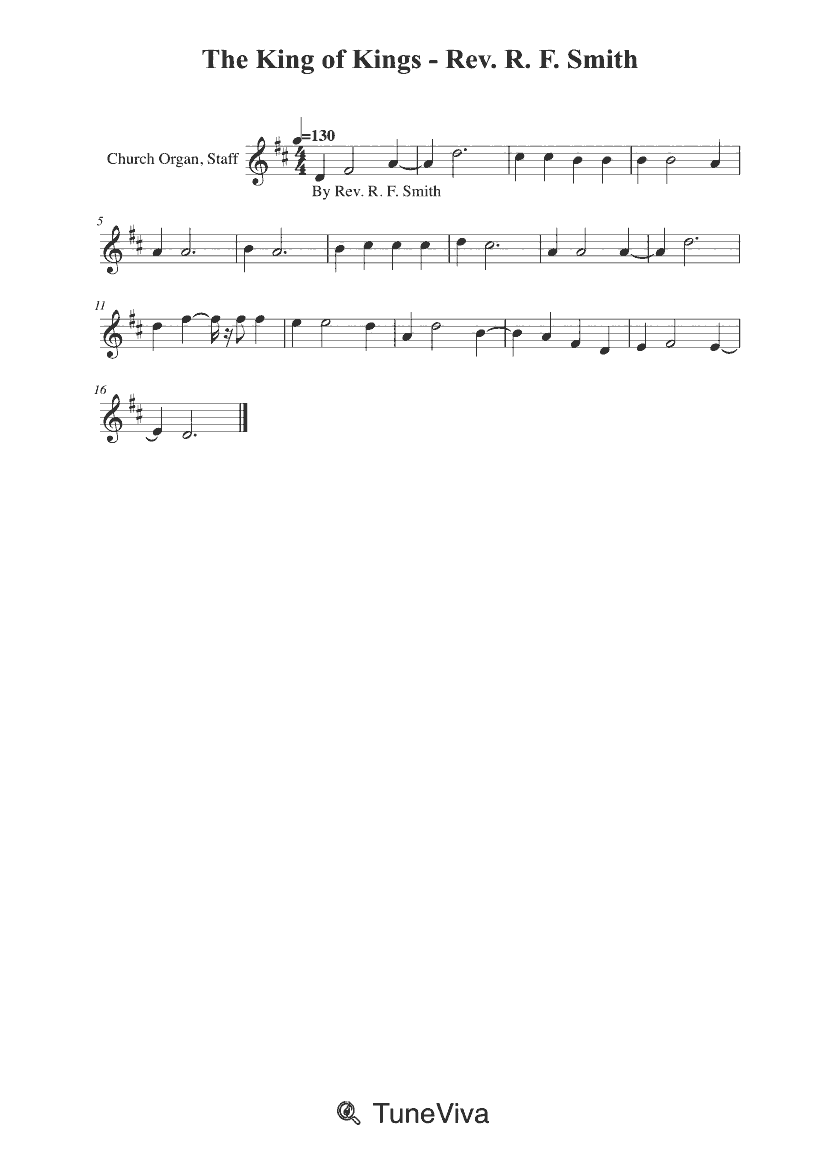
The most-viewed entry. The words are Reginald Heber's, written in 1812 for St Stephen's Day; the catalogue files a tune setting under Smith.
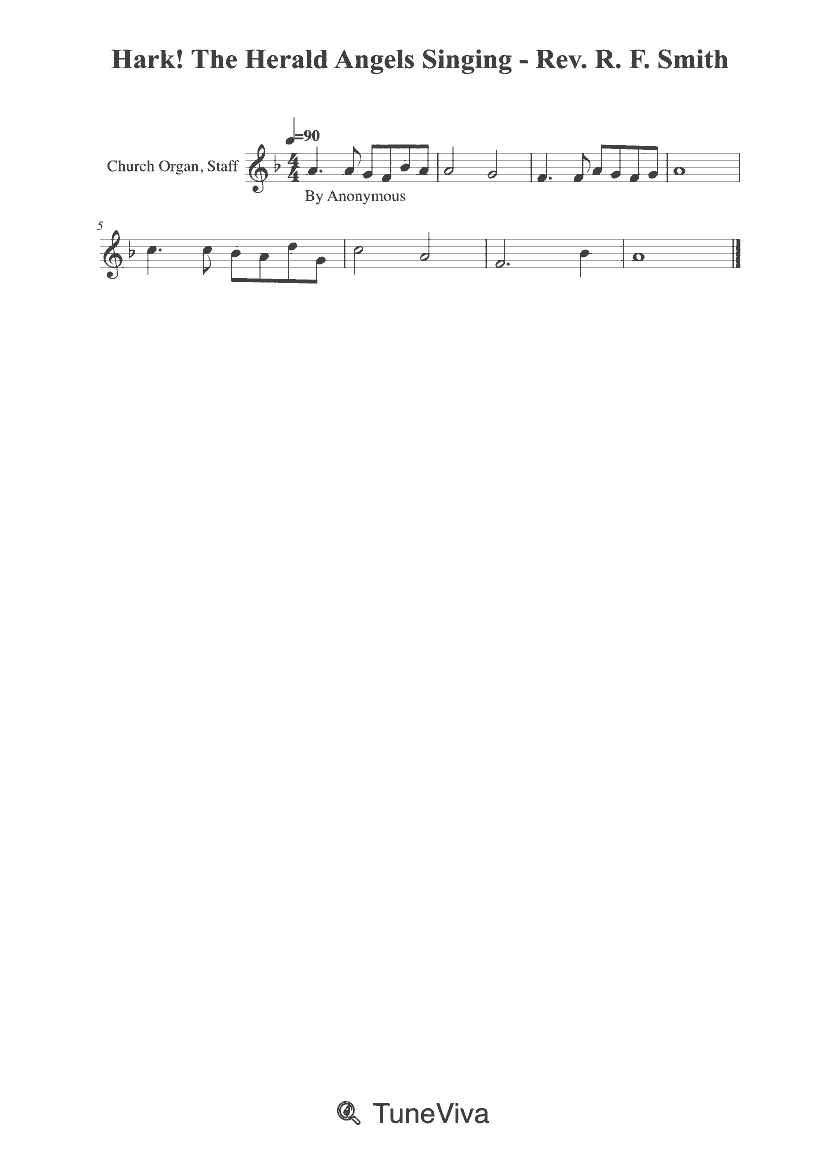
A Christmas carol on the angelic announcement, using the older "Singing" form of the title rather than Charles Wesley's "Hark! how all the welkin rings".
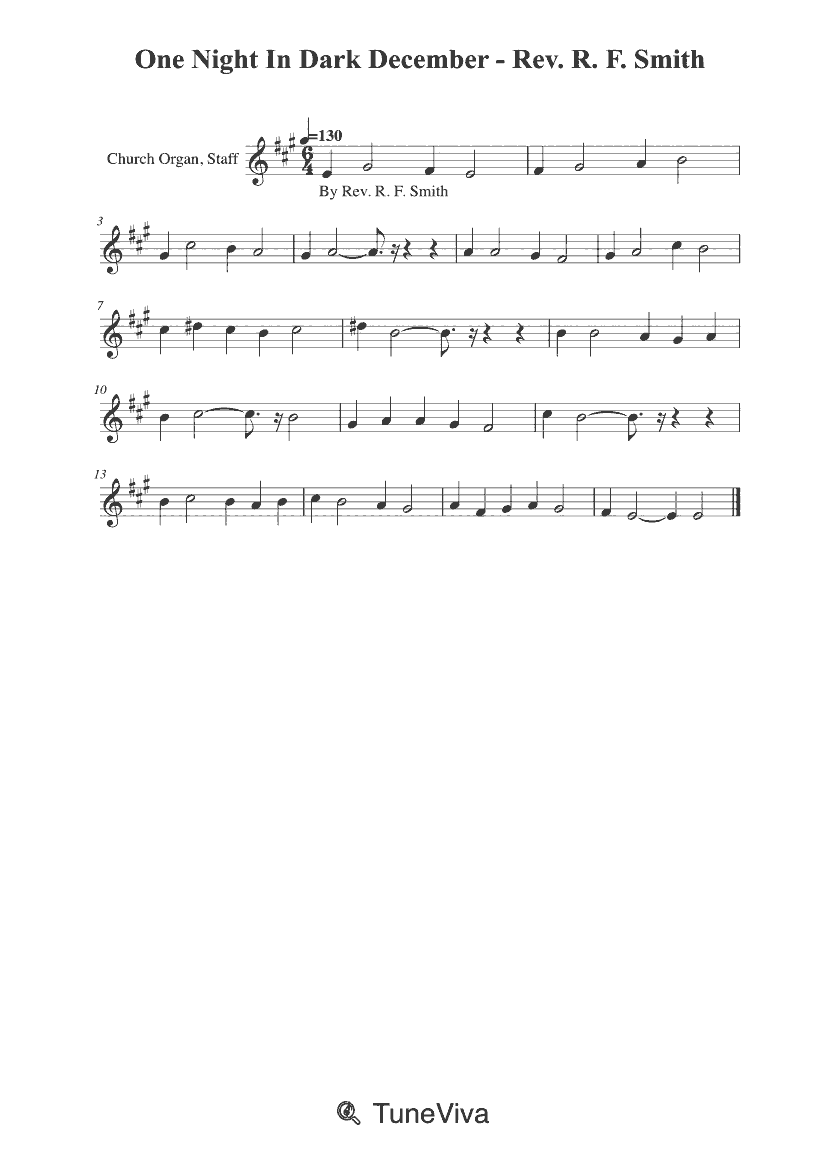
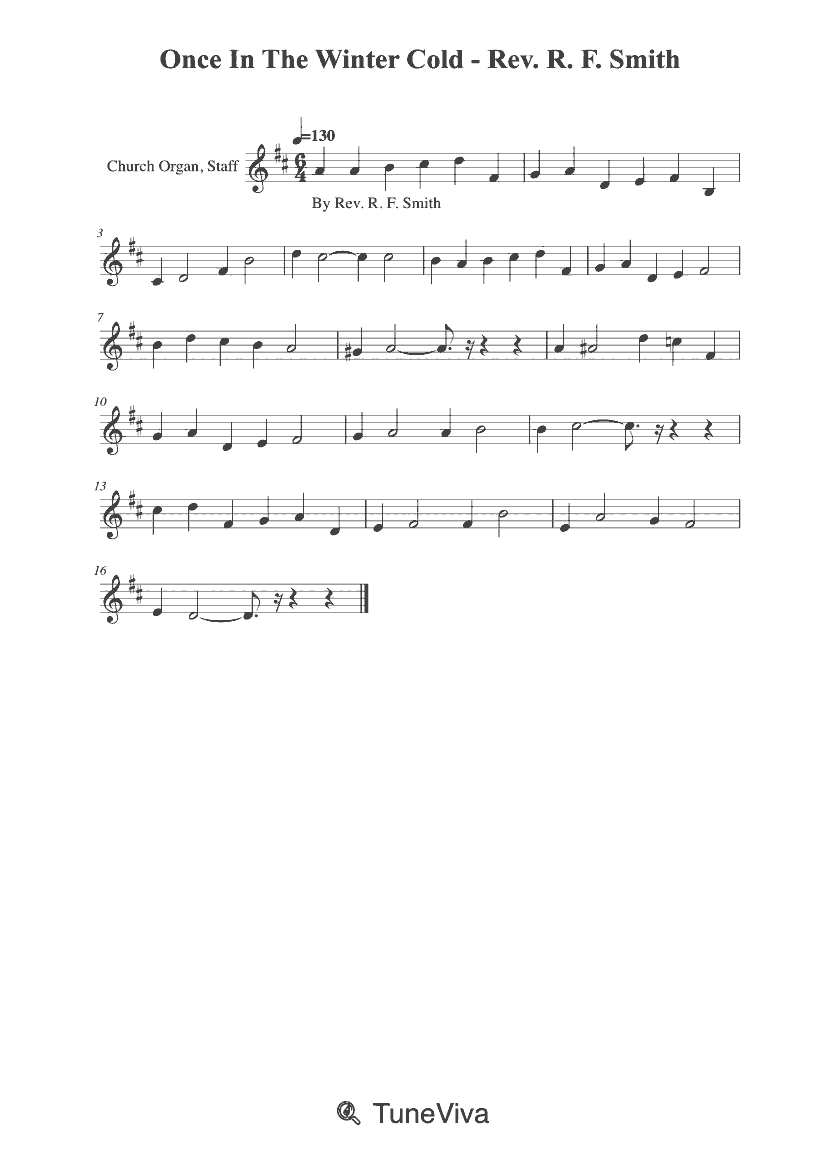
A nativity carol that sets the birth in the middle of winter, a common Victorian device for framing the shepherds' watch.
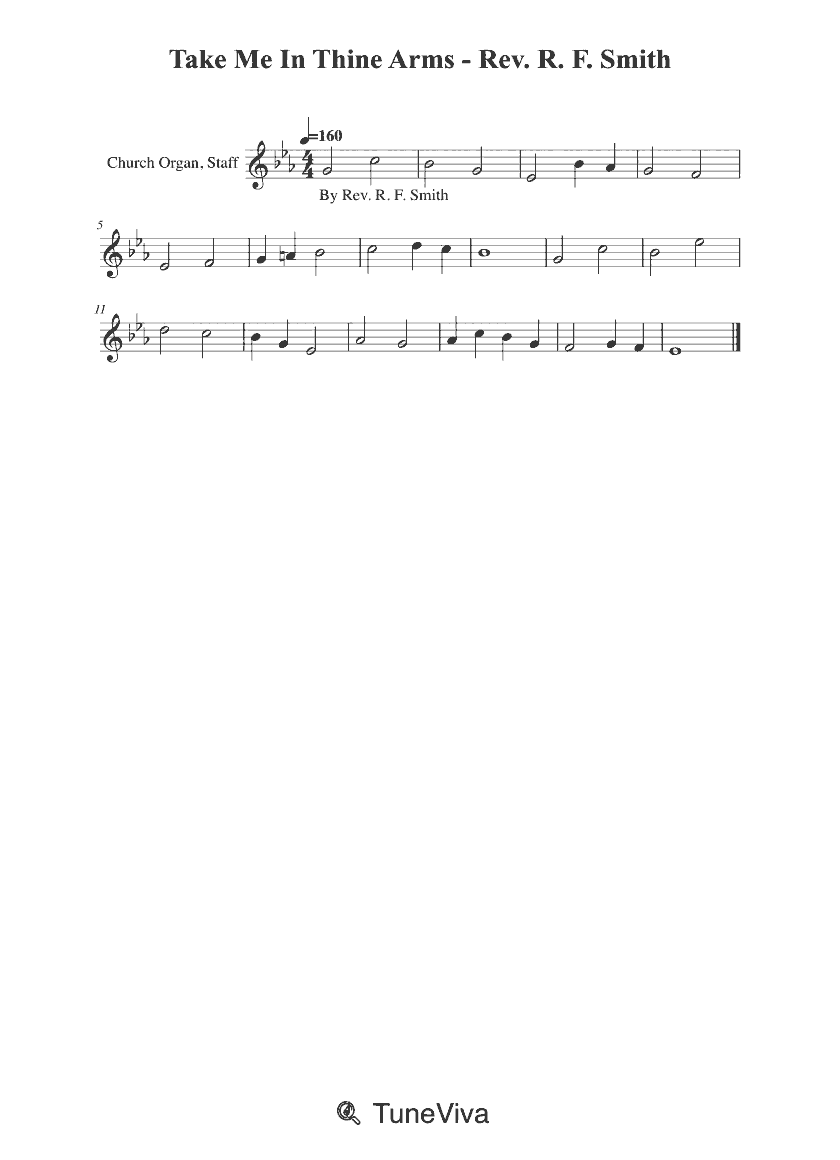
A short devotional piece rather than a seasonal one, in the language of refuge and adoption.
Set to Smith's tune CLYNE and printed in Chope's Carols for Use in Church in 1894.
A bell carol: the churchyard bells ring out across a winter landscape. It appears as number 14 in Chope's 1894 collection.
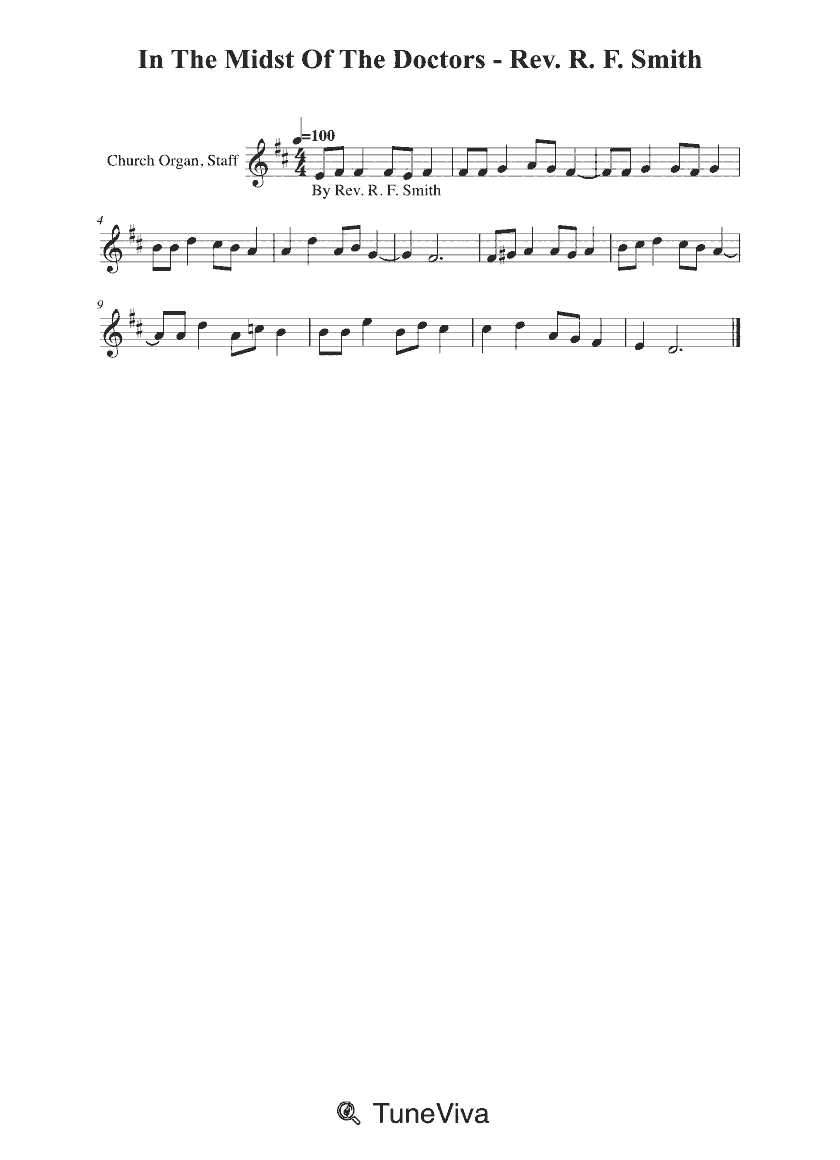
A carol on the twelve-year-old Christ among the teachers in the temple, a subject Victorian children's collections liked.
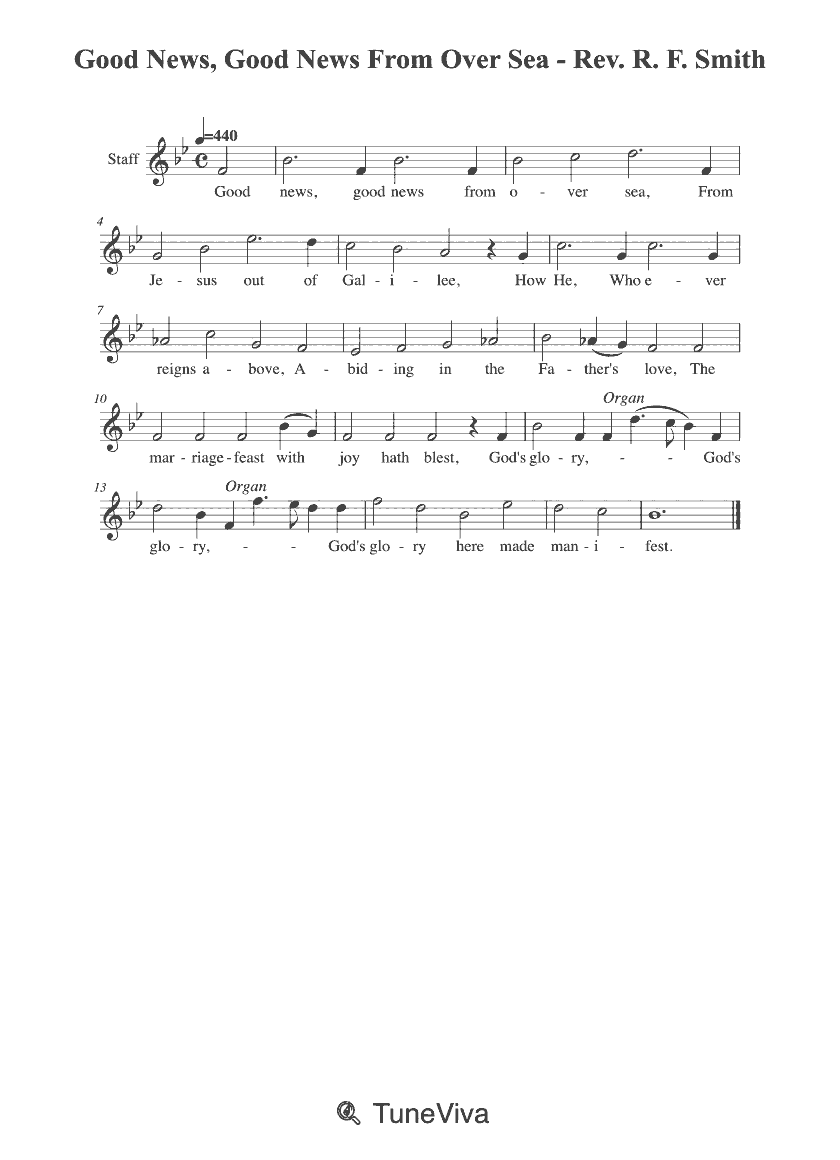
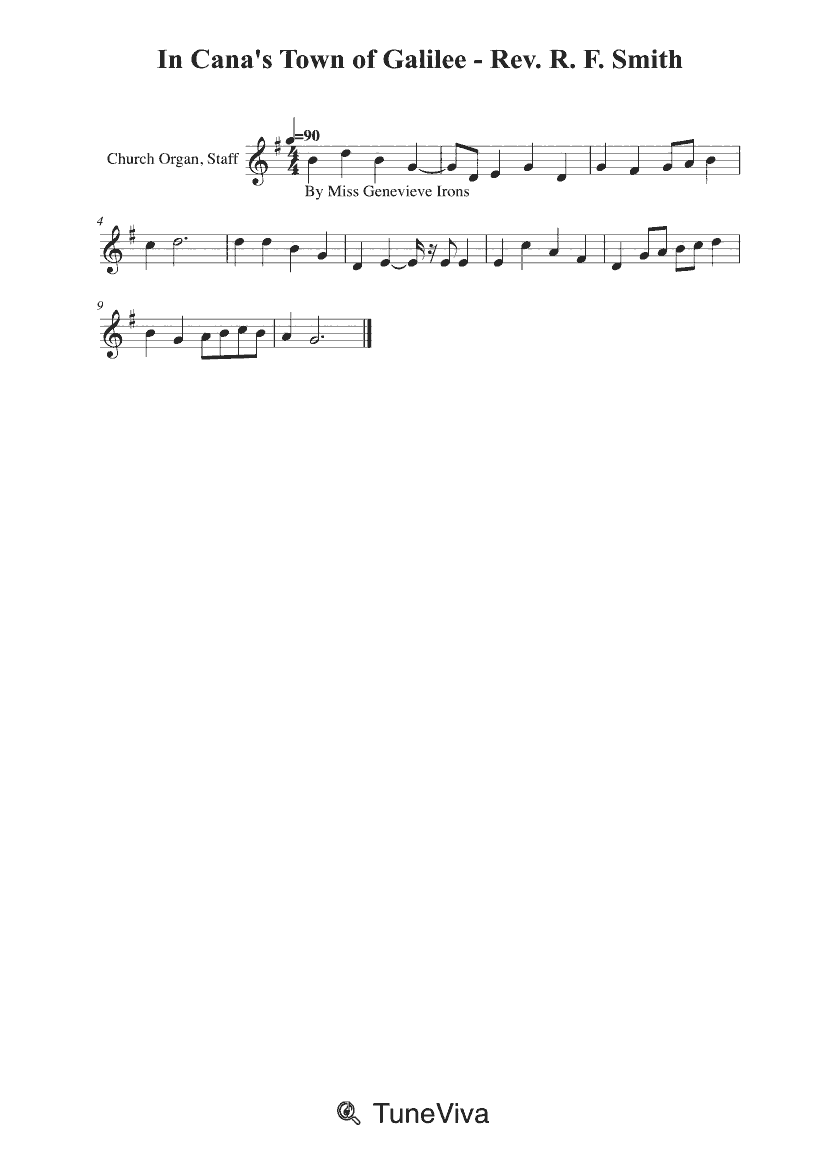
A Epiphany-season piece on the wedding at Cana, where the first sign is worked.
A short hymn of aspiration, the sort of two-verse item that filled the back pages of parish collections.
The Rev. Robert Frederick Smith, 1833 to 1905, born in Sheffield, a Lincoln College man, vicar of Edingley-cum-Halam in Nottinghamshire and a canon of Southwell Minster.
Mostly not. He was principally a composer of tunes, and several of the texts are by other hands; "The Son of God goes forth to war", for instance, is Reginald Heber's.
Several come from Richard R. Chope's Carols for Use in Church, London, 1894, and from the later compilation Carols Old and Carols New, 1916.
The index is a measure of notational density. A strophic four-part carol has few notes per second, so all twenty entries land on the same value.
Catalog editions and arrangements attributed to Rev. R. F. Smith.