classical
1 tracks
Robert Mackintosh, known as Red Rob for the colour of his hair, was a Perthshire-born fiddler and composer who worked in Edinburgh, Aberdeen and London in the last decades of the eighteenth century. He published four collections of dance music between 1783 and 1804, and most of the tunes in them carry the names of the gentry.
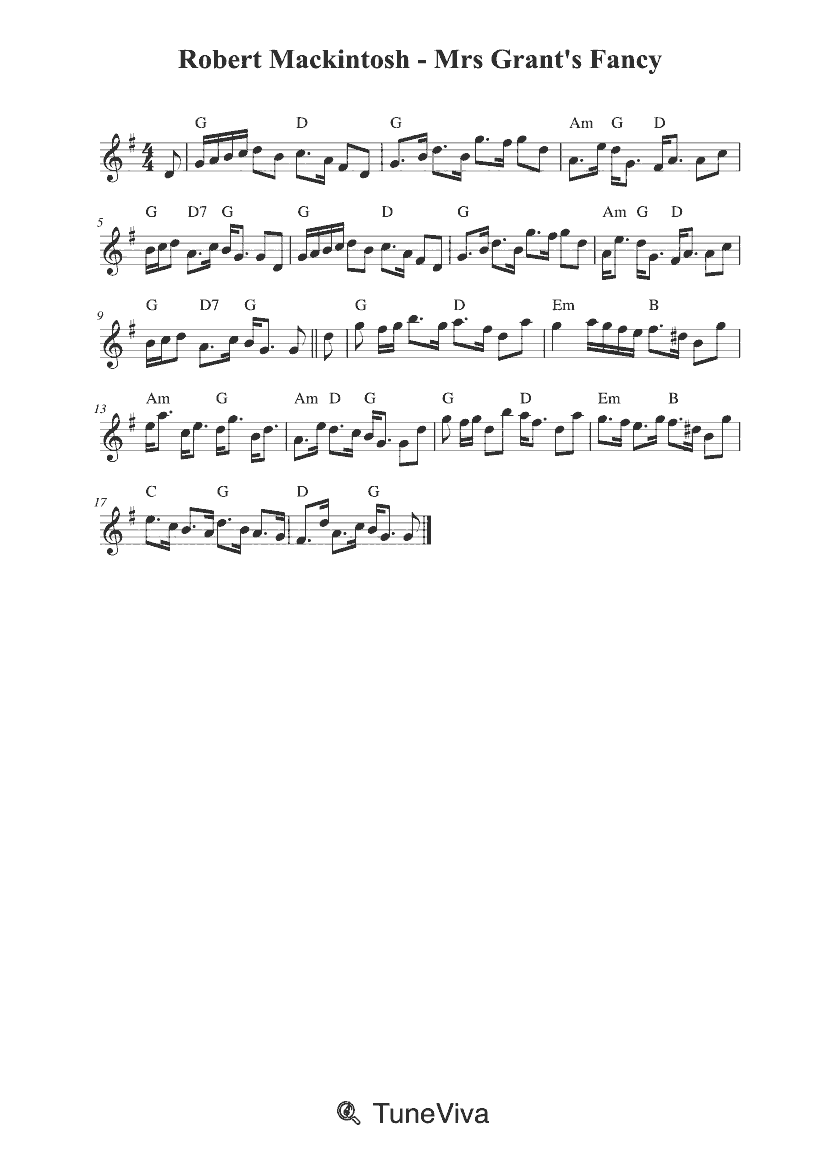
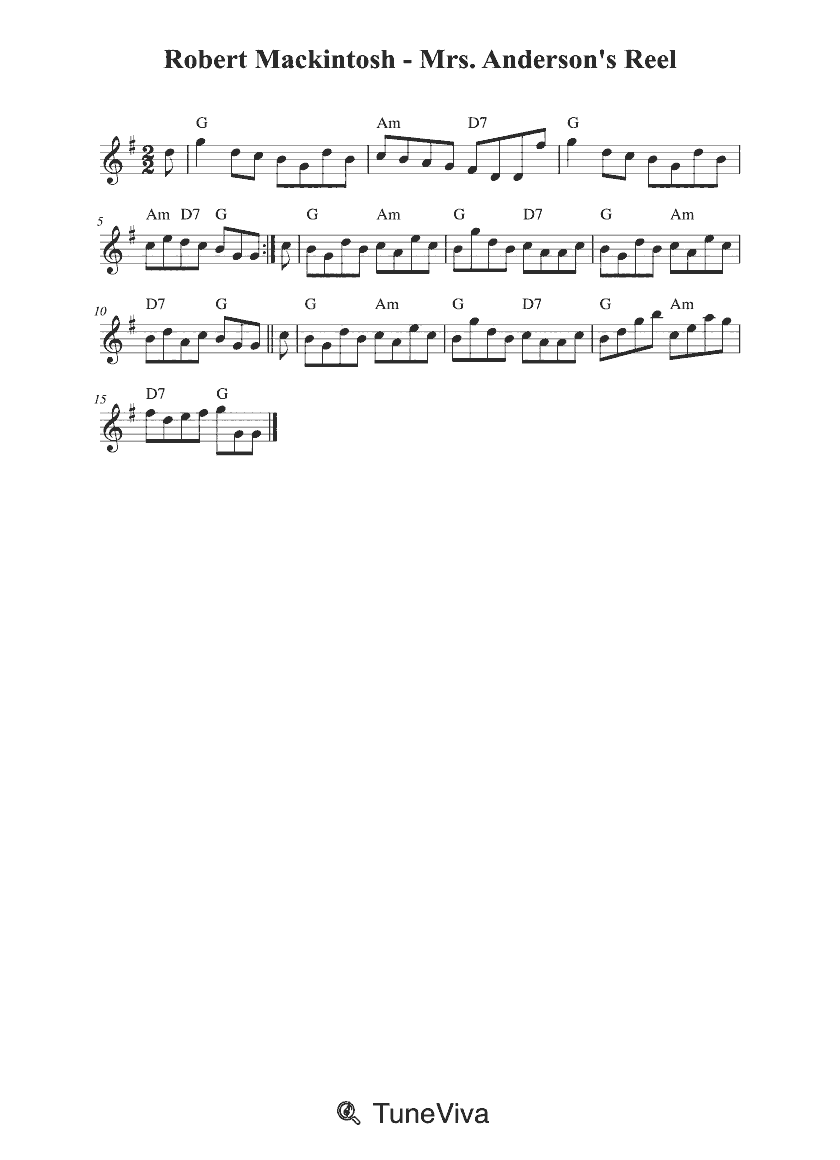
TuneViva holds 91 Mackintosh scores, about 102 minutes of music and 19,754 notated notes; none of them has lyrics. The most-viewed are Mr John Trotter's Hornpipe and Mrs Grant's Fancy, and reels, strathspeys and jigs make up nearly the whole list.
Mackintosh was born at Tullymet, near Pitlochry in Perthshire, about 1745. By 1773 he was living in Skinner's Close off Edinburgh's High Street, teaching music and playing in the orchestra of the Edinburgh Musical Society. From 1785 to 1788 he was in Aberdeen, leading the Gentleman's Concerts, and he later moved to London, where he died in 1807. The nickname Red Rob came from his hair.
His first collection appeared in 1783 with 54 pieces, 17 of them reels. A second followed in Edinburgh in 1793 with 73 pieces, a third in 1796 with 117, and a fourth in London in 1804 with 113 more. The titles mix strathspeys, reels and jigs with minuets and gavottes, the dance forms that filled Scottish assembly rooms. Modern recordings include Concerto Caledonia's Airs, Minuets, Gavotts and Reels (2013) and Pete Clark's Mackintosh at Murthly (2004).
The 91 scores come to about 102 minutes and 19,754 notated notes, all without lyrics. Difficulty is almost uniform: 89 entries sit at complexity index 1 and two at index 0, which reflects the short, single-line character of the tunes rather than easy reading. Titles carry the composer's name as a prefix, spelled both Mackintosh and MacKintosh, and a few add tags such as '(C)' or extra spacing that have no musical meaning.
Expect a single melody line with a bass, not a full four-part texture. Strathspeys need the Scotch snap, a short-long pair that gives the dance its lift; reels run in even quavers and should stay metronomic so the dancers can trust the pulse. Ornaments such as cuts and strikes are rarely written in, so add them where the line repeats. If the score is a keyboard arrangement, the melody sits in the right hand and the left hand supplies the bass.
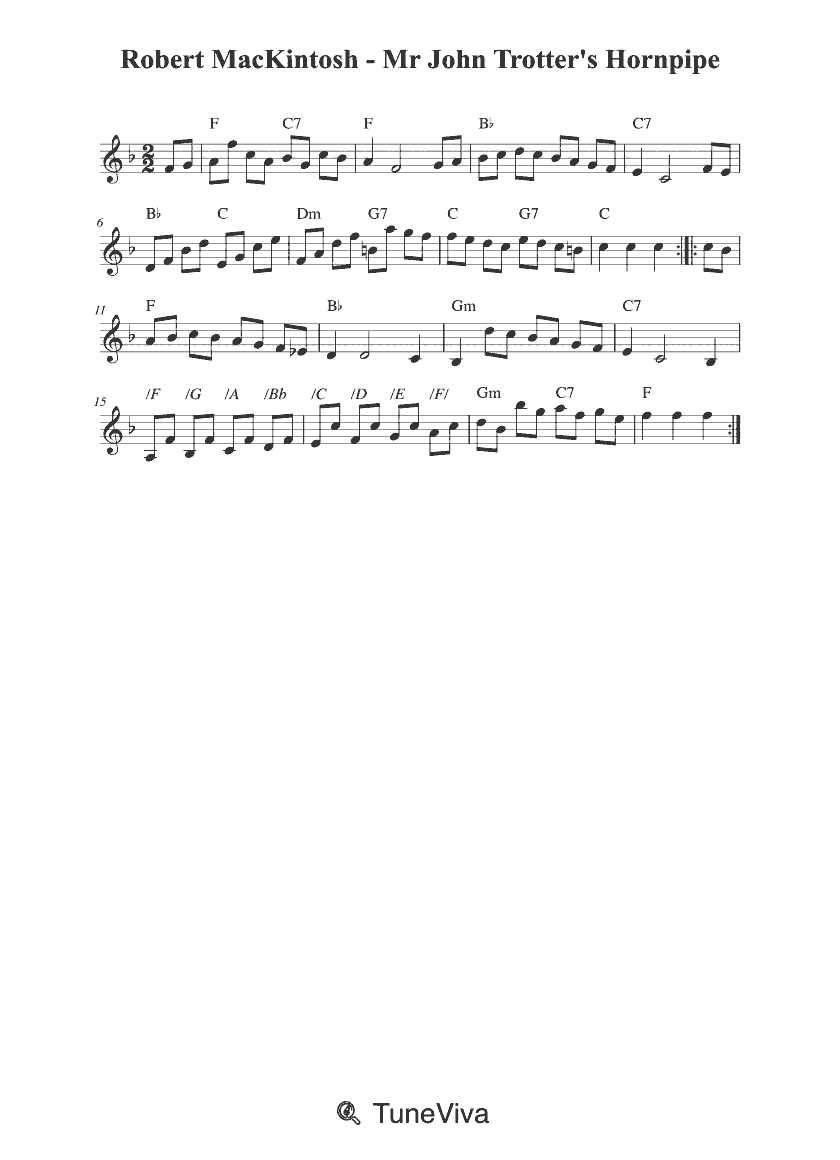
A hornpipe from the collections and one of the two most-viewed Mackintosh scores here.
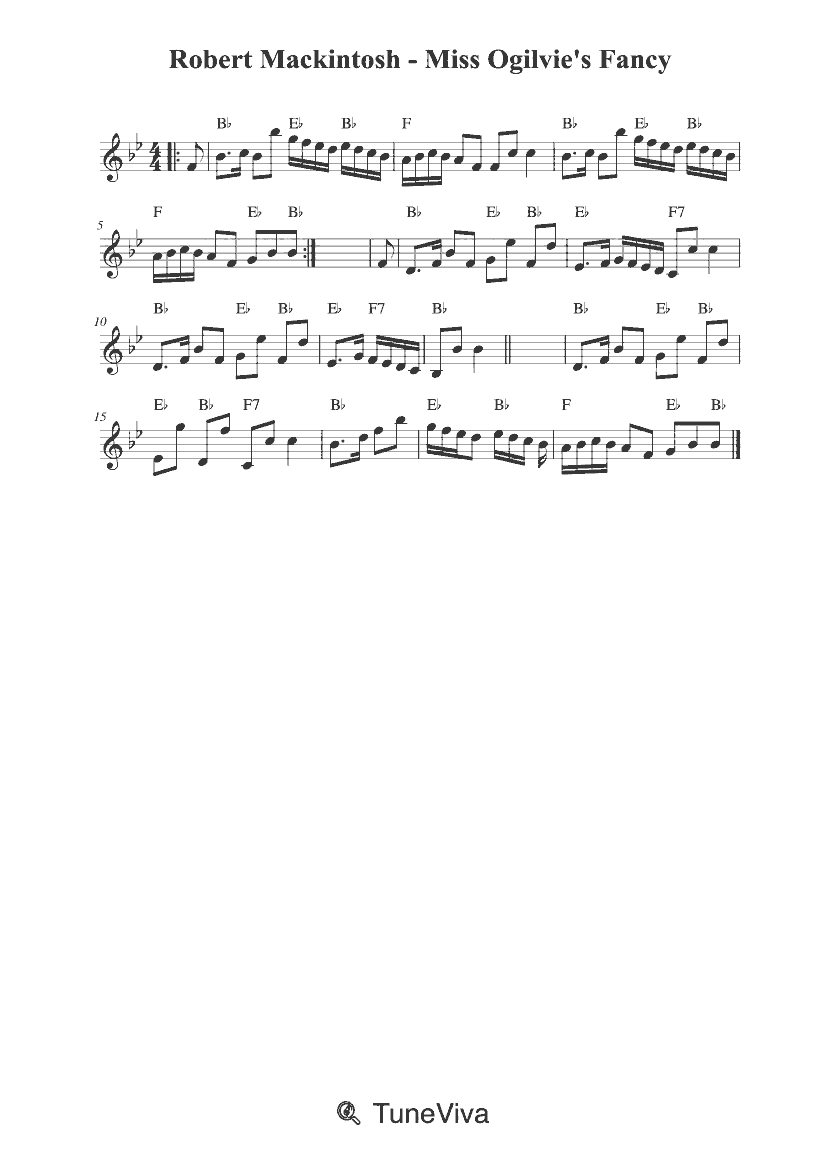
A short dance air with a descriptive rather than a formal title, one of several 'fancies' in the catalogue.
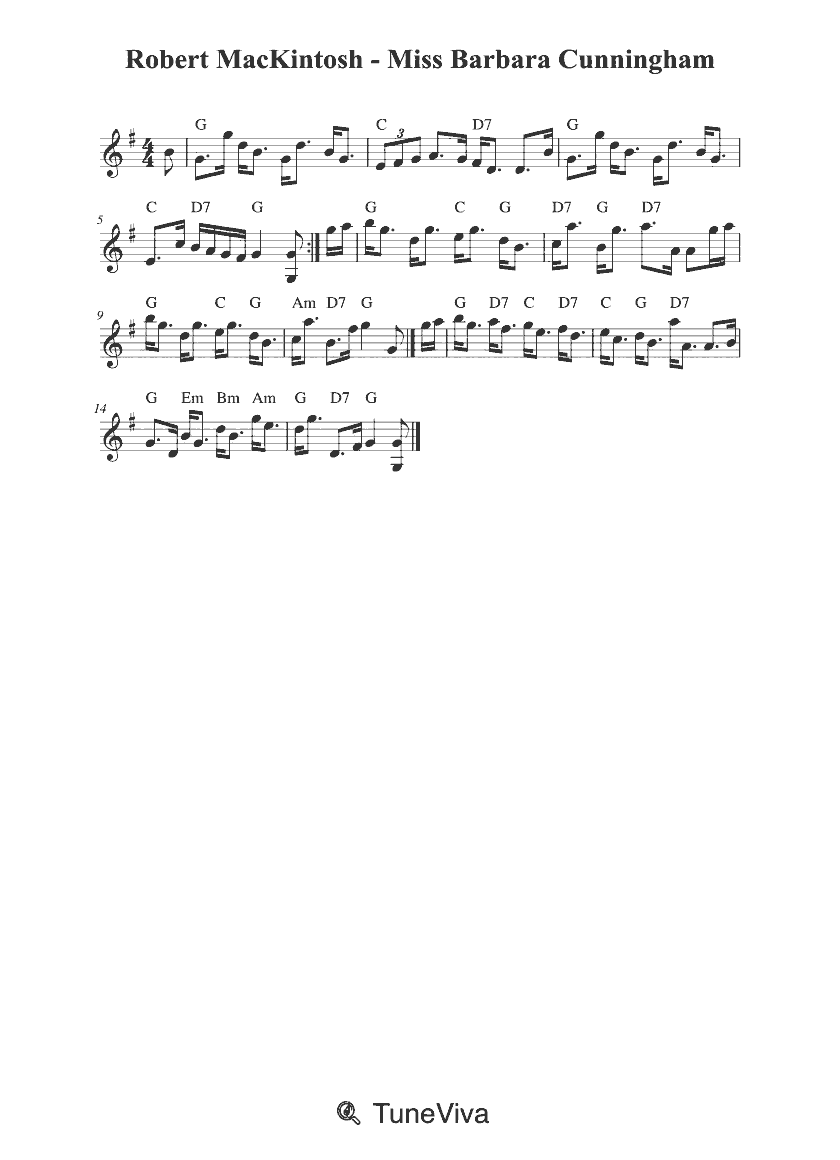
A tune named for a woman of the Cunningham family, the usual dedication practice in Scottish tune books.
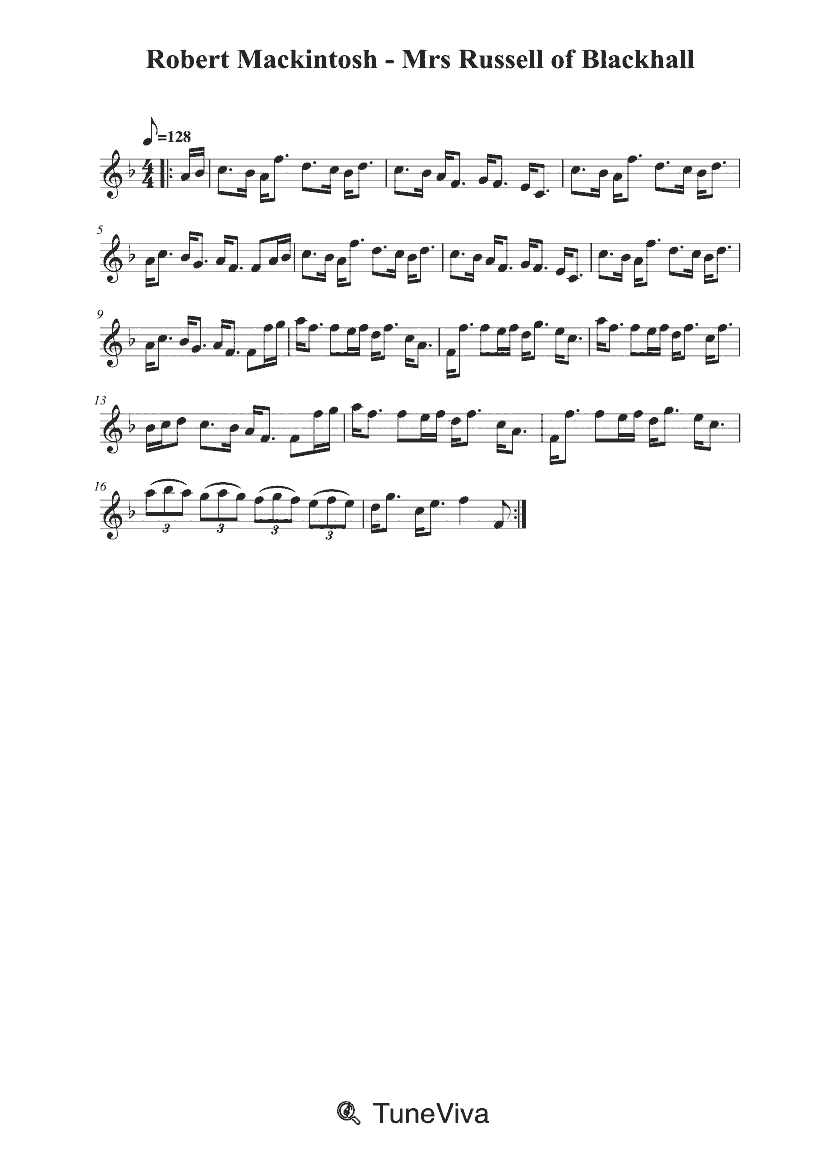
Named for a landed family; Blackhall lies near Aberdeen, where he directed the Gentleman's Concerts in the late 1780s.
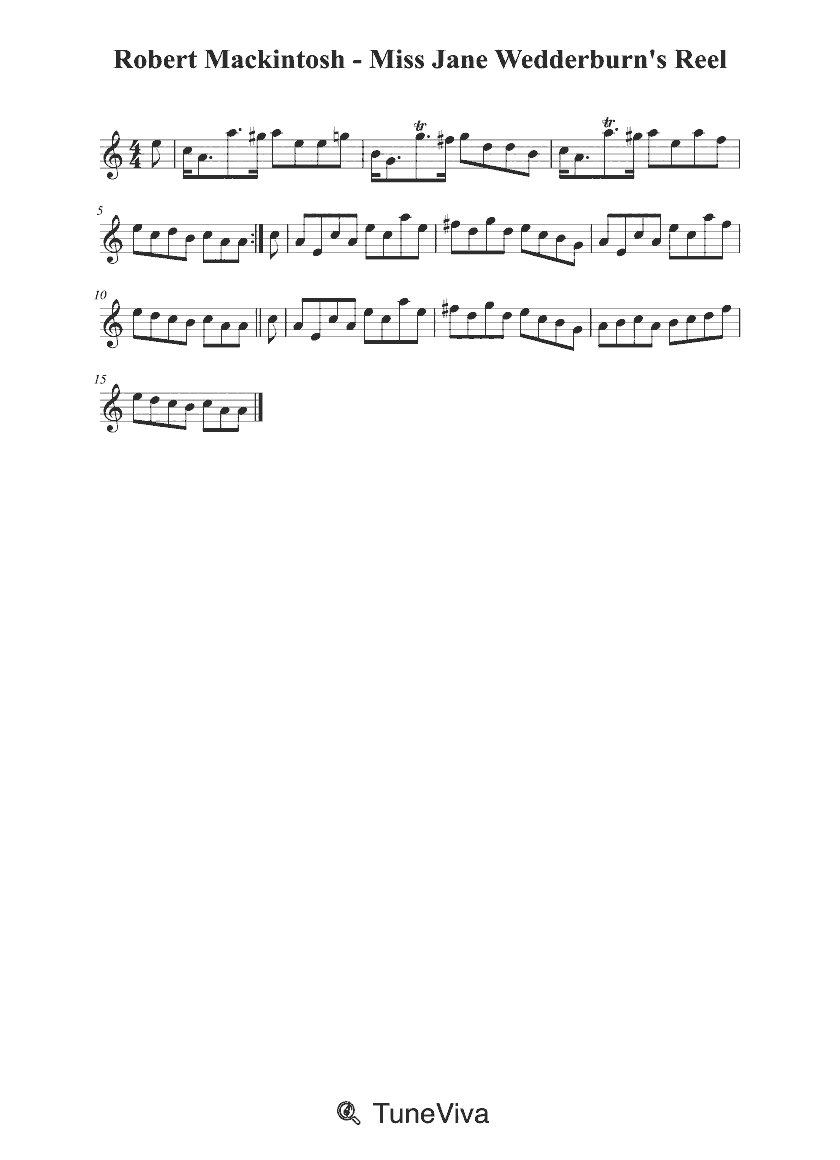
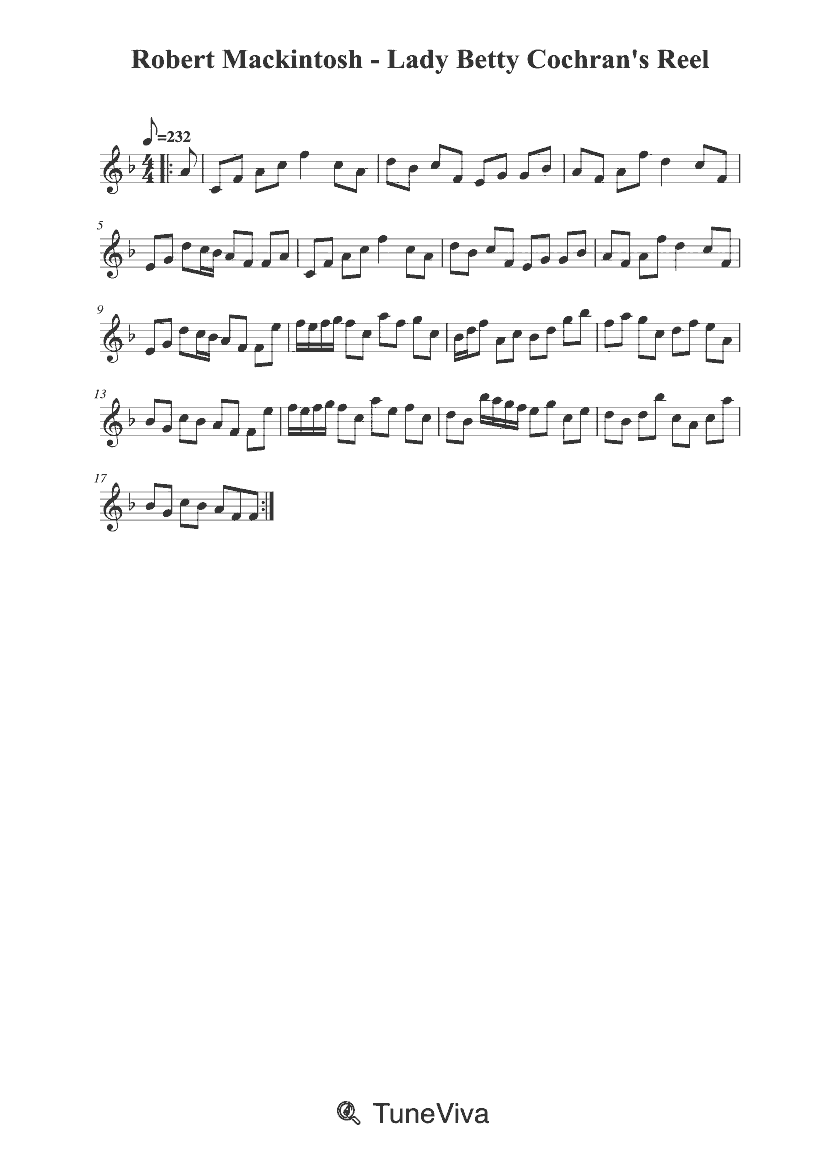
A reel in the Scots manner, four beats to the bar with the weight on the first and third.
One of several 'fancy' titles in the catalogue, shorter and less formal than the named strathspeys.
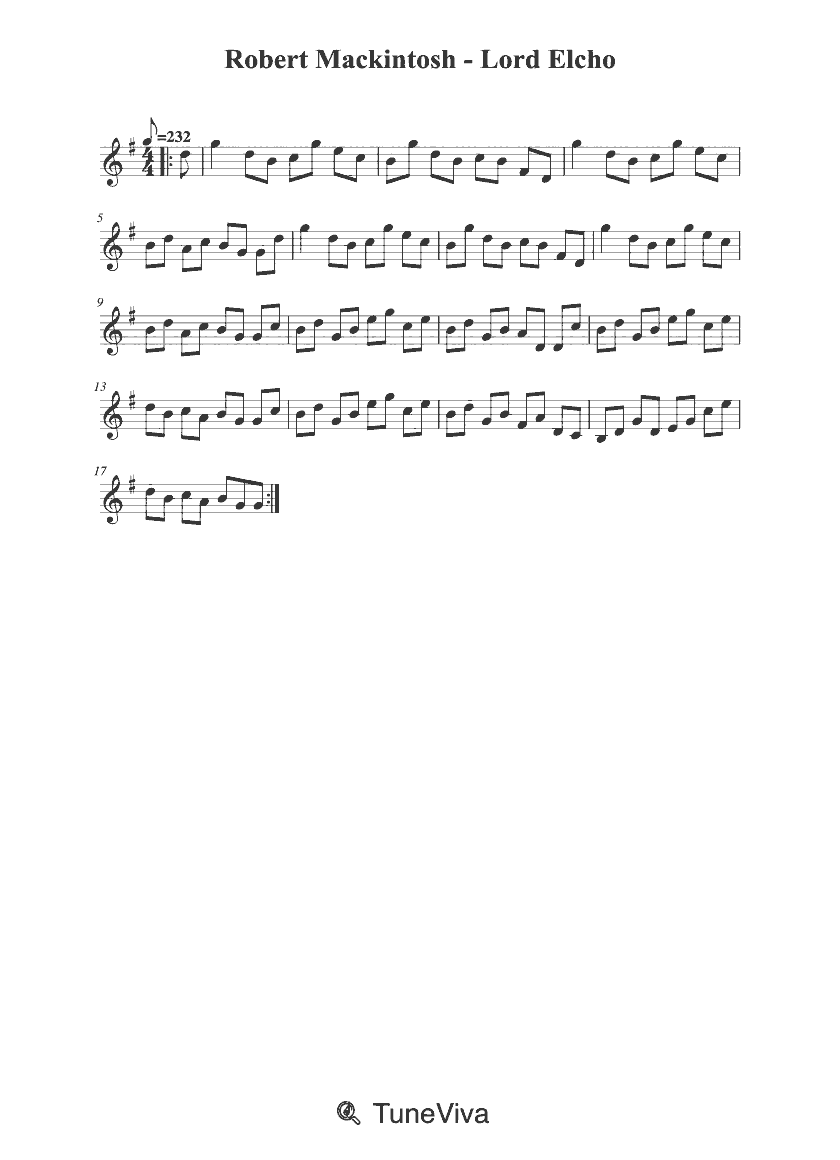
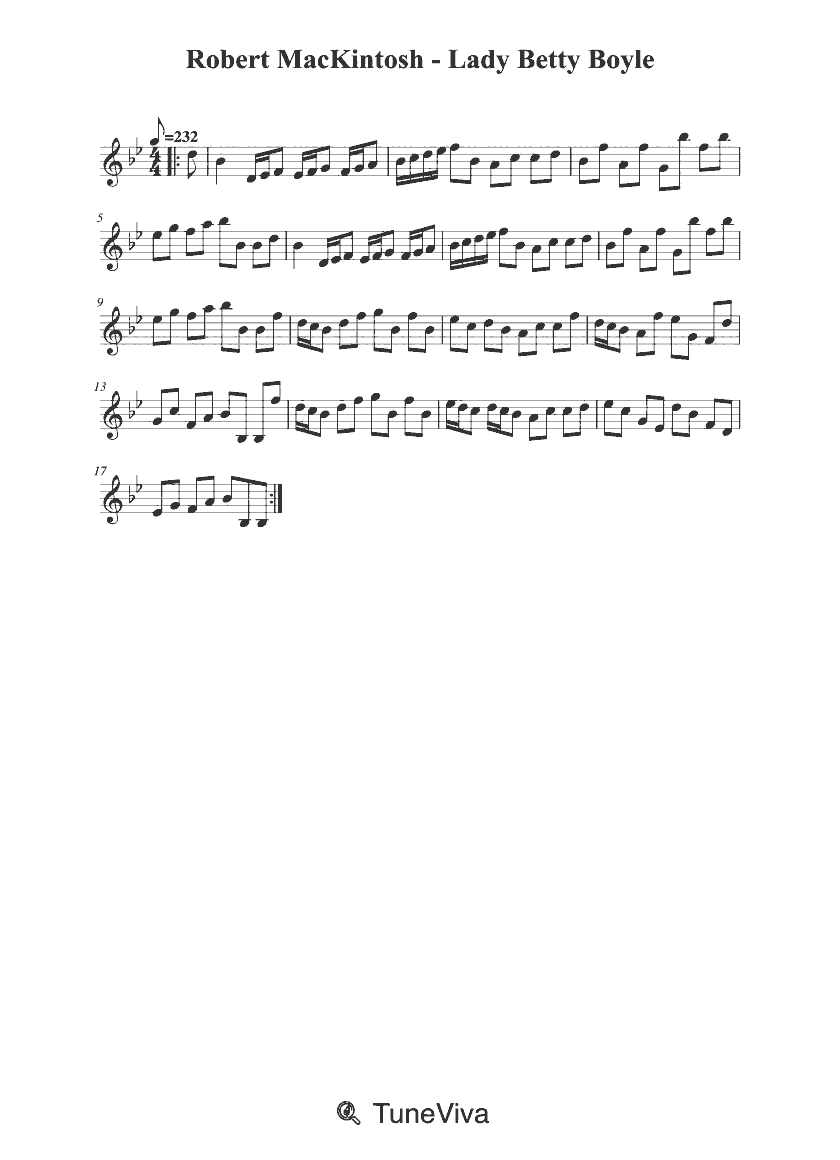
A tune carrying a noble title, the kind of dedication that helped sell subscription collections.
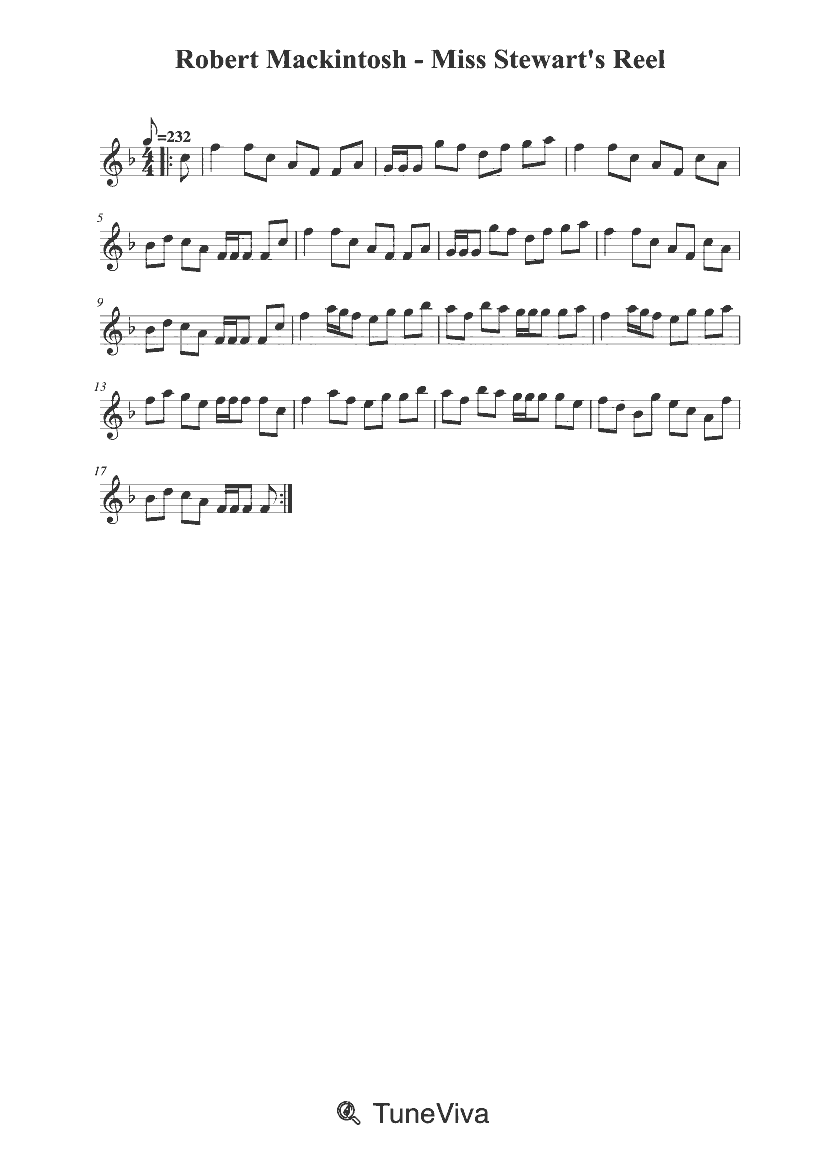
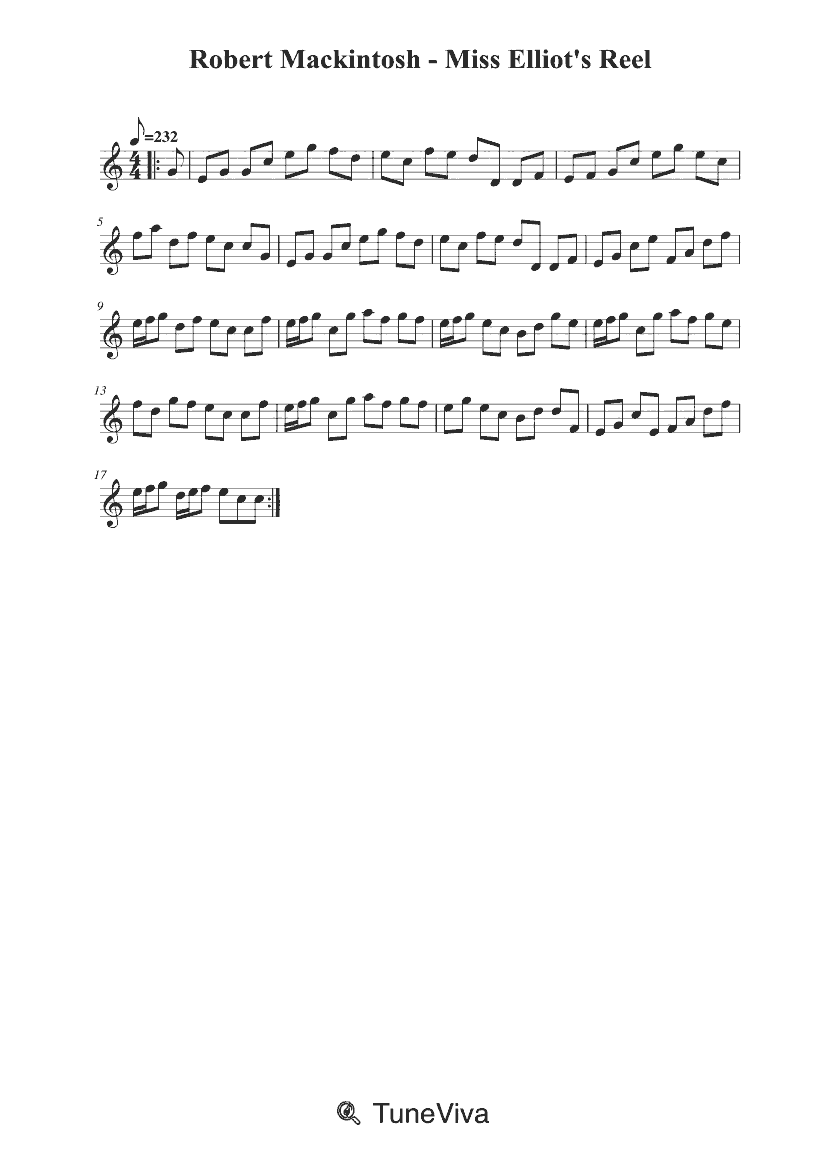
A reel built on short repeated phrases, the shape that makes Scottish dance tunes easy to pick up by ear.
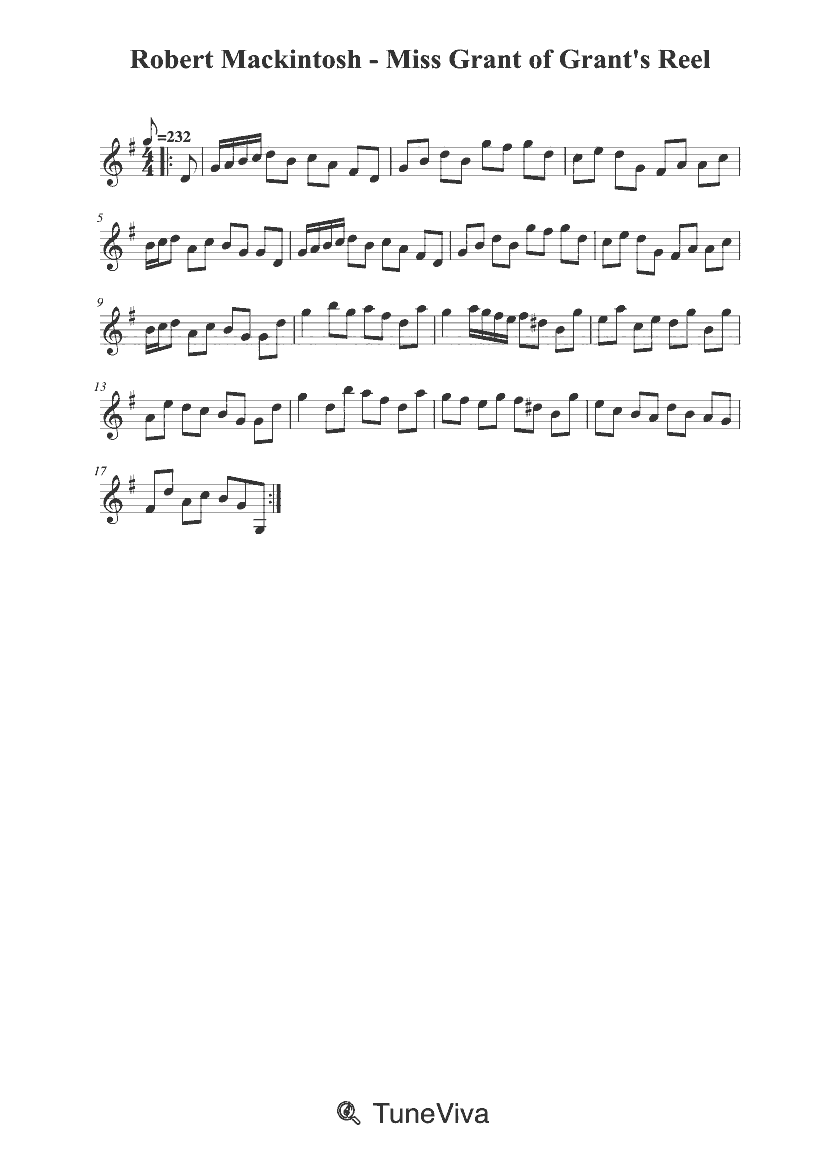
The doubled name is a Highland title: 'Grant of Grant' designates the clan chief, and 'Miss' his daughter.
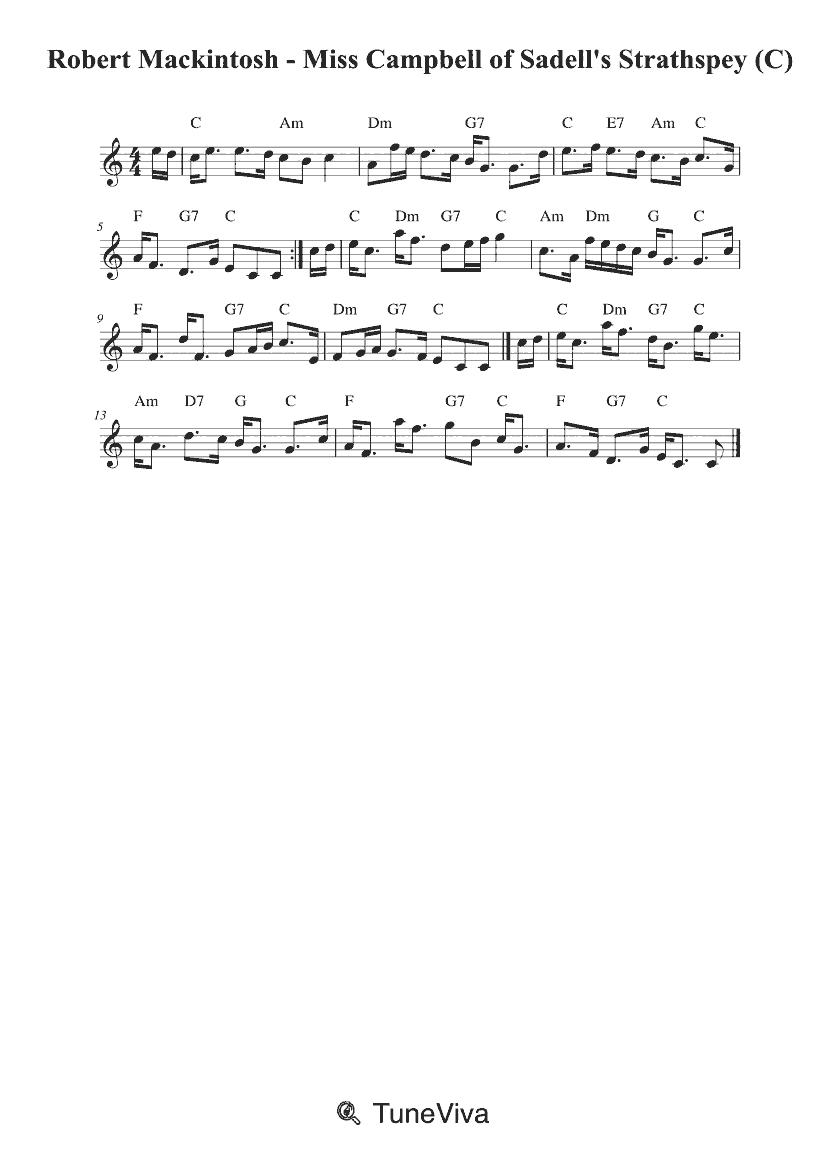
A strathspey named for the Campbell family of Saddell in Argyll; the catalogue spells the place with one 'd' and adds an unexplained '(C)'.
There are 91, running to about 102 minutes of music and 19,754 notated notes; none of the scores carries lyrics.
Because of the colour of his hair. The nickname stuck and is still used in Scottish music reference works.
A Scottish dance tune in 4/4, slower than a reel, characterised by the Scotch snap: a short note on the beat followed by a long one.
From four collections published in 1783, 1793, 1796 and 1804, which between them contain more than 350 pieces, mostly reels and strathspeys.
Catalog editions and arrangements attributed to Robert Mackintosh.