classical
1 tracks
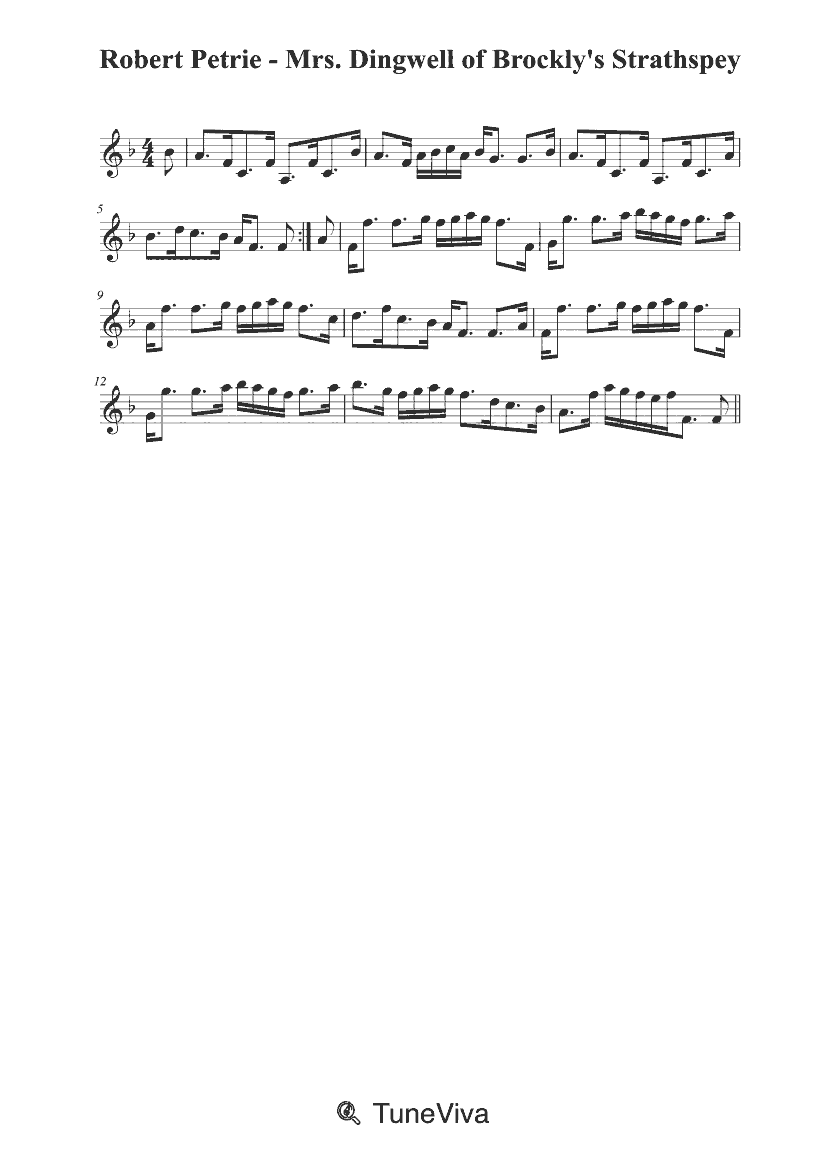
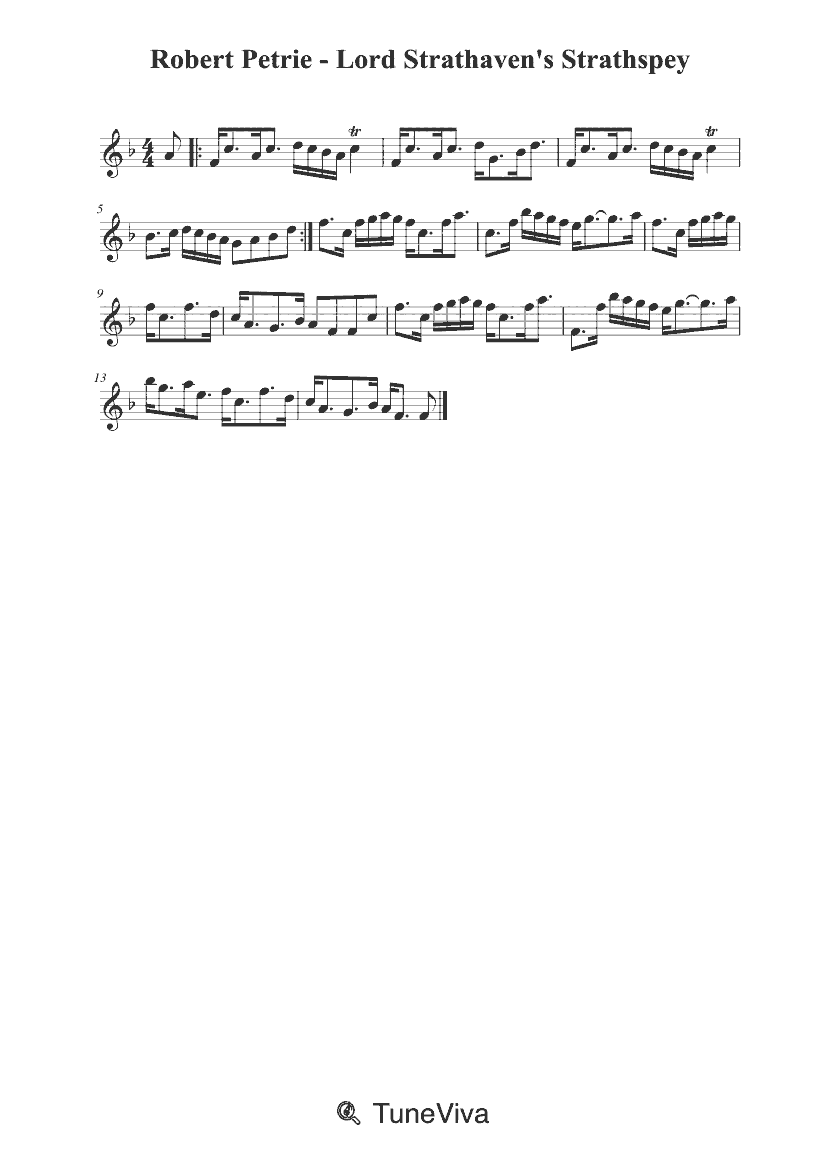
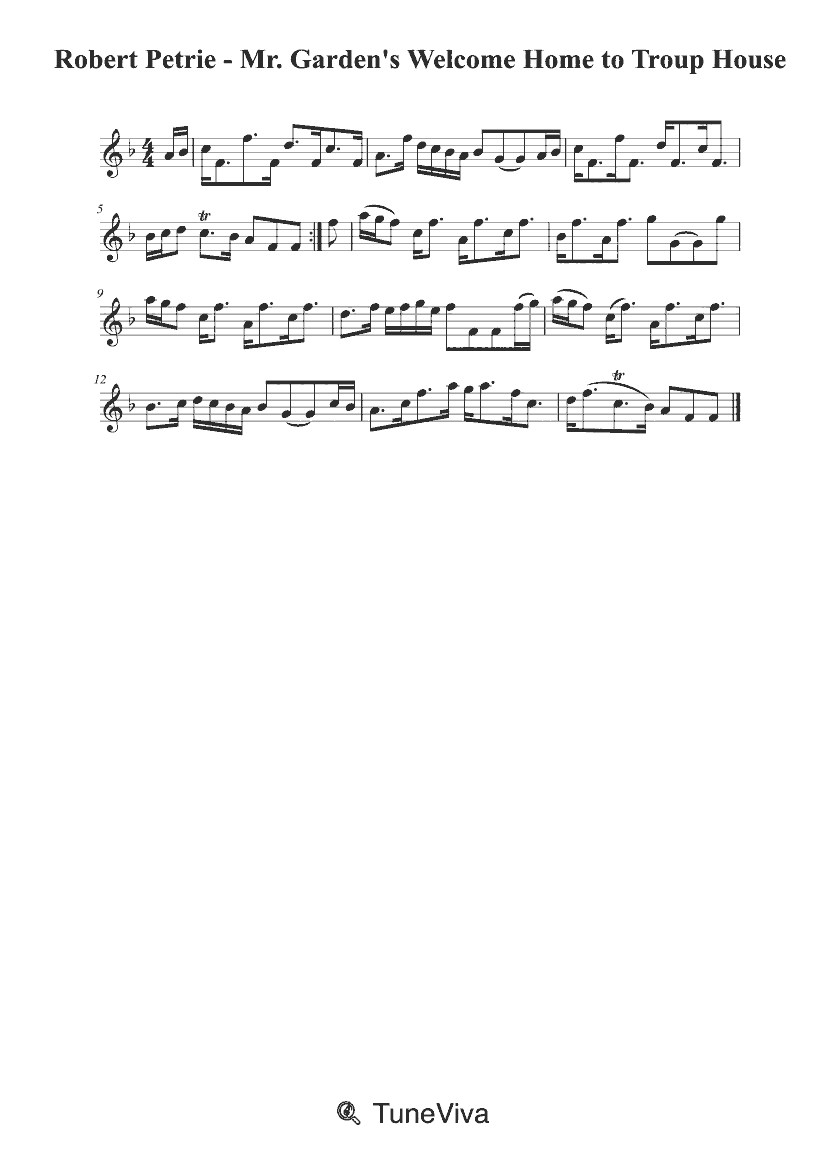
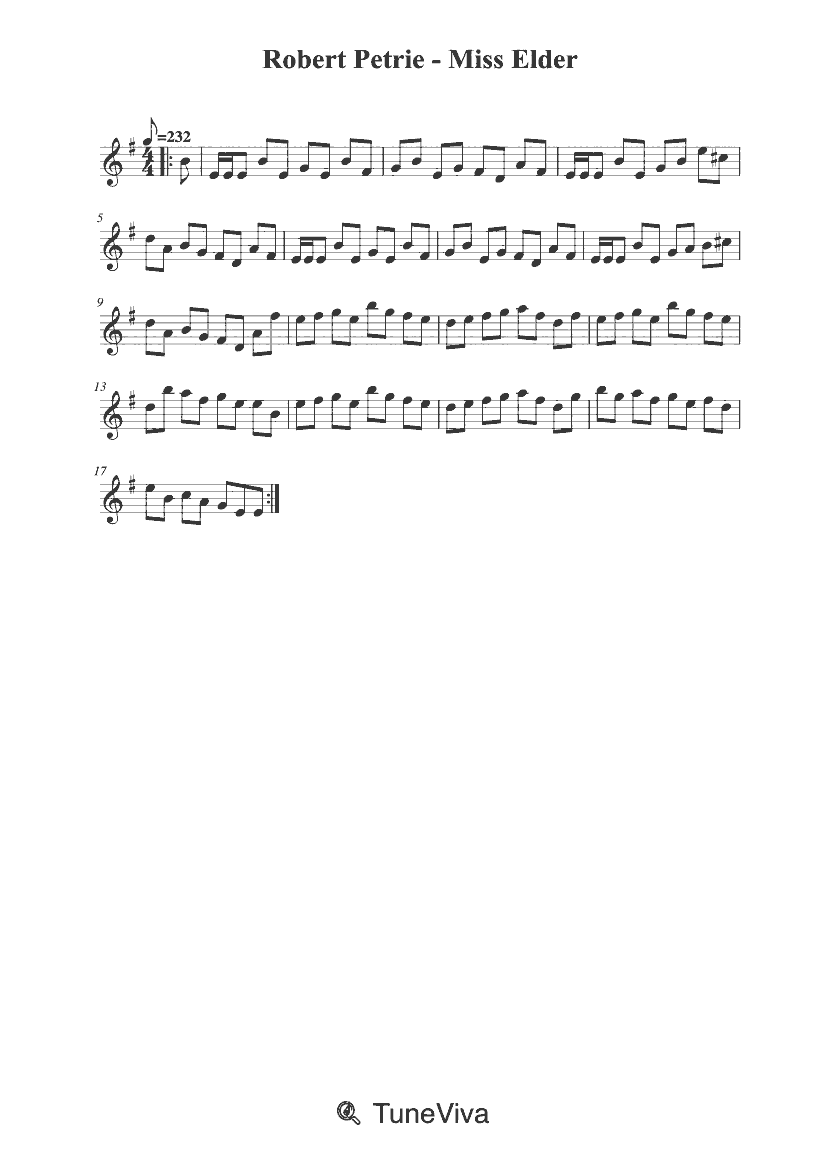
Robert Petrie's scores are dance tunes with people's names in the titles. Miss Elder, Mrs. Dingwell of Brockly's Strathspey, Lord Strathaven's Strathspey, Mr. Garden's Welcome Home to Troup House: this is the world of Scottish country dance and the fiddler-composers who supplied it, where a tune was often written for a patron, a pupil, or a family occasion.
TuneViva holds 113 Petrie scores, all short instrumental pieces. The collection is dominated by strathspeys and reels, with jigs and character pieces mixed in. There are no lyrics and no large-scale works. What you get is a working fiddler's repertoire, preserved in notation and ready to play.
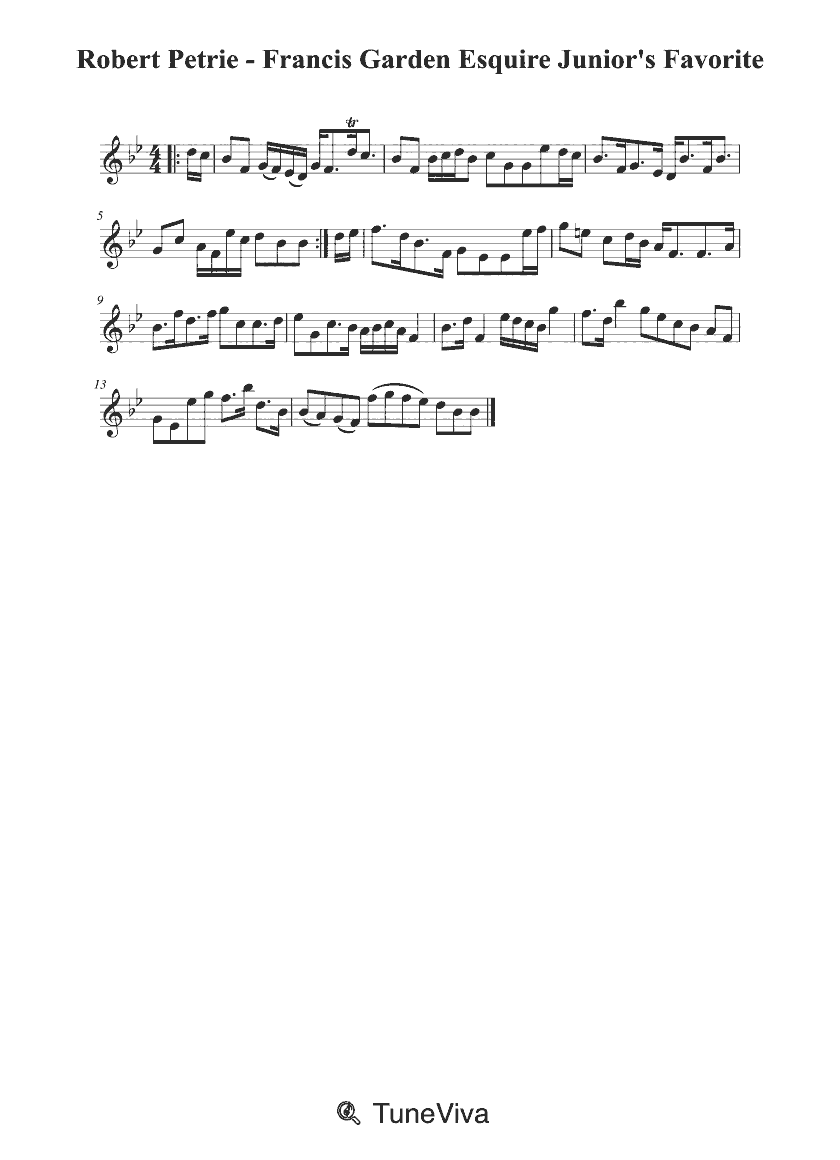
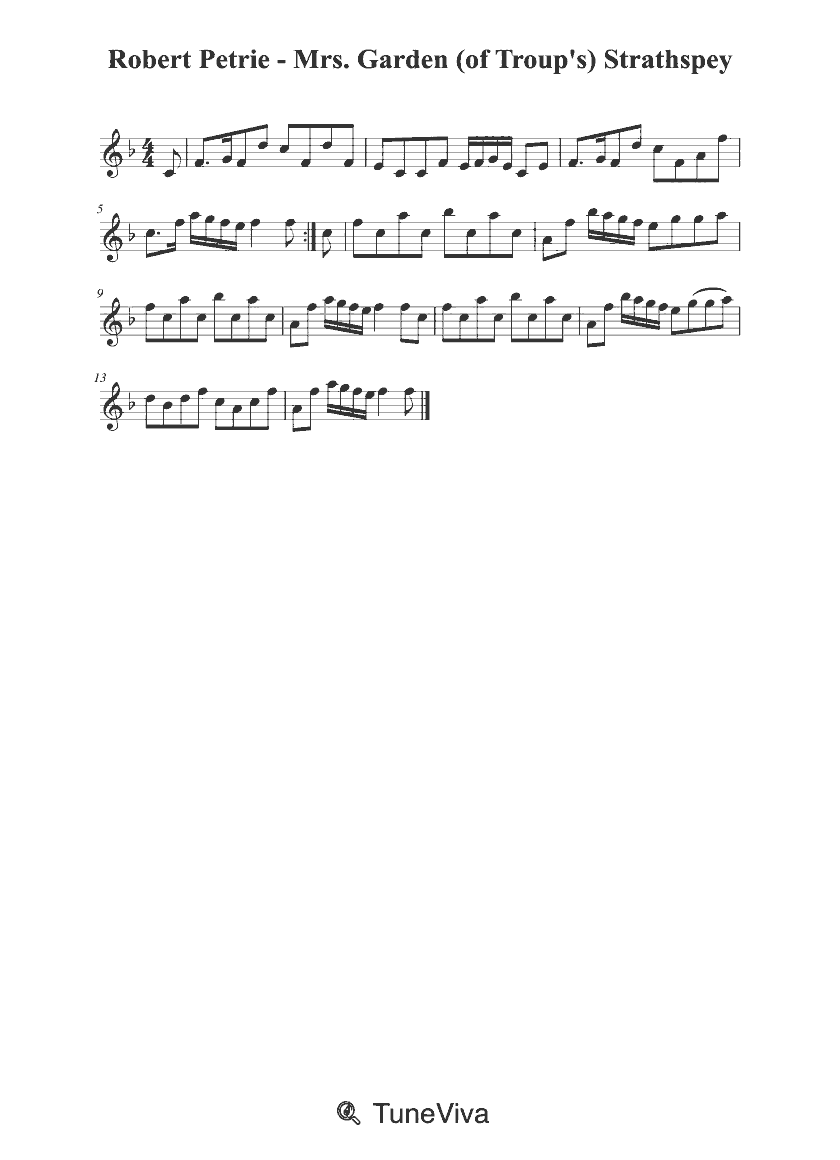
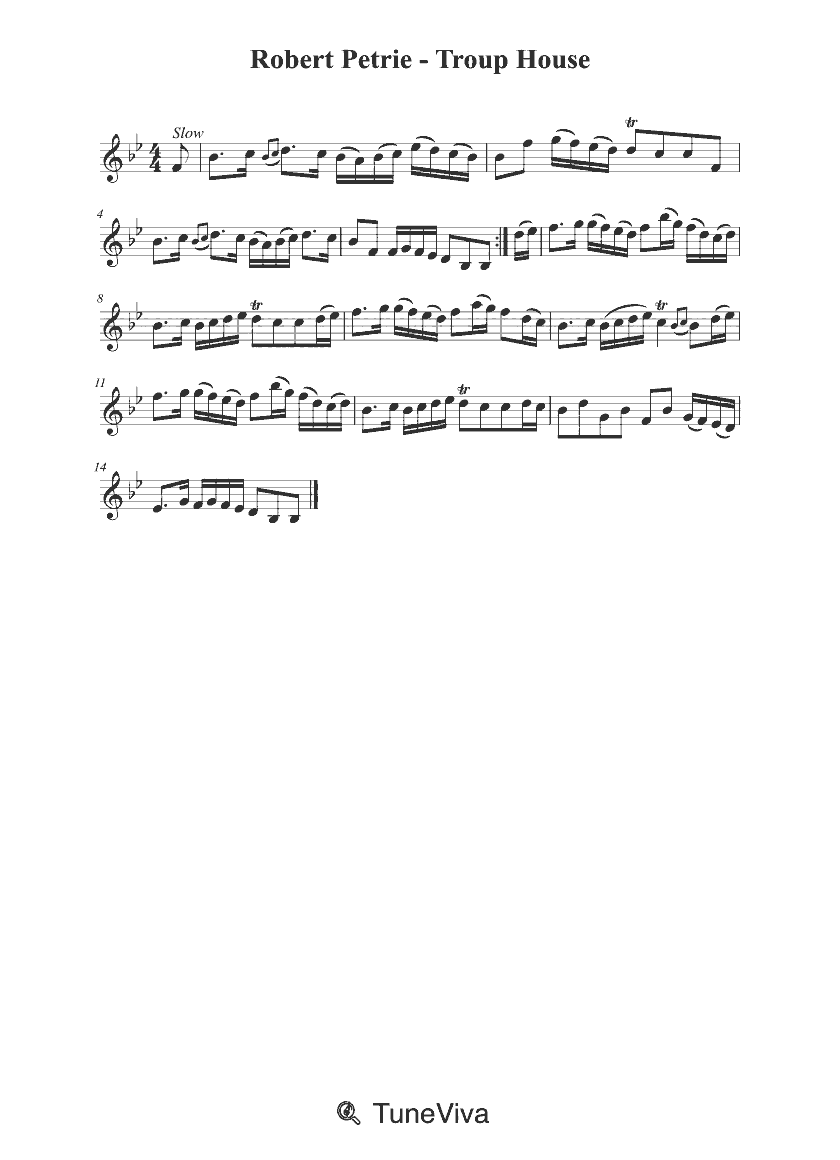
Robert Petrie lived from 1767 to 1830, and his surviving publications place him among the Scottish fiddler-composers and collectors of the late eighteenth and early nineteenth centuries. A Third Collection of Strathspey Reels, with a Bass for the Violoncello or Piano Forte was published in London in 1802, printed for the author, and dedicated to Francis Garden Esquire Junior of Troup. The dedication explains a cluster of titles in this catalogue: Francis Garden Esquire Junior's Favorite, Mrs. Garden (of Troup's) Strathspey, and Mr. Garden's Welcome Home to Troup House.
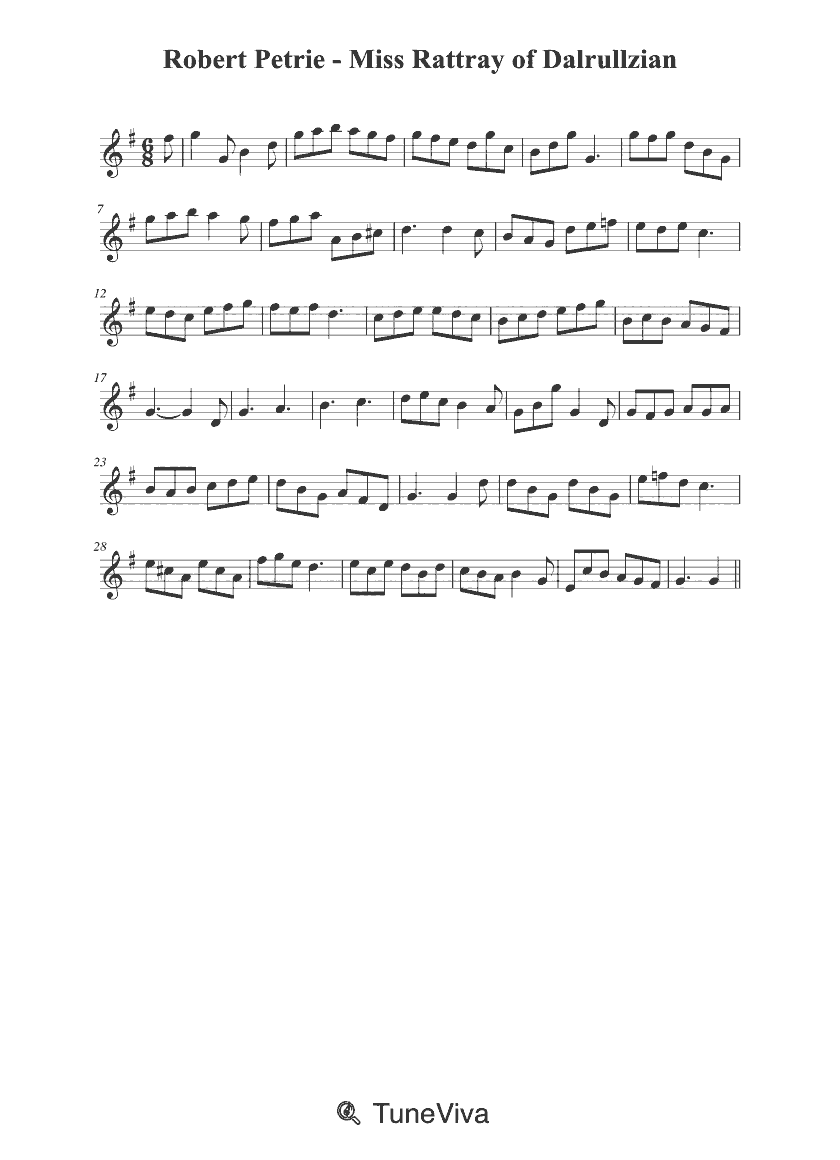
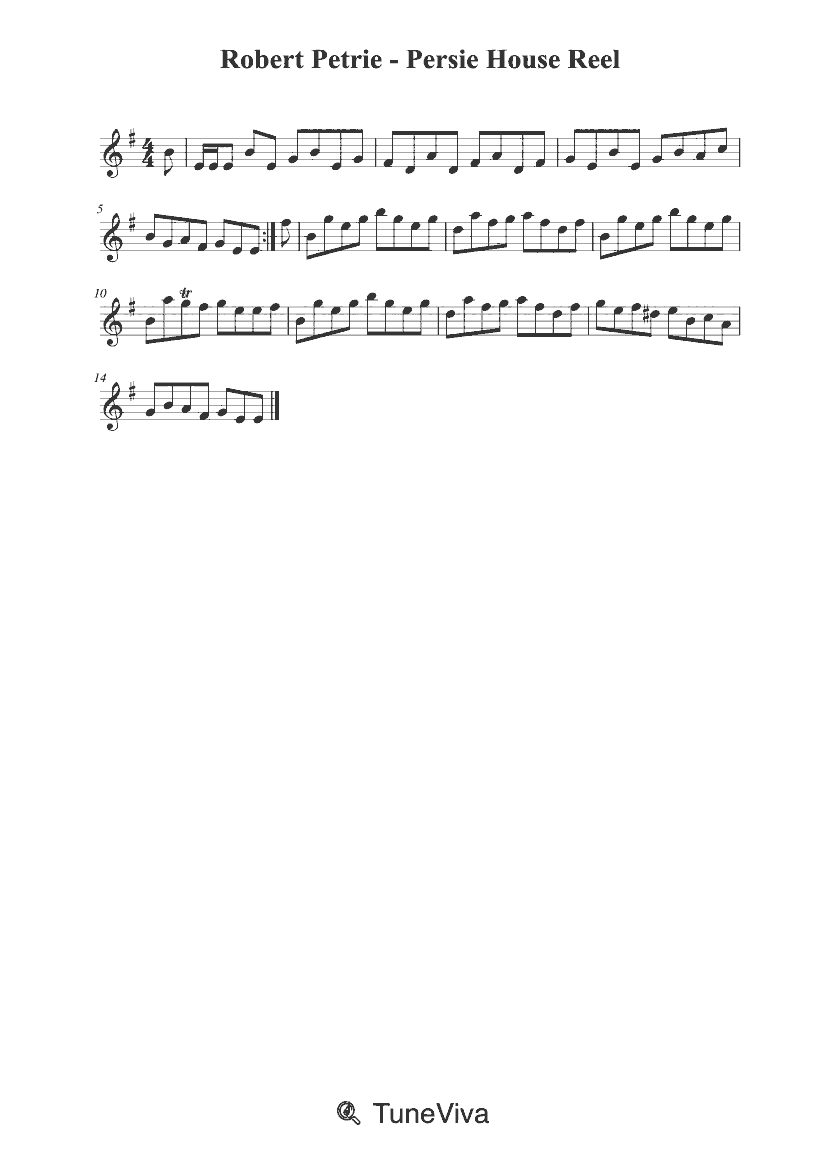
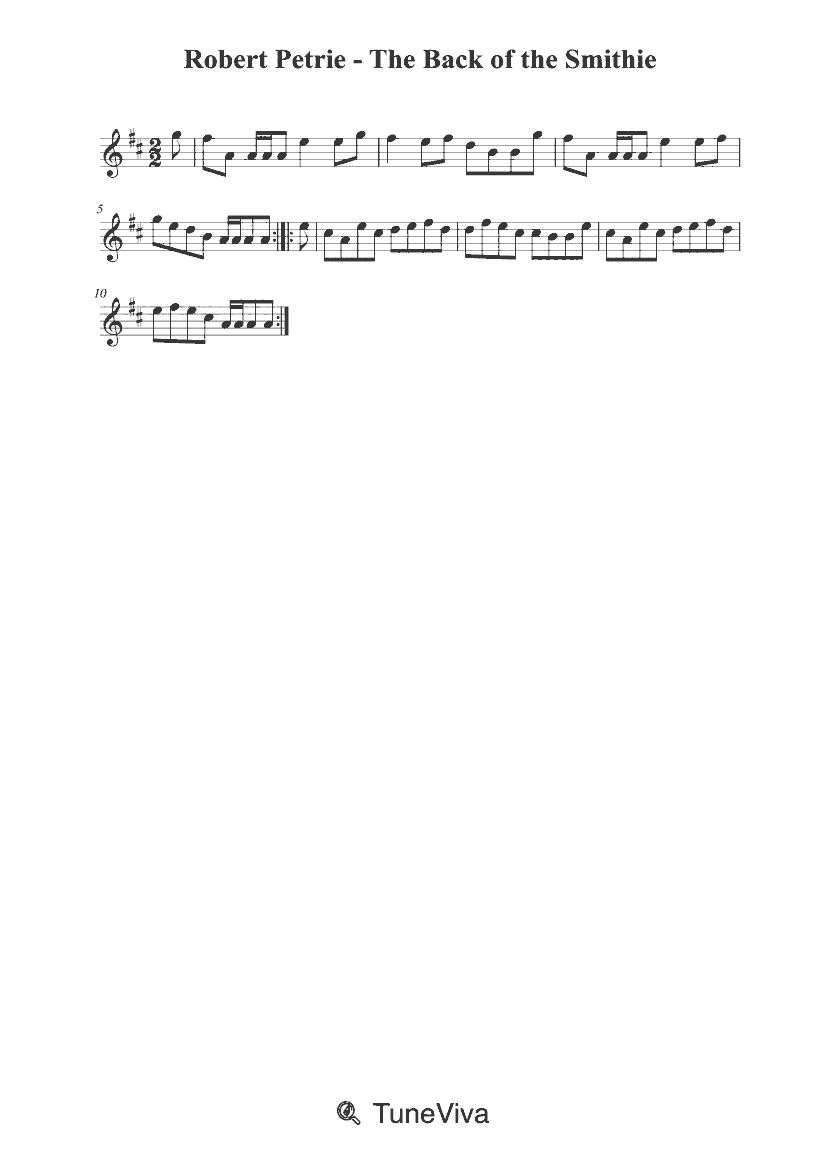
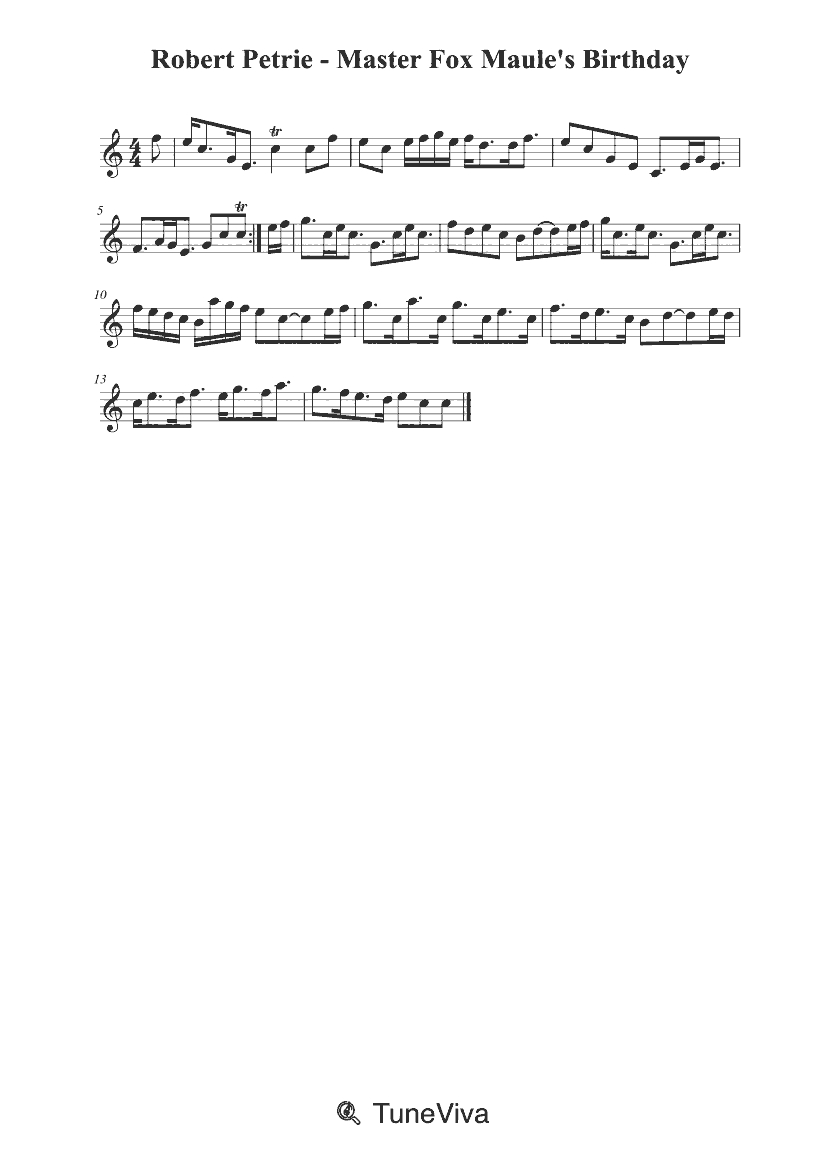
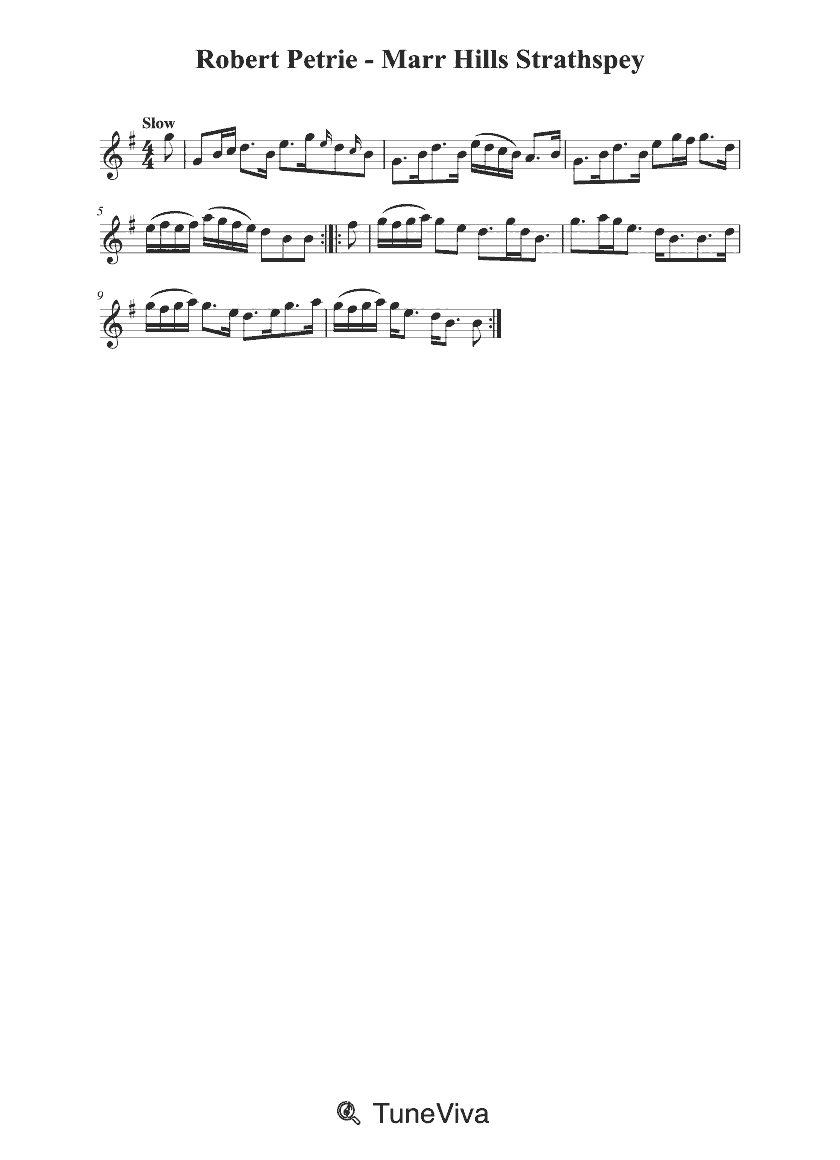
The 1802 volume includes a four-page list of subscribers, which was normal for a self-published collection and is a reminder that this music circulated through a network of patrons, teachers, and dancing assemblies rather than through a modern music trade. Petrie's pieces carry the small, specific titles typical of the genre: Miss Rattray of Dalrullzian, Persie House Reel, The Back of the Smithie, Master Fox Maule's Birthday, Marr Hills Strathspey. Many of these names belong to Perthshire and Angus families and estates.
His dates are recorded in library catalogues, but the details of his life are thin. The score titles themselves are the best evidence of his circle, and they suggest a fiddler working for landed households and teaching in the same milieu. For a player, the interest is less biographical than practical: these are compact, tuneful dances with a bass line that can be realized on cello, piano, or a second instrument.
These are dance tunes, so the pulse comes first. Strathspeys need the distinctive Scottish snap and a firm, unhurried beat; reels move faster and want even eighth notes and clean bow changes. The bass line is optional in performance but useful for understanding the harmony, which is mostly simple and functional. Ornamentation is not written in much detail, so a fiddler should add grace notes and doublings in the usual style. Play them in sets rather than one at a time: two or three related tunes make better musical sense than a single strain.
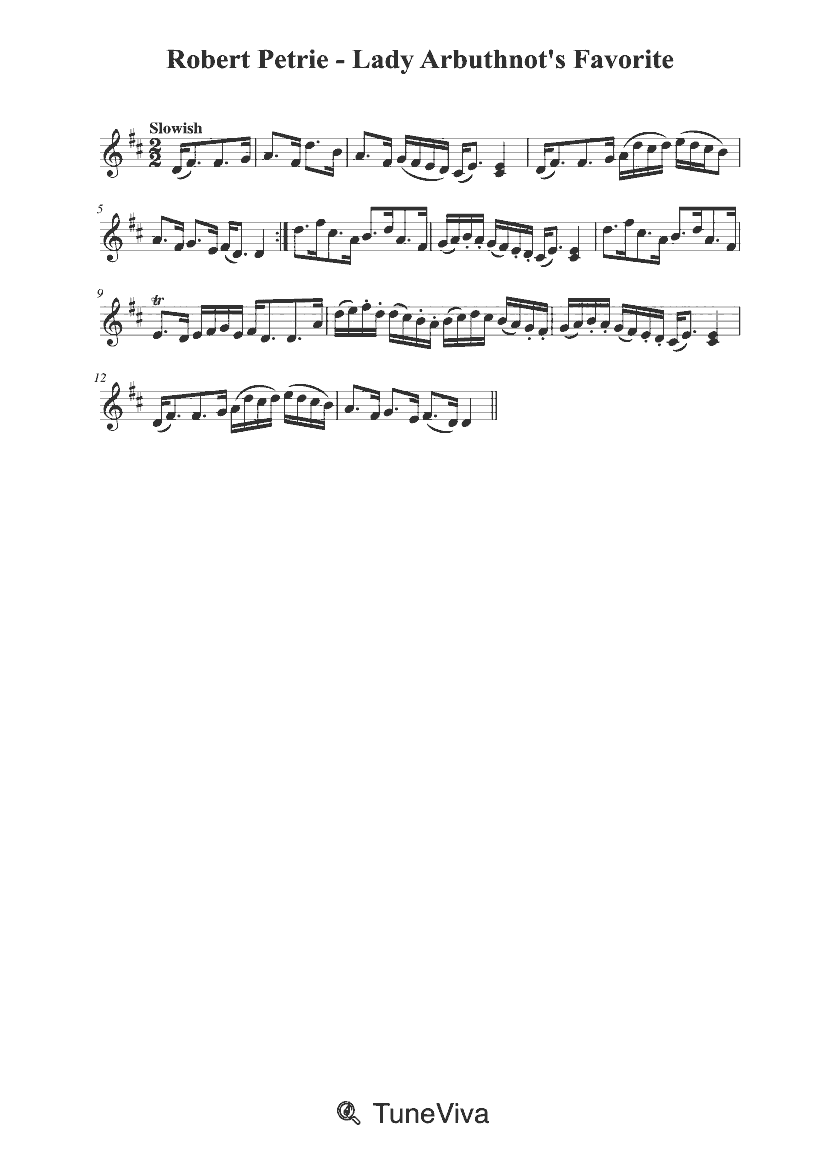
The most-viewed Petrie item here, a characteristic named dance tune.
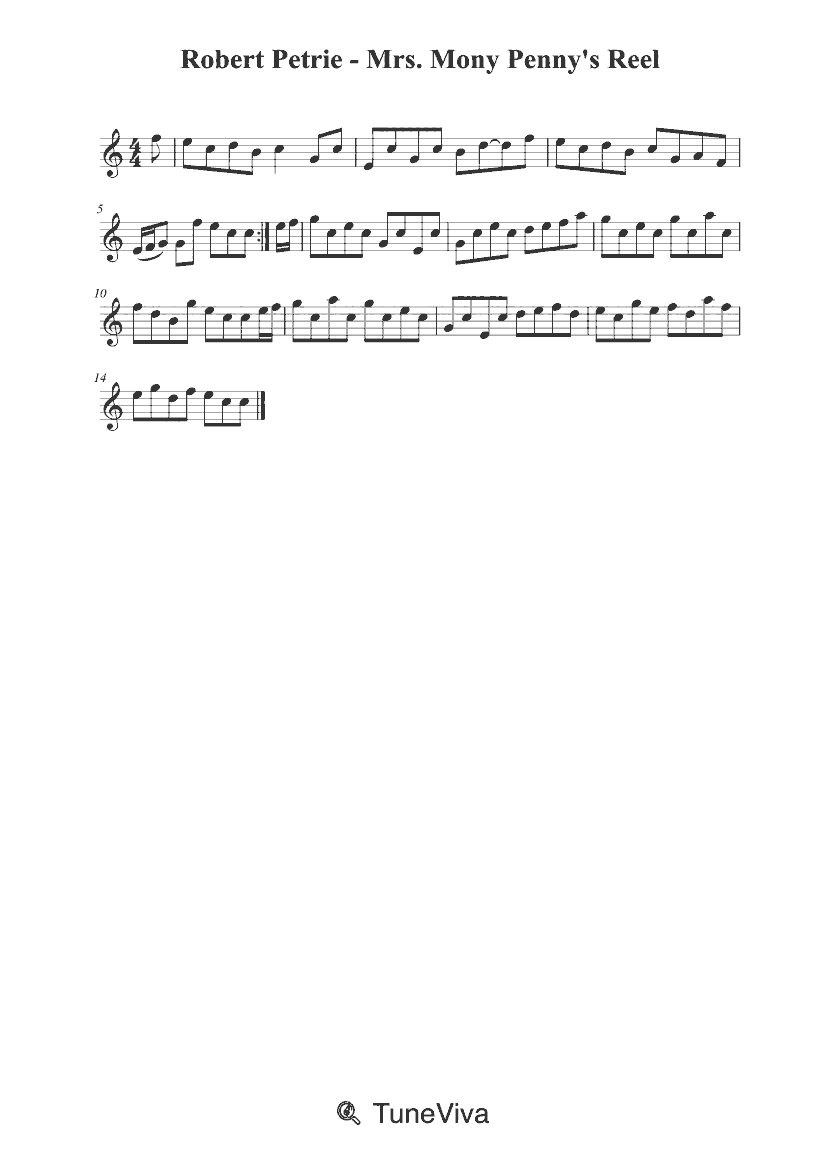
A reel tied to a named house, showing how tunes were attached to places and families.
One of several pieces connected to Francis Garden of Troup, to whom Petrie's 1802 collection was dedicated.
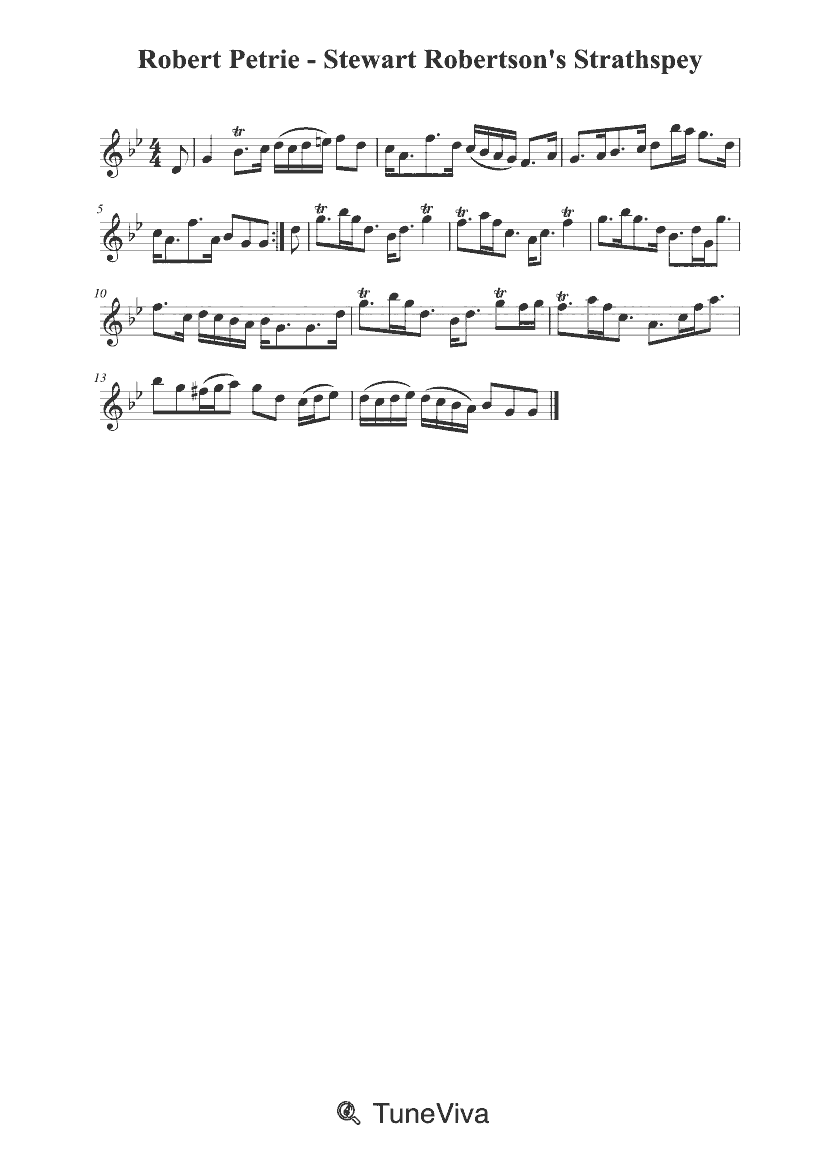
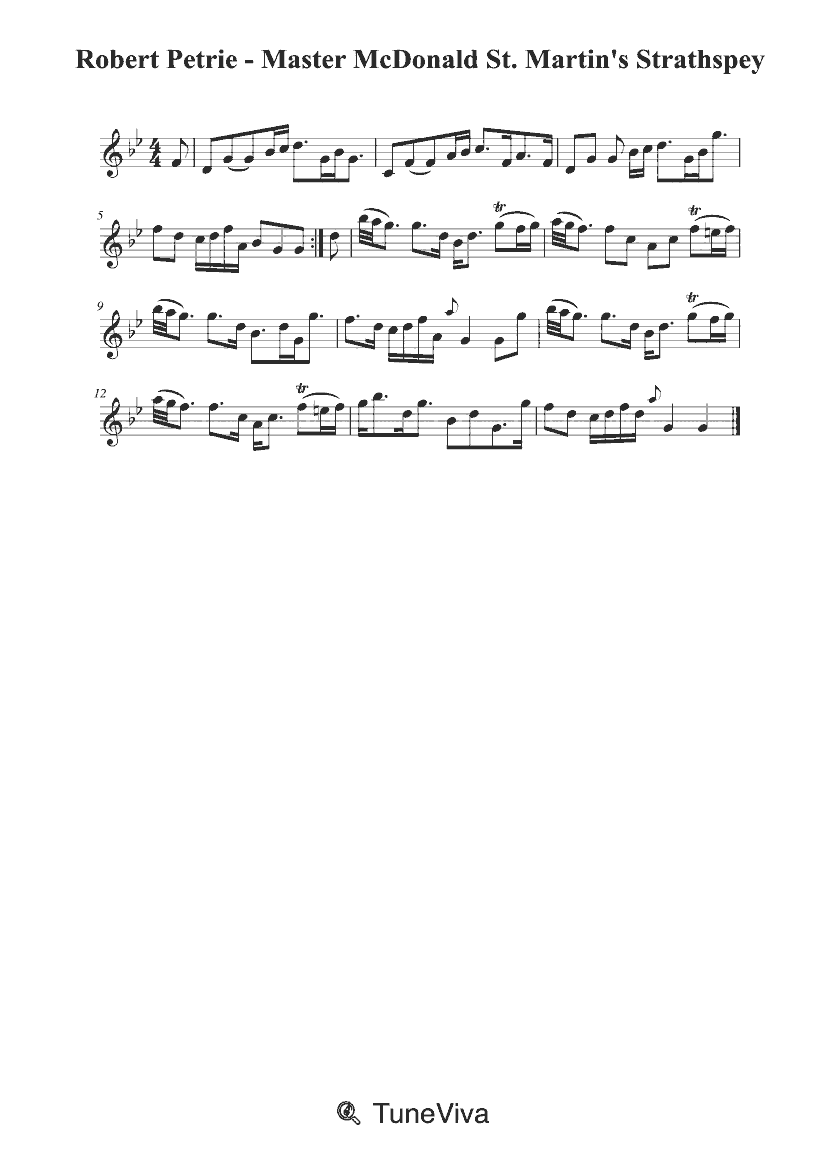
A strathspey in the dedicatory style common to Scottish fiddle collections.
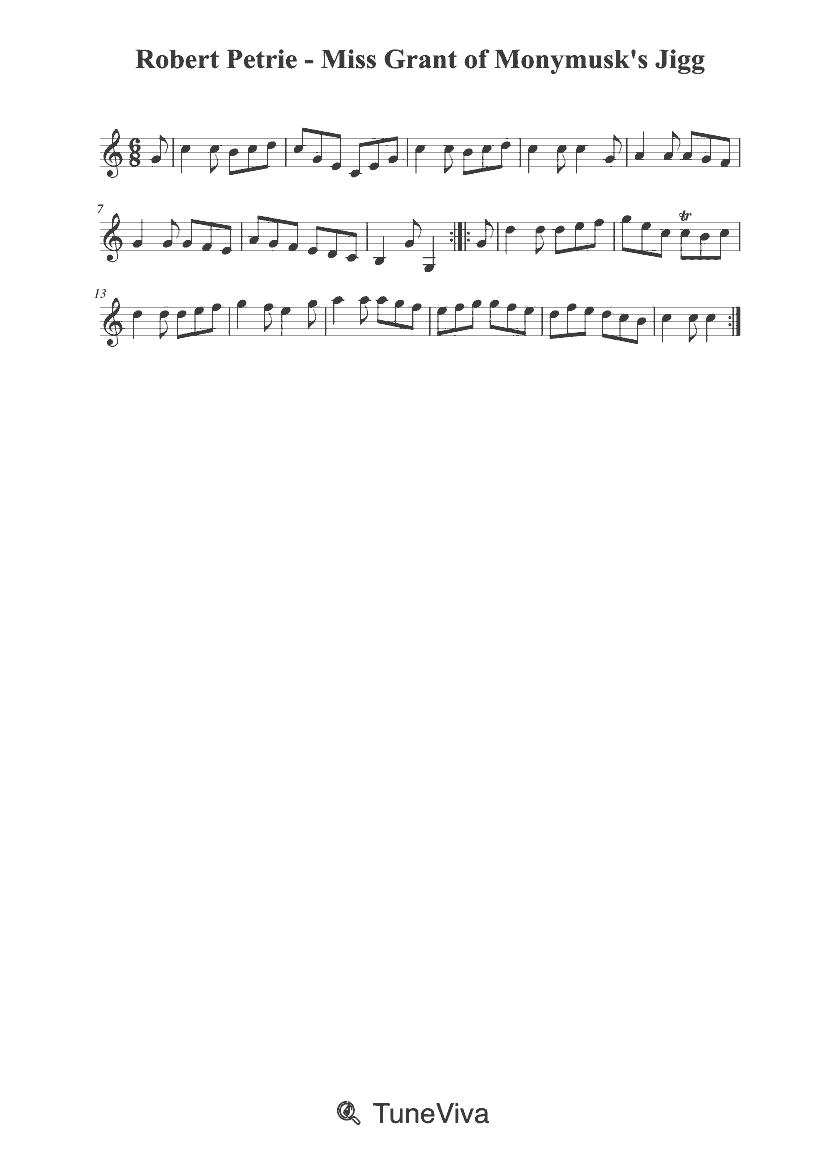
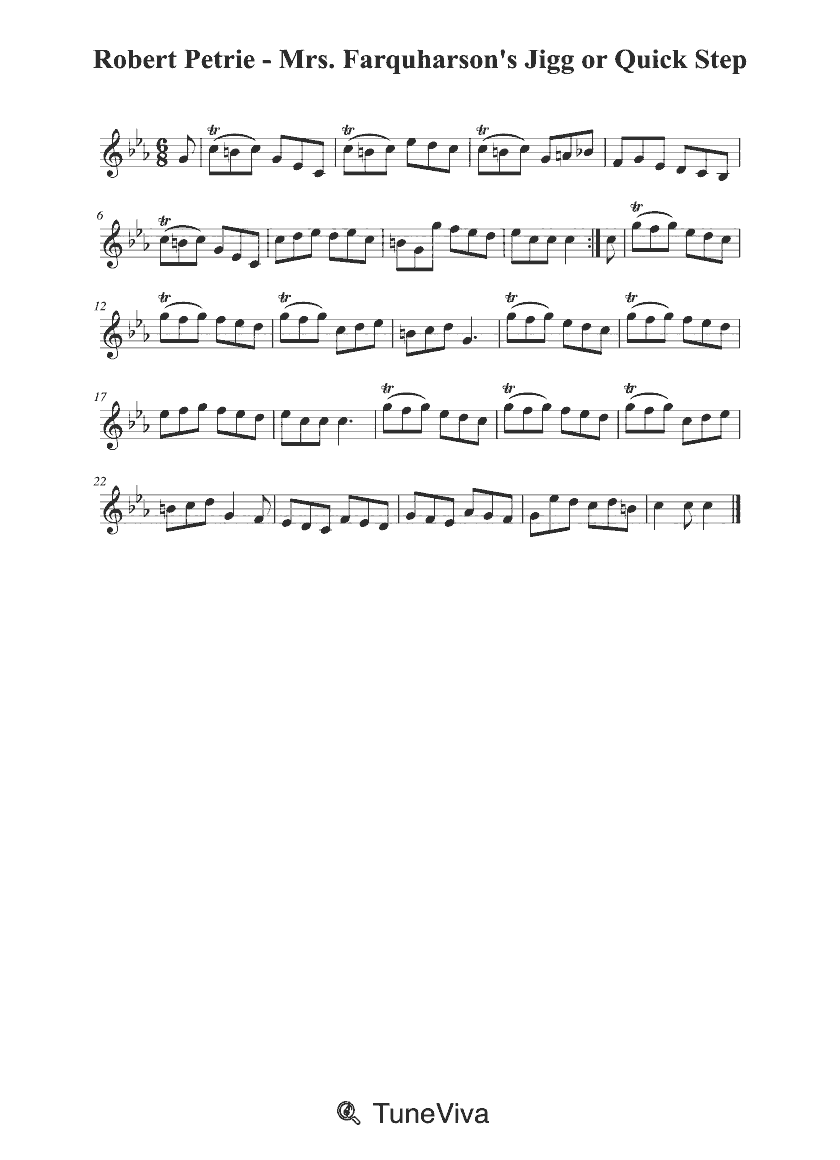
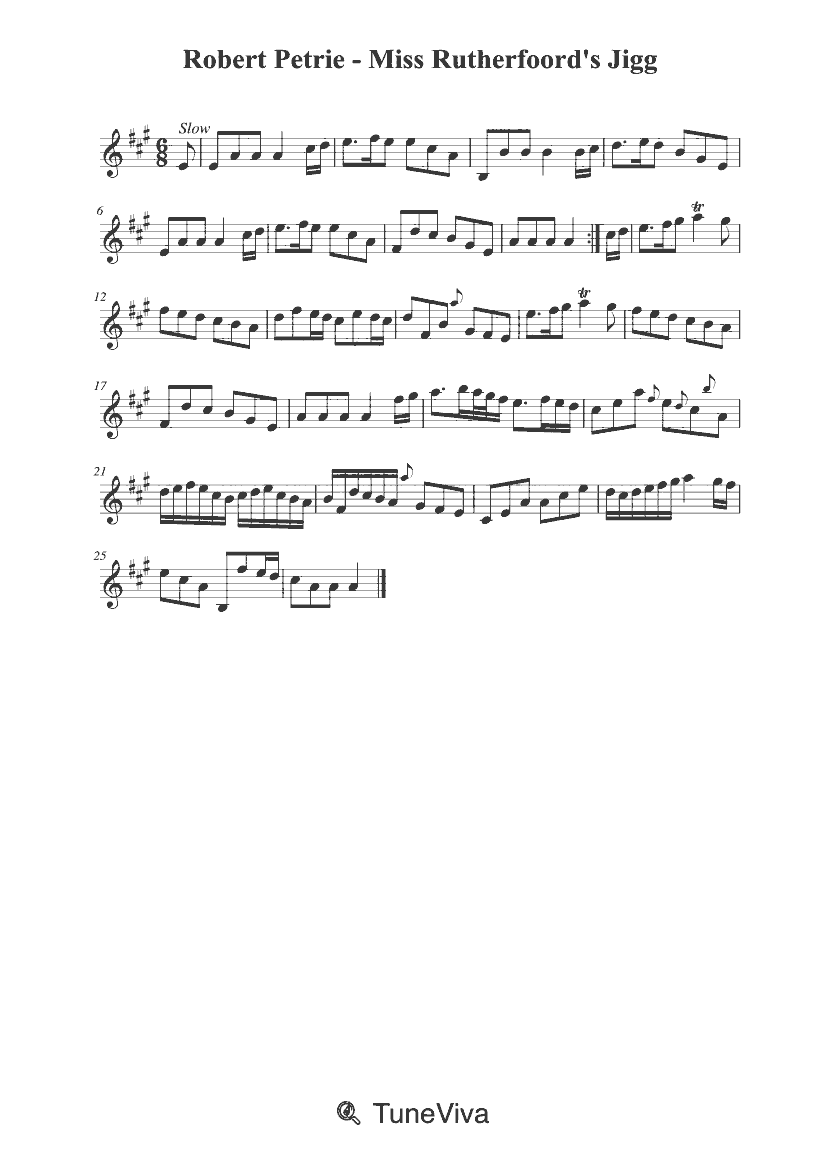
A jig that shows Petrie writing beyond the strathspey and reel forms.
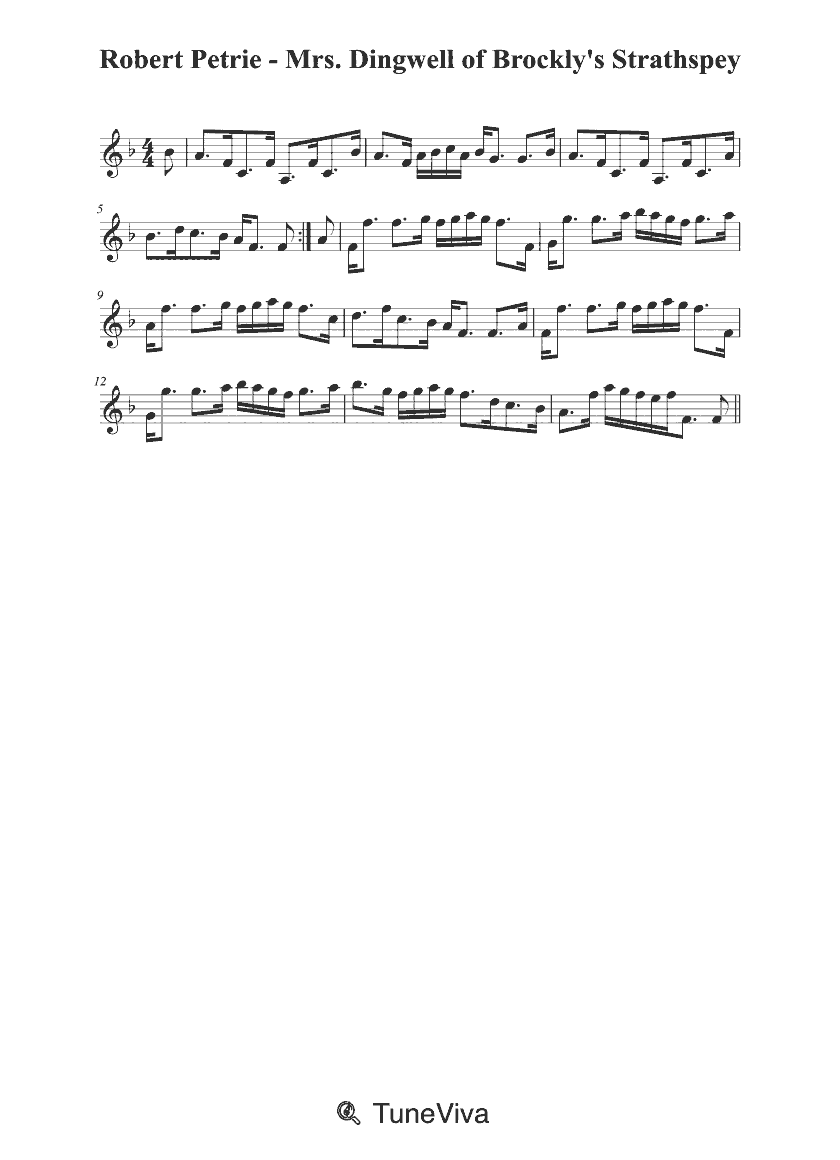
A titled strathspey with the broad, dotted rhythms that give the form its lift.
Scottish dance music: strathspeys, reels, and jigs, mostly named after patrons, pupils, and estates, published in collections such as A Third Collection of Strathspey Reels (1802).
The 1802 collection was published with a bass for violoncello or piano forte, and the catalogue entries are instrumental dance tunes without lyrics.
Petrie dedicated A Third Collection to Francis Garden Esquire Junior of Troup, and several catalogue titles refer to the Gardens of Troup House.
Catalog editions and arrangements attributed to Robert Petrie.