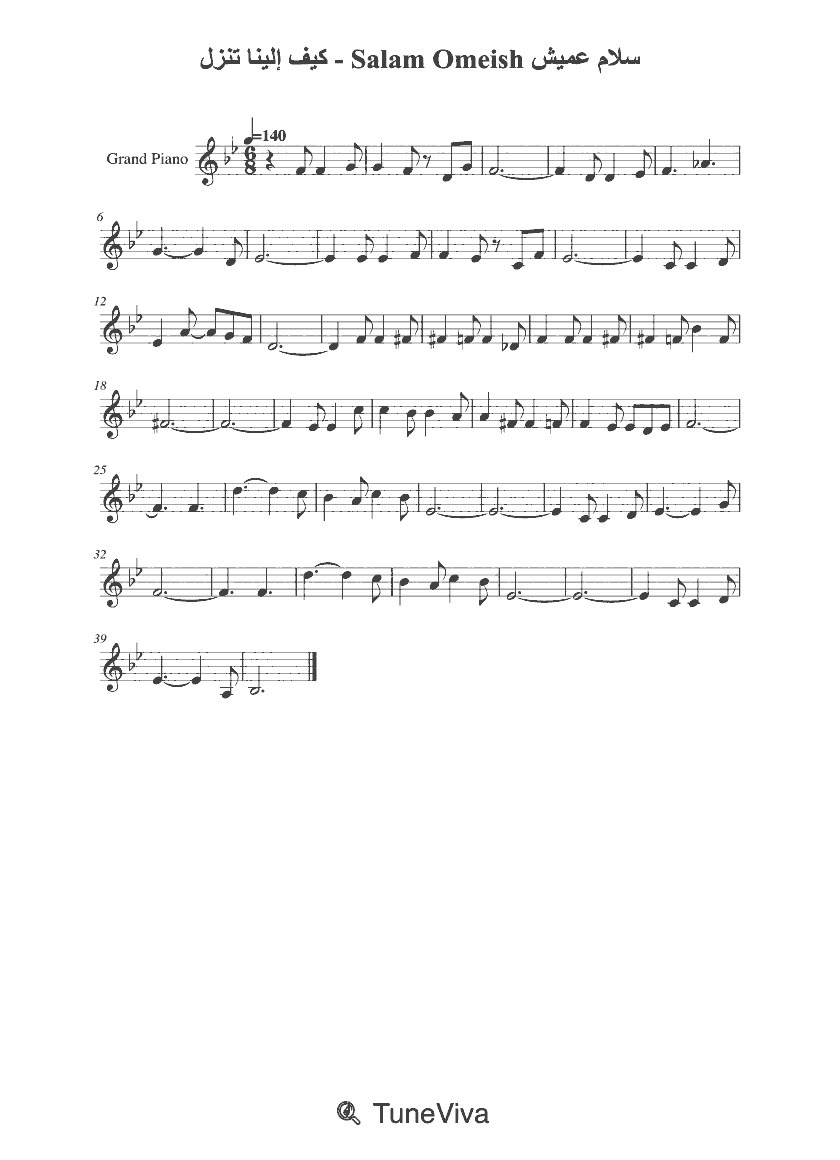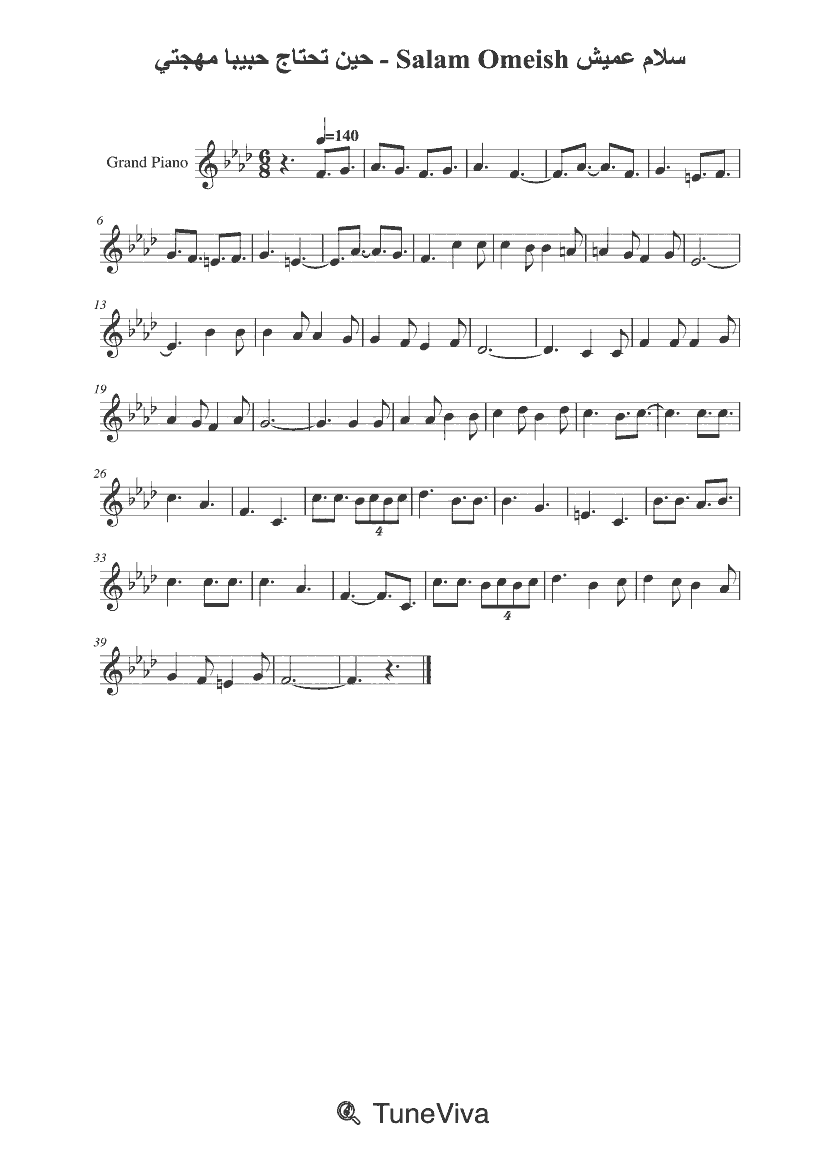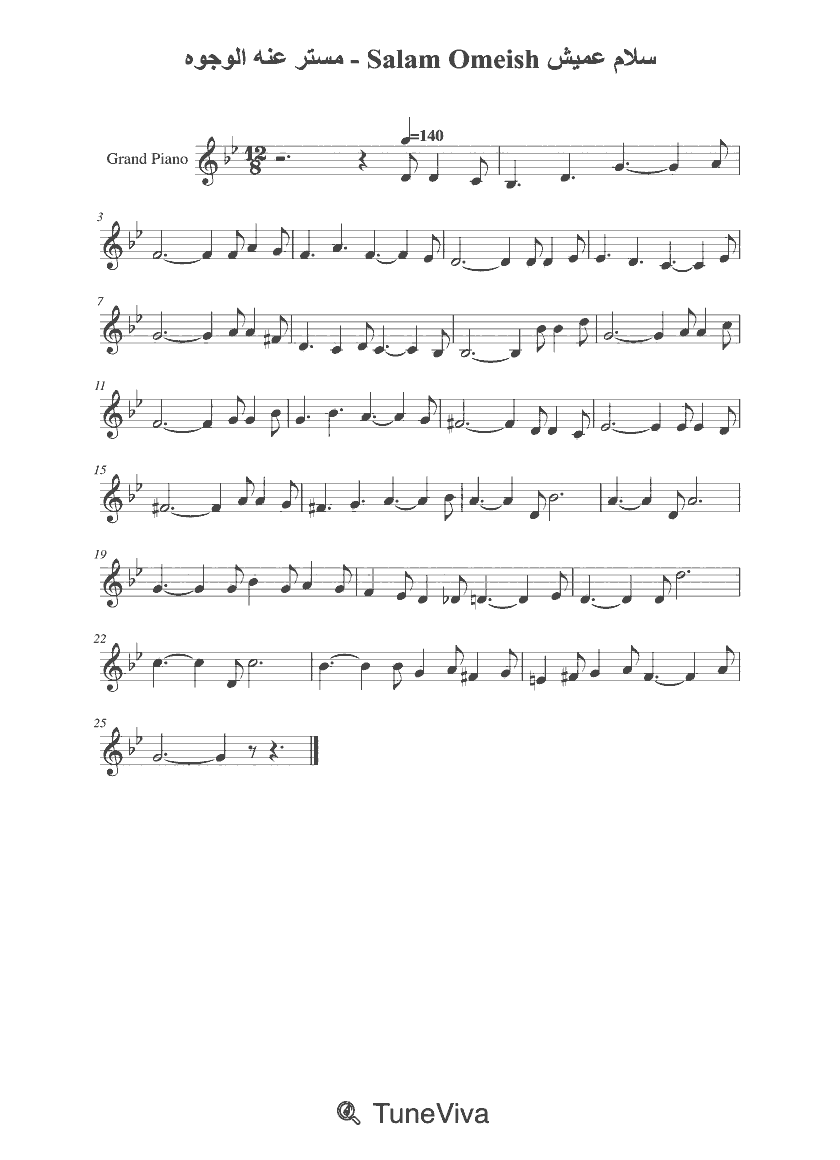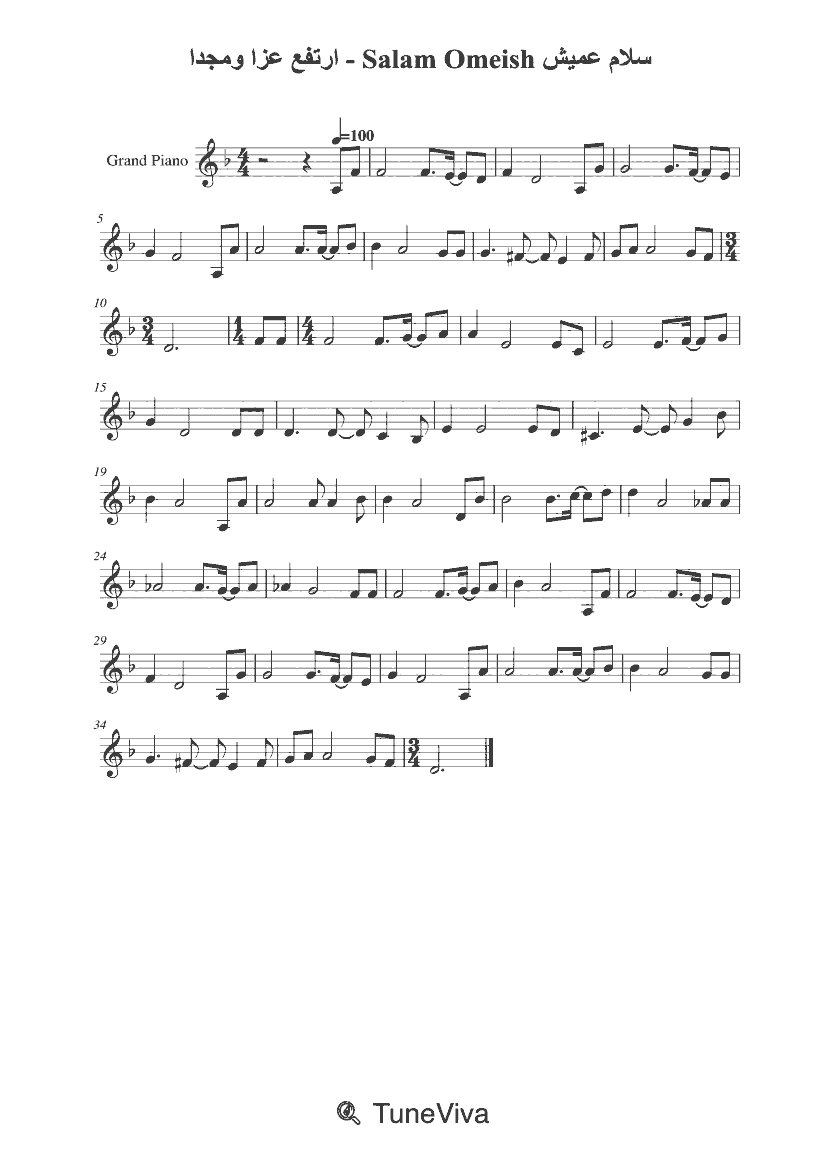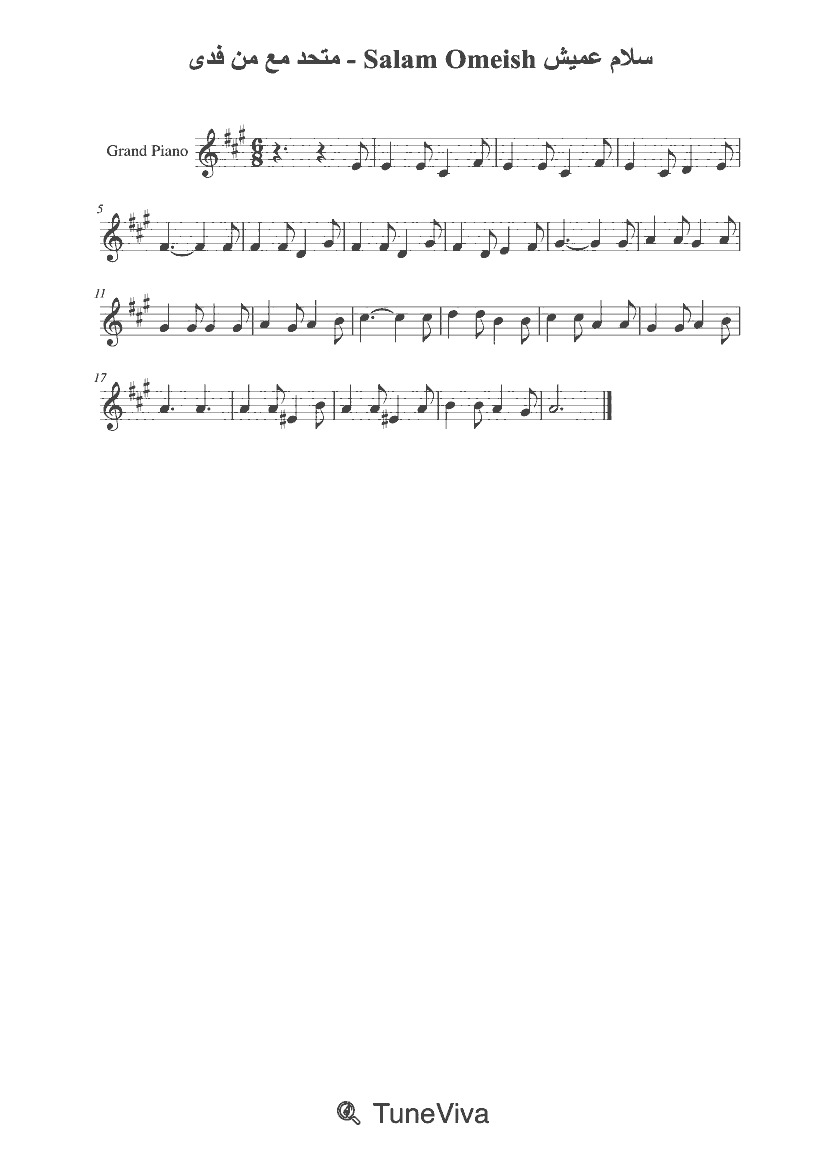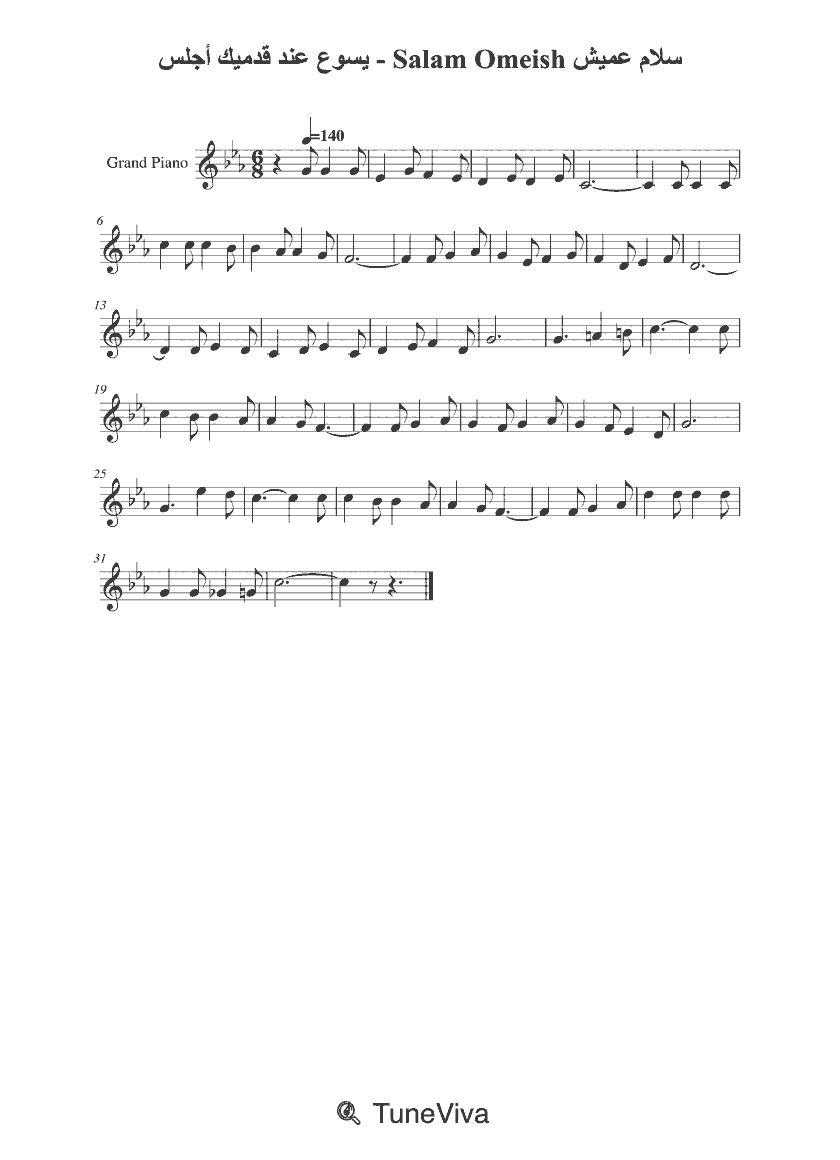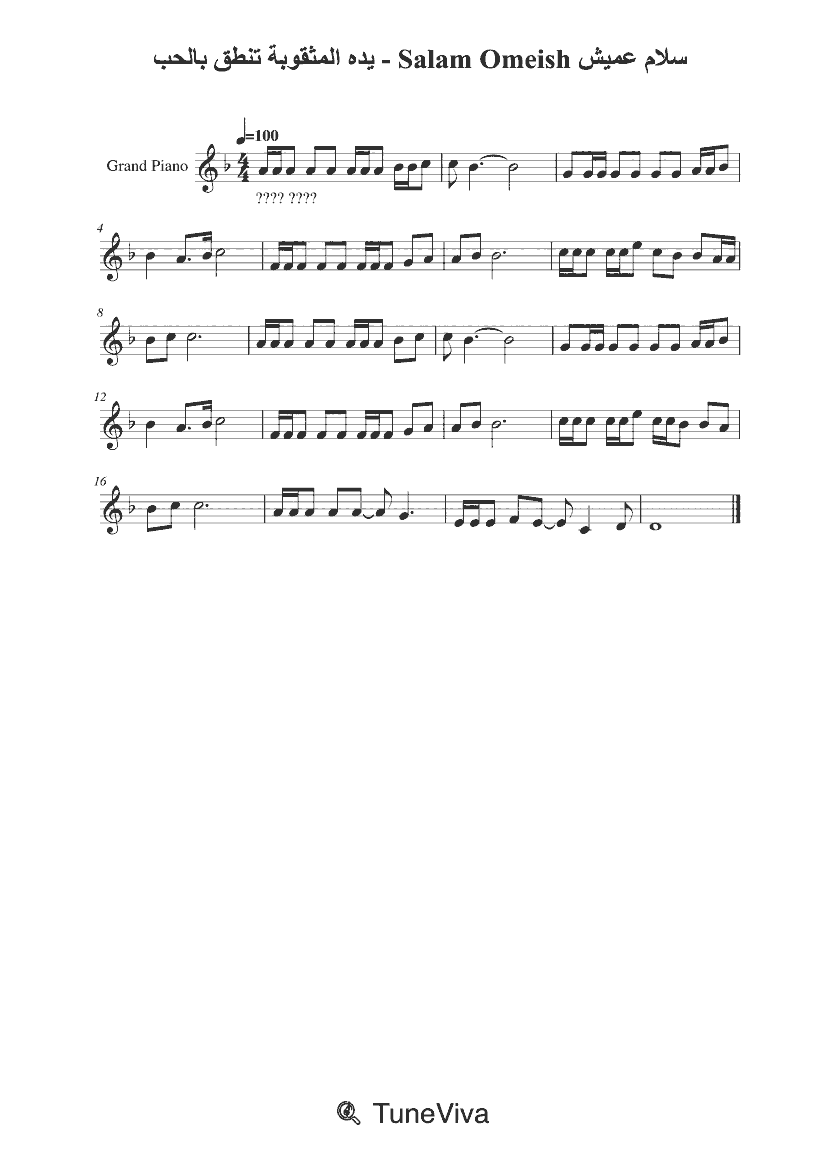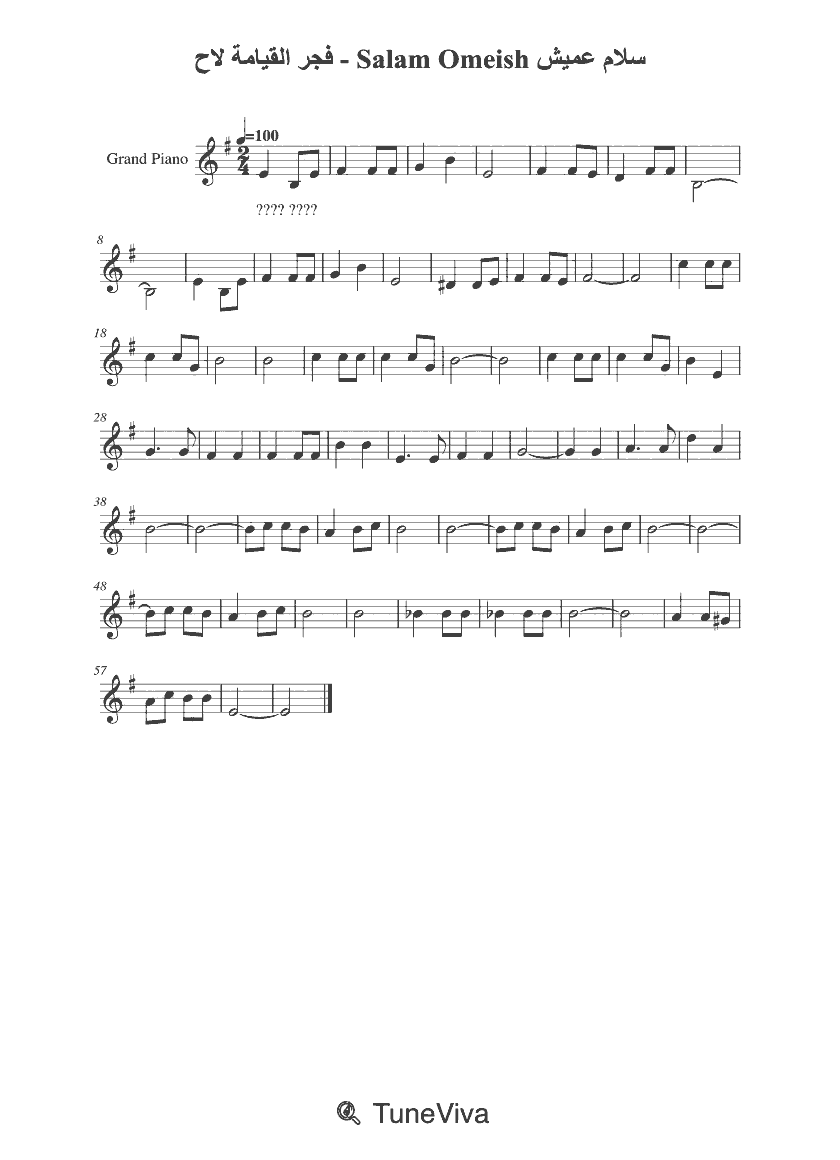
classical
1 tracks
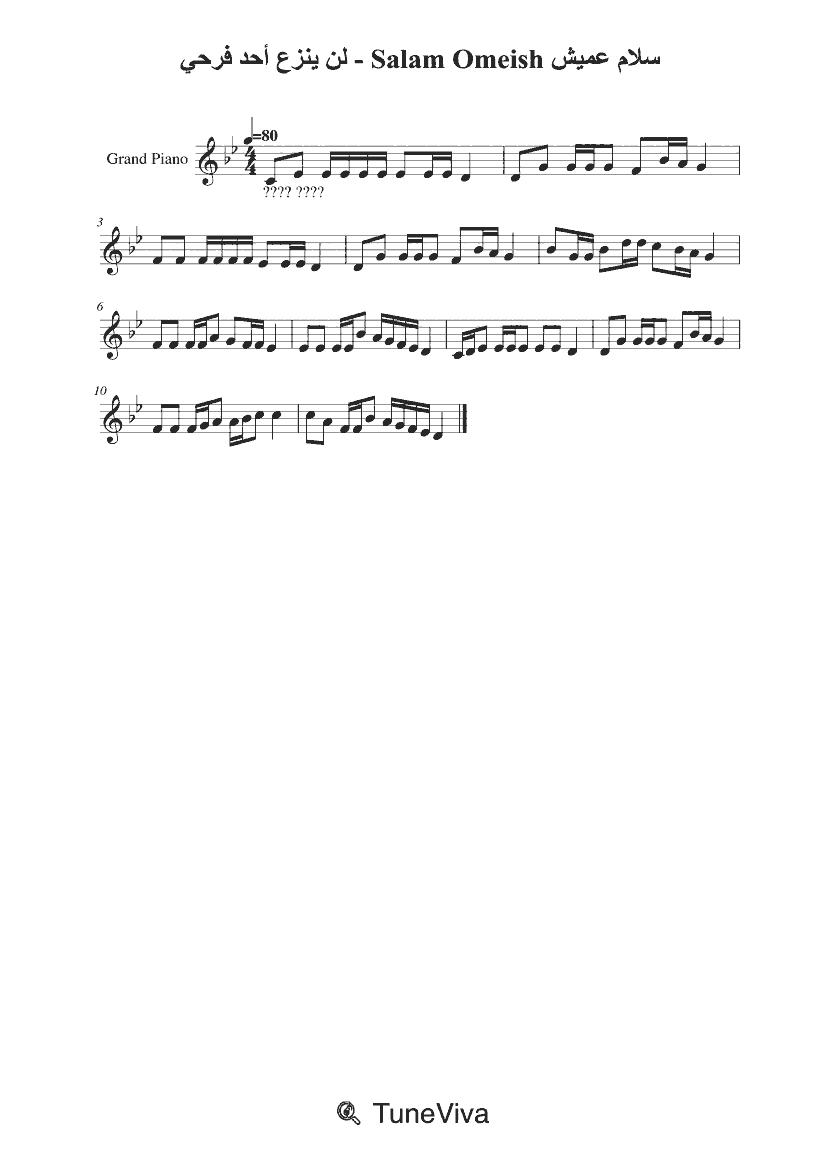
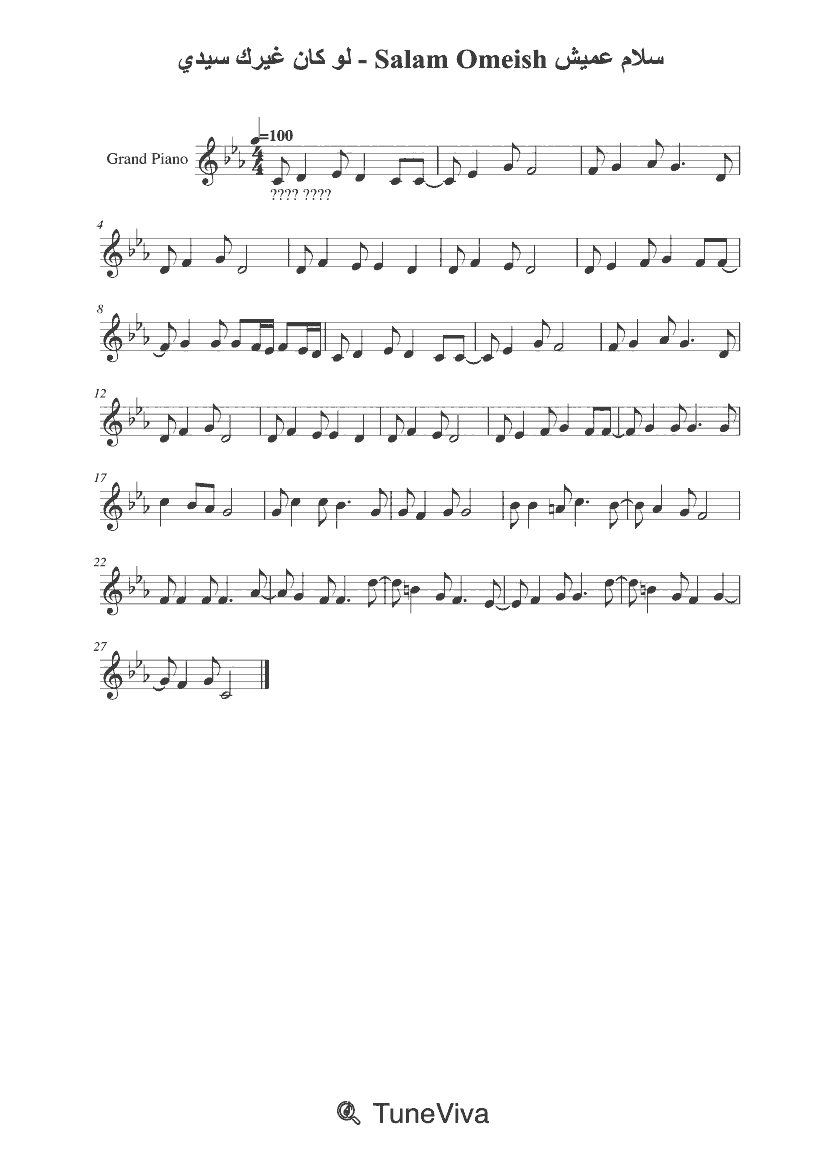
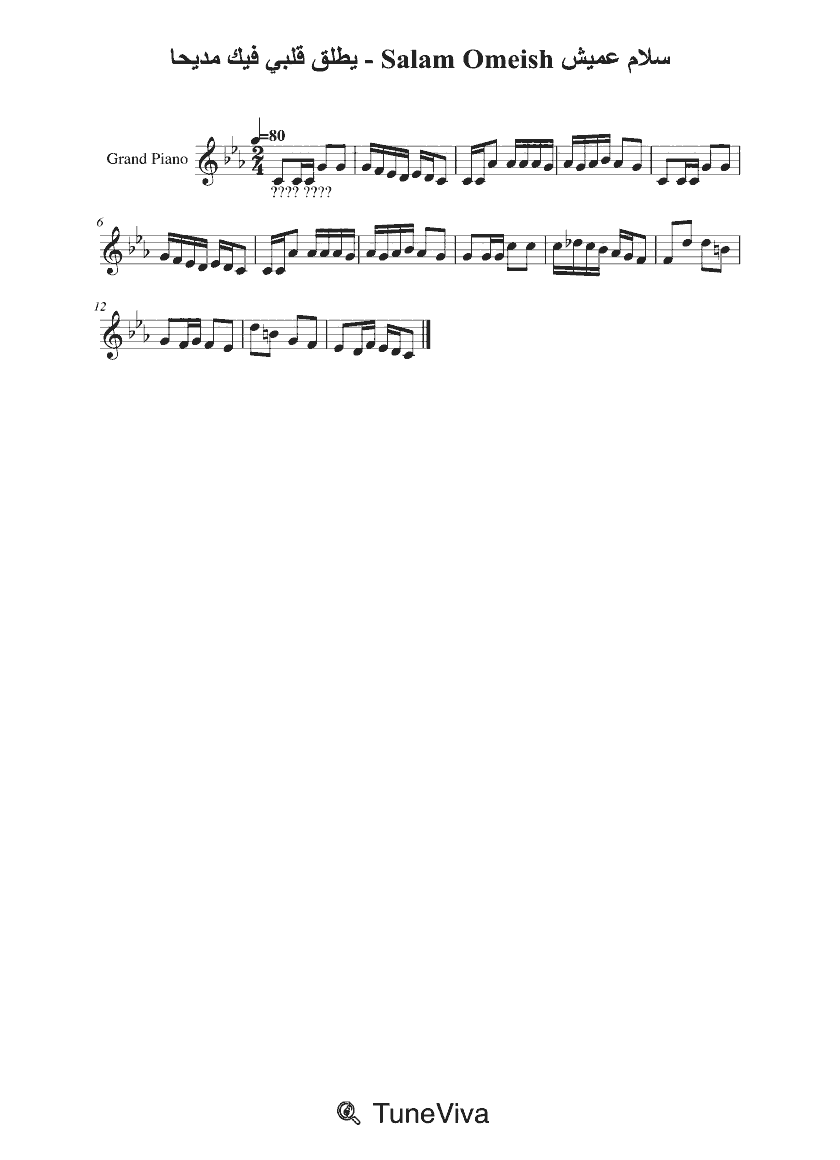
The catalogue's Salam Omeish page is small and almost entirely Arabic: 26 scores, about 19 minutes of music and 2,779 notated notes. Five entries carry lyrics, all 26 are classed as classical, and every one sits at complexity index 1.
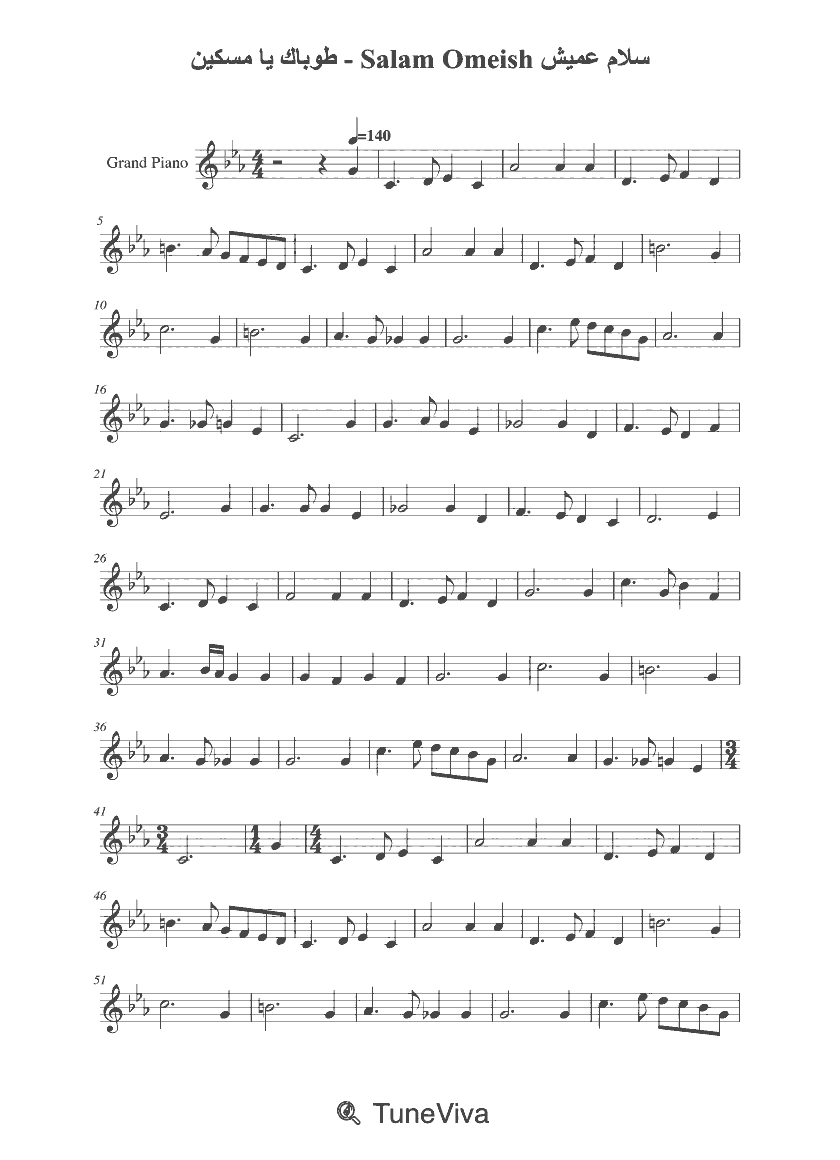
The most-viewed title is طوباك يا مسكين, with 12 views, followed by أعبدوا الرب بفرح واهتفوا and أسترني ربي بدمك. The low counts are a reminder that this is a niche repertoire in the catalogue, not a measure of the hymns' use in Arabic-speaking churches.
The files are short, and none runs to a large choral form.
Salam Omeish is a Jordanian pianist, composer and arranger associated with the Amman Baptist Church. A 2011 report on the church's Ajloun conference calls him 'Jordan's leading pianist'; a 2024 feature on the Alhan Al Raja band describes him as a composer and musician at the church and quotes him on the hymn-writing of his father, Fawwaz Omeish. Fawwaz founded the Amman Baptist Church and was its pastor; Hymnary.org records his death in 2012. The family's hymns, according to Salam, spread through Jordan, Egypt, Lebanon, Iraq and Palestine and later among Arab communities abroad.
The catalogue holds a selection of that repertoire rather than a complete edition. Hymnary.org indexes 31 tunes under Salam Omeish's name and three texts; the Arabic hymn database Taranim Arabia lists 169 entries in which he appears as composer or arranger. The 26 files here are short hymn settings drawn from the Arabic Protestant repertoire, and several titles are the opening line of the text rather than a tune name. The catalogue appends 'Salam Omeish سلام عميش' to almost every title, which makes the raw titles longer than the works.
Only five of the 26 have lyrics attached, even though the texts exist and are printed in Arabic hymnals such as تسابيح المحبة. The genre field calls all 26 classical, and the difficulty index places every one at 1, so neither field separates a congregational hymn from a piano arrangement. The catalogue also records no dates, publishers or translators.
These are congregational hymns, so the first decision is tempo for singing rather than playing. The melodies are mostly syllabic and strophic, with repeats that let a congregation learn the tune by ear; keep the accompaniment simple and the inner parts quiet. In Arabic, the text carries long vowels and emphatic consonants, and the phrasing should follow the words rather than the bar lines. Where only a melody is given, add harmony sparingly and leave space for the voices.
A setting of the Beatitudes' 'blessed are the poor'; the most-viewed file on the page, with 12 views.
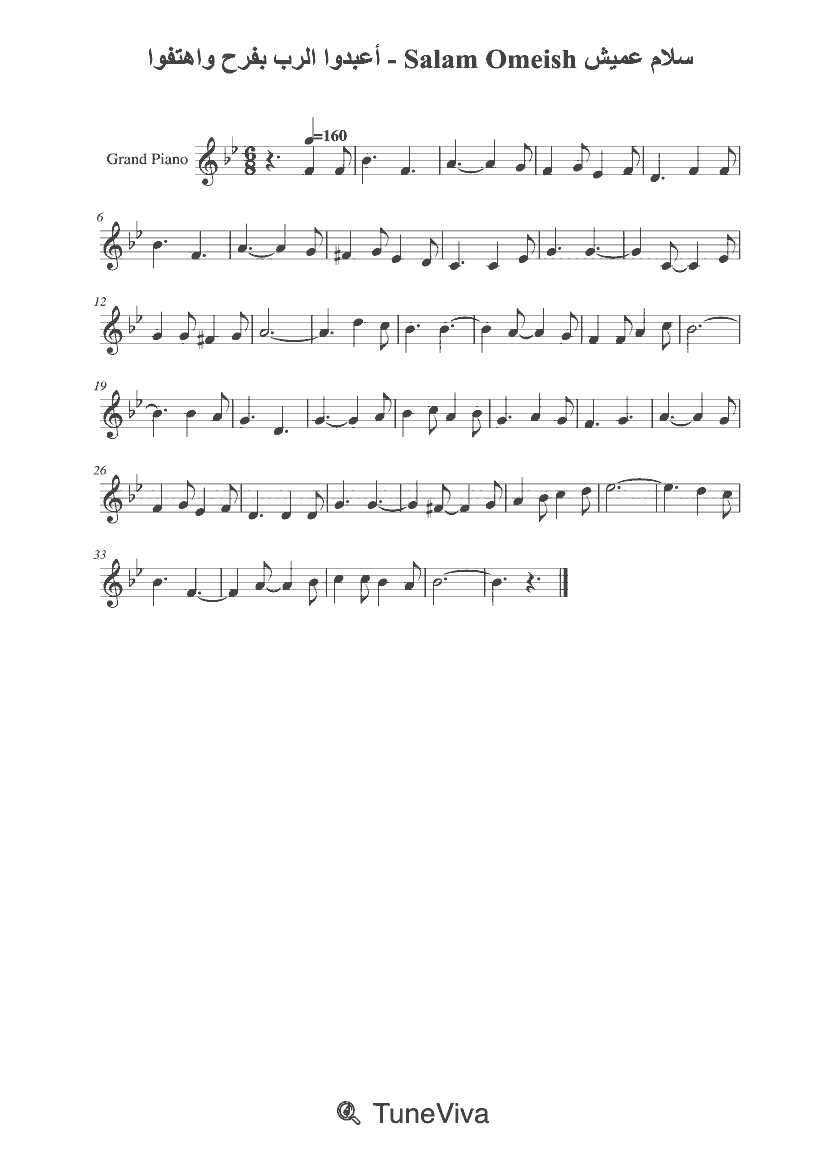
An invitation to worship whose first line urges the congregation to serve the Lord with joy and to shout aloud.
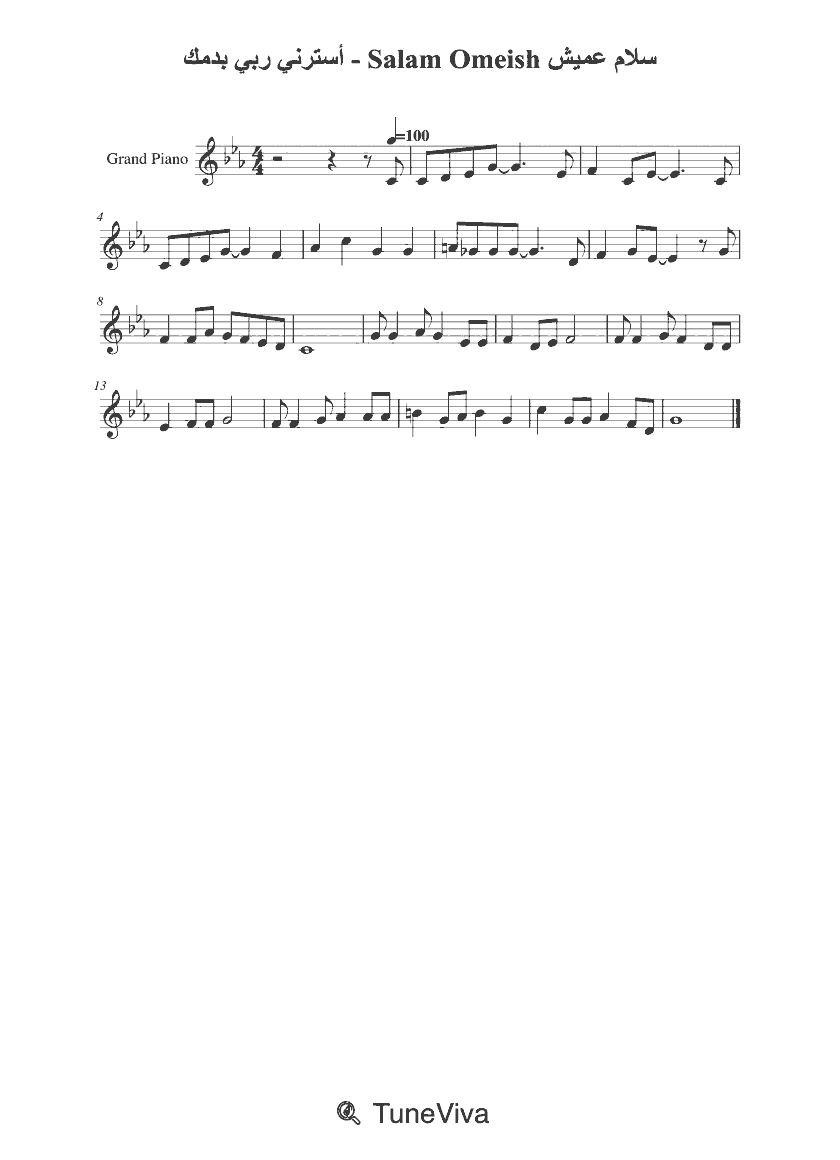
A Communion or Passion hymn asking to be covered by the blood of Christ.
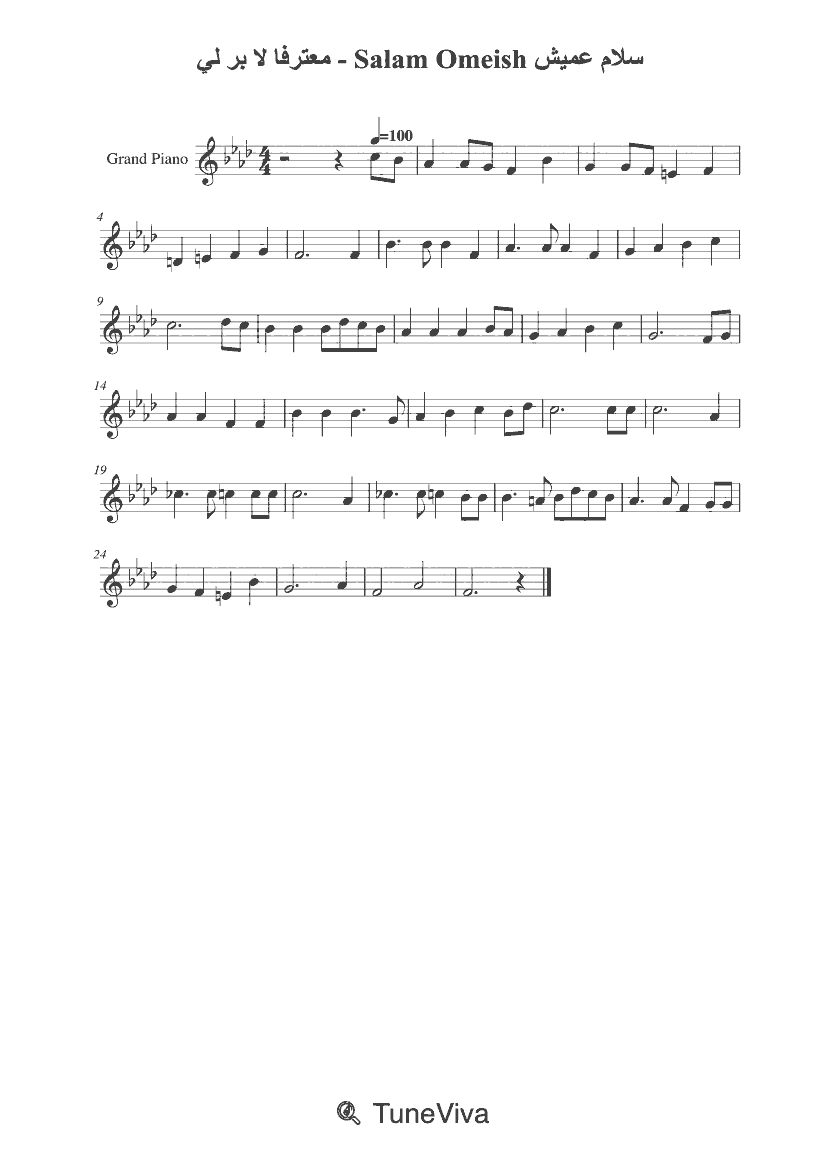
A confession of human unrighteousness; the title means 'confessing that I have no righteousness of my own'.
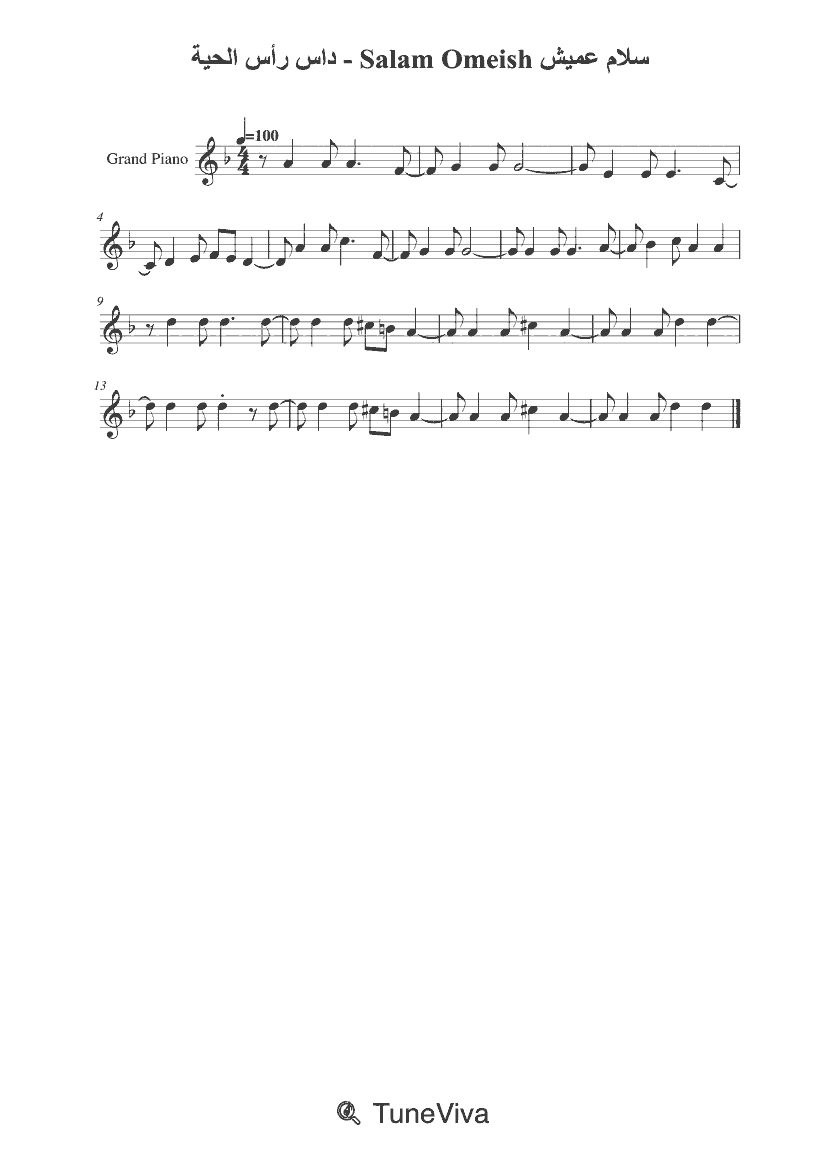
The title, 'he crushed the head of the serpent', points to Genesis 3:15 and its reading as a promise of Christ's victory.
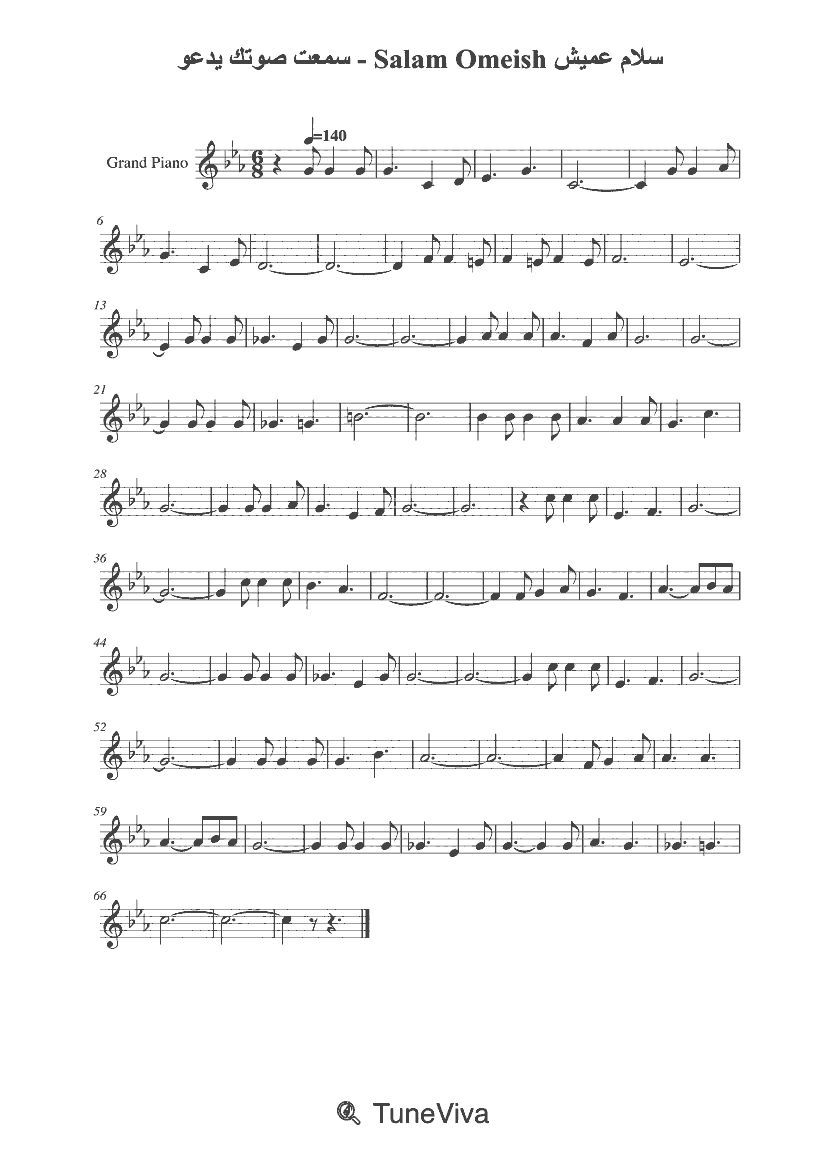
'I heard your voice calling': a hymn of response to a call, in the language of discipleship.
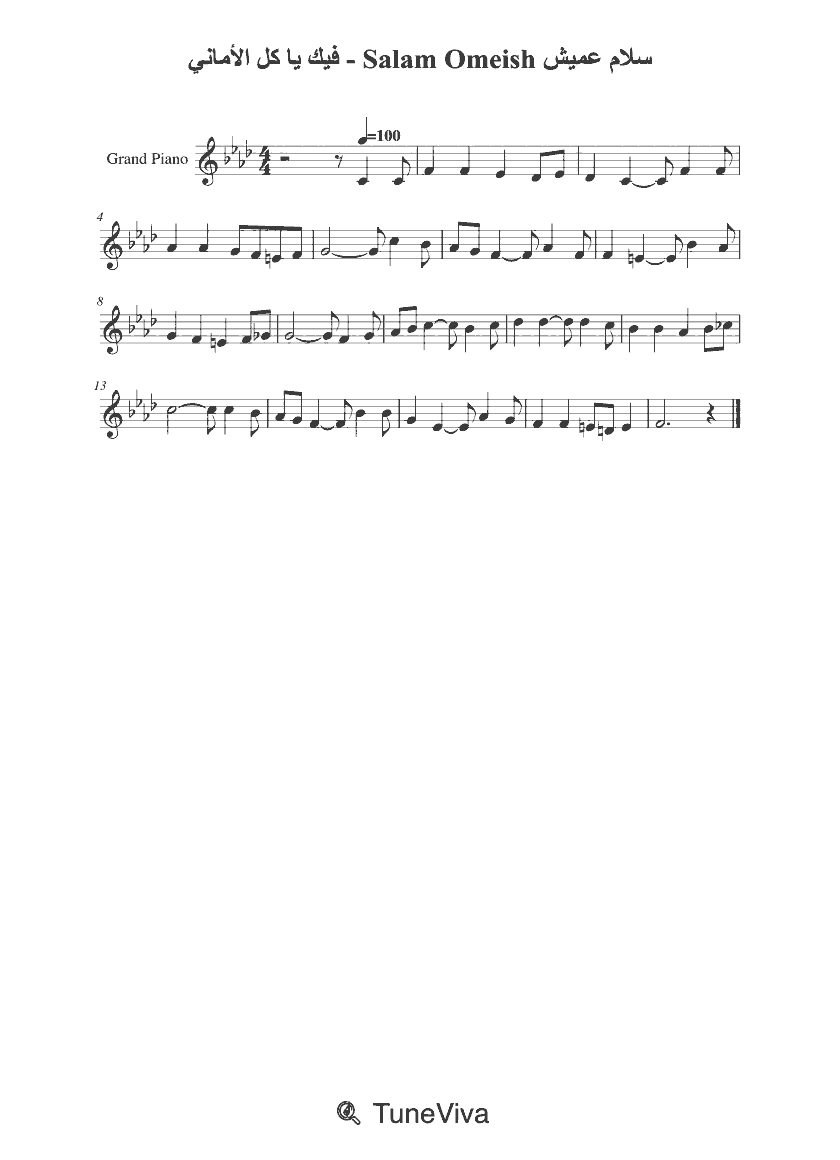
'In you are all my hopes': a short hymn of trust.
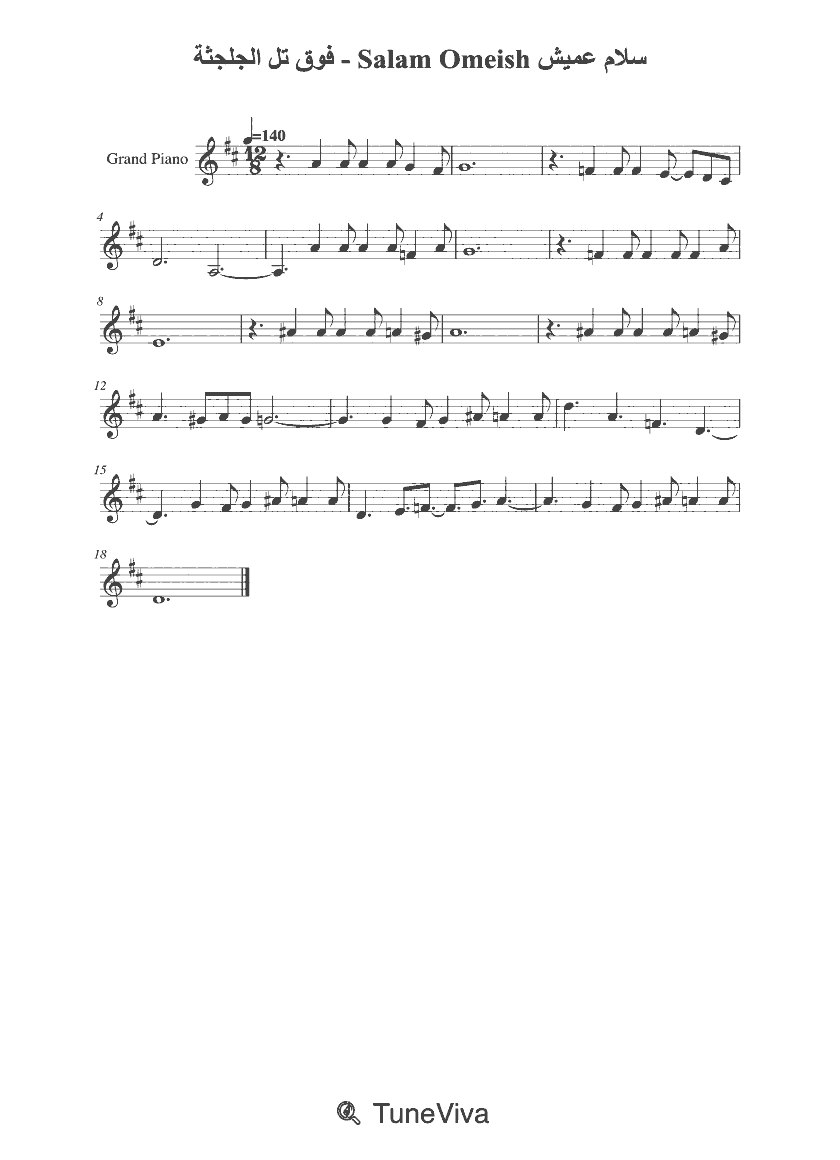
'On the hill of Golgotha': a Good Friday hymn on the crucifixion.
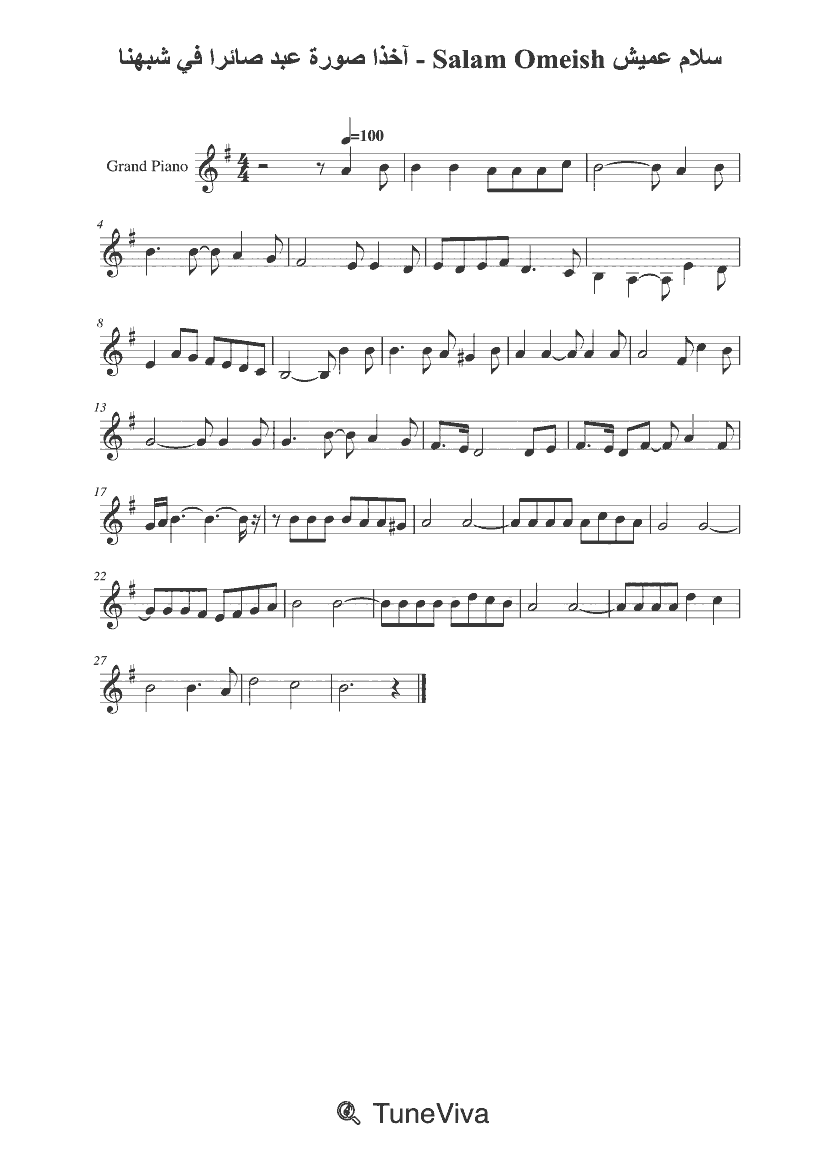
The title follows Philippians 2, 'taking the form of a servant, being made in our likeness'.
26, running to about 19 minutes of music and 2,779 notated notes. Five of the entries carry lyrics.
He was Salam Omeish's father, the founding pastor of the Amman Baptist Church, and a hymn writer and translator; Hymnary.org records his death in 2012. Salam has spoken about the family's project of reviving and teaching those hymns.
The hymns were written in Arabic, and the catalogue keeps the Arabic first line while adding the composer's name in Latin and Arabic script. The display titles here remove that repeated credit.
The catalogue does not explain the gap. Several files may be melody-only or piano versions, but the catalogue records neither the text nor the translator for the other 21.
No. The catalogue does not distinguish his own compositions from his arrangements of his father's hymns, and the 169 entries listed by Taranim Arabia include both roles.
Catalog editions and arrangements attributed to Salam Omeish.