classical
1 tracks
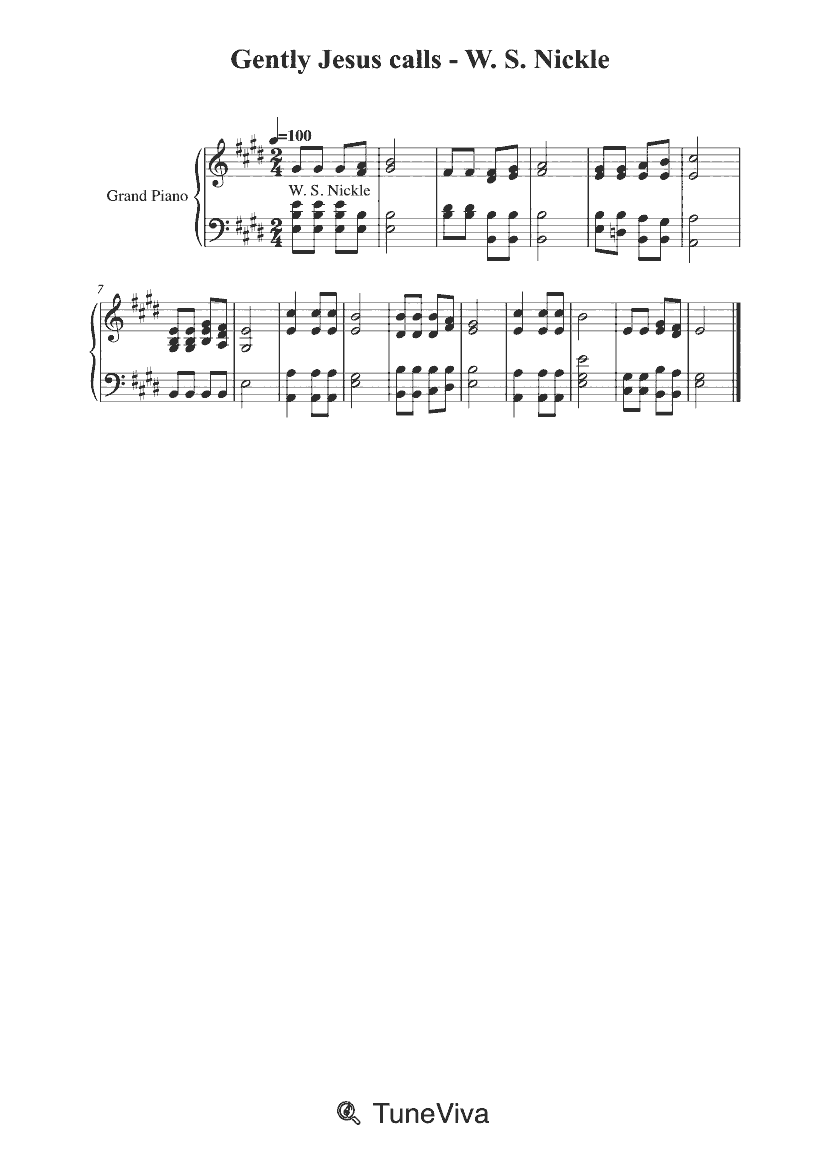
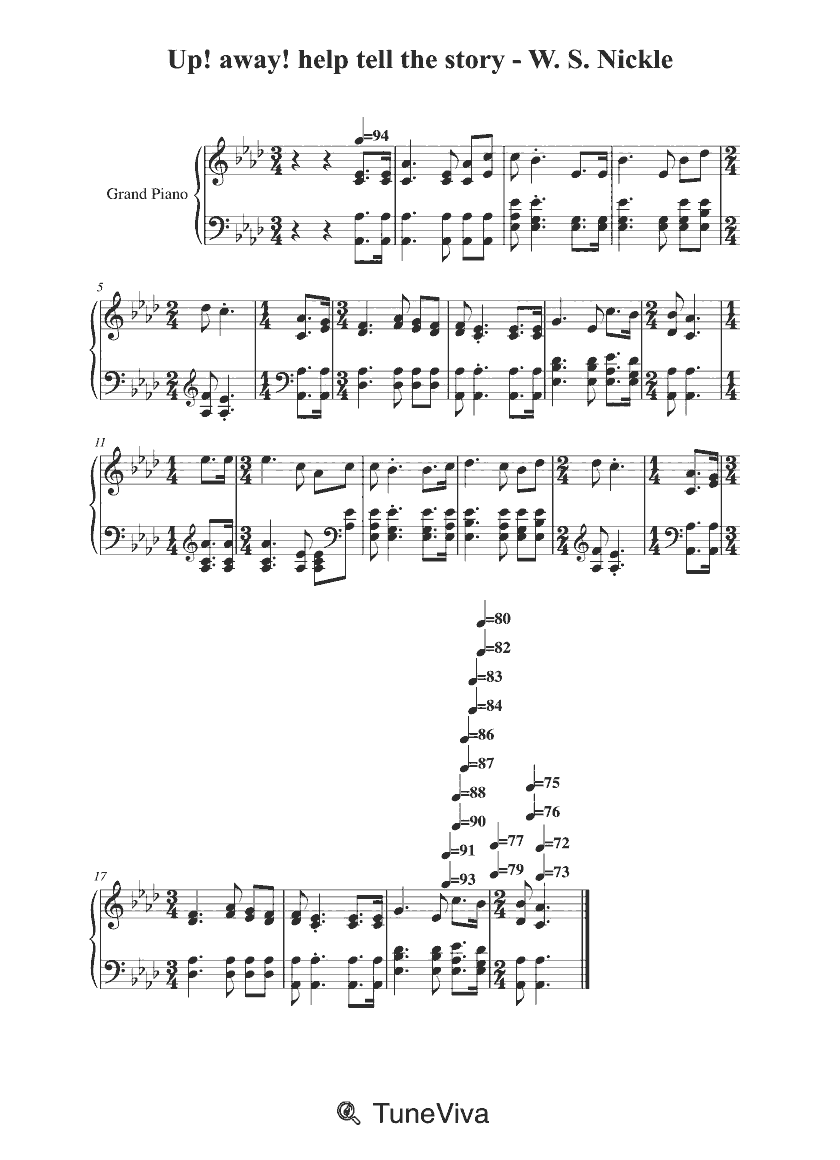
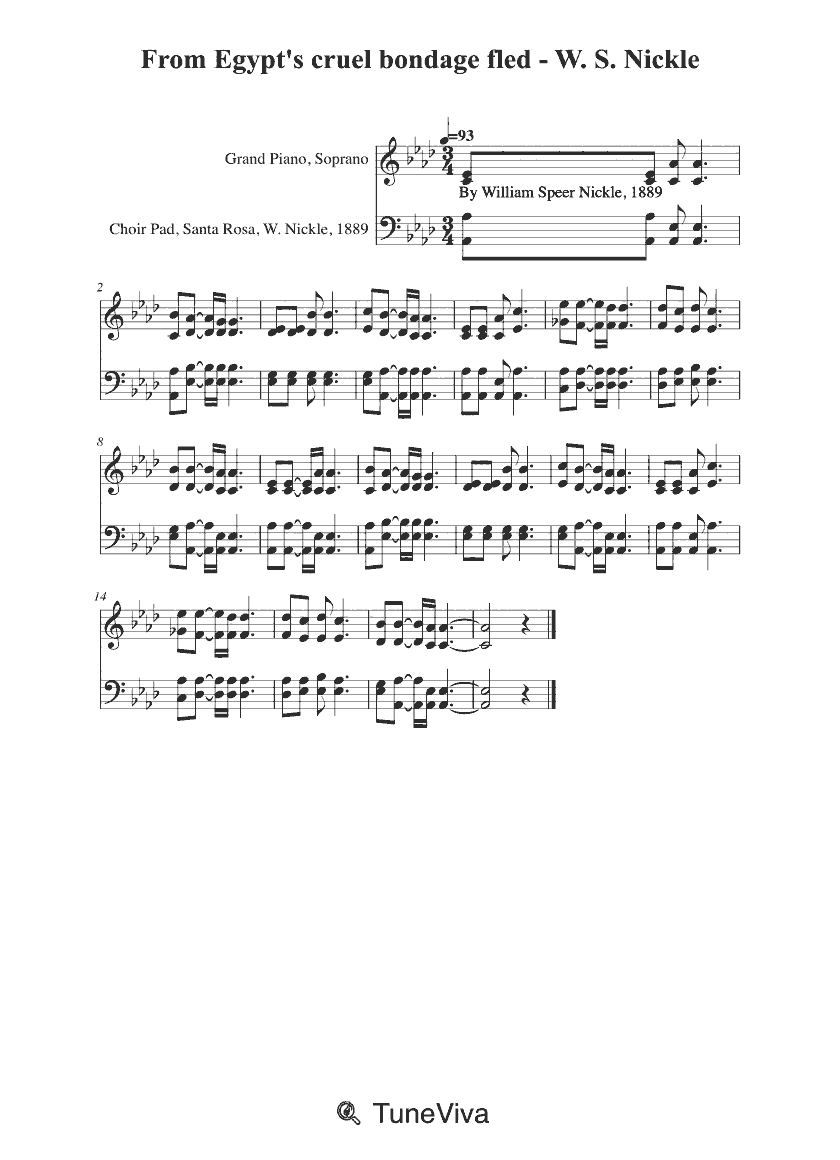
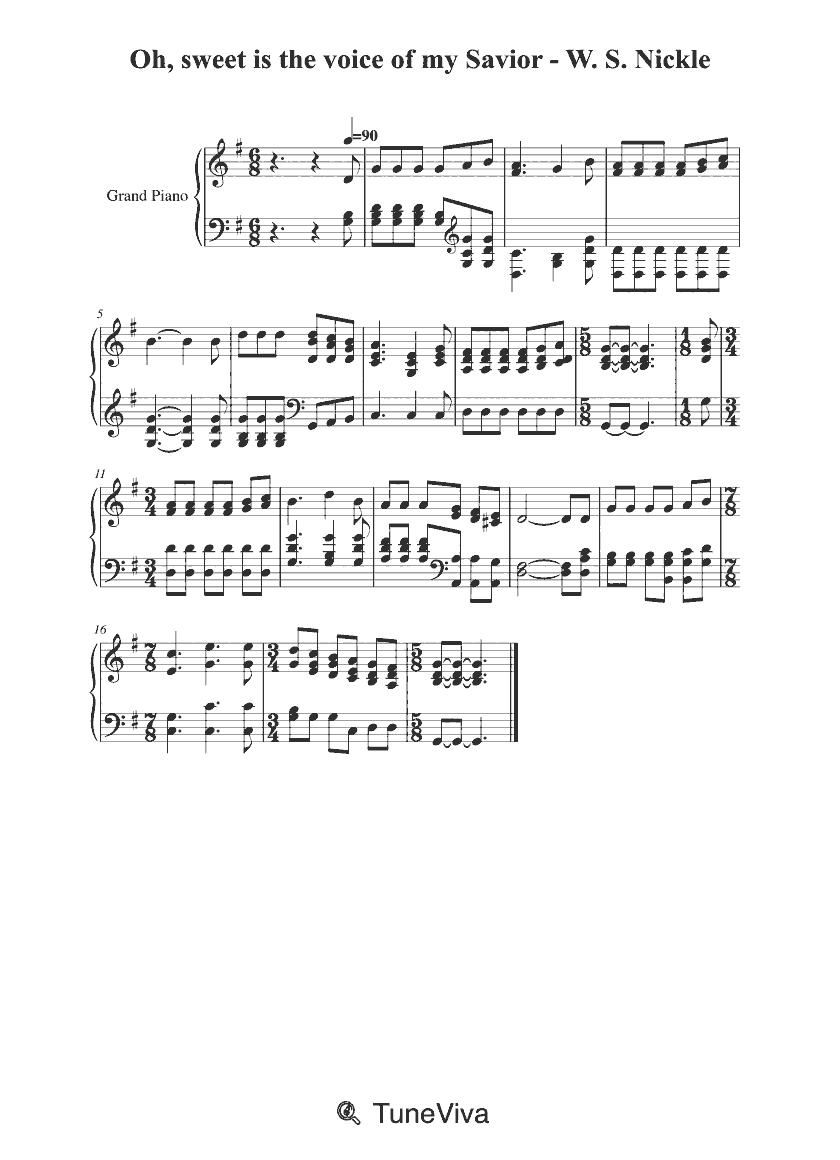
Nickle is one of the shadowy figures of American gospel song: a Chicago compiler and minister whose tunes circulated widely and whose biography barely did. The catalogue holds 21 scores, about 11 minutes of music and 6,094 notated notes, with five entries carrying lyrics.
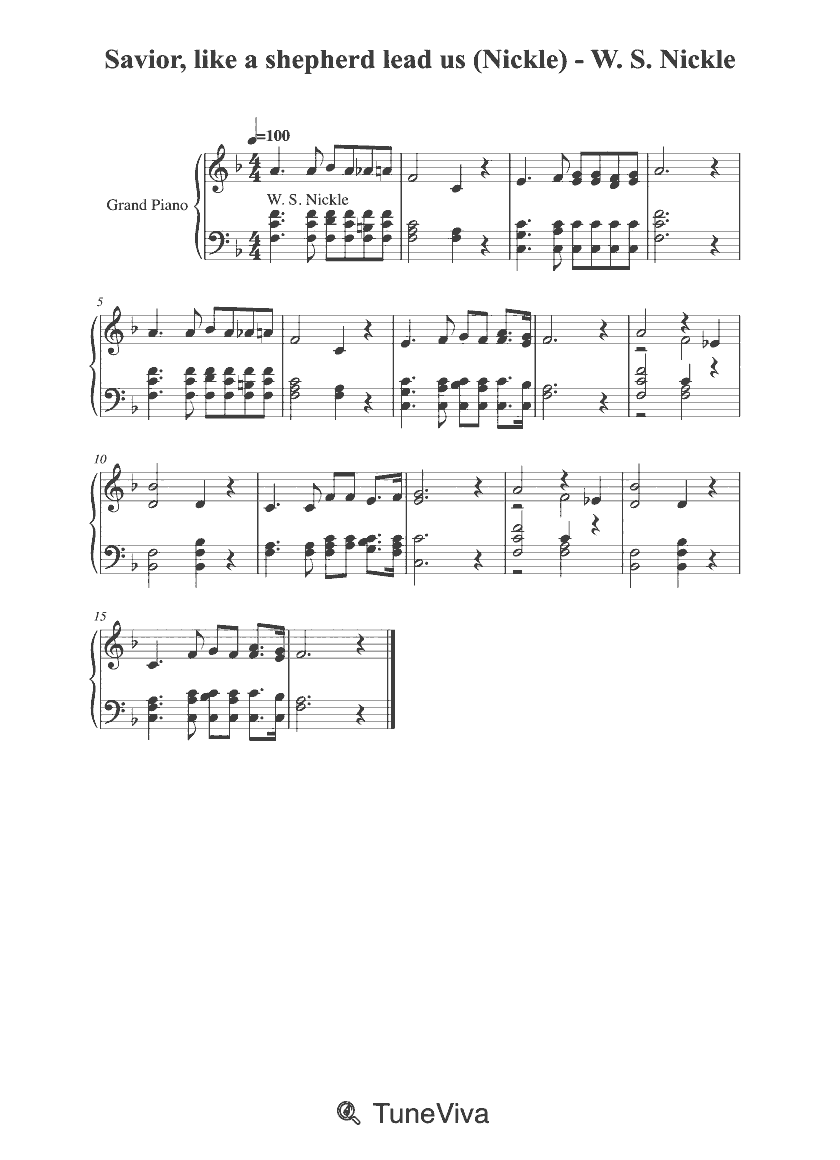
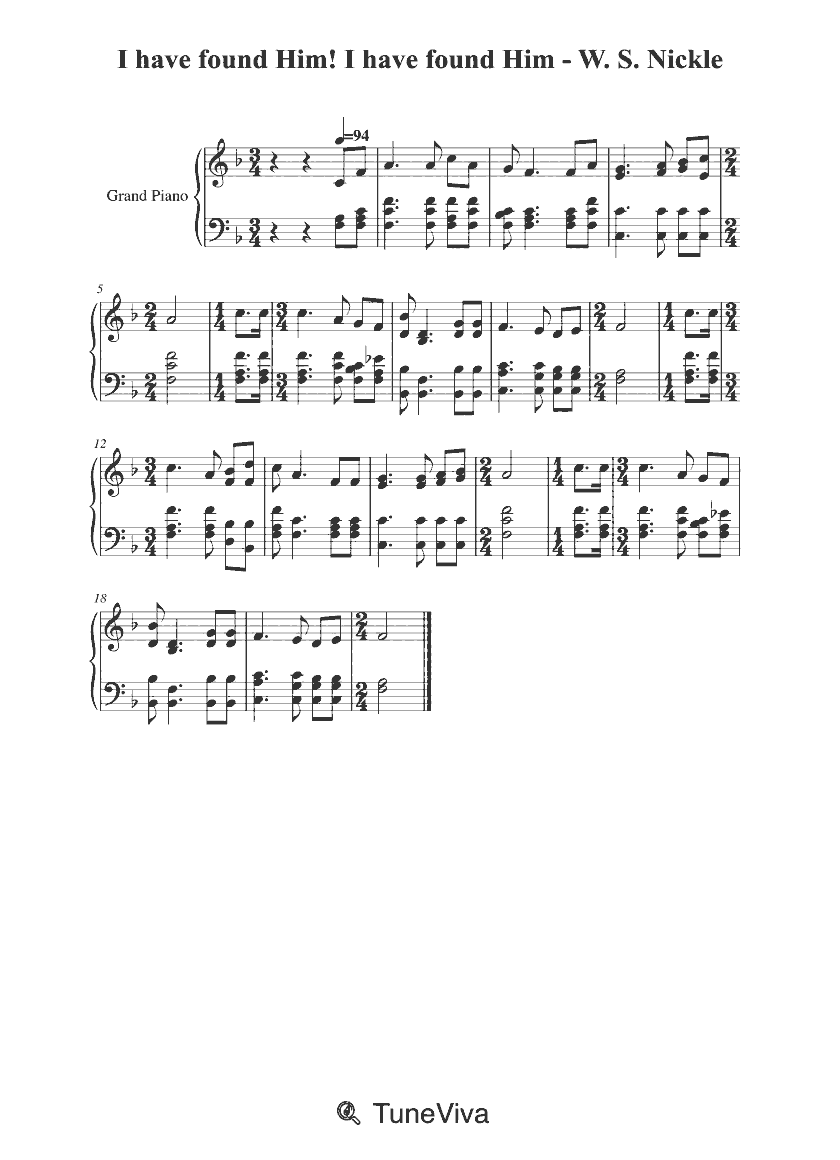
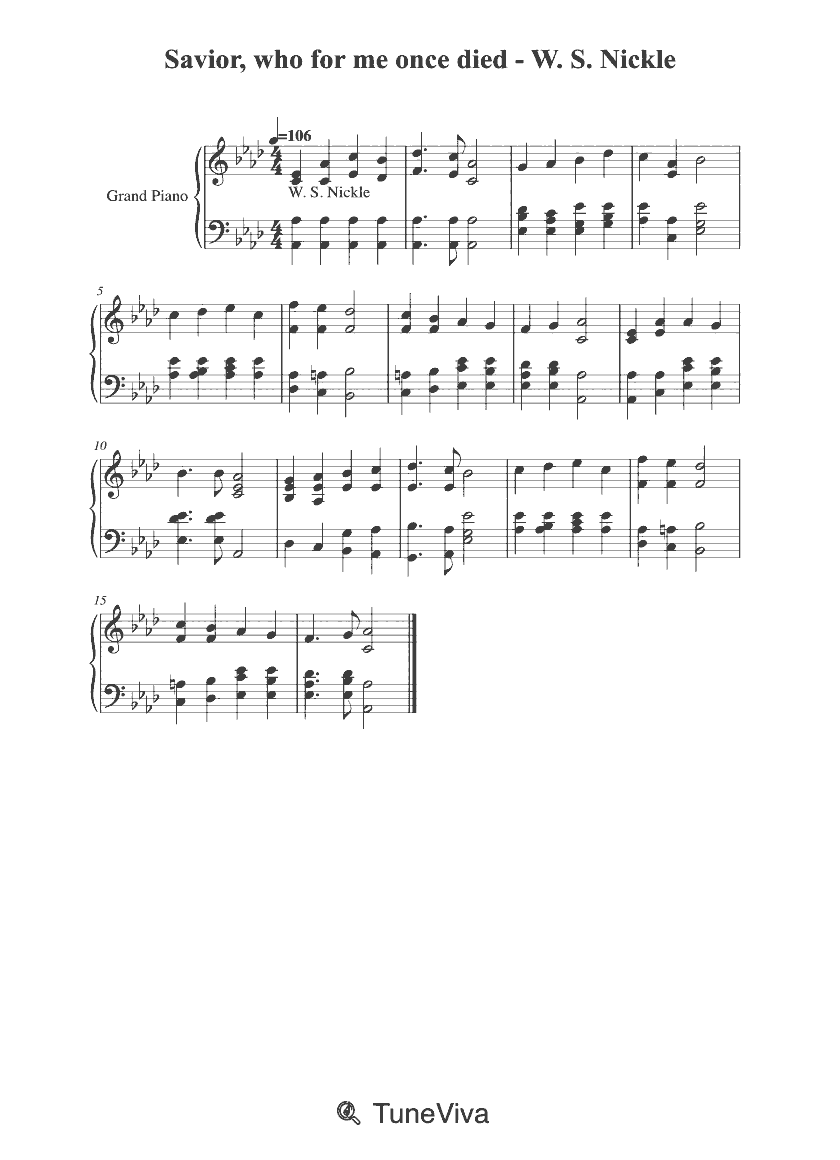
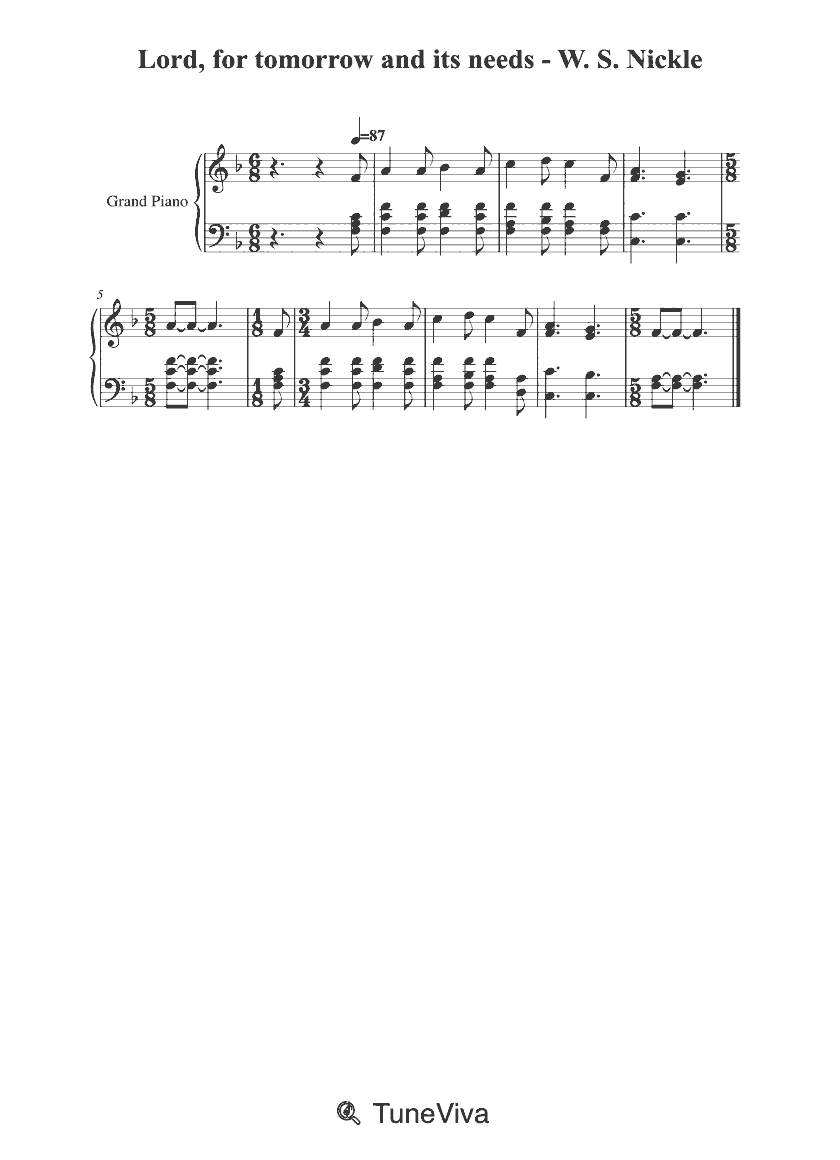
The most-viewed is Lord, for Tomorrow and Its Needs, followed by his setting of Savior, Like a Shepherd Lead Us, marked (Nickle) to separate it from the standard Bradbury tune. The rest are short invitation and trust songs, from I Have Found Him! I Have Found Him to Throw Open the Gates of the City.
William S. Nickle, styled the Reverend in the hymnals that carry his tunes, lived from 1853 to 1914 and worked in Chicago. He is best documented as an editor rather than as a lone composer. With F. A. Hardin and John B. Shaw he compiled Honey Out of the Rock, issued by Meyer & Brother of Chicago in 1892, and with George J. Meyer and O. F. Pugh he compiled Gospel Herald in Song, published by the same house in 1899 for gospel meetings, Sunday schools and prayer meetings.
His tunes travelled through other people's books. Hymnary traces them into Salvation Songs (1895), The Crowning Day, Hymns of Victory (1905) and even a German-language collection, Die Kleine Palme, where a Nickle setting appears under a German first line. That pattern explains the shape of the catalogue: 21 short pieces, three at complexity index 0, seventeen at 1 and one at 2, with five carrying lyrics.
Two entries deserve a word of explanation. Lord, for Tomorrow and Its Needs sets an early-twentieth-century prayer for daily bread (Sybil F. Partridge, c. 1905), one line of petition at a time, and it remains the tune of his that congregational singers are most likely to have met. Savior, Like a Shepherd Lead Us carries the composer's name in brackets because Dorothy Thrupp's 1836 text is normally sung to Bradbury's tune; Nickle's is a different setting of the same words, and the two are easily confused in a catalogue that lists both under one title.
Nickle's tunes are modest in range and rhythmically square, which is why they wore well in prayer meetings: a congregation can learn the refrain on one hearing. Keep the harmony plain and the tempo unhurried, but do not let the repeated chords at the end of each phrase drag. In the invitation pieces the last line usually rises, so save a little tone for it. If you are playing from a single-line file, add the harmony sparingly; these melodies were written to sit under a tune-book alto and tenor rather than over a piano texture.
The most-viewed score on the page: a setting of a Victorian prayer that asks for help with the present day alone.
Nickle's own tune for Dorothy Thrupp's 1836 text, marked with his name to distinguish it from Bradbury's better-known setting.
A discovery testimony with an exclamatory refrain, the third most-viewed entry in the collection.
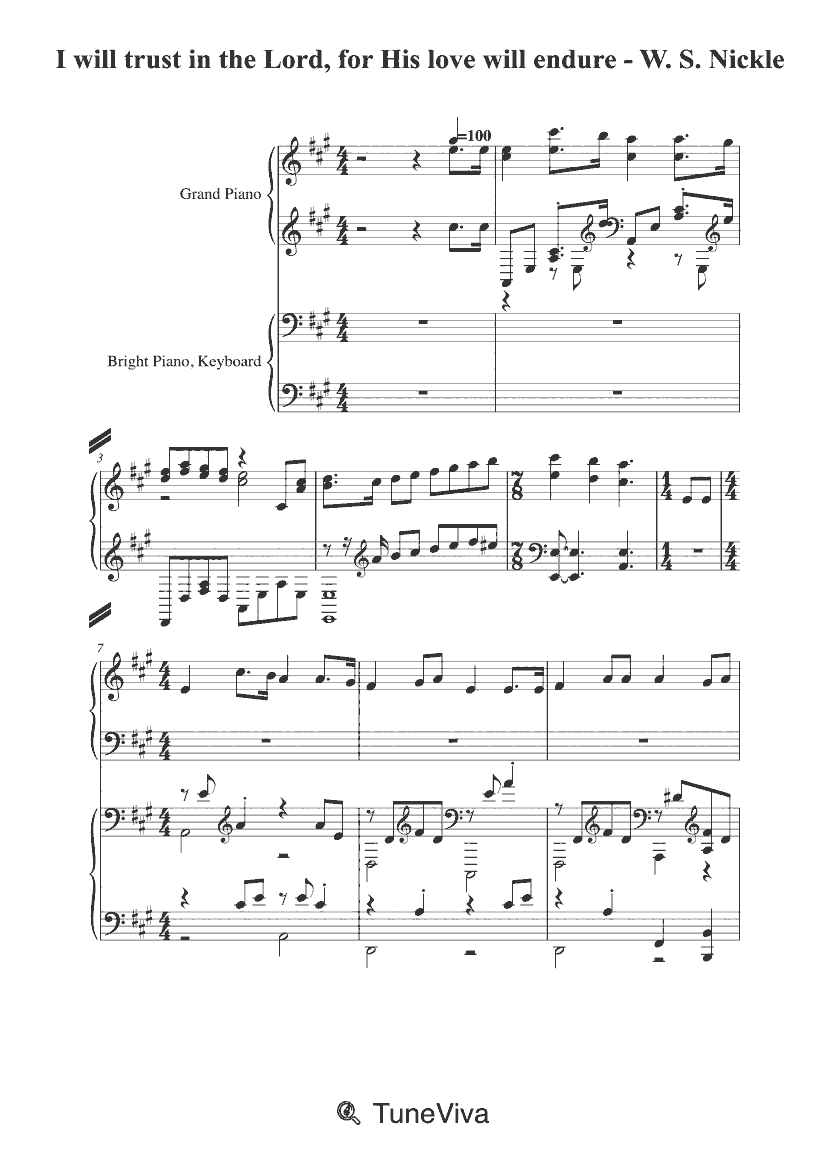
A trust chorus built on a single psalm-like assertion, repeated with each verse.
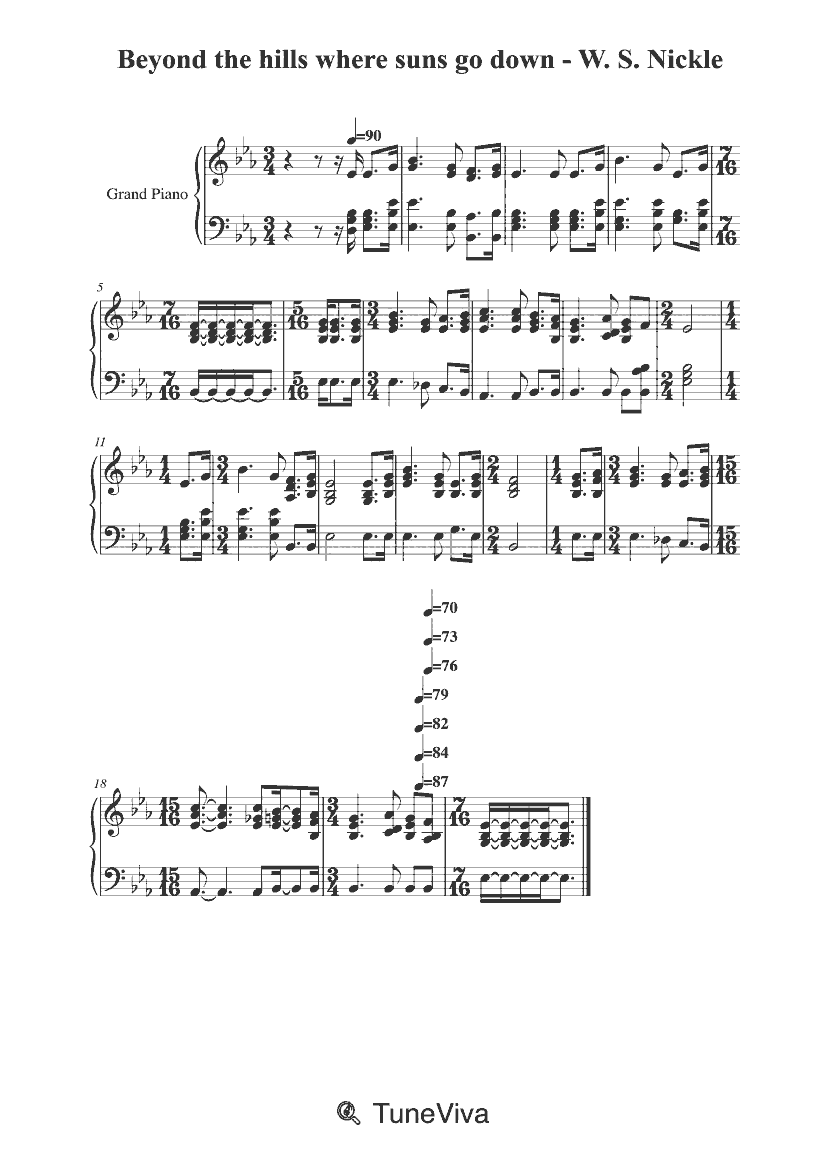
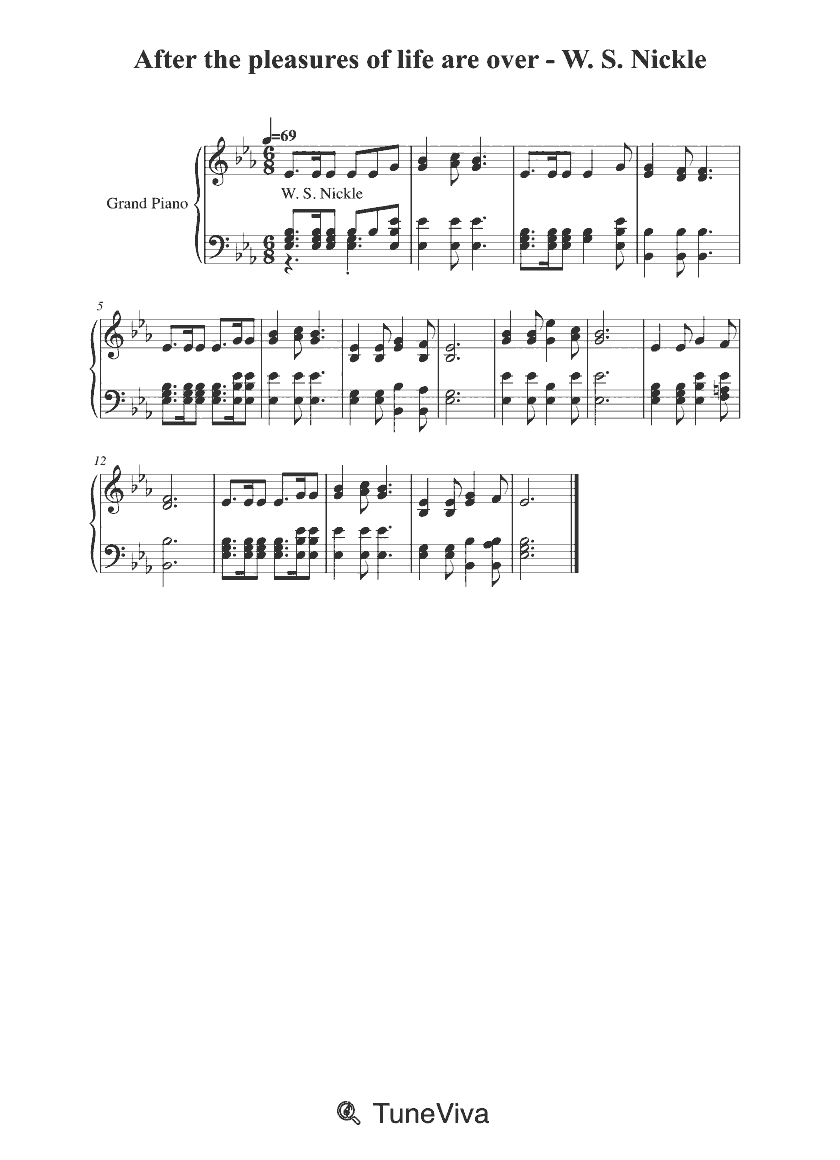
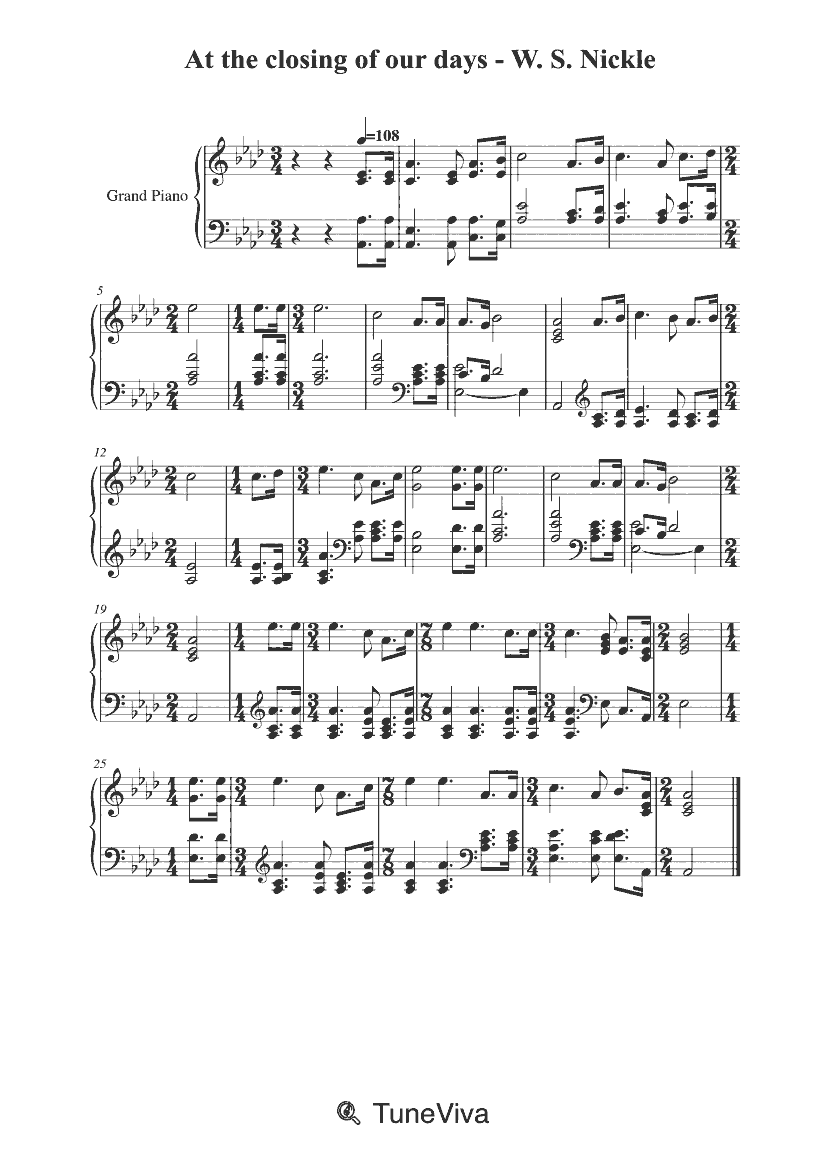
A heaven-and-sunset hymn, one of several in the collection that look past the horizon rather than at the cross.
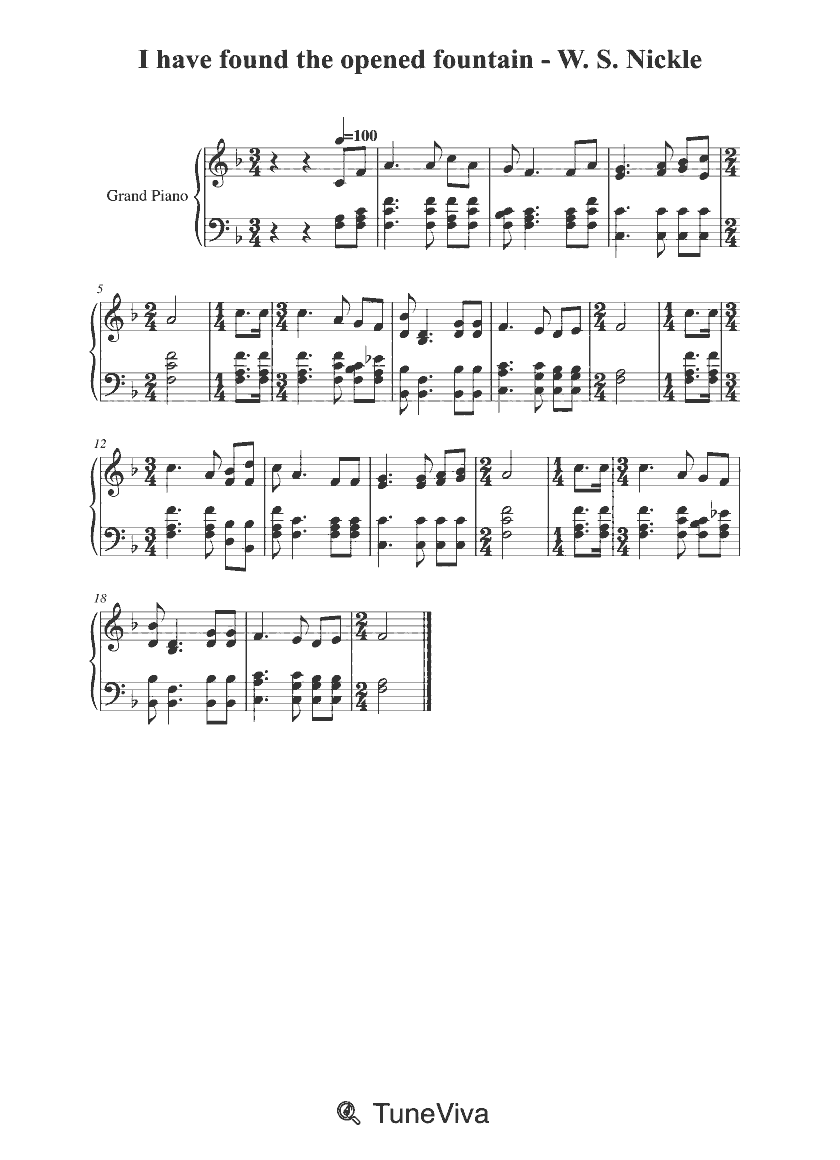
A fountain-of-cleansing text in the revival idiom, with a refrain that returns to the image each time.
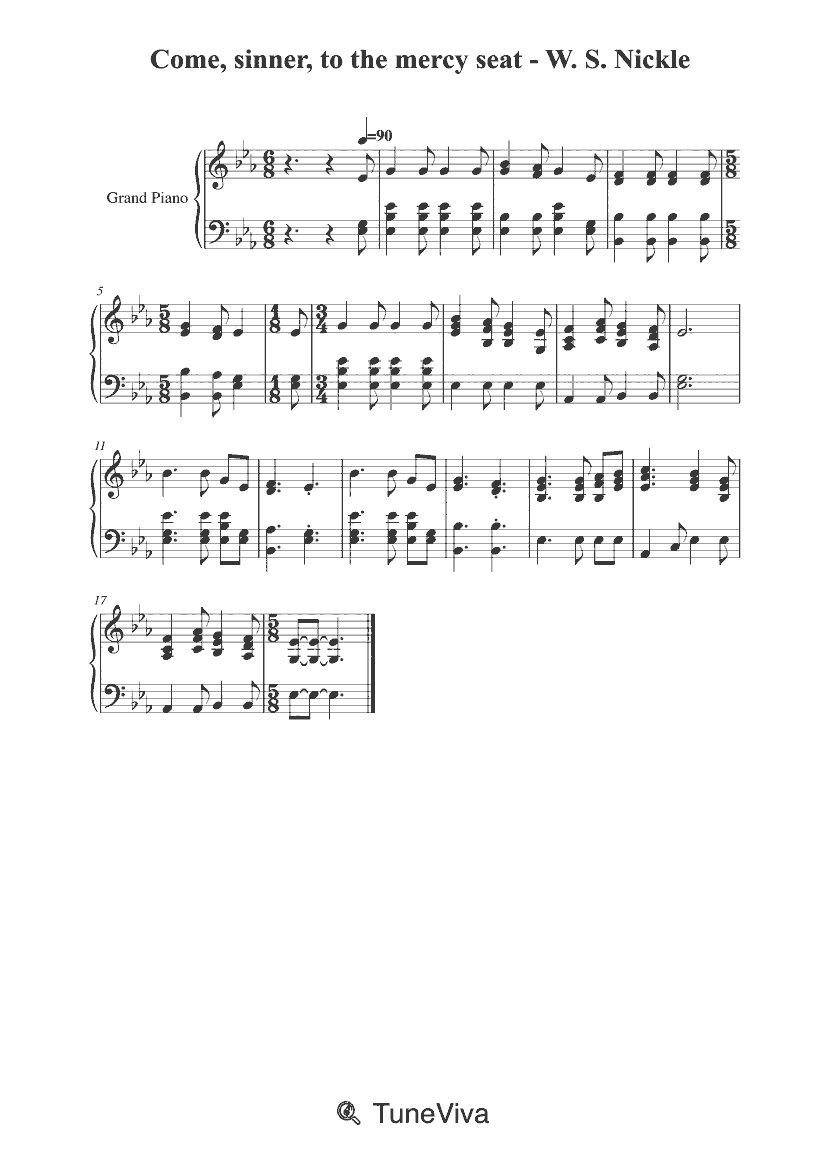
A direct invitation hymn, the sort of piece that accompanied an altar call in a Chicago mission hall.
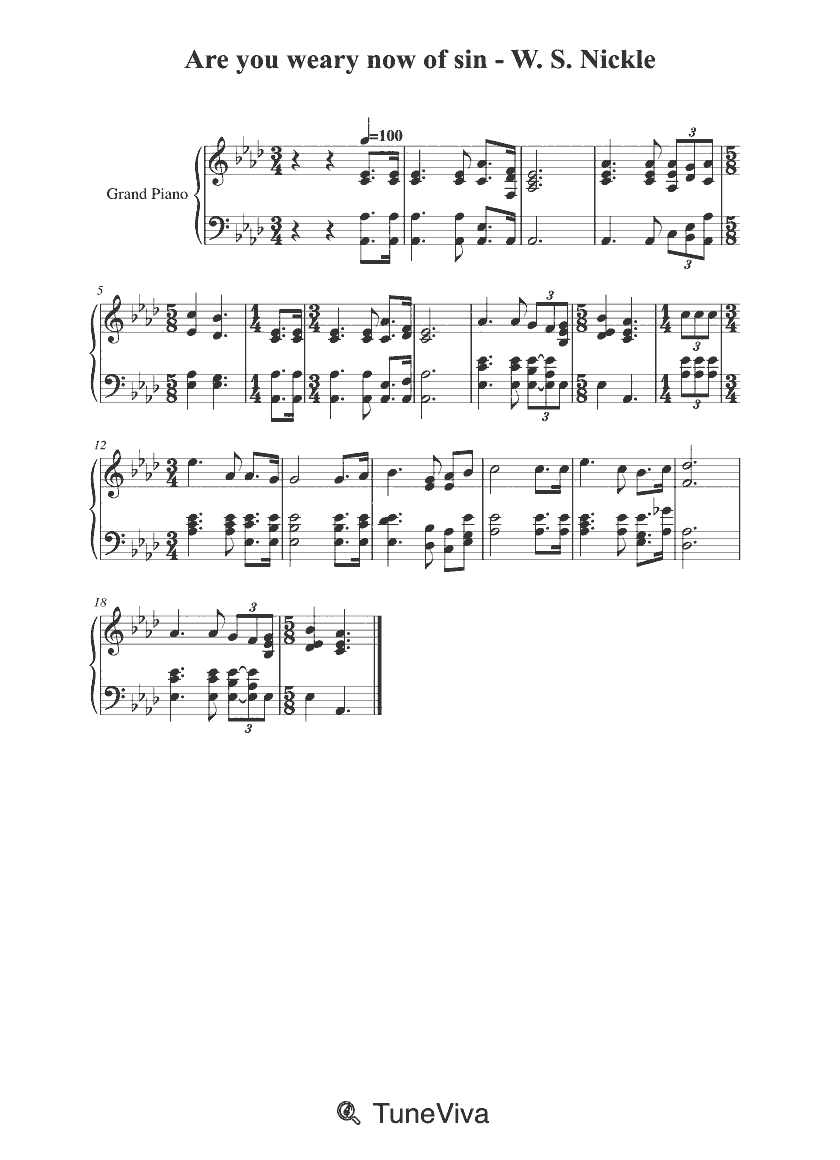
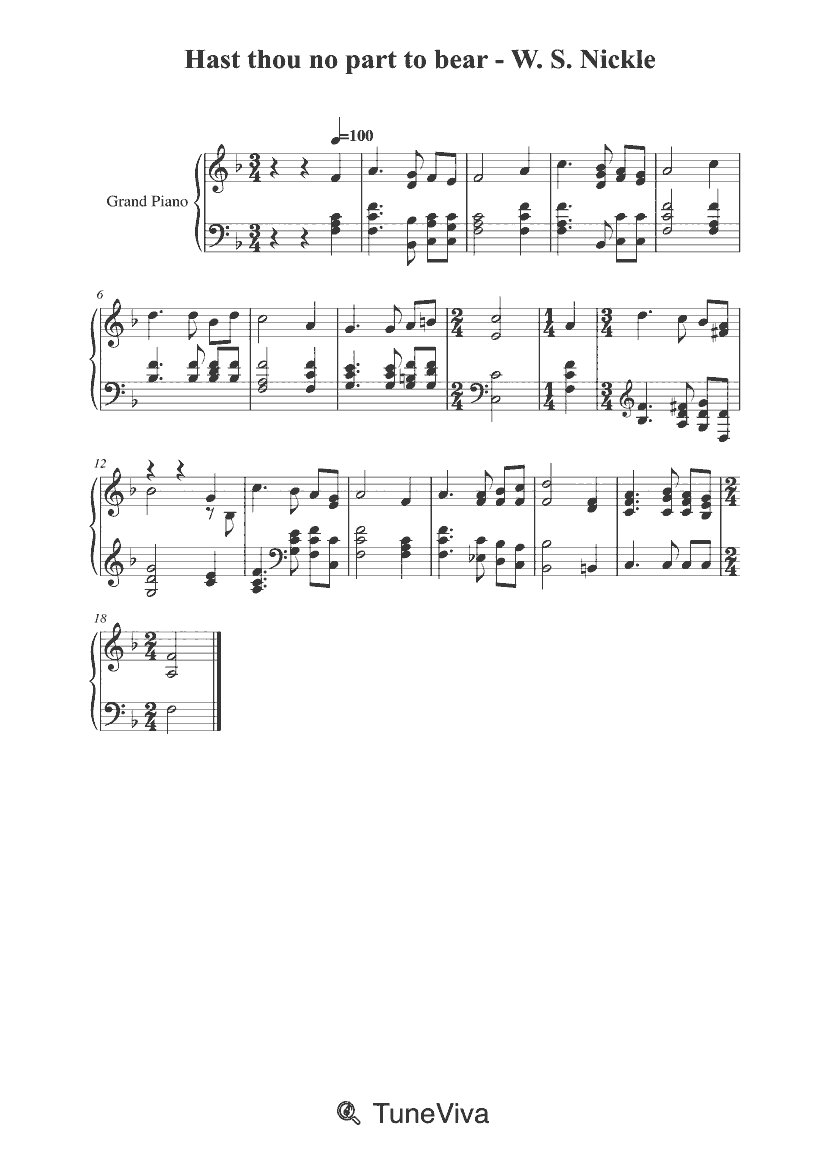
A question-and-answer evangelistic song, opening with the listener's condition rather than with the Saviour.
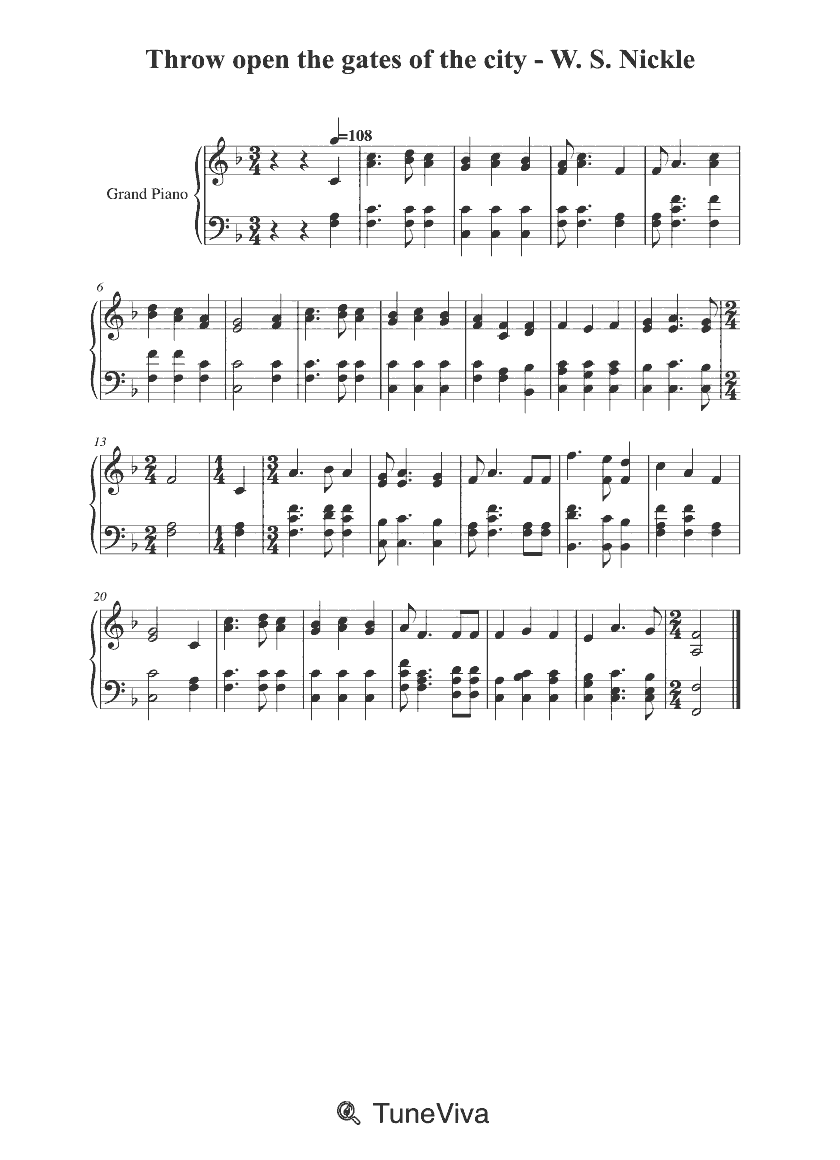
A New Jerusalem hymn with a processional refrain, among the most extrovert pieces in the collection.
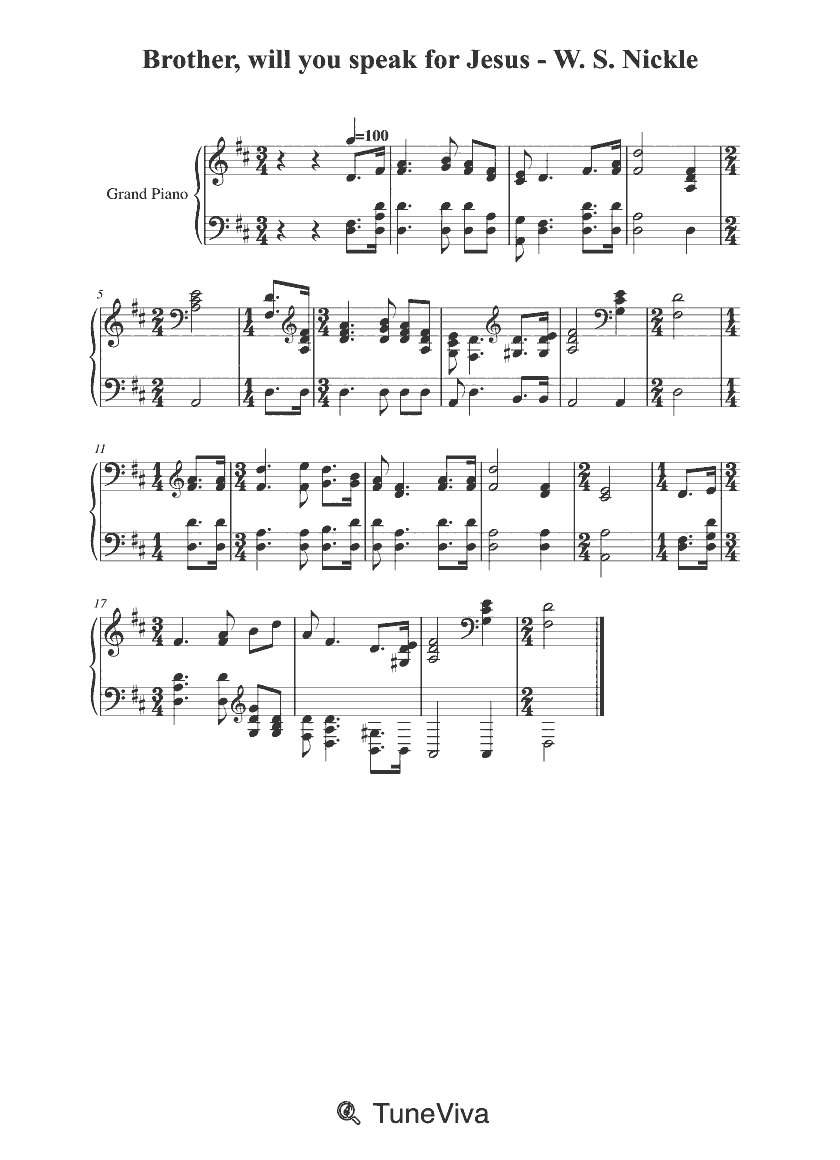
A quiet invitation, and one of the five entries whose lyric field is filled in.
21, running to about 11 minutes of music and 6,094 notated notes. Five of the files include lyrics.
The Reverend William S. Nickle (1853-1914), a Chicago gospel-song compiler and minister, credited as co-editor of Honey Out of the Rock (1892) and Gospel Herald in Song (1899), both from Meyer & Brother.
Because Savior, Like a Shepherd Lead Us is usually sung to Bradbury's tune. The bracketed name marks this file as Nickle's own setting of the same text.
A few are. Hymnary traces them through Salvation Songs, The Crowning Day, Hymns of Victory and later collections, and several survive in the Timeless Truths reprint tradition.
Catalog editions and arrangements attributed to W. S. Nickle.