classical
2 tracks
This collection reflects catalog attributions. Biographical information and attributions have not been independently researched.
TuneViva holds 6 scores under William J. Henry, and the catalogue does not record a reliable biography for this name. The collection is classical repertoire, so this page describes the scores themselves rather than the person behind them. The collection totals about 3 minutes and 1,913 notated notes. 6 scores are at complexity index 0, and 6 include lyrics.
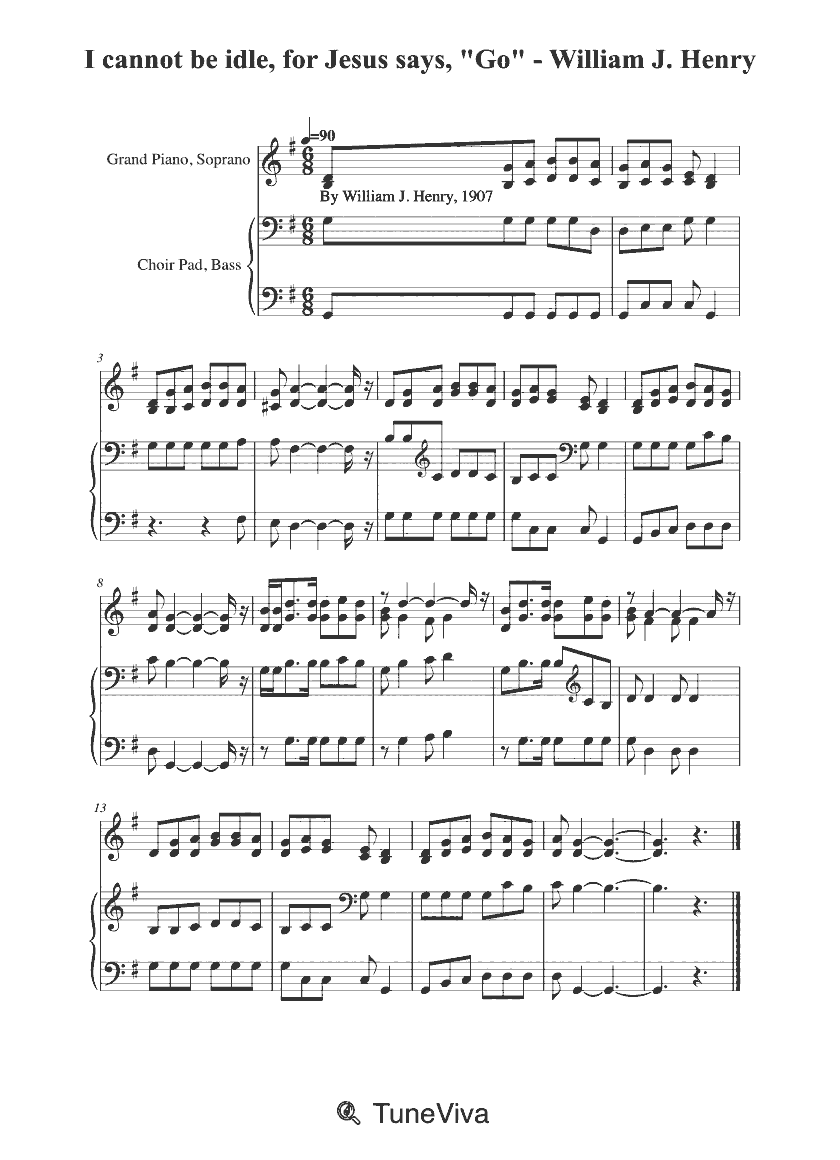
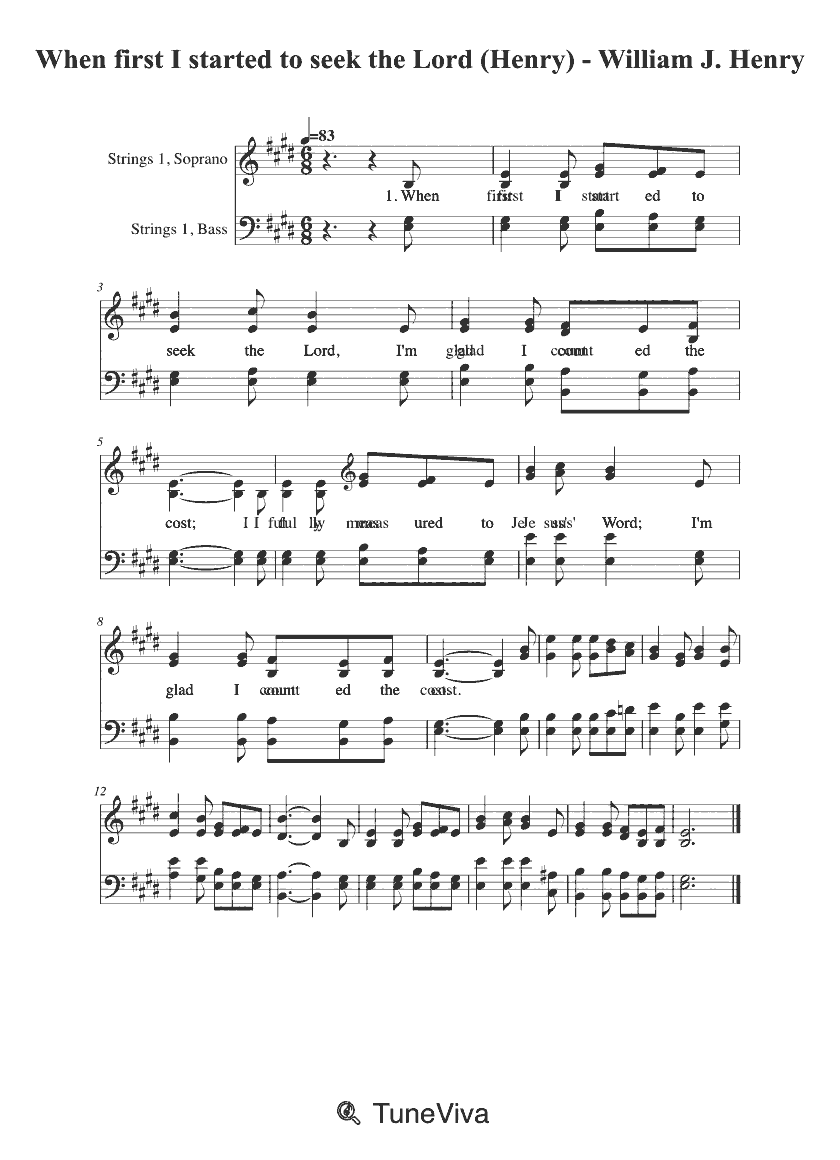
The most-viewed titles are Let the gates of praise be open - William J. Henry, I cannot be idle, for Jesus says, "Go" - William J. Henry and When first I started to seek the Lord (Henry) - William J. Henry. All entries can be read on screen, transposed and downloaded; PDF is standard, with MusicXML and MIDI on most files.
TuneViva holds 6 scores under William J. Henry, and the catalogue does not record a reliable biography for this name. The collection is classical repertoire, so this page describes the scores themselves rather than the person behind them.
The collection runs to about 3 minutes and 1,913 notated notes. 6 entries sit at complexity index 0, 0 at index 1 and 0 at index 2. 6 scores include lyrics, so the set is useful to singers as well as instrumentalists.
Titles are recorded as uploaded, so the same piece can appear with the composer's name appended or under a different spelling. Check the scoring and editorial marks on each file before printing. The list below links to the most-viewed works, and the related composers share the same broad repertoire. Every entry can be previewed in the browser, transposed into a comfortable key and downloaded as a PDF. MusicXML and MIDI files are available where the uploader provided them, and the score view is rendered from the notation file. The catalogue records duration, note count, track count and complexity for each file, so settings can be compared before opening them. Titles are preserved as uploaded, so the same piece may appear under more than one spelling or with the composer's name appended.
These are vocal scores: expect underlaid text, short phrases and refrains that repeat. Keep the words clear and let the accompaniment support rather than cover the voices. The collection runs to about 3 minutes, so most individual pieces are short. Check the scoring named on the file before printing. The complexity index is a rough proxy for notation density, not a formal grade.
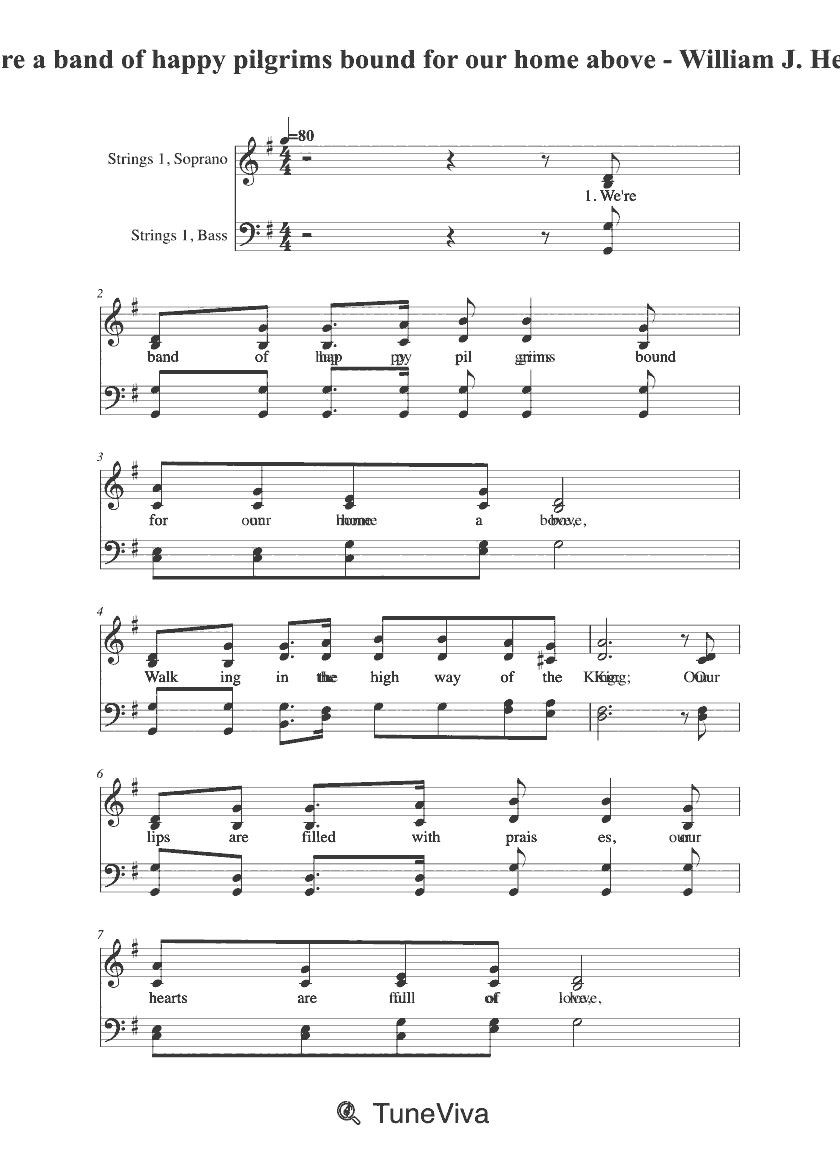
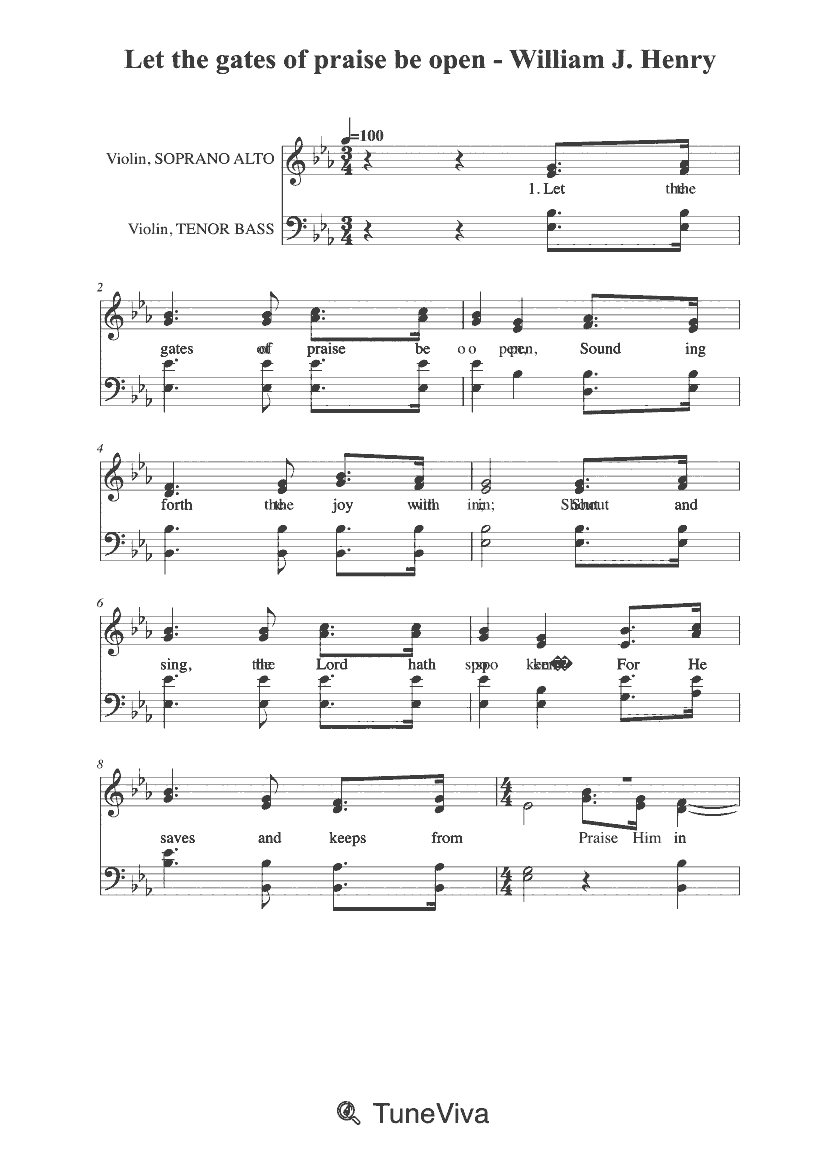
The most-viewed title in the collection, with 8 views; complexity index 0, about 0.6 minutes.
8 views; complexity index 0; about 0.3 minutes.
A classical repertoire piece with 2 views, complexity index 0 and a running time of about 0.3 minutes.
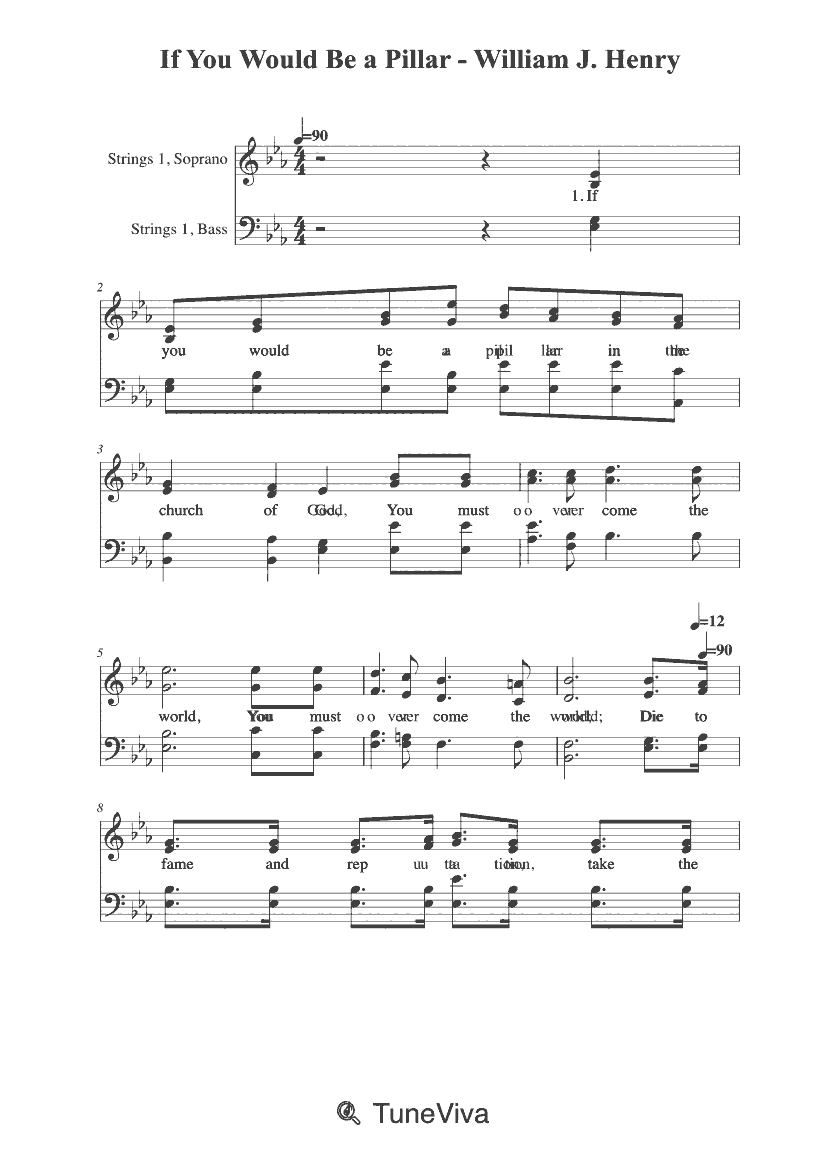
1 views; complexity index 0; about 0.8 minutes.
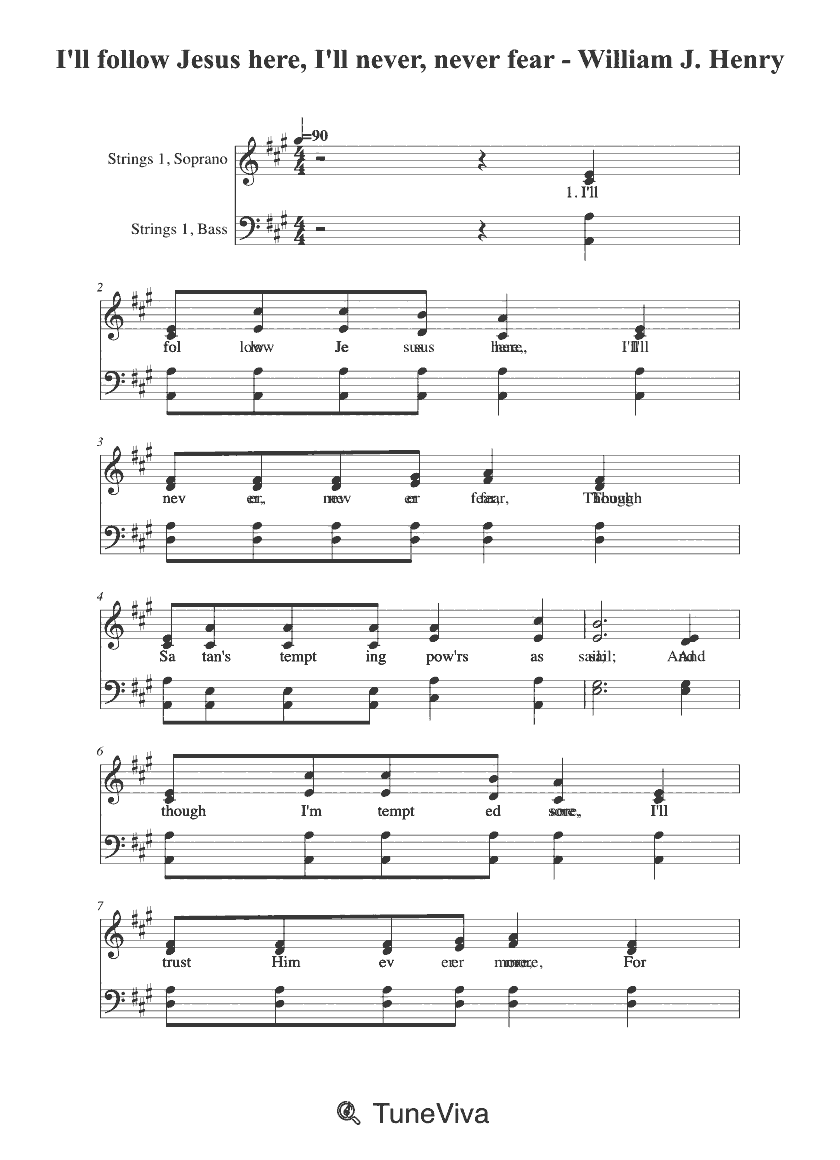
A classical repertoire piece with 1 views, complexity index 0 and a running time of about 0.7 minutes.
A classical repertoire piece with 1 views, complexity index 0 and a running time of about 0.8 minutes.
There are 6 scores, running to about 3 minutes of music and 1,913 notated notes.
Yes. Every entry can be previewed, transposed and downloaded; PDF is standard, with MusicXML and MIDI where the file provides them.
The catalogue lists them as public domain or CC0. Check the individual file before republishing.
Let the gates of praise be open - William J. Henry, with 8 views.
Catalog editions and arrangements attributed to William J. Henry.