classical
2 tracks
William Edie Marks is credited with 47 scores, about 26 minutes of music and 15,829 notated notes. Twenty-nine carry lyrics, the highest proportion among the gospel writers in this group. "The last mile of the way" has 114 views, and the entry after it, "If I walk in the pathway of duty", is the opening line of the same hymn rather than a separate piece. Difficulty divides fairly evenly: 21 scores at index 0, fourteen at index 1 and twelve at index 2. All 47 are filed as classical in the catalogue.
Marks was born in July 1872 in Delaware, probably at Wilmington, and he was still living there in 1913. He died in Wilmington on 20 November 1954 and is buried at Lombardy Cemetery in the city. Hymnary records him as a compiler as well as a writer: Cream of Song, issued in Louisville, Kentucky, appeared with Leander Pickett and O. B. Culpepper, and his own texts include "Overcoming power".
His best-known piece by a wide margin is "The Last Mile of the Way". Johnson Oatman Jr. wrote the words in 1908 and Marks supplied the music; the hymn opens "If I walk in the pathway of duty", which is why the catalogue holds it twice, once under its title and once under its first line. The rest of the collection follows the same pattern of songs for revival and Sunday-evening services: "God's abiding peace is in my heart today", "Count it all joy", "Lift thy face to the light!".
The title field is inconsistent. Some entries use a phrase from the refrain, others the full first line, and two pairs look like duplicate settings of one text. Twenty-one entries sit at complexity index 0, so much of the writing is four-square and readable at sight, and only a handful reach index 2. No publisher or date is recorded for the individual scores.
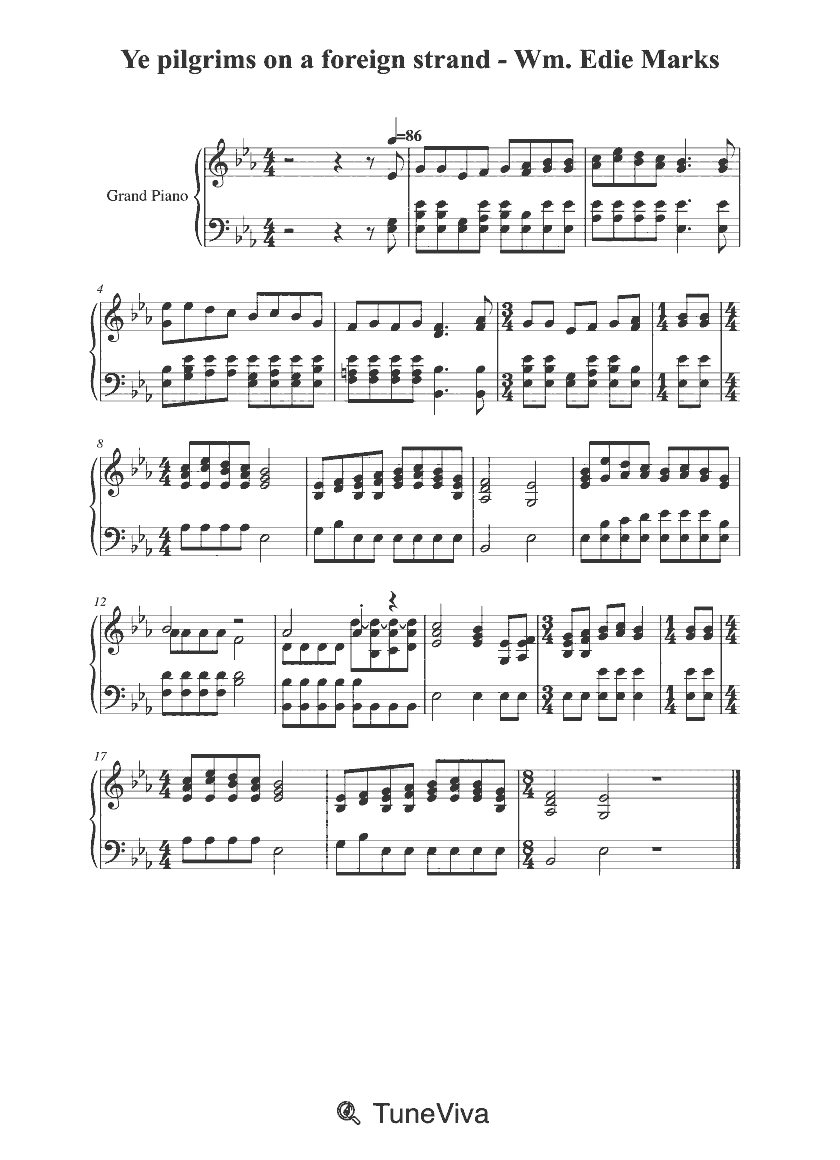
The Last Mile of the Way turns on its refrain: keep the verse plain and let the chorus broaden, with the dotted figure steady rather than dragged. In the other songs the harmony is functional, so the interest comes from the words and from clean part-leading. Accompanists should avoid a heavy left hand, which blurs the text, and organists can save the fuller registration for the last stanza. Where two entries give the same hymn under different titles, choose one and mark the other, or the congregation will sing the chorus twice with different words.
Johnson Oatman Jr.'s 1908 text with Marks's tune, and the most-viewed entry here at 114.
The opening line of the same hymn, catalogued separately; compare it with the entry above before printing both.
A hymn of perseverance, set at complexity index 1 and holding 11 views.
An assurance hymn in the first person, one of 21 entries at the easiest index.
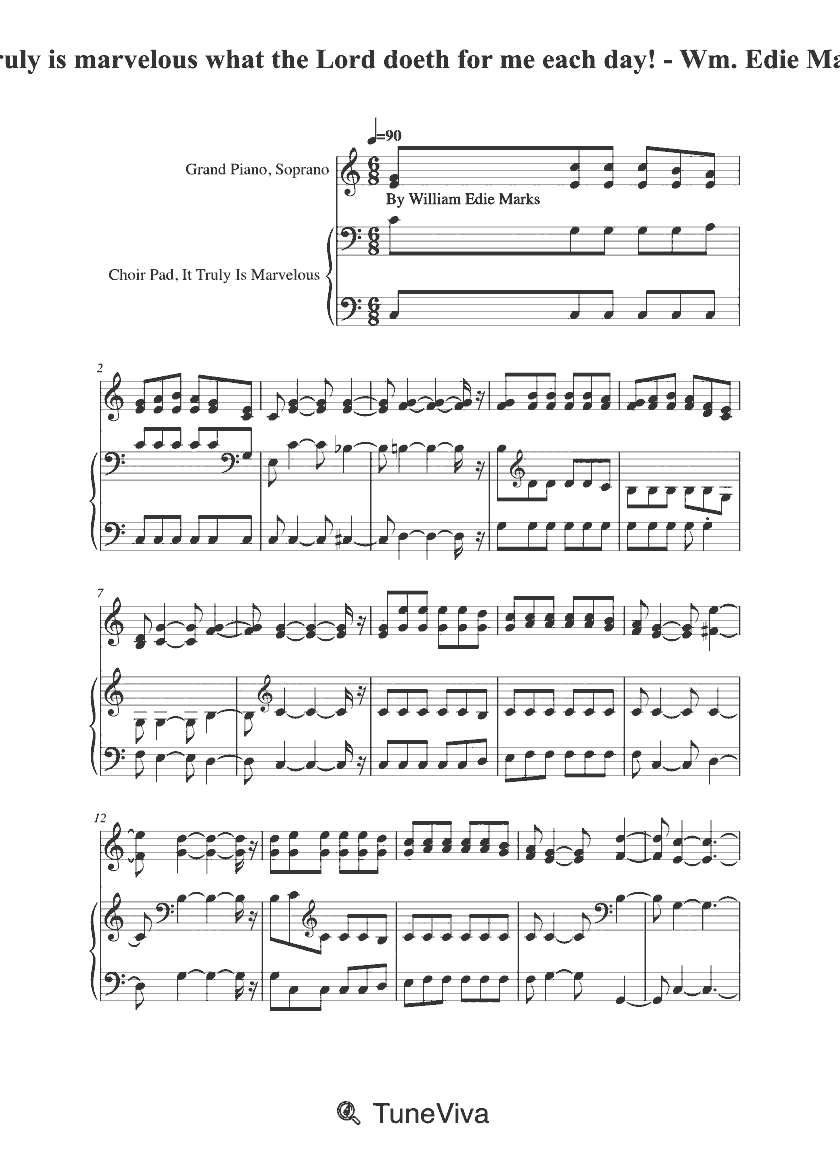
The catalogue drops the apostrophe; the phrase itself comes from 1 Peter 1:8.
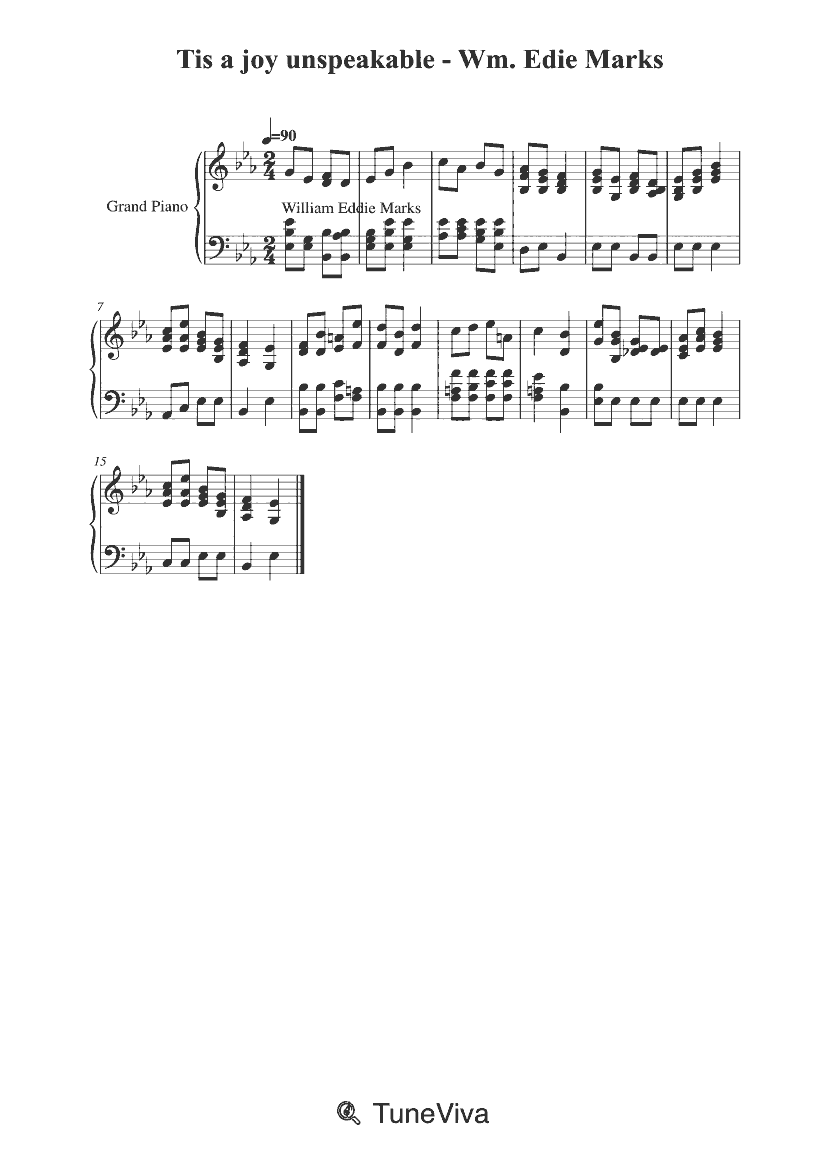
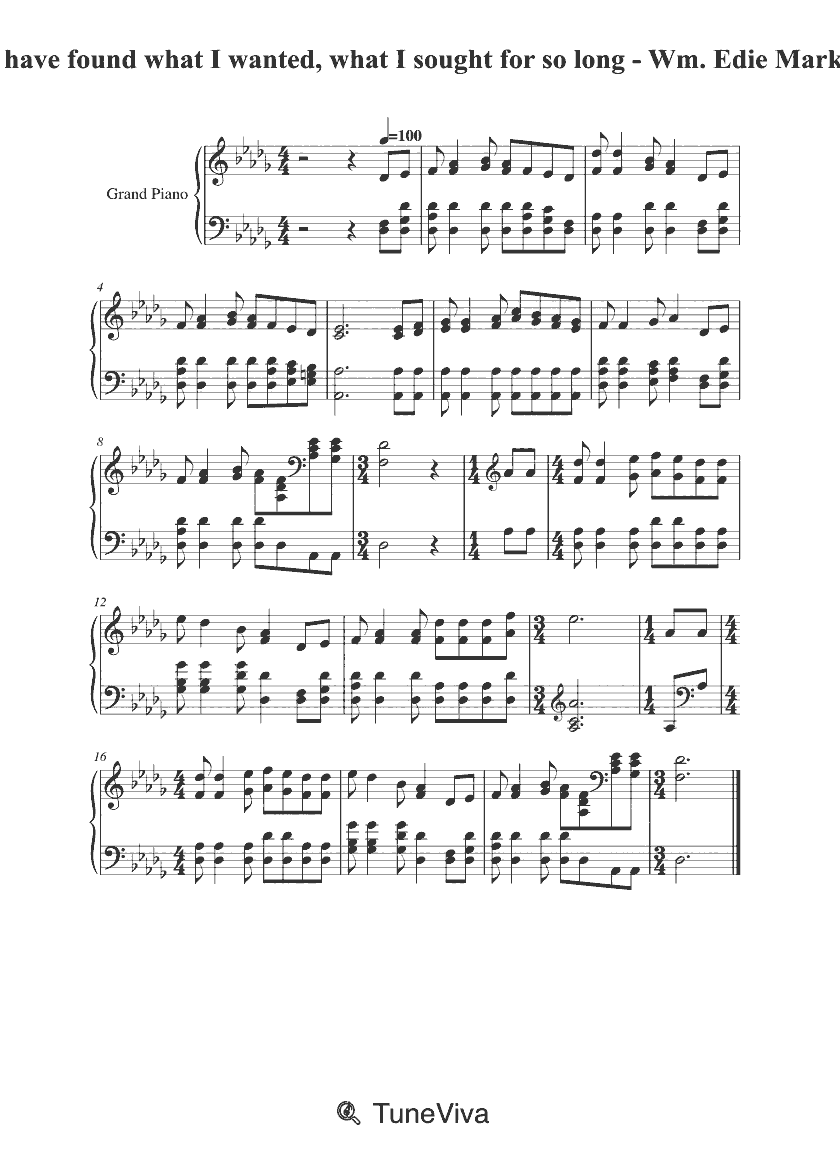
A testimony hymn that frames conversion as the end of a search.
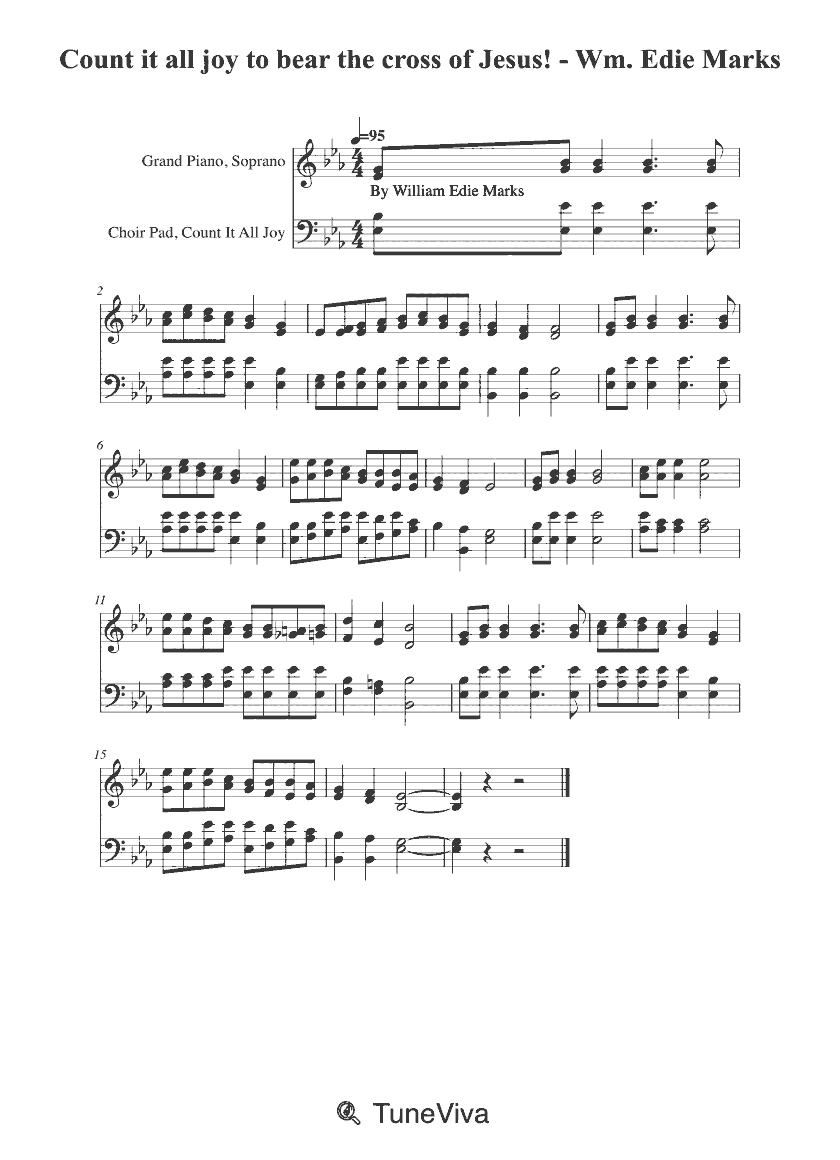
One of two entries built on James 1:2; this one keeps the phrase as its whole title, the other expands it.
The second "Count it all joy" entry, a longer text turning the verse towards endurance.
A refrain-led song in which the chorus carries the argument and the verses illustrate it.
An exhortation in the second person, and one of the shorter entries in the collection.
47, about 26 minutes of music and 15,829 notated notes. Twenty-nine of them include lyrics.
Johnson Oatman Jr., in 1908. Marks composed the music, and the hymn opens with the line "If I walk in the pathway of duty".
One is filed under its title and one under its first line. The catalogue has no field that links a title to its opening line, so the pair sits apart.
Yes. Hymnary lists him as both author and composer, and "Overcoming power" is one of his own texts in Cream of Song.
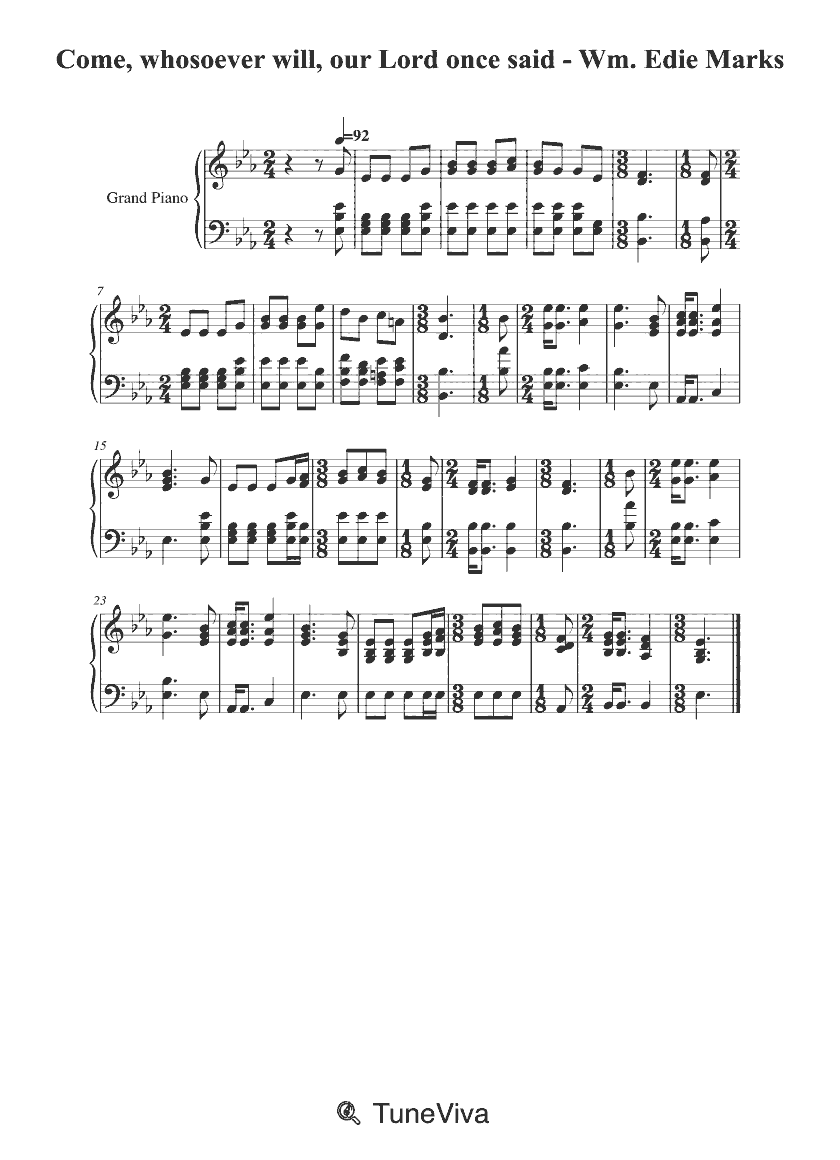
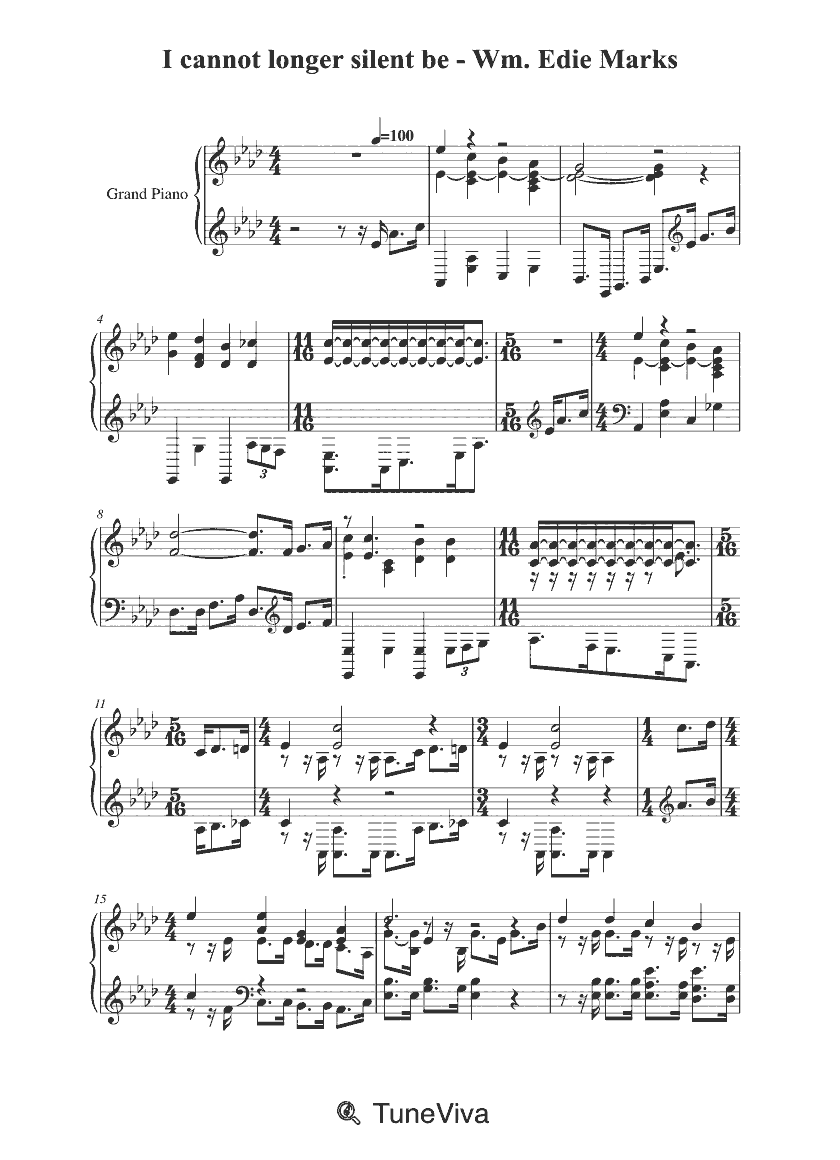
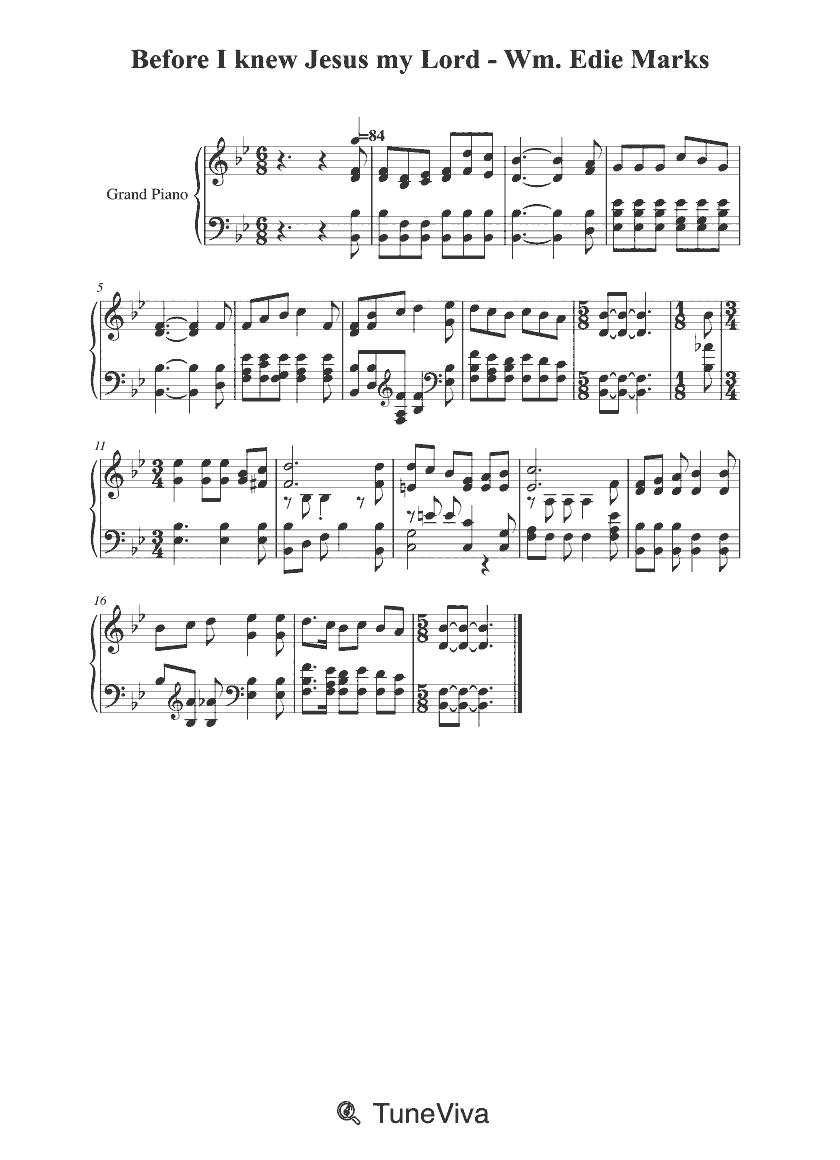
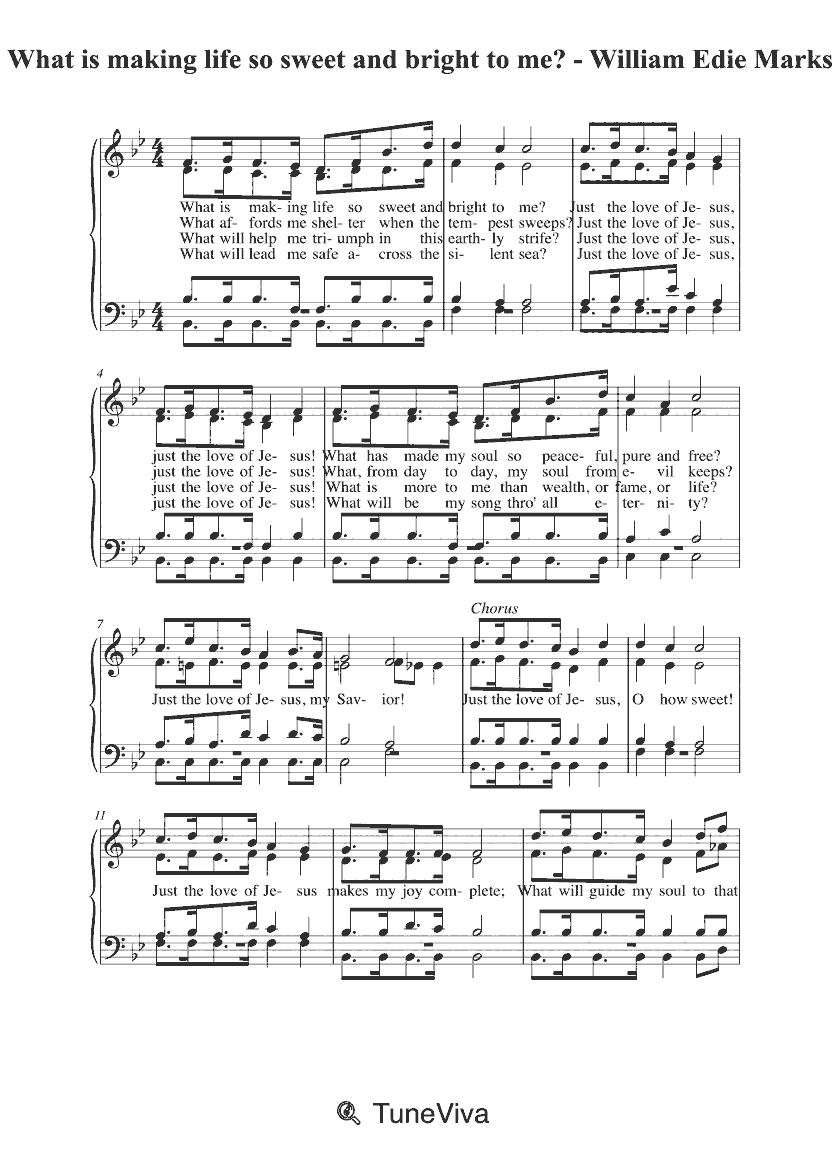
Catalog editions and arrangements attributed to William Edie Marks.