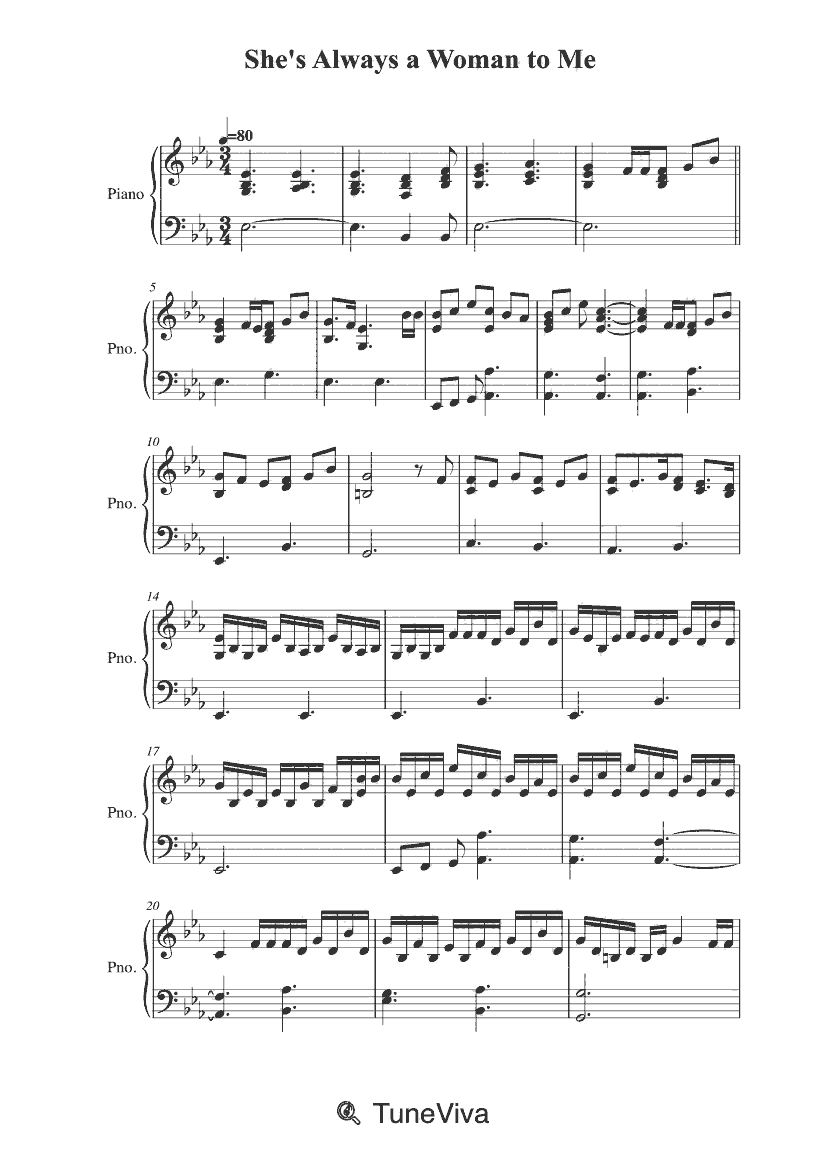
She's Always a Woman to Me
Jerry Bustillo
Piano · 3 min 36 sec
Open scoreExplore blues sheet music for singing, piano and instrumental playing. Start with Backwater Blues for voice and piano, or The Fives for boogie-woogie piano writing with a voice part. The catalogue also includes instrumental arrangements of Sweet Home Chicago and other blues-related music. Choose by instrument and arrangement, then listen to the rhythm before practising.
Scores 1–9 of 9
Jerry Bustillo
Piano · 3 min 36 sec
Open score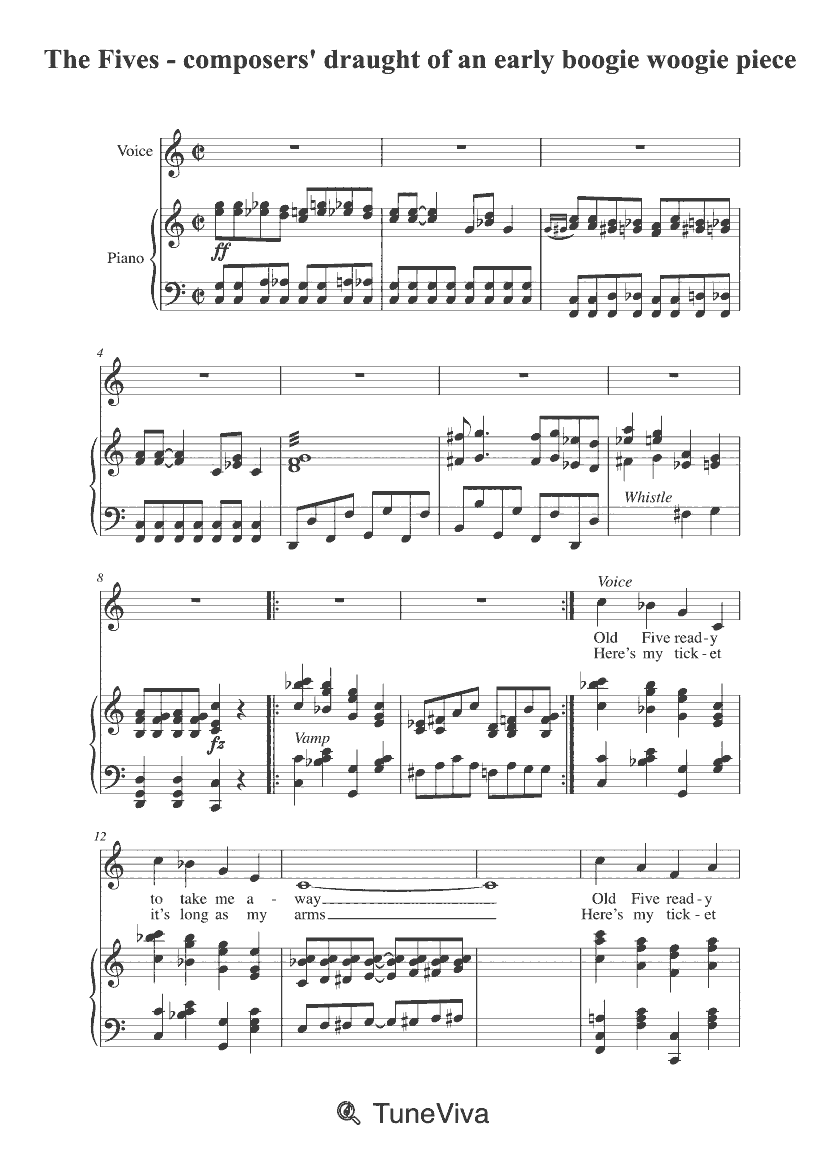
MUSIC BY Hersal Thomas and Geo. W. Thomas
Voice; Piano · 7 min 14 sec
Open score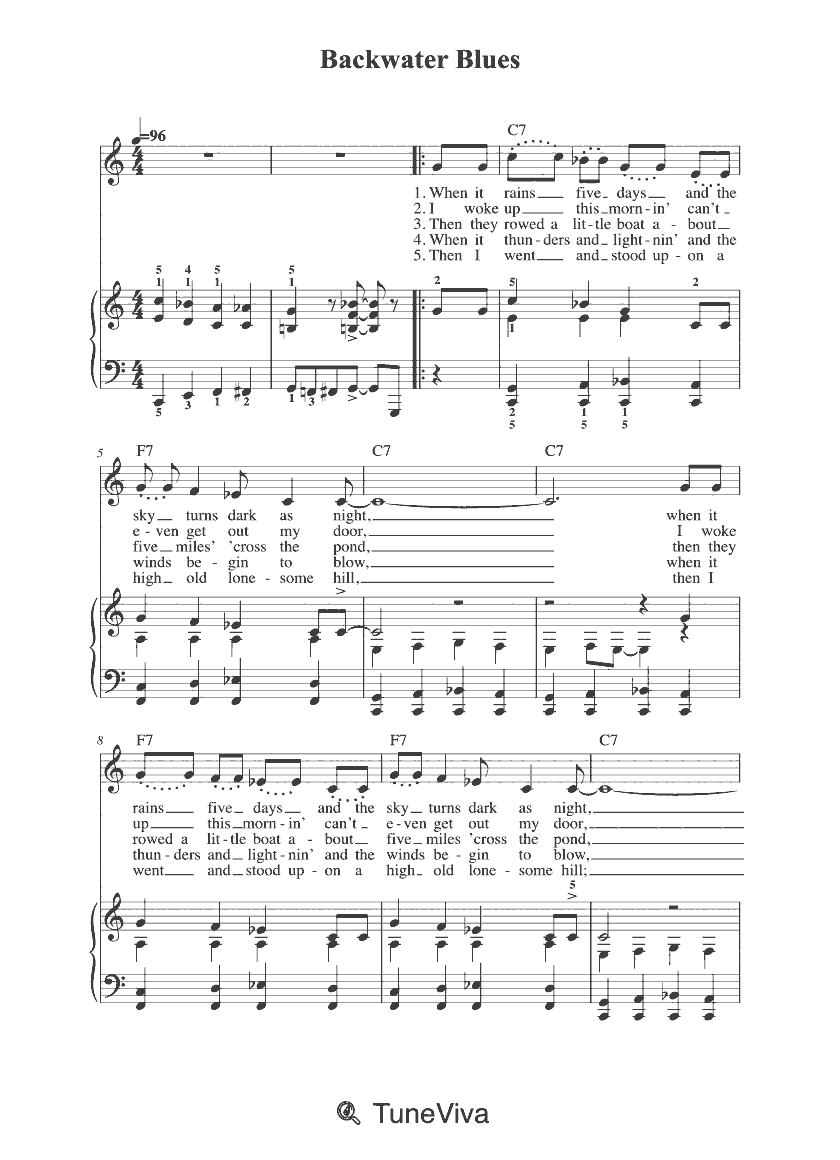
Bessie Smith Bessie Smith
Voice; Piano · 3 min 24 sec
Open score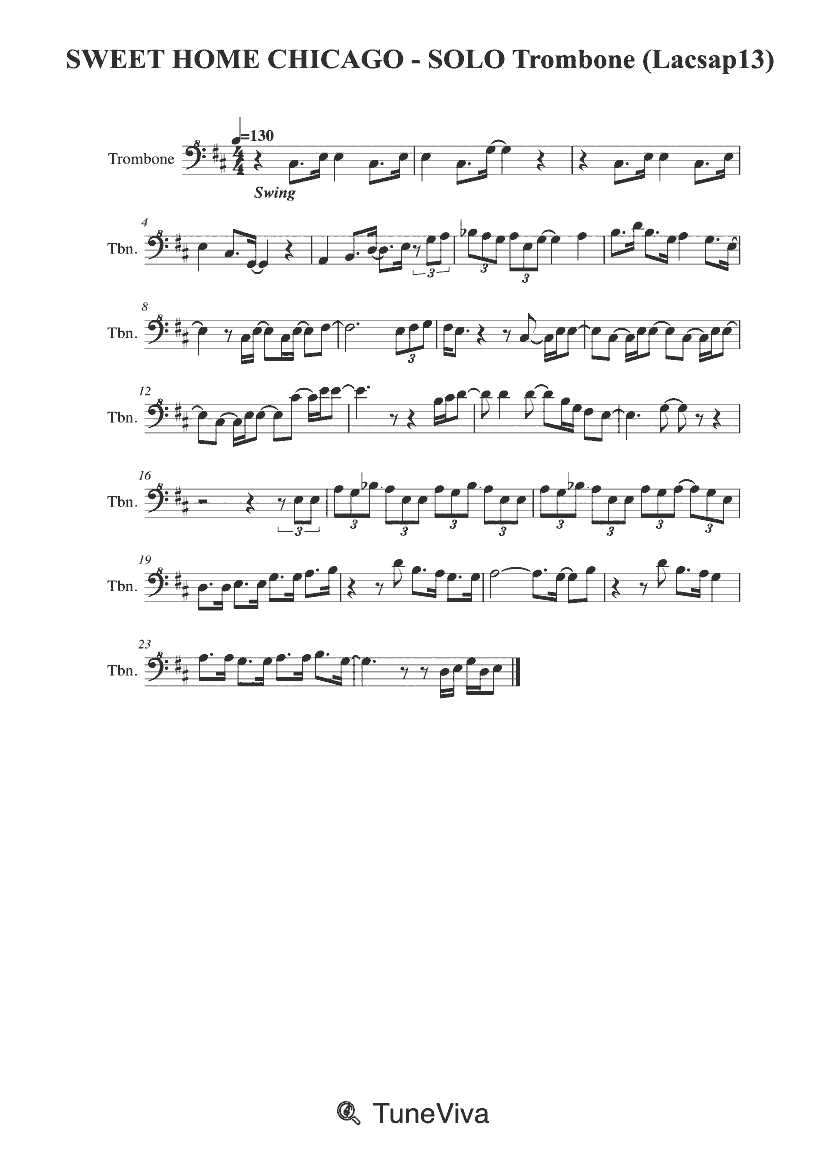
Lacsap13
Solo trombone - Tom Bones Malone
Trombone · 36 sec
Open score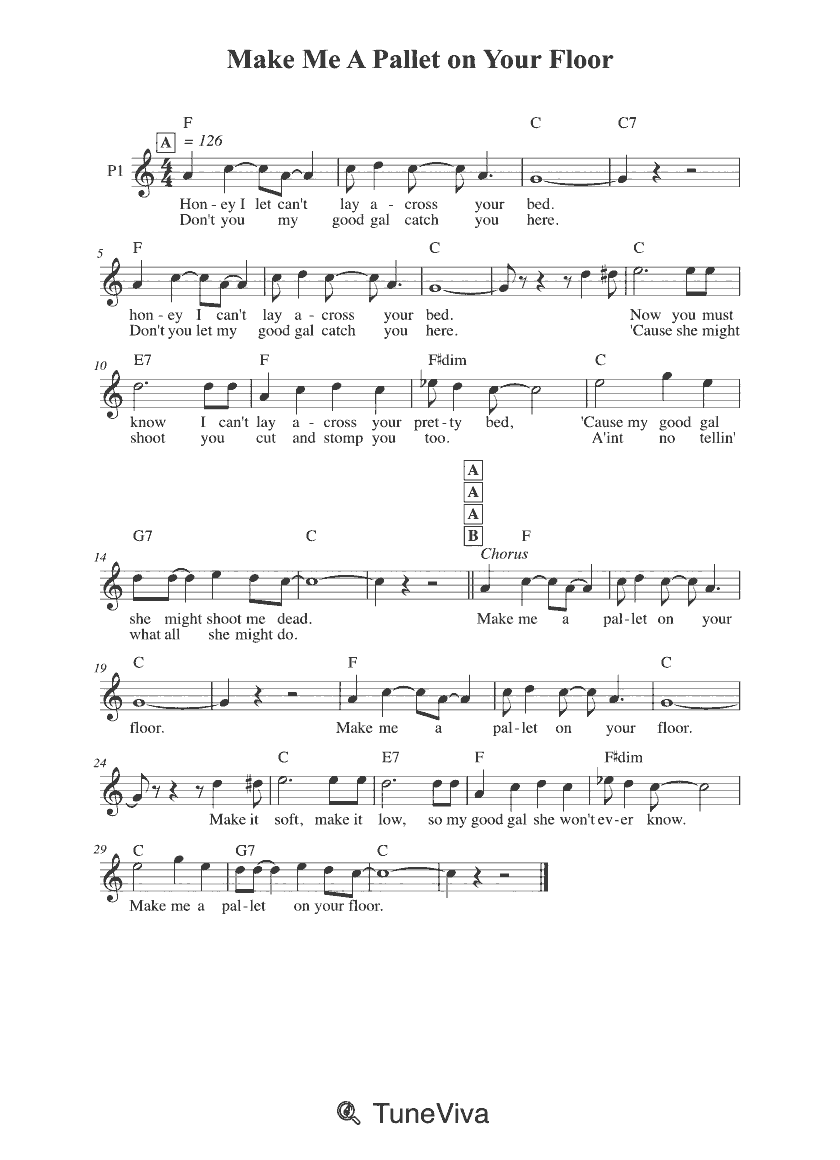
Trad.
P1 · 1 min 3 sec
Open score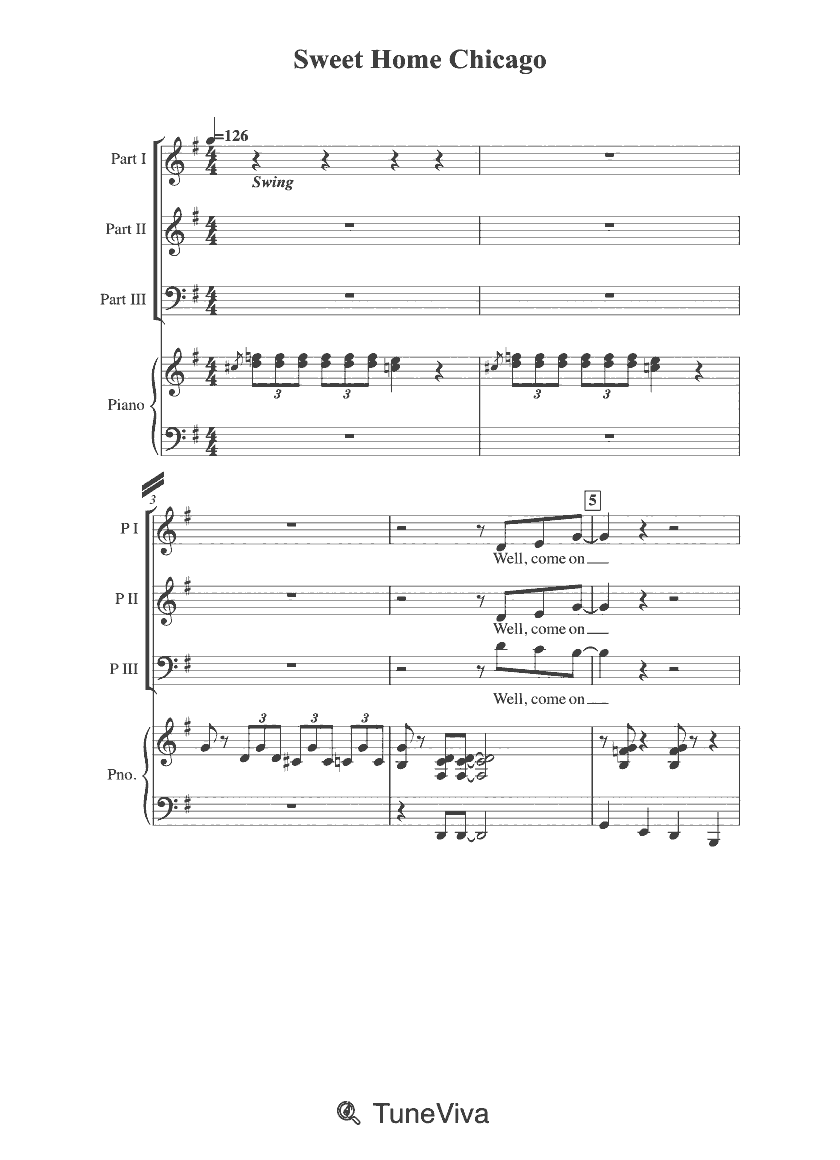
Robert Johnson
Arranged by Roger Emerson
Part I; Part II; Part III +1 parts · 2 min 34 sec
Open score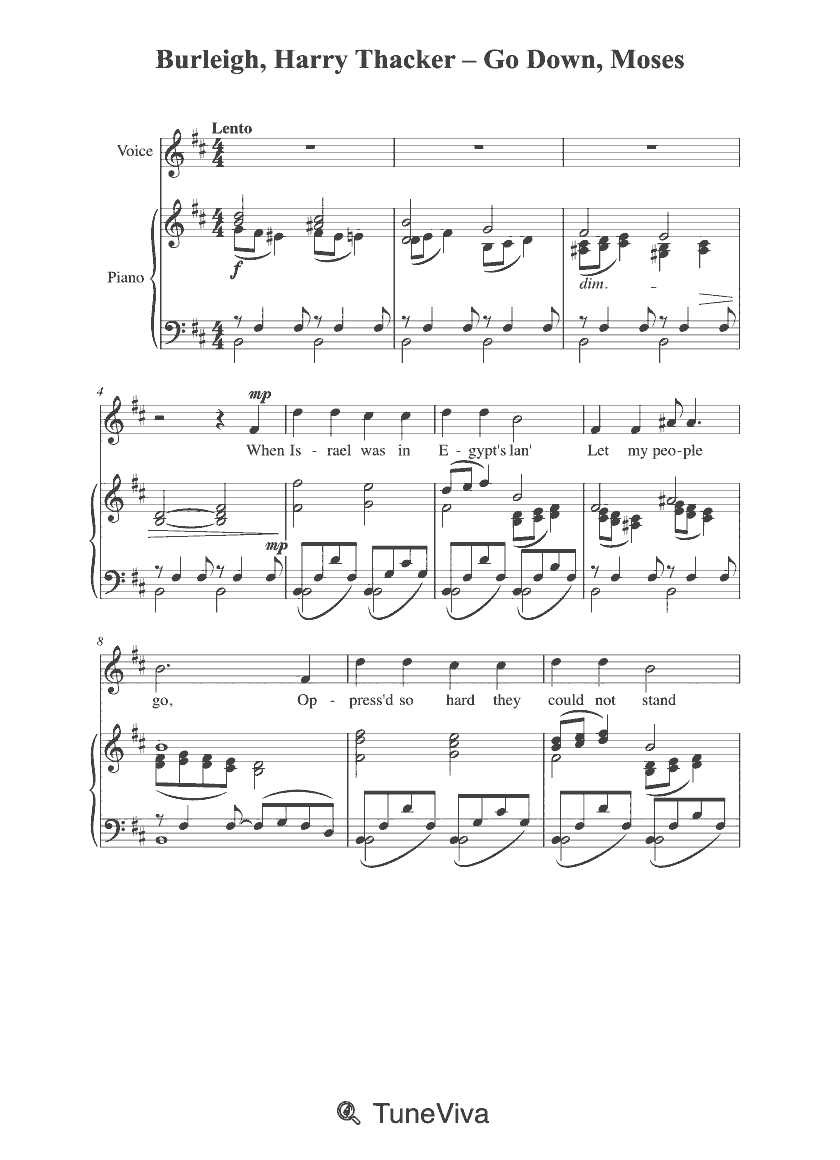
Negro Spiritualarr. Harry T. Burleigh
(Let my people go!)
Voice; Piano · Arr. Originally transcribed by Wouter Van Burik. Later transposed and proofread against for the Open Score Lieder Corpus · 2 min 50 sec
Open score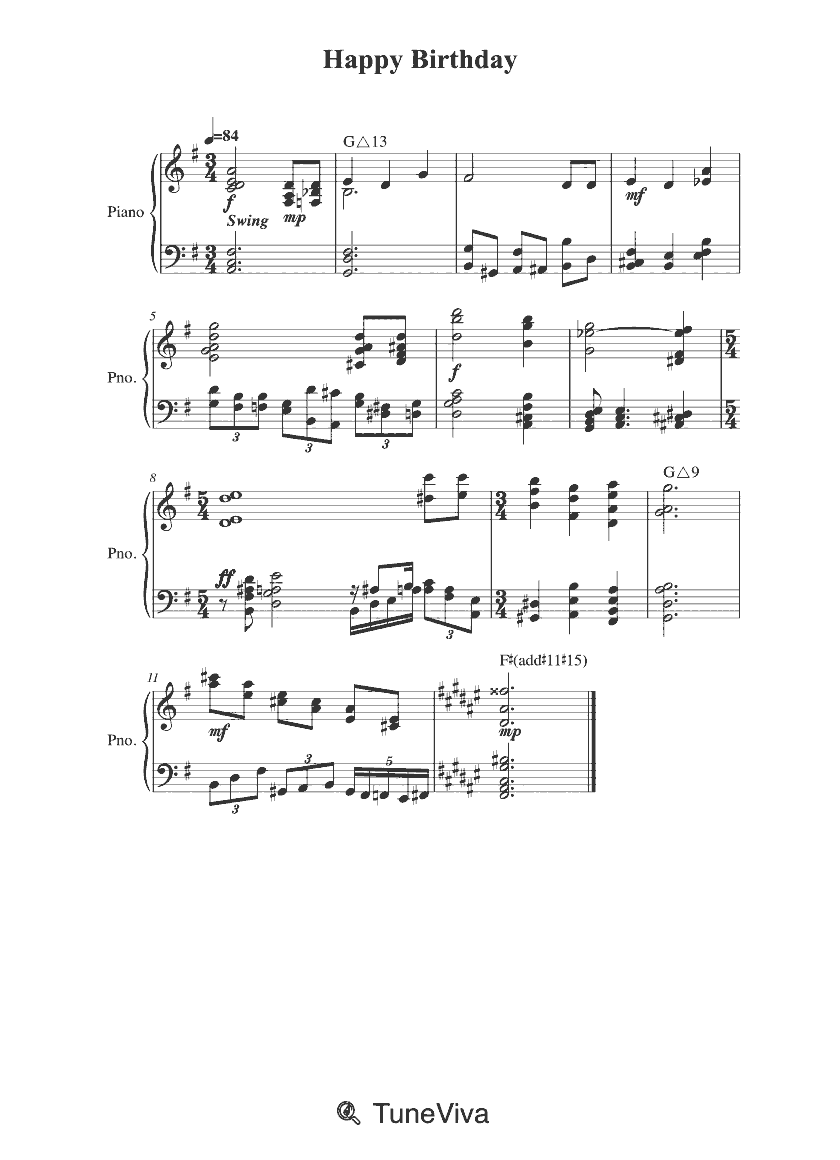
Gordon Chan
Reharm
Piano · 29 sec
Open score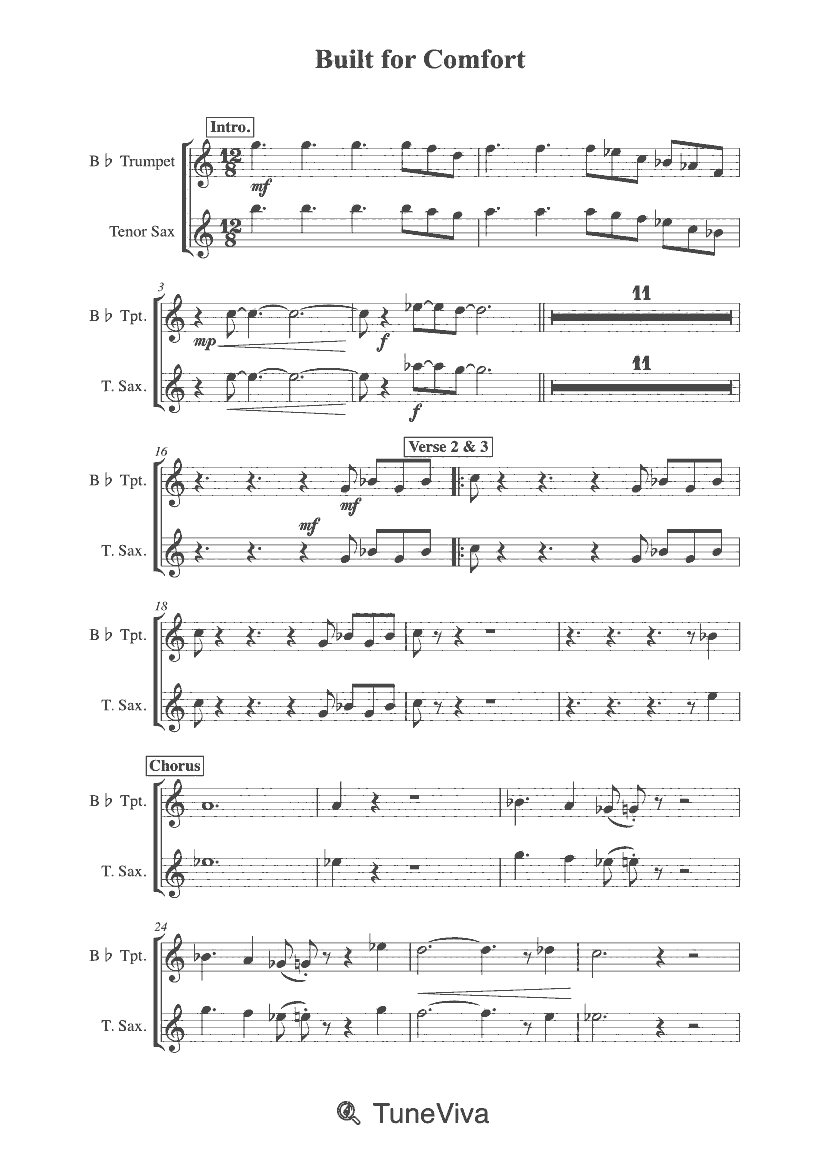
Howlin' Wolf
B♭ Trumpet; Tenor Sax · 11 min 21 sec
Open scoreIn a twelve-bar blues, listen for the final phrase that brings you to the next chorus. Count one cycle without playing, then practise the last two bars into the next downbeat. Other blues forms use different lengths, so check the actual repeats and chord changes in your score.
A vocal score with piano accompaniment serves a different purpose from a solo melody or an ensemble arrangement. Backwater Blues and The Fives include Voice and Piano; Sweet Home Chicago appears in more than one scoring. Read the part names and preview the opening page before choosing.
Tap the beat while listening, then practise a short phrase slowly. Follow any swing, shuffle or articulation markings in the arrangement. Keep the pulse steady through rests and leave space between phrases rather than rushing into the next entry.
For piano, establish the left-hand pattern before adding the melody. In a voice-and-piano score, identify the sung line and the accompaniment so that you can rehearse either part. A boogie-woogie bass pattern can demand coordination even when the melody is straightforward.
Twelve-bar blues is a common framework, but blues music does not always follow a twelve-bar pattern. Follow the actual bar lines, repeats and chord changes in the arrangement instead of assuming that every phrase has the same length.
Score parts: Voice, Piano. Catalogue duration 3 min 24 sec. Opening key signature: No sharps or flats. Opening time signature: 4/4. Opening tempo: 96 BPM.
Score parts: Voice, Piano. Catalogue duration 7 min 14 sec. Opening key signature: No sharps or flats. Opening time signature: 2/2.
Score parts: Trombone. Catalogue duration 36 sec. Opening key signature: 2 sharps. Opening time signature: 4/4. Opening tempo: 130 BPM.
Twelve-bar blues is a repeating twelve-measure chord framework, commonly built around the tonic, subdominant and dominant chords. It is a common blues form, but not every blues song uses it.
Listen to a short phrase, tap its pulse, then play the notes slowly while keeping the rhythm even. For piano, learn the accompaniment separately before combining it with the melody. Increase the tempo once the phrase feels steady.
No. Follow the rhythm markings and style of the particular arrangement. Swing or shuffle should not be added automatically to every score labelled blues.
Backwater Blues and The Fives both include Voice and Piano parts in the TuneViva catalogue. Preview the score to locate the vocal melody and the accompaniment before rehearsing.
Yes. The catalogue includes instrumental arrangements such as Sweet Home Chicago for trombone. Choose a version written for your instrument, checking its range and whether the notation is transposed before playing.