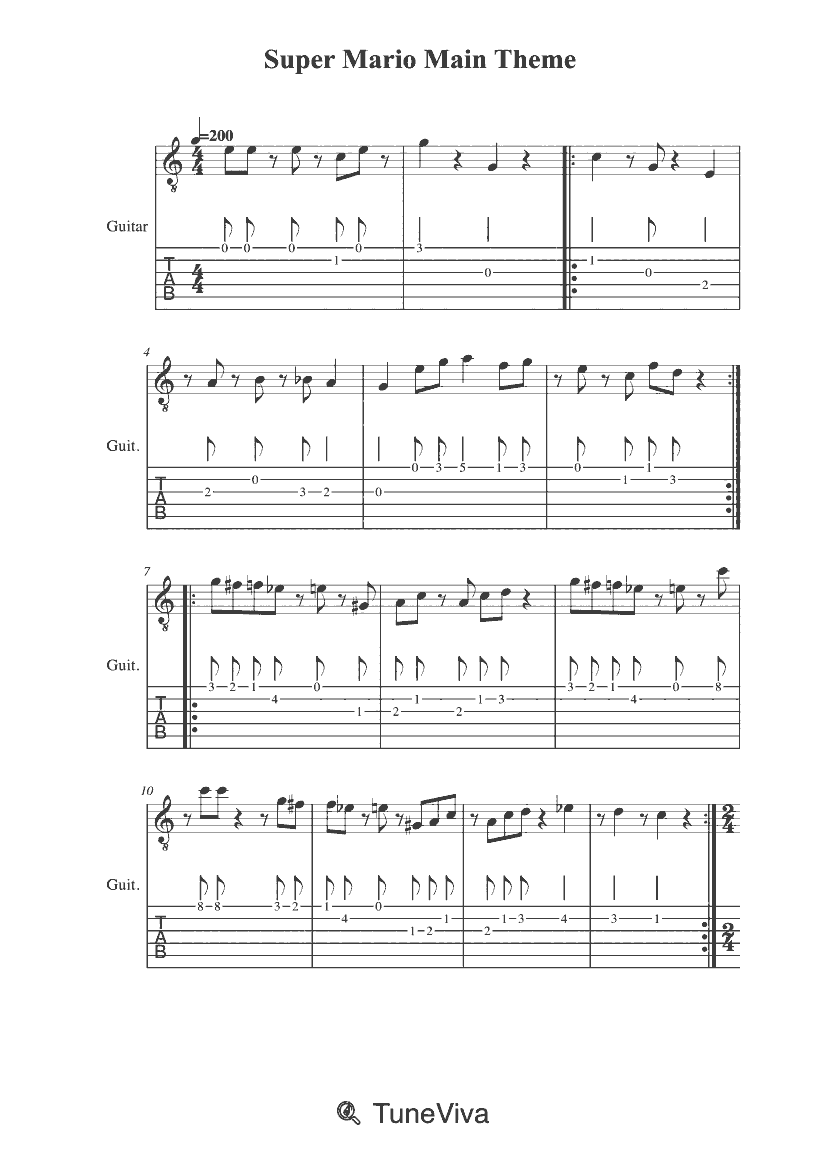
Super Mario Main Theme
Koji Kondo
Follow the score, hear the music, then make it your own.
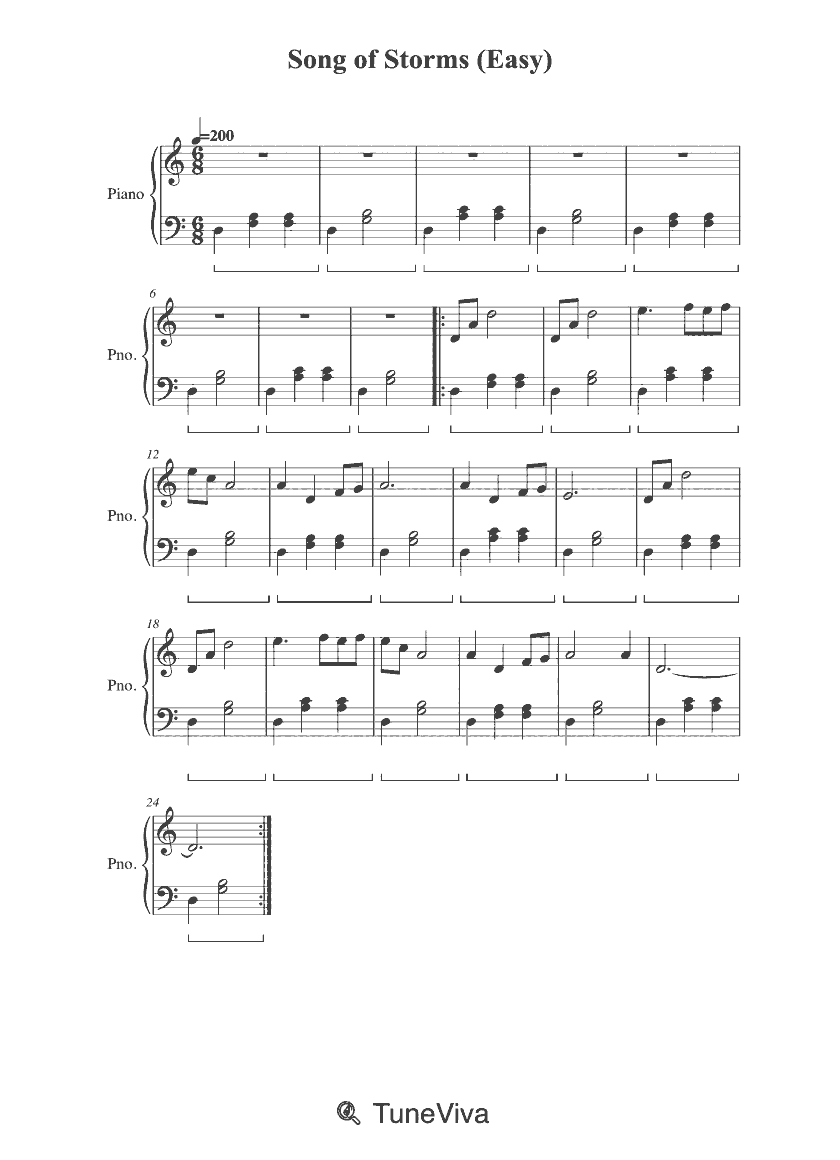
Song of Storms is the tune the windmill man teaches you in The Legend of Zelda: Ocarina of Time, composed by Koji Kondo for the 1998 Nintendo classic, and it has been hummed by players ever since. This piano edition carries the title's own word Easy on its sleeve, and the notation earns it: twenty-four bars of 6/8 in C major, the famous round written out in quarters and eighths with pedal marks under every bar and a written repeat to double the pass. The playback runs about nineteen seconds, so looping it is effortless.
Score parts: Piano. Opening key signature: No sharps or flats. Opening time signature: 6/8. Opening tempo: 200 BPM. Estimated playback time: 19 sec. Listen while following the notation, adjust playback speed, or open this score in practice mode.
In the game, playing this melody on the ocarina summons rain on cue, and the windmill caretaker claims he learned it from a boy seven years in the future, one of the story's neat time loops. Kondo wrote it as a circular tune, a melody that rolls back onto itself like the windmill it lives in, and the piano edition keeps that design: the strain is short, the repeat is built in, and the figures overlap between the hands so the round's logic survives translation. The title's word Easy is the edition's own claim, and on this evidence it is a fair one.
The signature is no sharps or flats, the metre is 6/8, and the tempo is marked at a brisk 200 to the quarter. The notation mixes quarter and half notes with twenty-four eighths, and pedal marks appear under every one of the twenty-four bars, sustaining the harmonies the way the game's drone does. Thirty-six chord notes thicken the texture without crowding it, and a single forward-and-backward repeat doubles the whole. The range runs from D3 to F5, comfortably inside the stave, and nothing exceeds the ordinary shapes of piano writing.
Play the melody line alone first, singing the game's three-note motif in your head, until the circular phrasing feels natural. Then add the supporting line, and only then the pedal, taking a new pedal with each bar as marked and clearing it as the next arrives so the round does not blur. The repeat is an invitation to loop until the tune sits under the hands without looking. If you know the ocarina version, notice how the piano's chord tones replace the drone; matching that continuity is the edition's whole secret. The nineteen-second playback makes an ideal loop while you work.
The Legend of Zelda: Ocarina of Time, the 1998 Nintendo title with music by Koji Kondo. In the game, playing the tune on the ocarina summons rain, and the windmill man claims a boy from the future taught it to him.
The word Easy is the edition's own description, printed in the title. The notation backs the claim with a modest range, plain rhythms, a built-in repeat and pedal marks under every bar.
A forward-and-backward pair doubles the twenty-four bars, and the tune's circular design means the join is seamless. Loop it as many times as you like; the playback gives one full pass in nineteen seconds.
A pedal mark under each bar sustains the harmonies the way the game's drone does. Clear each as the next arrives, or the round's clarity suffers.
Koji Kondo