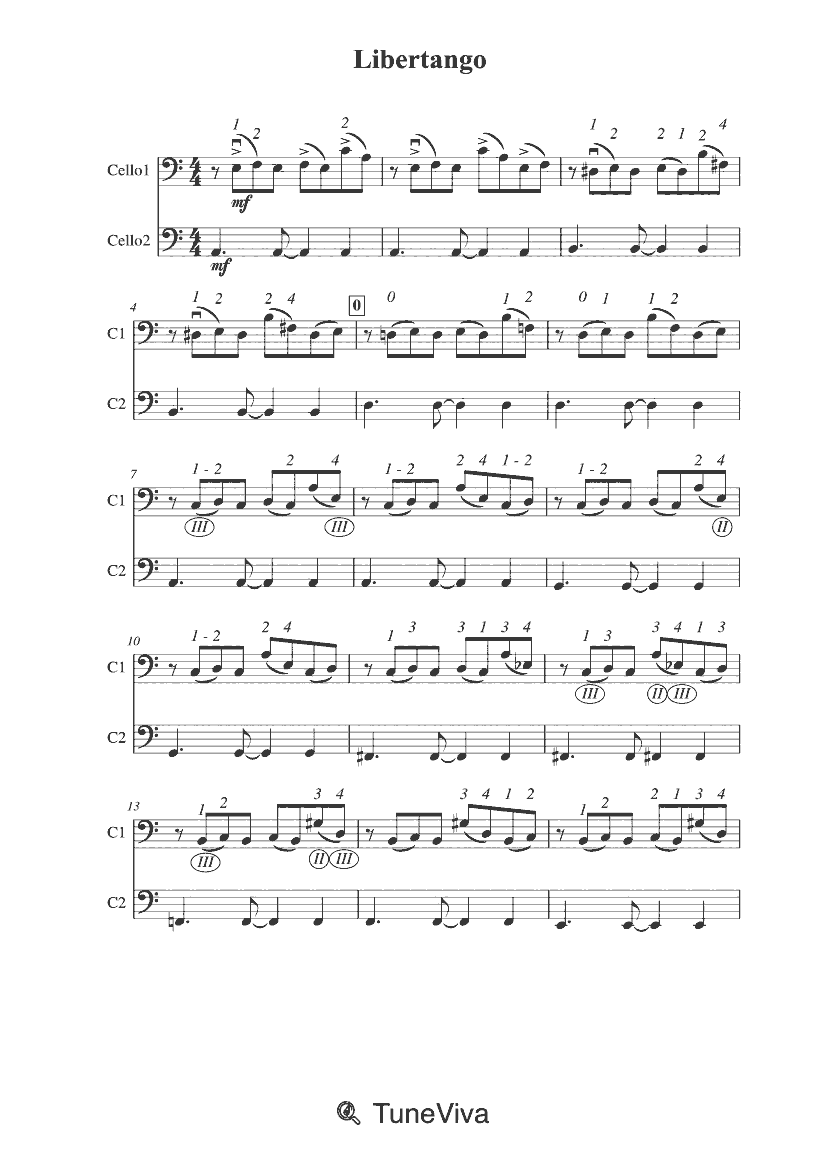
Libertango
Astor Piazzolla
Follow the score, hear the music, then make it your own.
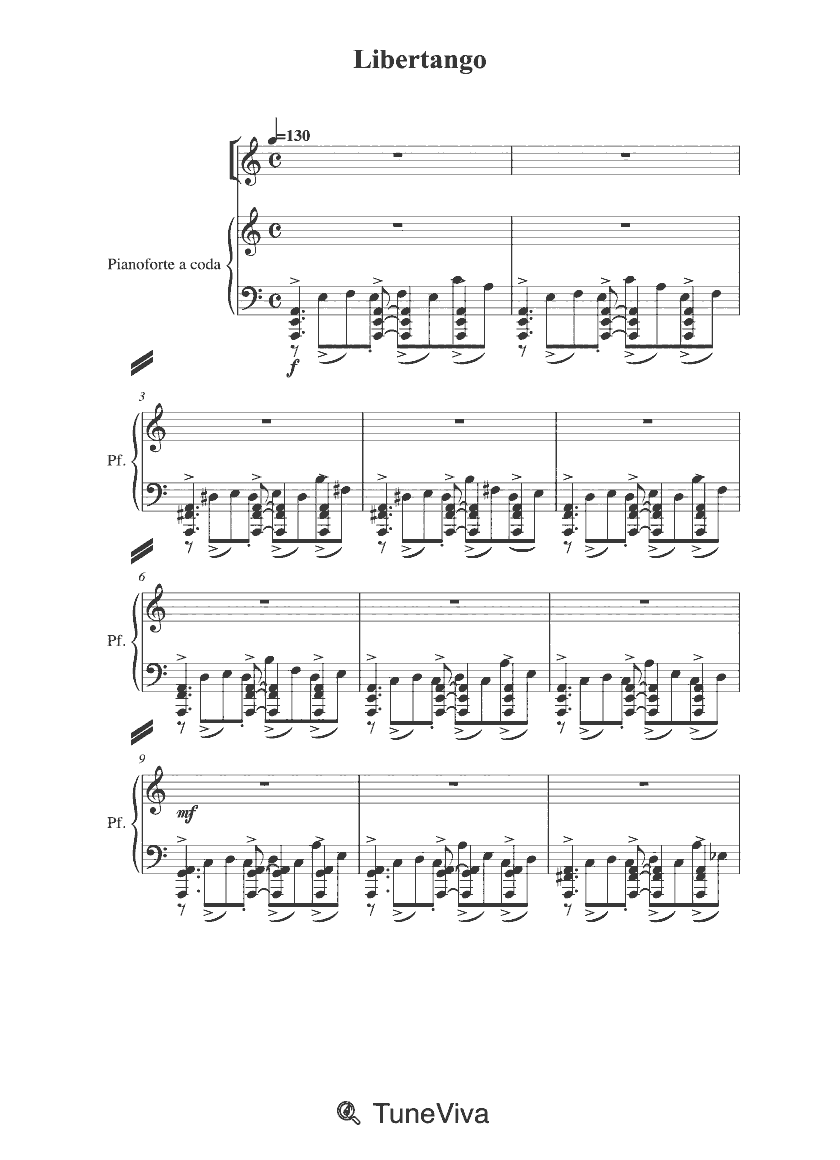
Libertango is the piece where Astor Piazzolla announced his nuevo tango to Europe: recorded in Milan in 1974, its name fusing libertad and tango, and its three-note ostinato has since travelled everywhere from concert halls to film. This edition sets it as a duo for violin and grand piano, the piano carrying the famous ostinato grind while the violin plays the long melody over it, at a driving 130 beats a minute.
Score parts: Violino; Pianoforte a coda. Opening key signature: No sharps or flats. Opening time signature: 4/4. Opening tempo: 130 BPM. Estimated playback time: 4 min 8 sec. Listen while following the notation, adjust playback speed, or open this score in practice mode.
Piazzolla had spent years fighting the tango establishment over his reforms, and Libertango, with its portmanteau title, was his declaration that the music had moved on: the tango's edge with the pulse of popular music. The melody rides a repeated bass figure that never stops, the accents strike against the beat, and the whole thing runs on momentum. Film and dance floors adopted it quickly, and it remains his most recognised tune after Adiós Nonino.
Ninety-seven bars in 4/4, no key signature, 130 beats a minute. The piano carries nearly two thousand notes against the violin's four hundred, and the notation is dense with attack markings: five hundred and ninety accents, a hundred and twenty-four staccatos, thirty-one tenutos and a pair of doits, the slide effects that give the line its bark. The dynamics climb from mezzo piano to fortissimo in steps as the piece builds.
Piazzolla's own portmanteau of libertad, freedom, and tango, announcing his break from traditional tango when the piece was recorded in Milan in 1974.
Violin and grand piano, with the piano carrying the relentless ostinato and the violin the melody above it.
Nearly six hundred accent marks shape the piece; in Piazzolla's style the dissonant attacks against the pulse are the music's energy source.
About four and a half minutes of playback at the marked 130 beats a minute across ninety-seven bars.
Astor Piazzolla