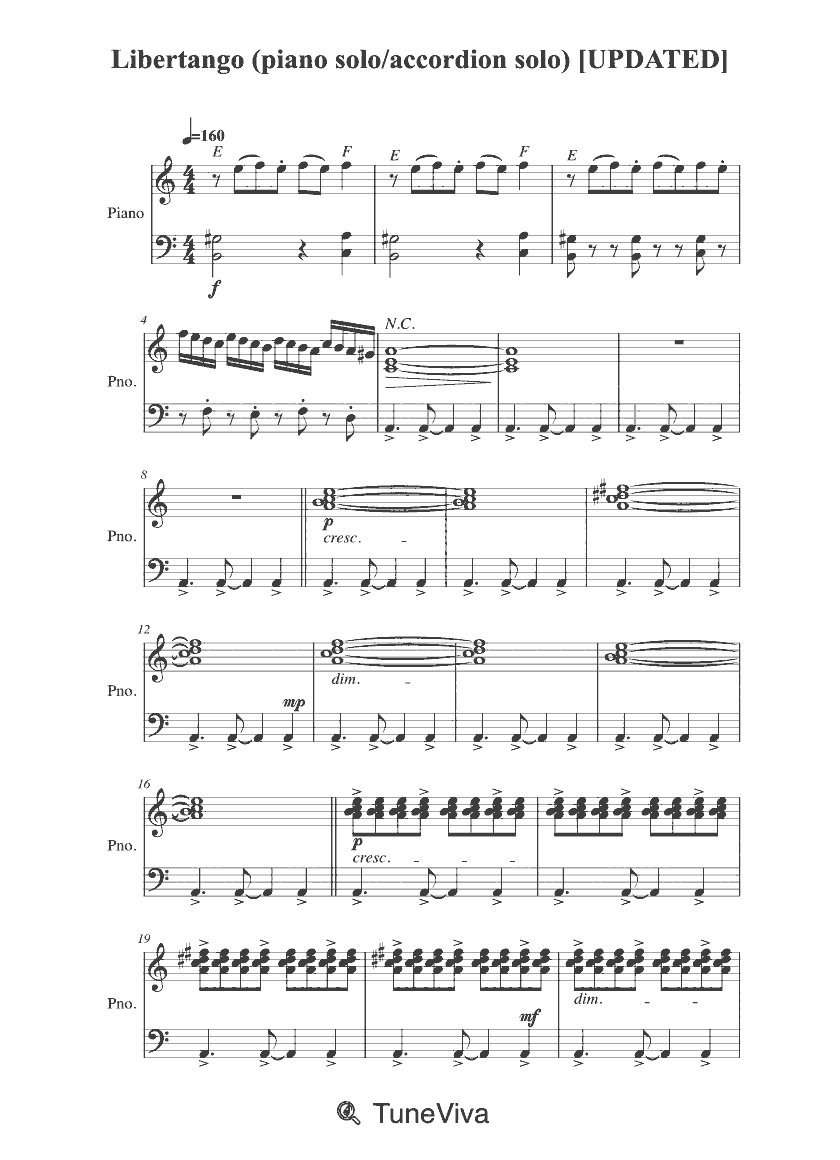
Libertango (piano solo/accordion solo) [UPDATED]
Astor Piazolla
Piano · 5 min 37 sec
Open scoreWorld music sheet music on TuneViva is a broad, single-label selection rather than a survey of one tradition. The featured scores show that breadth through contrasting instrumentations: A. C. Jobim's Wave is listed for tenor saxophone, Carlos Gardel's Por Una Cabeza for violin and cello, and Astor Piazzolla's Libertango with piano as its score part, while the title also mentions accordion solo. Use the named parts, opening keys, time signatures and tempo to judge whether a particular score suits your instrument; the World music heading alone does not establish difficulty, original instrumentation or edition status.
Scores 1–20 of 162
Astor Piazolla
Piano · 5 min 37 sec
Open score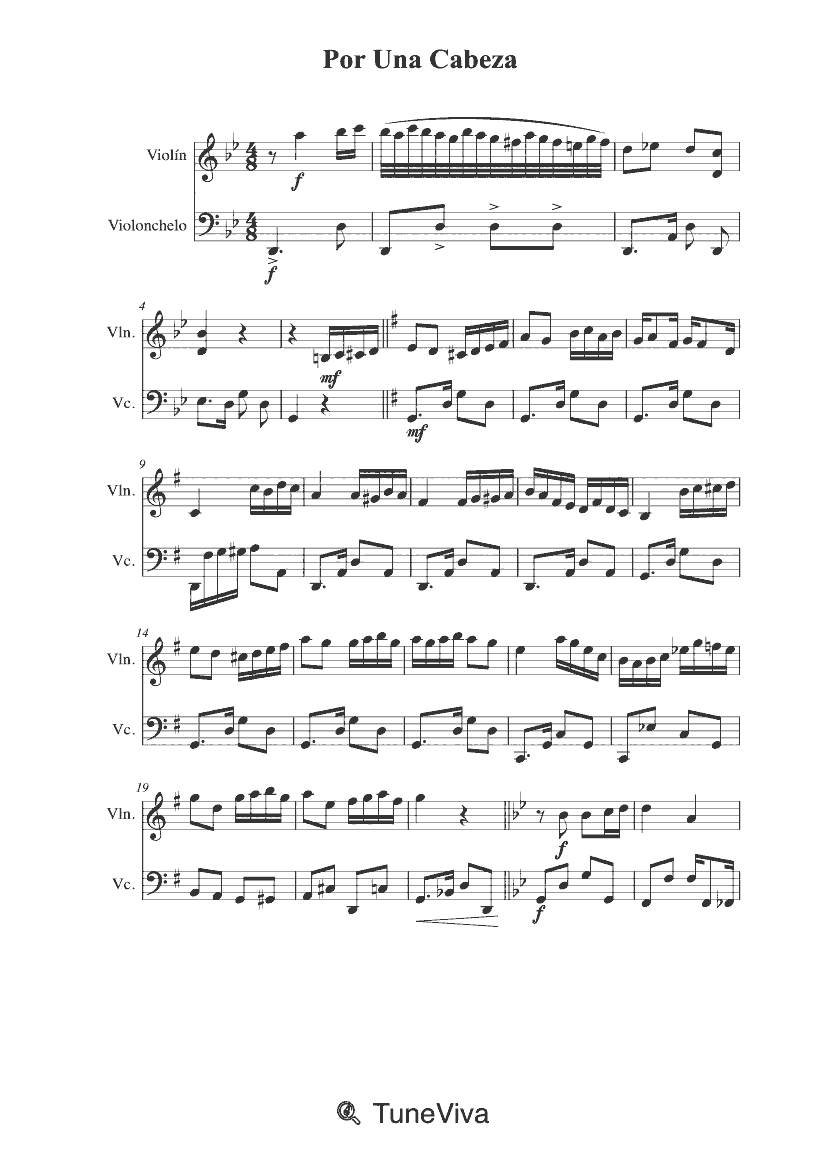
Carlos Gardel
Tango
Violín; Violonchelo · 34 sec
Open score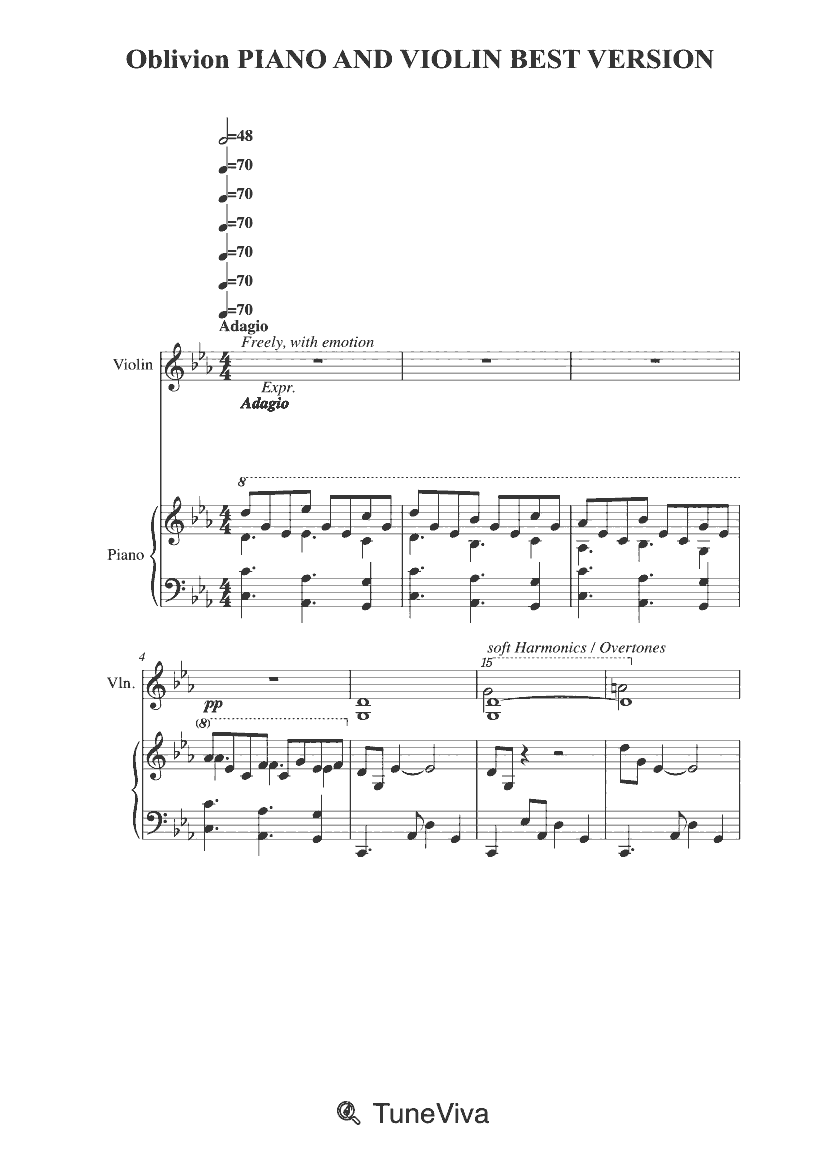
ASTOR PIAZZOLLAarr. Bruce Xu
For Solo Violin and Piano
Violin; Piano · 3 min 17 sec
Open score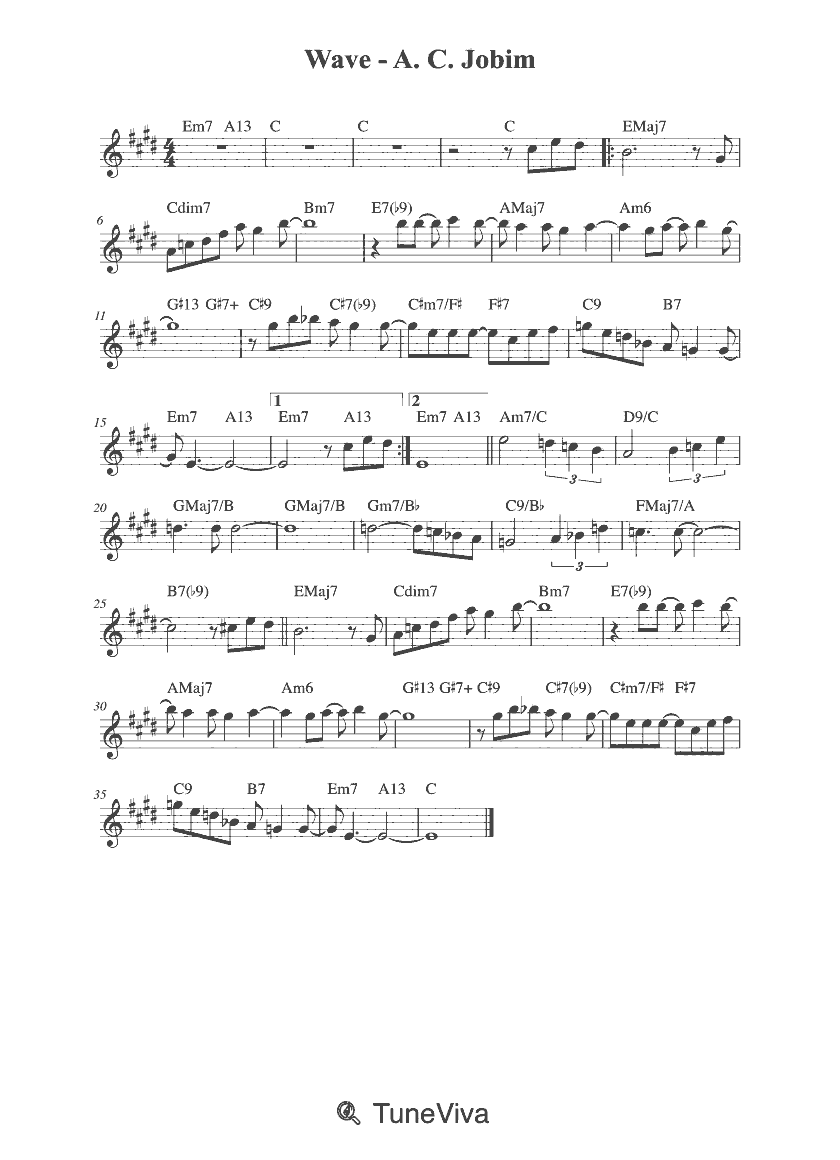
A.C.Jobim
Tenor Saxophone · 1 min 26 sec
Open score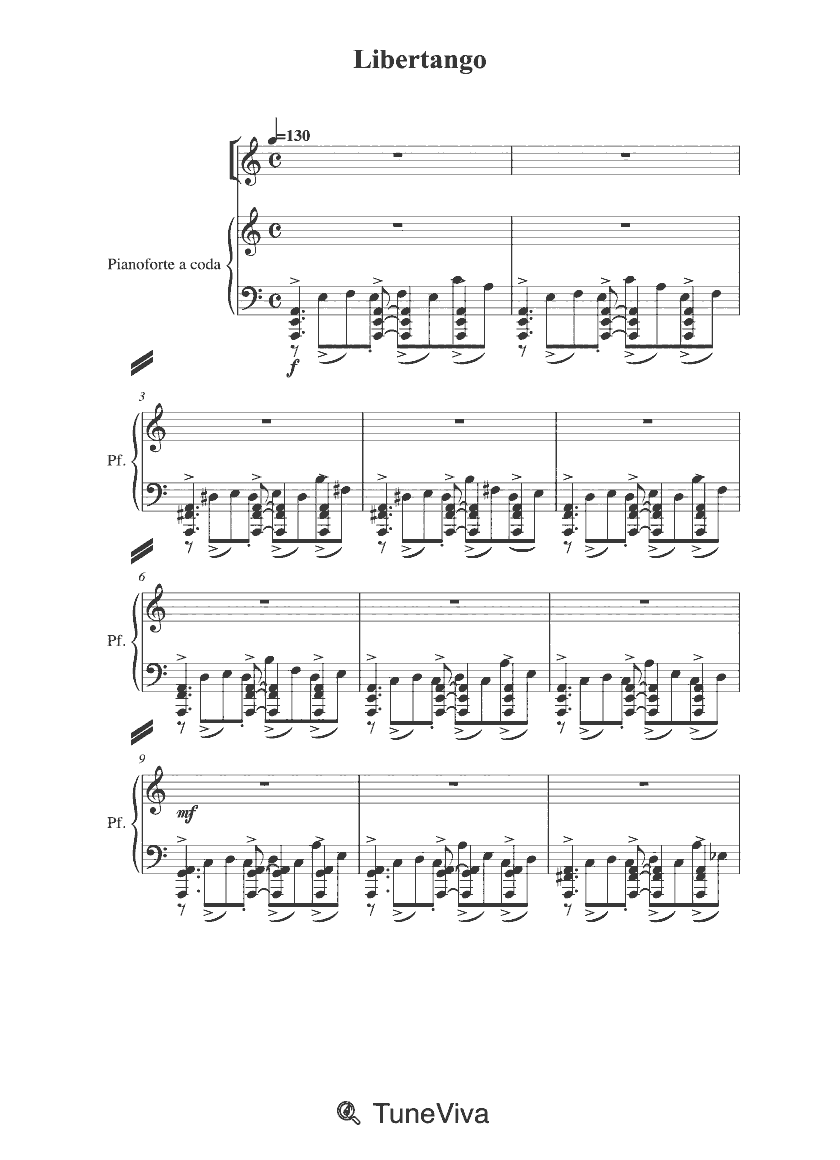
Astor Piazzolla
Violino; Pianoforte a coda · 4 min 8 sec
Open score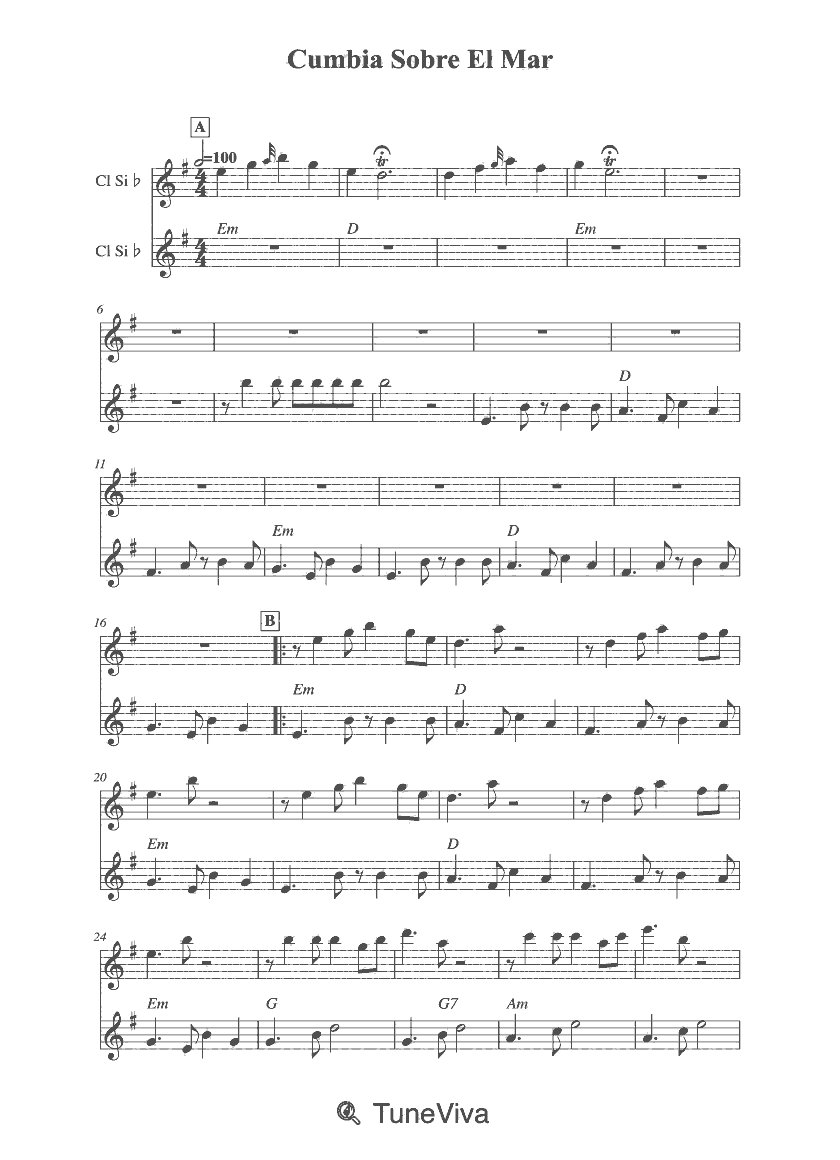
????????
Cl Si♭ · 1 min 14 sec
Open score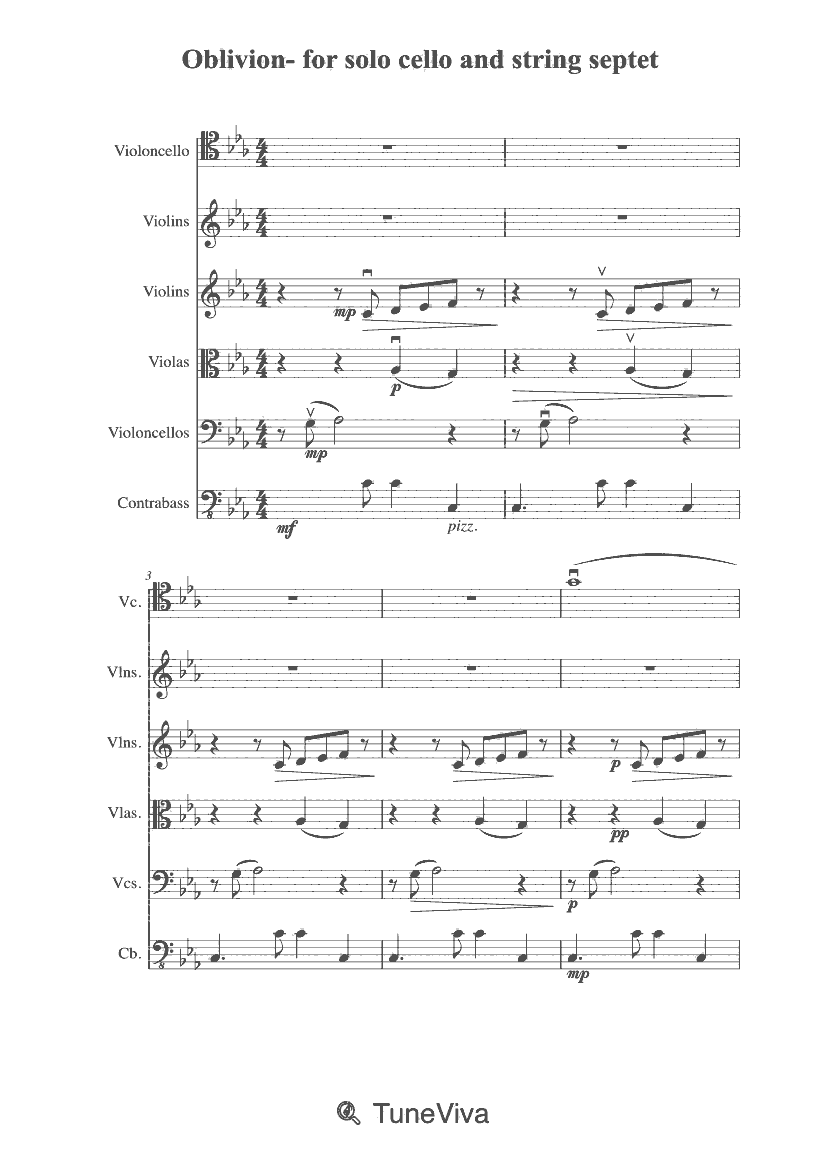
Astor Piazzolla (1921-1992) Arr. Luka Stefanovic
Arranged for solo cello and string septet
Violoncello; Violins; Violas +2 parts · 2 min 22 sec
Open score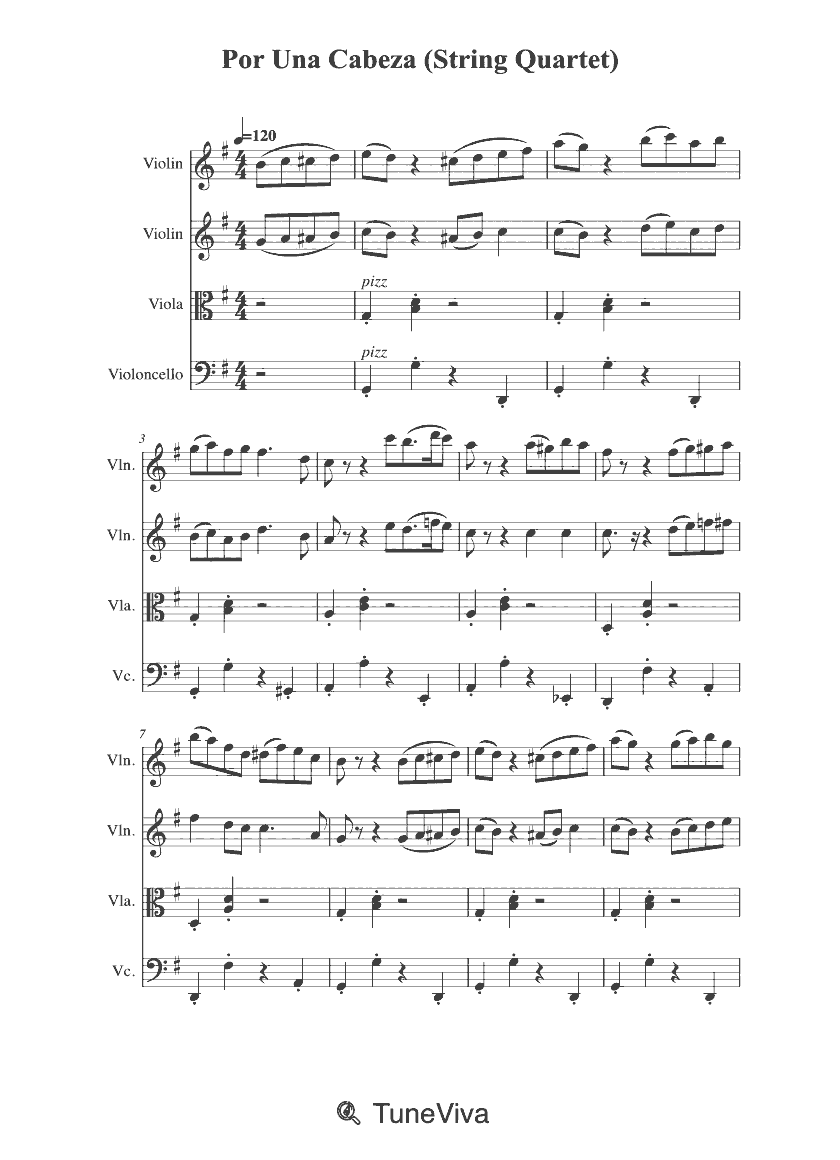
Carlos GardelArranged by Michael Tan
For String Quartet
Violin; Viola; Violoncello · 2 min 9 sec
Open score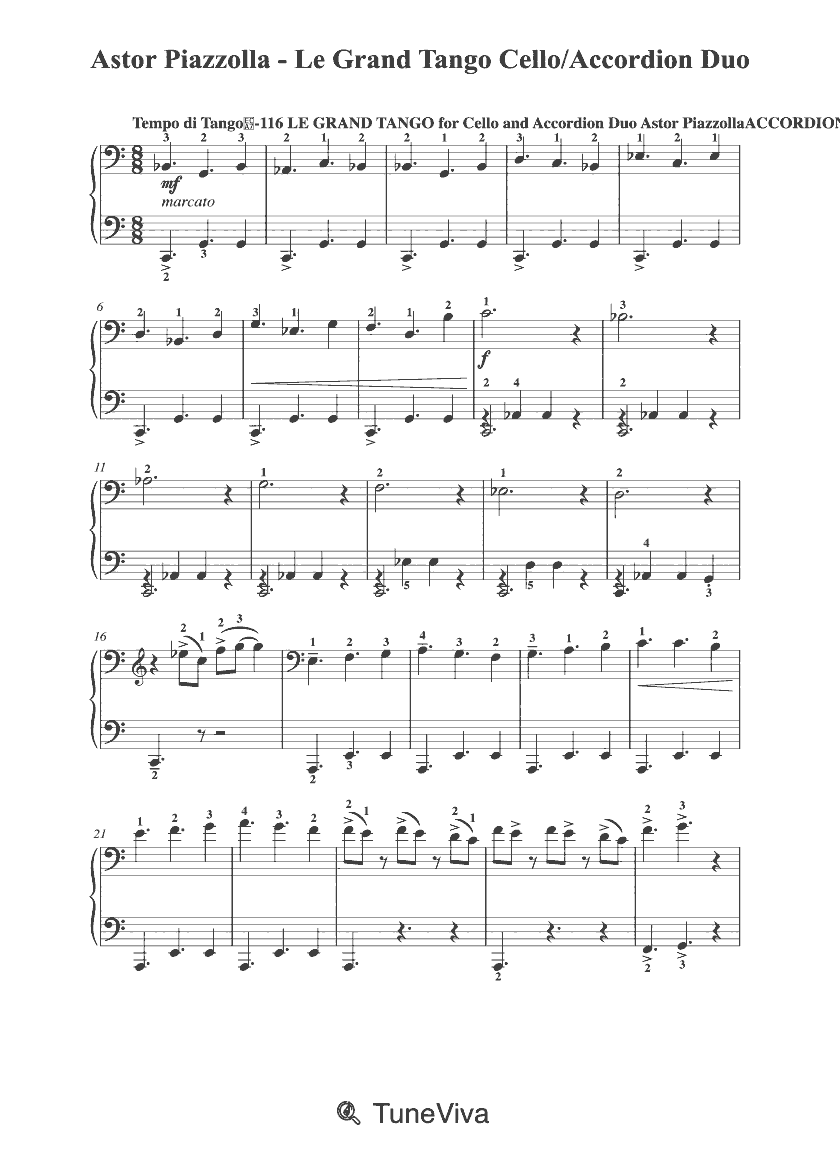
Astor Piazzolla
Piano · 10 min 6 sec
Open score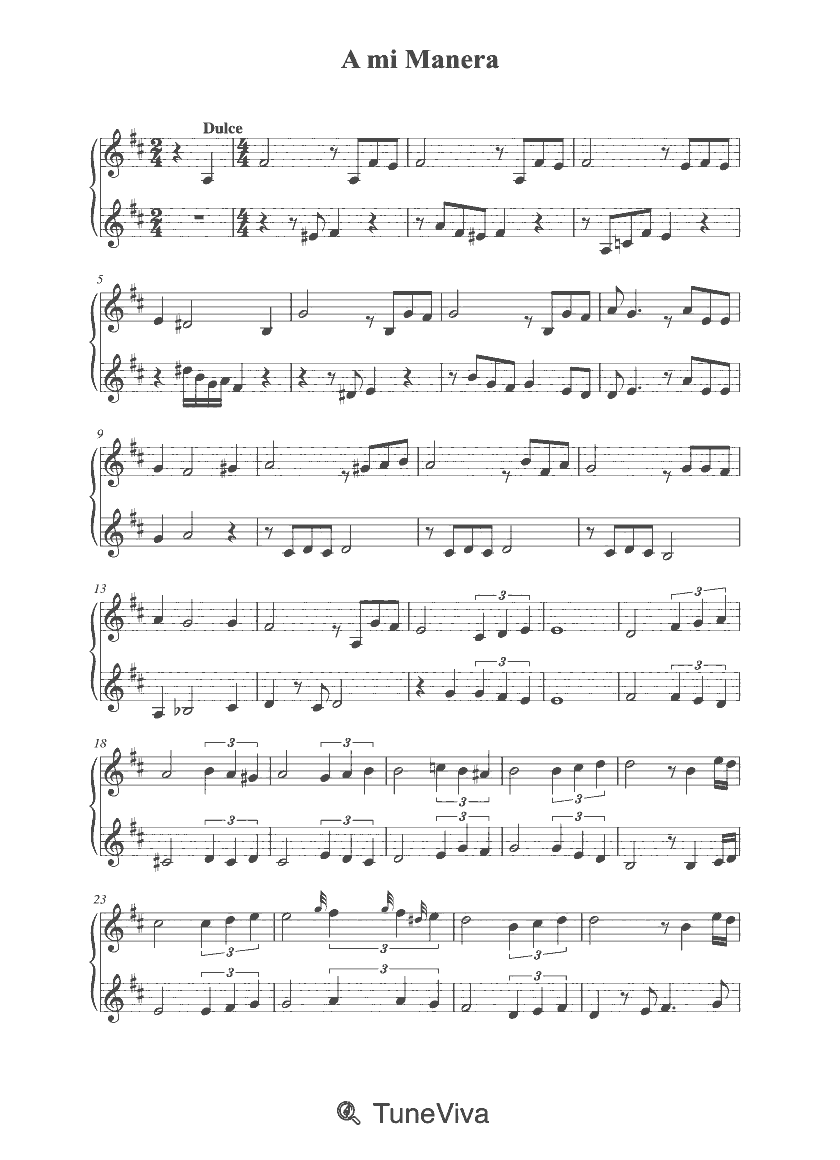
J.L. Nieto
Piano · 1 min 26 sec
Open score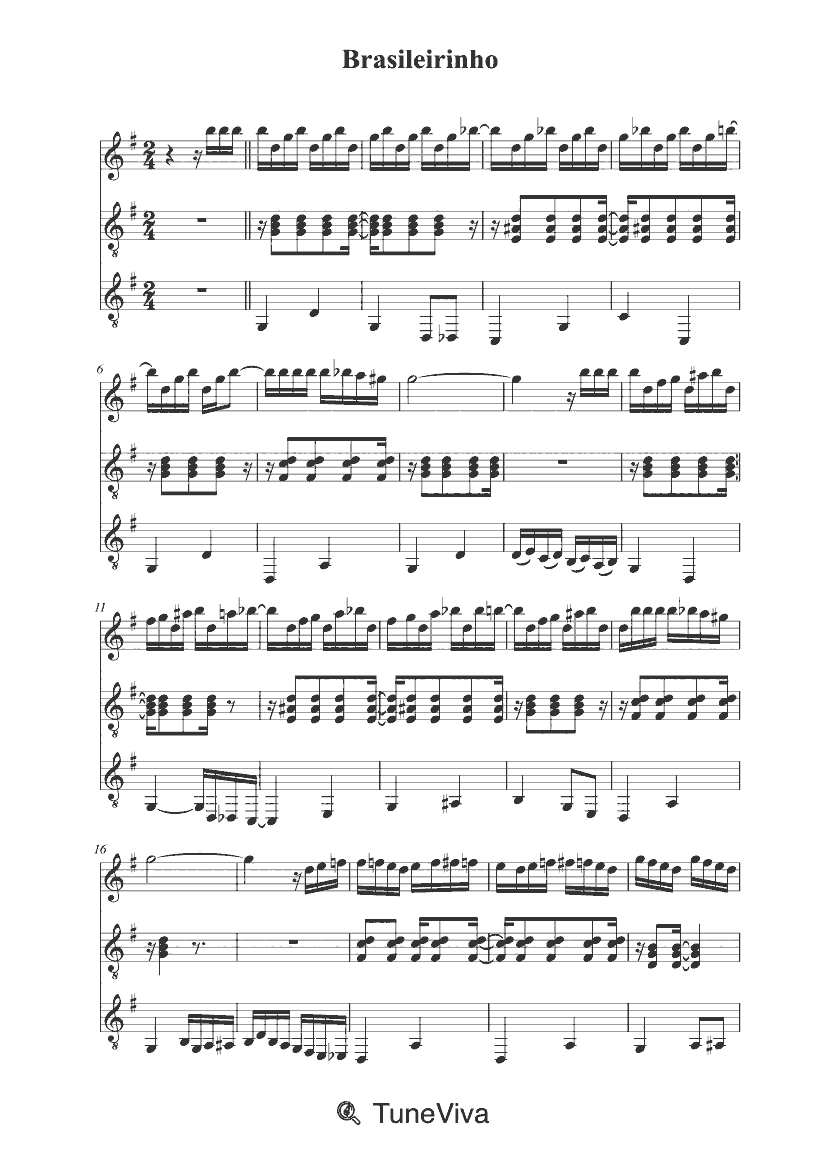
Waldir Azevedo
Steel string Guitar; Guitar · 1 min 57 sec
Open score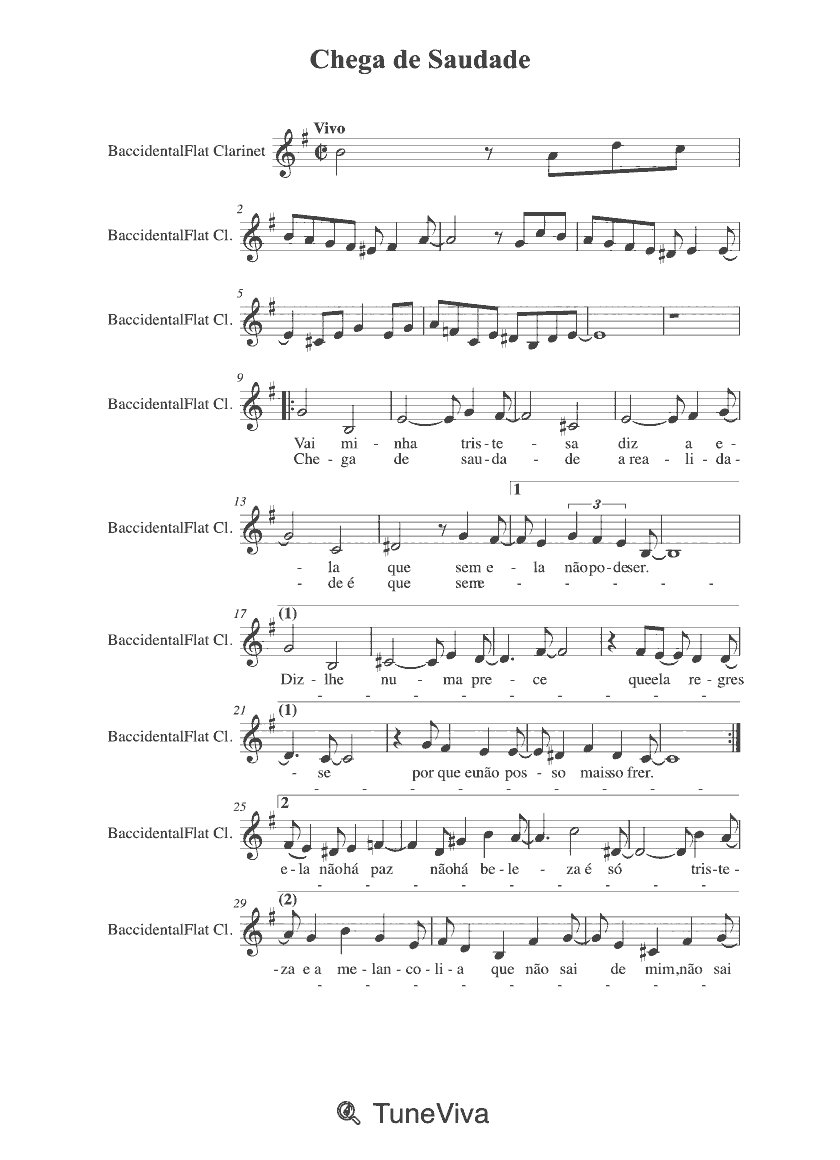
Tom jobim e Vinicius de Moraes
B♭ Clarinet · 2 min 14 sec
Open score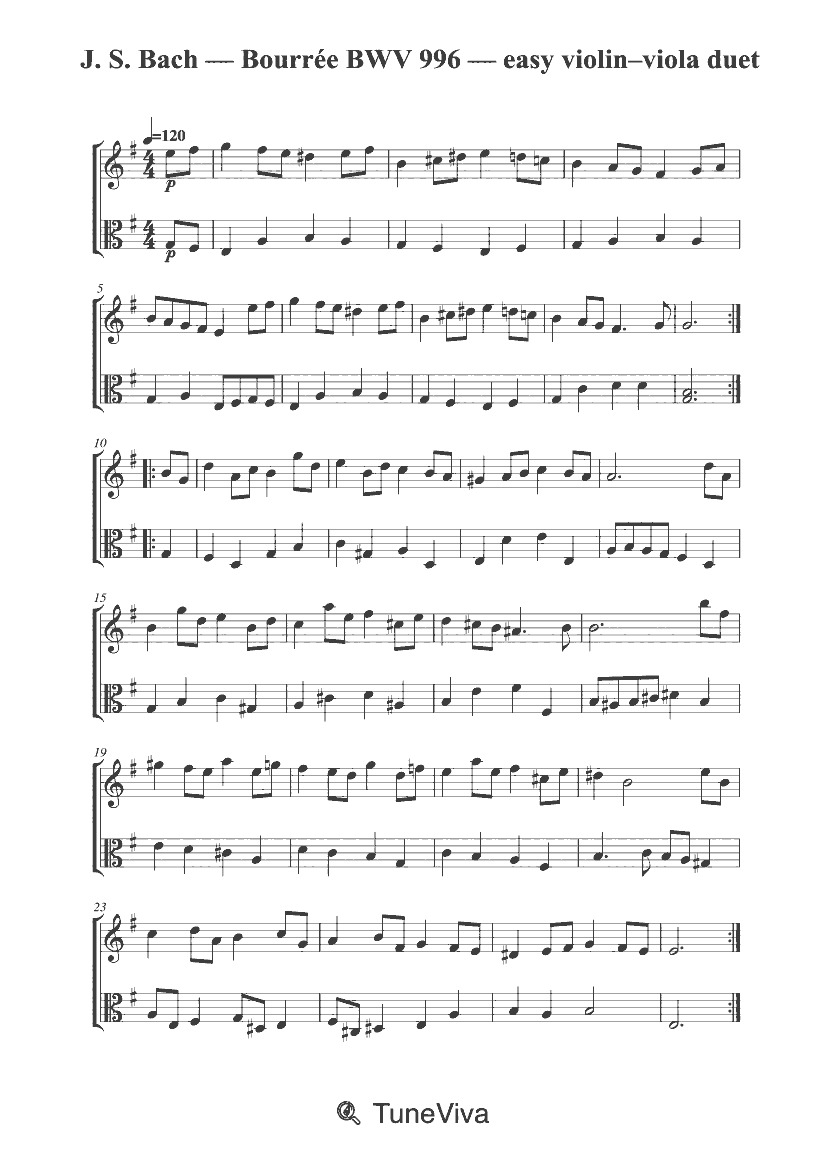
Johann Sebastian Bach
Arrangement für Violine mit Violavon Alexander Jewstügow
1 min 36 sec
Open score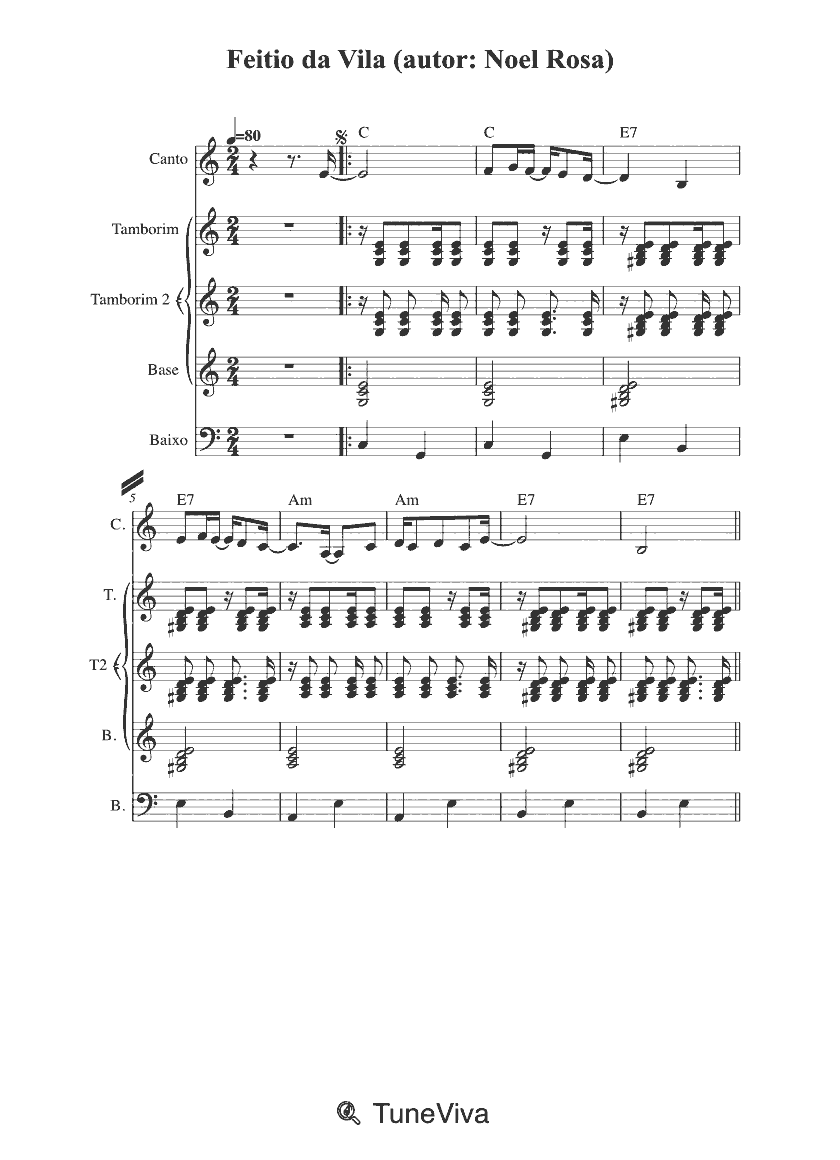
Noel Rosa
Canto; Tamborim; Tamborim 2 +2 parts · 2 min 18 sec
Open score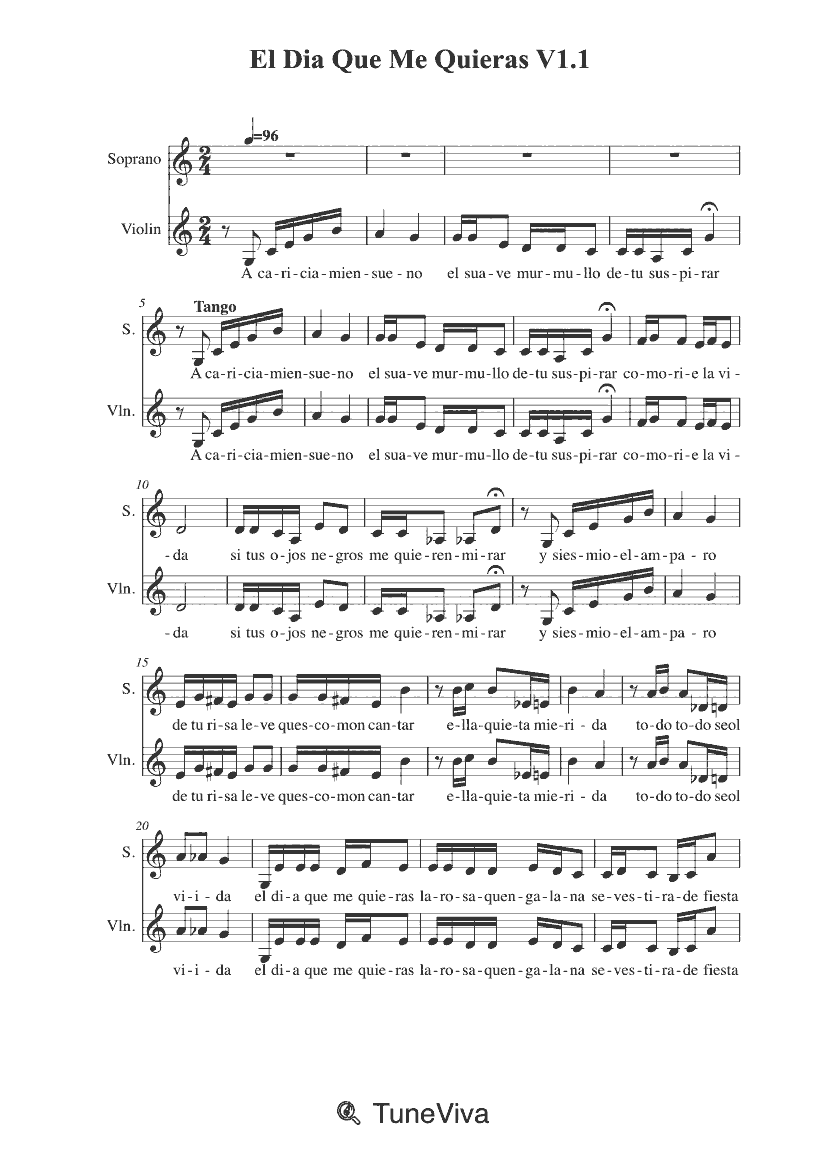
Carlos Gardel
Soprano; Violin · 1 min 0 sec
Open score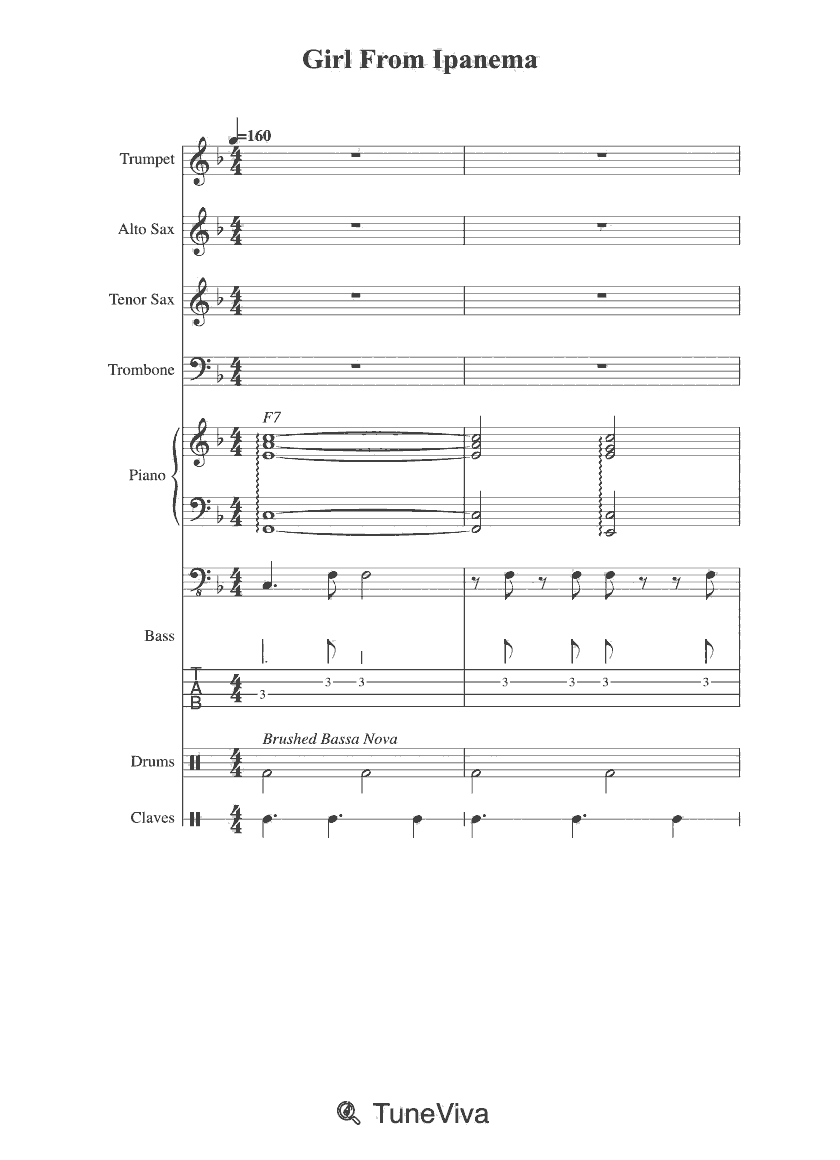
arr Noah Zahm
Trumpet; Alto Sax; Tenor Sax +5 parts · 1 min 40 sec
Open score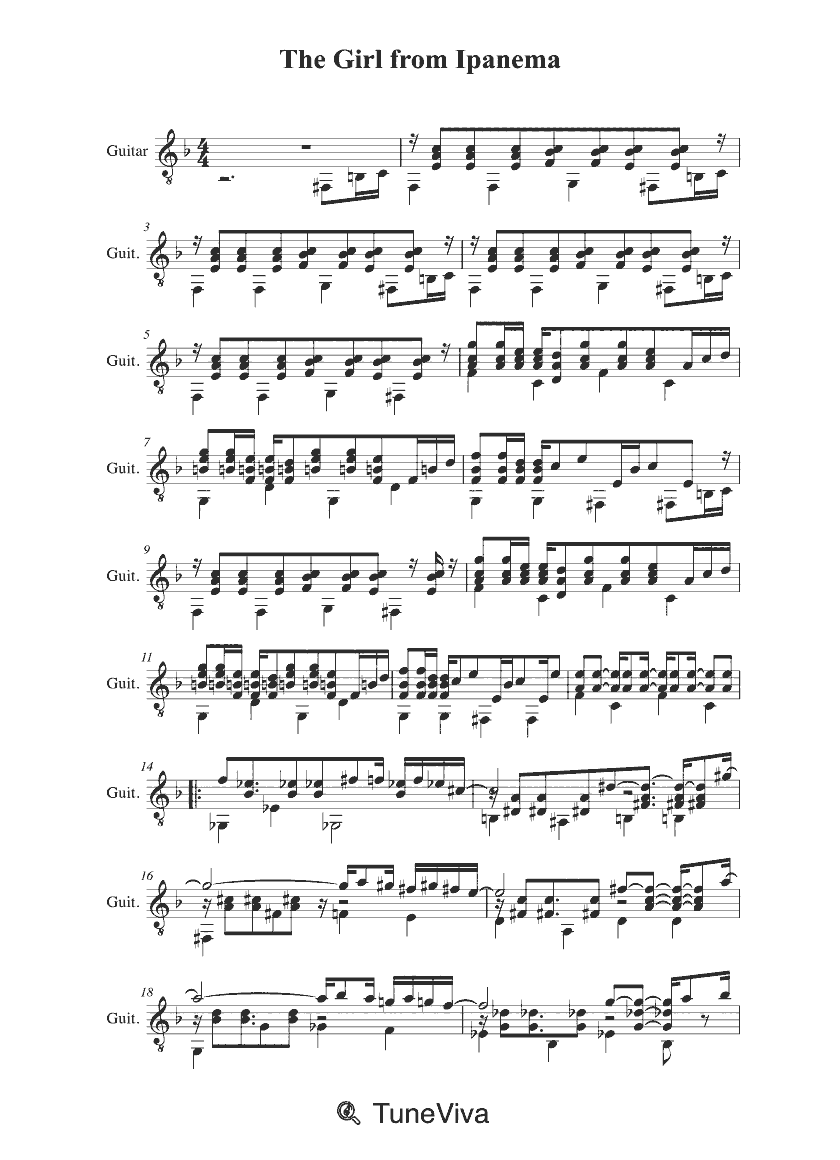
Antnio Carlos Jobim Transcription of an arrangement by Prof. Angelo Franzi
Guitar · 4 min 53 sec
Open score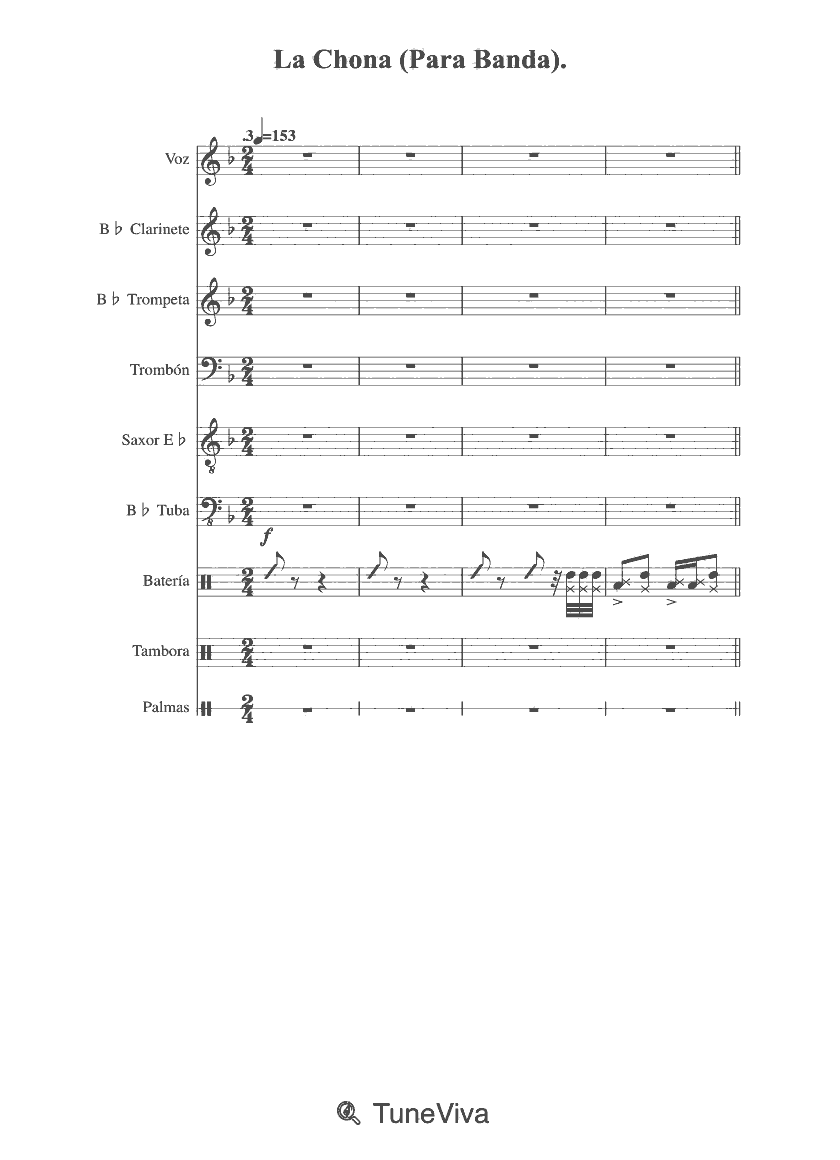
Los Tucanes de Tijuana Banda Los Mazatlecos La Dcima Banda
Voz; B♭ Clarinete; B♭ Trompeta +6 parts · Arr. Javilondo Martín · 4 min 17 sec
Open score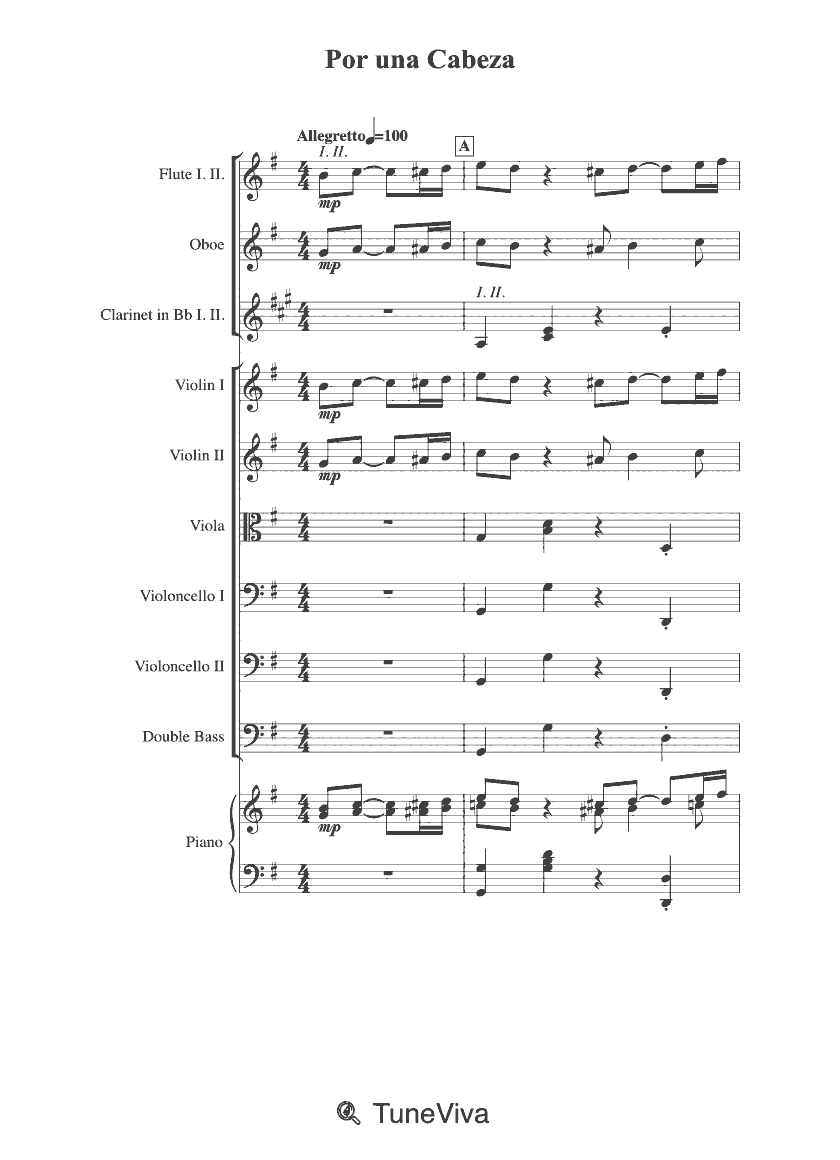
Carlos Gardel Arr: Flvio Rgis Cunha
Flute I. II.; Oboe; Clarinet in Bb I. II. +7 parts · 2 min 49 sec
Open score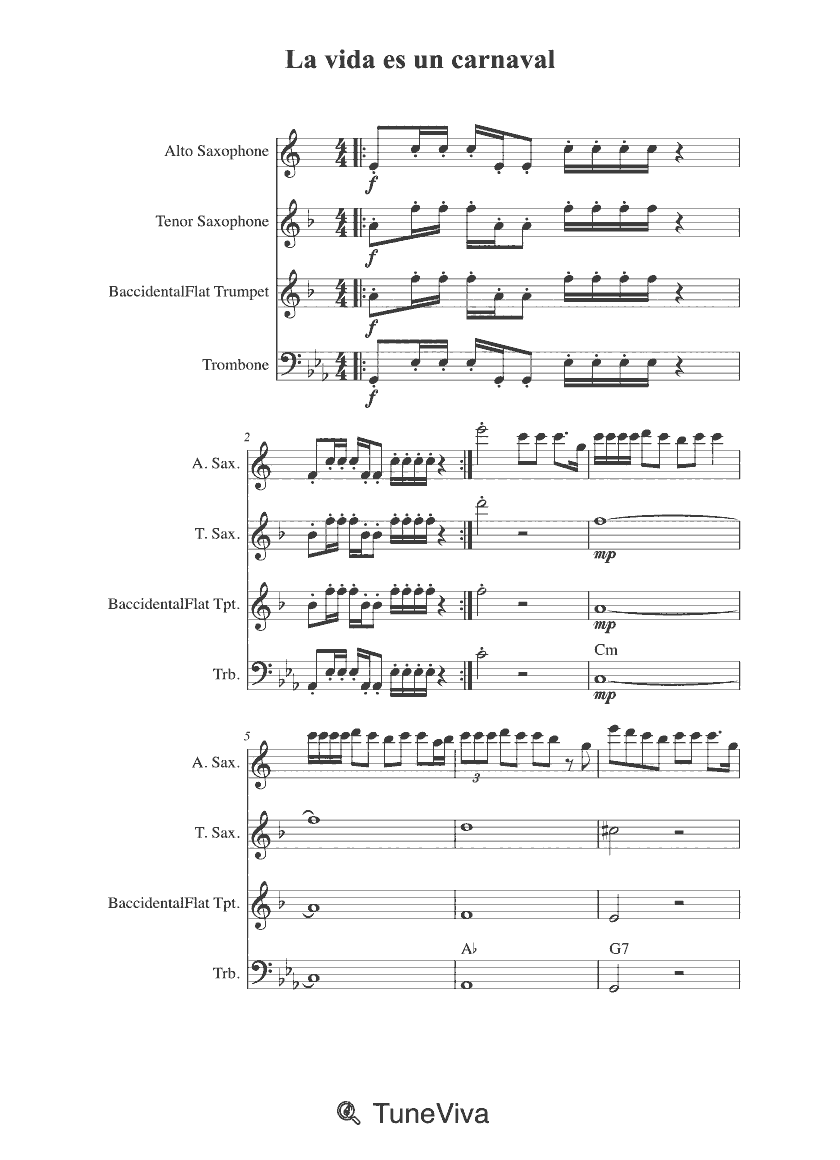
Celia Cruz
Alto Saxophone; Tenor Saxophone; B♭ Trumpet +1 parts · 40 sec
Open scorePage 1 of 9
World music is used here as a wide heading, not a claim that every score belongs to the same tradition. The highlighted works differ sharply in instrumentation: Wave is set for tenor saxophone, Por Una Cabeza for violin and cello, and Libertango for piano. Scores that also belong to another style are kept on separate combination pages.
Opening key, time signature, tempo and named parts describe the specific score in front of you, not a definitive version of the work. Wave opens with four sharps in 4/4; Por Una Cabeza with two flats in 4/8; Libertango with no sharps or flats, 4/4 and an opening tempo of 160 BPM. These details help players check key, metre and ensemble fit, but they do not establish a grade or difficulty.
Start with the score parts. A tenor saxophonist has a directly listed option in Wave; a violin-and-cello duo has Por Una Cabeza; a pianist has Libertango, whose title also mentions accordion solo. If your instrument is not named, do not assume the score can be transposed or adapted without checking the part and key.
The listings do not identify authoritative editions, original instrumentation, completion status or difficulty. Treat each score as a particular version and compare its parts, key and layout with the version you need. Composer spellings also vary in the records, including Piazzolla and Piazolla, so confirm the work title and composer when searching.
Score parts: Piano. Catalogue duration 5 min 37 sec. Opening key signature: No sharps or flats. Opening time signature: 4/4. Opening tempo: 160 BPM.
Score parts: Violín, Violonchelo. Catalogue duration 34 sec. Opening key signature: 2 flats. Opening time signature: 4/8.
Score parts: Tenor Saxophone. Catalogue duration 1 min 26 sec. Opening key signature: 4 sharps. Opening time signature: 4/4.
It contains 162 scores with that single label. The label is the catalogue filing, not a survey of every tradition.
They are on the World music and classical page. They are not duplicated in this list.
The highlighted World music scores are A. C. Jobim's Wave, Carlos Gardel's Por Una Cabeza and Astor Piazzolla's Libertango. They are presented with different instrumentations: tenor saxophone for Wave, violin and cello for Por Una Cabeza, and piano for Libertango.
The listed score parts are tenor saxophone for Wave, violin and cello for Por Una Cabeza, and piano for Libertango. Those parts identify the specific versions on this page; they do not confirm the instrumentation of the original works.
The listed Libertango score is for piano, with no sharps or flats in its opening key signature, a 4/4 time signature and a tempo of 160 BPM. The title of the listed score also mentions an accordion solo option, but the score part shown is piano.
Carlos Gardel's Por Una Cabeza is listed for violin and cello. The score opens with two flats and a 4/8 time signature.
A. C. Jobim's Wave is listed for tenor saxophone. Its opening key signature has four sharps, and the opening time signature is 4/4.
Match your instrument to the score parts first: this selection names tenor saxophone, violin, cello and piano. Check the opening key and time signature before playing, and do not assume an unnamed instrument can use the same part without transposition or adaptation.
The available descriptions do not state whether the scores are original versions or arrangements, nor do they confirm the original instrumentation of each work. The listed parts and keys describe the specific scores, so verify any edition or version claims before relying on them.