Caprice No. 24
Niccolò Paganini
Lá menor
Violin · 1 min 53 sec
Open scorePaganini's 24 Caprices for Solo Violin Op. 1 is a set of numbered showpieces for unaccompanied violin, and TuneViva lists individual caprices from the set as separate scores rather than as a single complete volume. The listings currently include Caprice No. 5 in A minor, Caprice No. 16 in G minor and Caprice No. 24, each carrying a single violin part.
Scores 1–20 of 31
Niccolò Paganini
Lá menor
Violin · 1 min 53 sec
Open score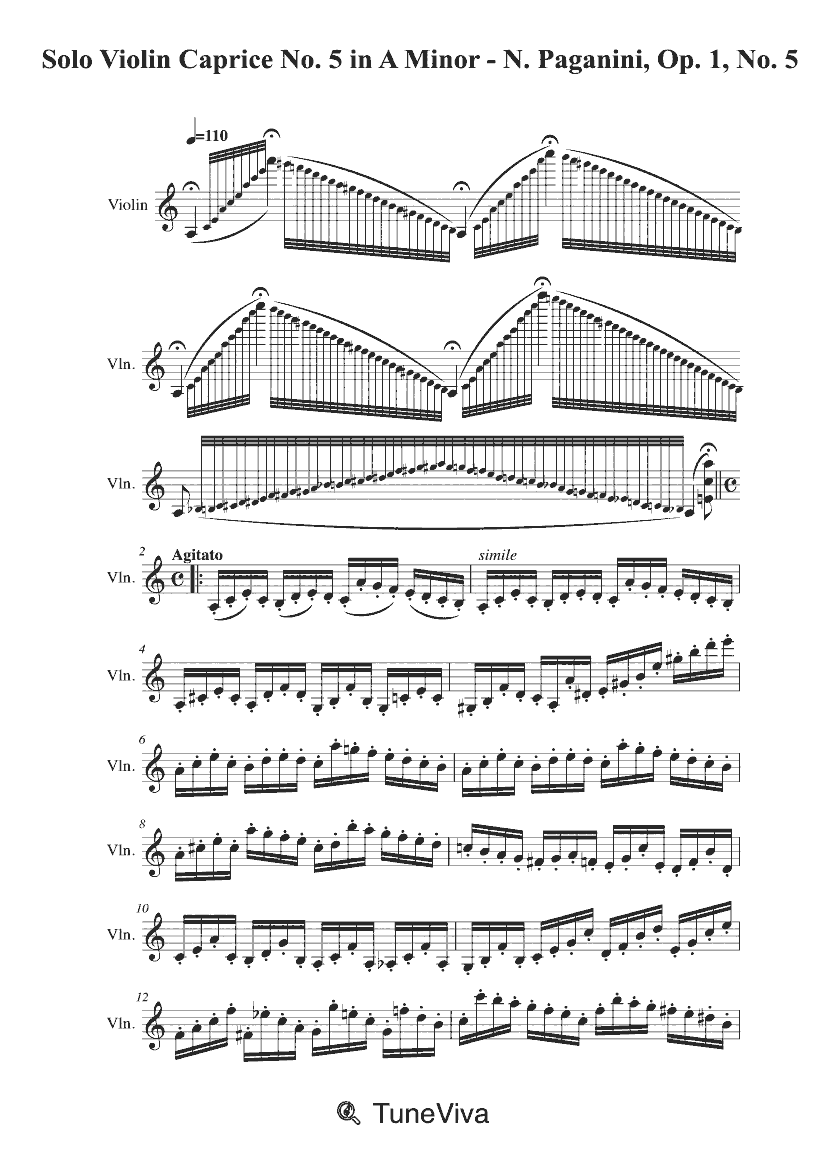
Niccolò Paganini
Op. 1 No. 5
Violin · 2 min 5 sec
Open score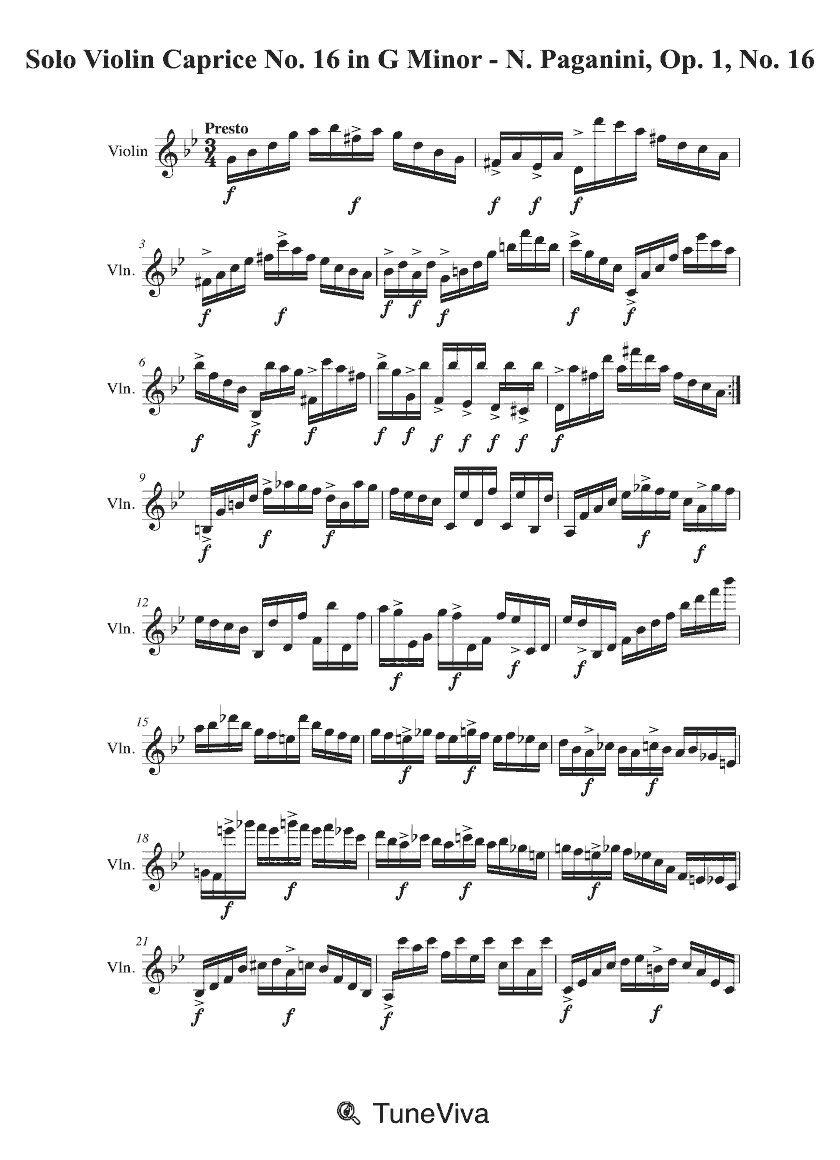
Niccolò Paganini
Op. 1 No. 16
Violin · 1 min 17 sec
Open score
Niccolò Paganini
Op. 1 No. 4
Violin · 8 min 25 sec
Open score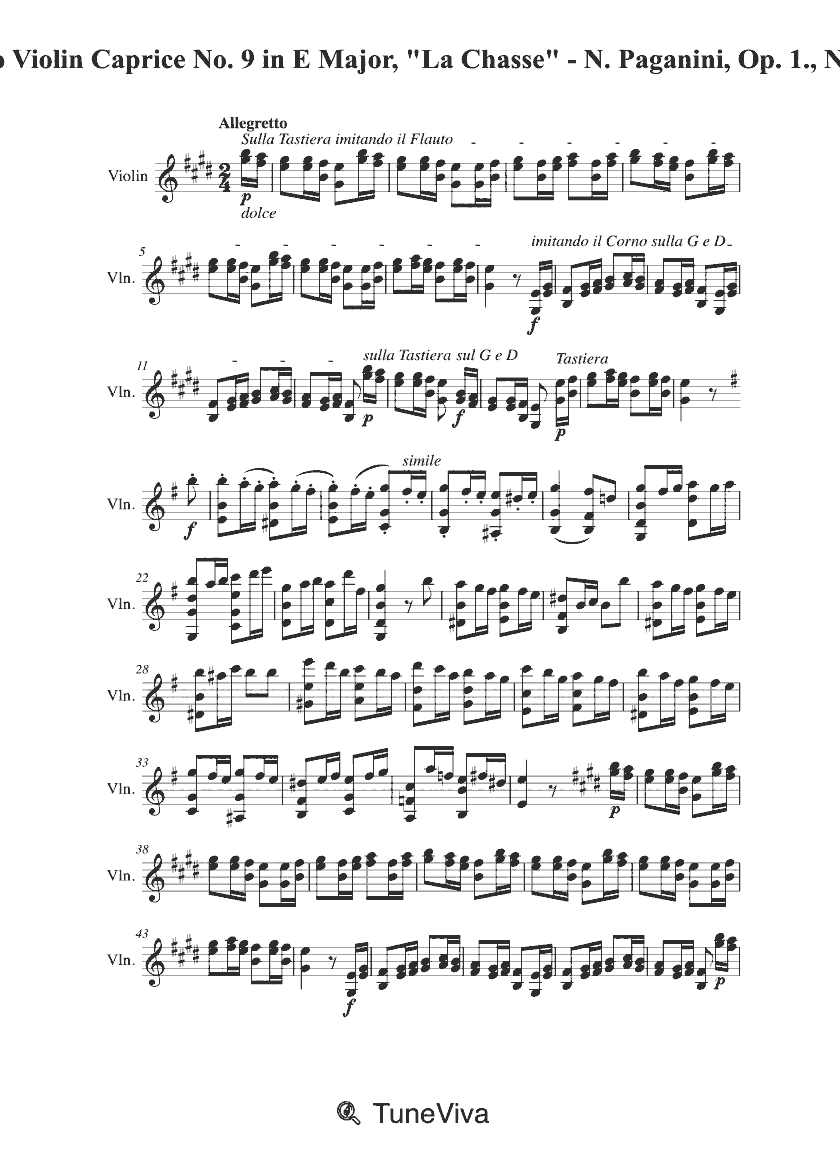
Niccolò Paganini
Op. 1 No. 9
Violin · 2 min 28 sec
Open score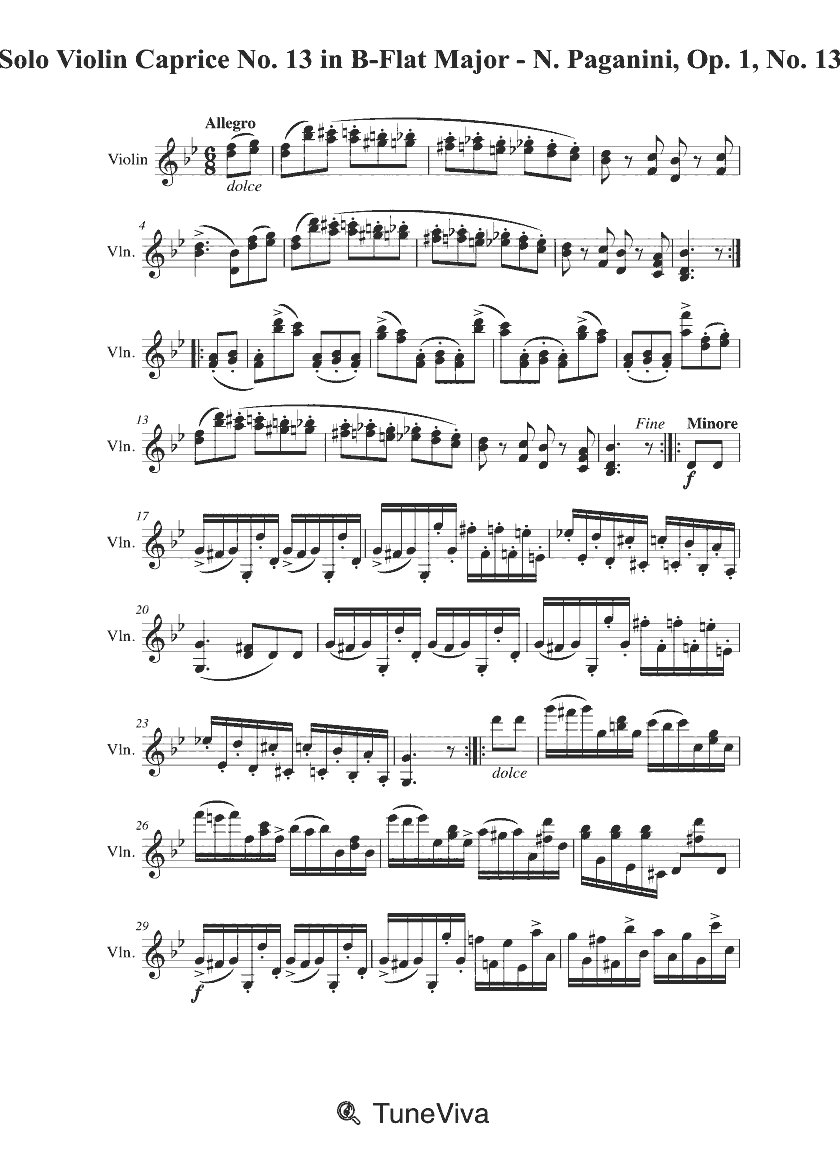
Niccolò Paganini
Op. 1 No. 13
Violin · 57 sec
Open score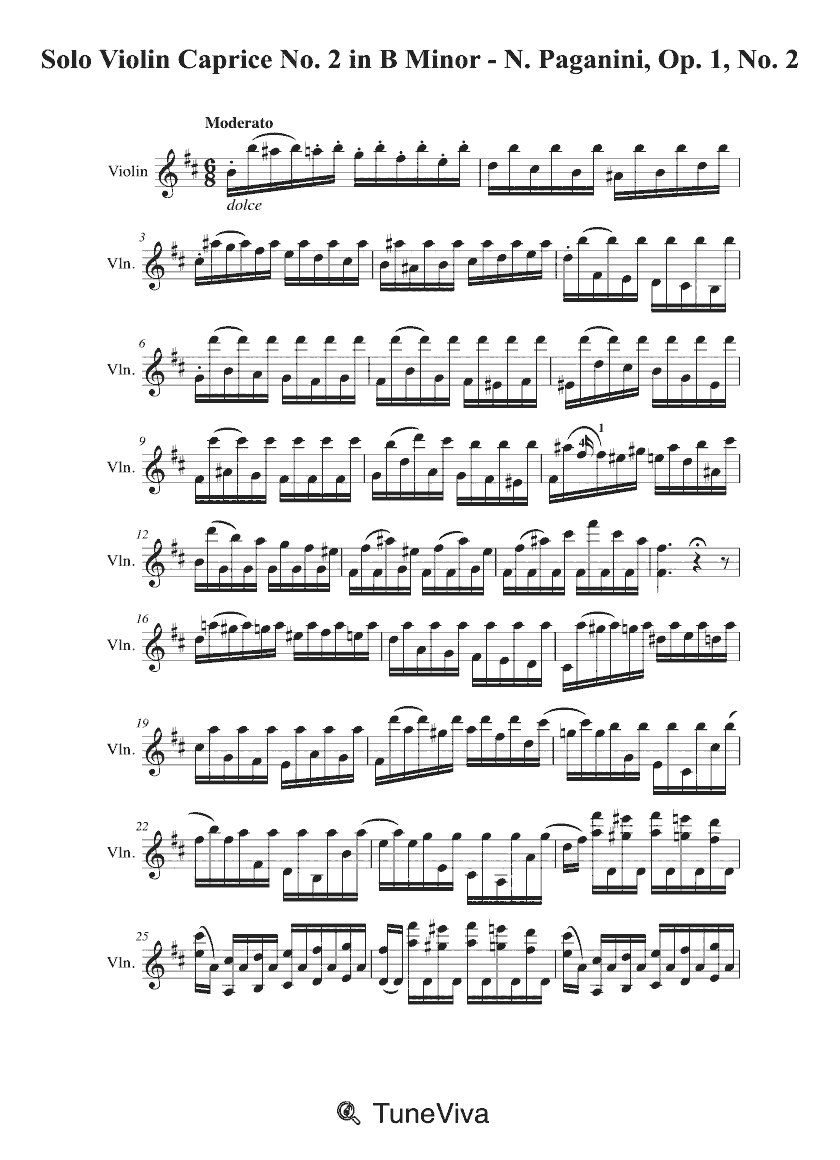
Niccolò Paganini
Op. 1 No. 2
Violin · 1 min 52 sec
Open score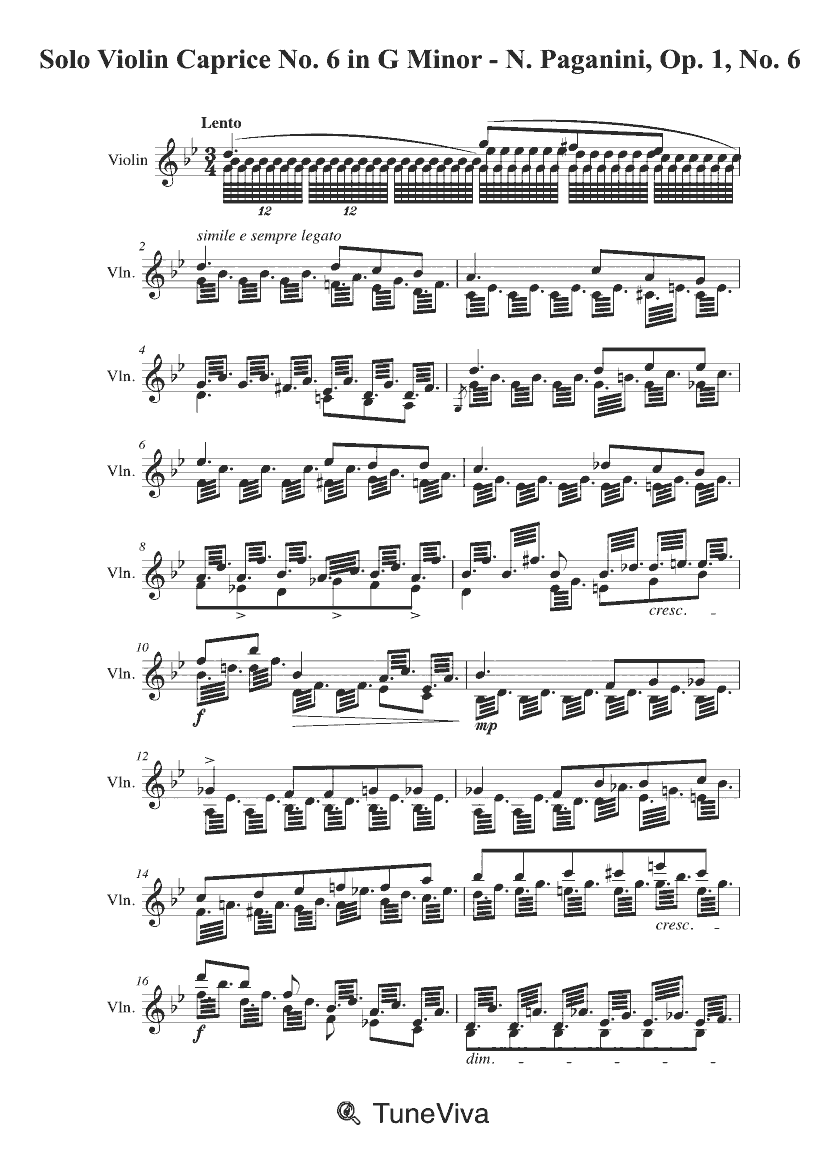
Niccolò Paganini
Op. 1 No. 6
Violin · 13 min 51 sec
Open score
Niccolò Paganini
Op. 1 No. 20
Violin · 1 min 40 sec
Open score
Niccolò Paganini
Op. 1 No. 1
Violin · 1 min 33 sec
Open score
Niccolò Paganini
Op. 1 No. 14
Violin · 2 min 2 sec
Open score
Niccolò Paganini
Op. 1 No. 3
Violin · 2 min 49 sec
Open score
Niccolò Paganini
Op. 1 No. 11
Violin · 3 min 56 sec
Open score
Niccolò Paganini
Op. 1 No. 17
Violin · 3 min 4 sec
Open score
Niccolò Paganini
Op. 1 No. 10
Violin · 1 min 32 sec
Open score
Paganini N.
Violin · 2 min 34 sec
Open score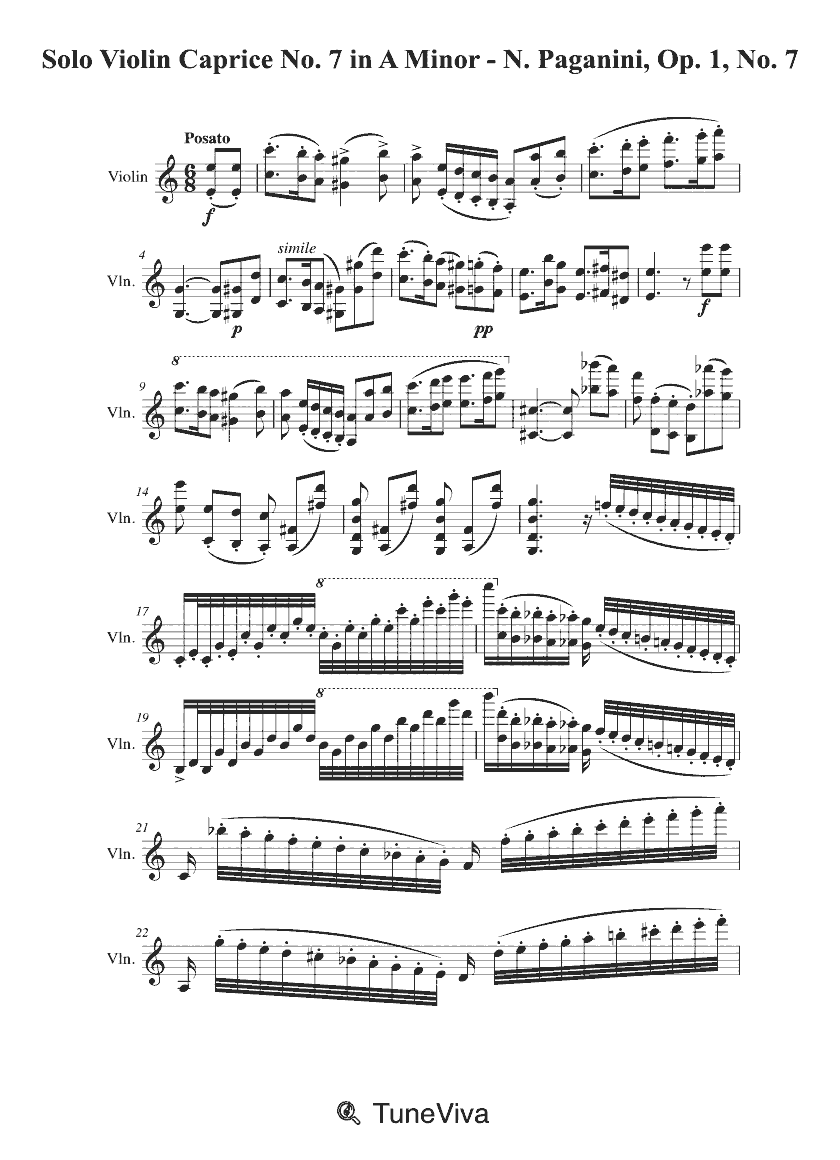
Niccolò Paganini
Op. 1 No. 7
Violin · 3 min 43 sec
Open score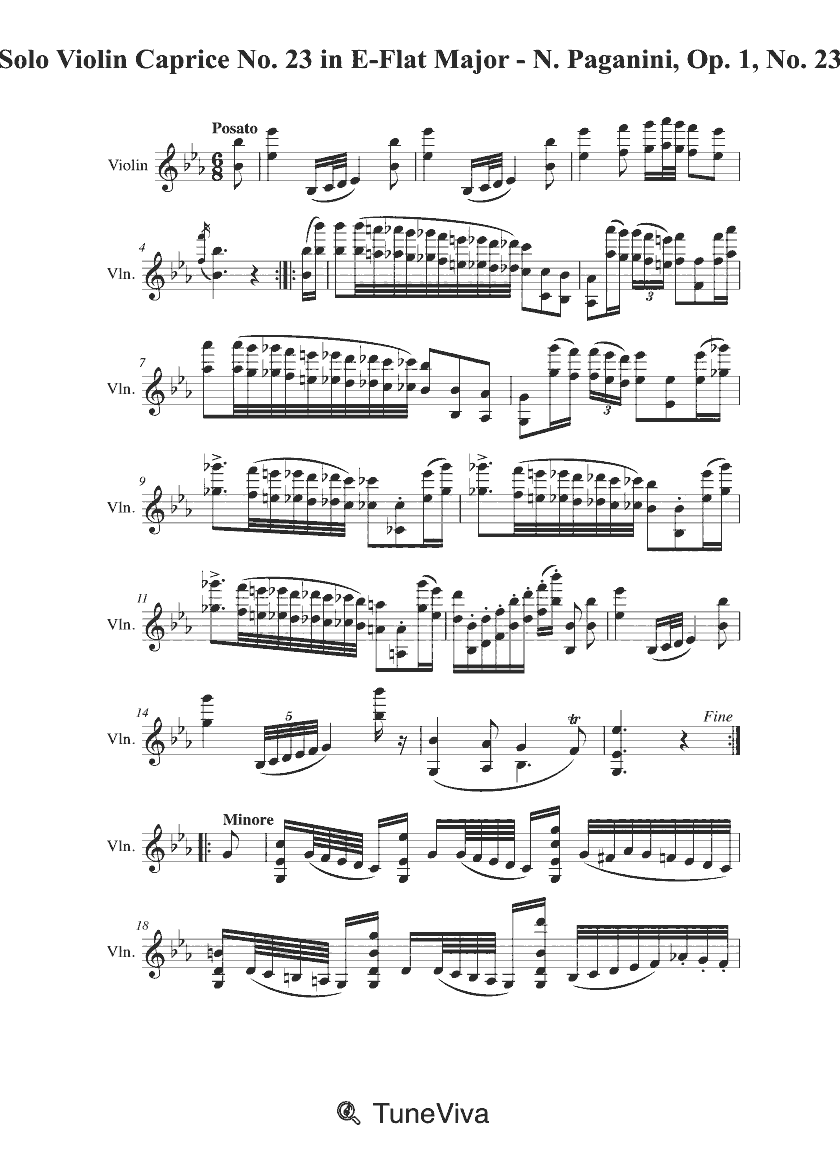
Niccolò Paganini
Op. 1 No. 23
Violin · 1 min 41 sec
Open score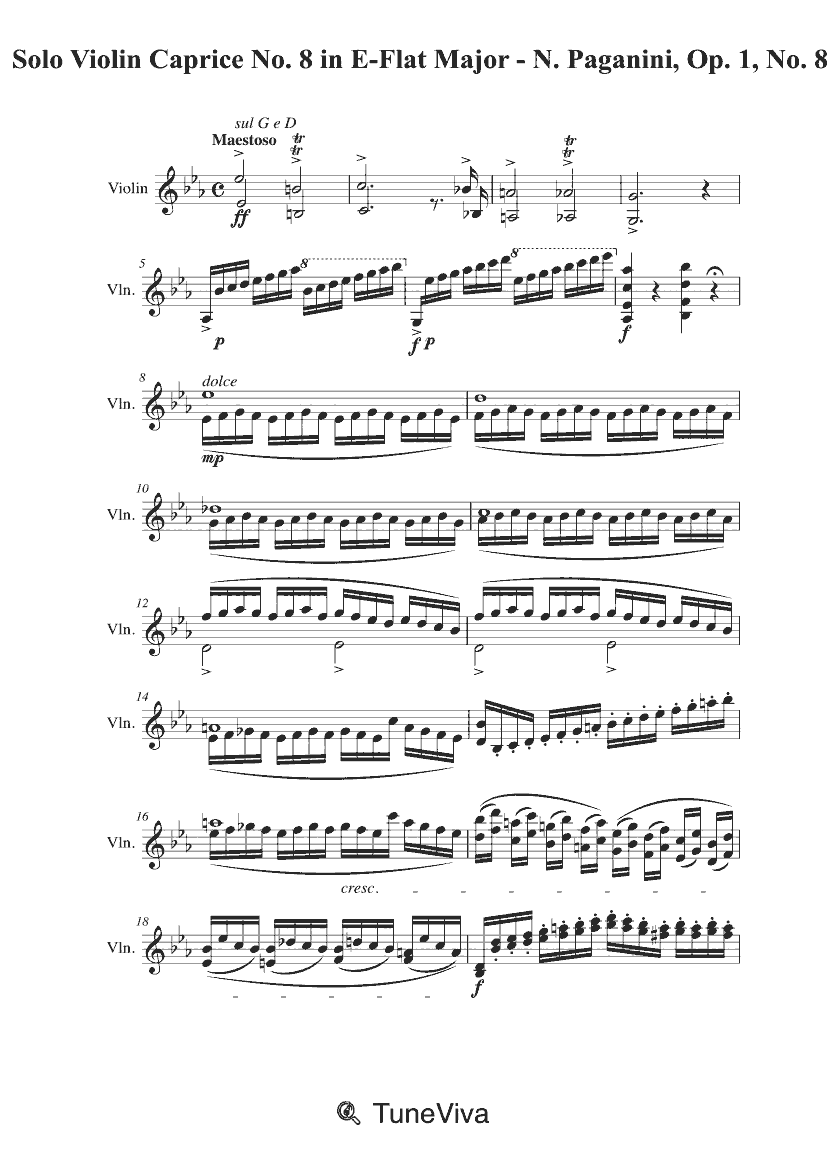
Niccolò Paganini
Op. 1 No. 8
Violin · 5 min 56 sec
Open score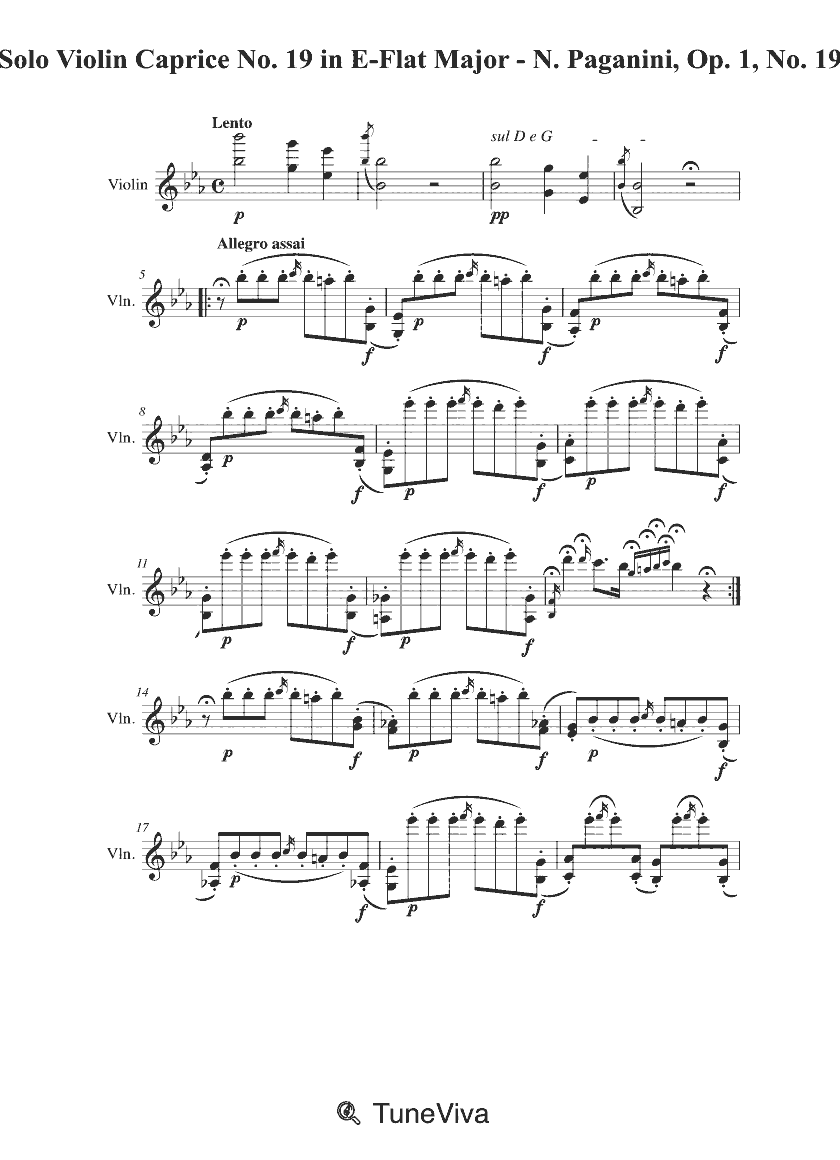
Niccolò Paganini
Op. 1 No. 19
Violin · 3 min 51 sec
Open scorePage 1 of 2
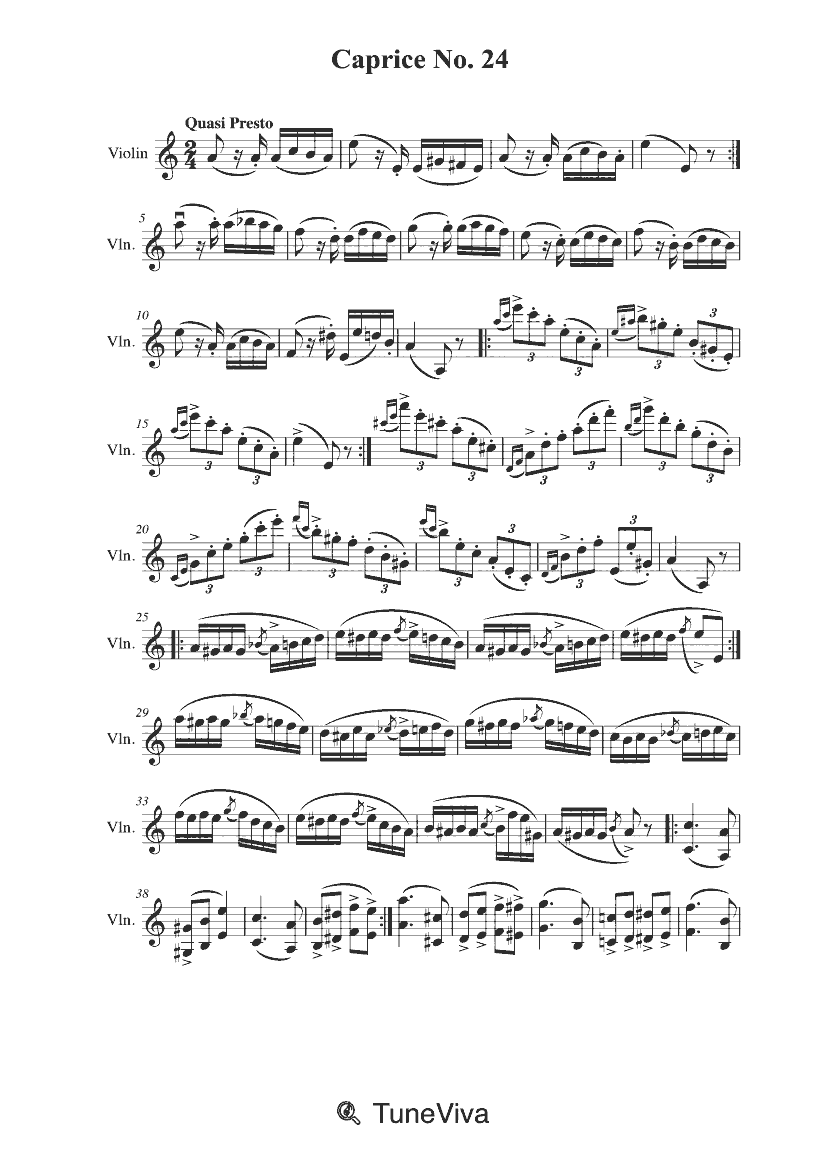
Each score carries a short set of opening details. Caprice No. 5 in A minor opens with a key signature of no sharps or flats, in 2/4, at a listed tempo of about 110 BPM. Caprice No. 16 in G minor opens with two flats, in 3/4, at about 140 BPM. Caprice No. 24 opens with a blank key signature, in 2/4, at about 166 BPM. These details describe single scores and should be checked against the music itself before you rely on them.
The key signatures attached to the named caprices can serve as a quick sanity check. A minor and G minor take no sharps and two flats respectively, so the signatures on the No. 5 and No. 16 scores agree with their titles. Caprice No. 24 is listed without a key in its title, and a blank signature is consistent with either A minor or C major; the title alone does not settle which.
The title specifies solo violin and every listed score shows a single violin part without piano, continuo or second violin. That makes these caprices usable as unaccompanied studies or recital pieces, and it also means there is no separate accompaniment score to coordinate with a partner. Any decisions about bowing, fingering or tempo changes belong to the player and, ideally, a teacher.
With only three of the twenty-four caprices listed separately, choice is limited to Nos. 5, 16 and 24. Compare the opening metre and tempo rather than assuming a fixed order of difficulty: 2/4 at a brisk tempo (No. 24), 3/4 at a moderate tempo (No. 16) and 2/4 at a steadier tempo (No. 5) present quite different rhythmic feels on the page. No grade or difficulty level is assigned to these scores here, so a teacher's judgement of your current technique is the better guide.
Score parts: Violin. Catalogue duration 1 min 53 sec. Opening key signature: No sharps or flats. Opening time signature: 2/4. Opening tempo: 166 BPM.
Score parts: Violin. Catalogue duration 2 min 5 sec. Opening key signature: No sharps or flats. Opening tempo: 110 BPM.
Score parts: Violin. Catalogue duration 1 min 17 sec. Opening key signature: 2 flats. Opening time signature: 3/4. Opening tempo: 140 BPM.
The set is credited to Niccolò Paganini, and the scores listed under this title carry his name as composer together with the opus number 1. The individual listings name the specific caprice, such as No. 5 in A minor or No. 16 in G minor, alongside Paganini's name.
The caprices are unaccompanied works: the title specifies solo violin and each listed score contains a single violin part, with no piano, continuo or ensemble part attached. Players therefore perform them alone, without a separate accompaniment to follow.
Separate scores are listed for Caprice No. 5 in A minor, Caprice No. 16 in G minor and Caprice No. 24. The remaining caprices of the set are not represented among these listings, so anyone wanting the complete twenty-four will need a collected edition rather than single numbers.
Caprice No. 16 is titled in G minor, and its score opens with a key signature of two flats, which matches G minor, in 3/4 time at a listed tempo of about 140 BPM. The two-flat signature and the triple metre are the first things to register when reading through the opening.
The Caprice No. 24 score begins with a key signature of no sharps or flats, in 2/4, at a listed tempo of about 166 BPM. Because the title gives no key, that blank signature could belong to either A minor or C major, and the opening notes themselves would be needed to decide which.