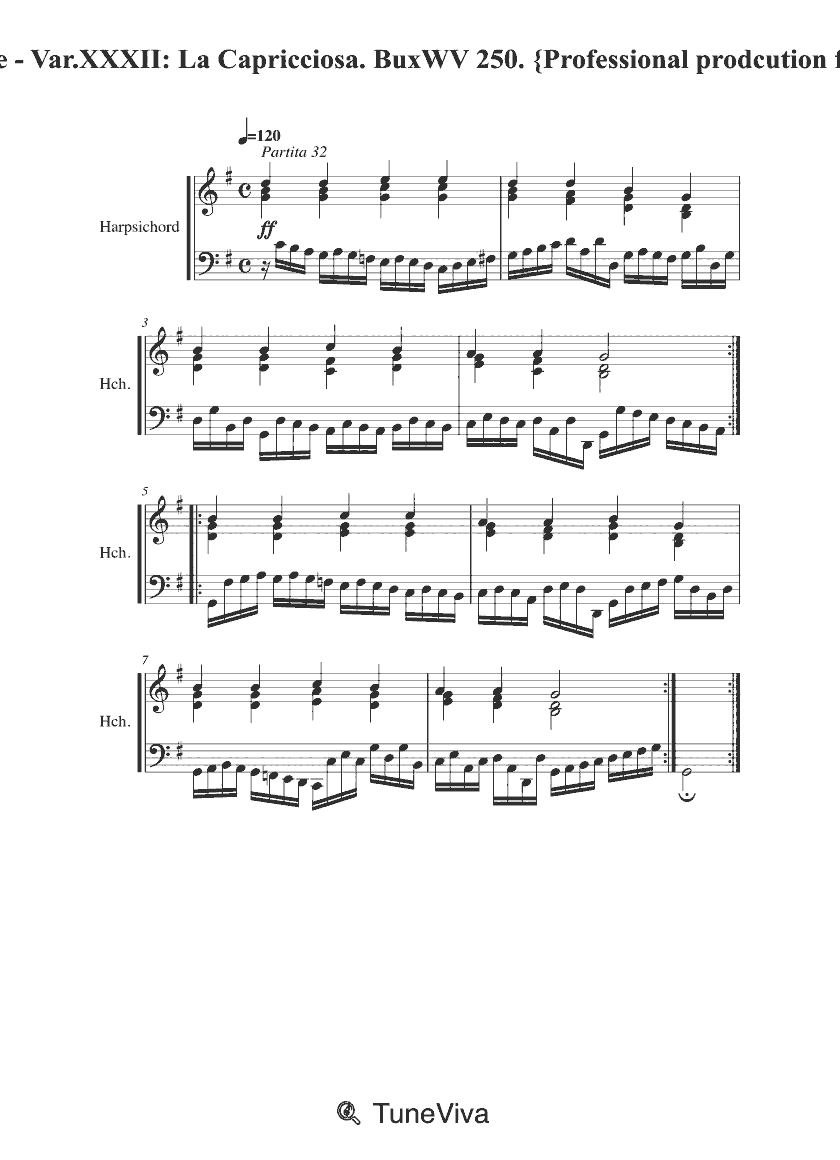
Buxtehude - Var.XXXII: La Capricciosa. BuxWV 250. {Professional prodcution full score.}
Dietrich Buxtehude
Harpsichord · 1 min 22 sec
Open scoreSheet music for the Aria in G Major la Capricciosa, a work presented in these listings as an aria with 32 partite diverse and attributed in the score titles to Dietrich Buxtehude, BuxWV 250. The available scores include the aria, Variation XIV, and Variation XXXII, all specifying harpsichord. Check whether you need the theme, one variation, or a complete cycle before choosing, since the titles describe individual scores and may not make the contents fully clear.
Scores 1–20 of 30
Dietrich Buxtehude
Harpsichord · 1 min 22 sec
Open score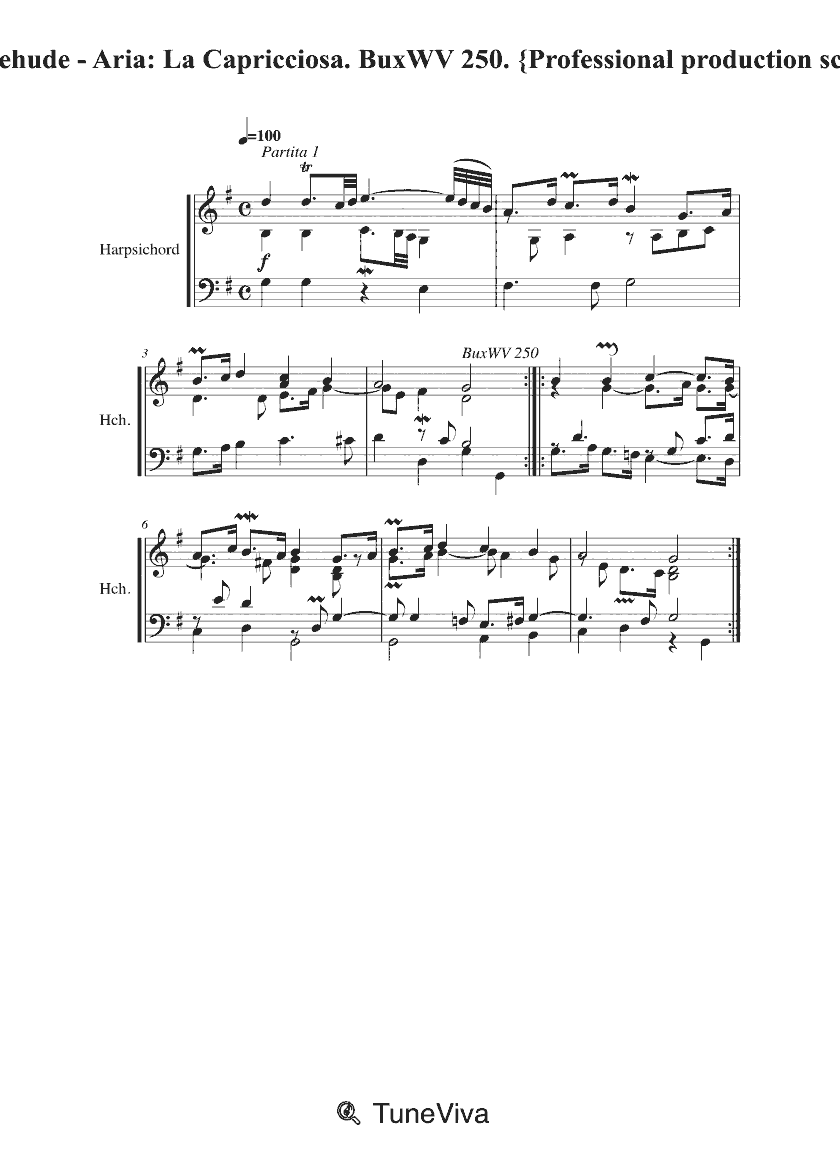
Dietrich Buxtehude
Harpsichord · 1 min 17 sec
Open score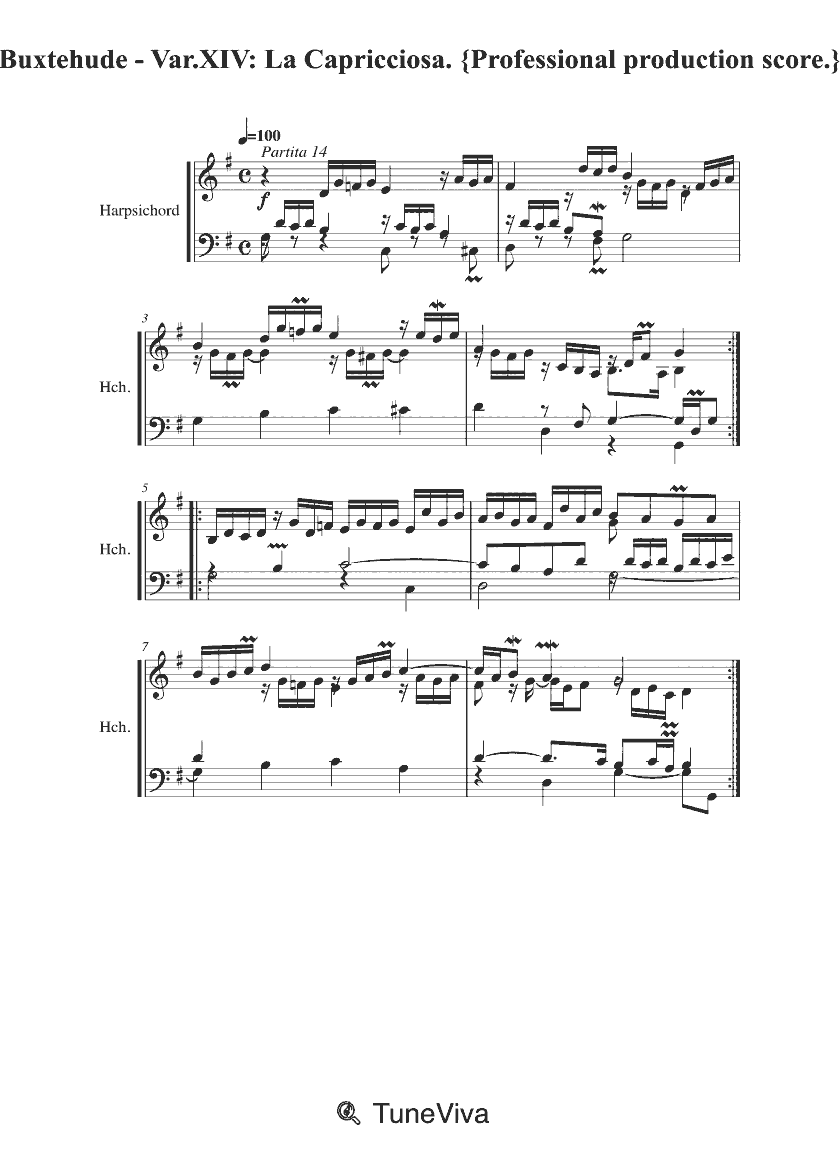
Dietrich Buxtehude
Harpsichord · 1 min 5 sec
Open score
Dietrich Buxtehude
Harpsichord · 2 min 28 sec
Open score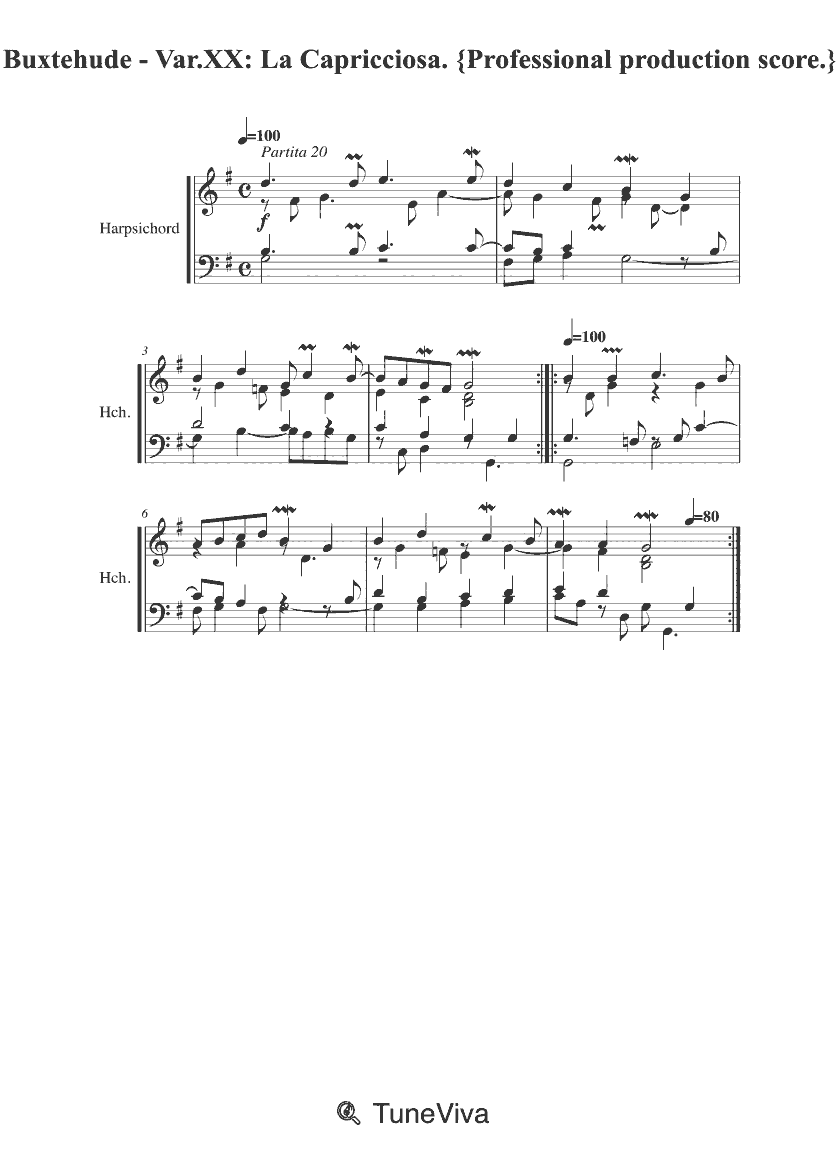
Dietrich Buxtehude
Harpsichord · 1 min 19 sec
Open score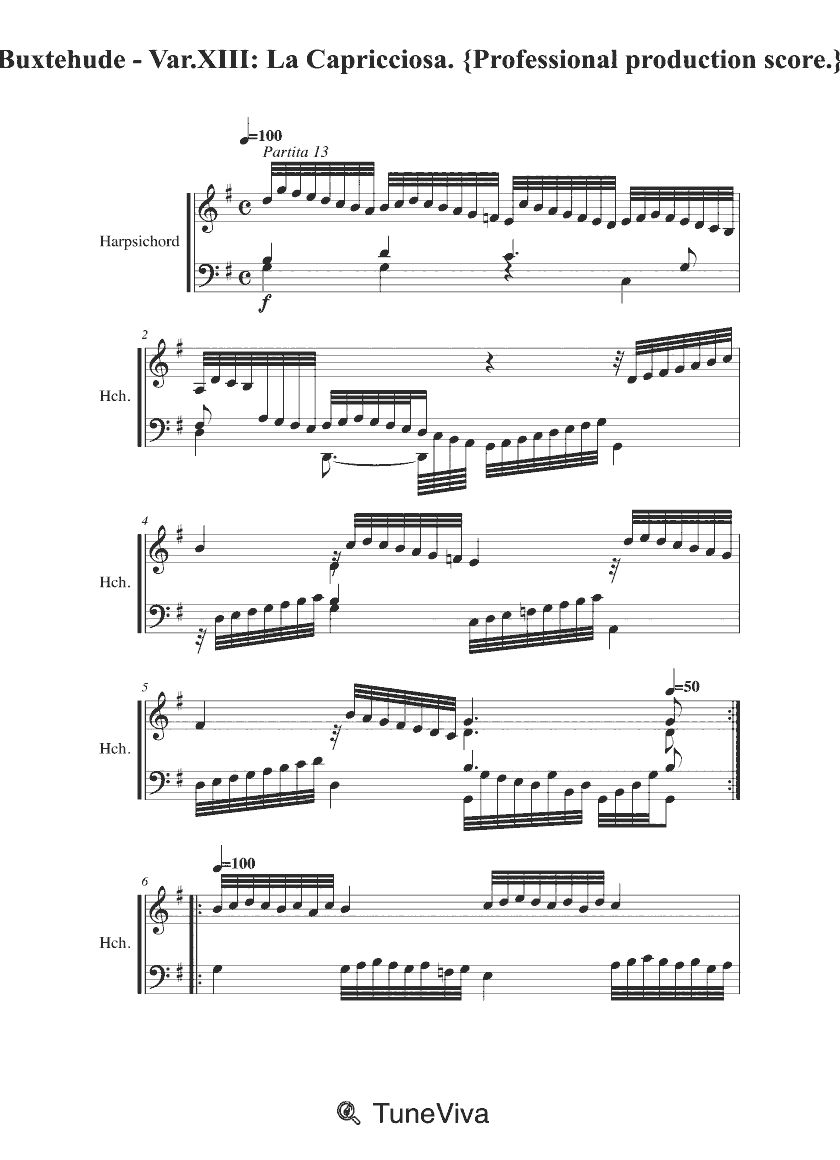
Dietrich Buxtehude
Harpsichord · 55 sec
Open score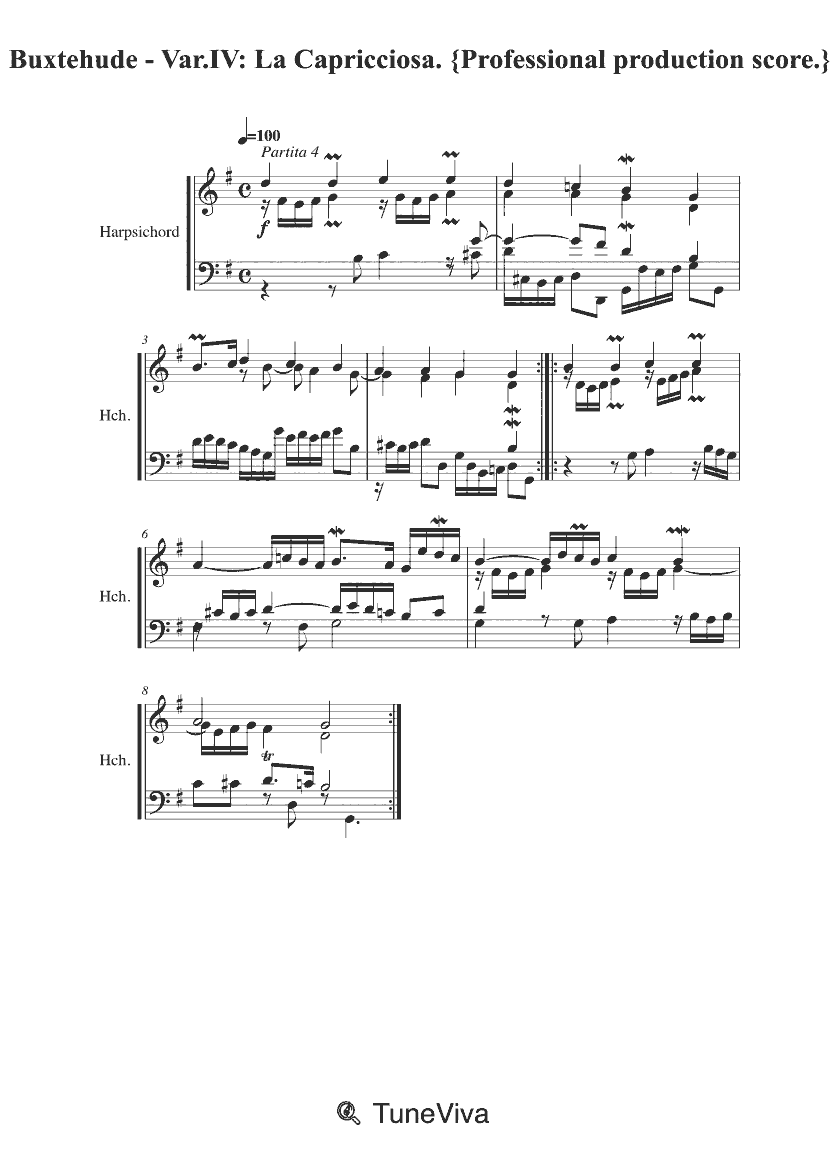
Dietrich Buxtehude
Harpsichord · 1 min 11 sec
Open score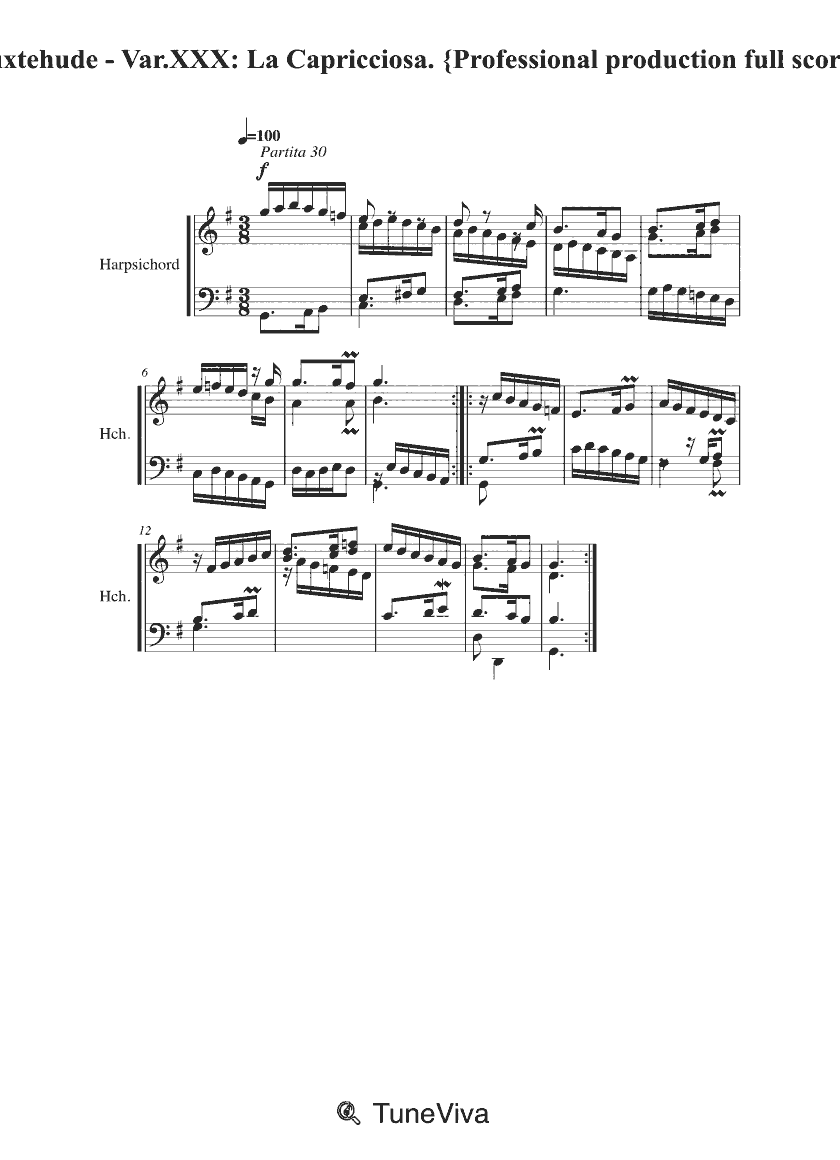
Dietrich Buxtehude
Harpsichord · 22 sec
Open score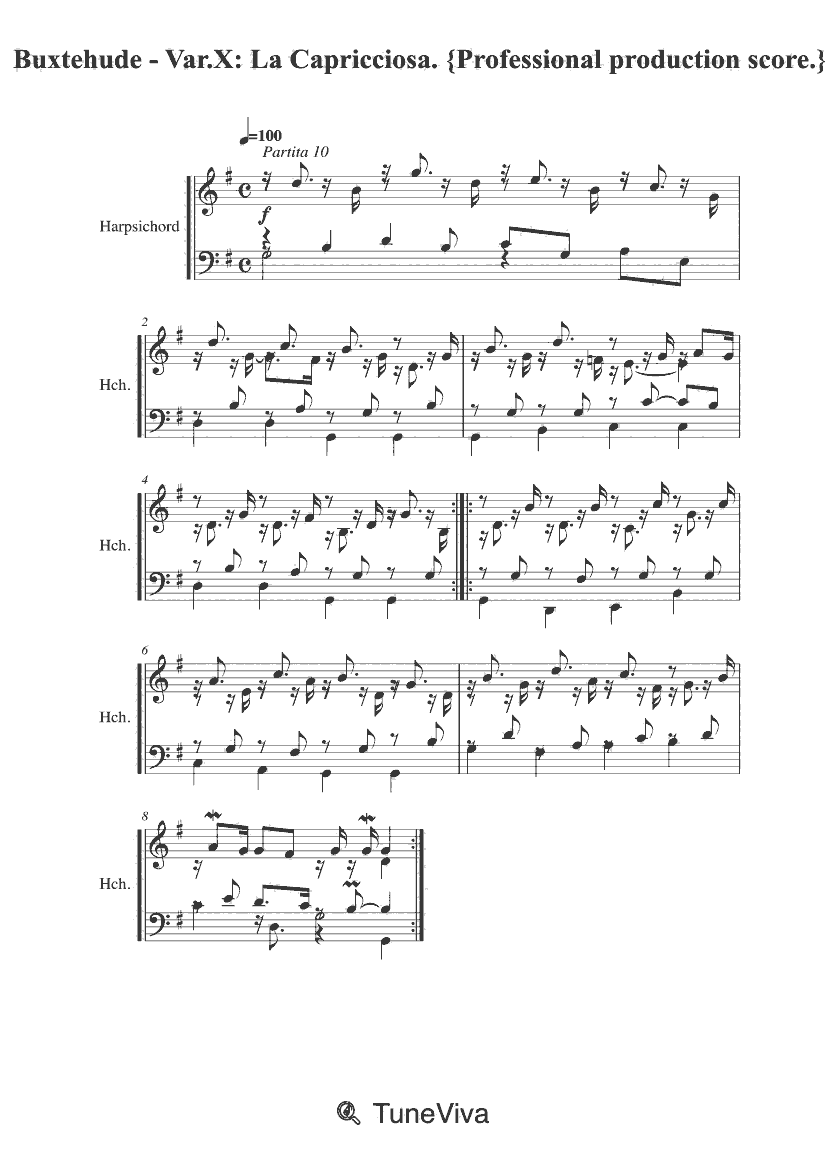
Dietrich Buxtehude
Harpsichord · 1 min 22 sec
Open score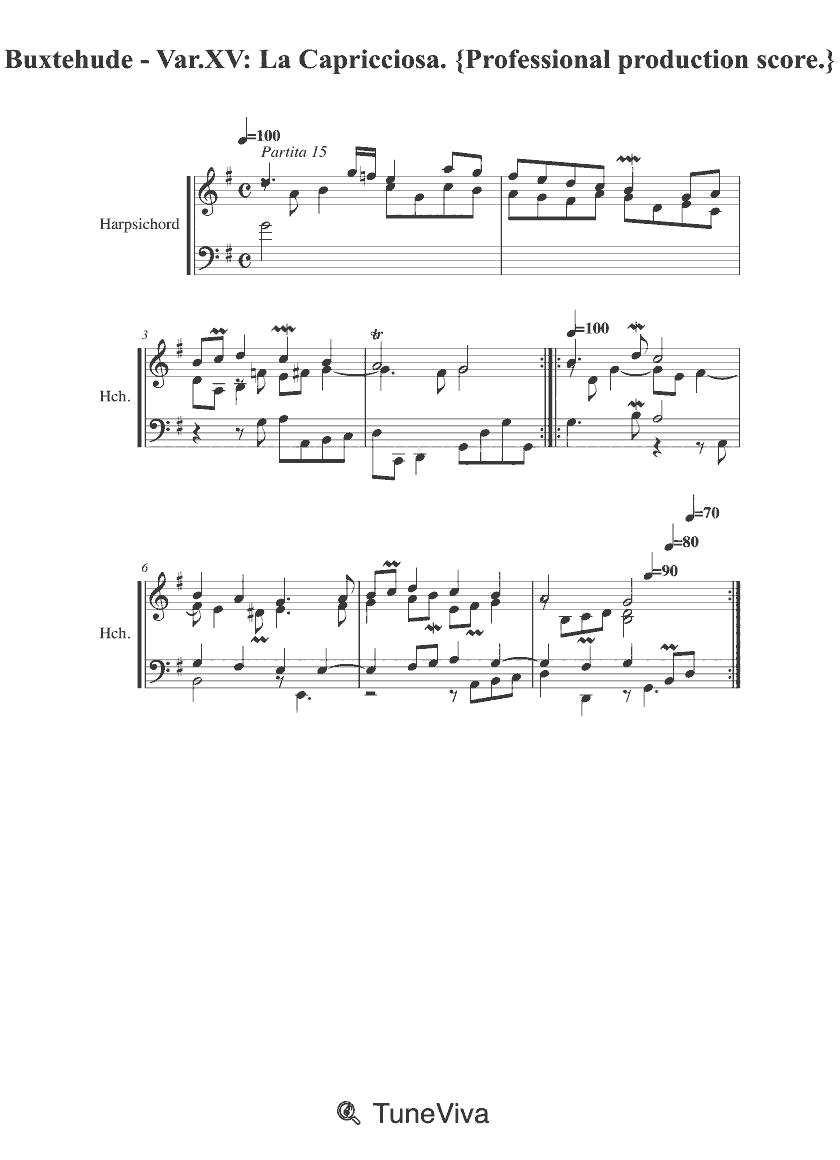
Dietrich Buxtehude
Harpsichord · 1 min 20 sec
Open score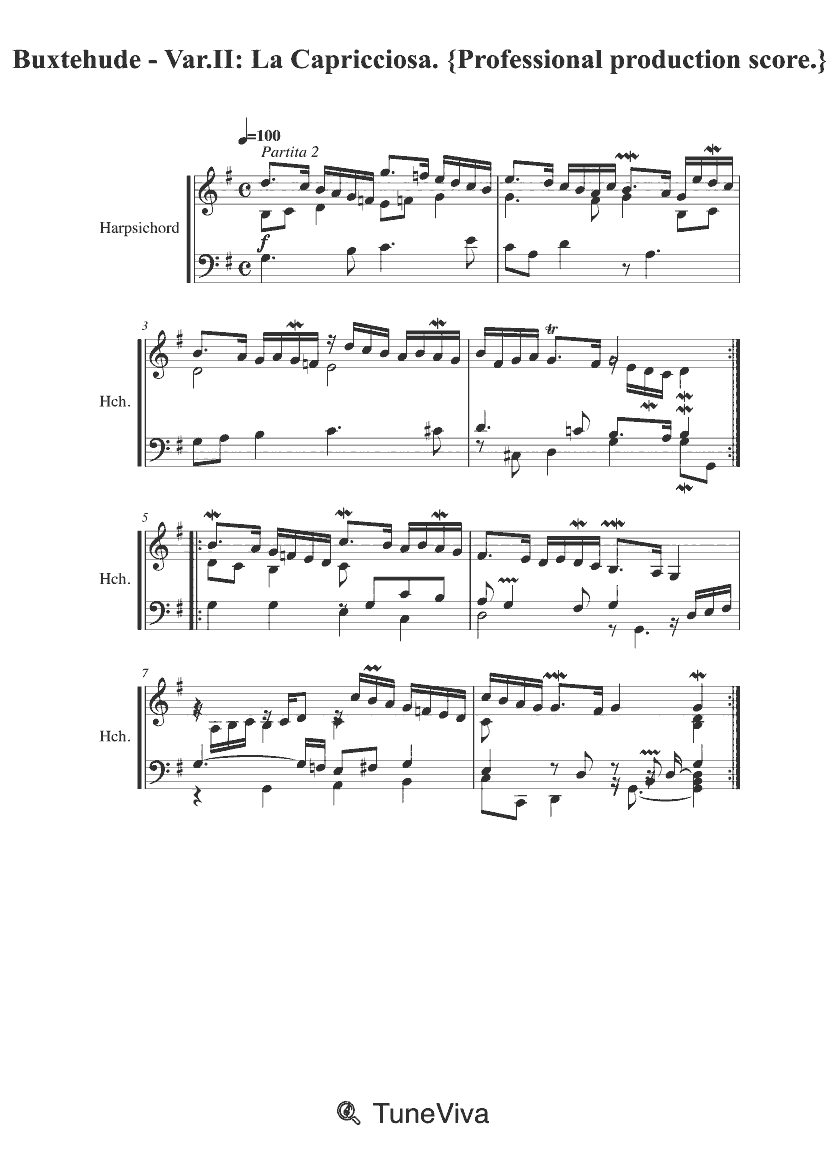
Dietrich Buxtehude
Harpsichord · 1 min 4 sec
Open score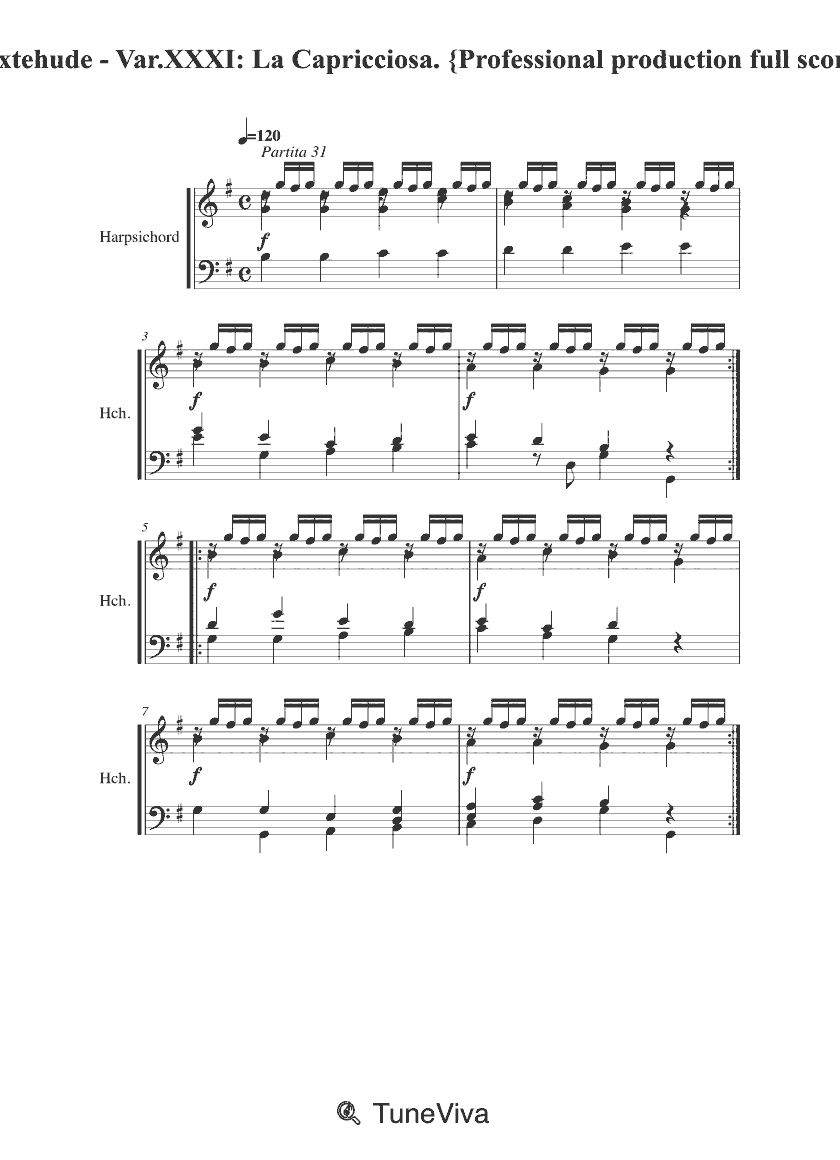
Dietrich Buxtehude
Harpsichord · 1 min 5 sec
Open score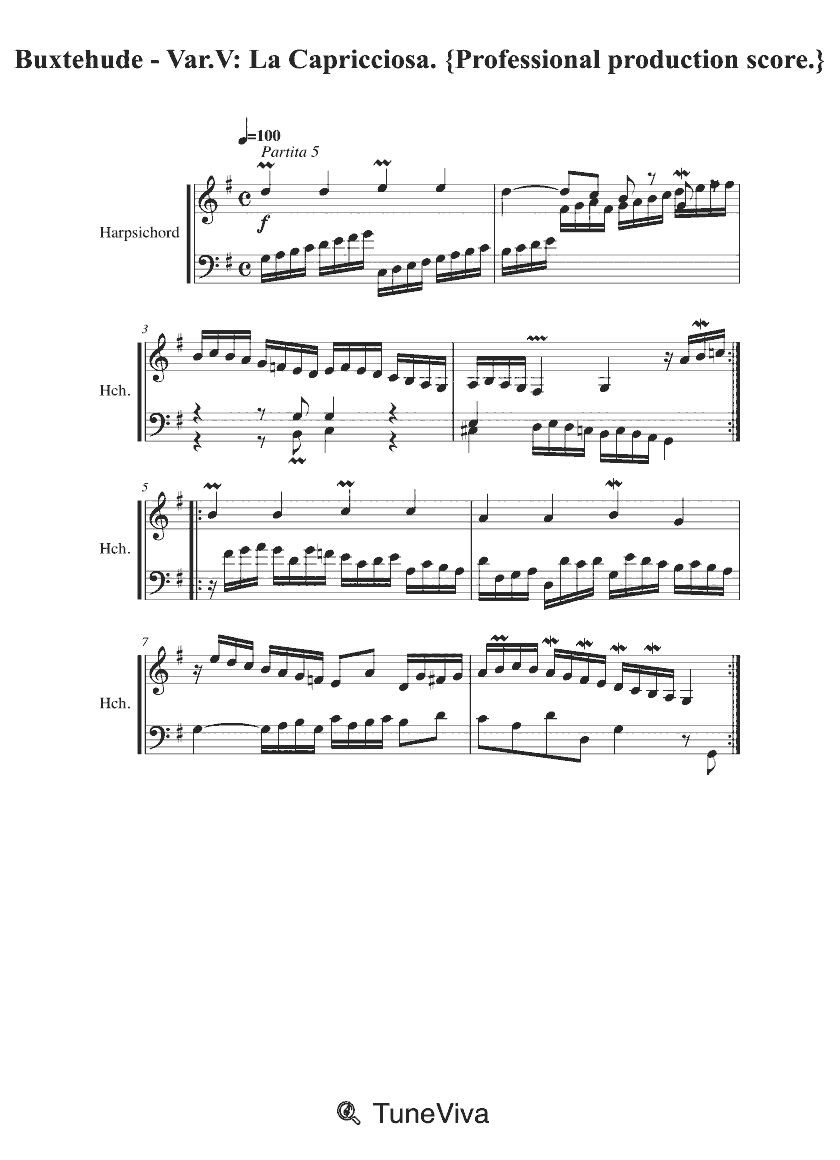
Dietrich Buxtehude
Harpsichord · 43 sec
Open score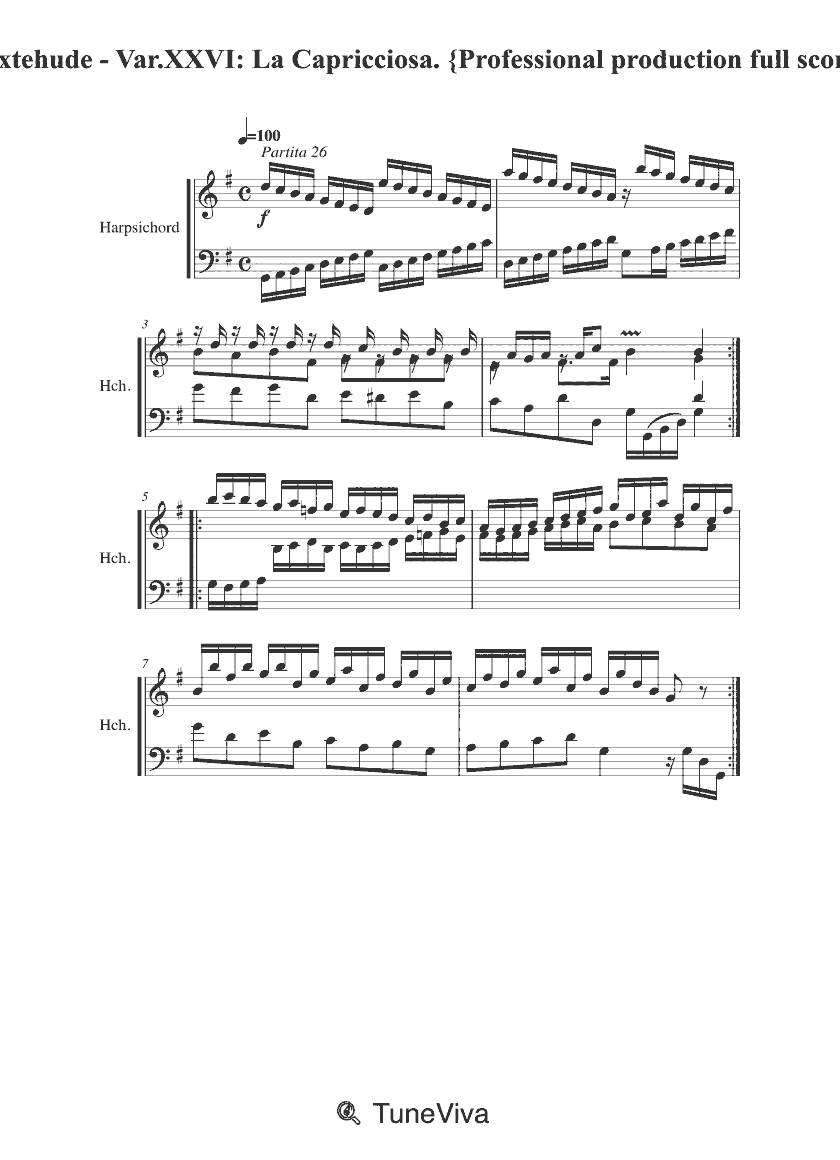
Dietrich Buxtehude
Harpsichord · 55 sec
Open score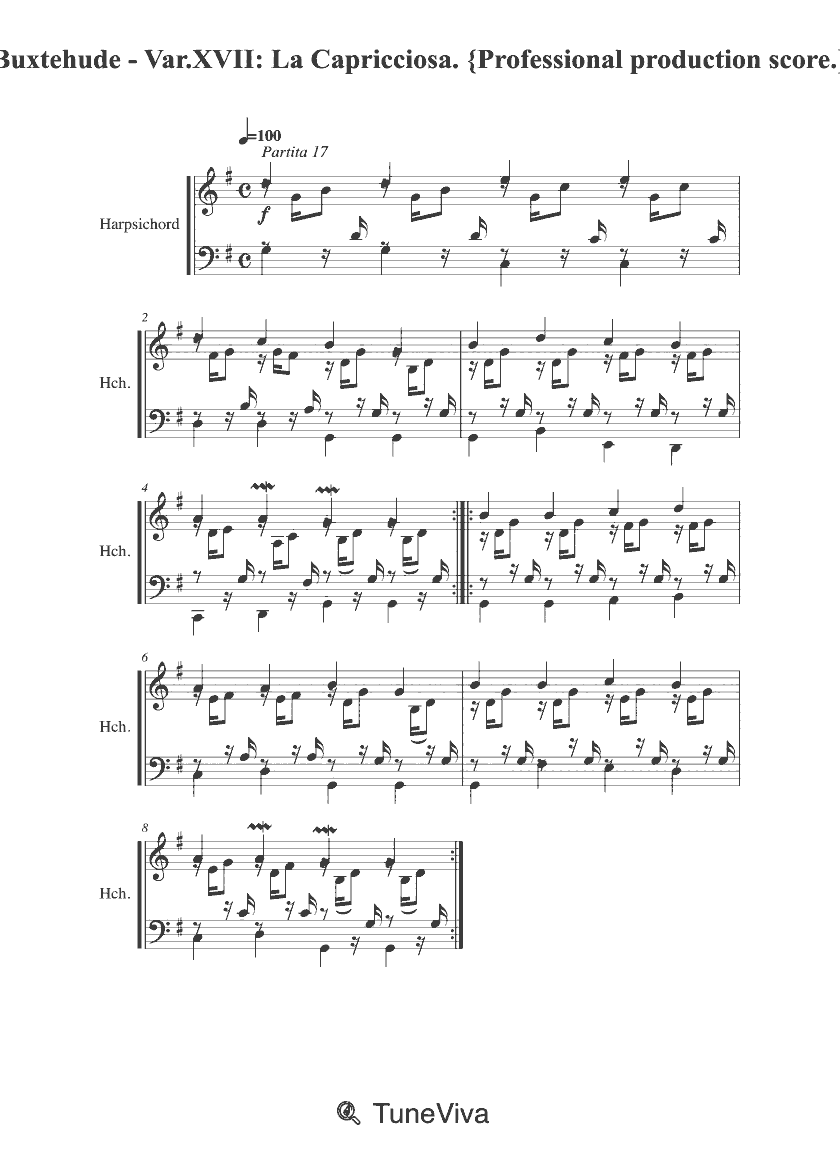
Dietrich Buxtehude
Harpsichord · 1 min 17 sec
Open score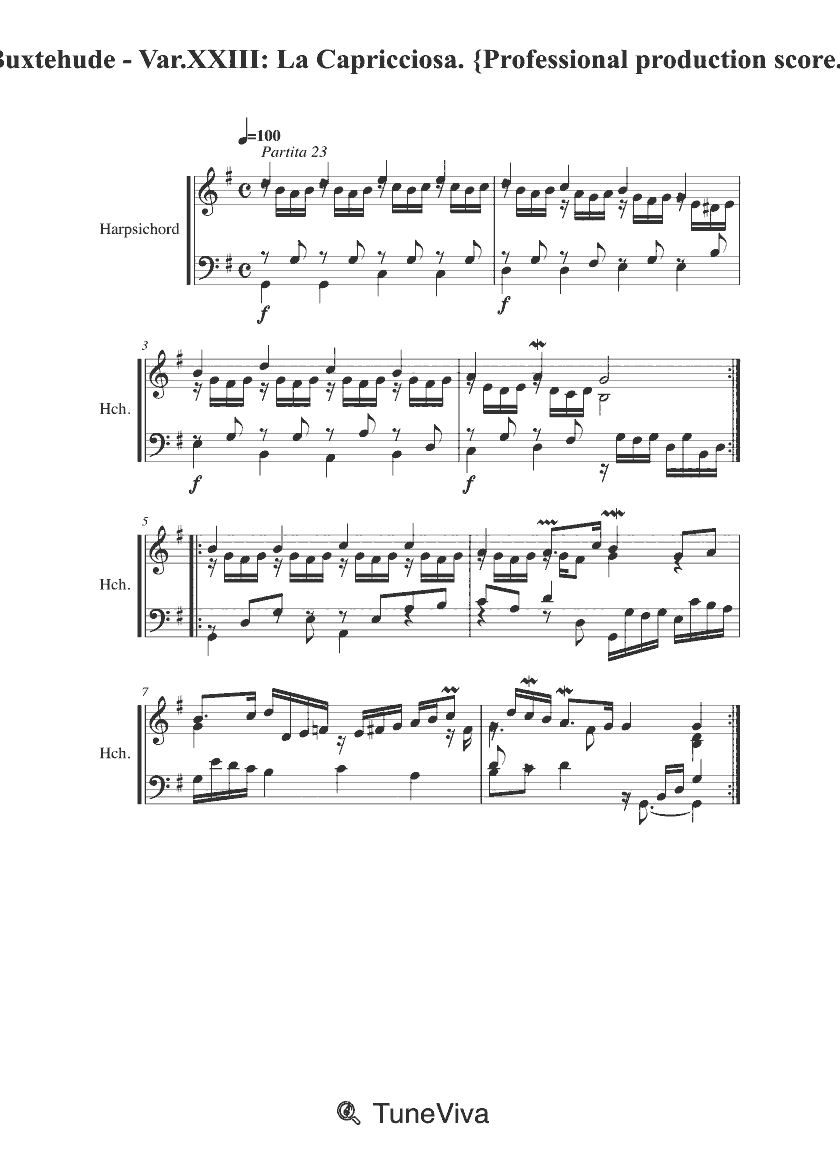
Dietrich Buxtehude
Harpsichord · 1 min 13 sec
Open score
Dietrich Buxtehude
Harpsichord · 52 sec
Open score
Dietrich Buxtehude
Harpsichord · 1 min 21 sec
Open score
Dietrich Buxtehude
Harpsichord · 38 sec
Open score
Dietrich Buxtehude
Harpsichord · 46 sec
Open scorePage 1 of 2
The aria is the theme that anchors the set; the numbered partite are the variations that follow. A single-variation score suits focused practice or study, while a score described as a full score may refer to its layout rather than to all thirty-two variations. Read the title carefully before deciding what you need.
The score titles combine several kinds of information: the work name, a variation number such as XIV or XXXII, a catalogue number, and production wording. Each label describes a particular score, not necessarily the complete variation cycle. Where labels conflict or leave the contents ambiguous, treat the identification as provisional.
Start with the aria if it is available so the theme’s melodic shape and harmonic direction are clear, then compare the variation you are learning with that model. In a single variation, identify which features of the theme are kept, varied, or temporarily set aside. A steady pulse helps the figuration stay coherent.
The available scores specify harpsichord, show one sharp at the opening, and use 4/4; the aria and Variation XIV scores give an opening tempo of 100 BPM, while the Variation XXXII score gives 120 BPM. Treat these as details of the individual scores rather than as a definitive edition or a complete description of the cycle. Check any editorial markings and tempo indications in the copy you use.
Score parts: Harpsichord. Catalogue duration 1 min 22 sec. Opening key signature: 1 sharp. Opening time signature: 4/4. Opening tempo: 120 BPM.
Score parts: Harpsichord. Catalogue duration 1 min 17 sec. Opening key signature: 1 sharp. Opening time signature: 4/4. Opening tempo: 100 BPM.
Score parts: Harpsichord. Catalogue duration 1 min 5 sec. Opening key signature: 1 sharp. Opening time signature: 4/4. Opening tempo: 100 BPM.
The Aria in G Major la Capricciosa is presented in the available scores as an aria with 32 partite diverse. The score titles attribute it to Dietrich Buxtehude and give BuxWV 250; no independent authoritative source was supplied with this page, so treat the attribution and catalogue number as title information rather than verified fact.
In the title “32 Partite Diverse,” the phrase describes a set of thirty-two diverse variations built on the aria. Each partita is a variation, so the aria supplies the theme and the numbered partite follow it.
The score listings for the Aria in G Major la Capricciosa include the aria itself, Variation XIV, and Variation XXXII; the XXXII item is titled “full score.” The listings do not show a score containing all thirty-two variations, and “full score” may describe layout rather than completeness.
The selected scores for the Aria in G Major la Capricciosa name harpsichord as the score part. That is what the copies specify; it does not establish the work’s original instrumentation or rule out other keyboard instruments.
The selected scores for the Aria in G Major la Capricciosa all show one sharp and 4/4 at the opening, with the title naming G major. These details describe the openings of those scores; they do not guarantee that every variation uses the same signature or metre.
The aria score and the Variation XIV score each show an opening tempo of 100 BPM in the score details, while the Variation XXXII score shows 120 BPM. Those figures describe the openings of these particular scores, not a definitive tempo for the work.
Choose the aria score if you need the theme that anchors the set, and choose Variation XIV or Variation XXXII if you need a single numbered partita for focused work. Choose a complete set only if a listing clearly says it contains all thirty-two variations, because “full score” may refer to layout rather than the whole cycle.