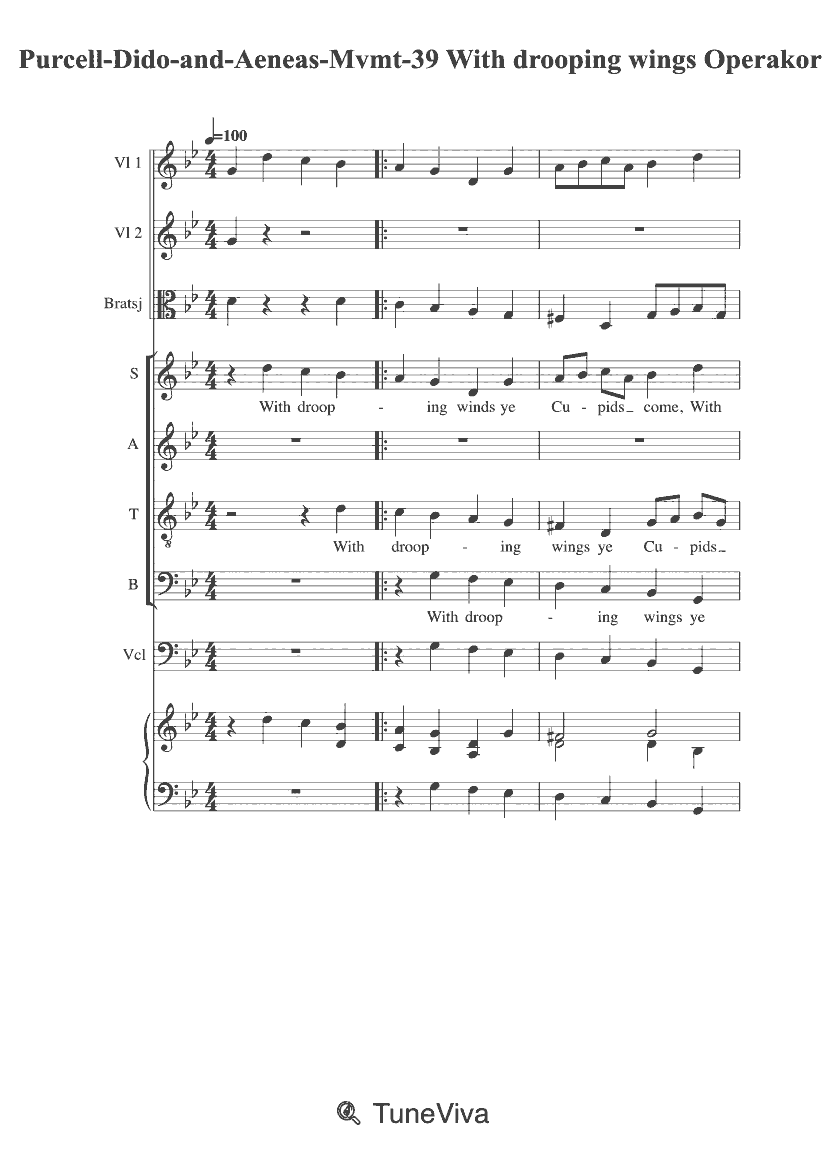
Purcell-Dido-and-Aeneas-Mvmt-39 With drooping wings Operakor
Henry Purcell
Vl 1; Vl 2; Bratsj +7 parts · 2 min 42 sec
Open scoreDido and Aeneas Z.626 sheet music on this page is represented by individual numbers attributed to Henry Purcell: the chorus “With drooping wings” and the Belinda arias “Pursue thy conquest, Love” and “Thanks to these lonesome Vales”. These selected scores suit musicians who need a single movement rather than the whole work, and their listed parts show different scorings for chorus and solo soprano.
Scores 1–20 of 42
Henry Purcell
Vl 1; Vl 2; Bratsj +7 parts · 2 min 42 sec
Open score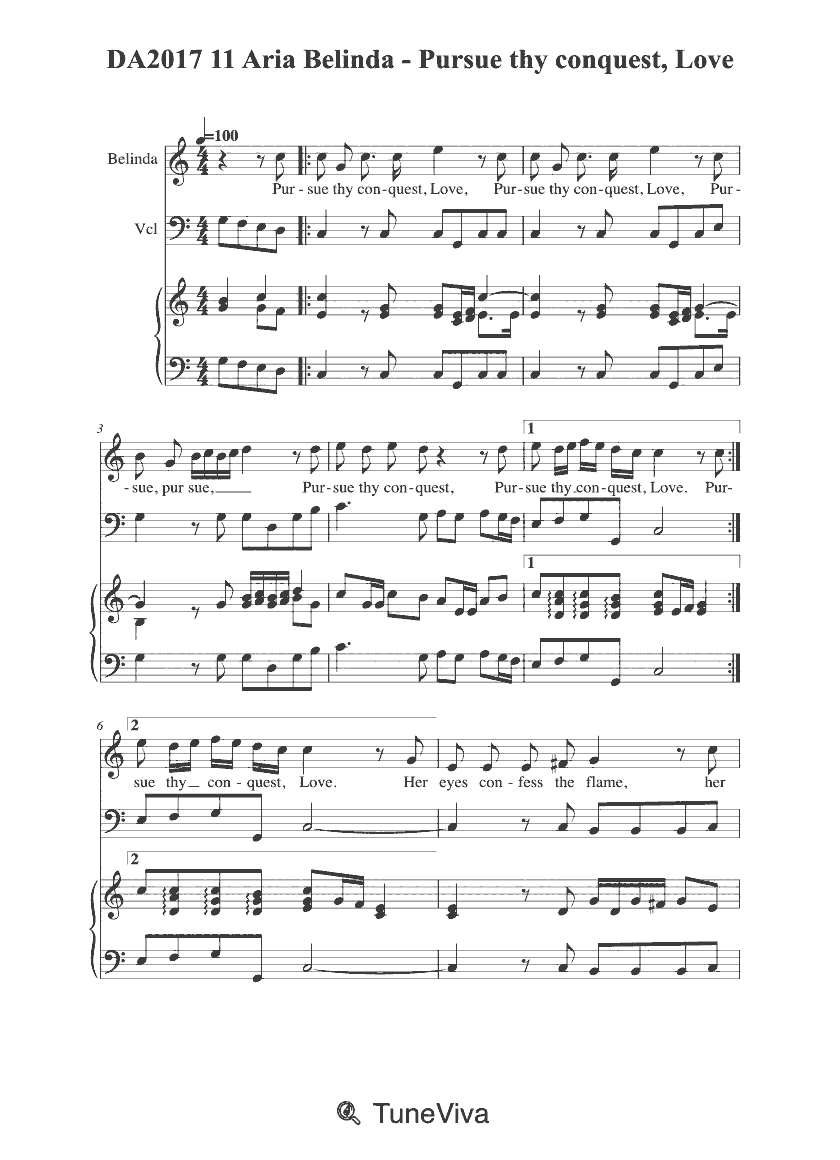
Henry Purcell
Pursue thy conquest Love
Belinda; Vcl; Cembalo, Harpsichord +1 parts · 1 min 4 sec
Open score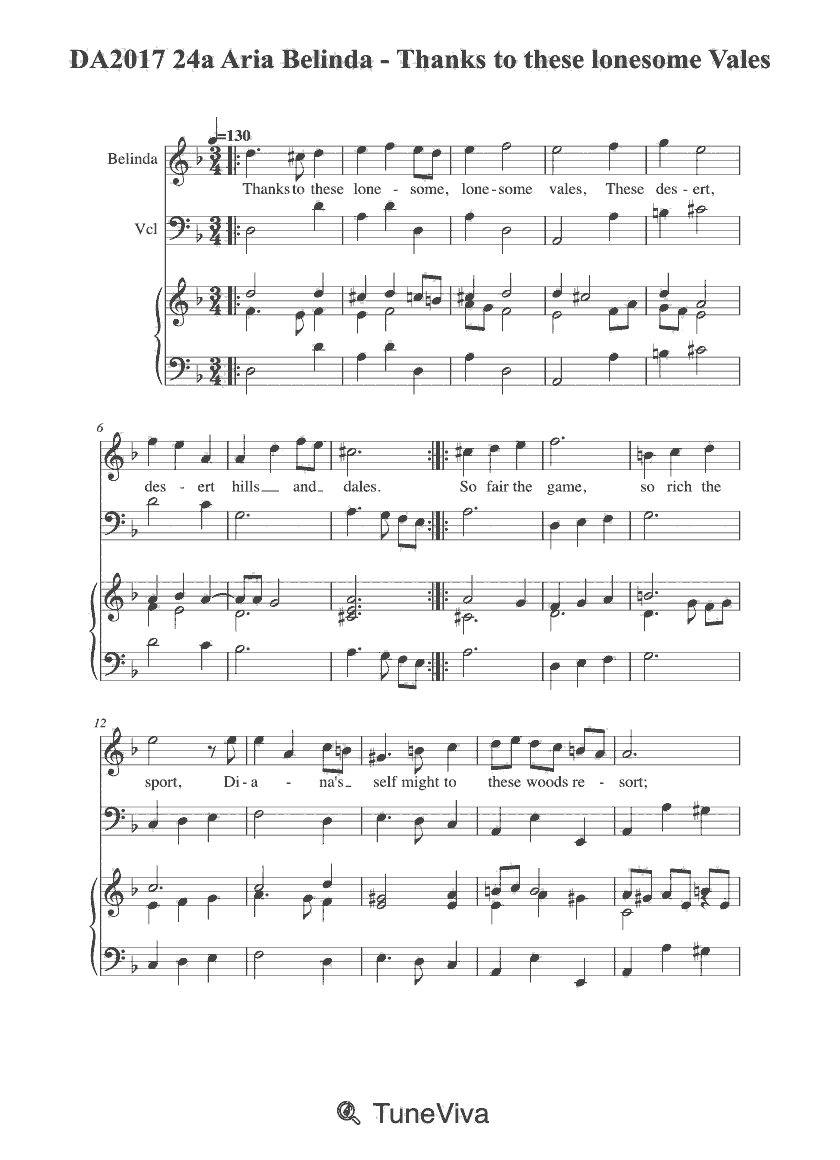
Henry Purcell
Thanks to these lonesome Vales
Belinda; Vcl; Cembalo, Harpsichord +1 parts · 1 min 34 sec
Open score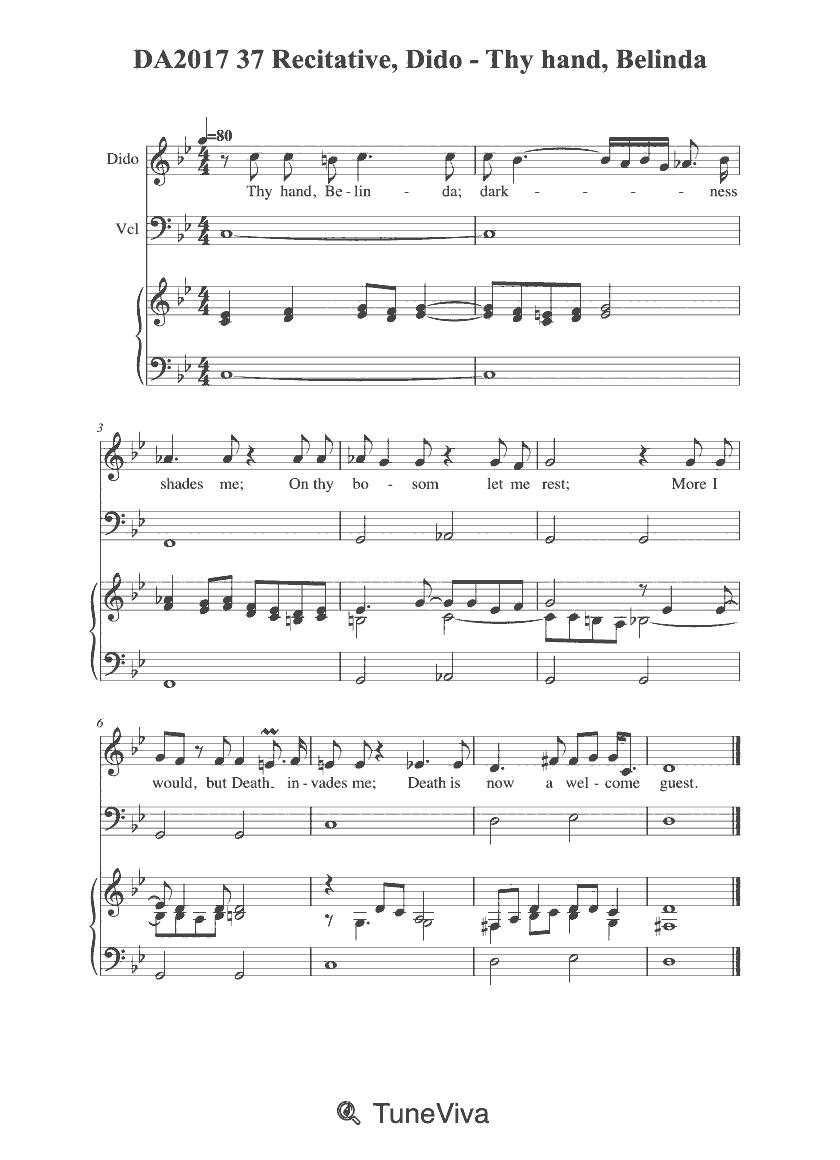
Henry Purcell
Thy hand Belinda
Dido; Vcl; Cembalo, Harpsichord +1 parts · 41 sec
Open score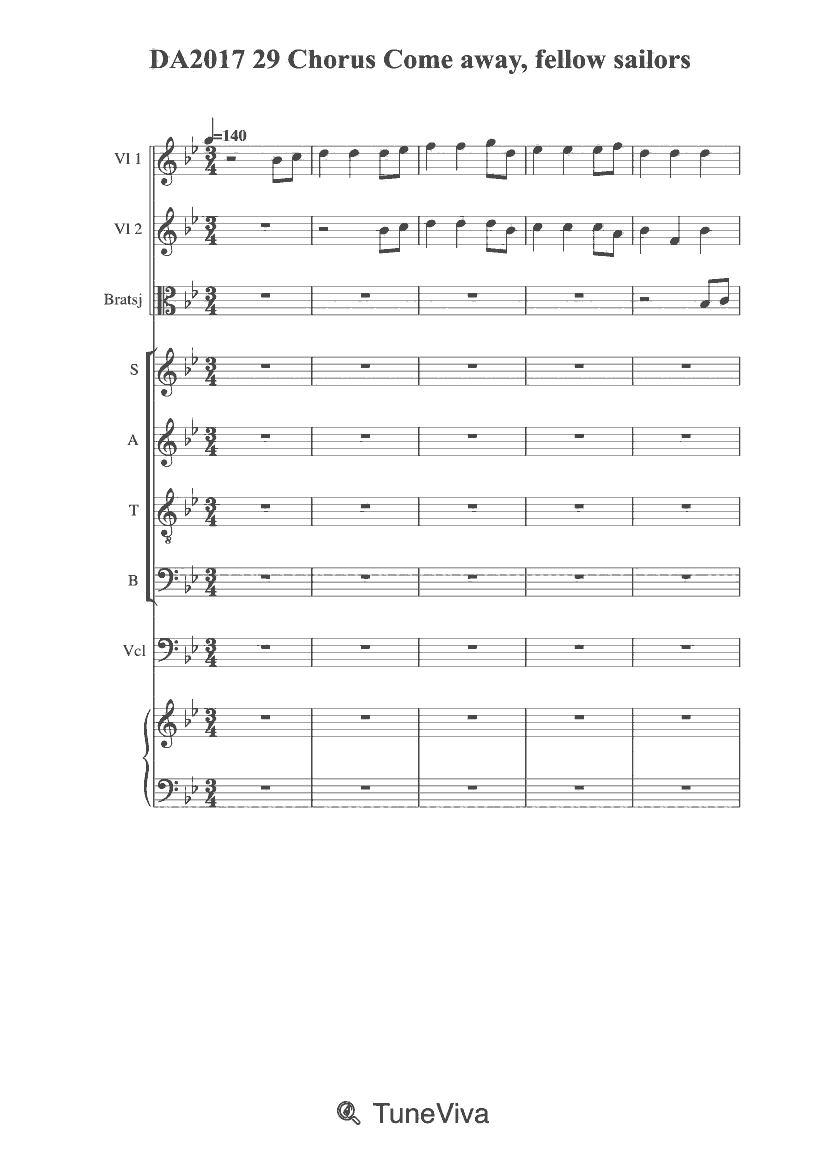
Henry Purcell
Come away fellow sailors
Vl 1; Vl 2; Bratsj +6 parts · 2 min 32 sec
Open score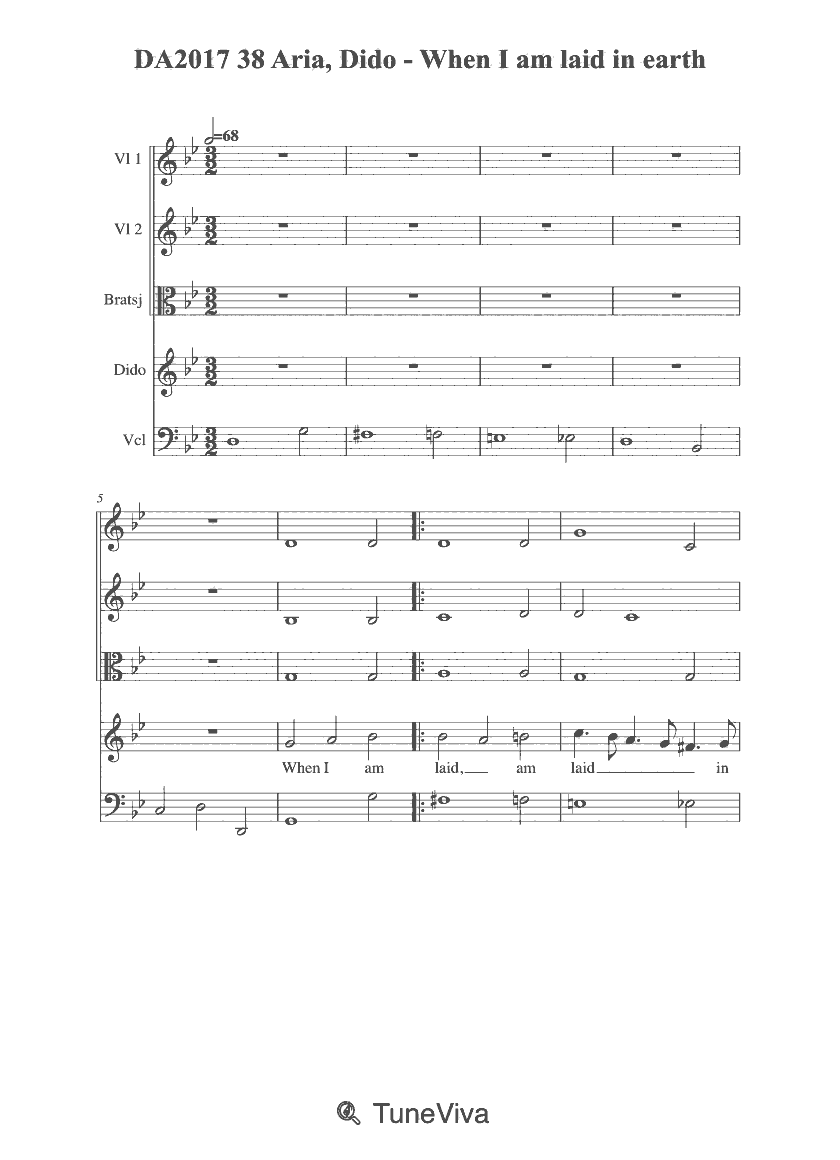
Henry Purcell
When I am laid in earth
Vl 1; Vl 2; Bratsj +2 parts · 5 min 9 sec
Open score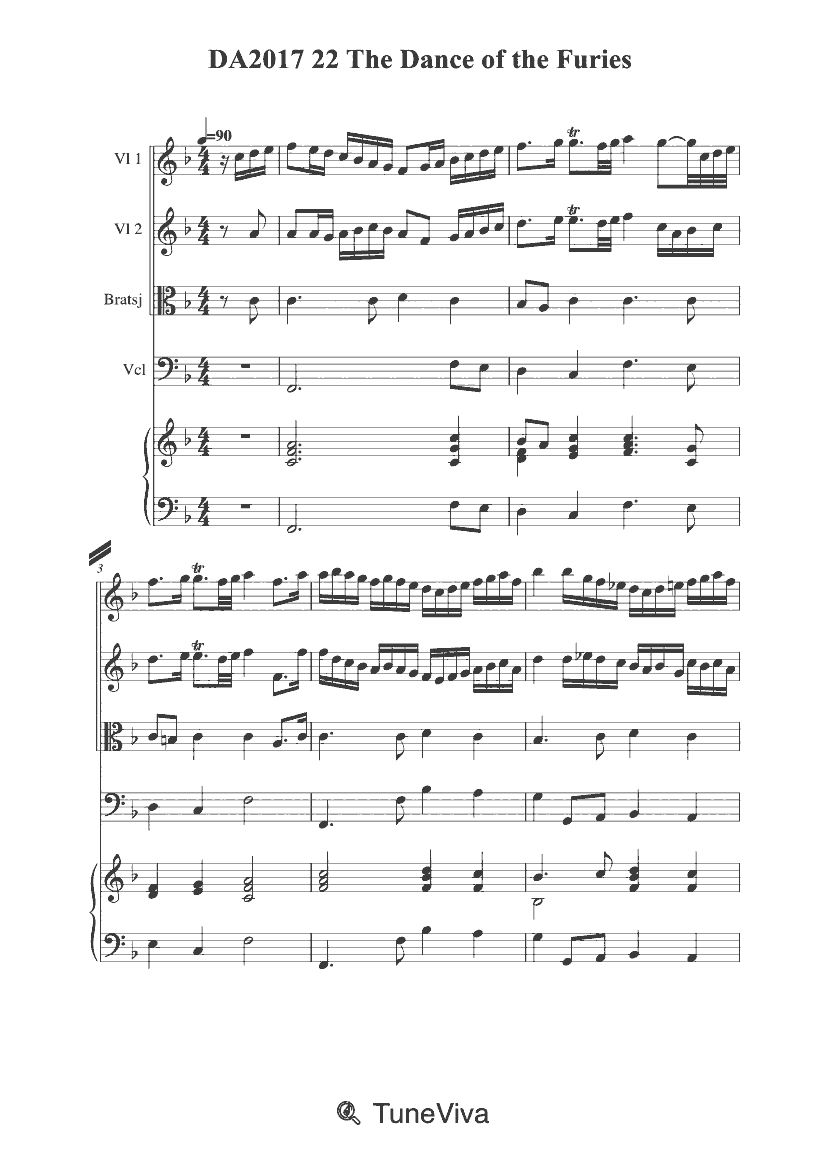
Henry Purcell
The Dance of the Furies
Vl 1; Vl 2; Bratsj +3 parts · 1 min 16 sec
Open score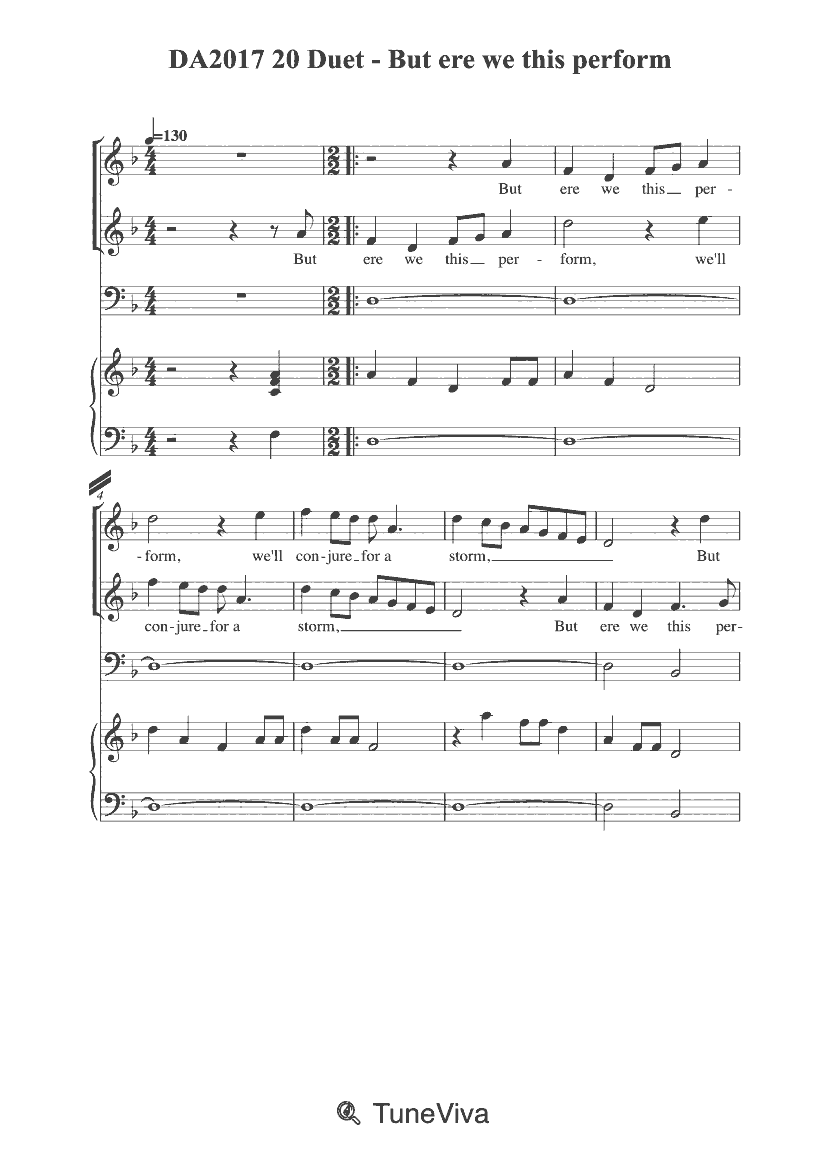
Henry Purcell
But ere we this perform
Sopran, First Witch; Sopran, Second Witch; Cello, Basso +2 parts · 4 min 26 sec
Open score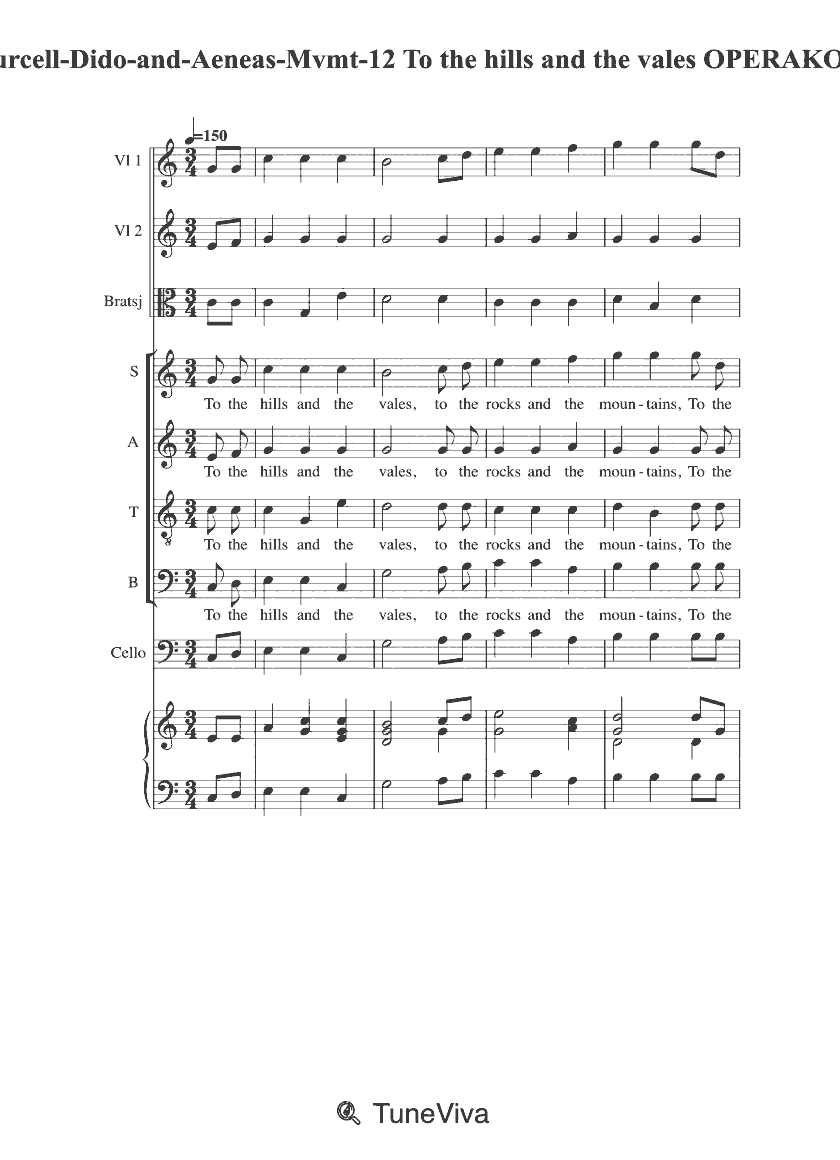
Henry Purcell
Vl 1; Vl 2; Bratsj +6 parts · 1 min 12 sec
Open score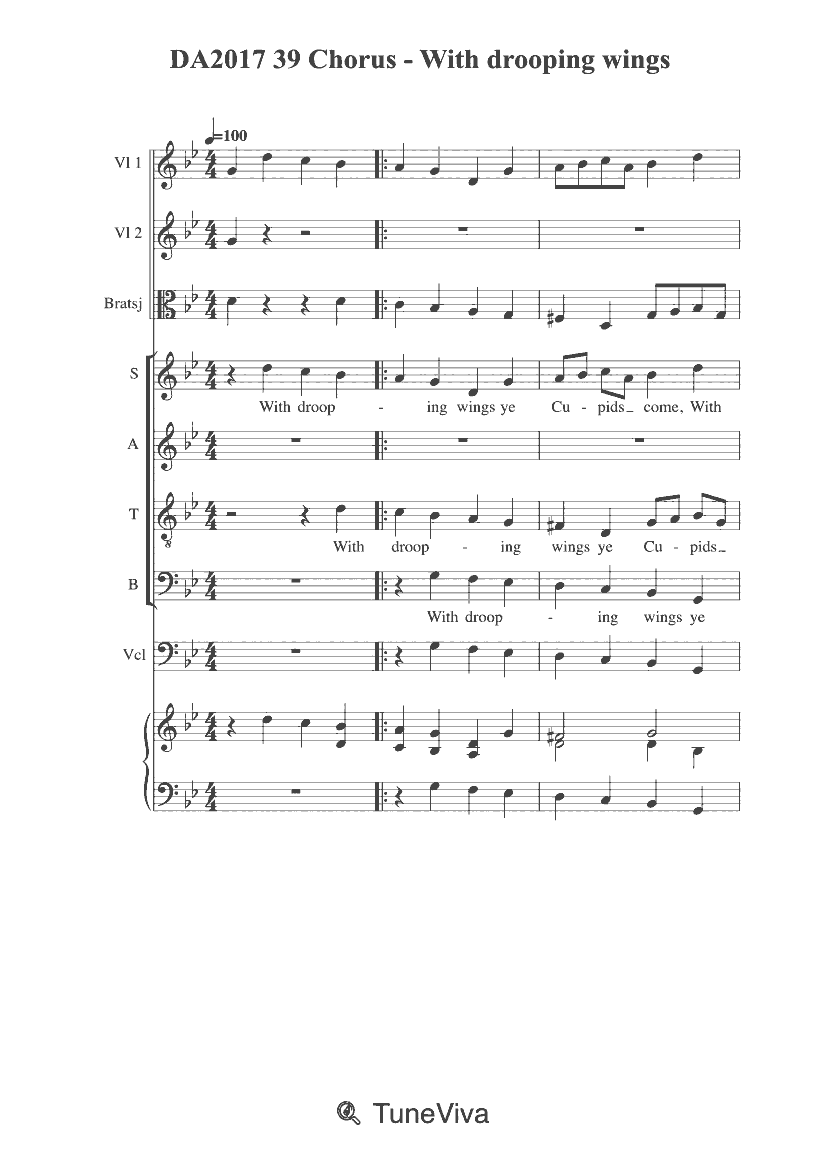
Henry Purcell
With drooping wings ye Cupids come
Vl 1; Vl 2; Bratsj +7 parts · 2 min 42 sec
Open score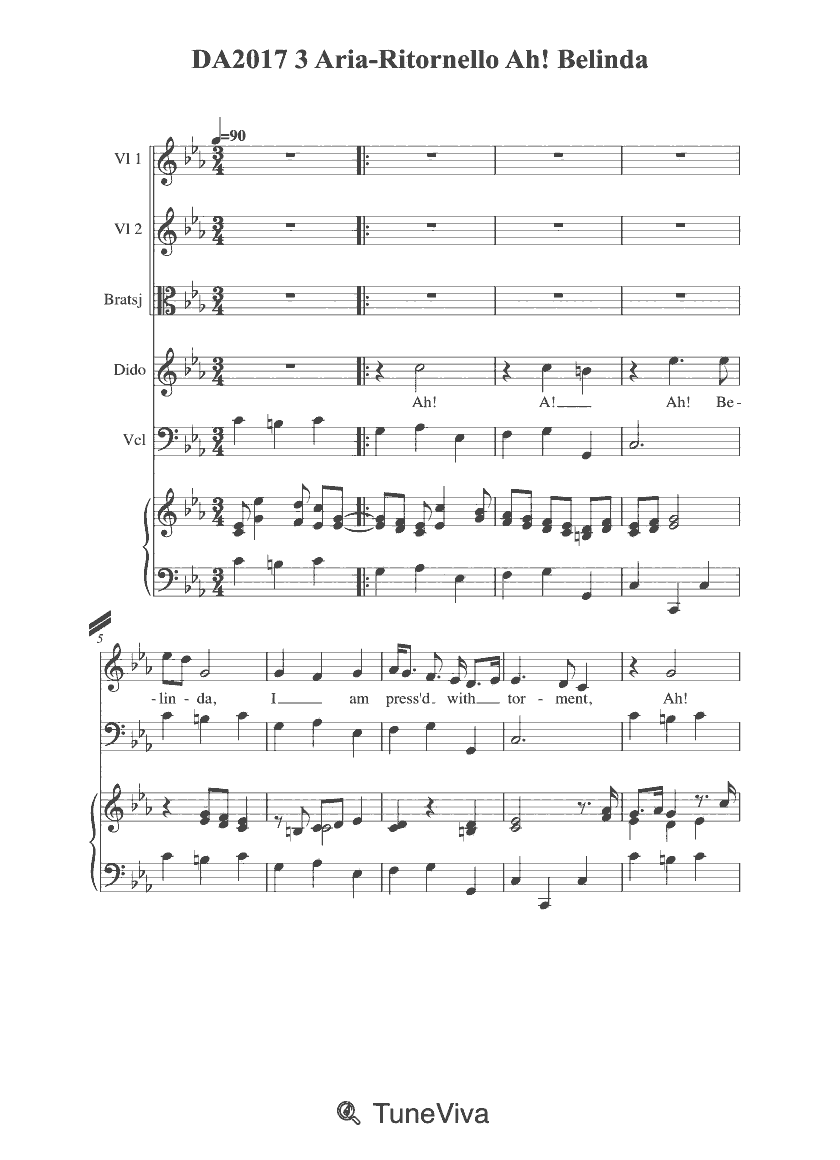
Henry Purcell
Ah! Belinda
Vl 1; Vl 2; Bratsj +4 parts · 3 min 37 sec
Open score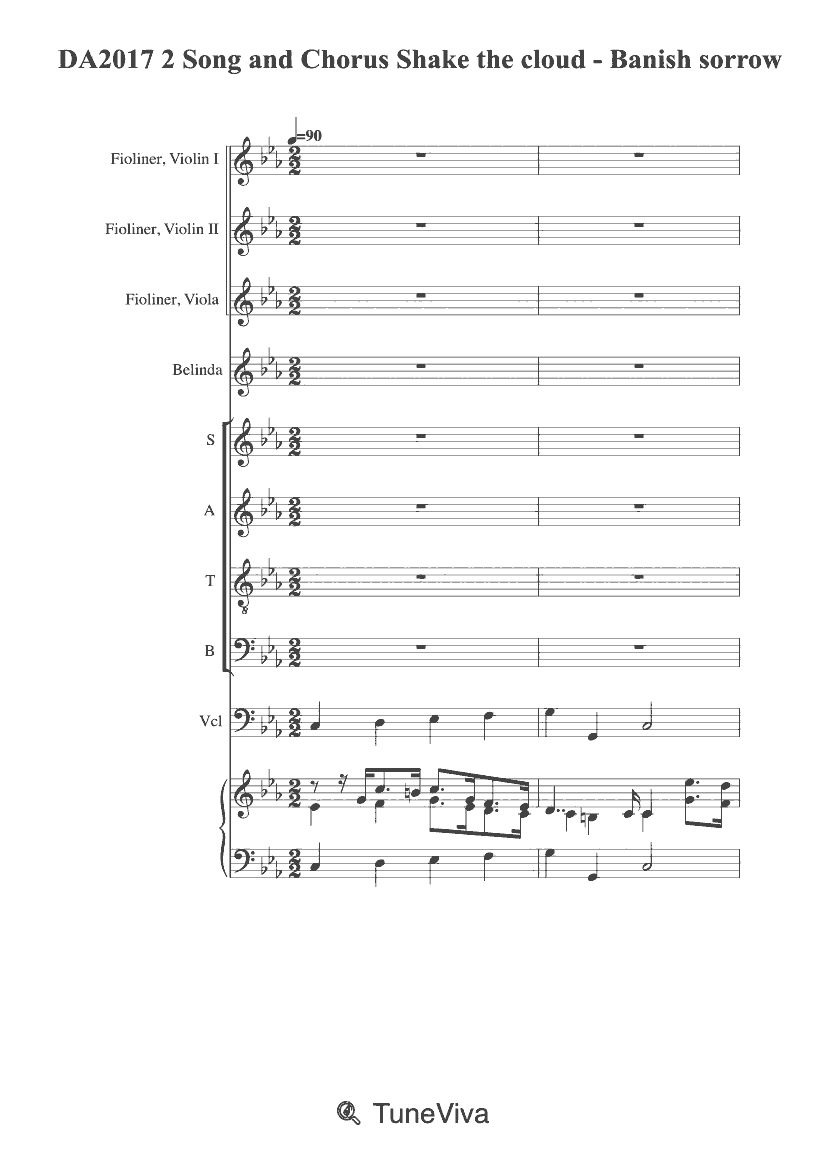
Henry Purcell
Shake the cloud - Banish sorrow
Fioliner, Violin I; Fioliner, Violin II; Fioliner, Viola +8 parts · 3 min 43 sec
Open score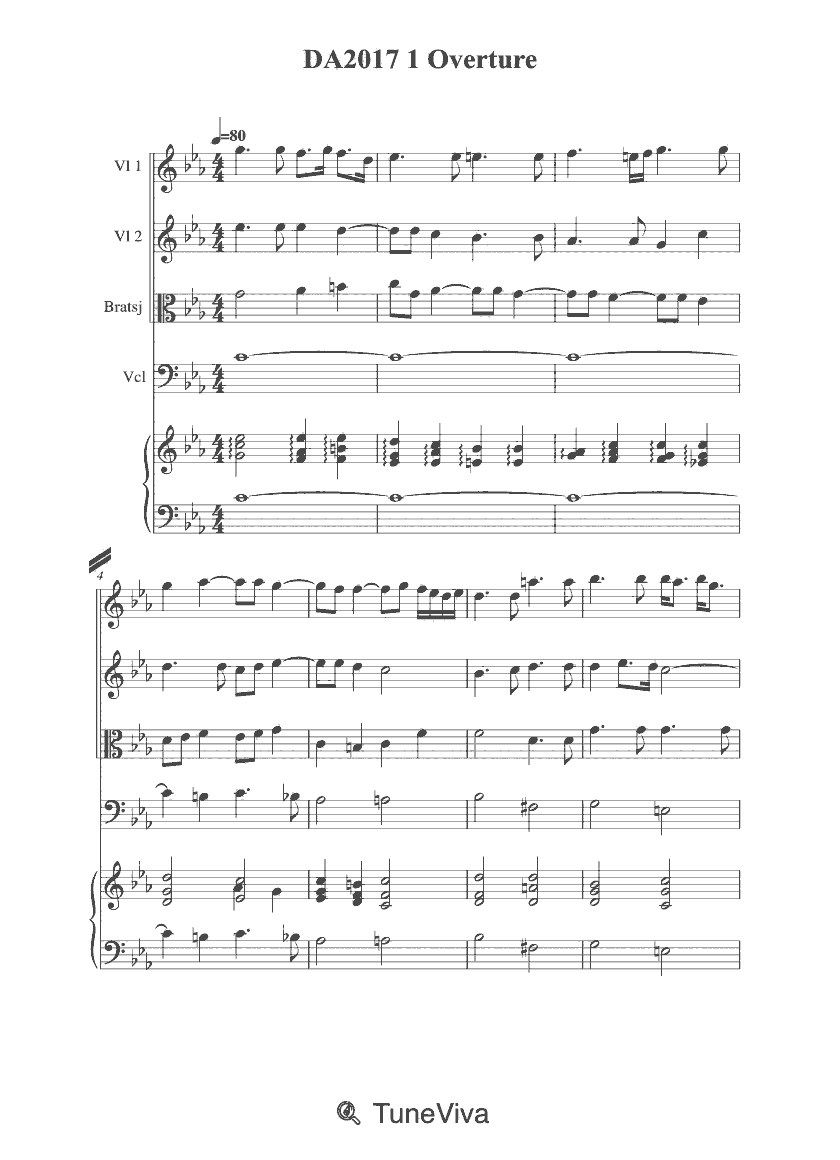
Henry Purcell
Vl 1; Vl 2; Bratsj +3 parts · 2 min 51 sec
Open score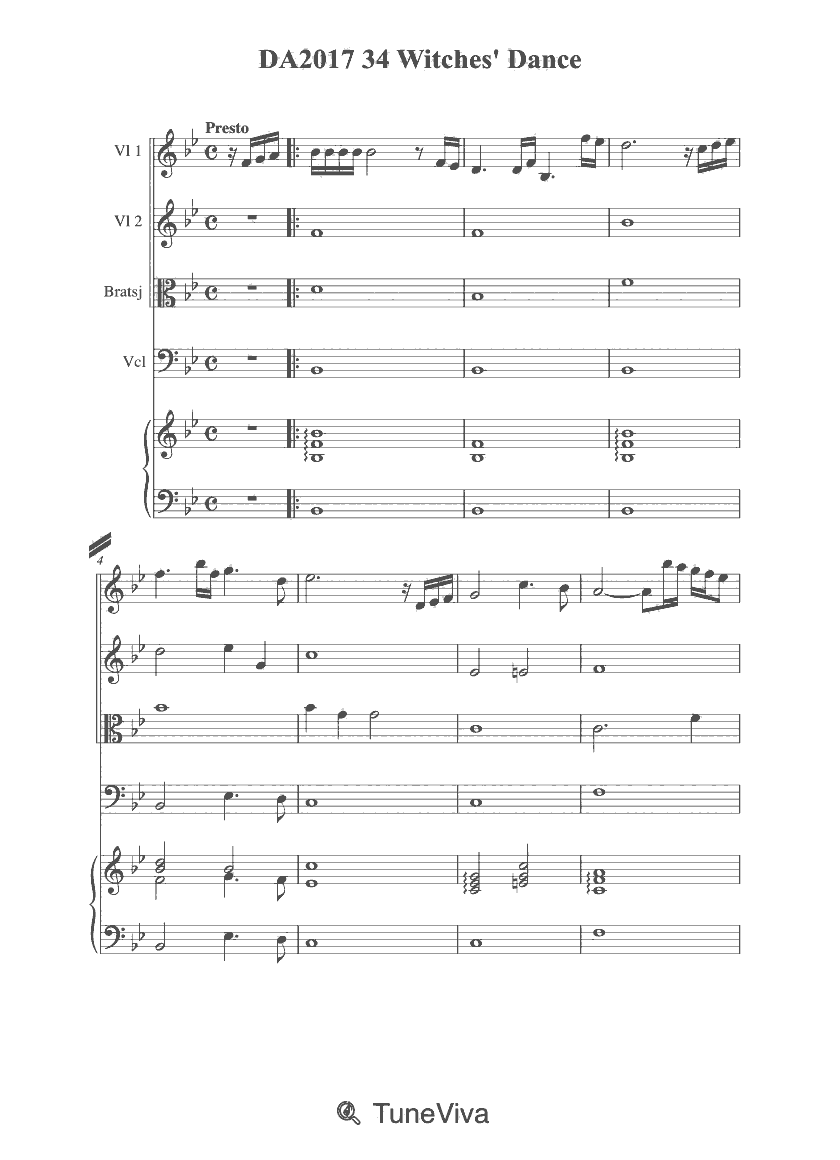
Henry Purcell
Witches' dance
Vl 1; Vl 2; Bratsj +3 parts · 1 min 50 sec
Open score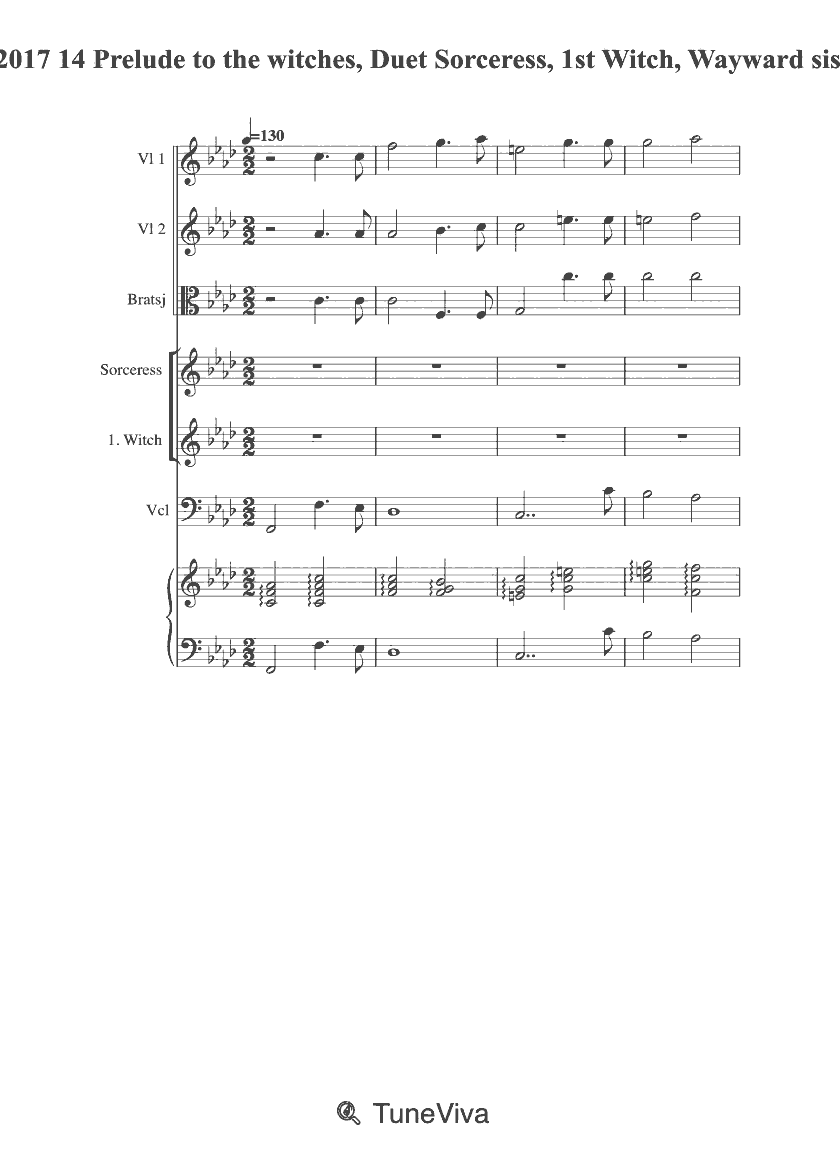
Henry Purcell
Wayward sisters
Vl 1; Vl 2; Bratsj +5 parts · 2 min 13 sec
Open score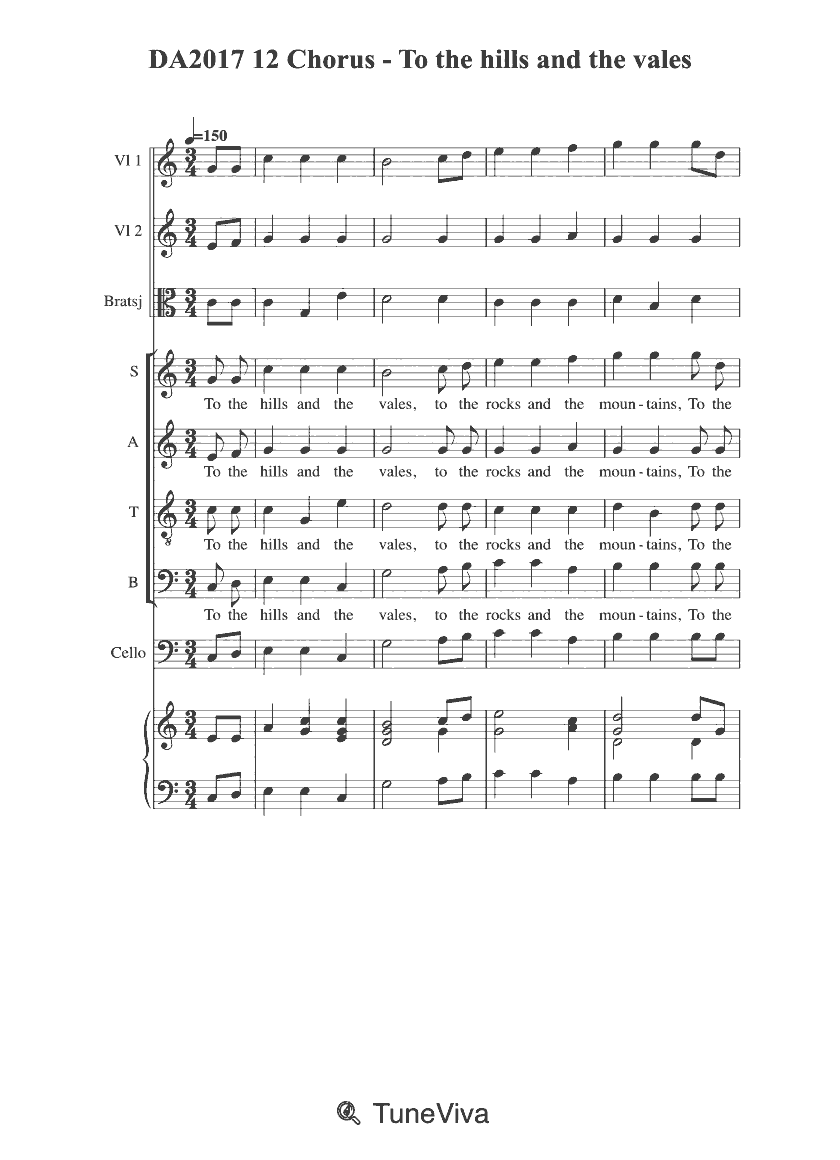
Henry Purcell
To the hills and the vales
Vl 1; Vl 2; Bratsj +6 parts · 1 min 12 sec
Open score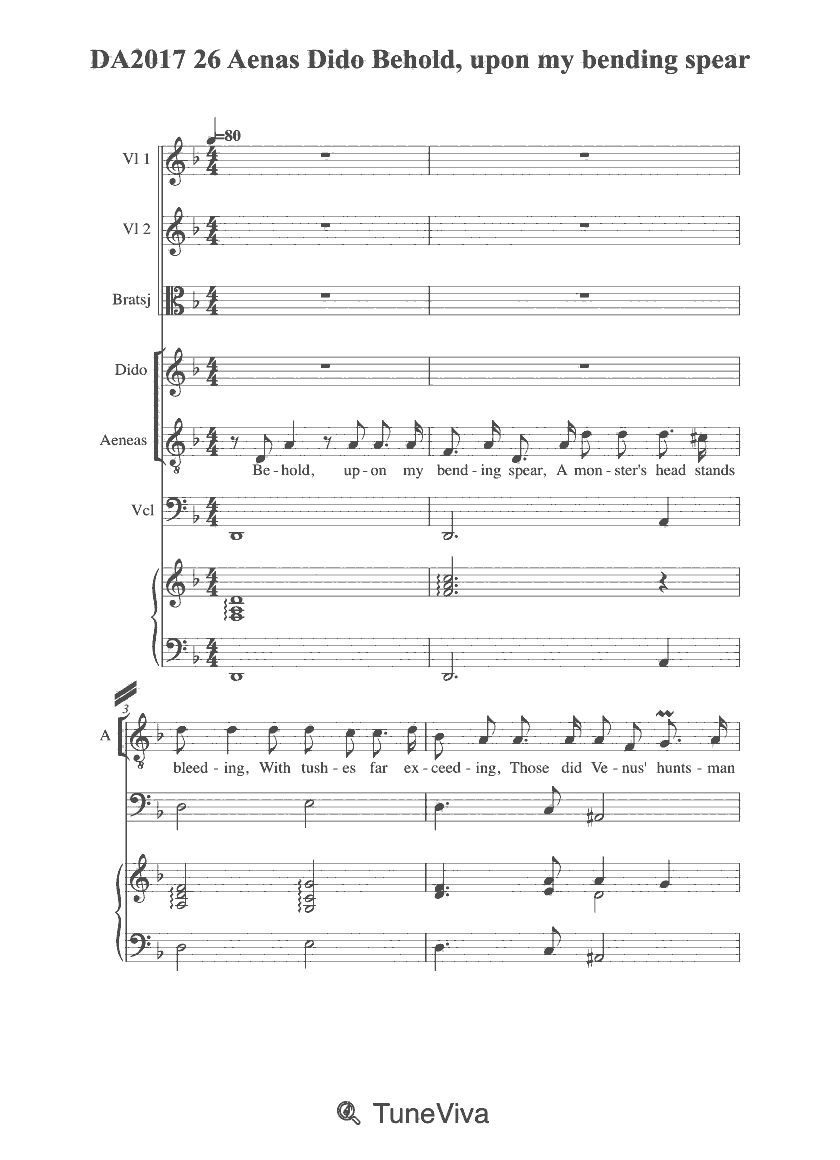
Henry Purcell
Behold upon my bending spear
Vl 1; Vl 2; Bratsj +5 parts · 30 sec
Open score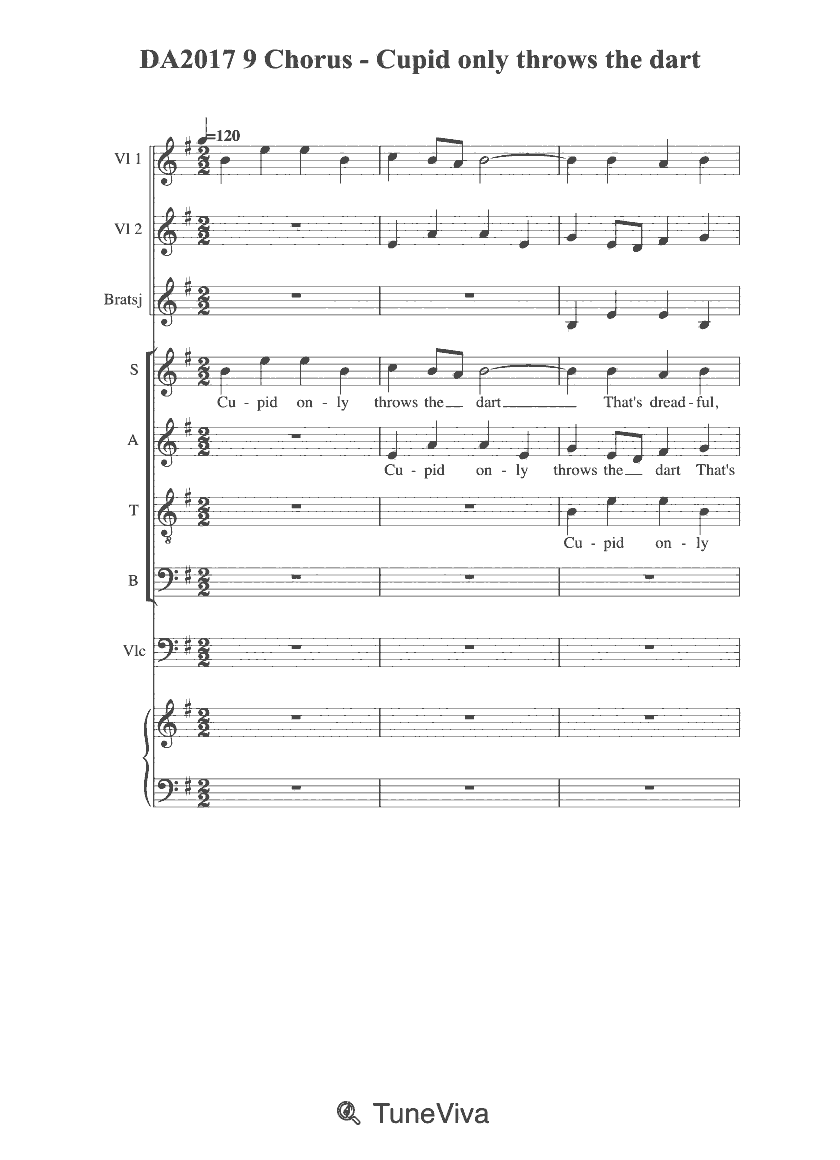
Henry Purcell
Cupid only throws the dart
Vl 1; Vl 2; Bratsj +7 parts · 1 min 26 sec
Open score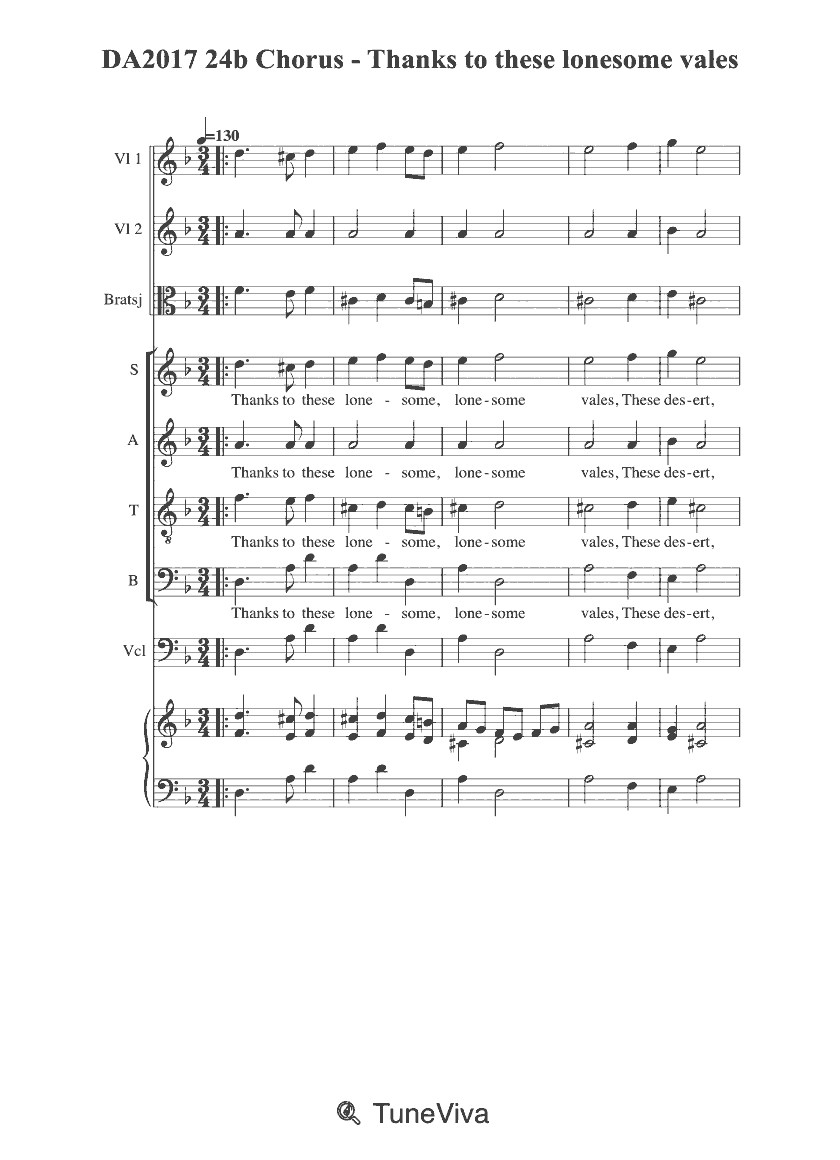
Henry Purcell
Thanks to these lonesome Vales
Vl 1; Vl 2; Bratsj +7 parts · 2 min 16 sec
Open score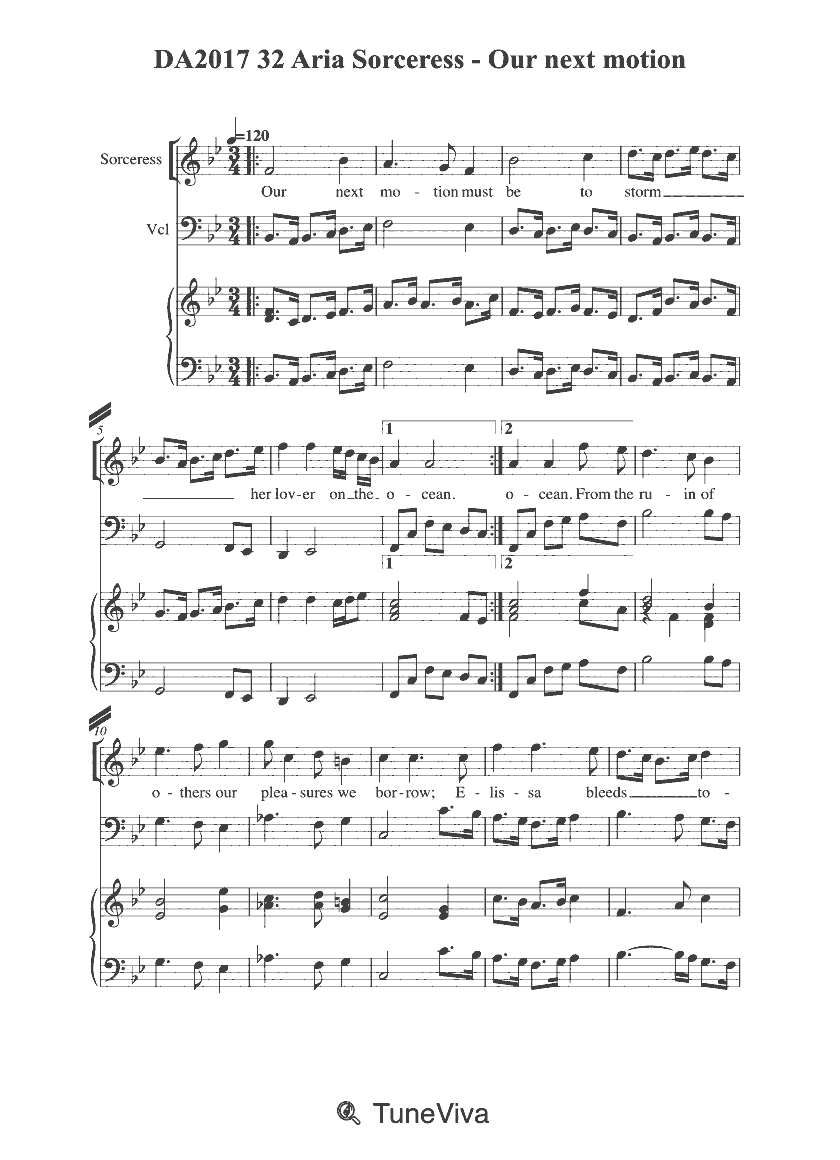
Henry Purcell
Our next motion
Sorceress; Vcl; Cembalo, Harpsichord +1 parts · 44 sec
Open scorePage 1 of 3
The selected items are separate numbers from Dido and Aeneas Z.626, not a complete opera score. They include a chorus number, “With drooping wings”, and two arias for the character Belinda. This makes the page most useful for rehearsal or performance of a specific excerpt, while a full synopsis, complete running order and edition history require separate verification.
“With drooping wings” lists parts for violin 1, violin 2, viola, soprano, alto, tenor, bass, cello and harpsichord. The Belinda arias list Belinda, cello and harpsichord. These part lists are useful for judging whether a score matches your forces, but they should be checked against the actual score before purchase or performance.
“Pursue thy conquest, Love” is listed with no sharps or flats, 4/4 time and a 100 BPM opening tempo. “Thanks to these lonesome Vales” is listed with one flat, 3/4 time and a 180 BPM opening tempo. Those details help distinguish the two arias at a glance, though opening tempo and key information in listings can be approximate.
The supplied records do not provide a verified edition, premiere history, full plot summary or authoritative movement numbering. They also do not prove that the listed keys, tempos or part names are definitive. Treat the titles and part lists as practical leads, then confirm details in the score itself or a reliable reference source.
Score parts: Vl 1, Vl 2, Bratsj, S, A, T, …. Catalogue duration 2 min 42 sec. Opening key signature: 2 flats. Opening time signature: 4/4. Opening tempo: 100 BPM.
Score parts: Belinda, Vcl, Cembalo, Harpsichord, Cembalo,. Catalogue duration 1 min 4 sec. Opening key signature: No sharps or flats. Opening time signature: 4/4. Opening tempo: 100 BPM.
Score parts: Belinda, Vcl, Cembalo, Harpsichord, Cembalo,. Catalogue duration 1 min 34 sec. Opening key signature: 1 flat. Opening time signature: 3/4. Opening tempo: 180 BPM.
The selected scores attribute Dido and Aeneas Z.626 to Henry Purcell. The page does not supply biographical or premiere details, so those should be checked in a reliable edition or reference work.
The selected scores are individual numbers from Dido and Aeneas Z.626, not a complete opera score. Their titles identify “With drooping wings” and the Belinda arias “Pursue thy conquest, Love” and “Thanks to these lonesome Vales”.
The selected items include the chorus “With drooping wings” and two Belinda arias: “Pursue thy conquest, Love” and “Thanks to these lonesome Vales”. Each is presented as a separate score rather than as part of a complete running order.
The score listing for “With drooping wings” names parts for violin 1, violin 2, viola, soprano, alto, tenor, bass, cello and harpsichord. That suggests a chorus with strings and continuo, but the part list should be checked against the score.
Both Belinda arias list Belinda, cello and harpsichord parts. “Pursue thy conquest, Love” opens with no sharps or flats in 4/4, while “Thanks to these lonesome Vales” opens with one flat in 3/4.
Choose “Pursue thy conquest, Love” for a 4/4 aria listed at a 100 BPM opening tempo, or “Thanks to these lonesome Vales” for a 3/4 aria listed at 180 BPM. Both are listed for Belinda with cello and harpsichord, so compare the actual vocal range and texture in the score before deciding.
“With drooping wings” is listed with two flats and 4/4; “Pursue thy conquest, Love” with no sharps or flats and 4/4; “Thanks to these lonesome Vales” with one flat and 3/4. These are opening indications in the listings and may not describe later changes in the music.