
Portsmouth
Misc tunes
1 min 4 sec · Score #76254
Open scorePortsmouth is a title attached to several different scores in this collection, so the name alone is not enough to identify a single work. One listing is attributed to Henry Playford and dated 1701; others are unattributed. Compare key, time signature, parts and attribution before choosing a score.
Scores 1–20 of 43
Misc tunes
1 min 4 sec · Score #76254
Open score
Henry Playford
1 min 9 sec
Open score
Misc tunes
Soprano; Tenor; Bass · 44 sec
Open score
anon.
Old English air
32 sec · Score #80181
Open score
Misc tunes
32 sec
Open score
Misc tunes
2 min 8 sec · Score #234590
Open score
Misc tunes
1 min 48 sec · Score #177847
Open score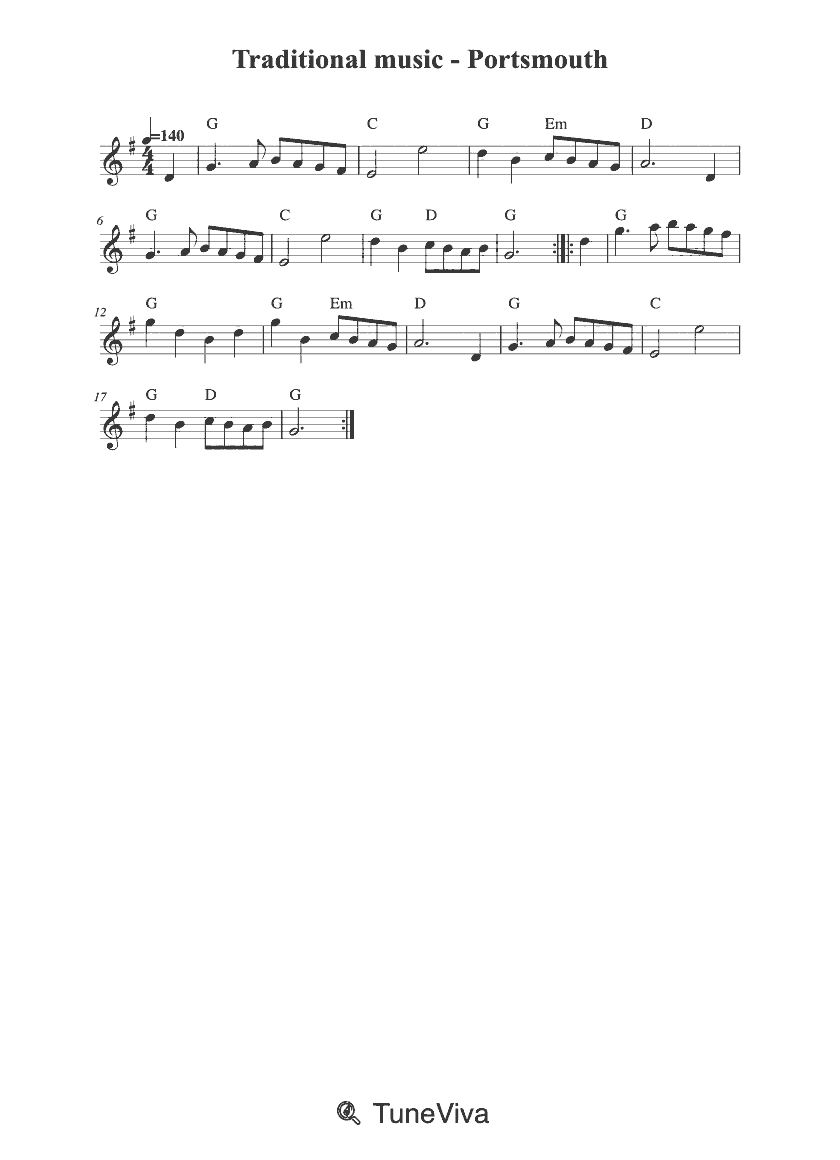
Trad. Playford 1709
55 sec
Open score
Misc tunes
1 min 48 sec · Score #72522
Open score
Misc tunes
2 min 8 sec · Score #123477
Open score
Misc tunes
2 min 32 sec
Open score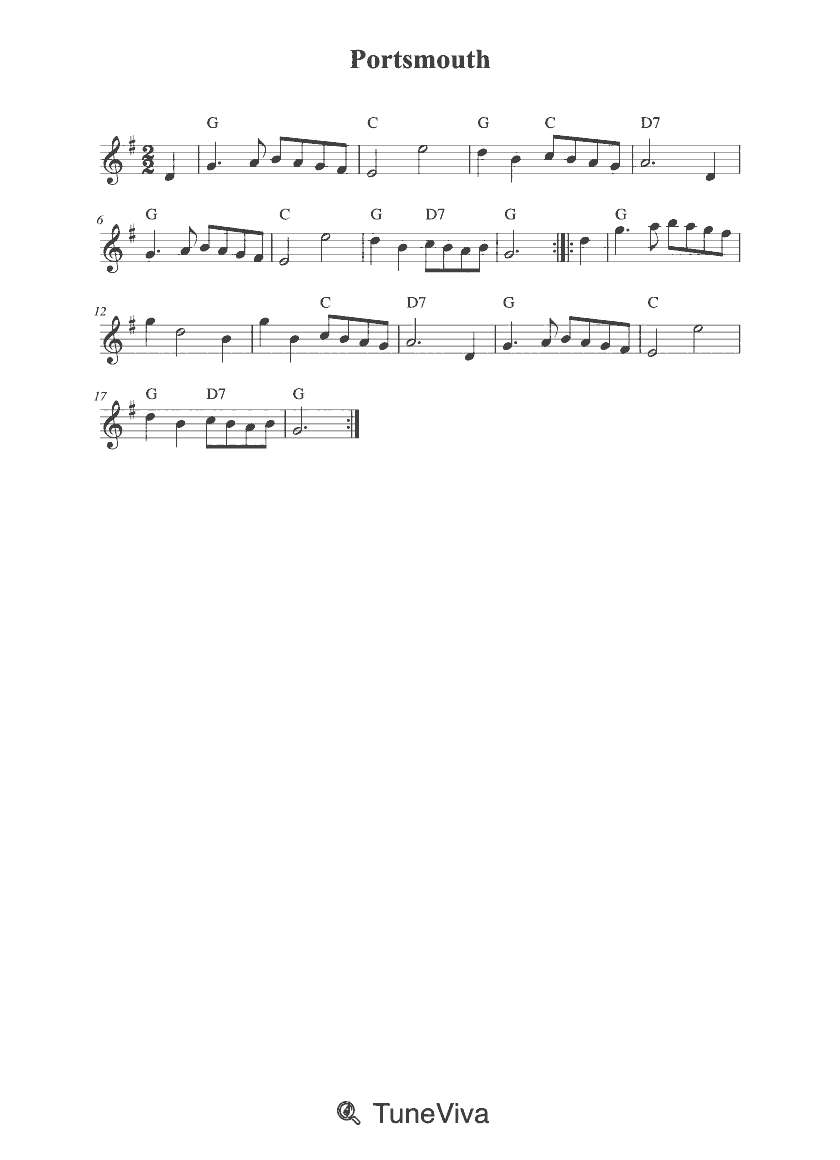
Misc tunes
2 min 8 sec · Score #205327
Open score
Untitled in MS
19 sec
Open score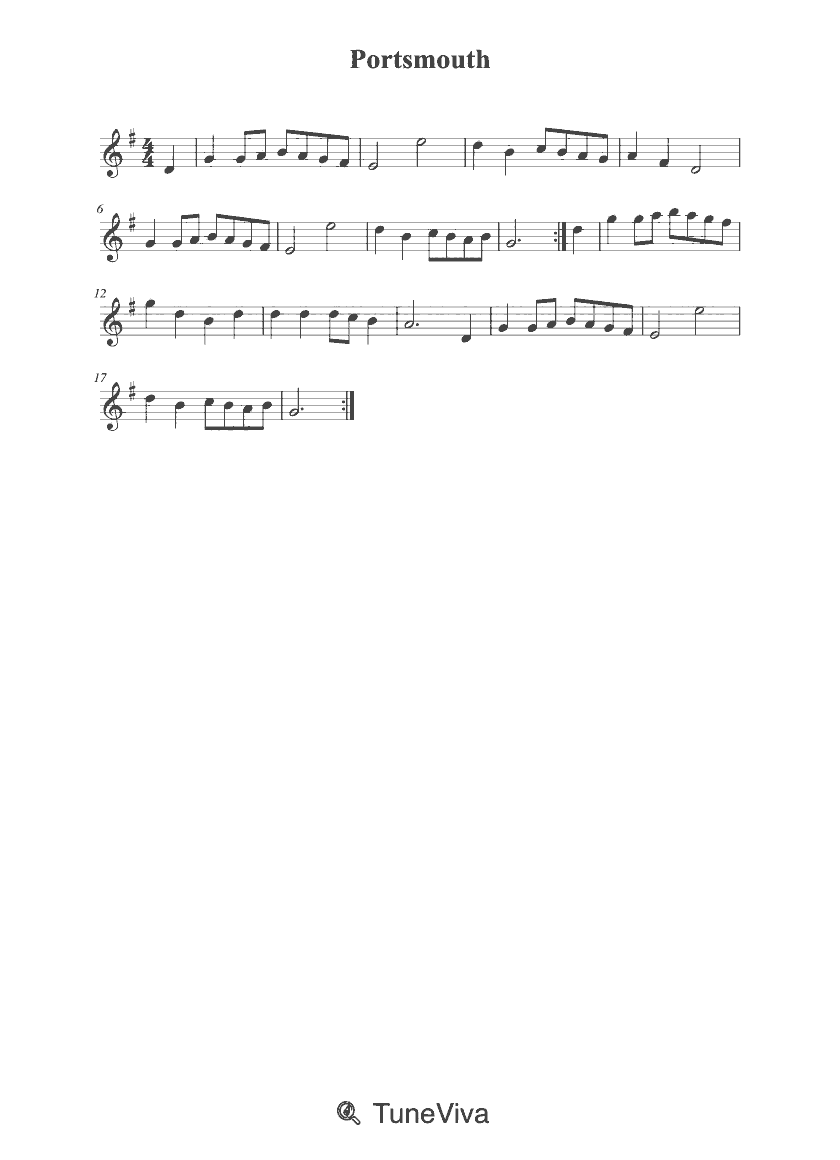
Misc tunes
1 min 20 sec
Open score
anon.
Old English air
32 sec · Score #63199
Open score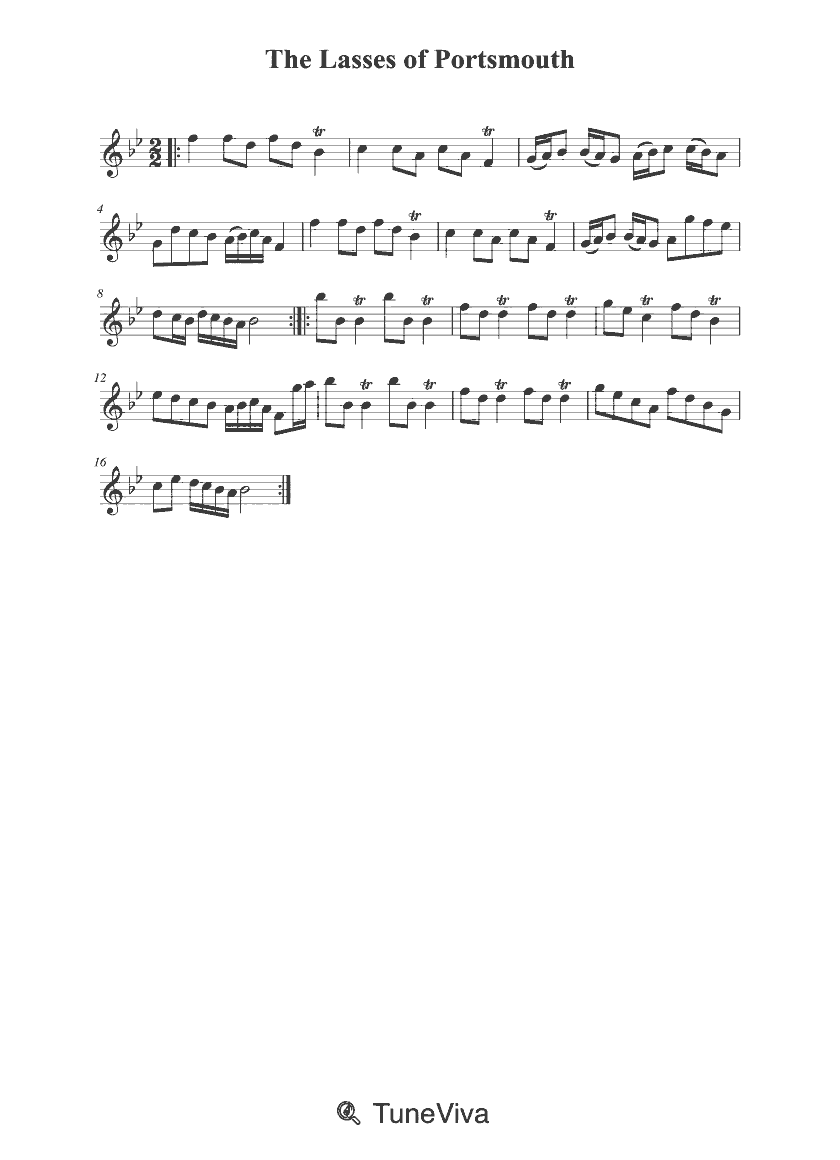
Misc tunes
2 min 8 sec · Score #94134
Open score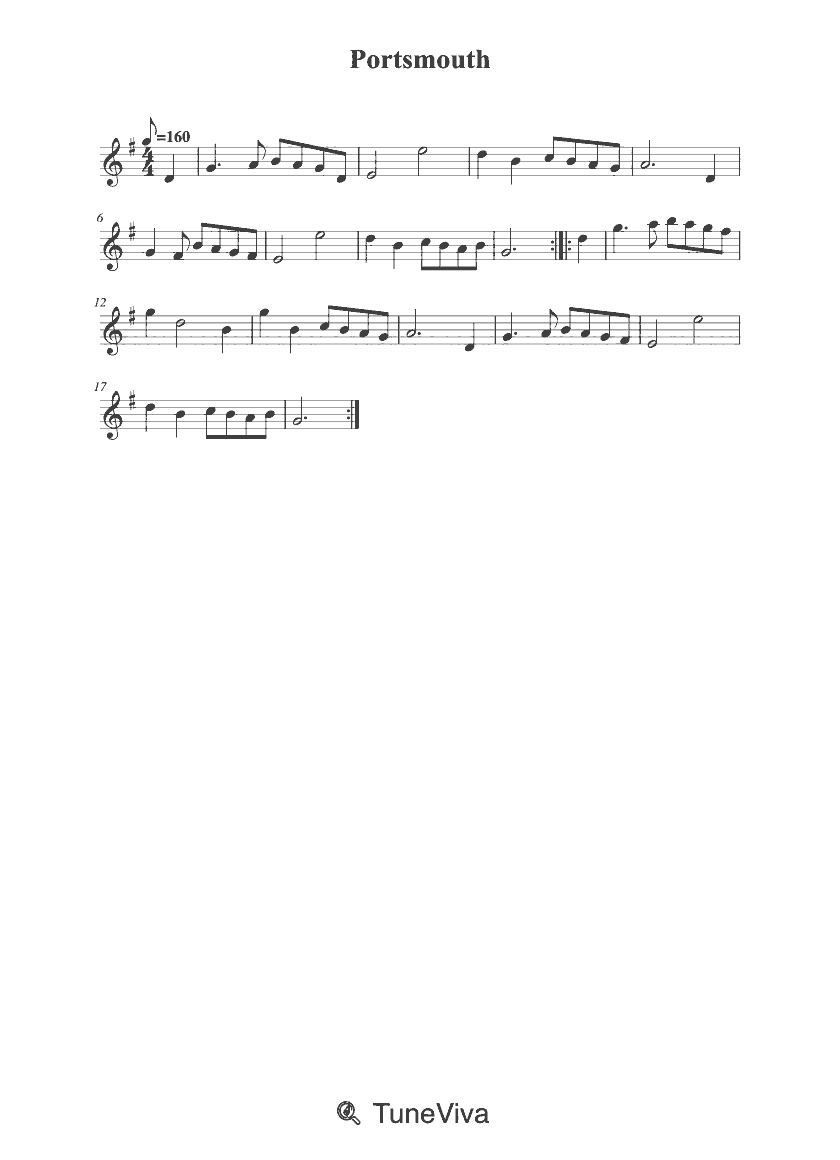
Misc tunes
1 min 35 sec
Open score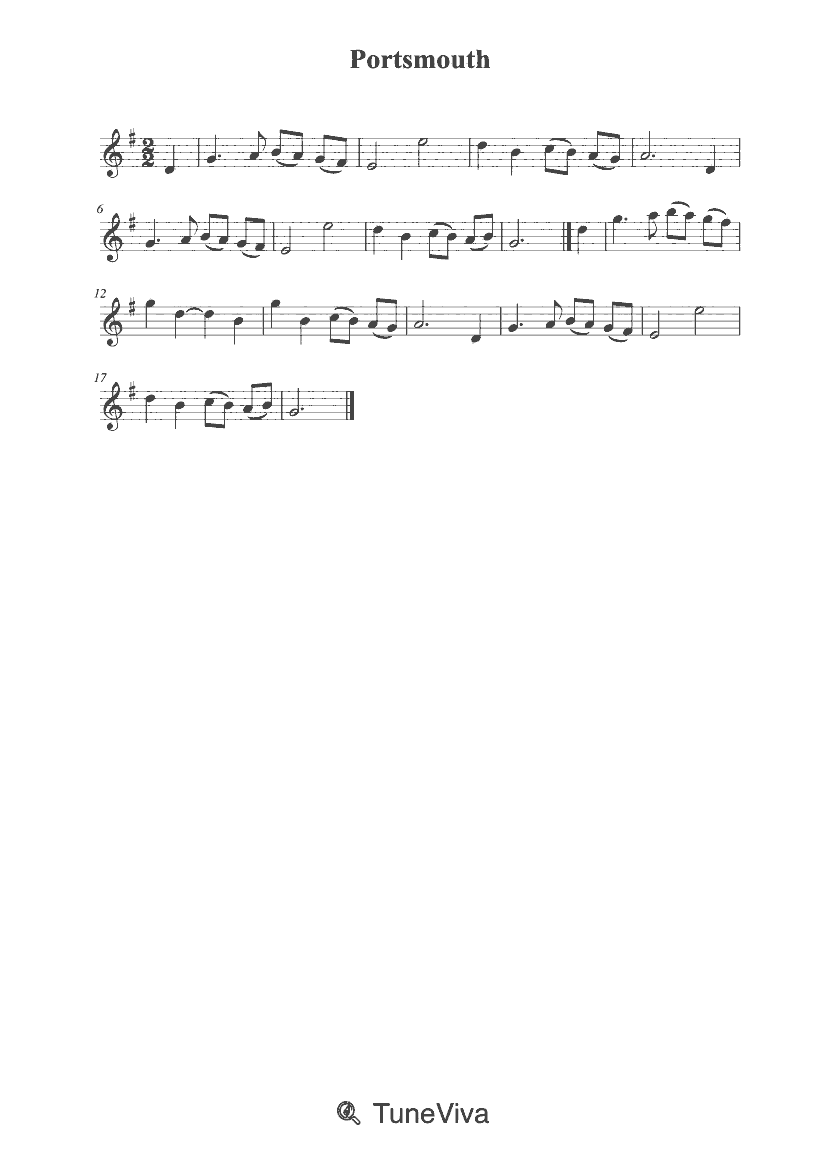
Misc tunes
1 min 4 sec · Score #216037
Open score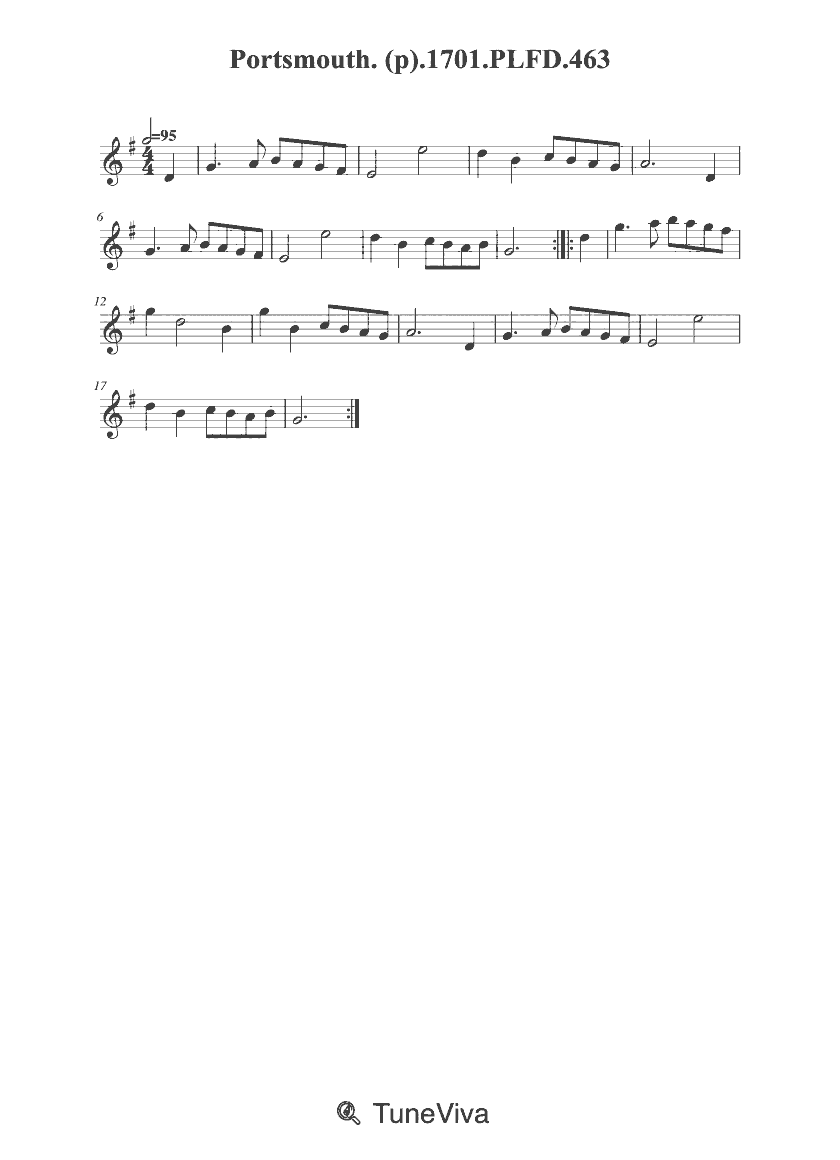
Misc tunes
40 sec
Open score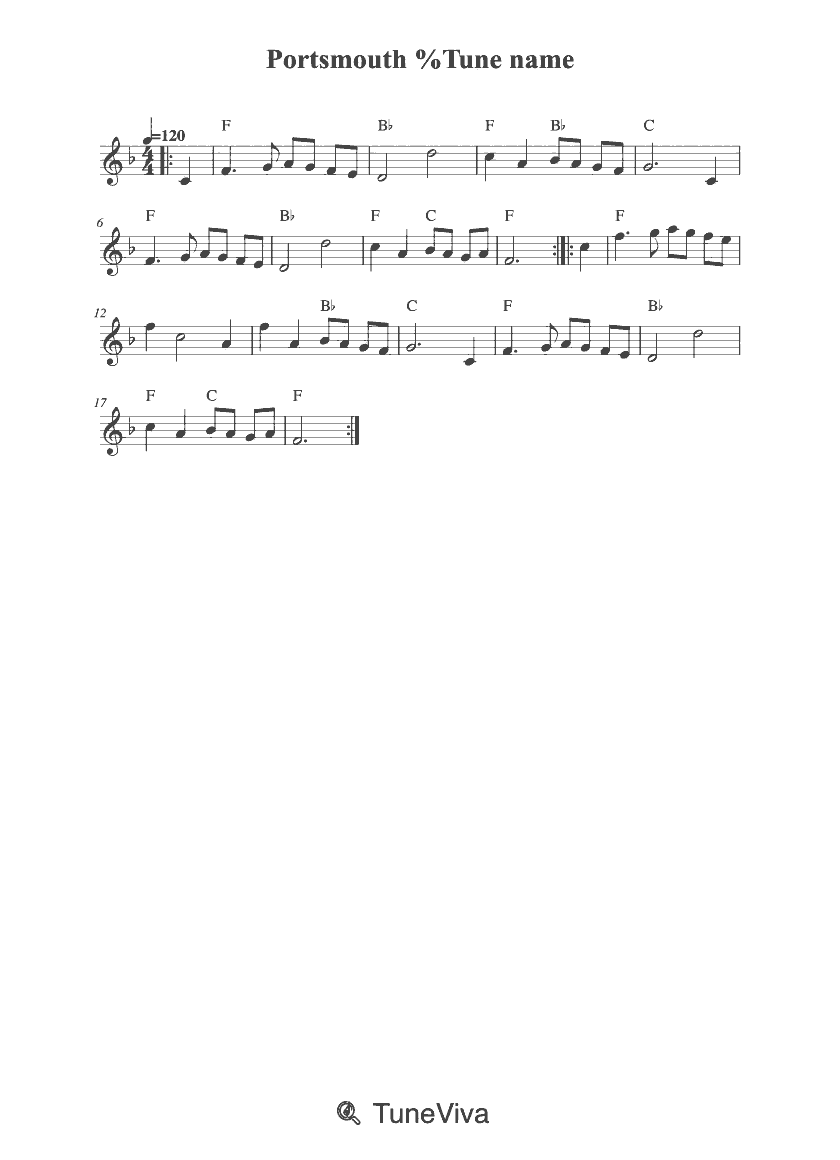
Misc tunes
1 min 4 sec
Open scorePage 1 of 3
The Portsmouth scores here differ in key and parts: two open in G major with one sharp, while one opens in F major with one flat. One three-part listing names Soprano, Tenor and Bass. Use those details as a starting point, then confirm them on the score itself.
For a single-line melody, start with a Portsmouth listing that does not assign multiple parts and check the clef and range. For a mixed ensemble, the Soprano/Tenor/Bass listing is the only one in this set that names parts; verify whether those parts suit voices or instruments.
The listing 'Henry Playford - Portsmouth' carries a 1701 date; the other Portsmouth scores are unattributed. Do not assume every score titled Portsmouth is the same piece or shares that attribution. Check the caption, composer credit and date on the score itself.
Two Portsmouth listings give 2/2; one three-part listing gives 22/4, which is not a standard time signature. A 224 BPM tempo appears on one listing. Check the printed time signature and tempo marking rather than relying on a single listed value.
Catalogue duration 1 min 4 sec. Opening key signature: 1 sharp (G major). Opening time signature: 2/2.
Catalogue duration 1 min 9 sec. Opening key signature: 1 sharp (G major). Opening time signature: 2/2. Opening tempo: 224 BPM.
Score parts: Soprano, Tenor, Bass. Catalogue duration 44 sec. Opening key signature: 1 flat (F major). Opening time signature: 22/4.
Portsmouth is a work title used for several scores here, not a single verified composition. One score is listed as 'Henry Playford - Portsmouth' with a date of 1701, while other Portsmouth listings carry no composer name.
One Portsmouth score is titled 'Henry Playford - Portsmouth' and gives Henry Playford with the date 1701. That attribution applies to that listing; the other Portsmouth scores in this set do not name a composer, so the Playford connection should not be extended to them without further evidence.
Two Portsmouth scores open with one sharp, given as G major, and one three-part score opens with one flat, given as F major. Check the opening key signature on the score you intend to play or sing.
The three-part Portsmouth listing names Soprano, Tenor and Bass. The single-part Portsmouth listings do not name instruments or voices, so compare clefs and ranges before choosing a version for a particular ensemble.
Two Portsmouth scores show an opening time signature of 2/2, while the three-part score shows 22/4, an unusual value that should be checked against the printed score. One listing also gives an opening tempo of 224 BPM.
Choose a Portsmouth score by matching the listed key, parts and notation to your ensemble or instrument. The three-part listing is the only one here that names Soprano, Tenor and Bass parts; the other listings do not specify instrumentation.