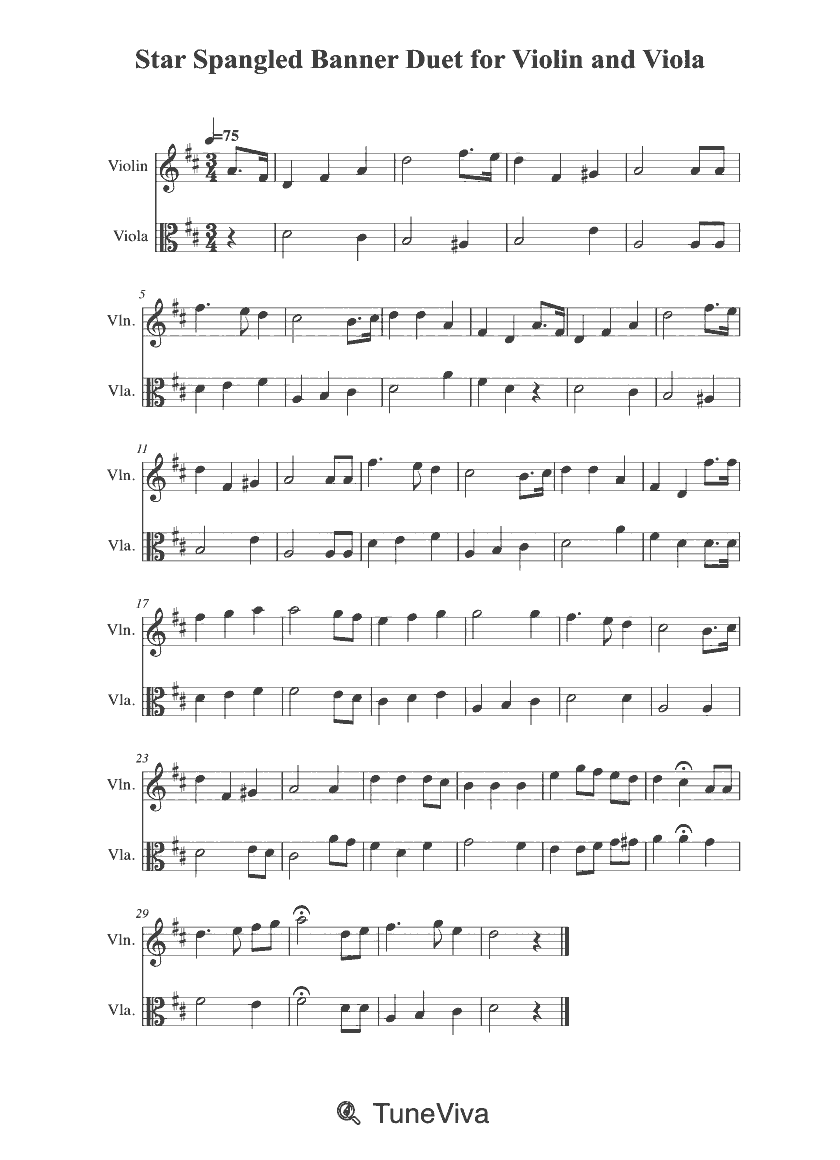
Star Spangled Banner Duet for Violin and Viola
John Stafford Smith
Violin; Viola · 1 min 17 sec
Open scoreThe Star-Spangled Banner sheet music on this page appears in three distinct arrangements: a violin-and-viola duet, an SATB choral score and a 13-part mixed ensemble version. The score listings associate the music with John Stafford Smith, and the SATB score names Francis Scott Key as lyricist. Compare instrumentation, opening key signature, time signature and listed tempo before choosing a version for your players or singers.
Scores 1–20 of 34
John Stafford Smith
Violin; Viola · 1 min 17 sec
Open score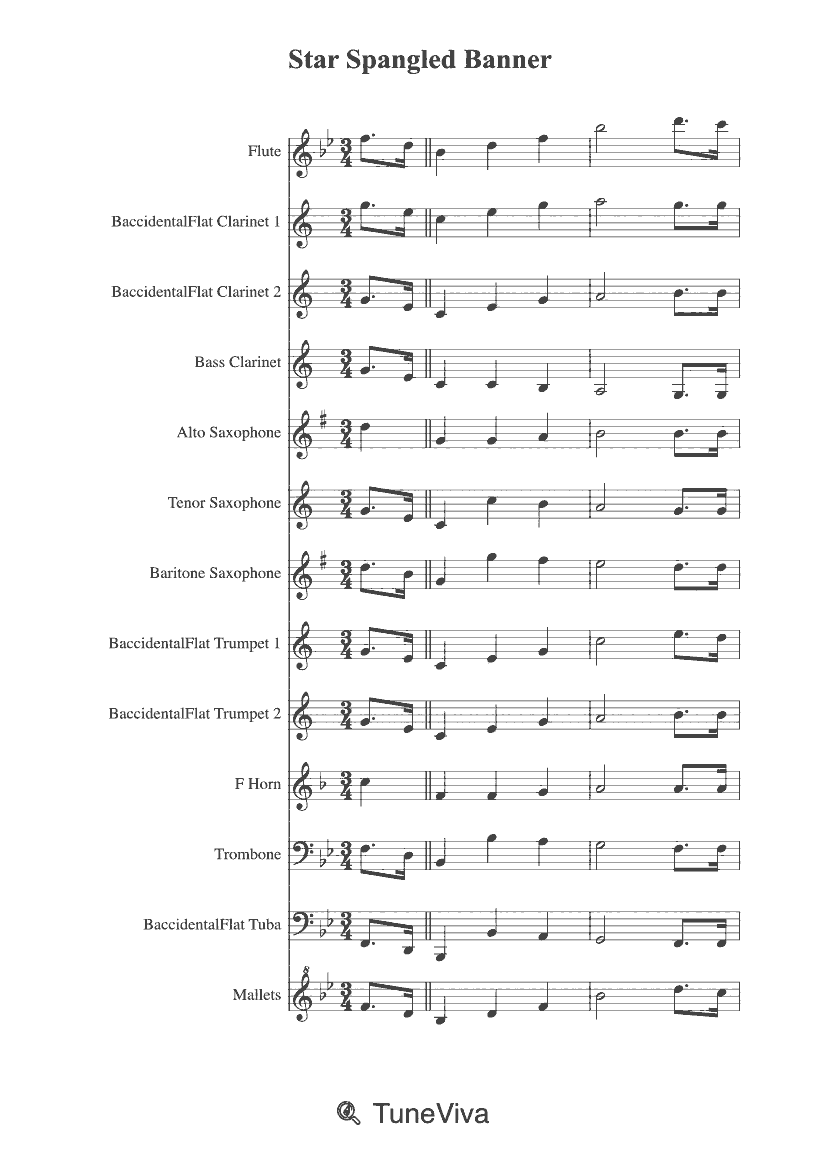
arranged by James McKelveyband arrangement by John D. Newsome
Flute; B♭ Clarinet 1; B♭ Clarinet 2 +10 parts · 55 sec
Open score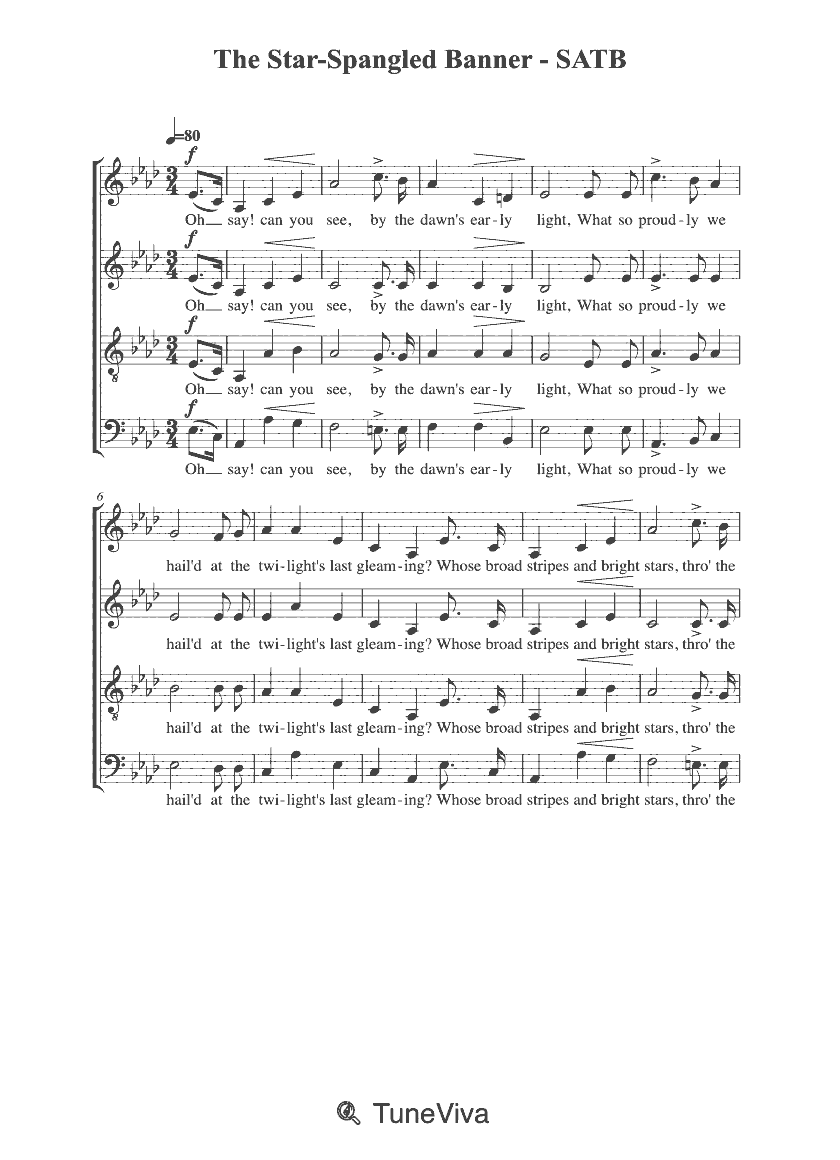
John Stafford Smith
Service version (1918)
Soprano; Alto; Tenor +1 parts · 1 min 15 sec
Open score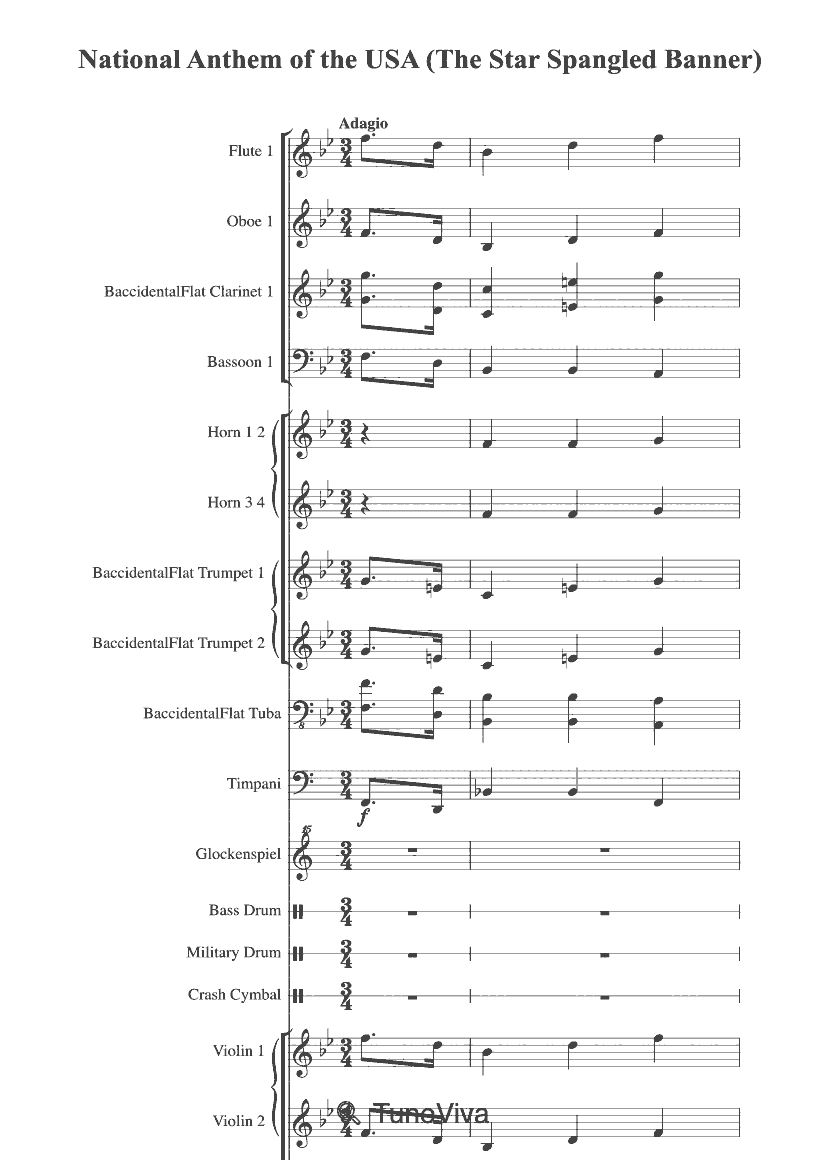
John Stafford Smith
Flute 1; Oboe 1; B♭ Clarinet 1 +16 parts · 1 min 37 sec
Open score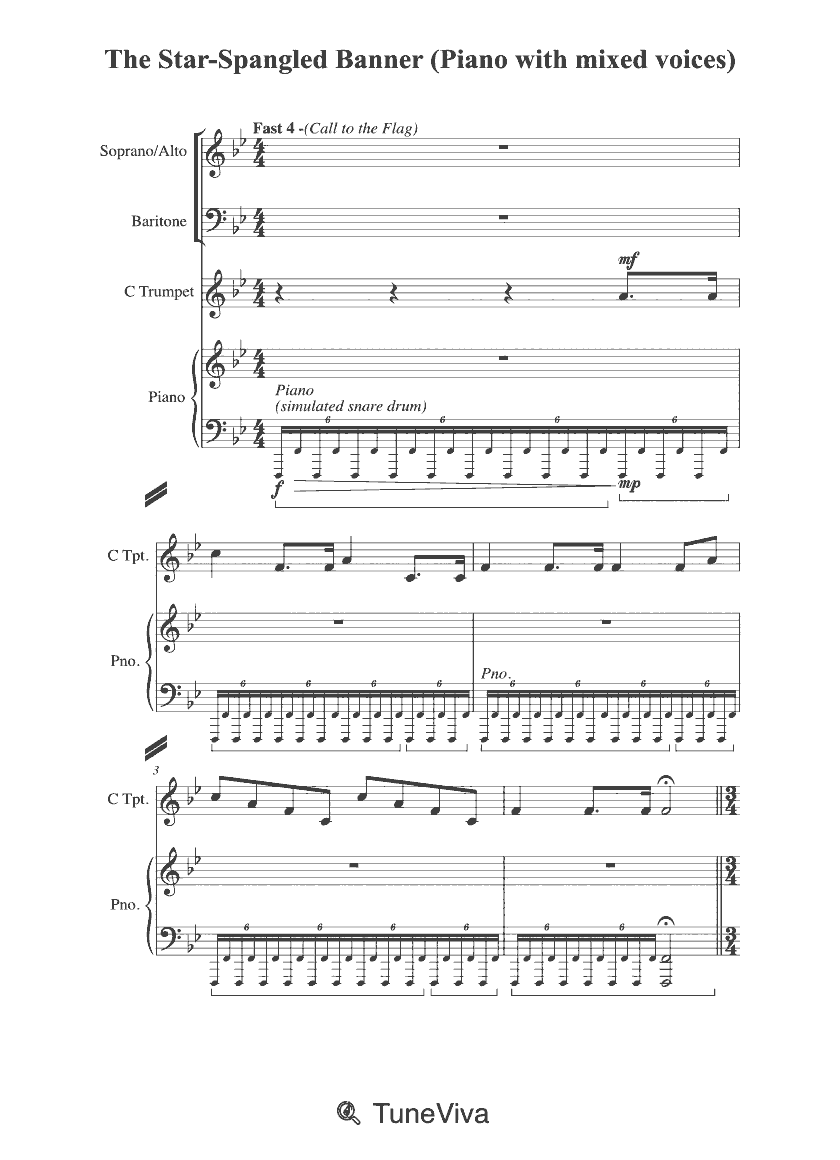
John Stafford Smith
National Anthem
Soprano/Alto; Baritone; C Trumpet +1 parts · 1 min 42 sec
Open score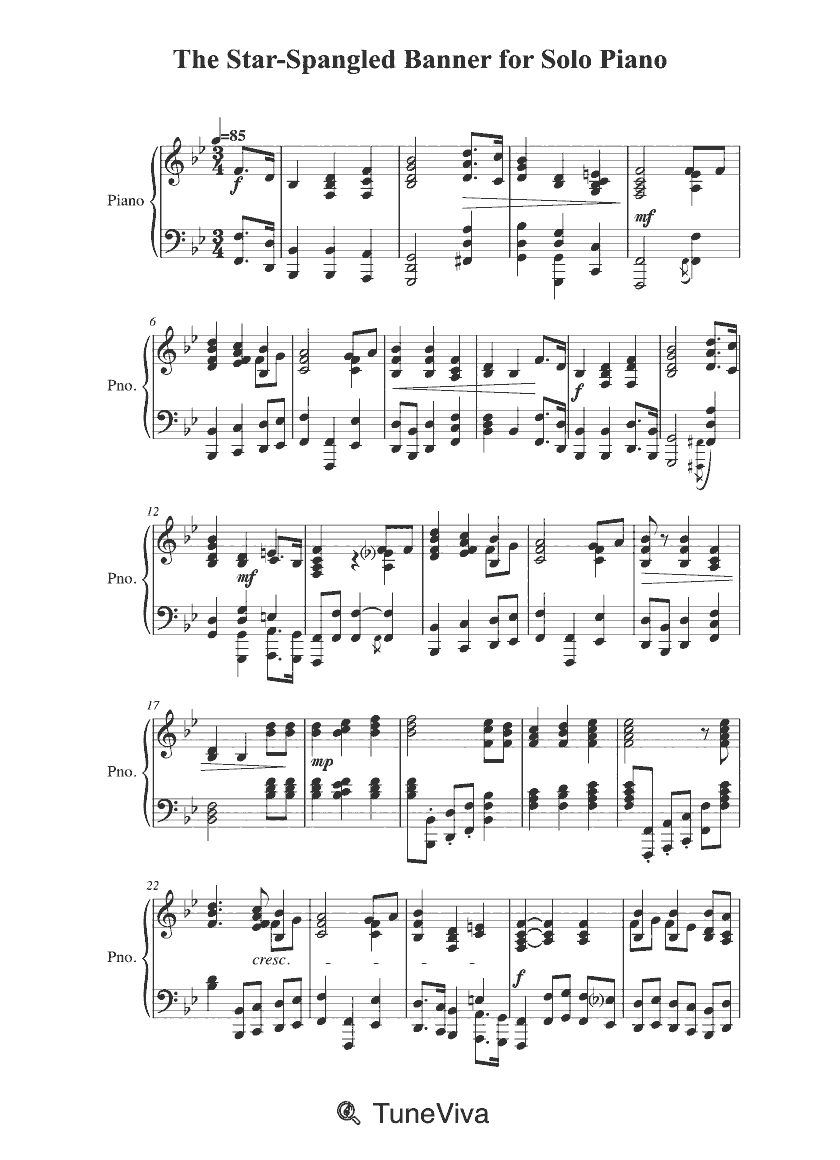
John Stafford Smith arr. Sergey Rachmaninoff
Piano · 1 min 24 sec
Open score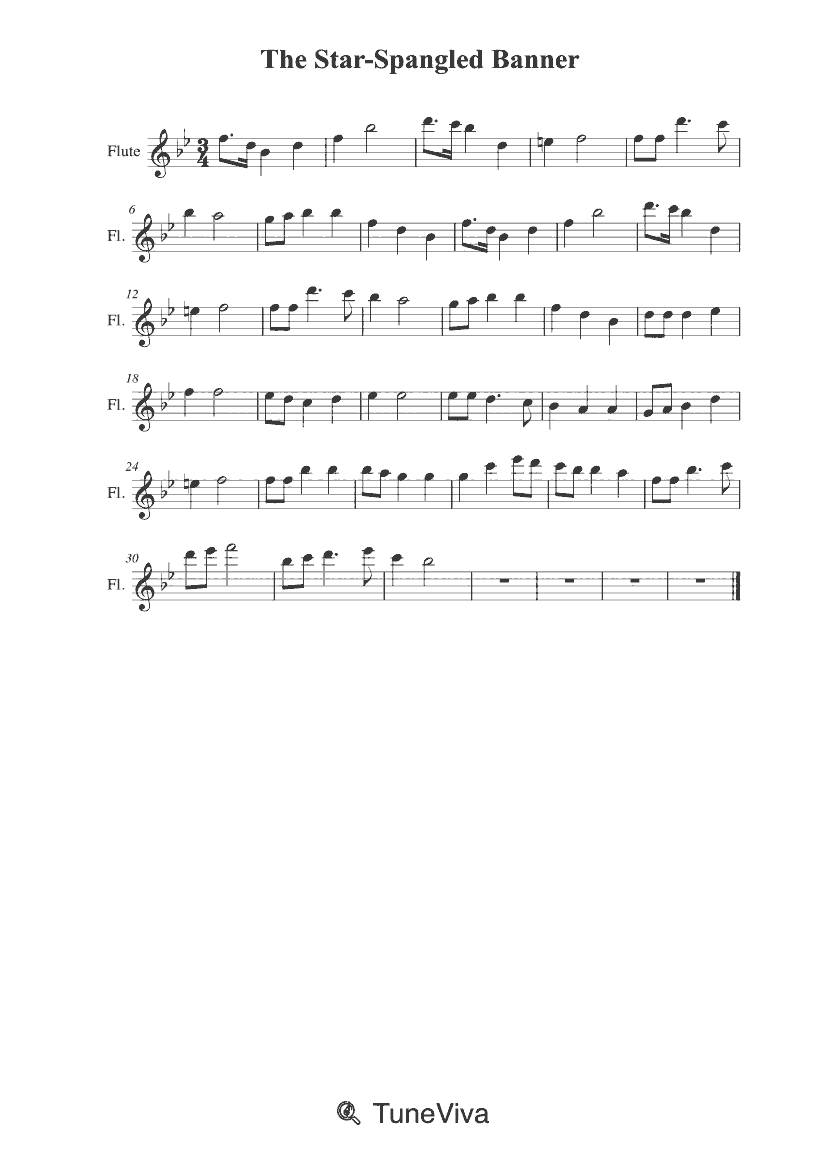
John Stafford Smith
Flute · 55 sec
Open score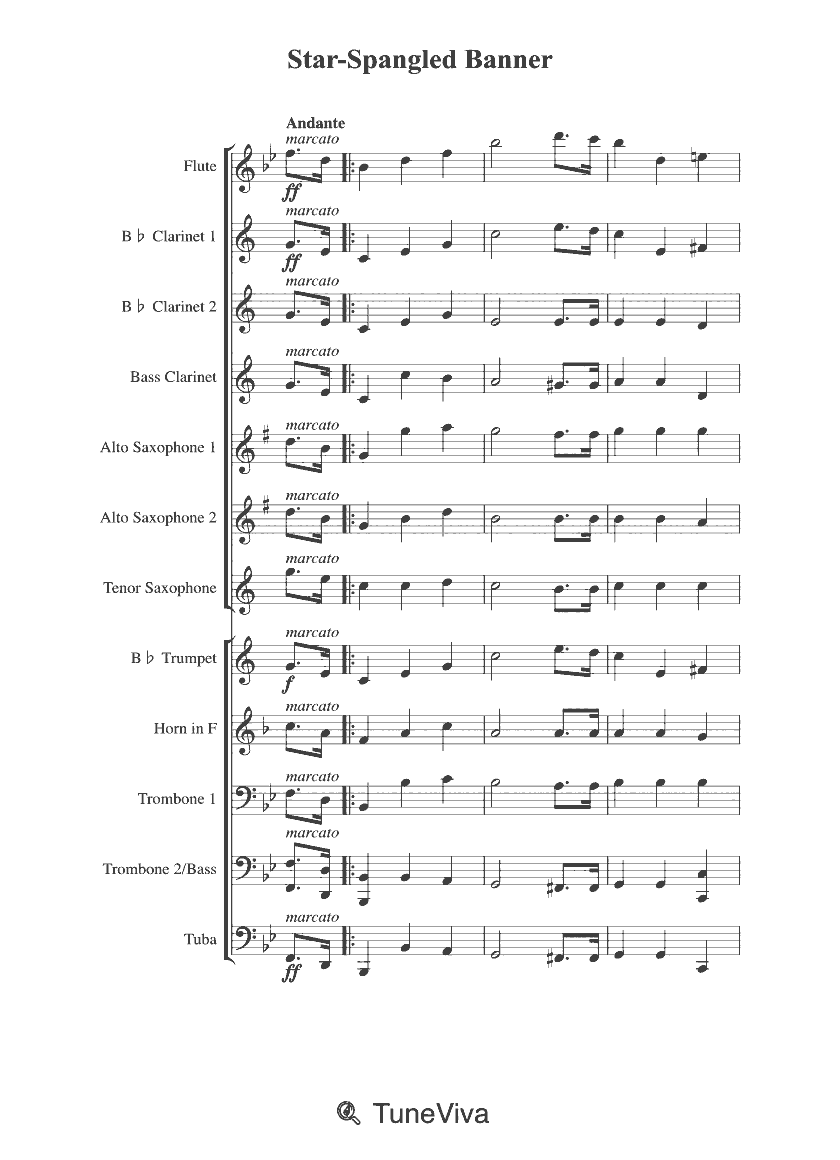
Francis Scott Key
Flute; B♭ Clarinet 1; B♭ Clarinet 2 +9 parts · 1 min 2 sec
Open score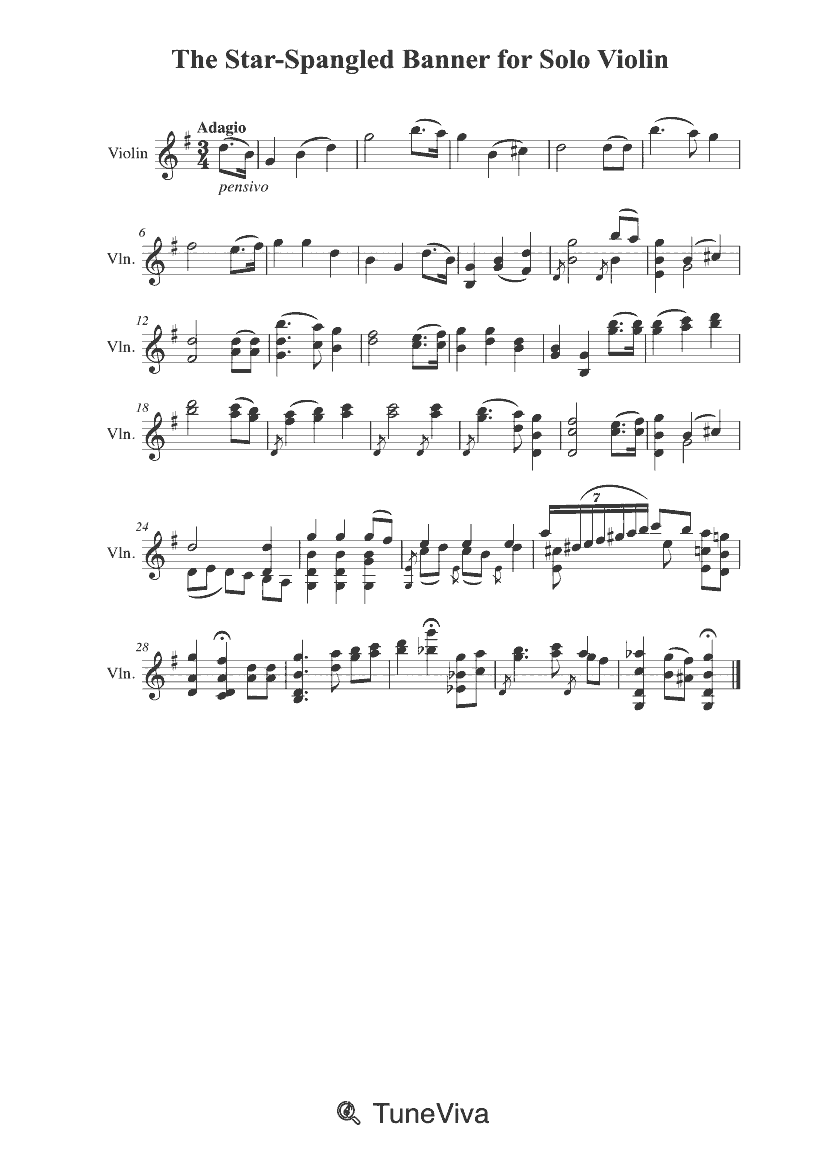
Jace Elliott14 February 2020
for Solo Violin
Violin · 1 min 15 sec
Open score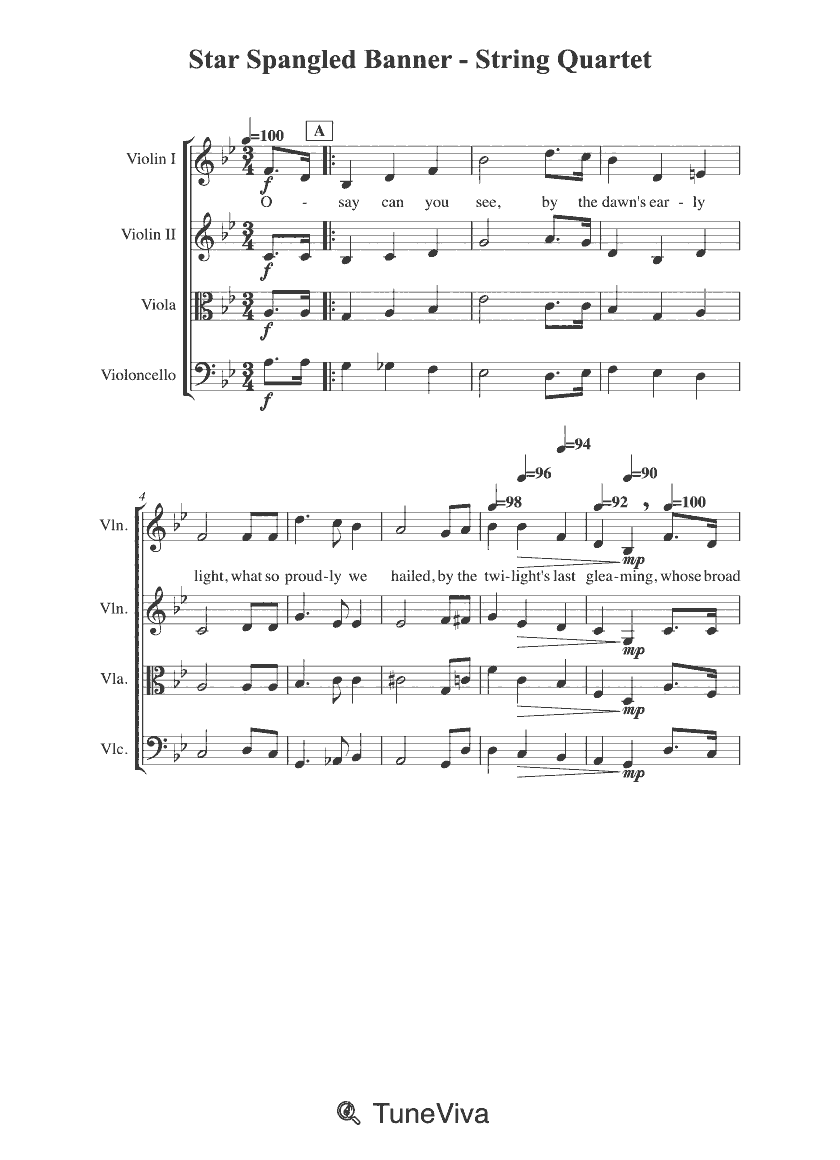
Key arr Miller
Violin I; Violin II; Viola +1 parts · 2 min 2 sec
Open score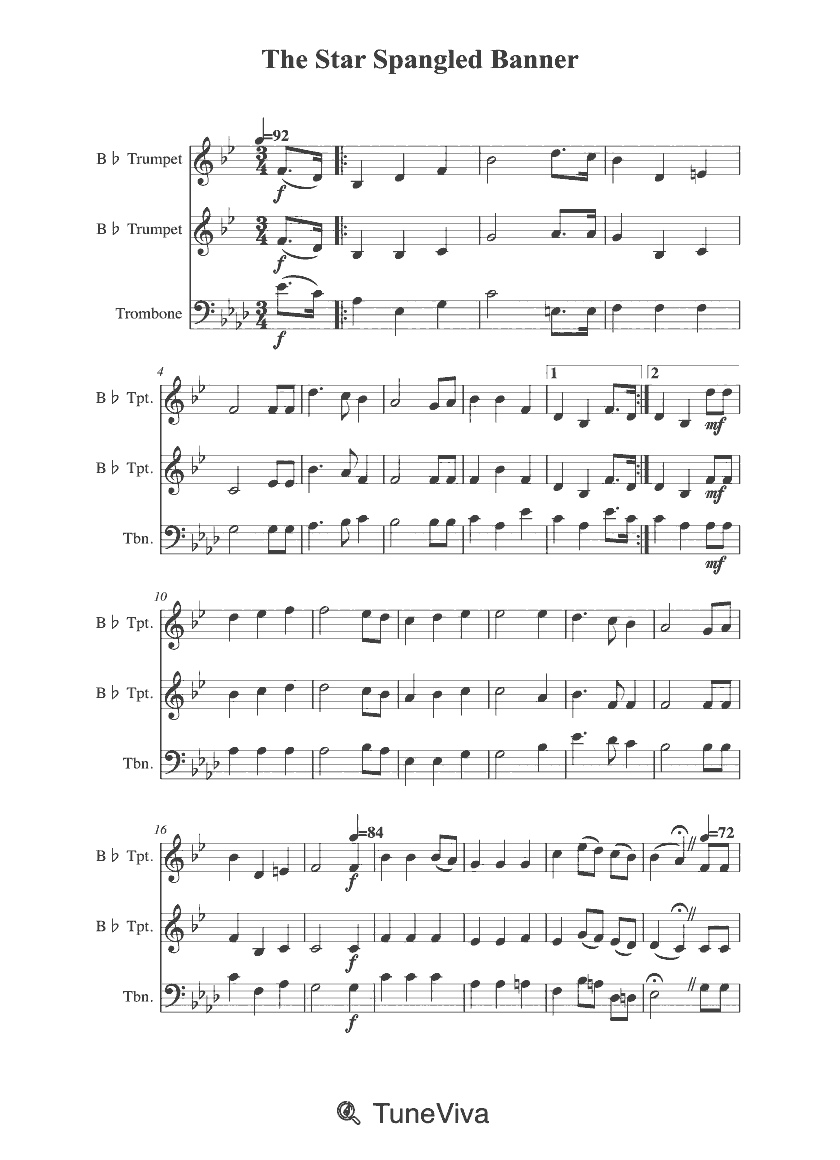
John Stafford Smith
B♭ Trumpet; Trombone · 1 min 9 sec
Open score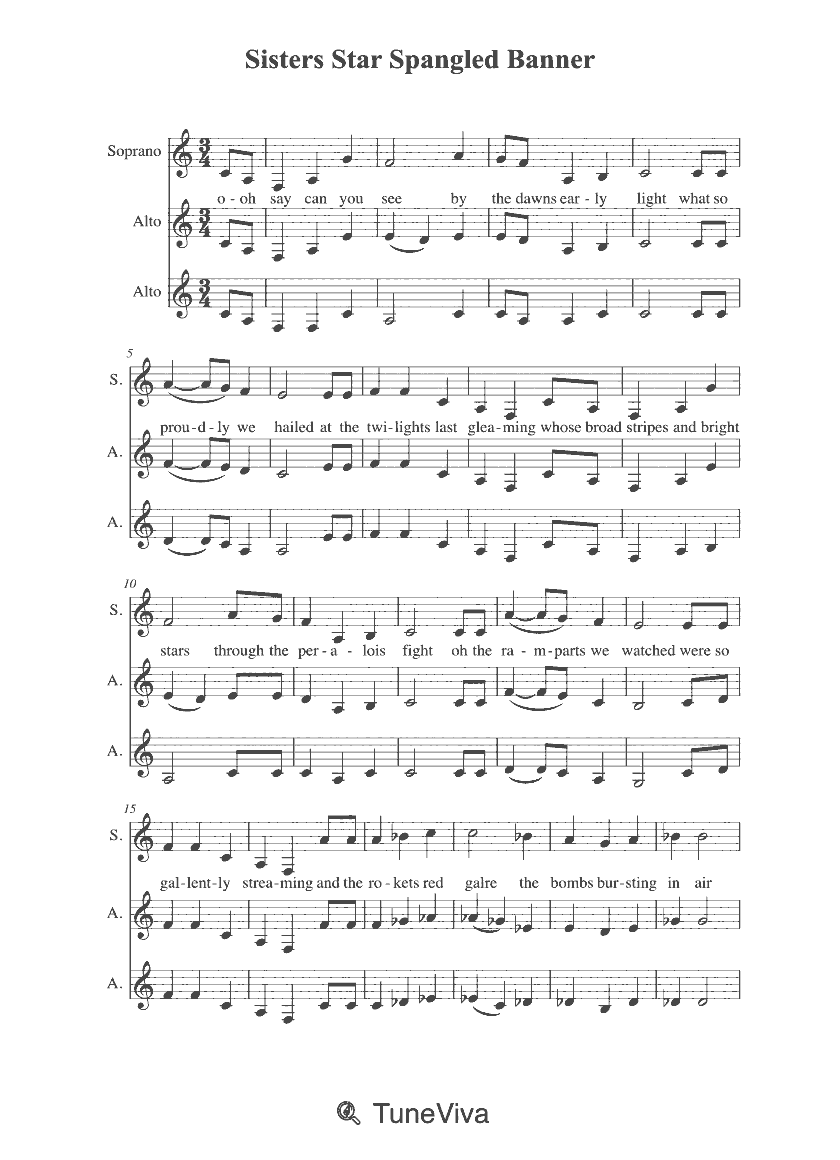
John Stafford Smith
Soprano; Alto · 1 min 5 sec
Open score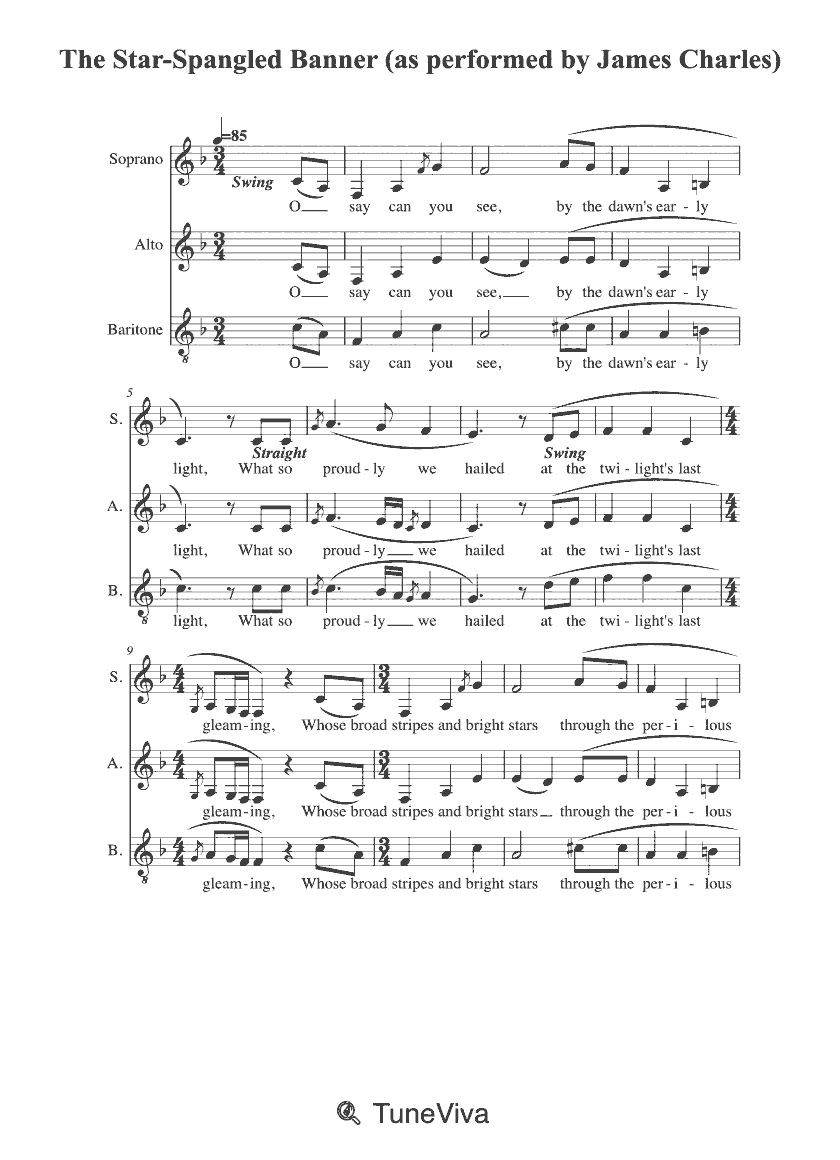
John Stafford Smith
(as performed by James Charles)
Soprano; Alto; Baritone · 1 min 40 sec
Open score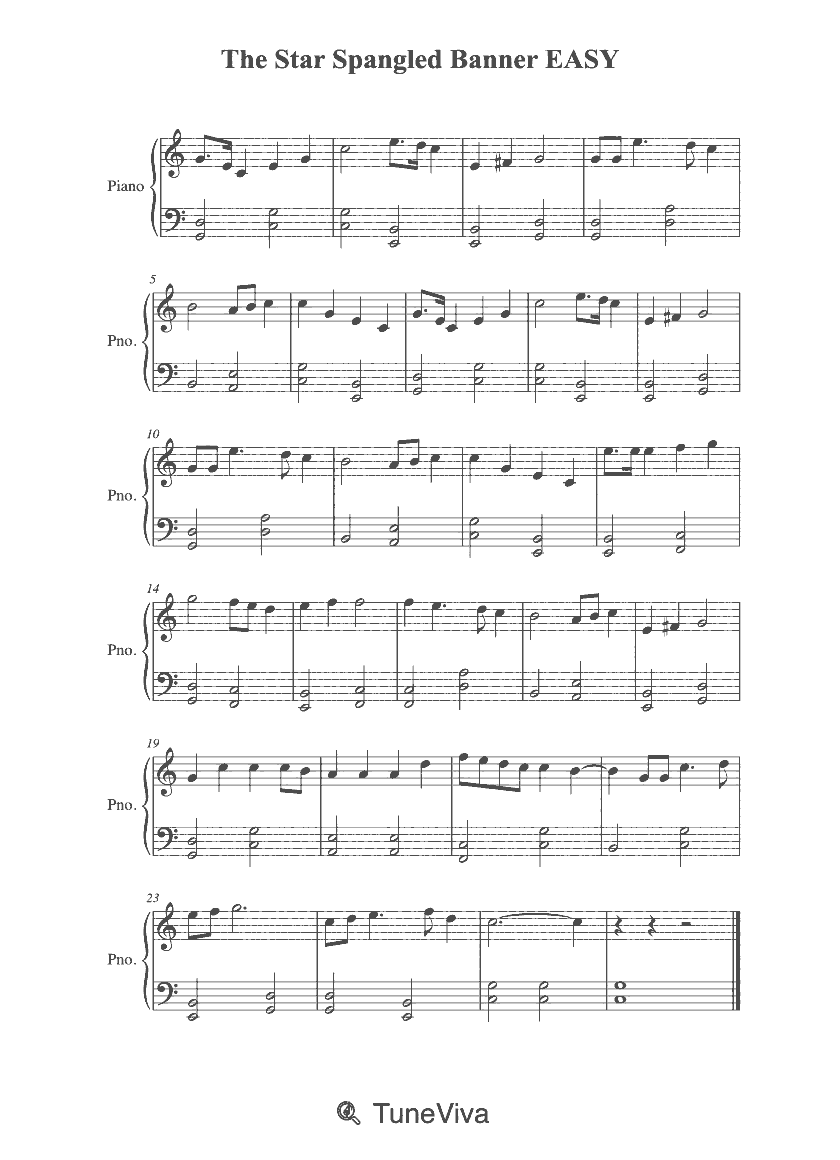
John Stafford Smith
Piano · 52 sec
Open score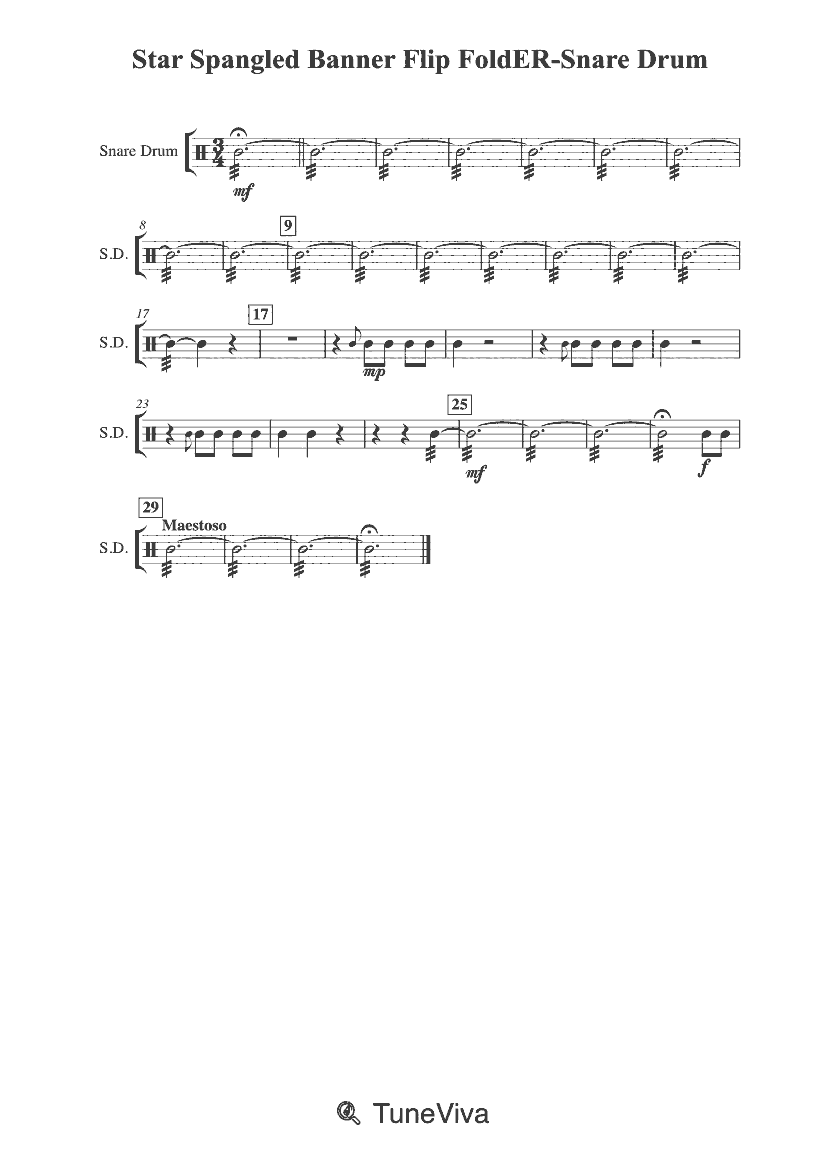
John Stafford Smith
Band Arrangement
Snare Drum · 51 sec
Open score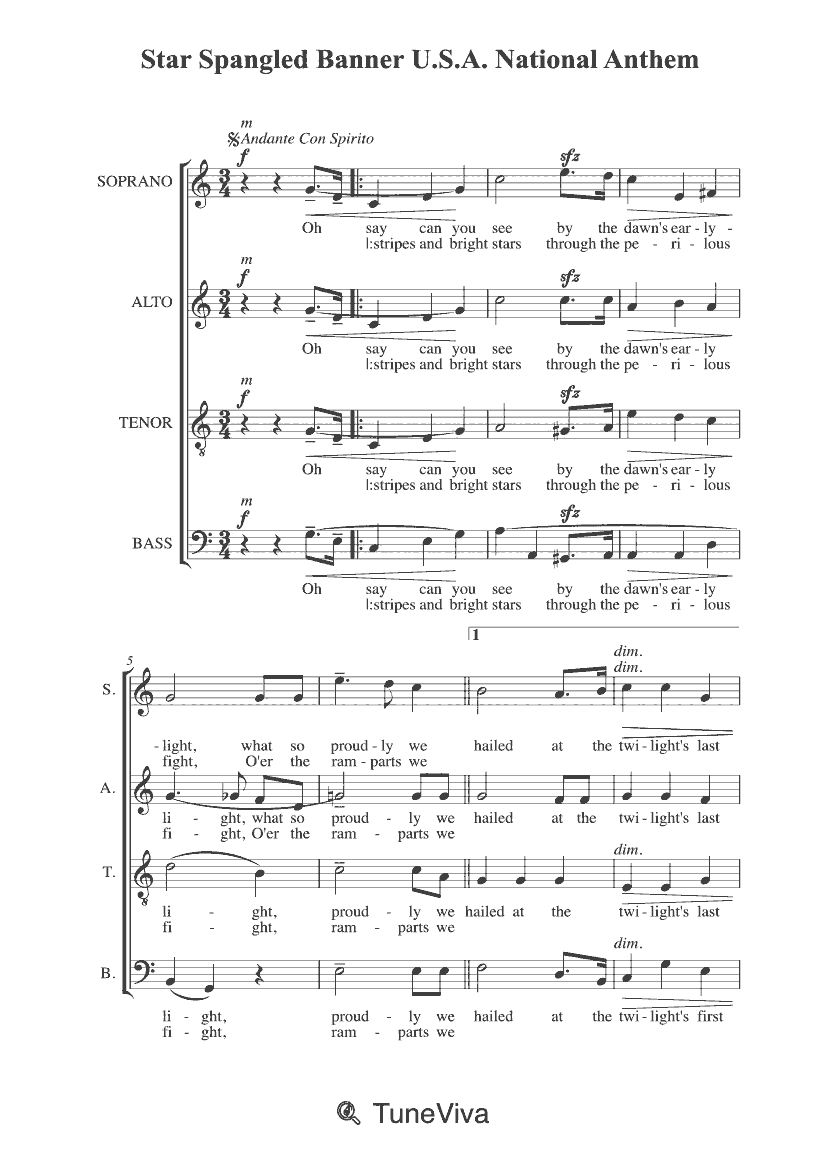
Music - John Stafford SmithLyrics - Francis S. KeyArr. - D.Jacobs
SOPRANO; ALTO; TENOR +1 parts · 57 sec
Open score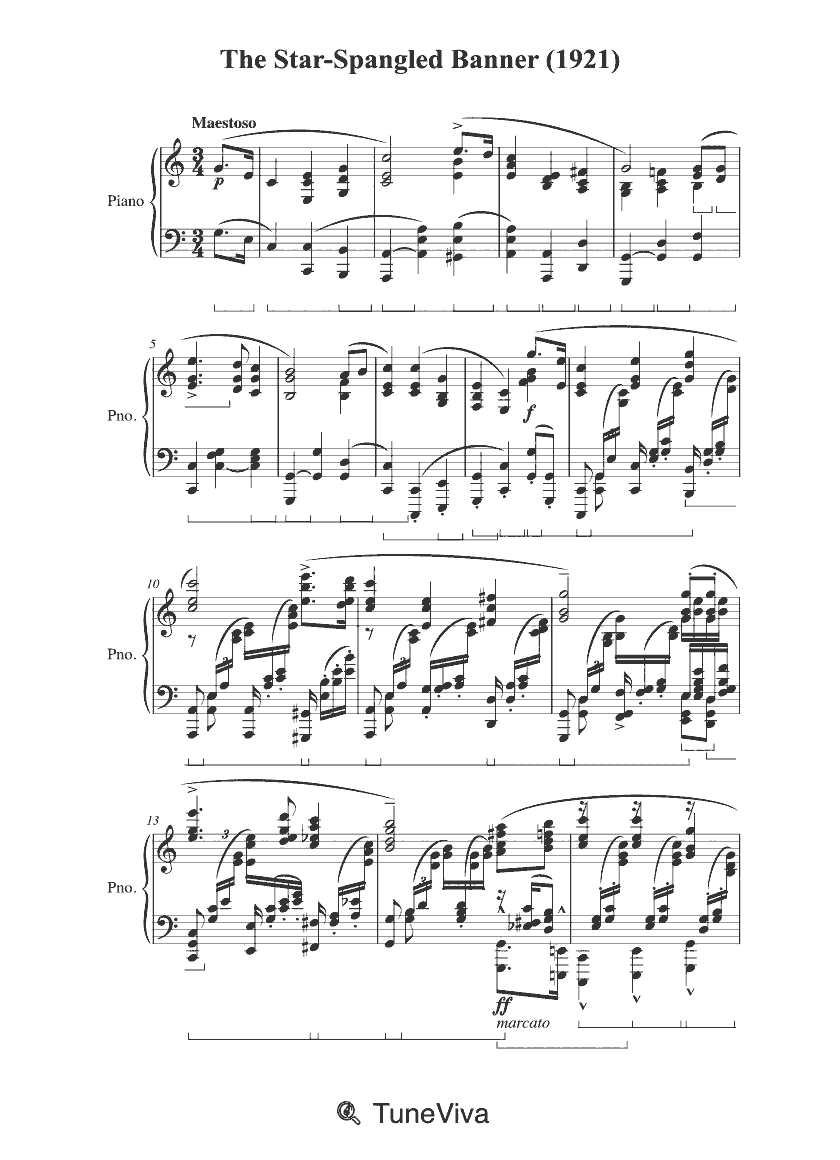
John Stafford SmithConcert versionby Leopold Godowsky
Piano · 2 min 5 sec
Open score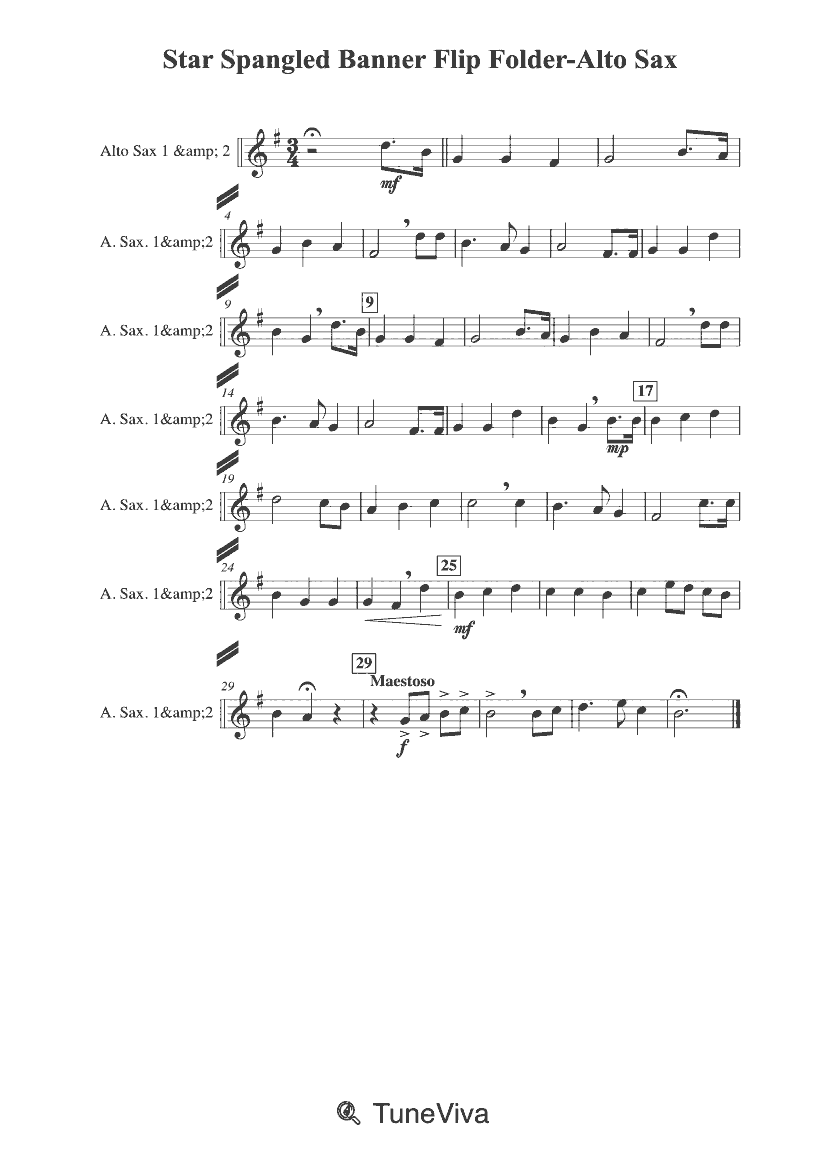
John Stafford Smith
Band Arrangement
Alto Sax 1 & 2 · 51 sec
Open score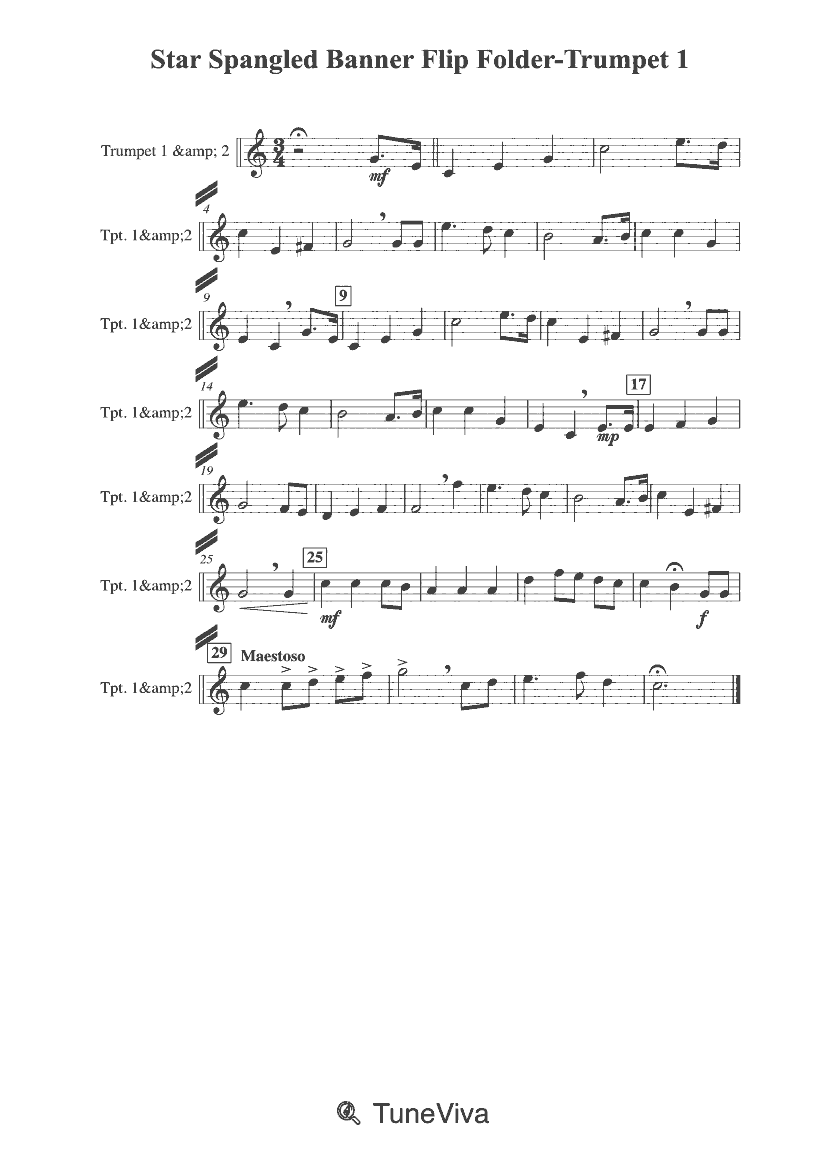
John Stafford Smith
Band Arrangement
Trumpet 1 & 2 · 51 sec
Open score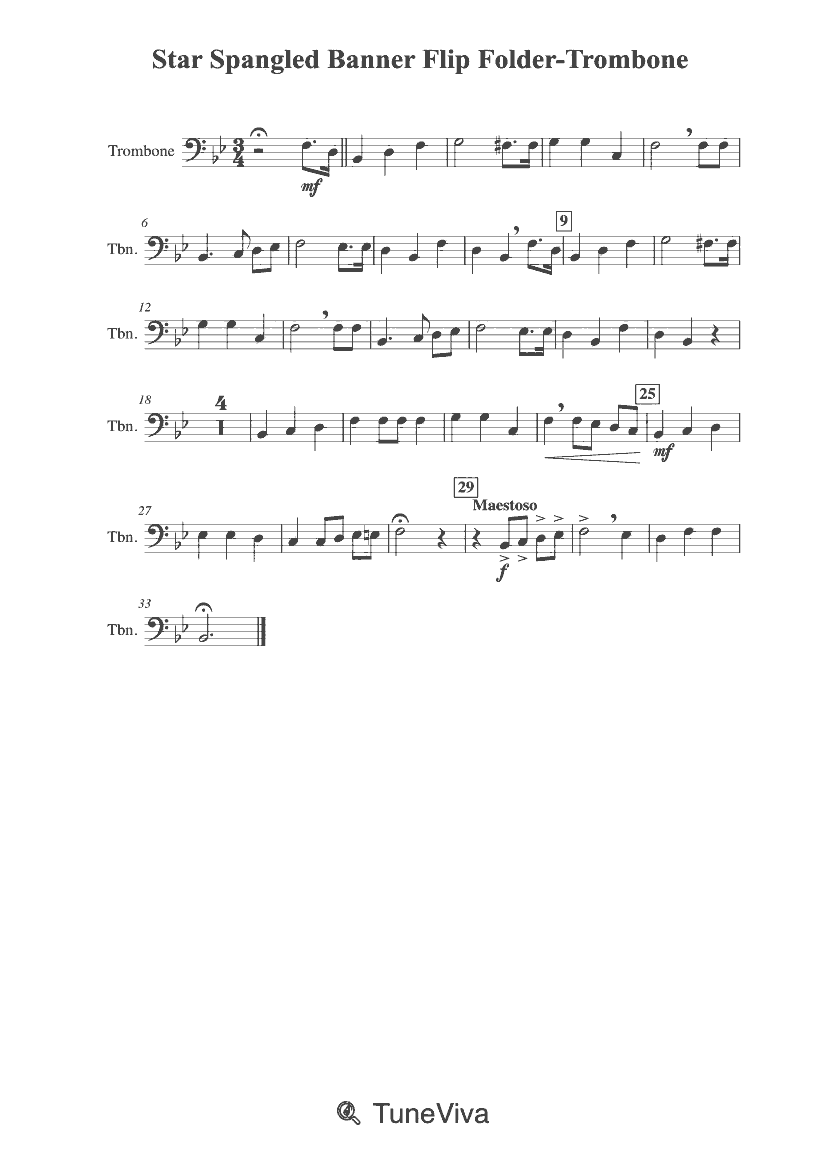
John Stafford Smith
Band Arrangement
Trombone · 1 min 8 sec
Open scorePage 1 of 2
The violin-and-viola duet is listed for two string parts and opens with two sharps in 3/4 at a stated 75 BPM. The SATB score lists soprano, alto, tenor and bass parts, names Francis Scott Key as lyricist, and opens with four flats in 3/4 at 80 BPM. The large ensemble arrangement has 13 parts, including woodwinds, saxophones, brass and mallets, and its opening time signature is given as 3/4.
A string duo has a directly relevant option in the violin-and-viola version. A four-part choir should consider the SATB score, which explicitly lists soprano, alto, tenor and bass parts and credits Francis Scott Key as lyricist. The 13-part arrangement is the broadest option in this selection, with flute, clarinets, saxophones, trumpets, horn, trombone, tuba and mallets among its listed parts.
Opening key signatures and tempos are useful for comparing these scores, but they should not be treated as fixed performance instructions for every edition. The duet lists two sharps and 75 BPM; the SATB score lists four flats and 80 BPM. The 13-part arrangement’s key-signature entry contains several values, so its intended opening key cannot be settled from the supplied details alone.
The selected scores give concrete information about scoring, opening time signature, key signature and listed tempo. They do not establish the work’s date of origin, first performance, original instrumentation or the precise nature of John Stafford Smith’s contribution. Treat those historical questions as unresolved unless checked against an authoritative reference.
Score parts: Violin, Viola. Catalogue duration 1 min 17 sec. Opening key signature: 2 sharps. Opening time signature: 3/4. Opening tempo: 75 BPM.
Score parts: Flute, B♭ Clarinet 1, B♭ Clarinet 2, Bass Clarinet, Alto Saxophone, Tenor Saxophone, …. Catalogue duration 55 sec. Opening key signature: 2 flats; No sharps or flats; 1 sharp; 1 flat. Opening time signature: 3/4.
Score parts: Soprano, Alto, Tenor, Bass. Catalogue duration 1 min 15 sec. Opening key signature: 4 flats. Opening time signature: 3/4. Opening tempo: 80 BPM.
The selection includes a violin-and-viola duet, an SATB choral version and a 13-part mixed ensemble arrangement of The Star-Spangled Banner. The duet lists violin and viola parts; the SATB version lists soprano, alto, tenor and bass; the large ensemble score includes woodwinds, saxophones, brass and mallets.
An SATB choir has a directly relevant option in the SATB score of The Star-Spangled Banner. That version lists soprano, alto, tenor and bass parts, names Francis Scott Key as lyricist, and gives opening details of four flats in 3/4 at 80 BPM.
The 13-part arrangement of The Star-Spangled Banner lists flute, two B-flat clarinets, bass clarinet, alto saxophone, tenor saxophone, baritone saxophone, two B-flat trumpets, F horn, trombone, B-flat tuba and mallets. Its opening time signature is given as 3/4.
The violin-and-viola duet of The Star-Spangled Banner is scored for two string players and opens with two sharps in 3/4 at a listed 75 BPM. The SATB version uses four vocal parts, opens with four flats in 3/4, lists 80 BPM and names Francis Scott Key as lyricist.
John Stafford Smith is listed as artist on the three Star-Spangled Banner scores shown here, and the SATB score names Francis Scott Key as lyricist. The violin-and-viola duet’s credit line does not name a composer, and the listings do not explain the exact nature of Smith’s contribution.
The supplied scores describe three arrangements of The Star-Spangled Banner rather than a documented original version. They list parts, opening key and time signatures and tempos, but do not establish the work’s date, first performance or original instrumentation.