
We Wish You a Merry Christmas
Traditional English Carolarranged BY Efpianisttranscribed BY Minh-Kha Nguyen
Piano · 1 min 6 sec
Open scoreWe Wish You a Merry Christmas appears here in several distinct arrangements rather than a single authoritative version. The selected scores include a piano solo, a flute-and-piano version, and an alto/tenor/baritone saxophone trio, so instrumentation is the most practical starting point when choosing sheet music. One piano credit describes the piece as a traditional English carol, while the other selected versions are identified as transcriptions or arrangements.
Scores 1–20 of 33
Traditional English Carolarranged BY Efpianisttranscribed BY Minh-Kha Nguyen
Piano · 1 min 6 sec
Open score
Transcription by Jake Wyatt
Flute; Piano · 30 sec
Open score
Arr. Erik Johnson
Traditional English Carol
Alto Saxophone; Tenor Saxophone; Baritone Saxophone · 1 min 11 sec
Open score
Misc Christmas
Piano · 24 sec
Open score
Matthew Clark
Trombone; Piano · 34 sec
Open score
Traditional
Piano · 26 sec
Open score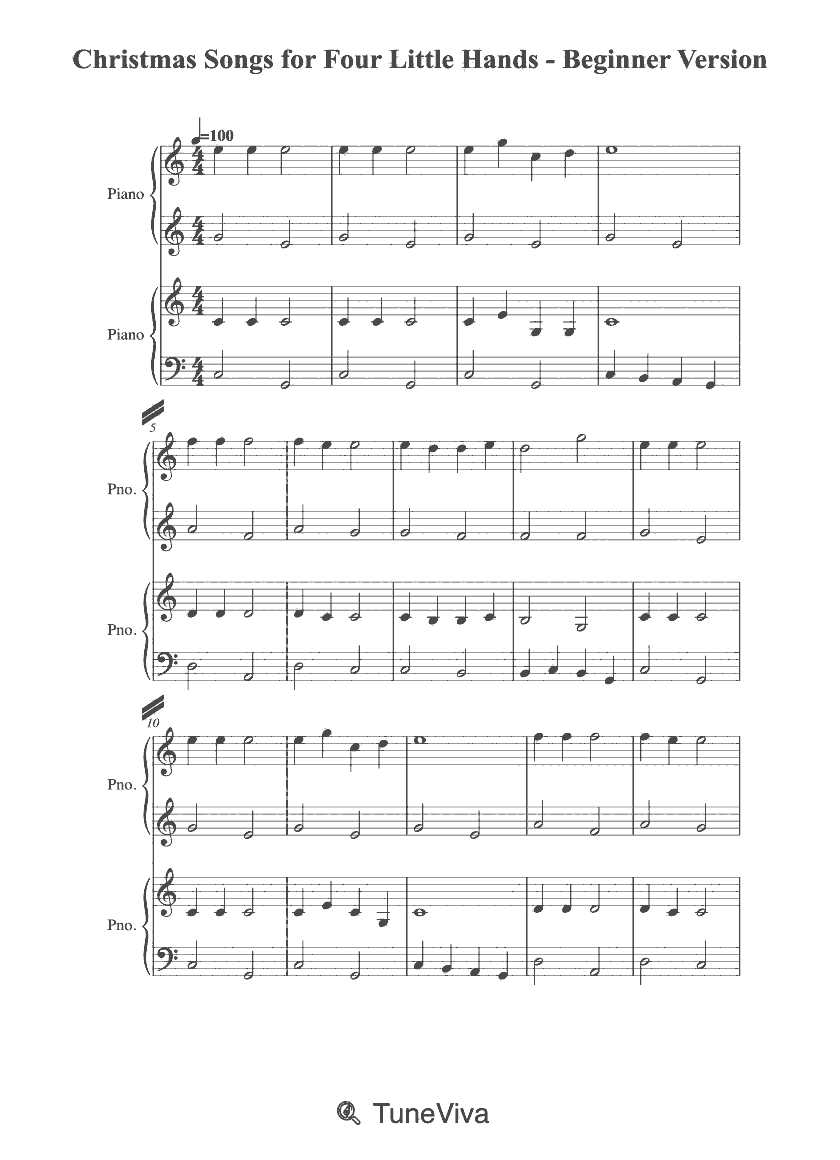
Mindy Liang
Jingle Bells + We Wish You A Merry ChristmasBeginner Version
Piano · 1 min 2 sec
Open score
Traditional
For Piano Four Hands
Piano · 52 sec
Open score
Arr: R Jochems
Saxofoon ensemble Quattro Stagioni
Alt sax 1; Alt sax 2; Alt sax 3 +2 parts · 49 sec
Open score
Martijn Staes
Klarinet in B♭; Altviool · 25 sec
Open score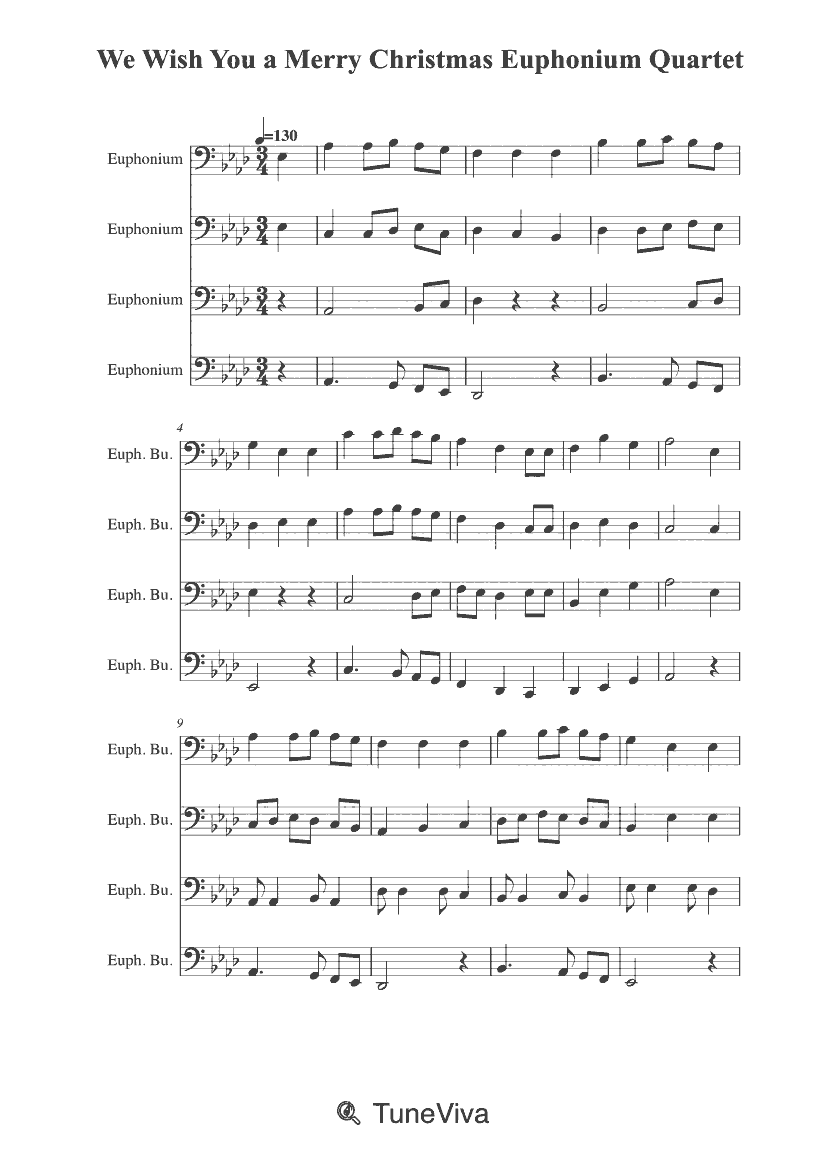
Arranged by Robert Lee Ball
Euphonium · 1 min 1 sec
Open score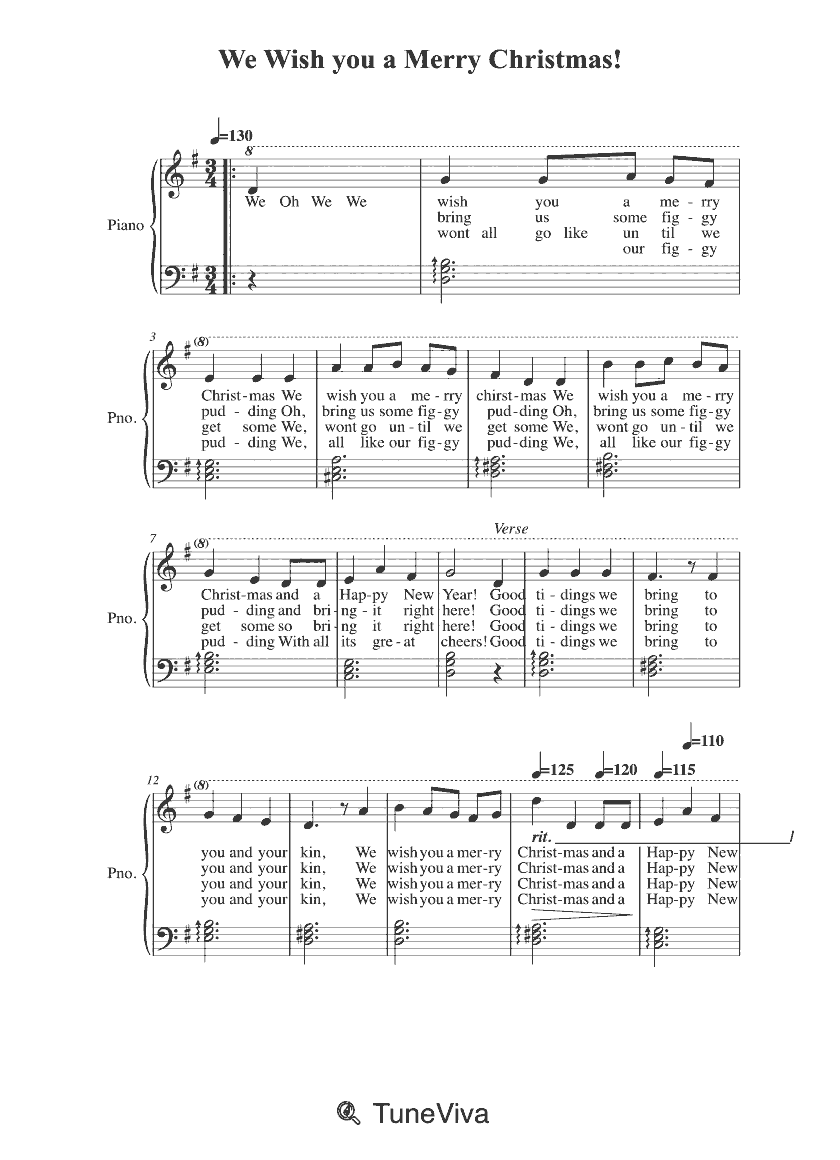
Arthur Warrel
Piano · Arr. The Piano Kid · 23 sec
Open score
The Kingston Trio
Saxophone; Trumpet · 35 sec
Open score
k
Violín; Violonchelo; Clarinete en Si♭ · 1 min 5 sec
Open score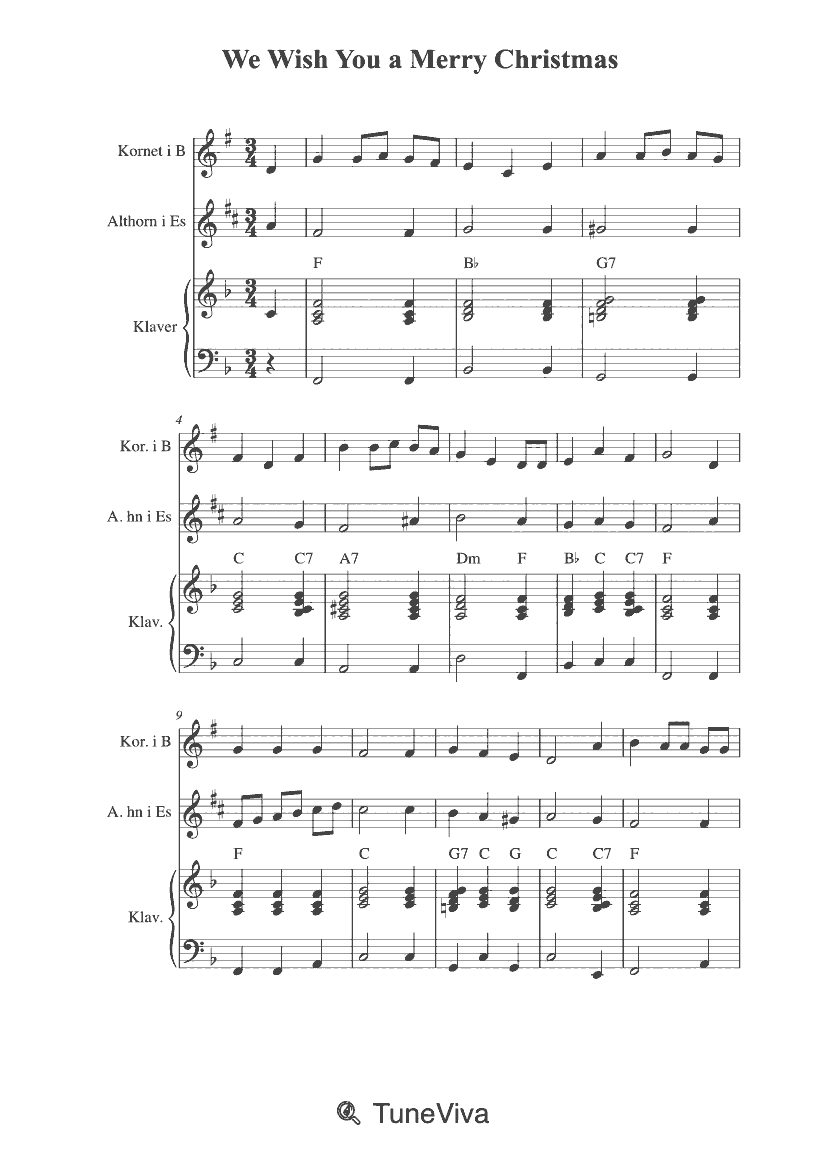
Arr. Marcus Pilgaard
Kornet i B; Althorn i Es; Klaver · 24 sec
Open score
tradicionalarr. Gerard
Saxofón contralto; Trombón; Set de percusión +4 parts · 49 sec
Open score
Harry Belafonte
Viola · 36 sec
Open score
k
Violín; Violonchelo; Clarinete en Si♭ · 53 sec
Open score
Misc Christmas
Piano; Claves; Bongos +5 parts · 3 min 16 sec
Open score
Misc Christmas
Strings 1; Acoustic Bass; PizzicatoStr. +2 parts · 1 min 4 sec
Open scorePage 1 of 2
The versions shown here serve different players: a piano solo, a flute with piano, and a saxophone trio. Decide whether you need a self-contained keyboard arrangement, a mixed duo, or a small saxophone ensemble before comparing key, tempo or length. The listed parts are the clearest guide to what each score actually contains.
All three selected arrangements open in 3/4, but their opening key signatures and tempos differ. The piano and flute-and-piano versions begin with two flats, while the saxophone trio lists two sharps and one sharp across its parts. Tempos range from 160 to 192 BPM in the supplied details. These describe the openings, not necessarily the whole shape of each arrangement.
The composer and arranger credits vary between the selected scores, and one piano version is credited as a traditional English carol arranged by Efpianist and transcribed by Minh-Kha Nguyen. The supplied material does not verify the carol’s history or the completeness of any arrangement. Check the score itself for the full musical text and attribution before relying on a label.
A short listed duration or a low note count does not establish that a version is easy or suitable for a beginner. Compare the actual notation, key, tempo, range and part writing. For the saxophone trio, confirm each player’s individual part and transposition before rehearsal; for the flute-and-piano version, check the balance and role of each part.
Score parts: Piano. Catalogue duration 1 min 6 sec. Opening key signature: 2 flats. Opening time signature: 3/4. Opening tempo: 160 BPM.
Score parts: Flute, Piano. Catalogue duration 30 sec. Opening key signature: 2 flats. Opening time signature: 3/4. Opening tempo: 184 BPM.
Score parts: Alto Saxophone, Tenor Saxophone, Baritone Saxophone. Catalogue duration 1 min 11 sec. Opening key signature: 2 sharps; 1 sharp. Opening time signature: 3/4. Opening tempo: 192 BPM.
The versions selected for this page include a piano solo, a flute-and-piano arrangement, and an alto, tenor and baritone saxophone trio. Instrumentation is listed per score, so compare the parts shown for each version before choosing one for a specific player or ensemble.
All three selected arrangements open in 3/4. The piano solo and the flute-and-piano version begin with a two-flat key signature, while the saxophone trio lists two sharps and one sharp across its parts. These details describe the opening only, so check later key changes in the score itself.
The piano solo is listed at about 66 seconds, 622 notes and 160 BPM, while the flute-and-piano version is listed at about 30 seconds, 309 notes and 184 BPM. Those figures describe the individual scores and do not establish difficulty or whether either version is abridged.
One piano credit on this page describes We Wish You a Merry Christmas as a traditional English carol, but the supplied material gives no date, origin or source for that attribution. Treat the carol description as a lead to verify rather than a full historical account.
The saxophone version is credited as an arrangement by Erik Johnson for alto, tenor and baritone saxophones. It opens in 3/4 at 192 BPM, with key signatures of two sharps and one sharp across the parts; players should confirm their individual part, clef and transposition before rehearsing.
Durations and note counts describe the individual scores, not a formal grade or difficulty rating. A shorter listed duration does not necessarily mean an easier arrangement, so compare instrumentation, key, tempo, range and the actual notation when choosing a version.