classical
5 tracks
Buxtehude spent nearly forty years at the Marienkirche in Lübeck, and the catalogue is weighted towards what he played there: 57 scores, about 331 minutes of music and 94,602 notated notes. Only seven entries carry lyrics, so this is mostly organ and chamber music.
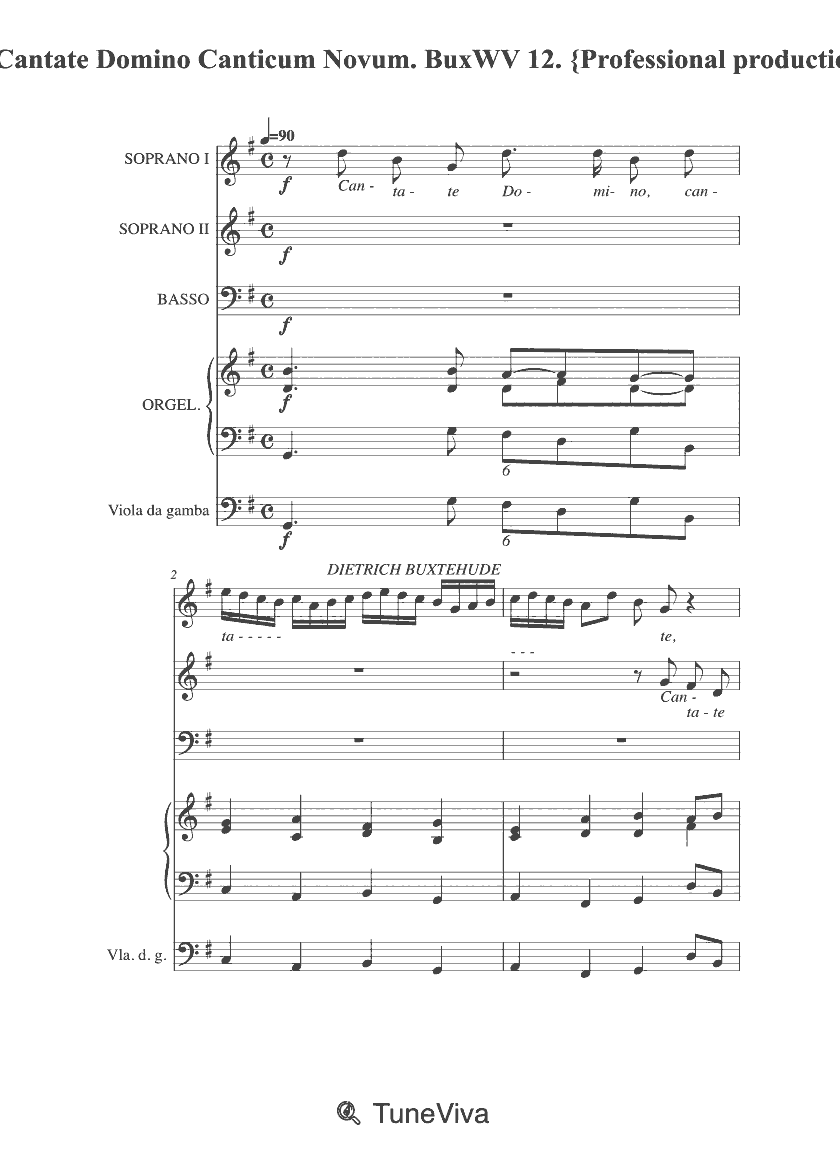
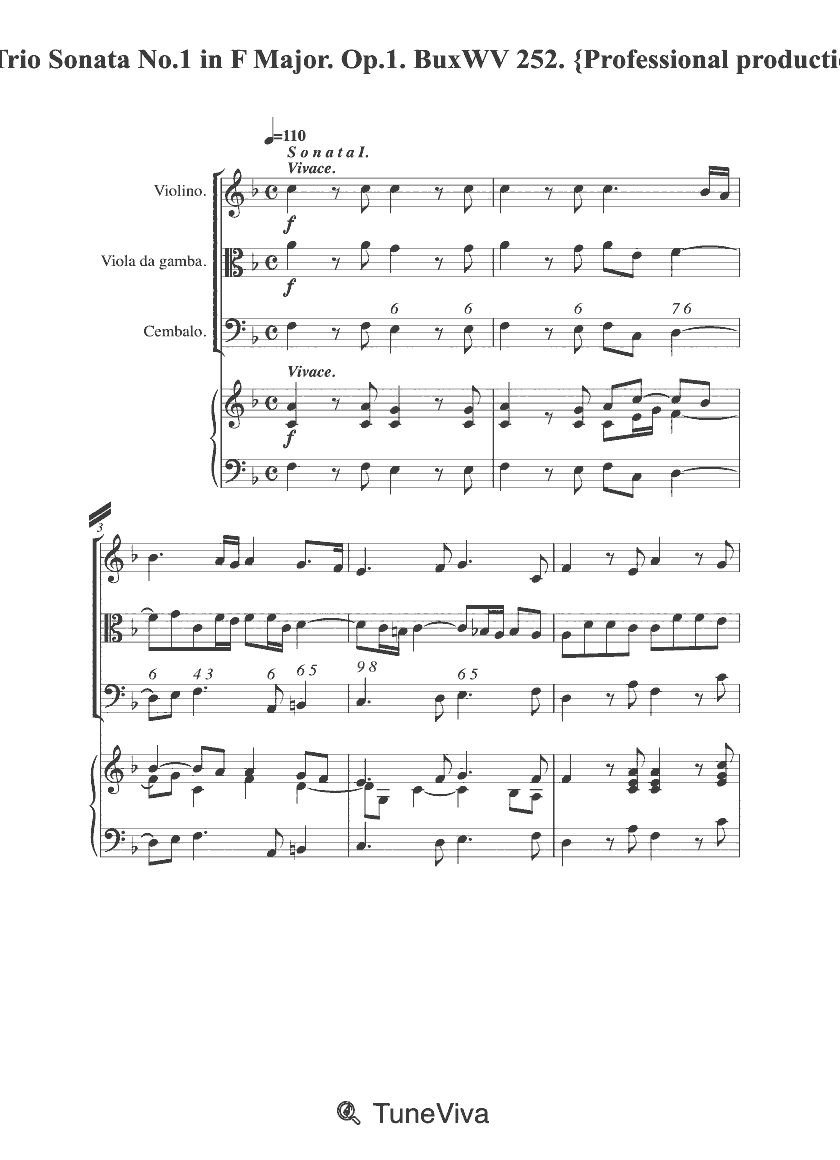
The most-viewed file is the cantata Cantate Domino, BuxWV 12, followed by the F major trio sonata from Op. 1. The rest of the top of the page mixes chorale fantasias, ostinato works such as the C minor Chaconne, and preludes including the C major BuxWV 137. All 57 entries are indexed at complexity 0.
Buxtehude was probably born in Helsingborg in about 1637, then part of Denmark, the son of an organist. He followed his father into the profession, serving at Helsingborg from 1657 and at St Mary's in Helsingør from 1660, before taking the post at the Marienkirche in Lübeck in 1668. There he succeeded Franz Tunder and married Tunder's daughter Anna Margarethe, with whom he had seven daughters. From 1673 he ran the Abendmusik concerts, and in 1705 the twenty-year-old J. S. Bach walked from Arnstadt to hear him. He died in Lübeck on 9 May 1707.
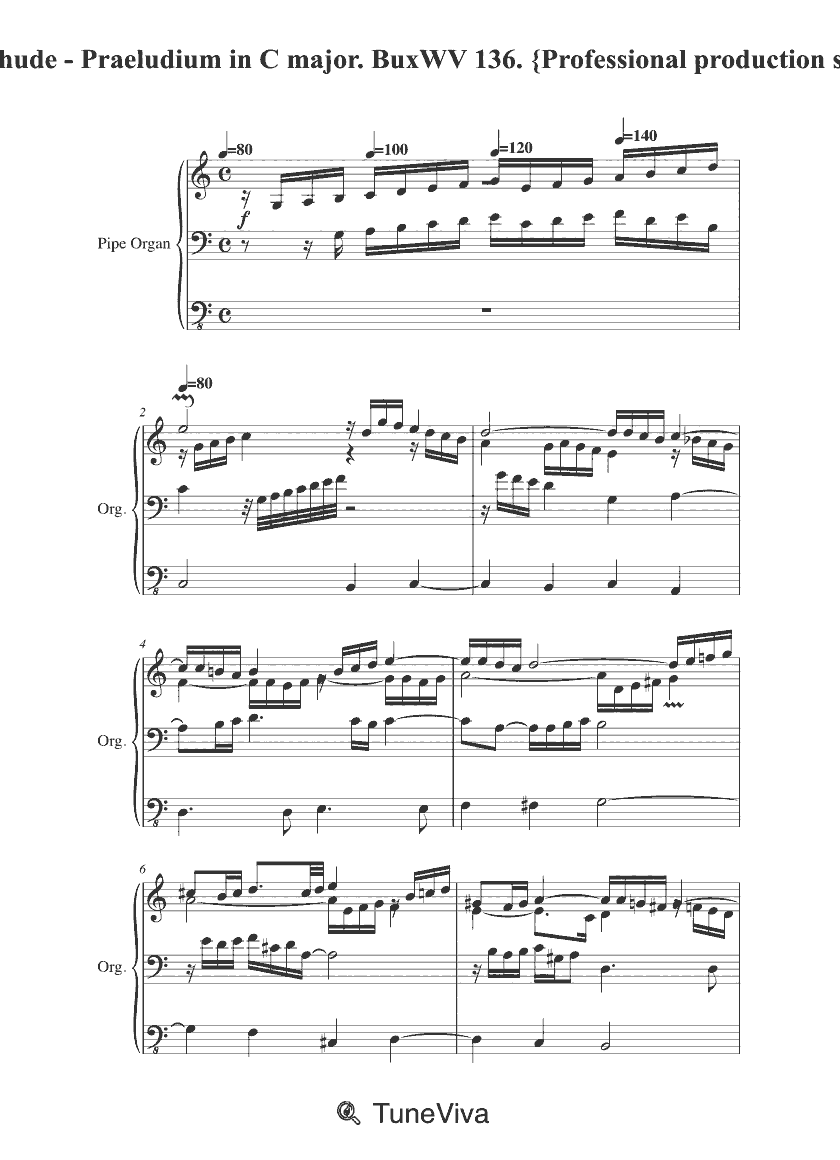
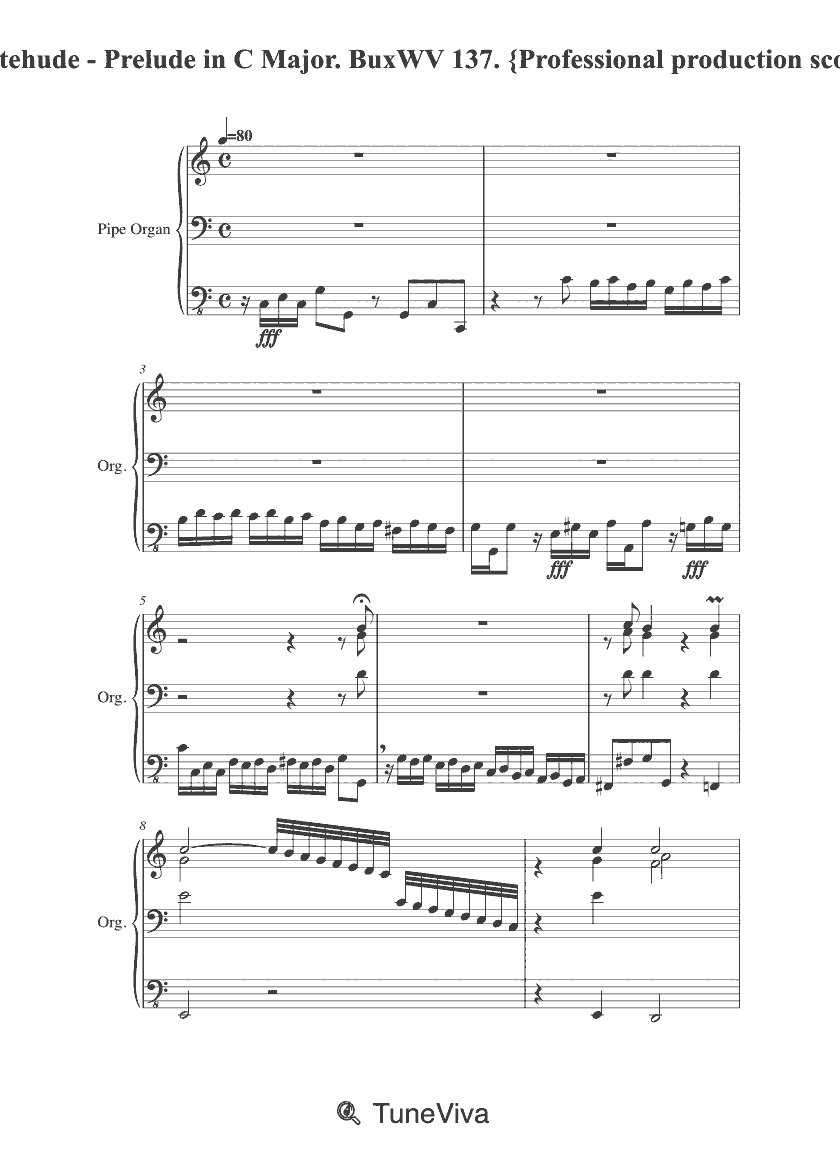
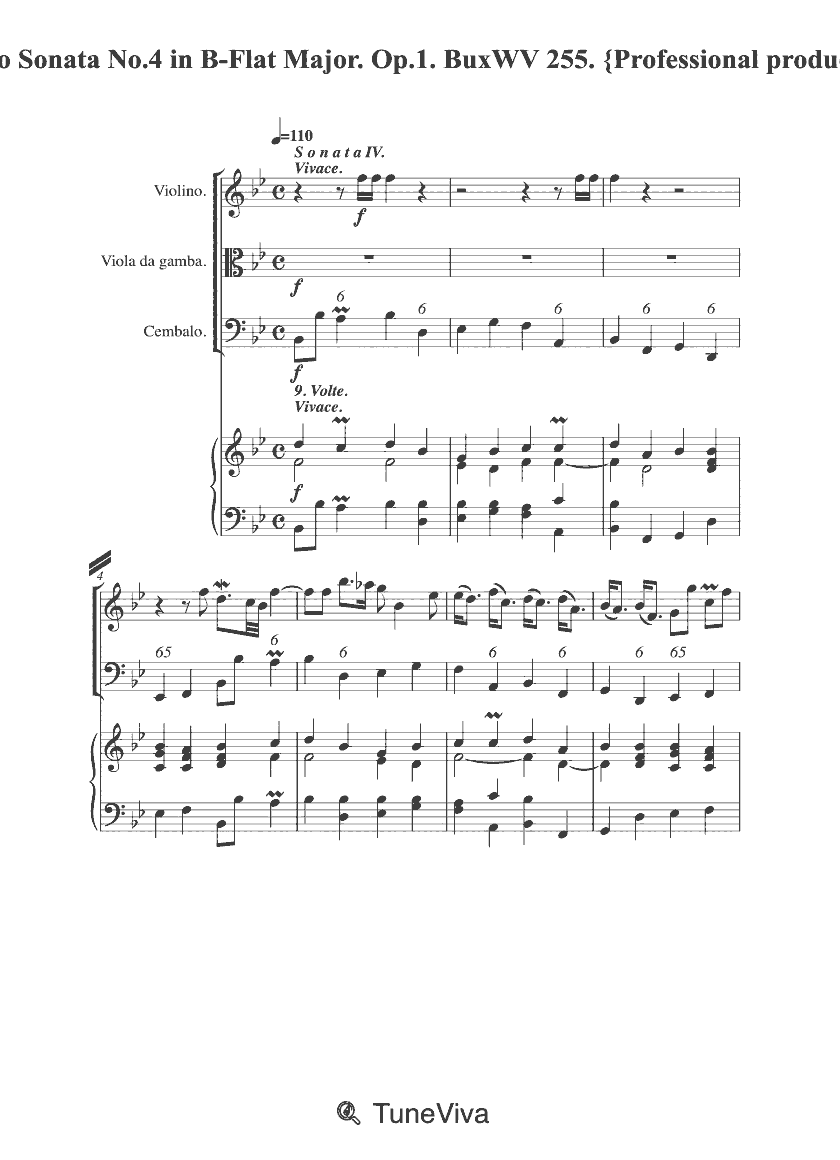
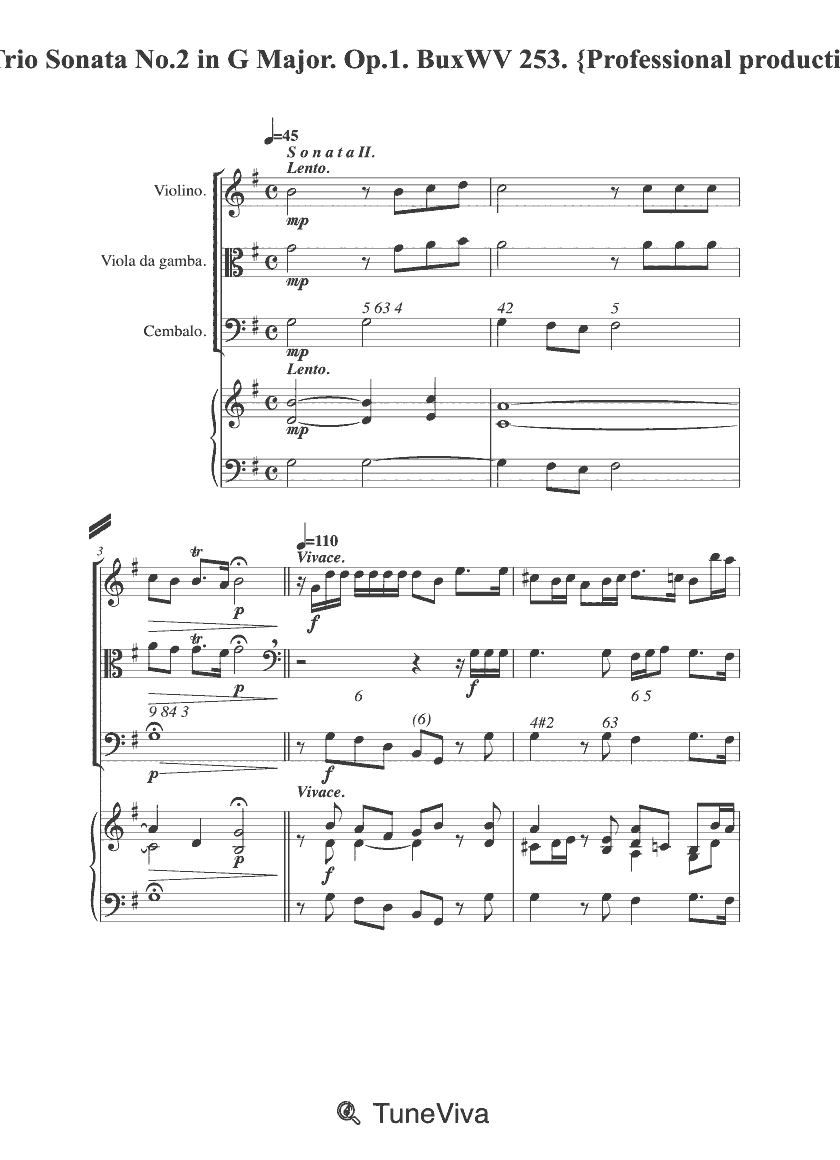
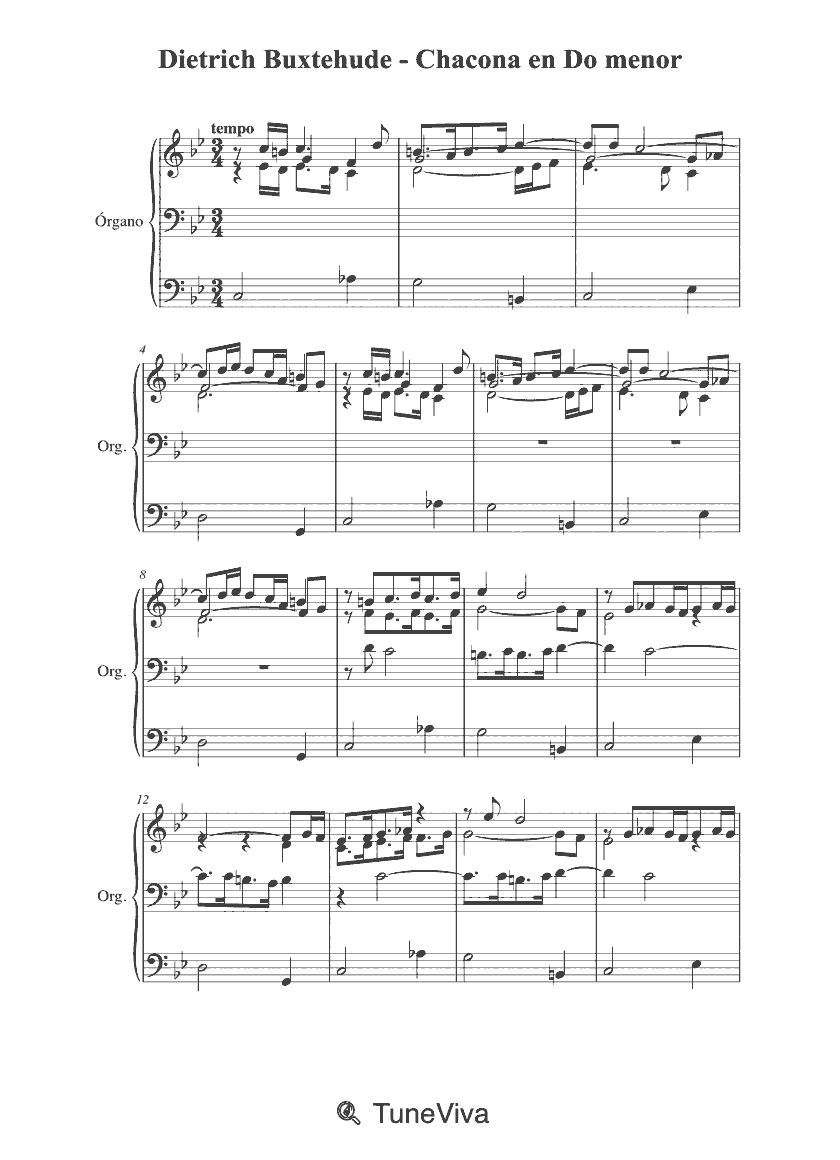
The catalogue is organised around the BuxWV numbers established by Georg Karstädt. The instrumental side is well covered: the C major Prelude, BuxWV 137, opens with a pedal solo and ends with a chaconne; the C minor Chaconne, BuxWV 159, belongs with the passacaglia BuxWV 161 to the group of ostinato works that influenced Bach. The Op. 1 trio sonatas in the catalogue are BuxWV 252 to 255, with the B-flat sonata's closing ciaconna also filed separately.
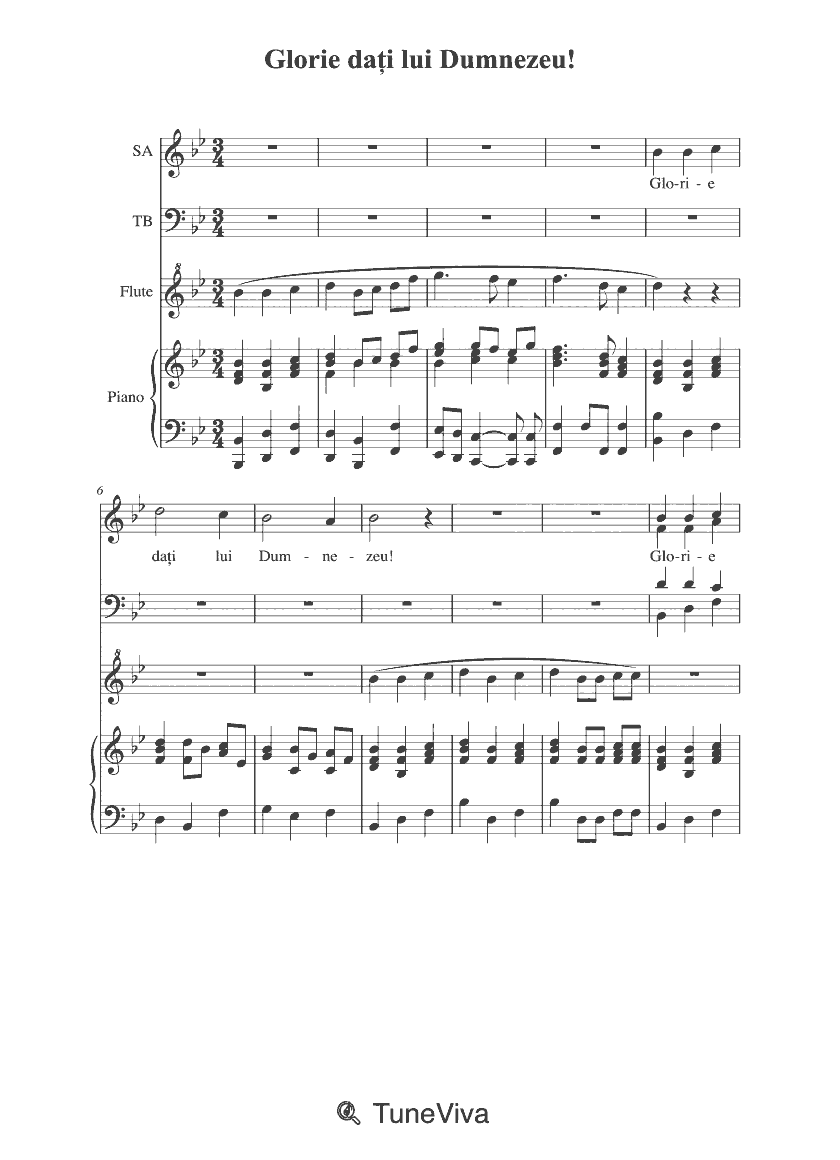
Vocal music is thinner here, though the cantata Cantate Domino, BuxWV 12, is the most-viewed item, and the catalogue also holds a Romanian-text piece, 'Glorie dați lui Dumnezeu!'. Two entries carry La Capricciosa, BuxWV 250: the theme itself and the thirty-second variation. The labels 'professional production full score' are the uploader's, not an editorial claim. With everything at complexity index 0, the index cannot separate a two-minute chorale prelude from a ten-minute sonata.
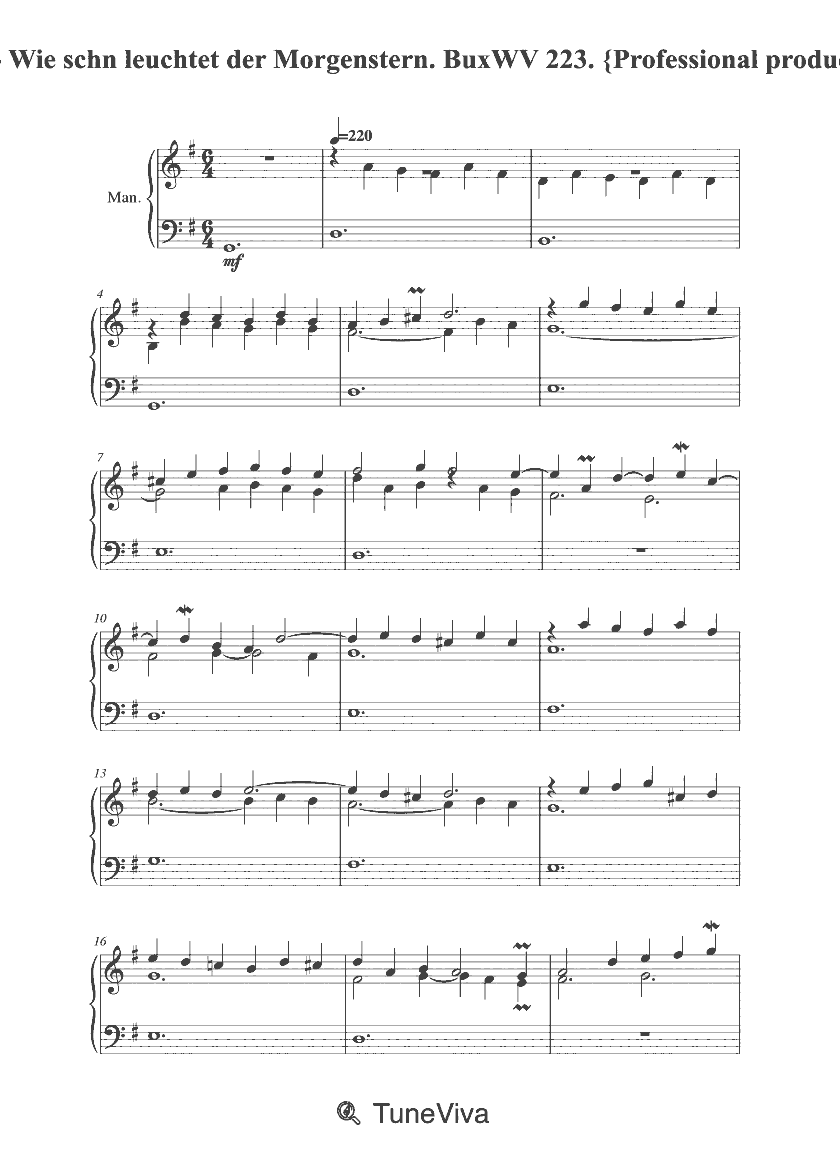
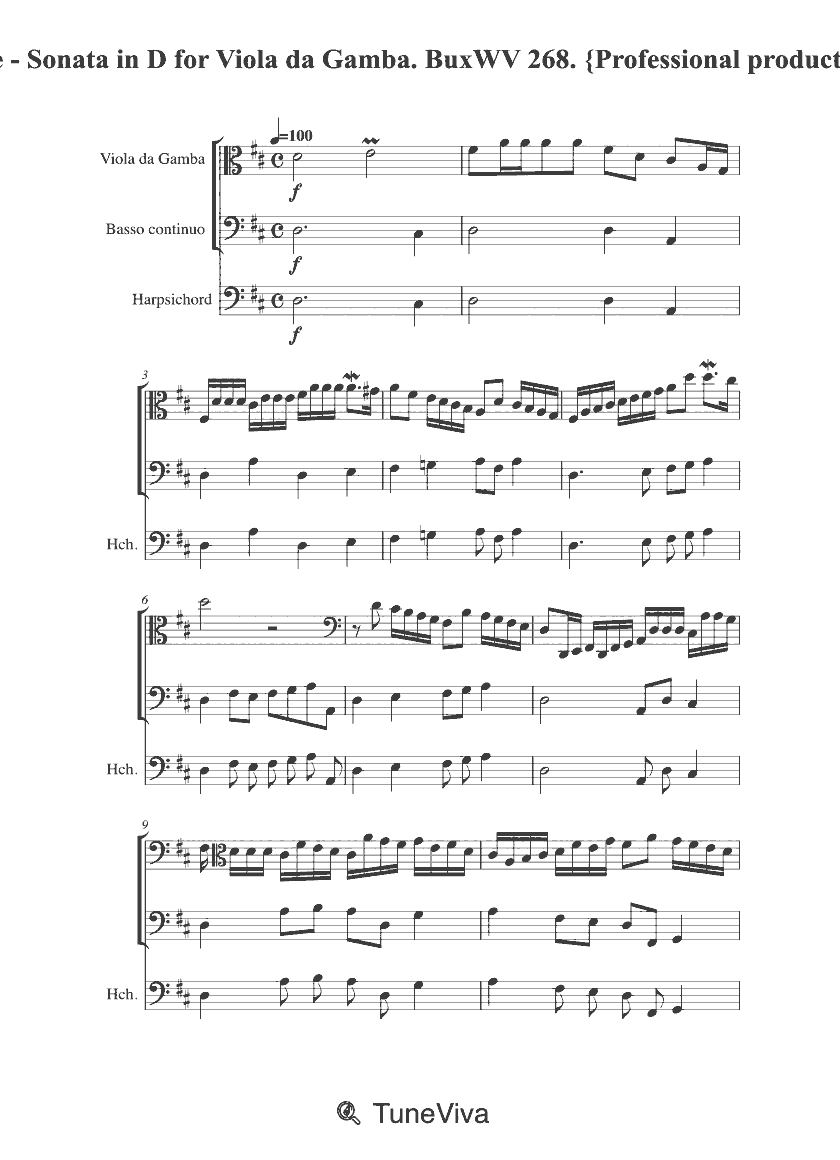
Buxtehude writes for the organ as a rhetorician: a free opening, a fugue, a sudden change of metre, then a closing flourish. Registration carries much of the structure, so plan it before you practise the notes. In the trio sonatas the two upper instruments argue as equals over a continuo bass, and the gamba sonata BuxWV 268 asks for a sustained, vocal tone rather than a showy solo. The chorale fantasia on Wie schön leuchtet der Morgenstern, BuxWV 223, is the best single introduction to his sectional writing.
A Latin cantata on Psalm 96, and the most-viewed Buxtehude score in the catalogue.
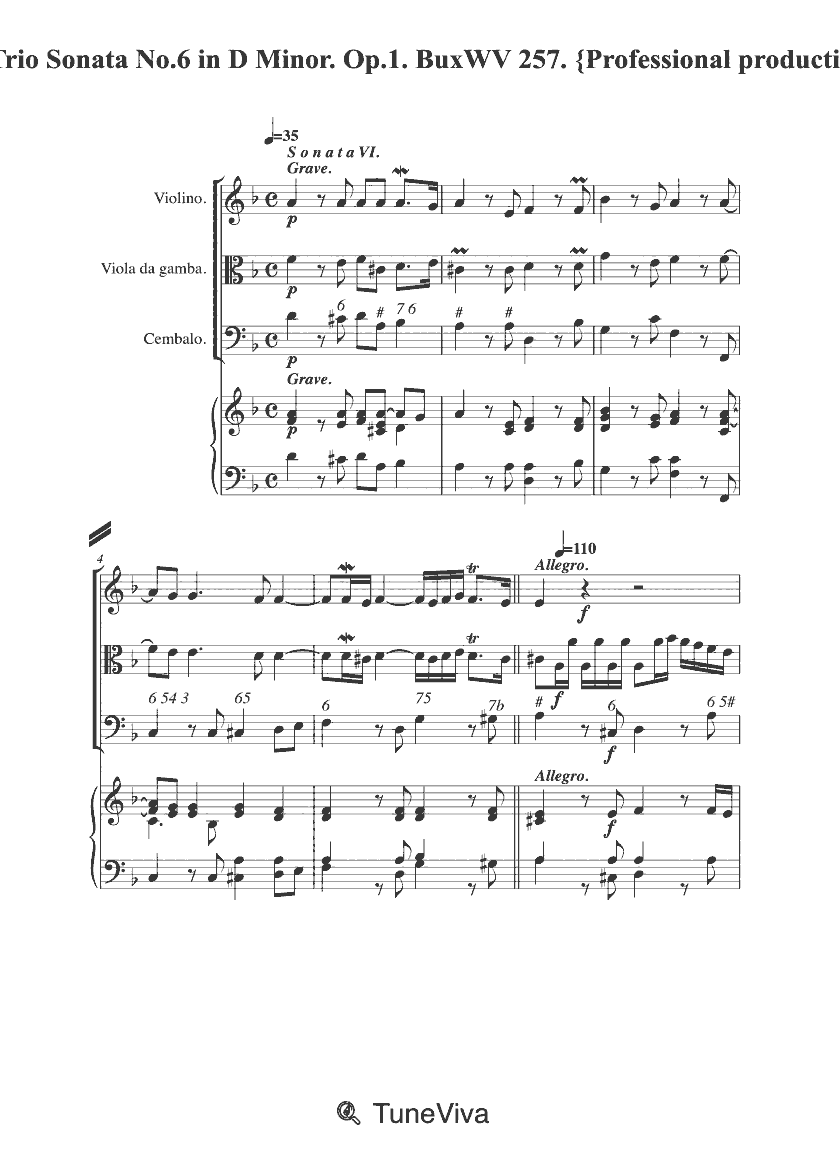
The opening sonata of the published Op. 1 set, for two violins and continuo.
A chorale fantasia on the Philipp Nicolai hymn, one of the large sectional works for organ.
One of the few surviving sonatas Buxtehude wrote for viola da gamba and continuo.
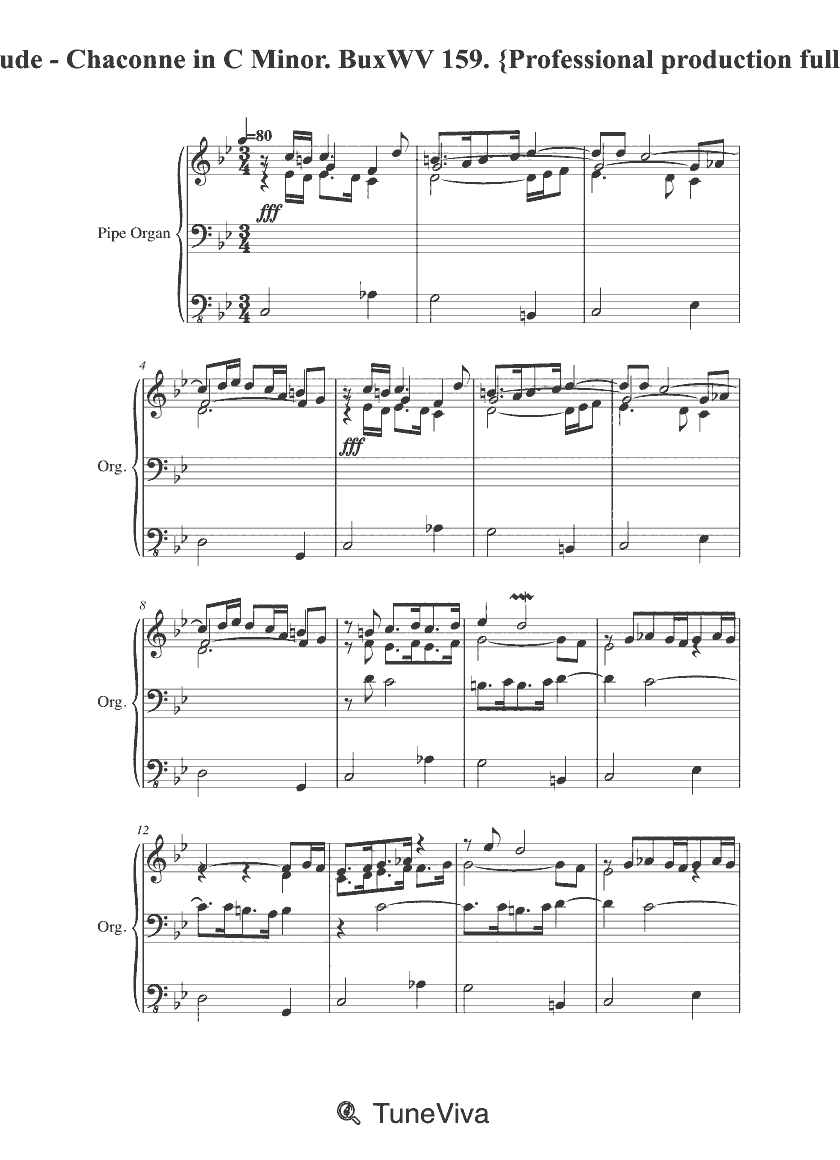
The first of Buxtehude's two organ chaconnes, built on a repeated bass that migrates through related keys.
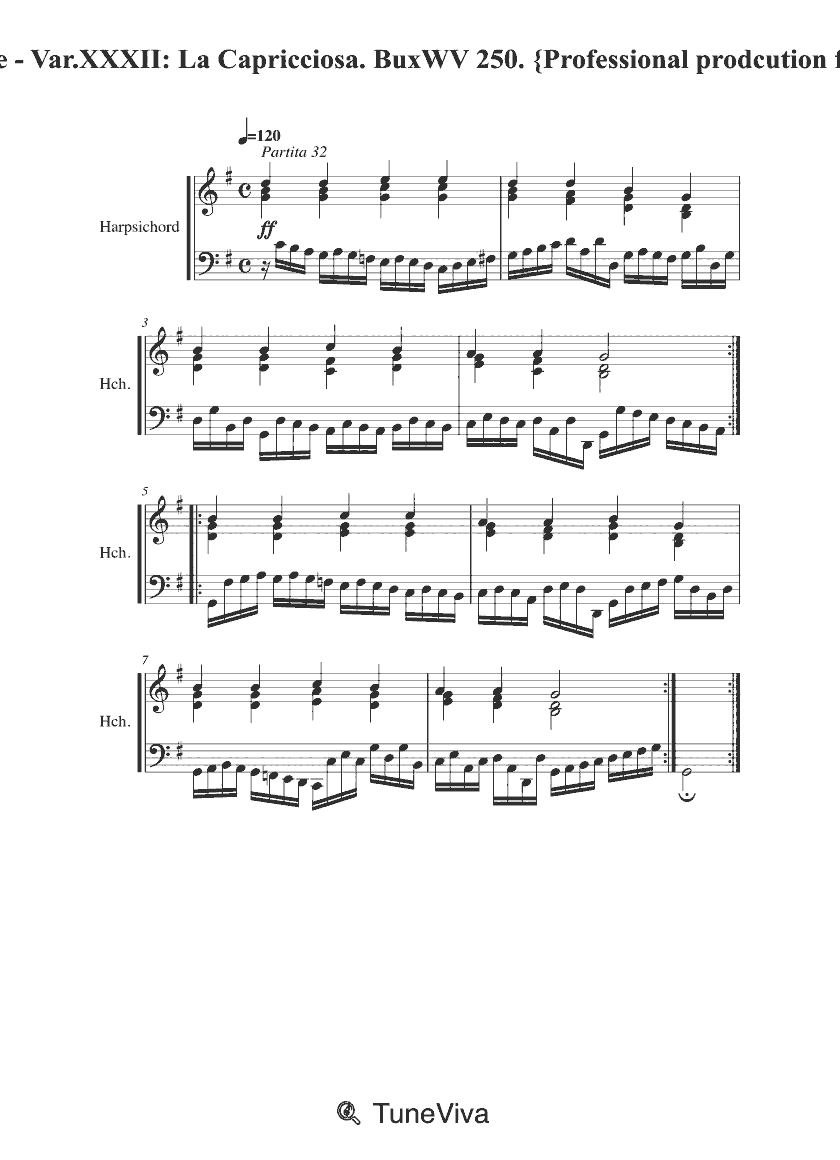
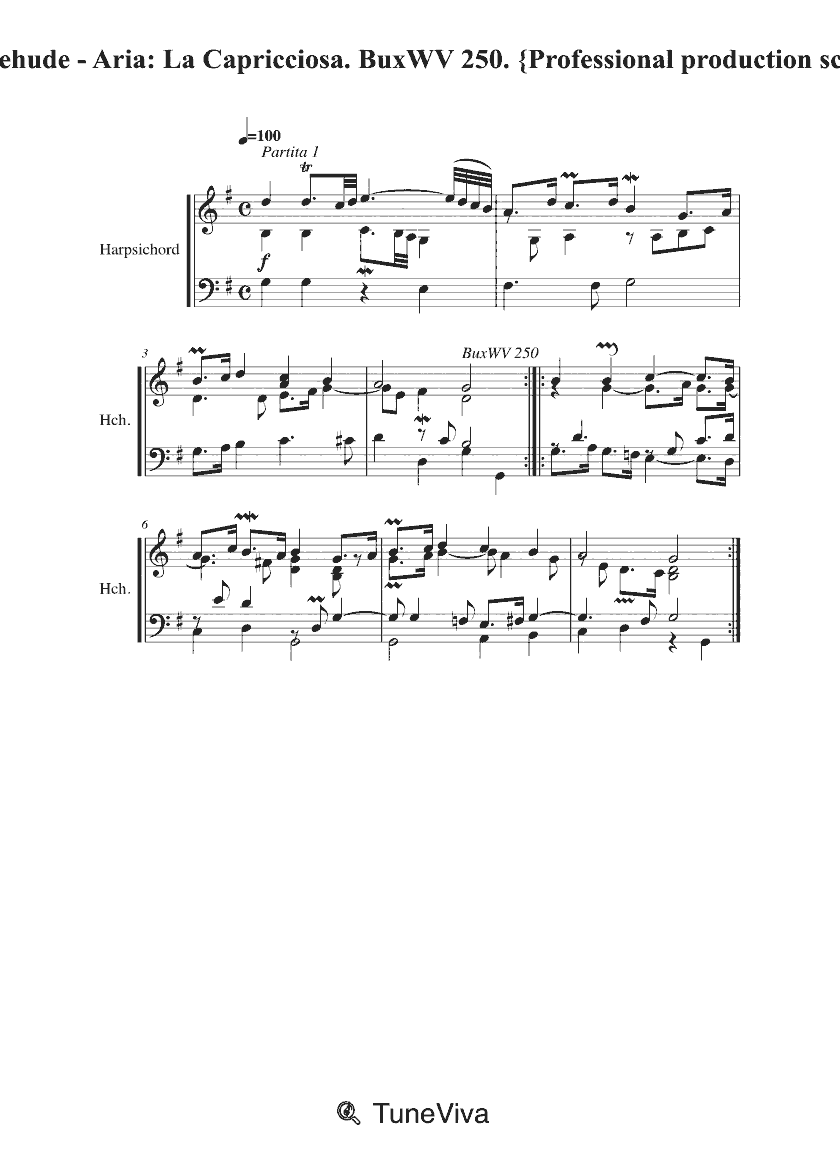
The thirty-second variation of a set in G major that may have been a model for Bach's Goldberg Variations.
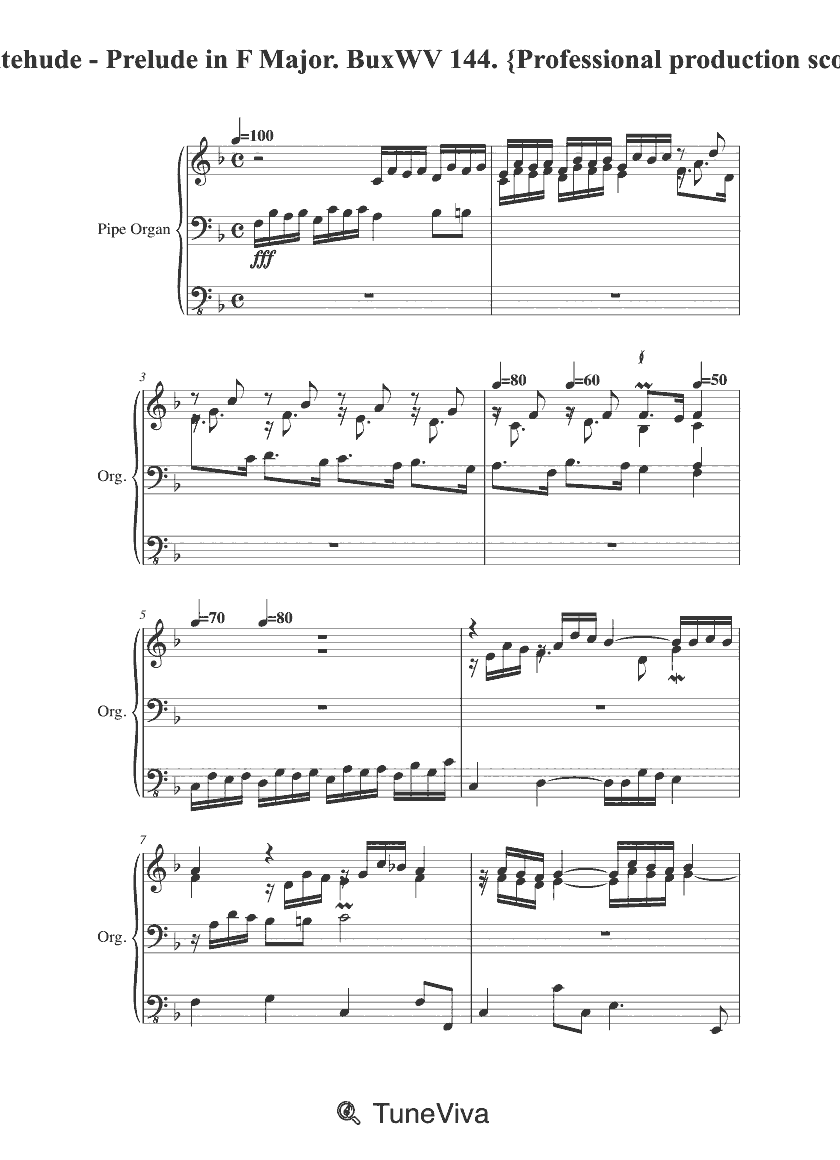
Opens with a pedal solo and closes with a short chaconne, an unusual shape for a praeludium.
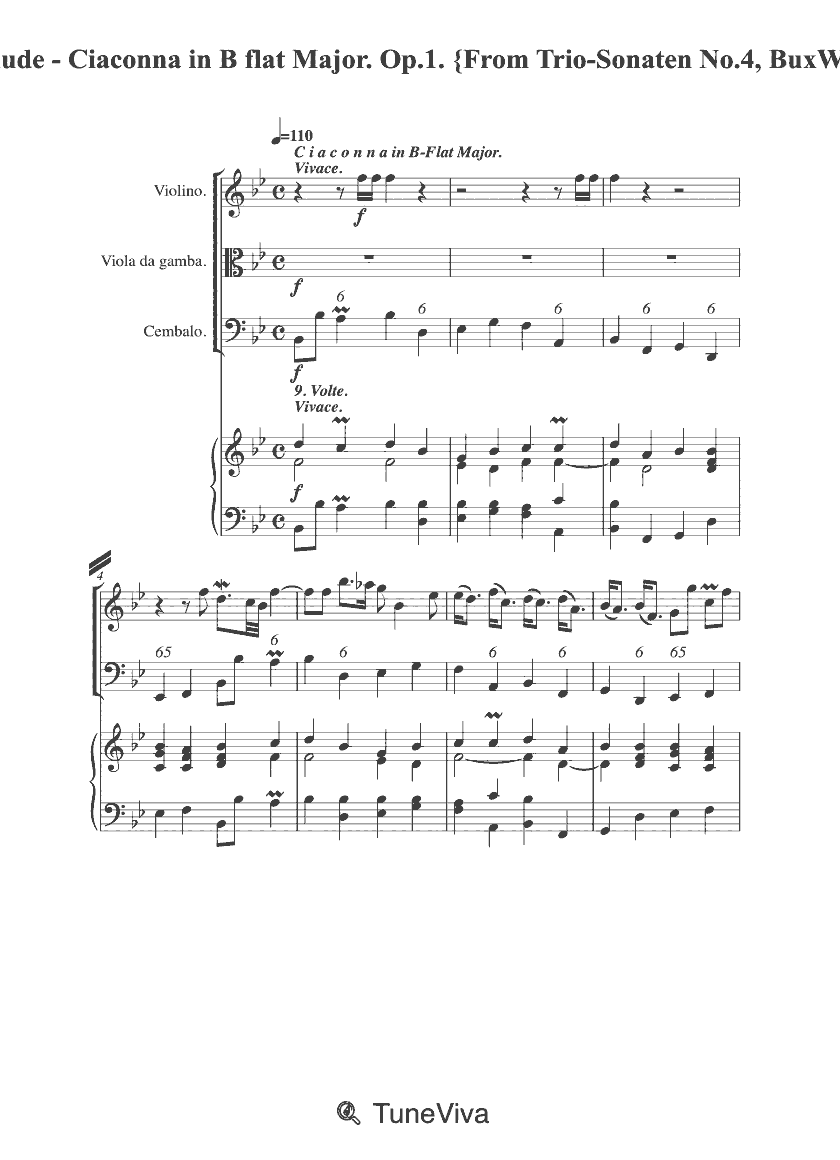
The closing movement of the B-flat trio sonata, BuxWV 255, filed here as a separate piece.
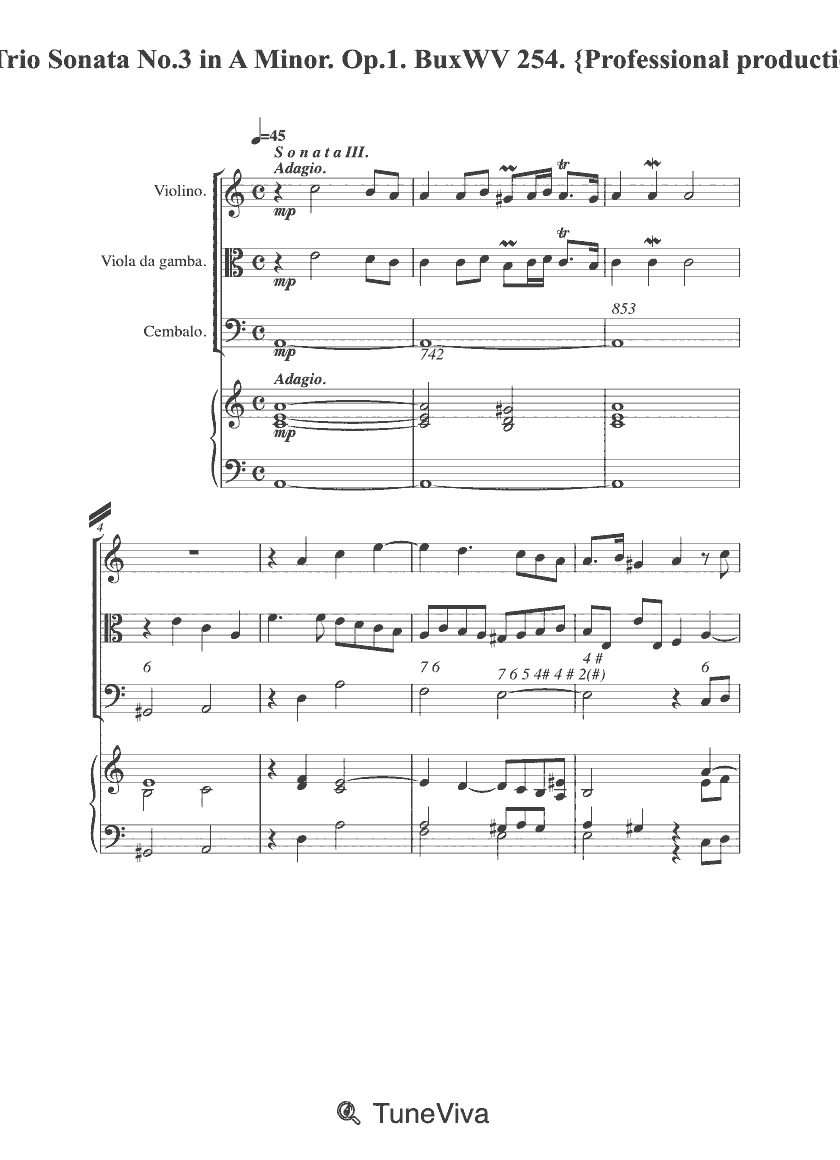
The A minor sonata from Op. 1, one of seven in the set.
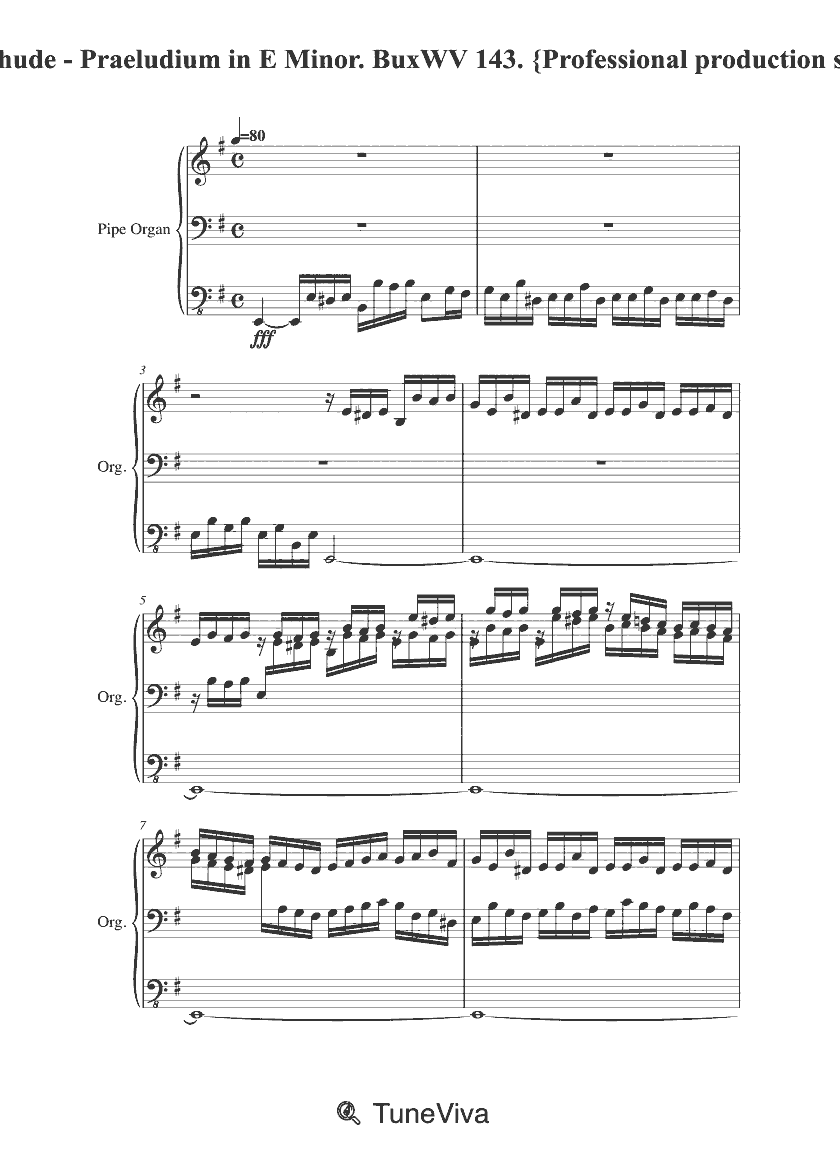
A short improvisatory prelude followed by a longer fugue, the compact form of the praeludium.
There are 57, running to about 331 minutes of music and 94,602 notated notes. Seven of them have lyrics.
It stands for Buxtehude-Werke-Verzeichnis, the catalogue compiled by Georg Karstädt and revised in 1985. The numbers are grouped by genre rather than by date.
One file is the aria theme and the other is the set of thirty-two variations, BuxWV 250. Splitting the theme from the variations is the uploader's choice, not Buxtehude's.
The visit is documented: Bach obtained leave from his Arnstadt post in 1705 and stayed nearly three months, long enough to annoy his employers.
Catalog editions and arrangements attributed to Dietrich Buxtehude.
Heut triumphieret Gottes Sohn (BuxWV 43)
BuxWv 159