classical
4 tracks
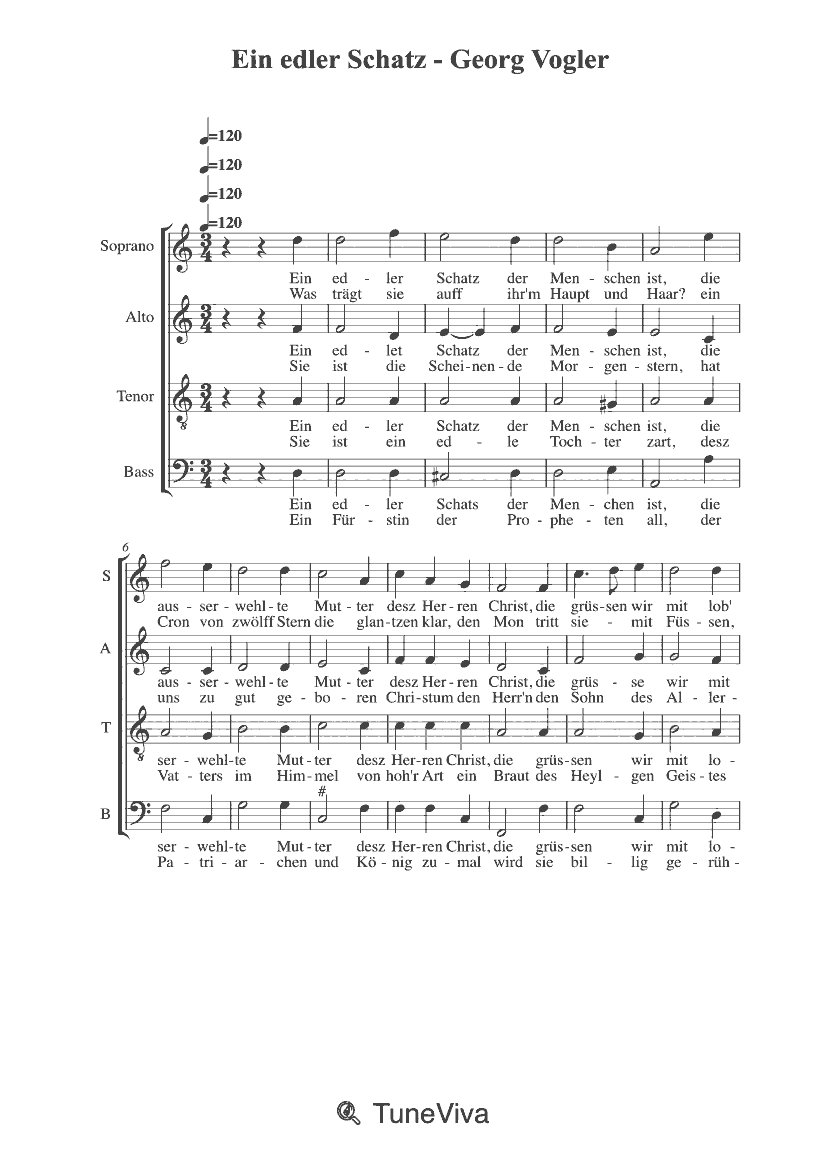
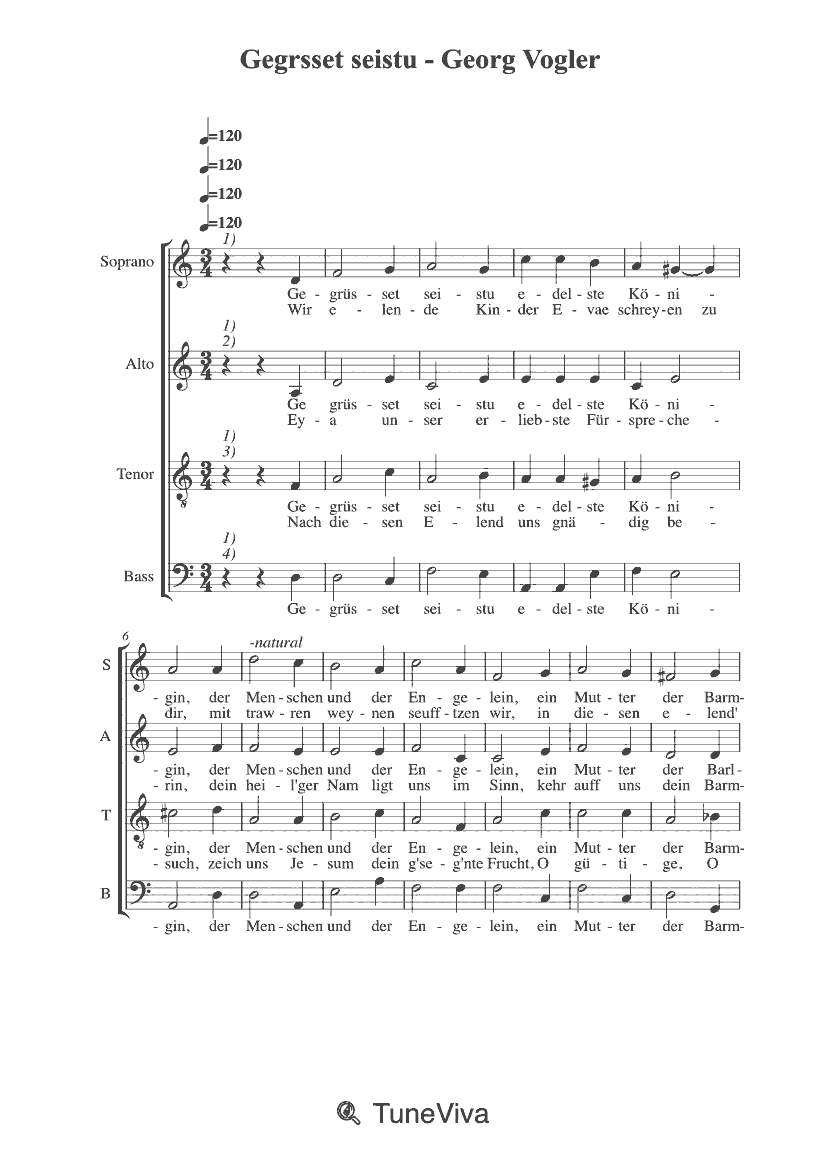
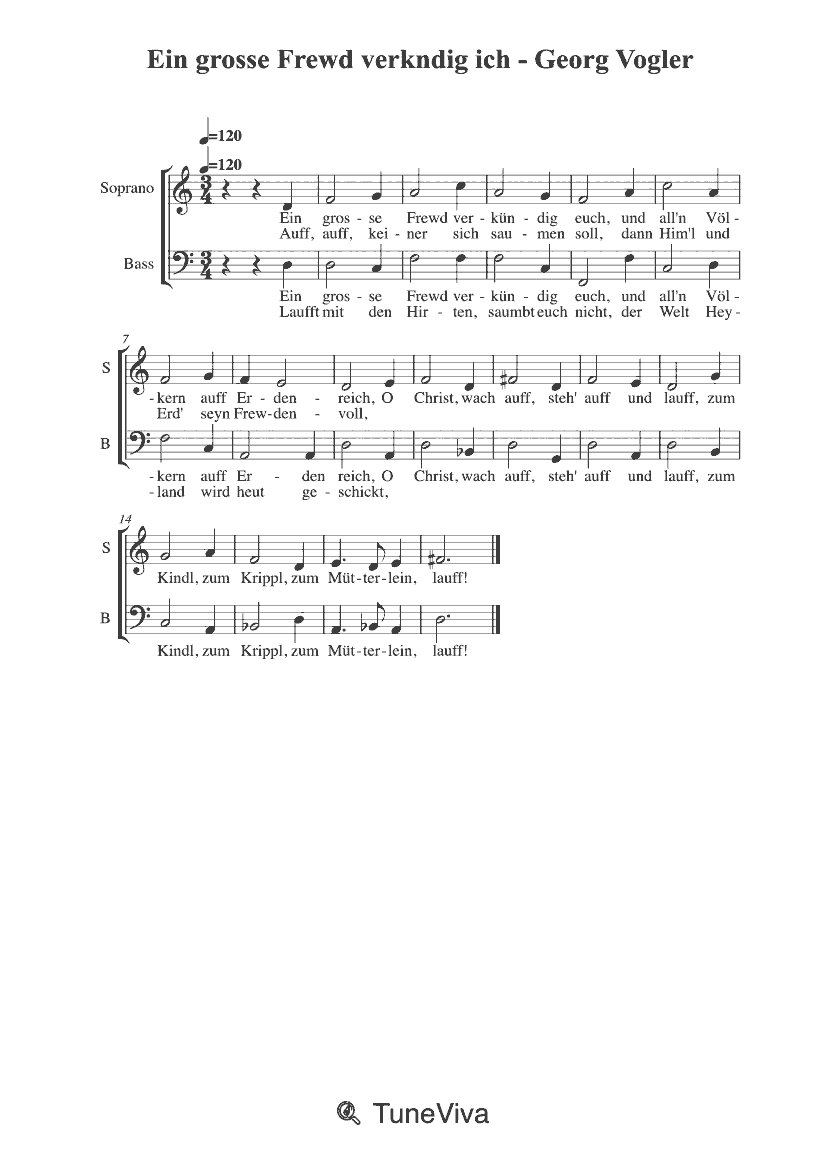
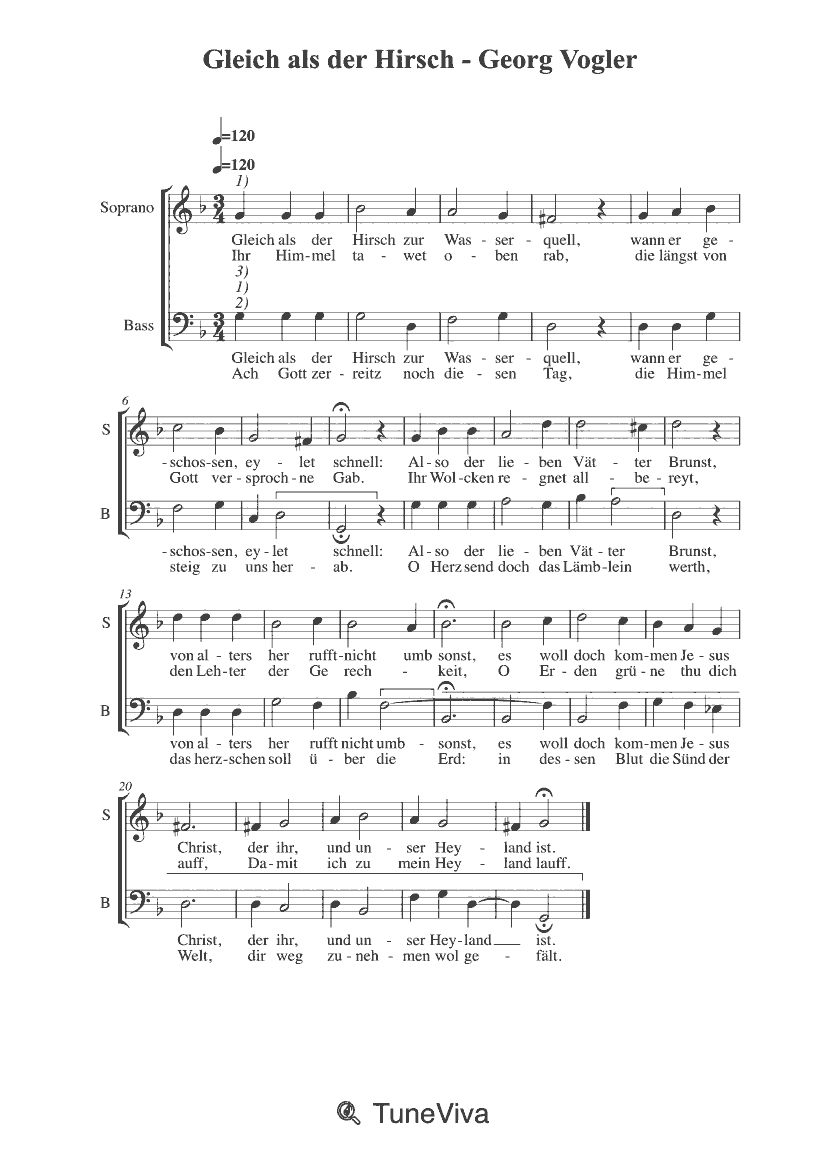
Georg Vogler's page is unlike anything else in the catalogue: 21 short German chorales, about 23 minutes of music and 2,683 notated notes, all with words. Every entry is logged at complexity index 0.
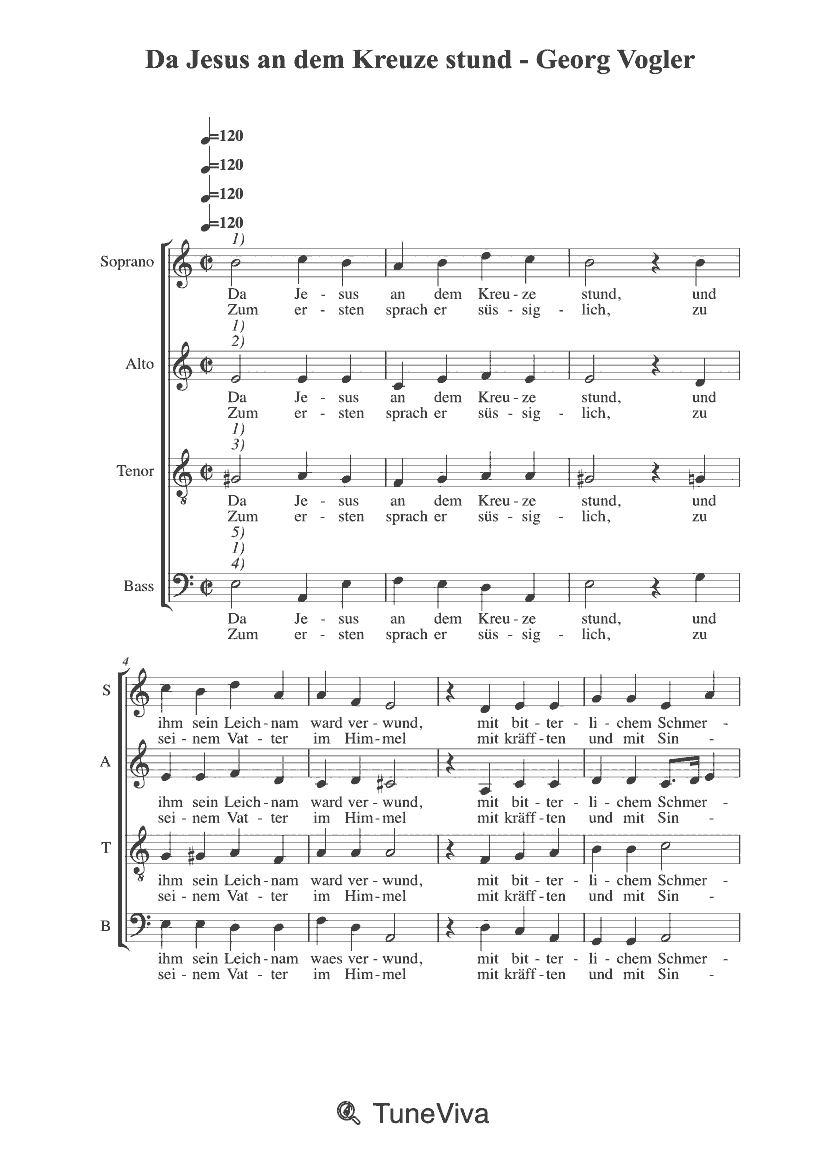
They come from one book, the Catechismus in außerlesenen Exempeln of 1625, a Jesuit catechism with hymns for church and school. The most-viewed is Da Jesus an dem Kreuze stund, a Passion hymn; Easter, Pentecost and Marian songs follow. Because each item is short, the whole page can be sung through in less time than a Mass.
Georg Vogler was born in 1585, joined the Society of Jesus and became professor of controversial theology and catechetics at Würzburg. He is a different man from the better-known Abbé Georg Joseph Vogler (1749-1814), the Würzburg-born organist and theorist who worked at Mannheim; the catalogue's chorales belong to the earlier, Counter-Reformation Vogler.
His Catechismus in außerlesenen Exempeln, kurtzen Fragen, schönen Gesängern, Reymen und Reyen für Kirchen und Schulen appeared in Würzburg in 1625 and was reprinted for decades; a 1652 printing is the source named for several of the pieces here. The book is a teaching text rather than a liturgical chantbook, and its songs set the chief parts of the catechism and the seasons of the church year in simple vocal settings. The title promises examples, short questions, songs, rhymes and rounds, and the contents mix instruction with music.
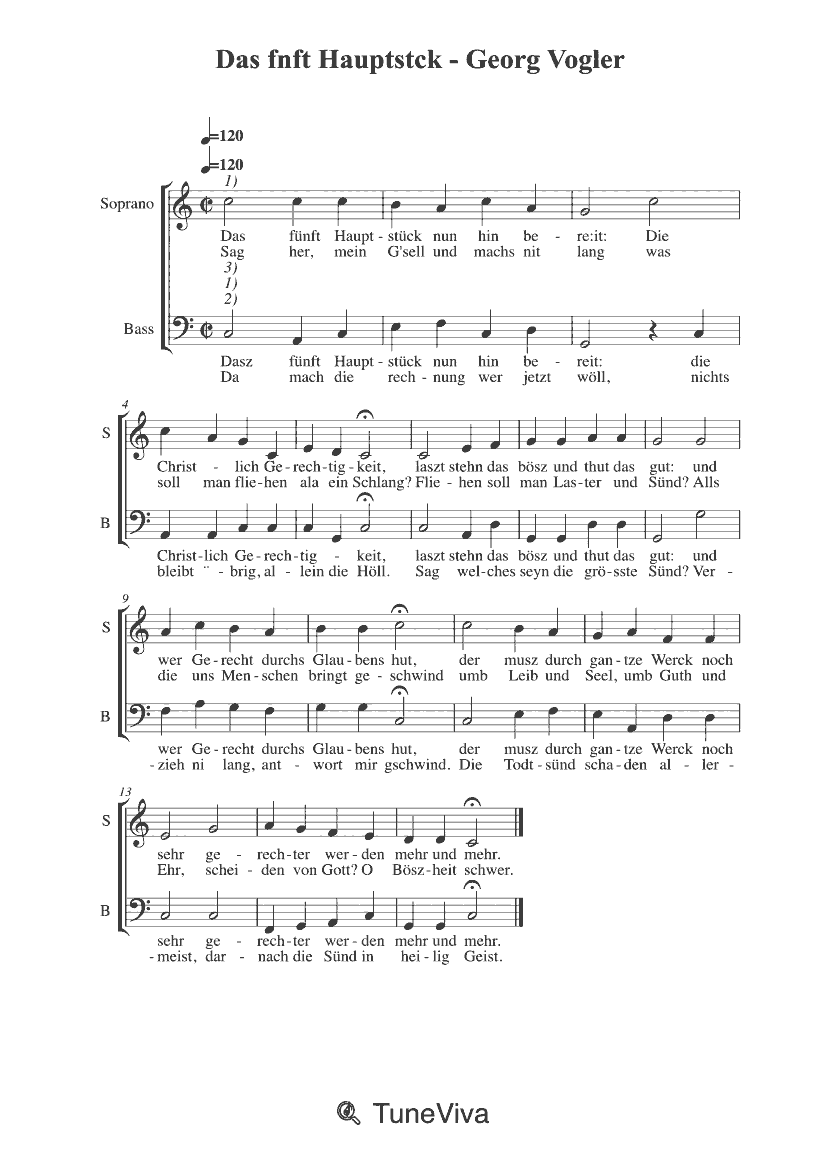
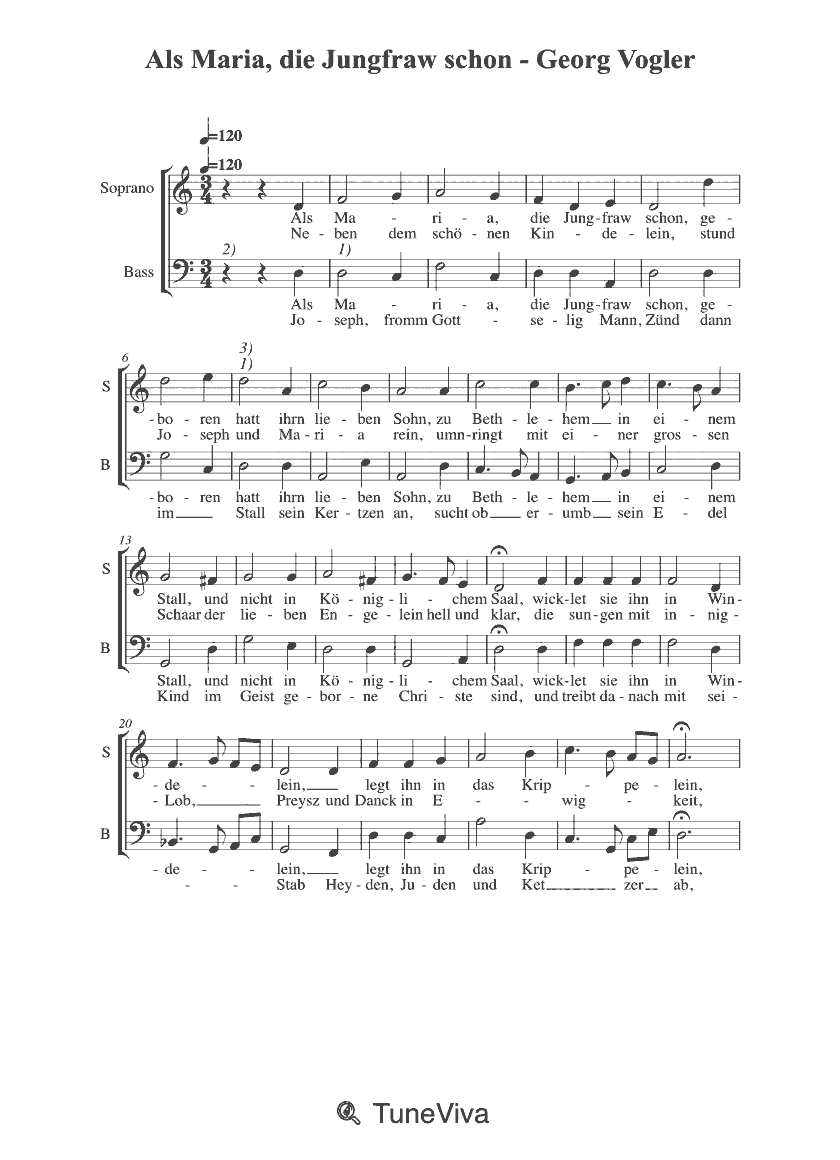
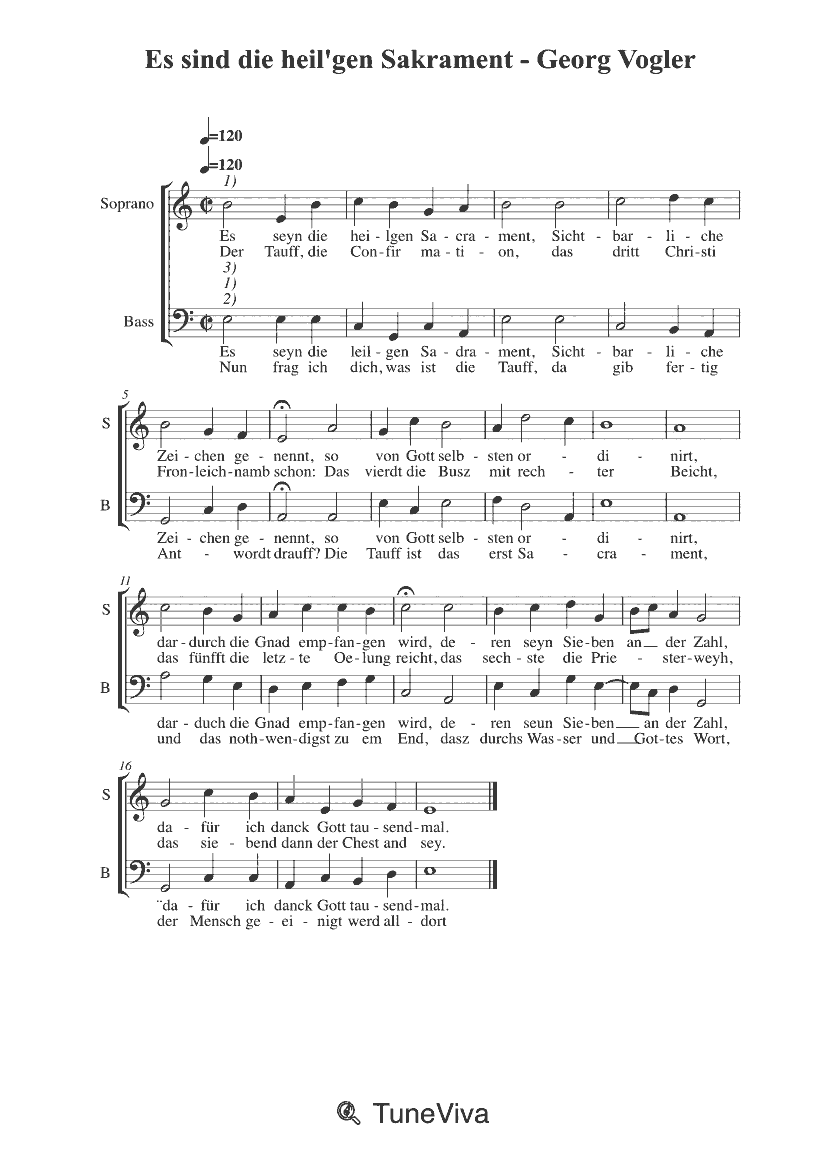
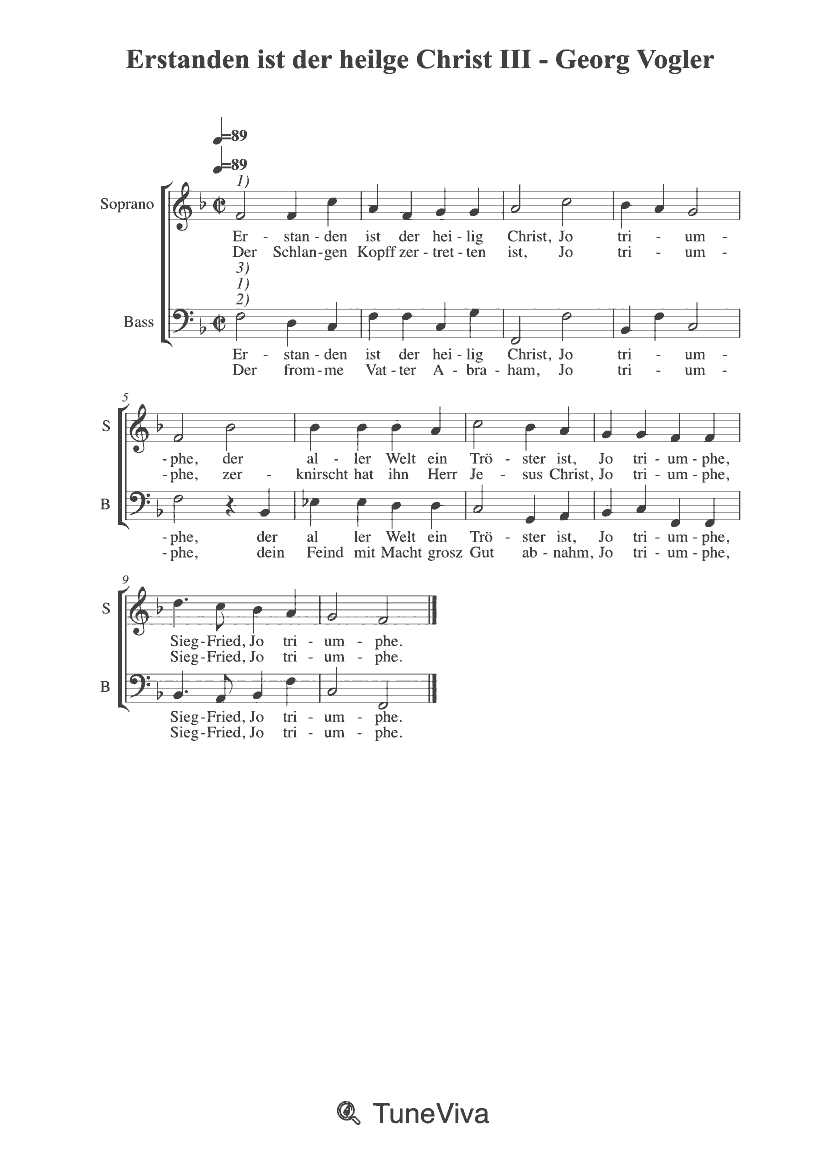
The catalogue's 21 entries follow that plan. Da Jesus an dem Kreuze stund is a Passion hymn; Erstanden ist der heilge Christ survives in two settings, labelled I and II; Nun bitten wir den heiligen Geist is a Pentecost hymn; and Als Maria, die Jungfraw schon belongs to the Marian repertory. Das fünft Hauptstück, whose title is garbled in the catalogue as 'Das fnft Hauptstck', marks the fifth part of the catechism. The German texts are older hymns and catechism verses, not free poems.
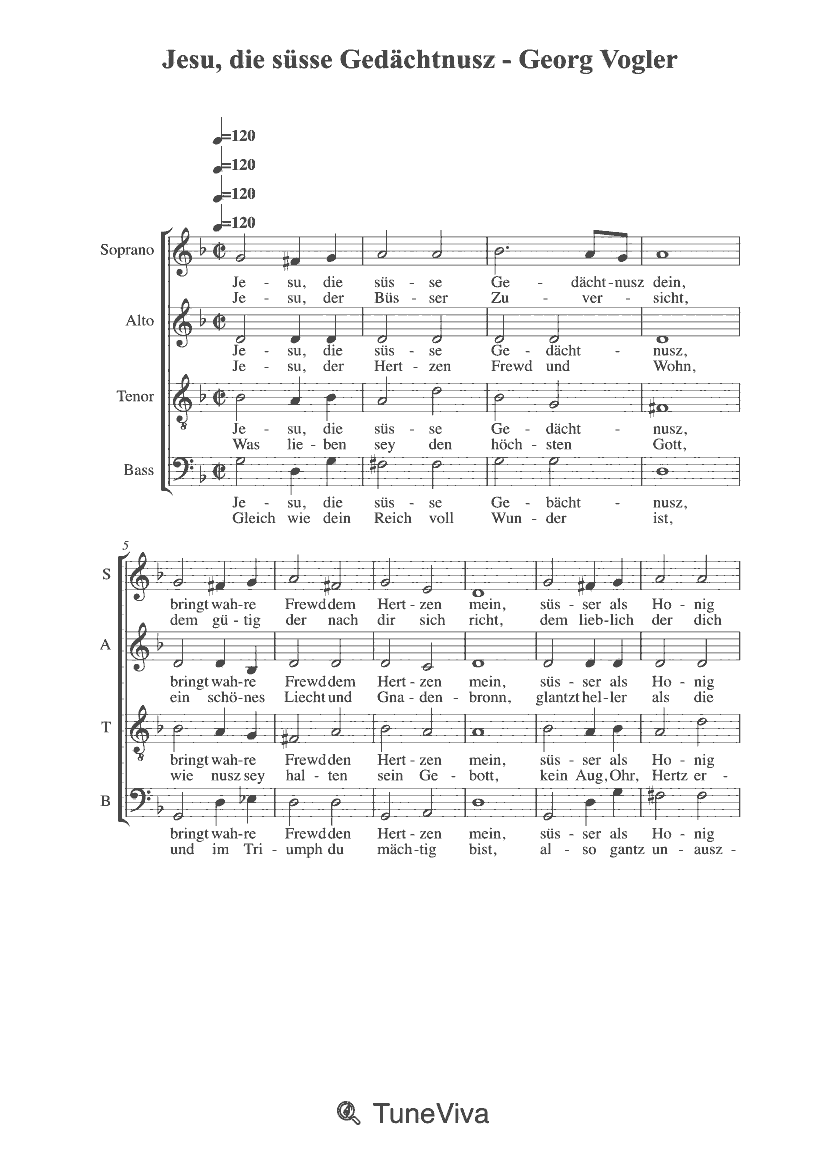
These are functional chorales: the text is meant to be heard and the harmony is mostly chordal. Keep the tempo close to speech and avoid heavy accents on the barline, since the phrases follow the words rather than the metre. The German is seventeenth-century and sometimes spelled differently from modern usage, so read the text aloud before singing. Because the pieces are short, they work as a set: group them by season instead of performing one in isolation.
The most-viewed entry: the Passion hymn 'Da Jesus an dem Kreuze stund', in a short syllabic setting.
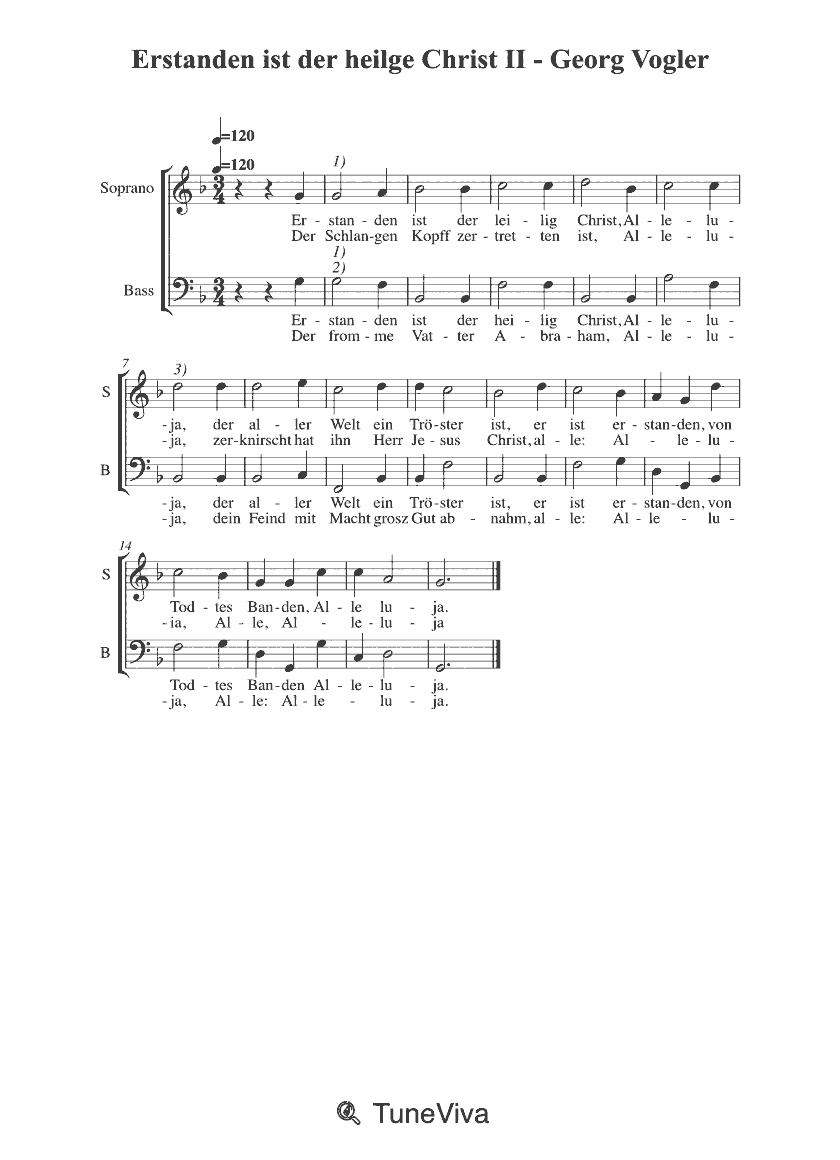
The second of two settings of the Easter hymn 'Erstanden ist der heilge Christ'.
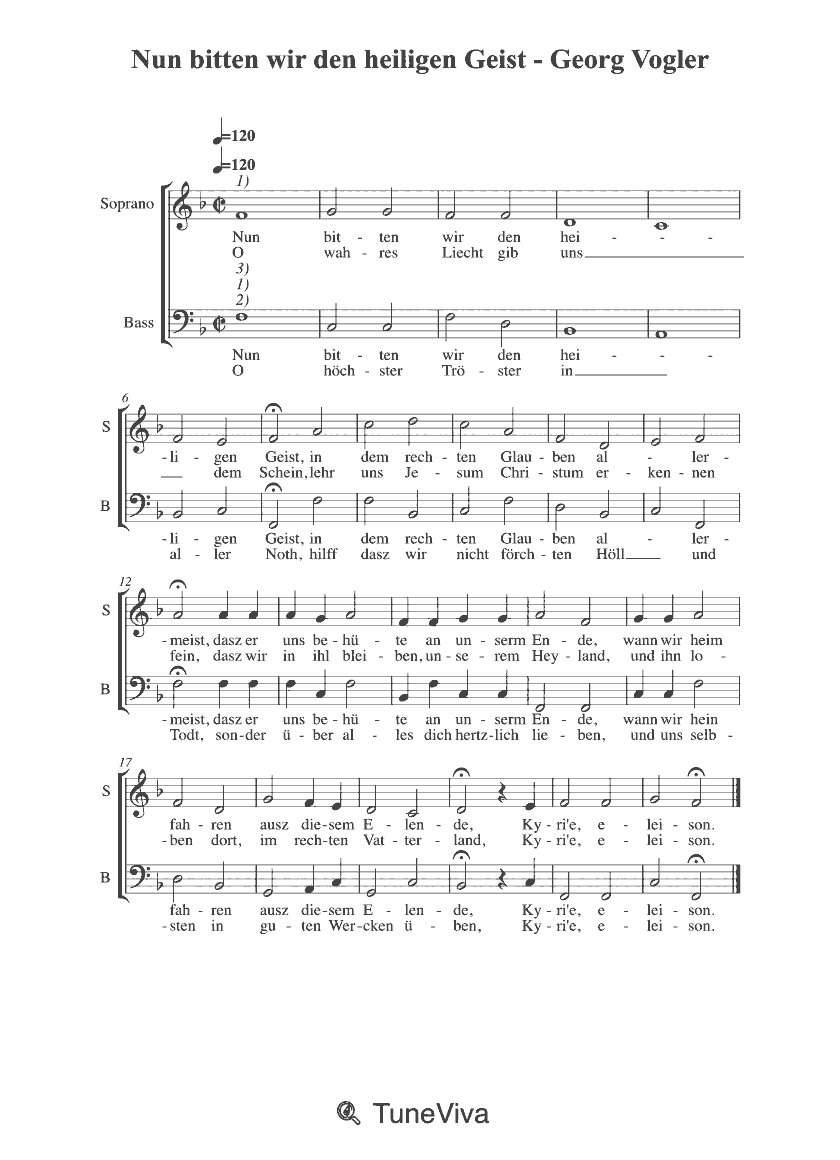
The Pentecost hymn 'Nun bitten wir den heiligen Geist', in a short setting.
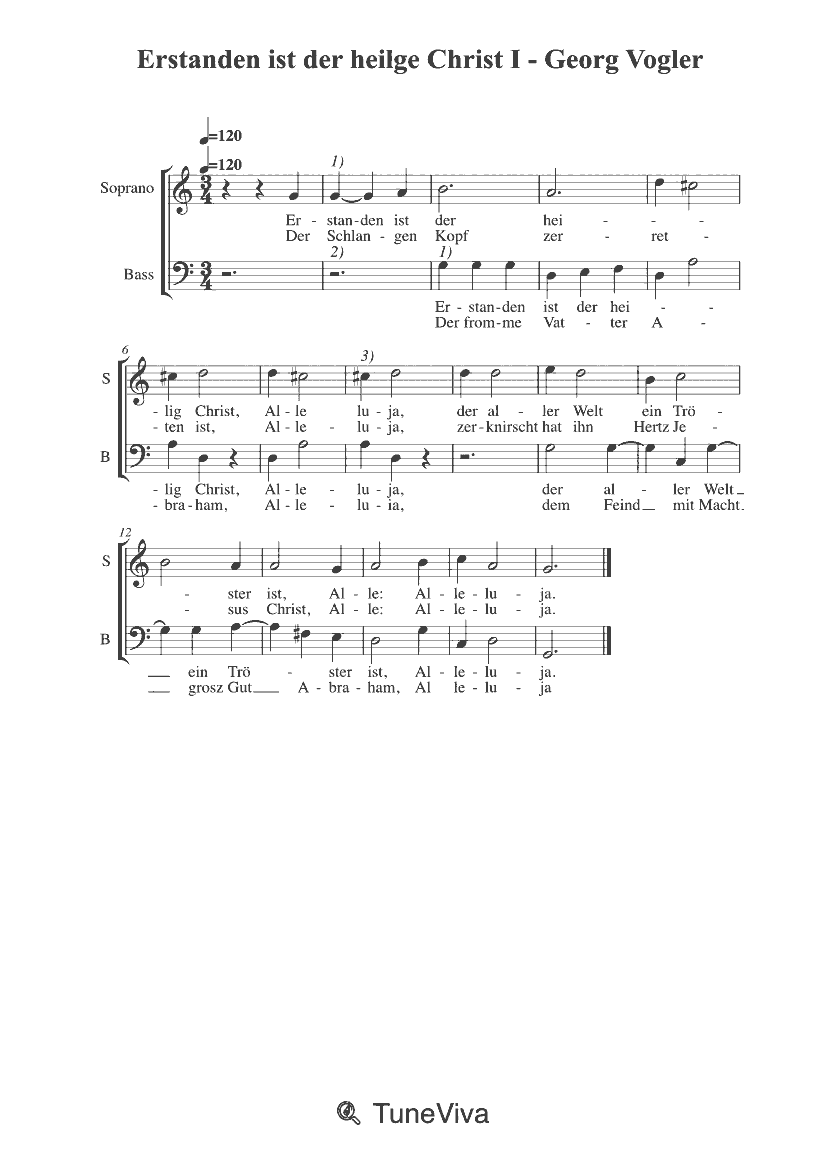
The first of the two Easter settings, distinguished from the second only by the numeral.
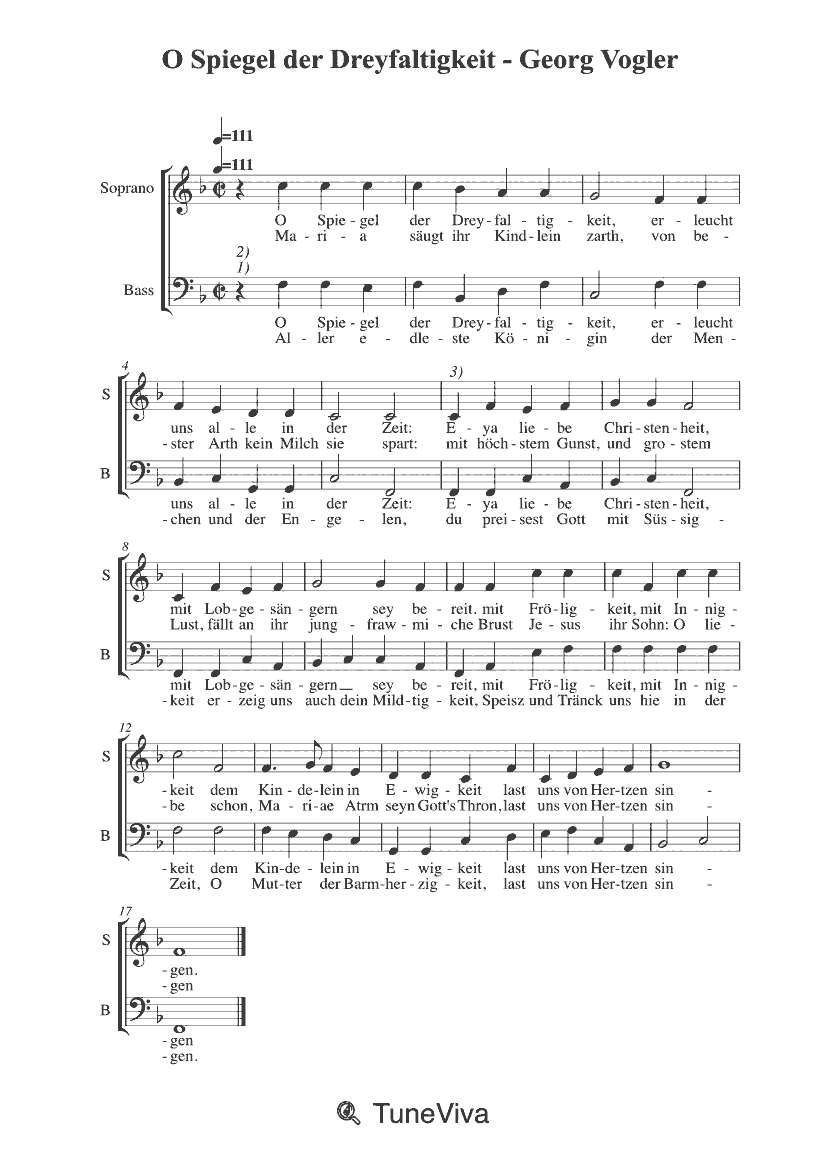
A hymn on the Trinity, with the older spelling 'Dreyfaltigkeit' for 'Dreifaltigkeit'.
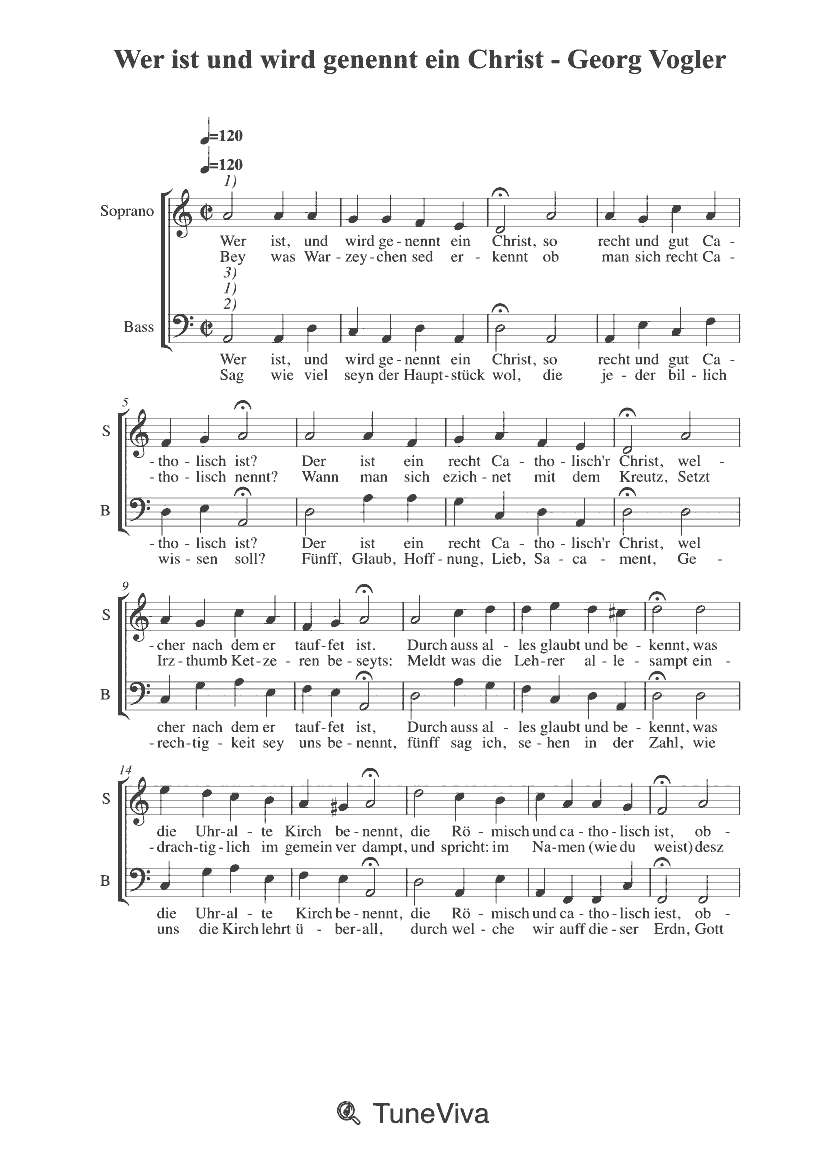
A catechism song asking who may be called a Christian.
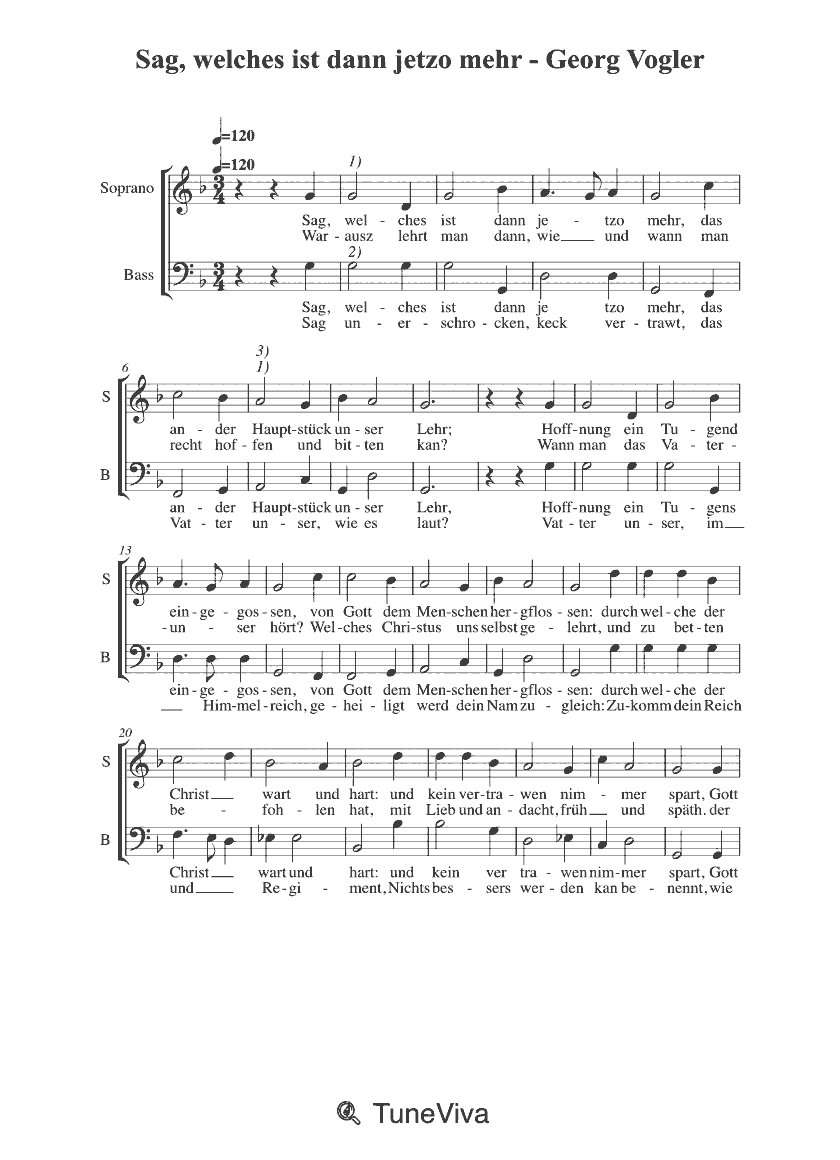
The fifth part of the catechism, catalogued without its umlauts as 'Das fnft Hauptstck'.
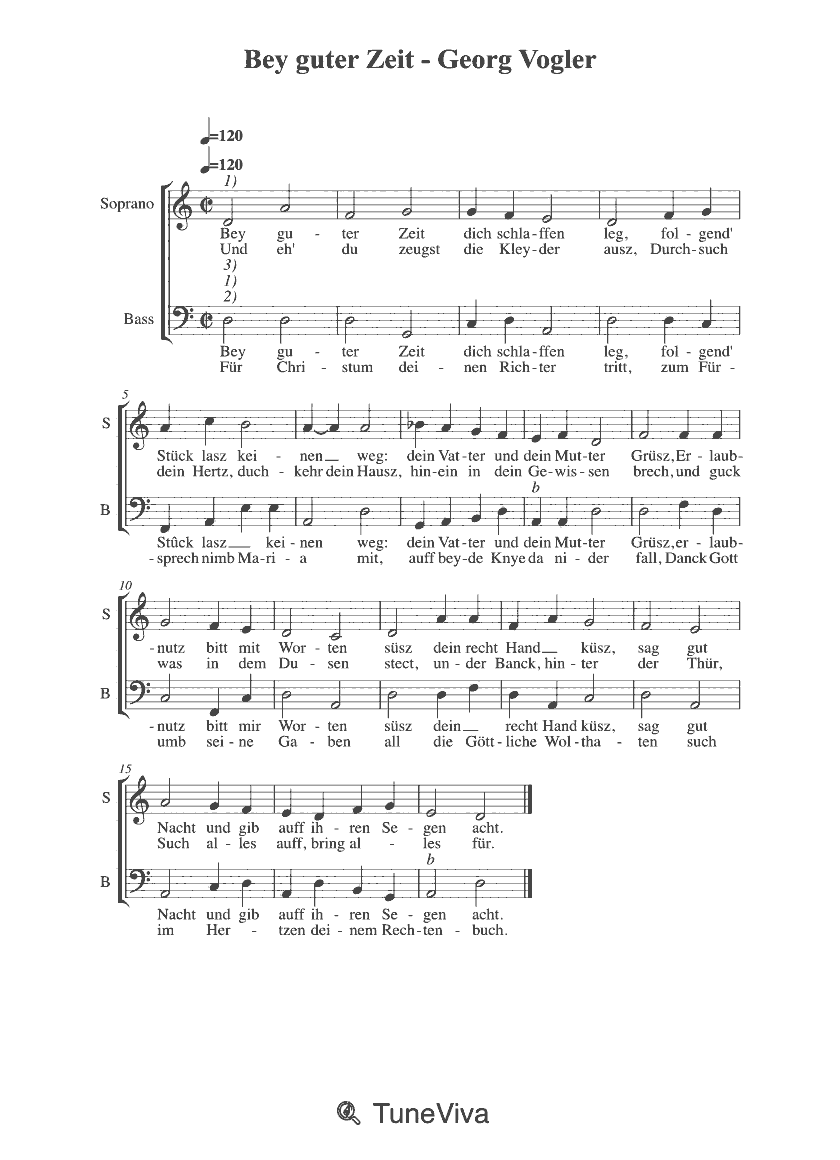
A short hymn whose title, 'Bey guter Zeit', means 'in good time'.
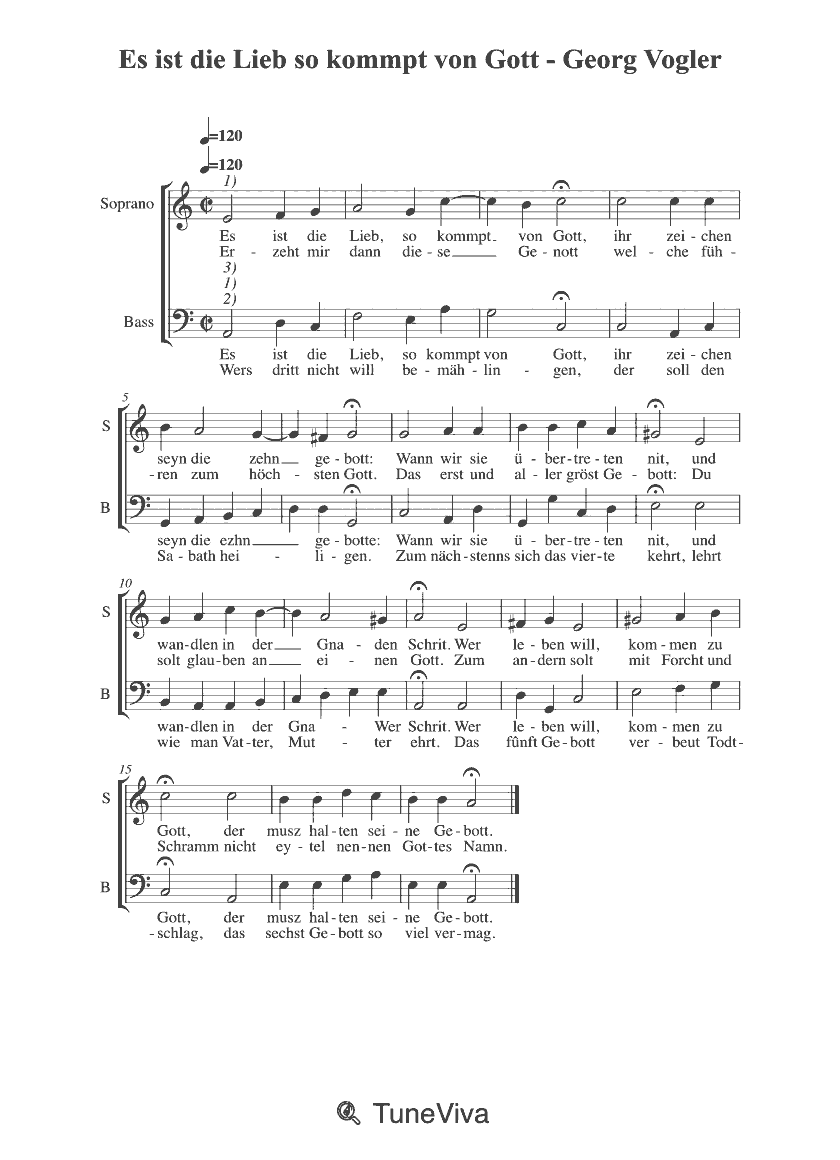
A hymn on love's origin in God, with the seventeenth-century spelling 'kommpt'.
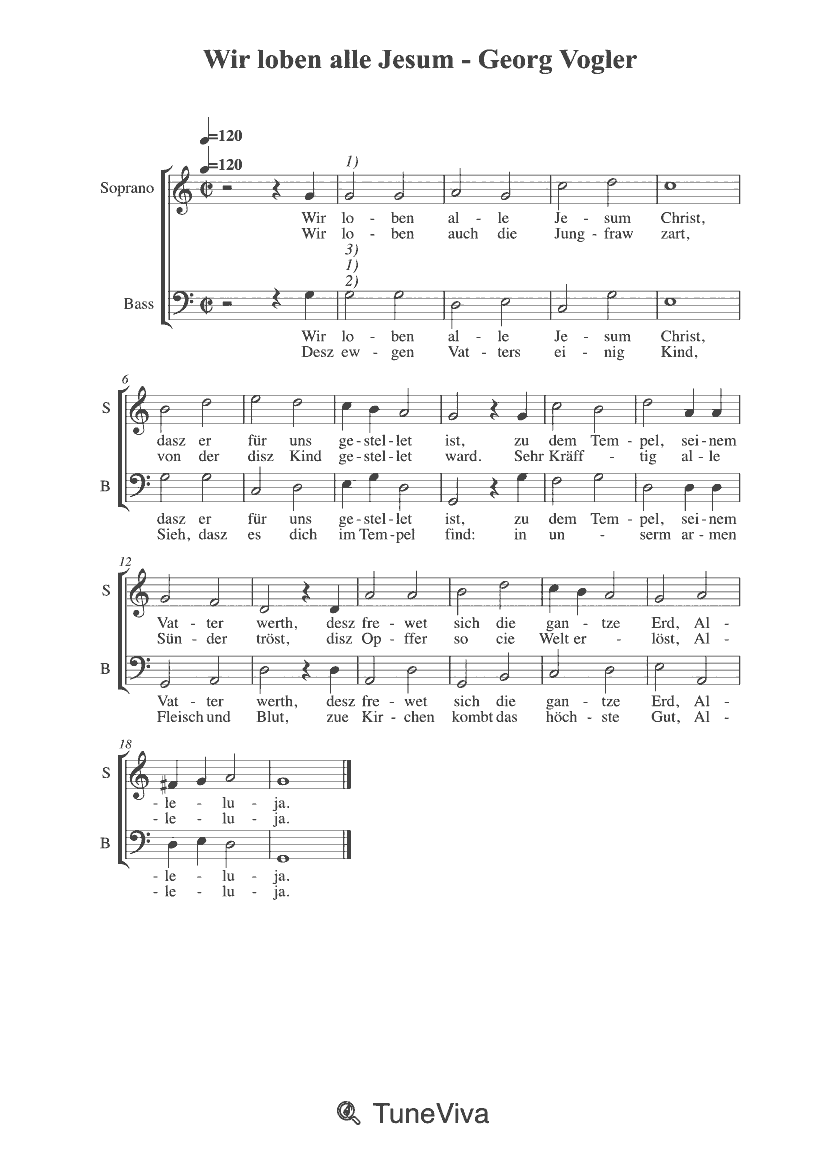
A short hymn, 'Wir loben alle Jesum'.
Twenty-one, about 23 minutes of music and 2,683 notated notes; all twenty-one carry lyrics.
No. Georg Vogler (1585-1635) was a Jesuit in Würzburg; Abbé Georg Joseph Vogler (1749-1814) was a composer, organist and theorist.
The Catechismus in außerlesenen Exempeln, printed in Würzburg in 1625; a 1652 printing also survives.
The catalogue preserves older spellings and has lost some umlauts. 'Das fnft Hauptstck' stands for 'Das fünft Hauptstück', the fifth part of the catechism.
The book's title addresses both churches and schools, and the pieces are short enough for teaching as well as for singing in a service.
Catalog editions and arrangements attributed to Georg Vogler.