classical
1 tracks
Joachim Andersen's page is a flautist's working library: twenty-seven scores, about fifty-one minutes of music and 18,527 notated notes, with no lyrics anywhere. Almost everything is an étude. The most-viewed file is Op. 30 No. 5 in D, followed by Op. 30 No. 1 and Op. 21 No. 10, and the only piece that is not a study is a piano accompaniment to the Scherzino from Op. 55. Twenty-six entries sit at complexity index 0 and one at index 2, a rating that understates how demanding the studies become at speed.
Carl Joachim Andersen was born in Copenhagen on 29 April 1847, the son of the flautist Christian Joachim Andersen, who taught him. He played in public as a child, and from the age of thirteen until 1868 he was first flute in the orchestra Niels Gade conducted in Copenhagen. He joined the Royal Danish Orchestra in 1869, took leave in 1878 and did not return: he spent two years in Saint Petersburg, then moved to Berlin in 1881 for Bilse's Band and the Royal German Opera. In 1882 he was one of the fifty-four musicians who left Bilse to found the Berlin Philharmonic, and he remained its solo flautist until a paralysis of the tongue forced his resignation in 1893.
Back in Copenhagen he composed, wrote for the Tivoli Gardens concerts and founded an orchestra school in 1897, teaching conducting there until his death on 7 May 1909. He was made a Knight of the Order of the Dannebrog in 1905.
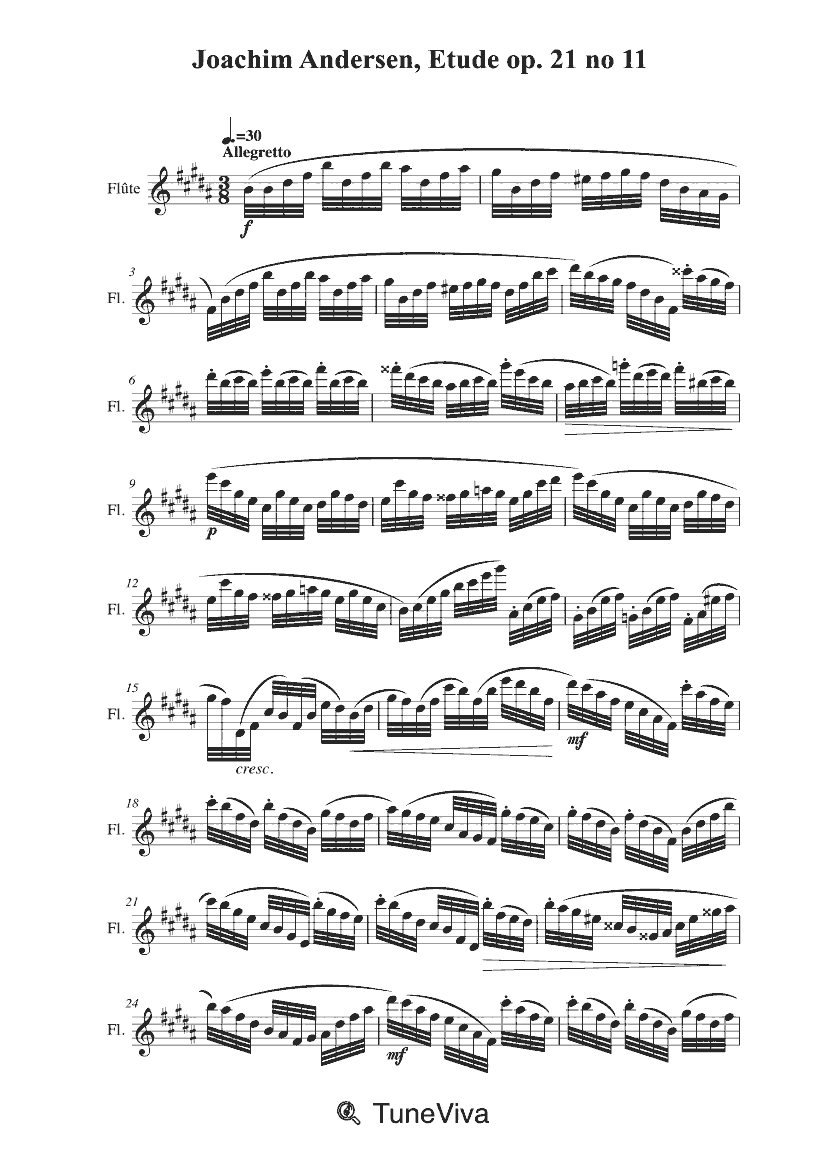
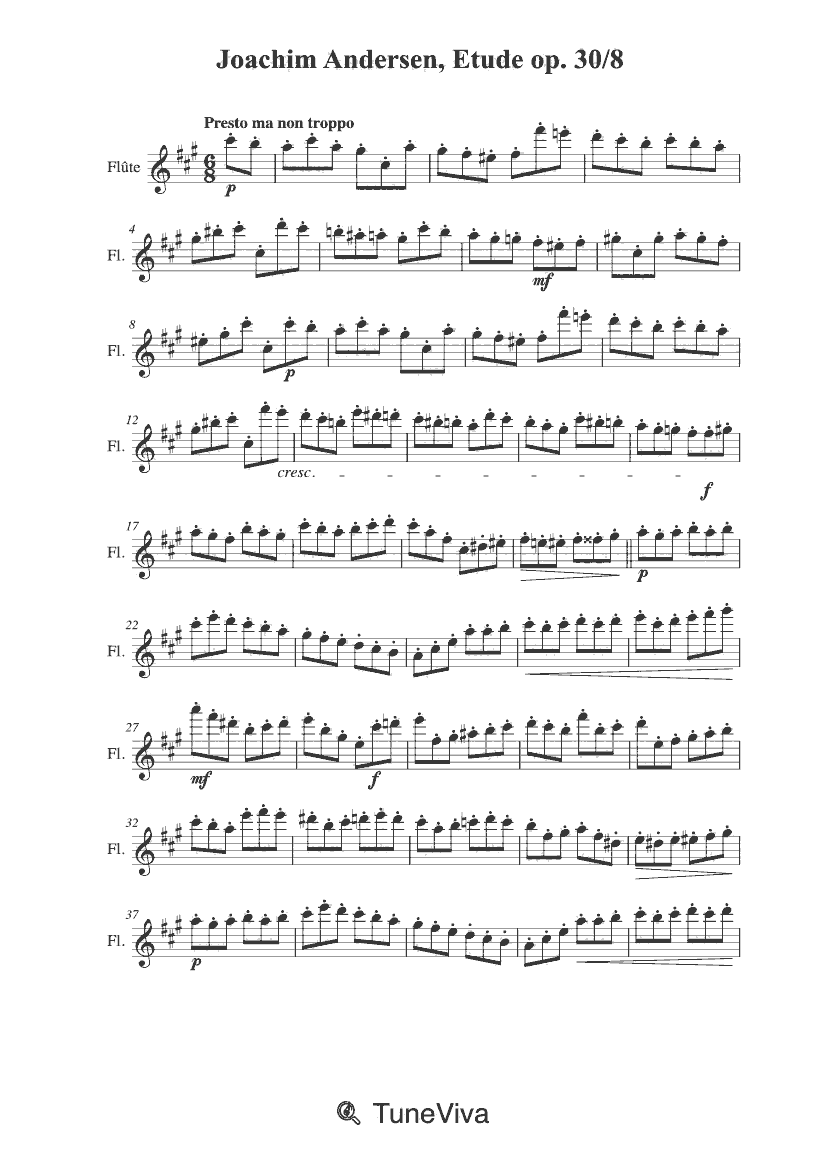
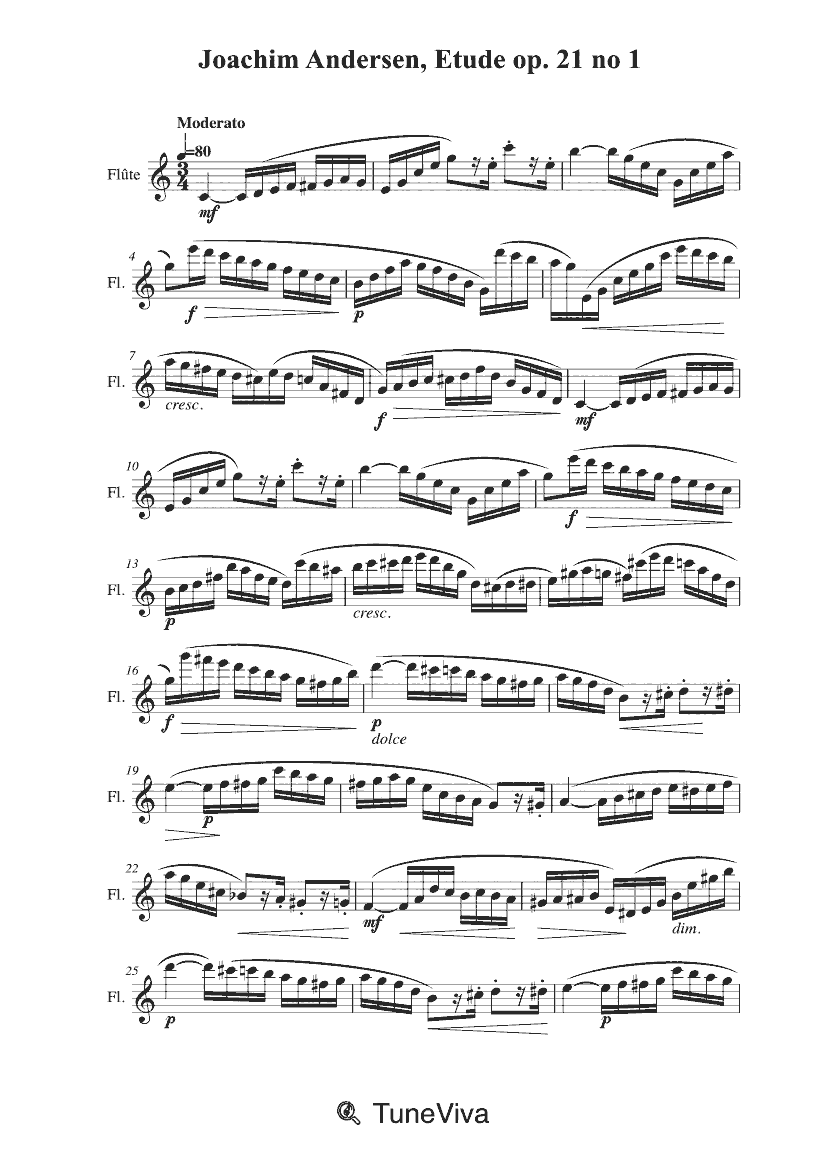
His output runs to sixty-three opuses, almost all for the flute, and eight volumes of studies are its centre. Op. 21, published in 1886 and dedicated to F. Waterstraat, is a set of twenty-four studies in every major and minor key; Op. 30 is a parallel set of twenty-four instructive studies in all keys. The eight performance pieces of Op. 55 were published in Leipzig by J. H. Zimmermann in 1894, and No. 6 is the Scherzino. The catalogue reflects that emphasis: all twenty-seven entries are tagged classical, and the études are short enough that the whole collection lasts under an hour.
Study playing is not performance playing, and these pieces are built to expose one weakness at a time. Start below tempo and keep the fingers close, especially in the Op. 30 set, where every key is visited and the awkward ones arrive without warning. Tone should stay even across the registers; if a phrase gets louder as it rises, the air is doing too much work. In the Scherzino accompaniment, keep the piano light so that the flute's staccato figures stay articulate.
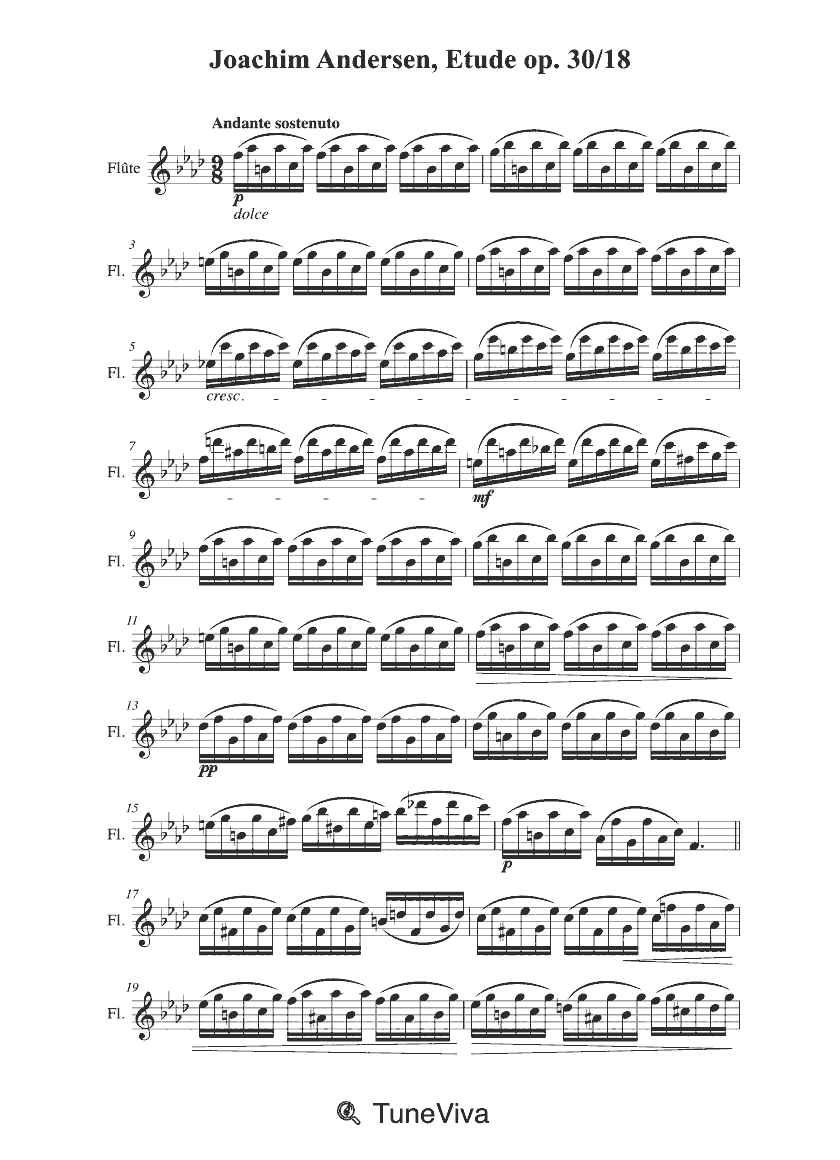
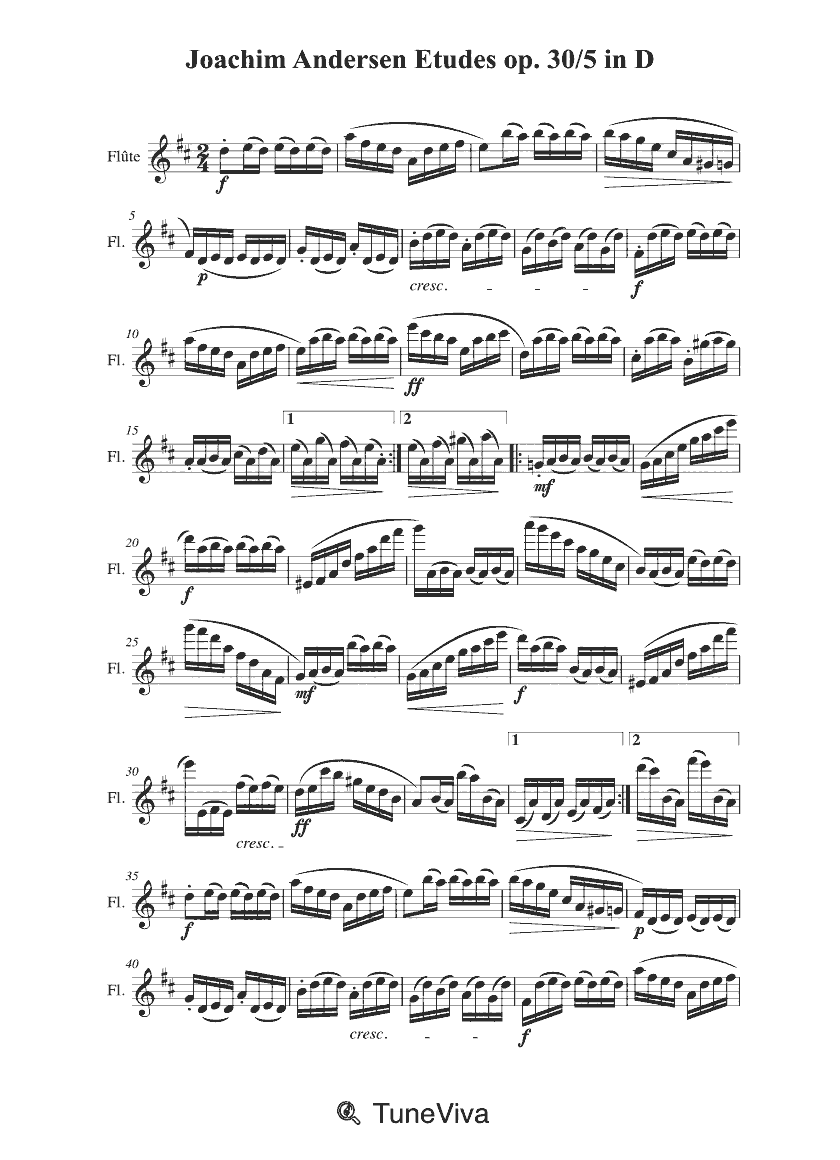
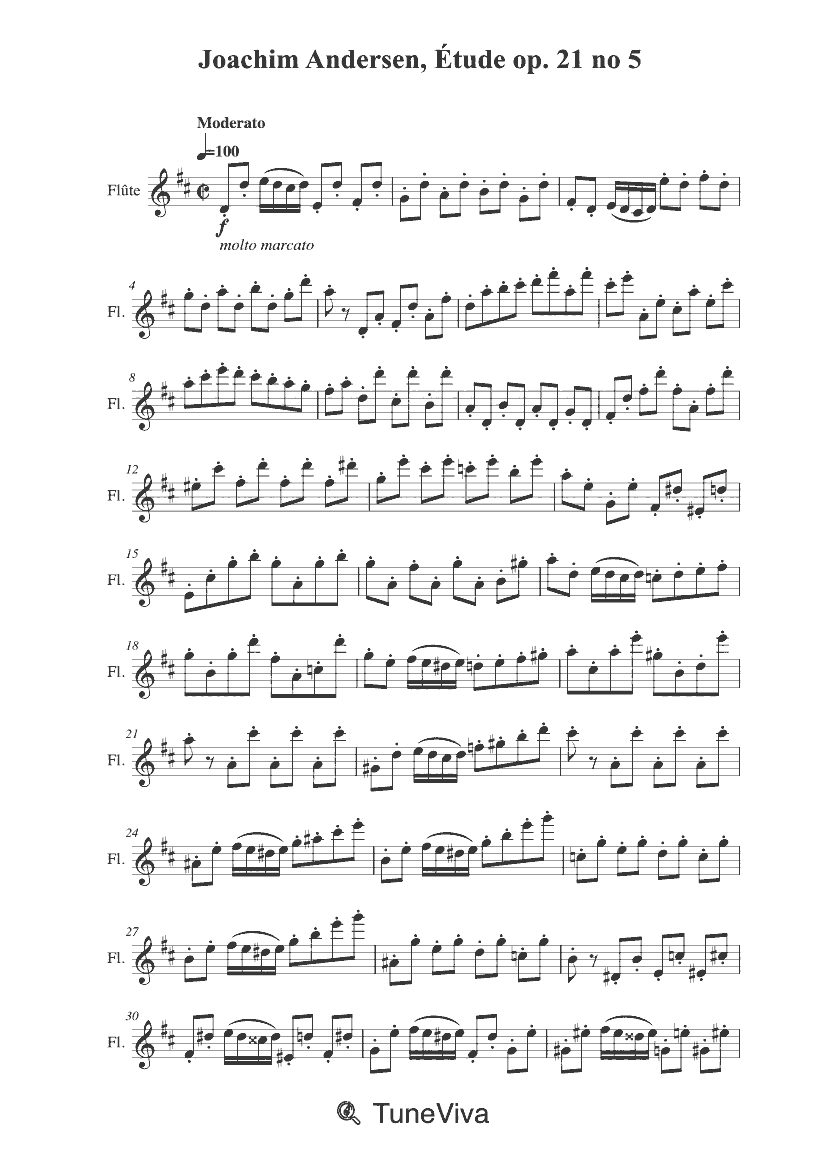
The most-viewed file on the page and one of the twenty-four studies of Op. 30; it is the only entry whose key is given in the title.
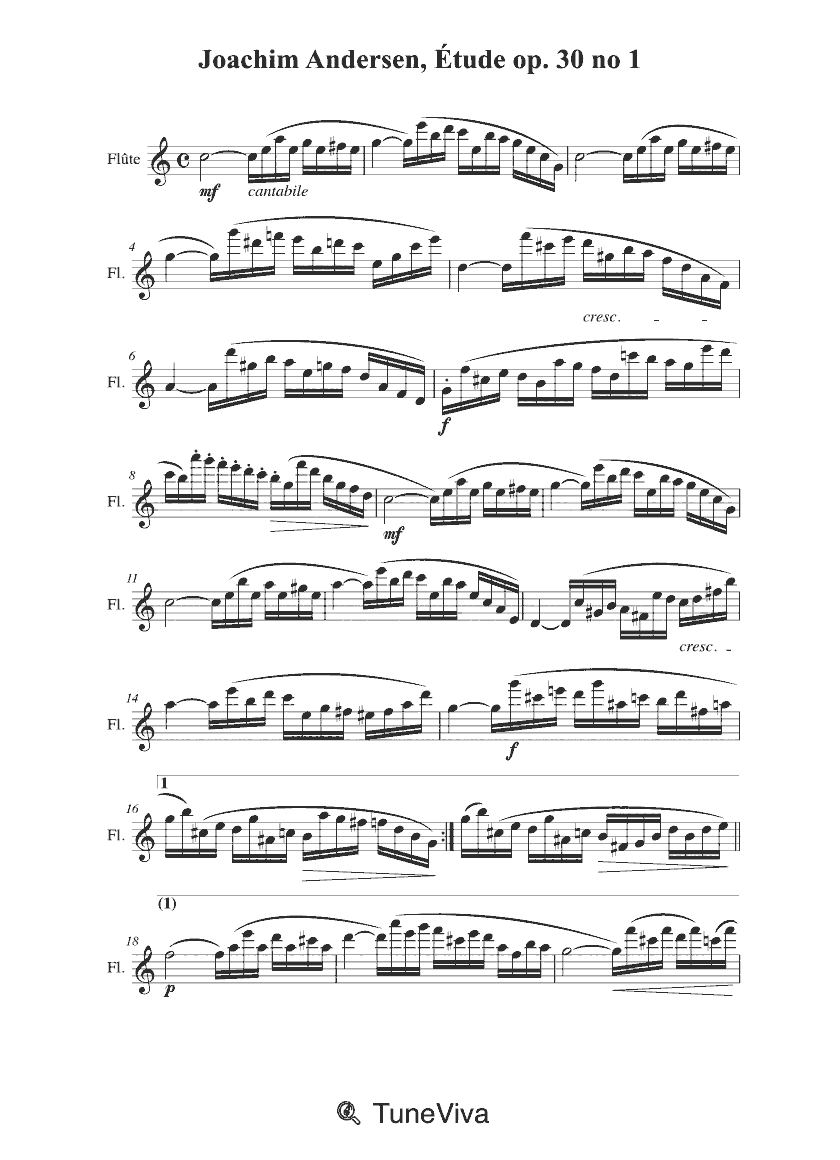
The opening study of Op. 30, a set that visits every key.
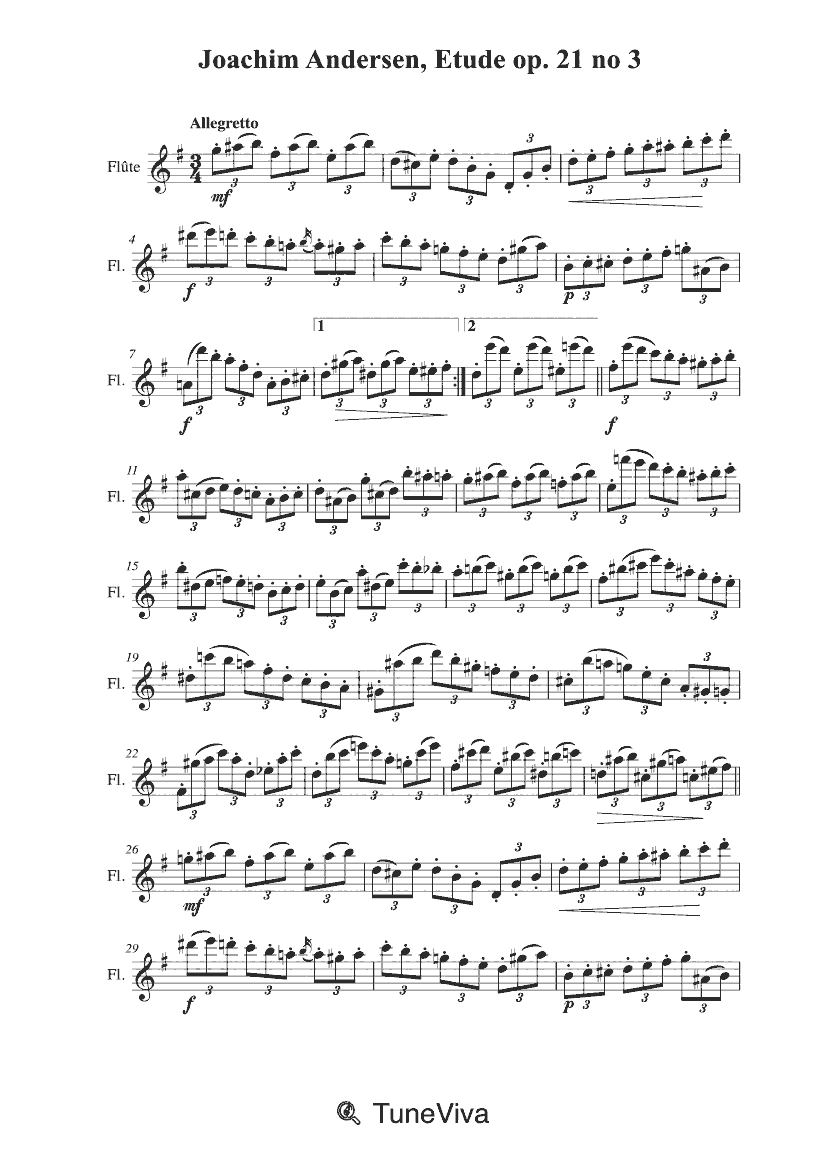
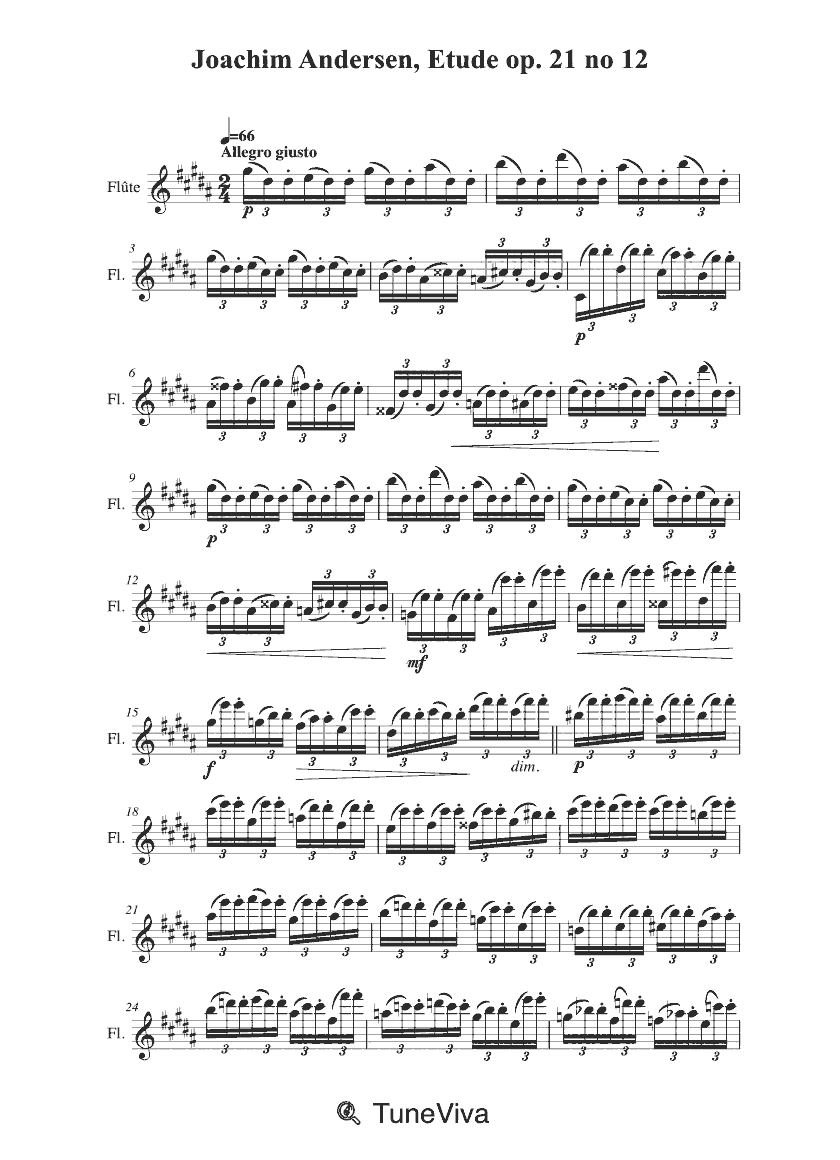
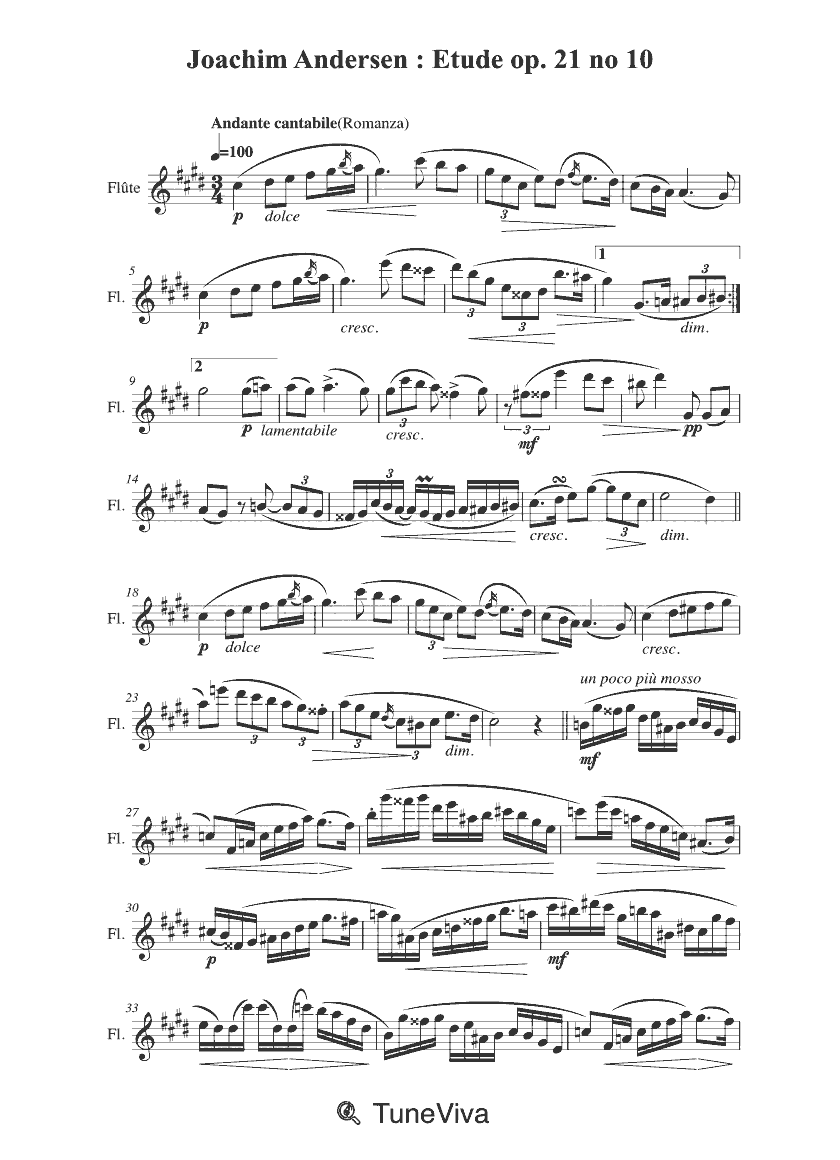
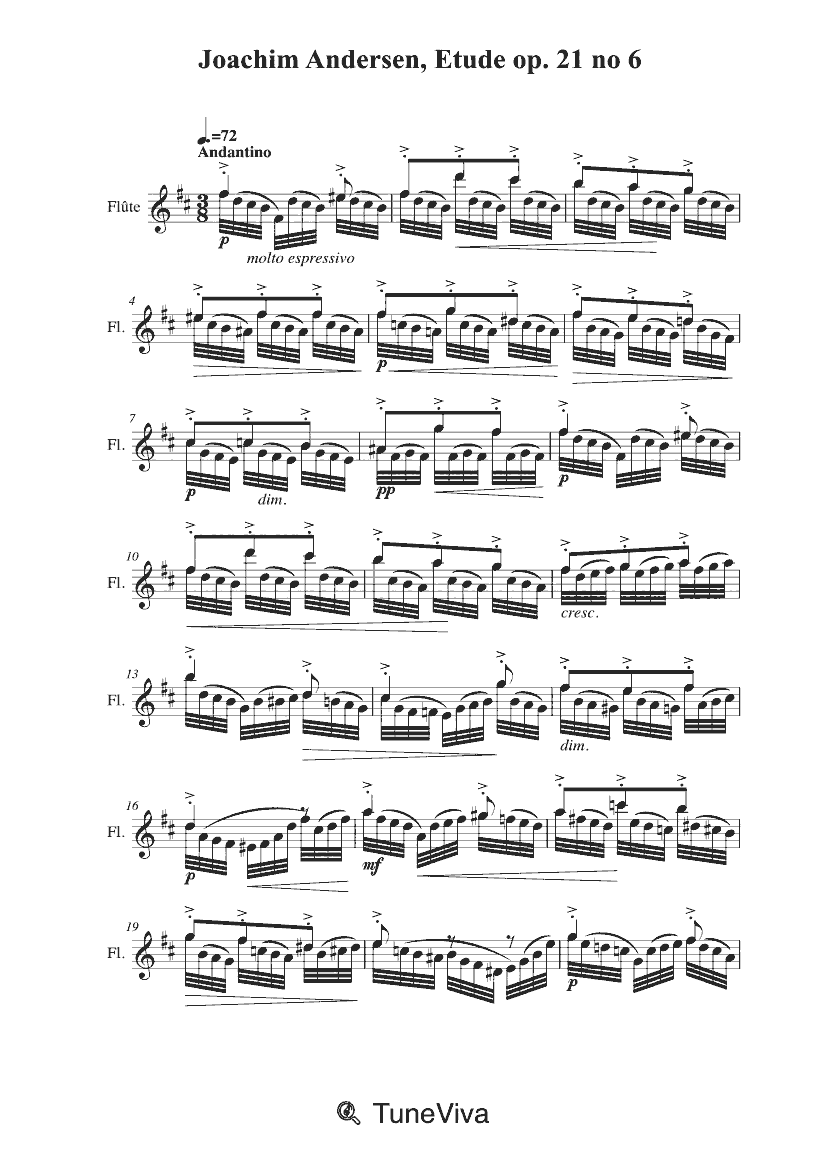
From the 24 studies of Op. 21, published in 1886 and dedicated to F. Waterstraat.
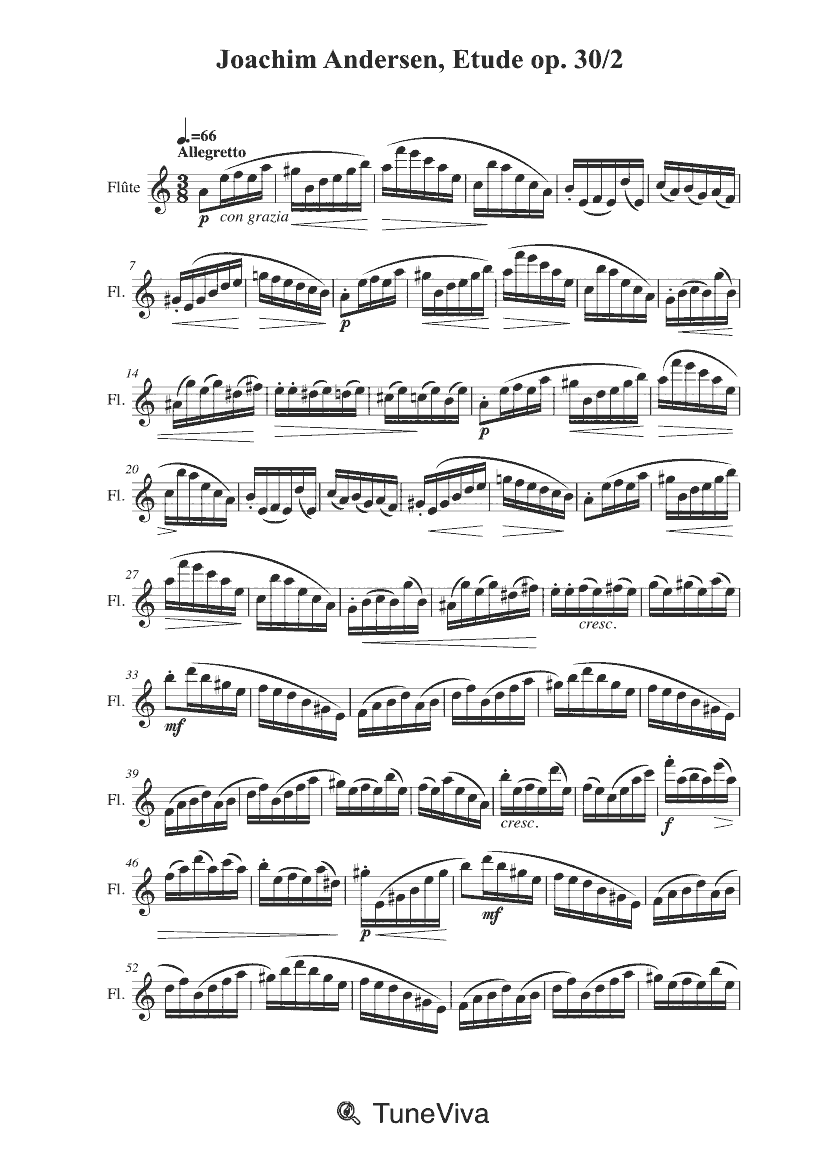
The second of the Op. 30 studies, still in the opening keys of the set.
One of the earlier numbers of Op. 21, where the keys are introduced in order.
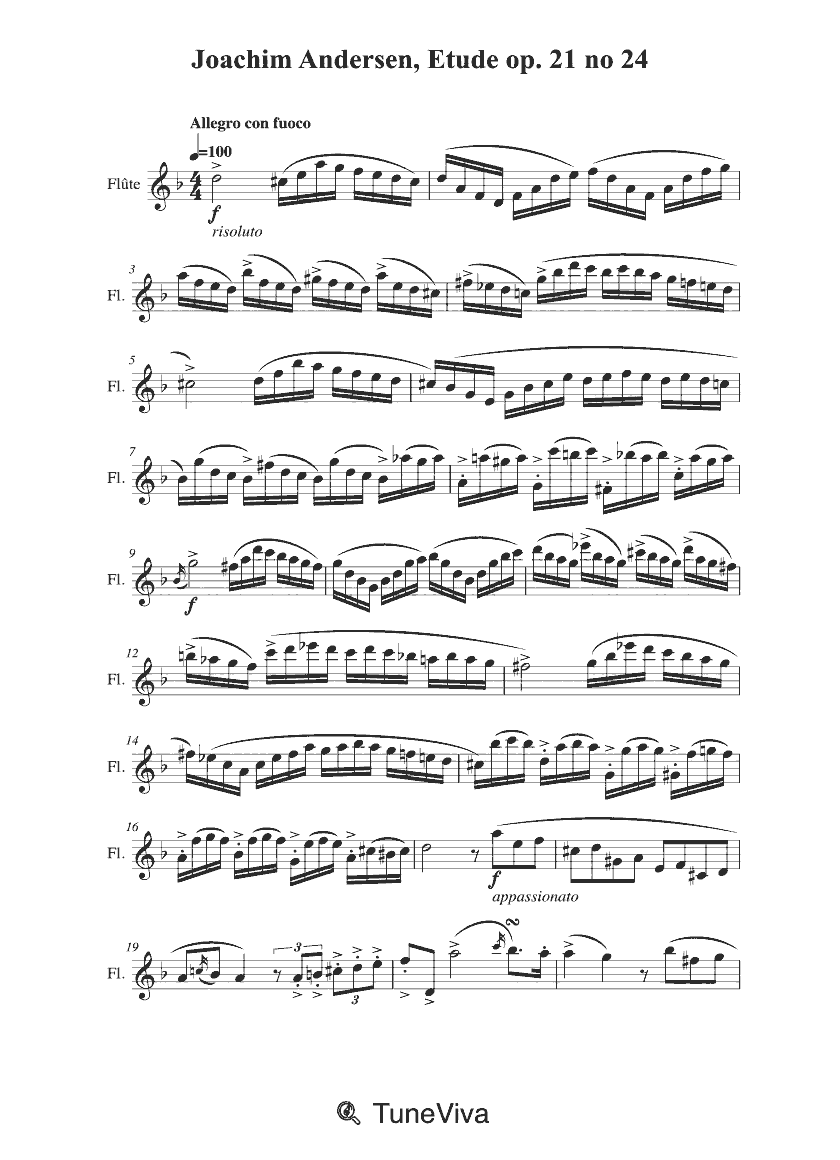
The last study of Op. 21, at the far end of the cycle through the keys.
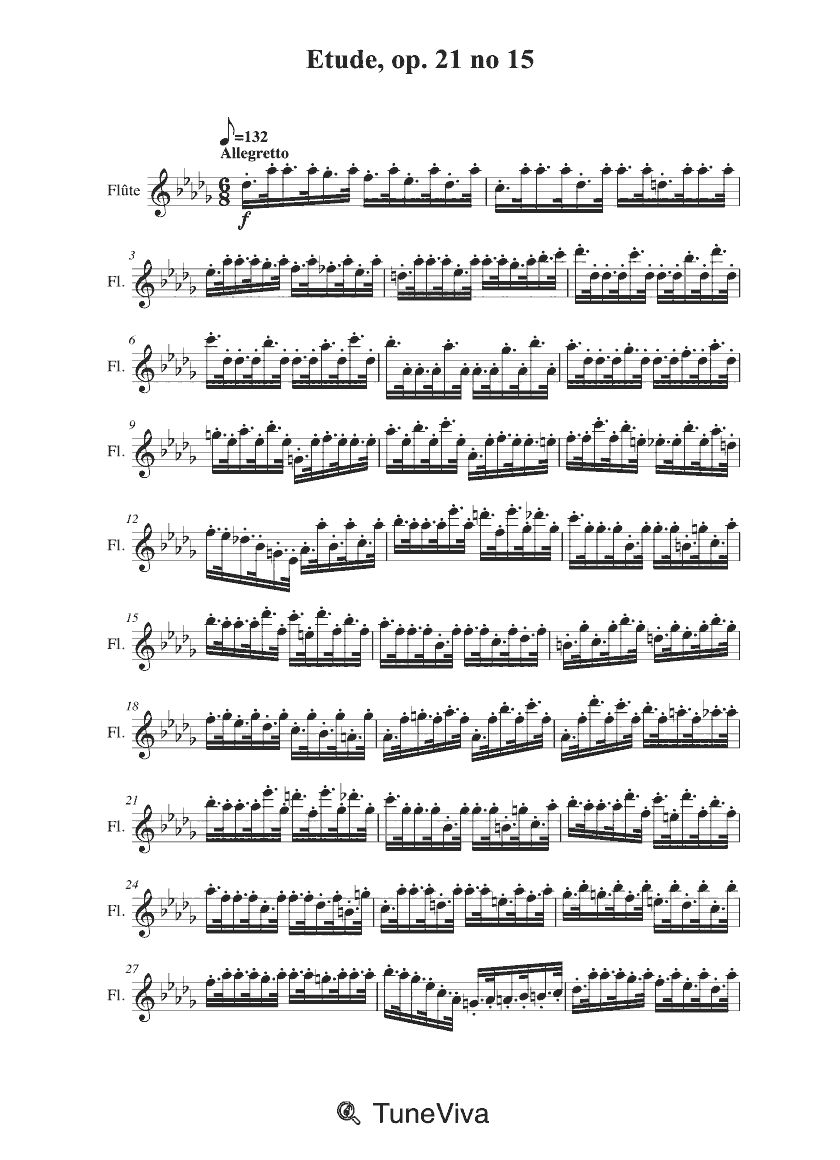
A study from the middle of the Op. 21 set; the catalogue gives no key.
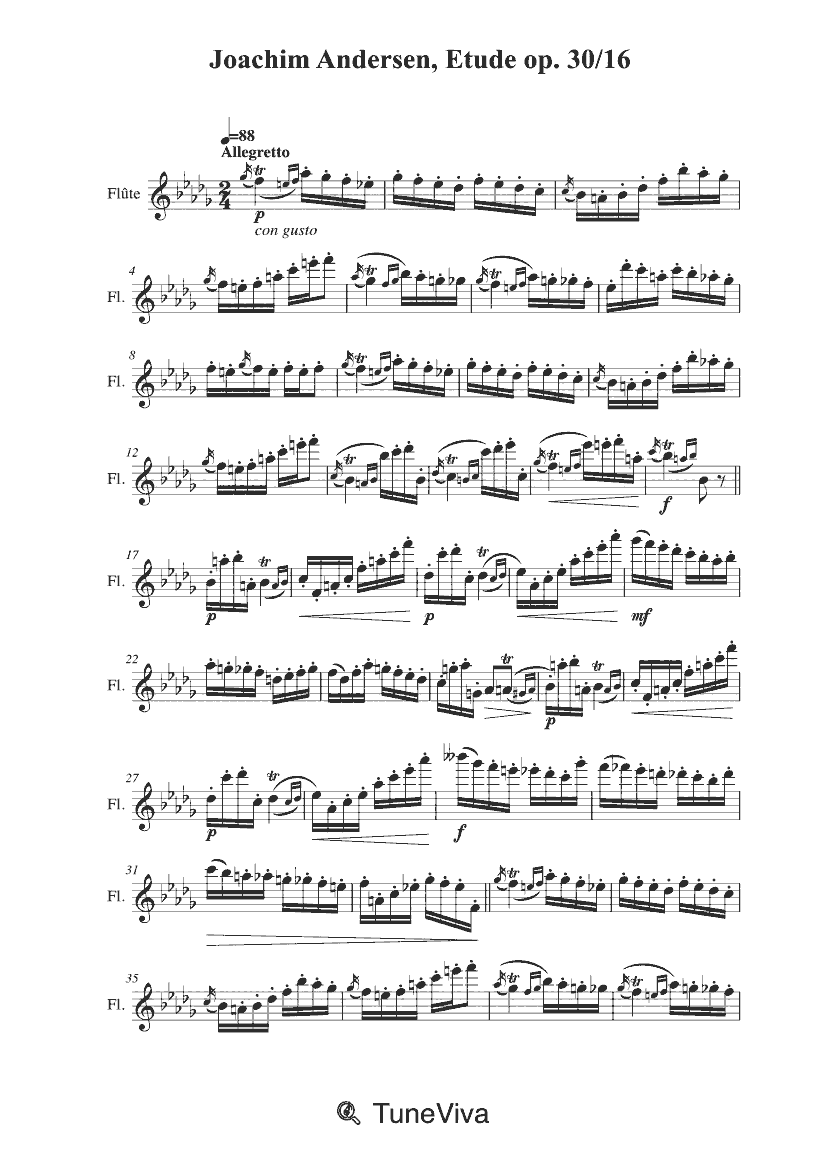
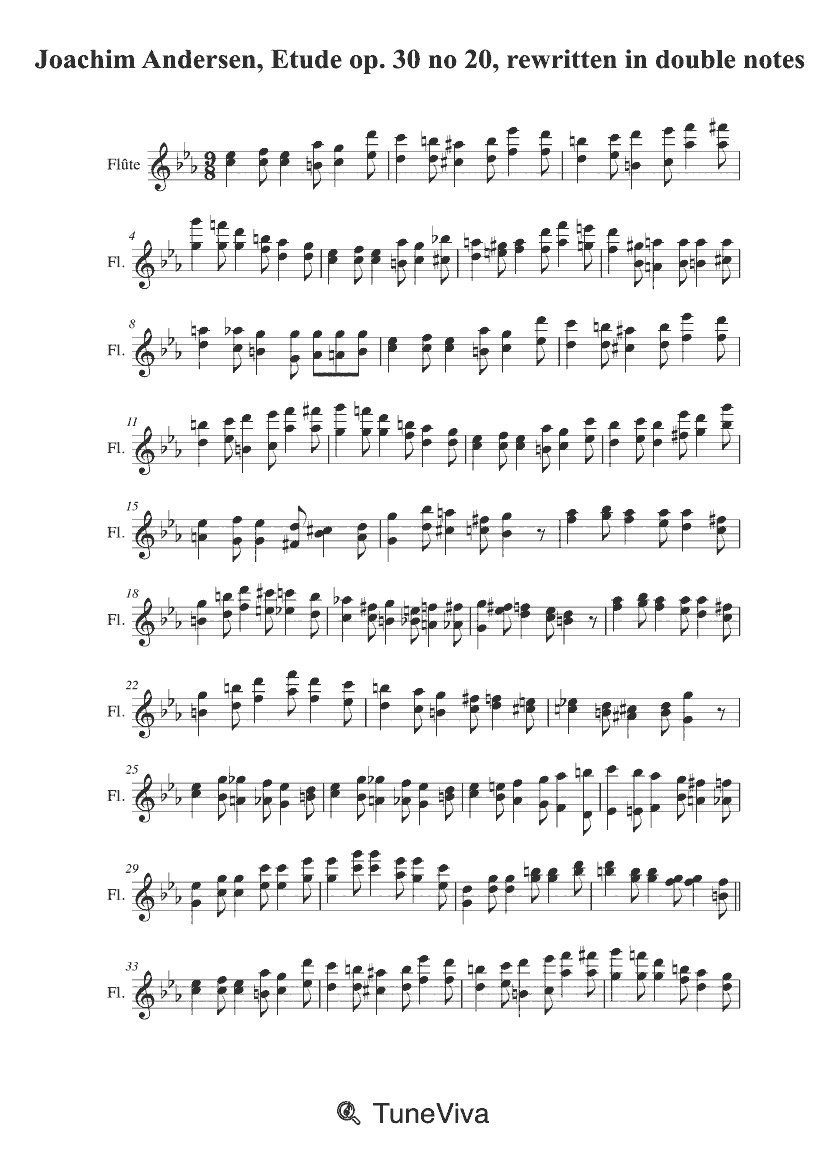
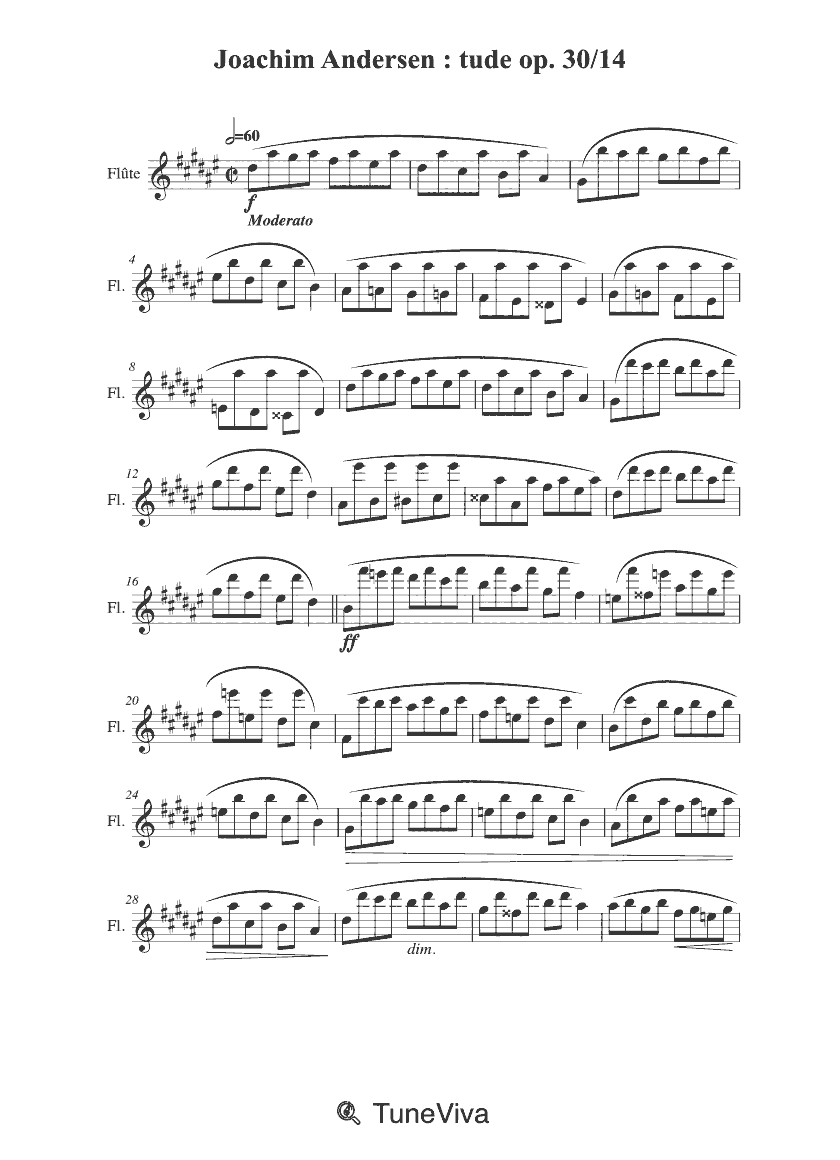
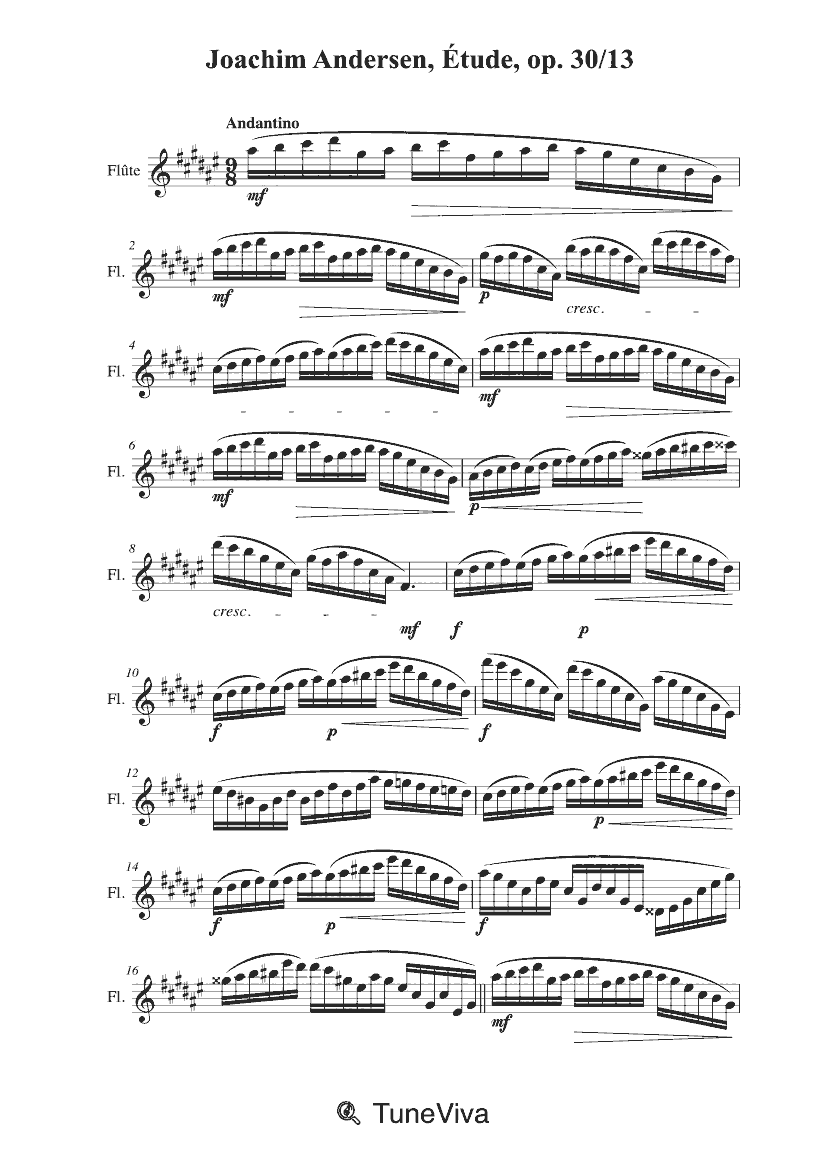
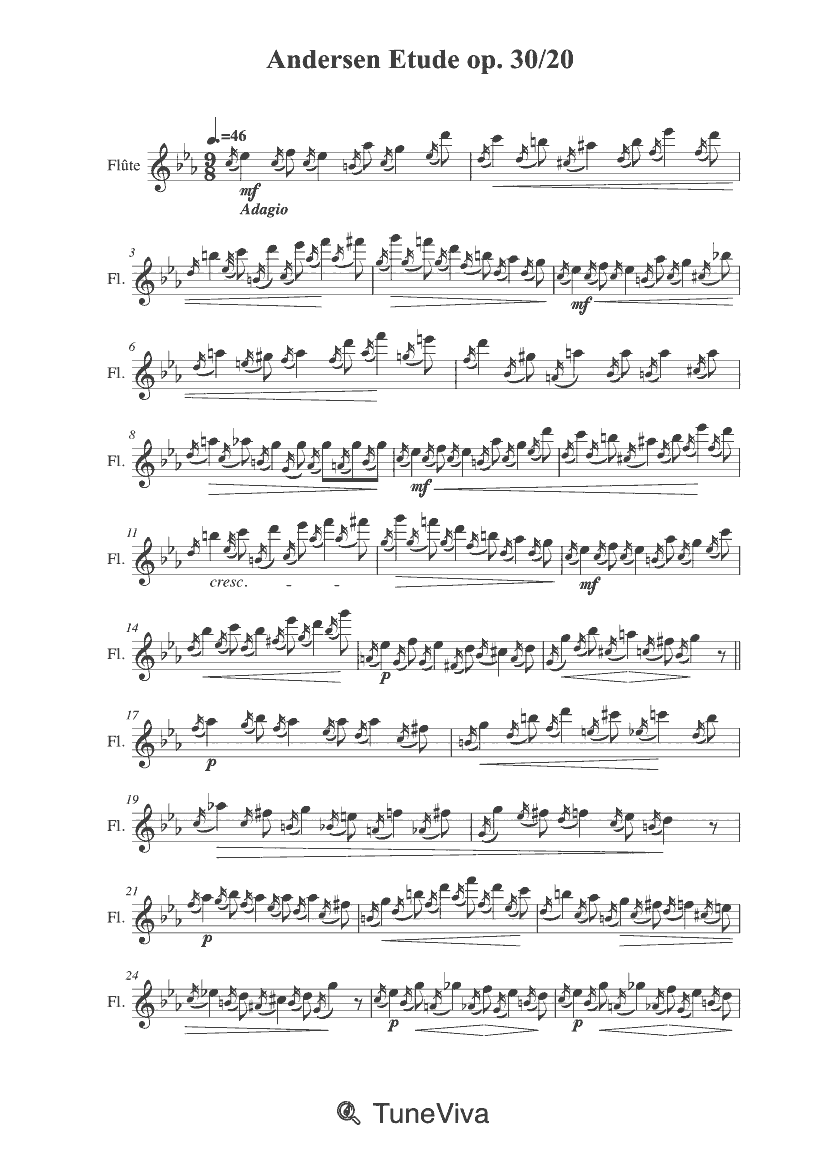
Late in Op. 30, where the keys and the figuration have become less familiar.
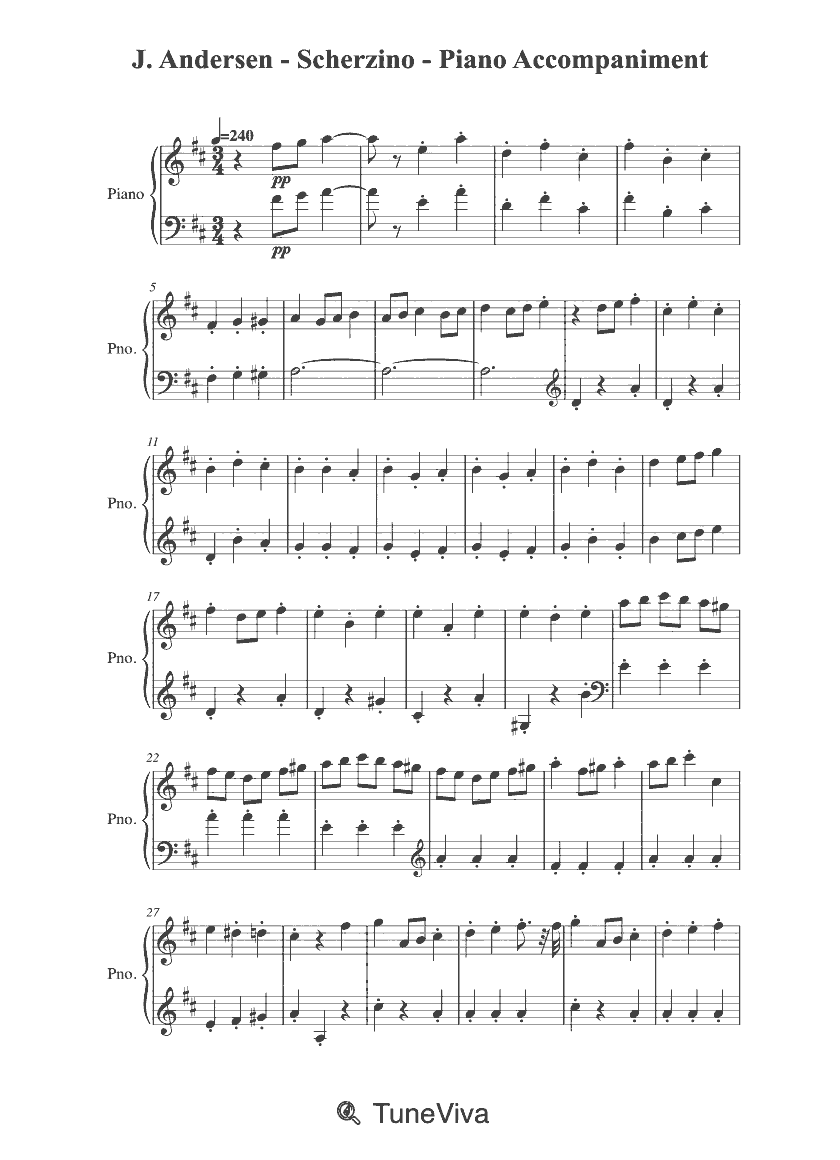
The piano part of Op. 55 No. 6, from Eight Performance Pieces published by Zimmermann in Leipzig in 1894; the flute line is not included.
Twenty-seven, running to about fifty-one minutes of music and 18,527 notated notes. None of them includes lyrics.
Both are sets of twenty-four studies covering all the keys. Op. 21 was published in 1886; Op. 30 is described as twenty-four instructive studies in all keys, and it is the set most of the files here come from.
The Scherzino entry is the piano part of Op. 55 No. 6, one of eight performance pieces. The flute line is not part of that file.
Nearly. His sixty-three opuses are flute music, with a handful of piano pieces and marches outside the opus list, and the catalogue holds nothing else.
Index 0 reflects note density rather than technical demand. A slow étude can be hard to play well and still contain few notes per second.
Catalog editions and arrangements attributed to Joachim Andersen.
Op. 55 No. 6