jazz-classical
1 tracks
Tom Brier wrote ragtime at the piano and played it at speed, and the catalogue holds 23 of his pieces: about 101 minutes of music and 83,574 notated notes, with no lyrics on any file. Sixteen entries sit at complexity index 2 and six at index 3, so this is not beginners' material. Just Peachy leads the page, followed by Sunlight and Shadow, Spasmodic and Strollin'. The files mix published rags with transcriptions of improvisations, and the genre field is blank on ten of the 23. The composer credit is inconsistent, from 'Tom Brier (1999)' on one file to 'Tom Brier (2012 or Recently)' on another, and that second wording is what the page address keeps.
Brier was born on 3 October 1971 in Oakdale, California, a town in the Central Valley south of Sacramento. A mechanical player piano came into the house when he was four, and he was picking tunes off its rolls before he began lessons at five. He had composed nearly two dozen rags by eleven, and his first serious piece, Pine Cone Rag, dates from 1982. In 1985 the Sacramento Ragtime Society invited him to play. He studied computer science at California State University, Stanislaus, graduating in 1993, and worked for Sacramento County as a programmer while playing ragtime festivals, including the one in Sedalia, Missouri.
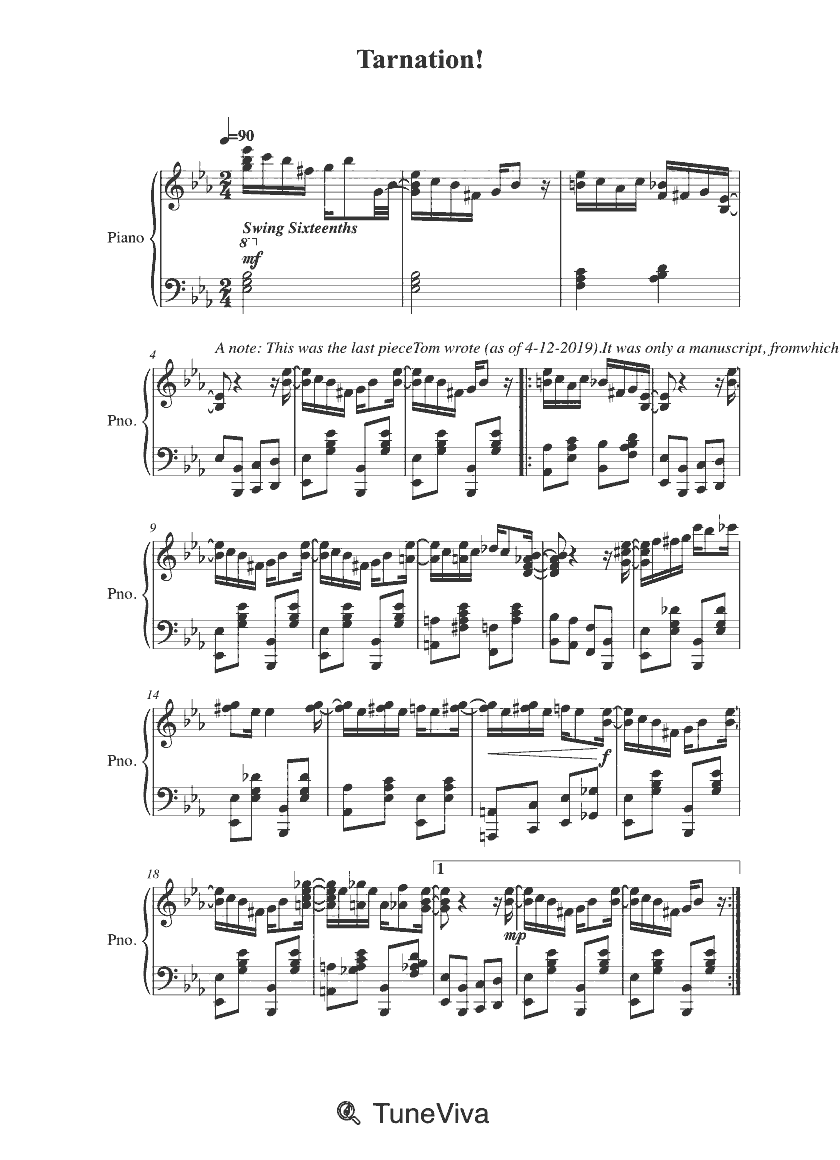
He wrote more than 200 pieces. Razor Blades, from 1994, is the one most often named as his best known, and the catalogue's dates match the published worklist: Just Peachy from 1992, Lucky Me from 1997, Camellia Fox Trot from 1999, Spasmodic from 2005, Peril in Pantomime from 2008, Carmine from 2010 and Tarnation! from 2015. On 6 August 2016 a car accident left him with a brain injury and paralysis; after more than two months in a coma he spent years in therapy, and as of 2023 he was living with his parents in Oakdale, the year the Scott Joplin International Ragtime Foundation gave him its Ragtime Outstanding Achievement Award.
Ten entries carry no genre at all, eight are filed as jazz, four as jazz-classical and one as classical, and several titles are transcriptions of performances rather than printed scores: the file for Strollin' names an improvisation as its source. Only one entry sits at complexity index 0, a fair warning that these are stride and ragtime solos with a working left hand.
Brier's left hand does most of the talking: octaves and tenths in a steady stride pattern while the melody rides above and often syncopates against it. Keep the tempo honest, because these pieces lose their snap when slowed to a comfortable speed, and voice the inner chords instead of hitting every note equally hard. Where the notation records an improvisation, treat repeats and fills as one pianist's choices rather than as the text. In the fox trots and the one-step, the dance pulse should stay audible even when the right hand takes liberties.
The most-viewed score here, written in 1992; the catalogue records its song title as a Tom Brier improvisation rather than a printed rag.
A 1998 composition, and like Just Peachy it reaches the site as a transcription of a performance; the file gives no arranger.
Dated 2005 in the worklist, and catalogued with the subtitle 'Don't try this at home', an accurate label for its index-2 difficulty.
The catalogue's song field reads 'Tom Brier Improvisation', so this is a recorded improvisation written out, not a published composition.
A one-step from 1997, carrying its dance designation as a subtitle.
Written in 2008 and one of six entries at complexity index 3; the title is a Brier original, not a theatre number.
From 1999 and published by the composer, number 119 in the BR sequence kept by Neil Blaze; the file adds the subtitle 'A Soothing Slow-Drag Serenade'.
A cakewalk with the subtitle 'Characteristic Two Step'; the en dash and composer name in the upload's title are stripped here.
The catalogue credits the piece as published in 1997; it is one of the index-3 entries.
Credited 28 December 2015 in the catalogue, months before the accident that ended Brier's performing career.
23, running to about 101 minutes of music and 83,574 notated notes. None of them includes lyrics.
The catalogue preserves the credit as it appeared on the source file, and Low-Down Mamma carries that wording. It reads as a note about the recording rather than a composition date.
Both. Just Peachy, Sunlight and Shadow, Strollin' and Carmine give 'Tom Brier Improvisation' as the song title, while Camellia Fox Trot and Lucky Me carry their dance designations and Spasmodic its own subtitle.
Those are dance-form labels from ragtime publishing rather than tempo marks. Camellia Fox Trot, Lucky Me and Uncle Ben's Cakewalk each name the step the piece was written for.
Catalog editions and arrangements attributed to Tom Brier.


Don't try this at home


A One-Step


A Soothing Slow-Drag Serenade

Characteristic Two Step
:D

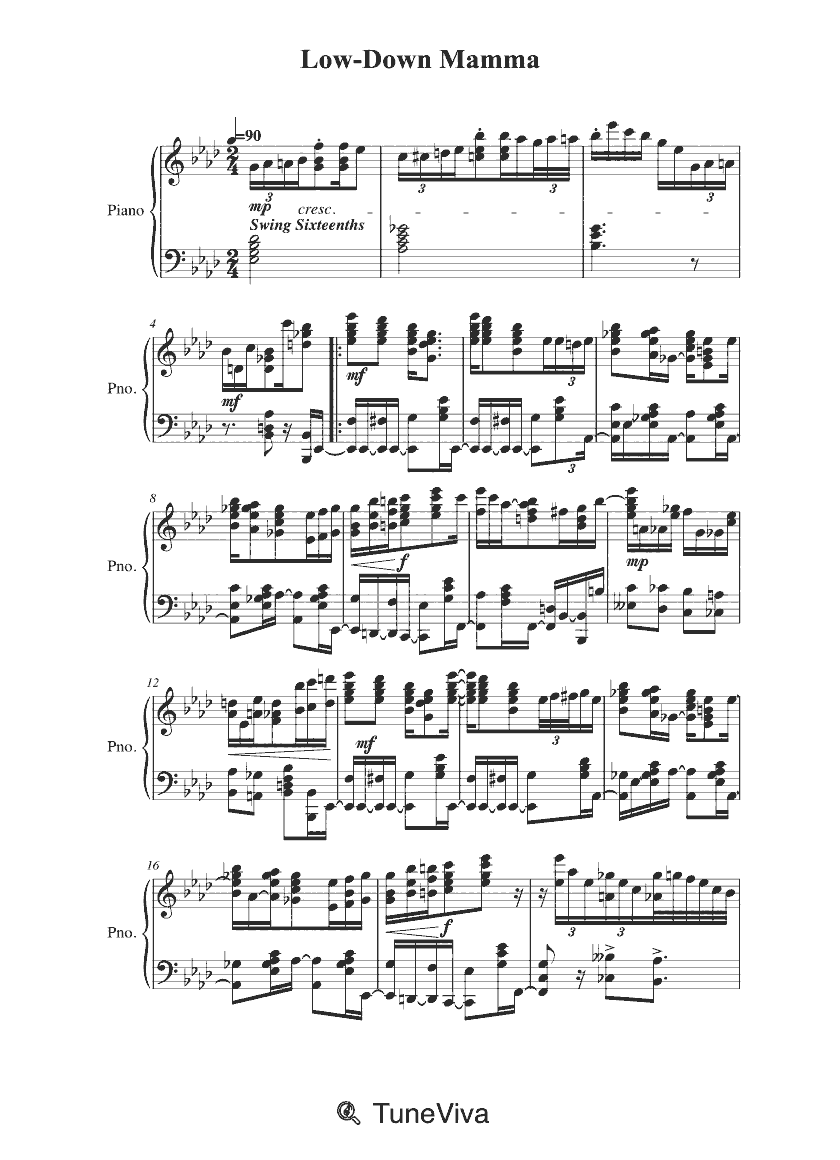
It's not what it looks like

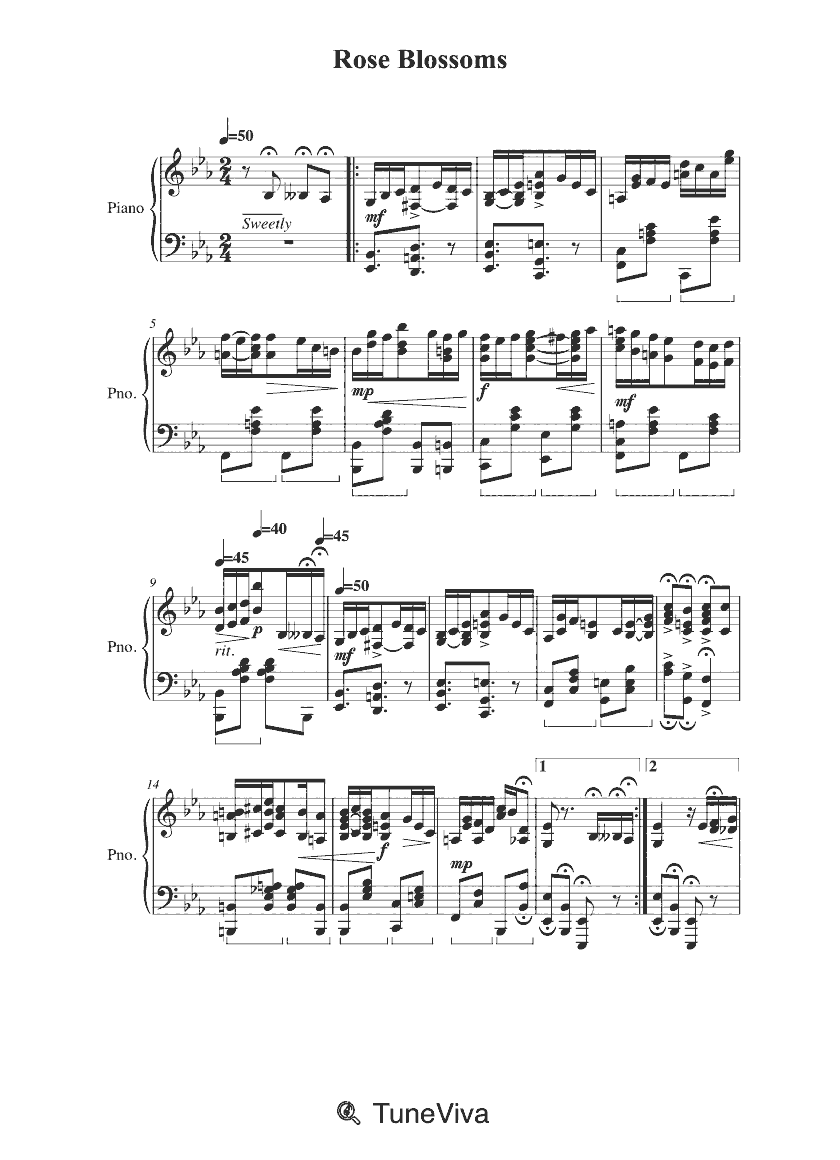
Fermatas Ahoy
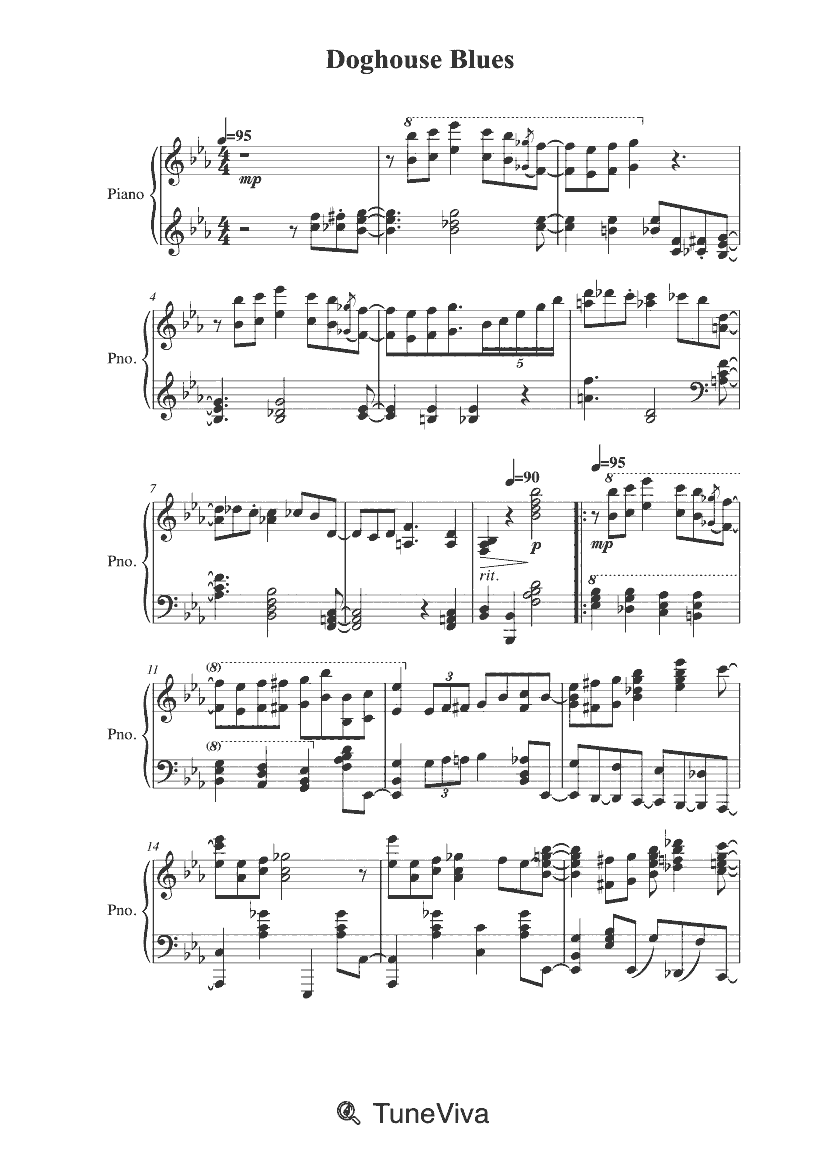
To be served smooth and with much pedal


and Tom B.R.'s New Rag