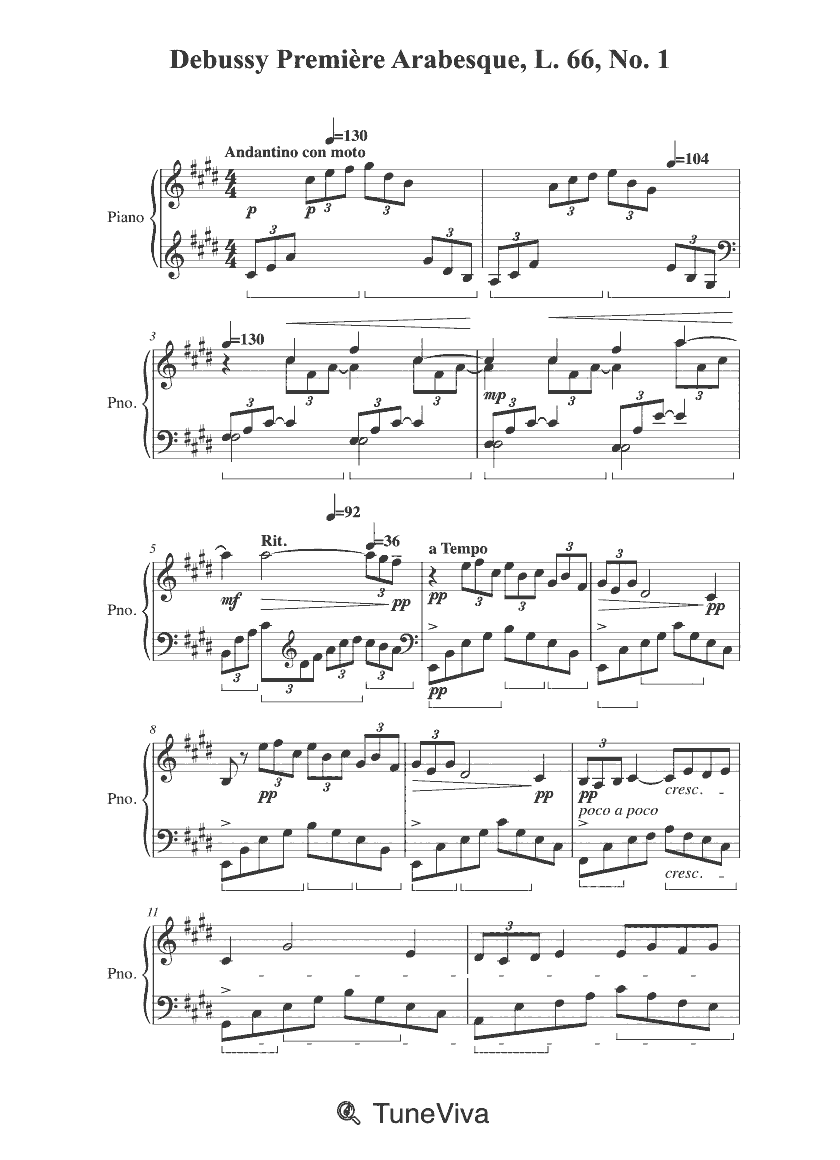
Debussy Première Arabesque, L. 66, No. 1
Claude Debussy
Follow the score, hear the music, then make it your own.
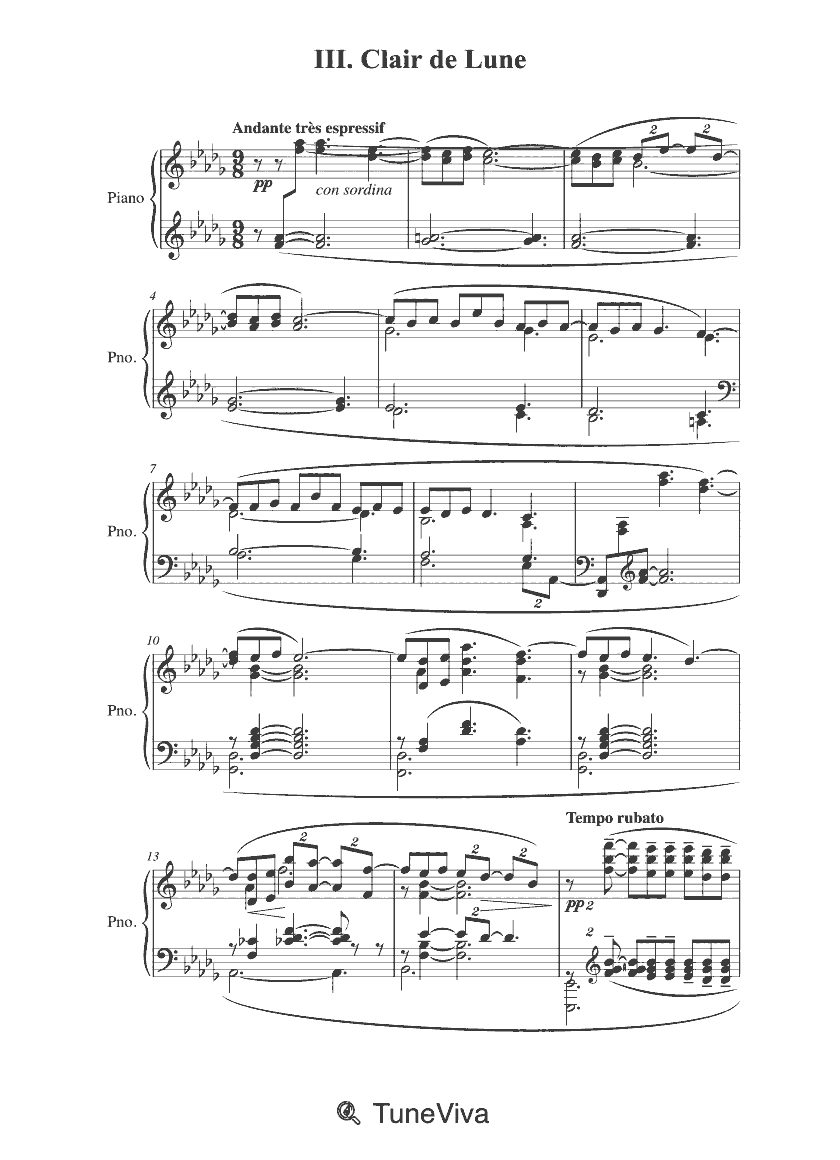
Clair de lune is the third movement of Claude Debussy’s Suite bergamasque. This solo piano edition opens in D♭ major and 9/8 with an Andante très expressif marking and a pianissimo dynamic. Its quiet first phrase and its flowing middle call for the same skill: keep the upper line audible while the notes below it change.
Score parts: Piano. Opening key signature: 5 flats. Opening time signature: 9/8. Opening tempo: 80 BPM. Estimated playback time: 5 min 7 sec. Listen while following the notation, adjust playback speed, or open this score in practice mode.
Count the nine eighth notes as three groups of three to find each bar’s underlying pulse. The melody contains held notes and rests, so practise counting through the spaces without stressing each dotted-quarter beat. Play the upper notes alone and listen through the rests. Then add the lower notes of the chords at a softer dynamic. The opening should sound like a phrase with space to breathe.
At Un poco mosso, establish the quicker accompaniment by playing where your hands need to land at each change of harmony. Then fill in the intervening notes and put the melody back on top. As the music grows towards the forte, let the line gain intensity gradually. At Calmato, listen for the texture settling before the opening tempo returns. Use a short practice loop across each change of texture so the joins become as secure as the sections.
The ending is marked morendo jusqu’à la fin, asking the sound to die away to the end. Keep the bass and upper chord connected in your ear as the sound becomes quieter. Test the pedal at the places where bass notes or harmonies change. On an instrument with a long resonance, a shallower or earlier pedal change can keep the harmony clear while the sound still lingers.
On a first reading, play across the joins into Un poco mosso and Calmato without the pedal. Hear which notes can connect in the fingers and where a bass change needs a fresh attack. Put the pedal back in only after you know those landmarks. Listen again at your playing tempo and adjust the timing so the change of harmony is clear without cutting off the upper line.
It opens in D♭ major, with five flats in the key signature, and 9/8 time. Count three dotted-quarter beats when first reading the opening.
Debussy wrote it as the third movement of Suite bergamasque. This score presents that movement on its own, so you can learn or perform it separately.
Morendo means dying away. Let the sound diminish through the final phrase and keep enough time for the last harmony to settle.
Claude Debussy
Claude Debussy