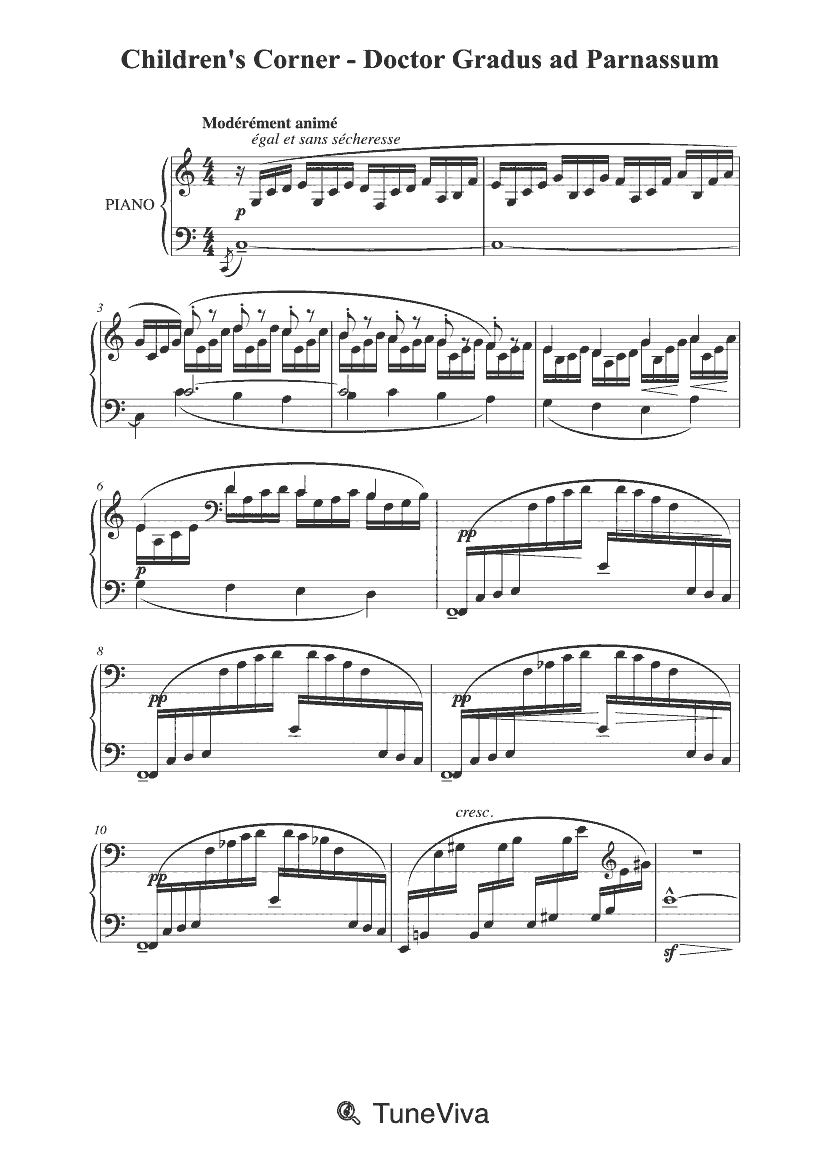
Children's Corner - Doctor Gradus ad Parnassum
Claude Debussy
PIANO · 3 min 29 sec
Open score
108 Claude Debussy scores to preview and download, from Doctor Gradus ad Parnassum and Rêverie to Clair de lune and La fille aux cheveux de lin, for piano.
The opening movement of the 1908 suite, a finger study that sends up the exercises of Clementi and Czerny.
A piano piece from 1890, and the second most-viewed Debussy score in the catalogue.
Piano · 3 min 24 sec
The eighth prelude of Book I, 39 bars in G-flat major after a poem by Leconte de Lisle.
Other editions:
Piano · 5 min 7 sec
The third movement of Suite bergamasque, and for many listeners the first Debussy piece they hear.
Other editions:
The second movement of the suite Debussy dedicated to his daughter, a quiet lullaby after the opening study.
A slow waltz from 1910, written for the gipsy violinist Léoni and first played at the New Carlton Hotel in Paris.
The fifth movement, a pastoral miniature placed between The Snow Is Dancing and Golliwogg's Cakewalk.
The tenth prelude of Book I, evoking the legendary cathedral rising from the sea.
The second prelude of Book I, whose French title Voiles can mean either veils or sails.
An 1890 waltz in F minor, one of several early salon pieces in the collection.
For Clair de lune, check that the edition gives you the third movement of Suite bergamasque in the scoring you need. Compare its quiet opening and flowing middle when judging a solo piano version. If you choose Première Arabesque instead, identify a beat where two even notes meet three triplet notes and practise that coordination separately before taking a longer phrase.
Compare the instrument and arrangement details below, then open a score to check the notation. Different entries may be arrangements or editions of the same work; available playback tools are shown on each score page.
Claude Debussy
PIANO · 3 min 29 sec
Open score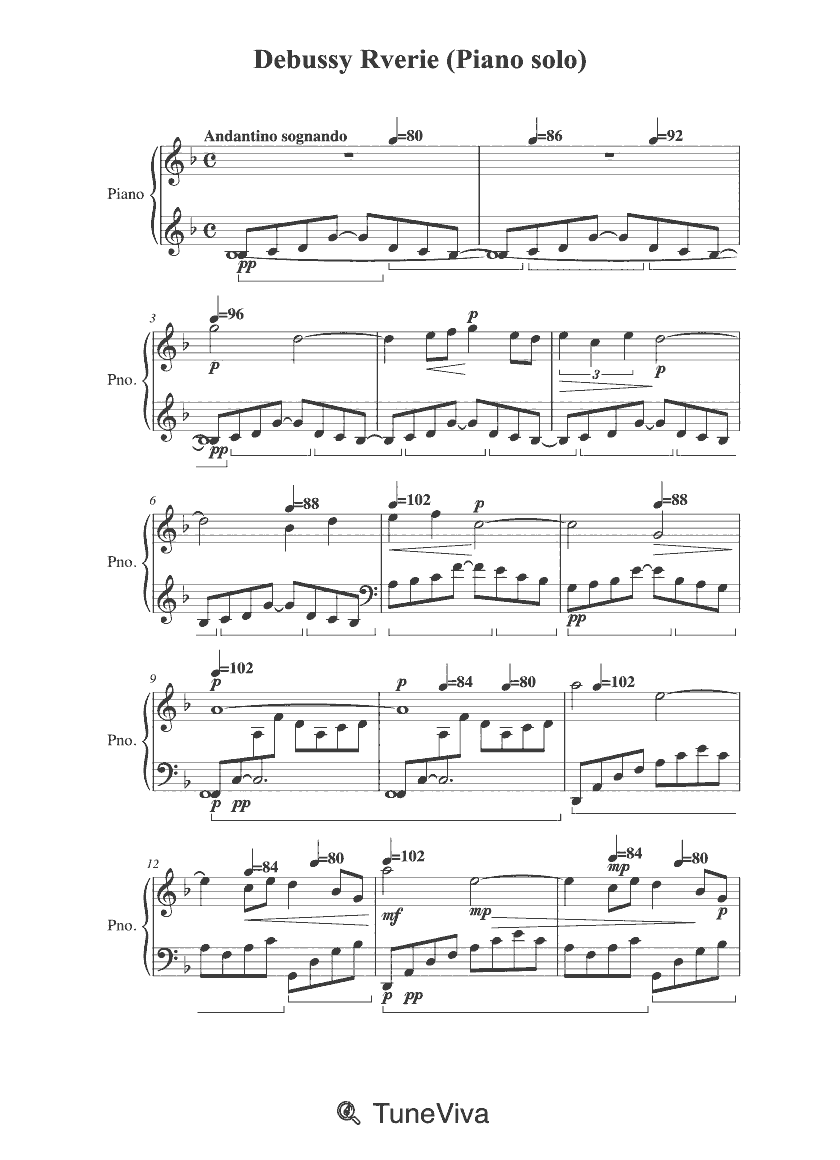
Claude Debussy
Piano · 4 min 47 sec
Open score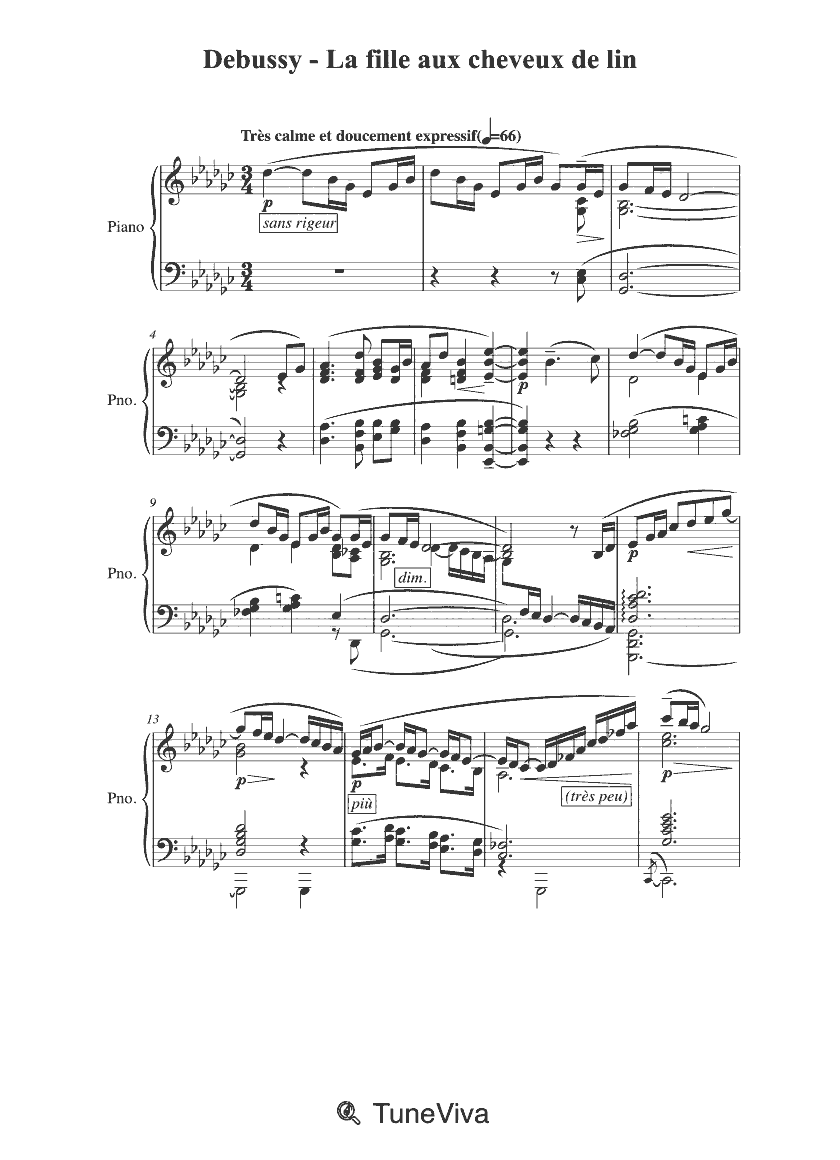
Claude Debussy
Piano · 3 min 24 sec
Open score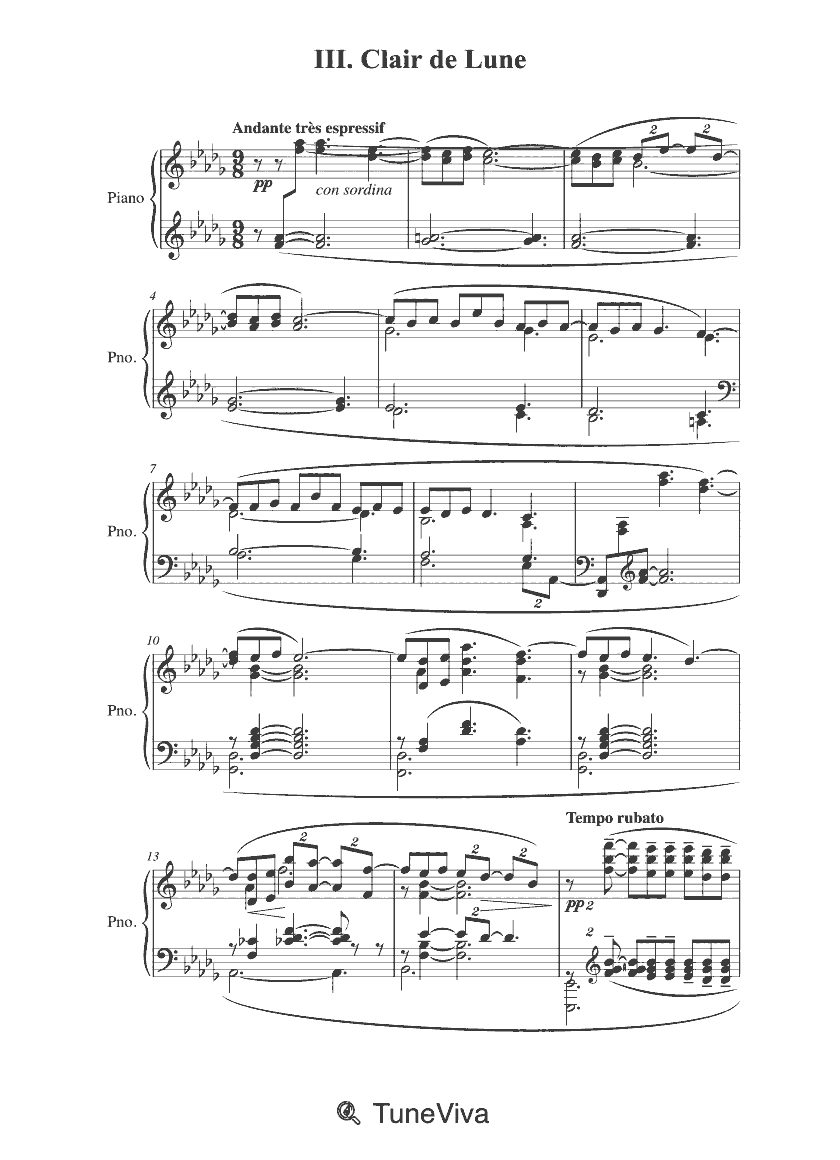
Claude Debussy
III. Clair de Lune
Piano · 5 min 7 sec
Open score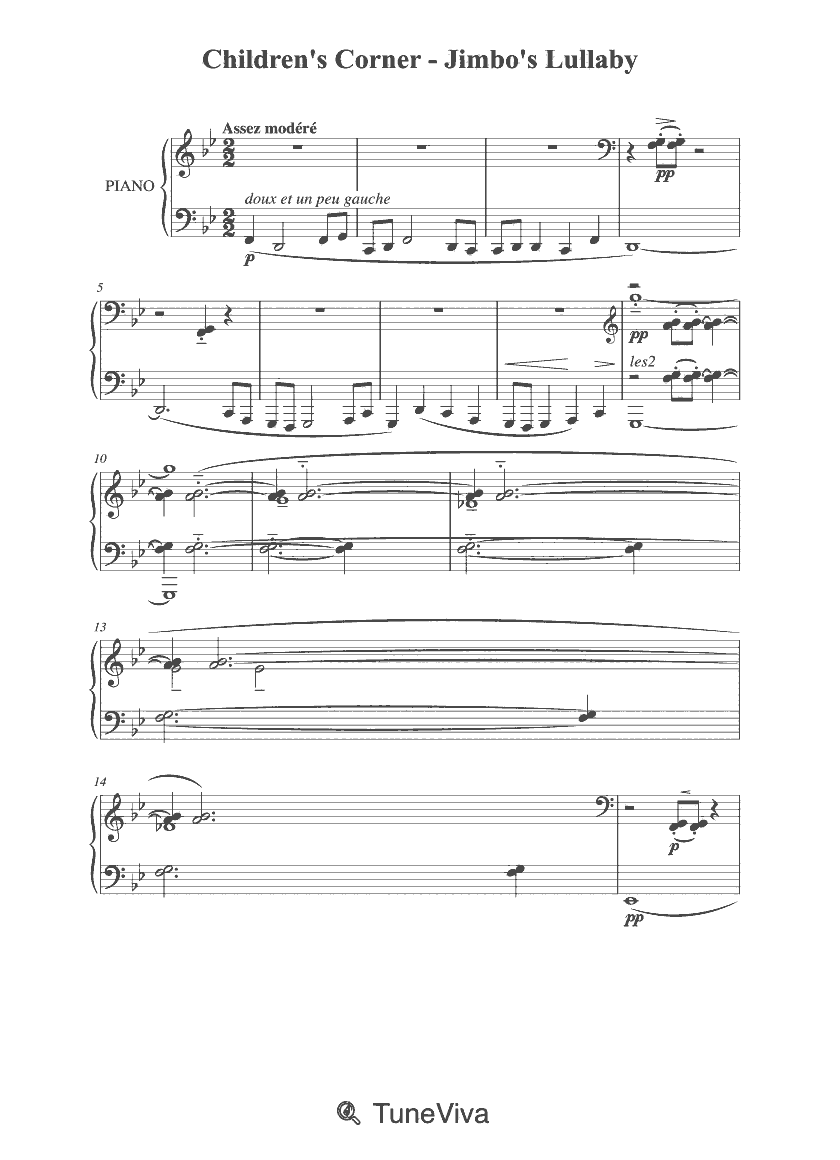
Claude Debussy
PIANO · 9 min 37 sec
Open score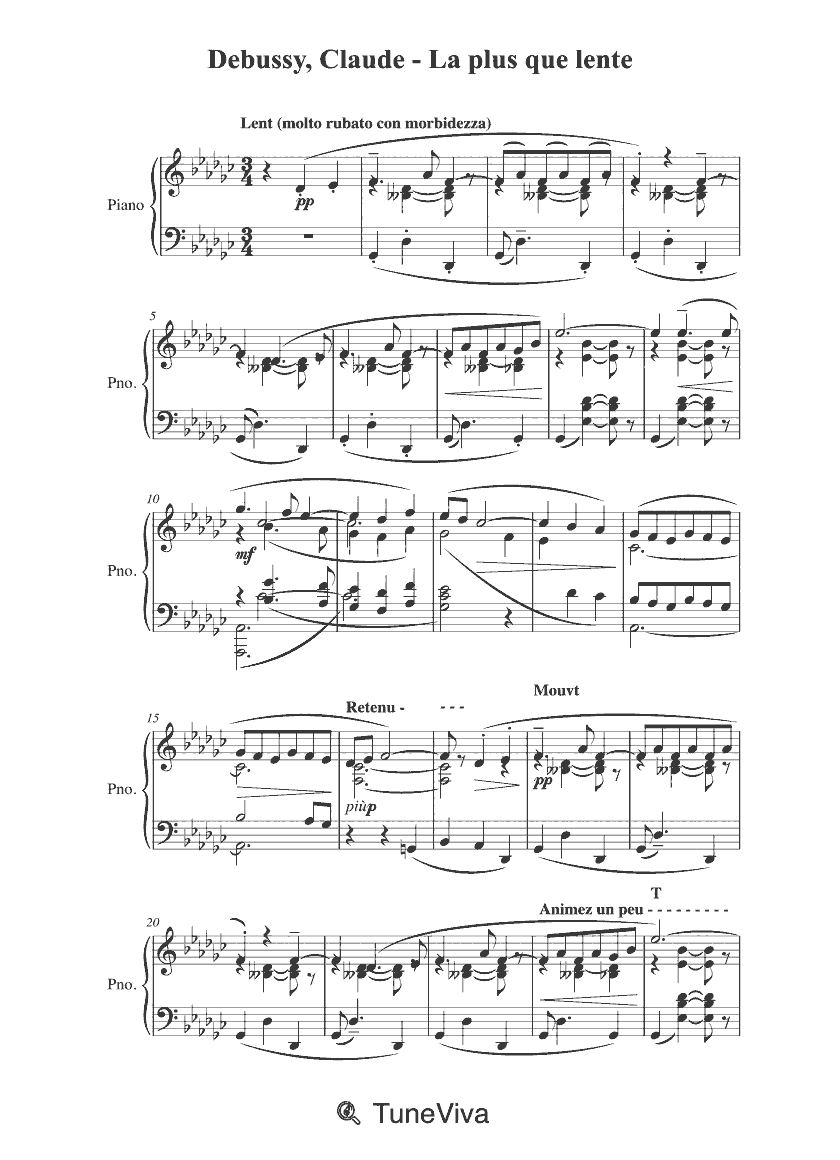
Claude Debussy
Valse
Piano · 4 min 48 sec
Open score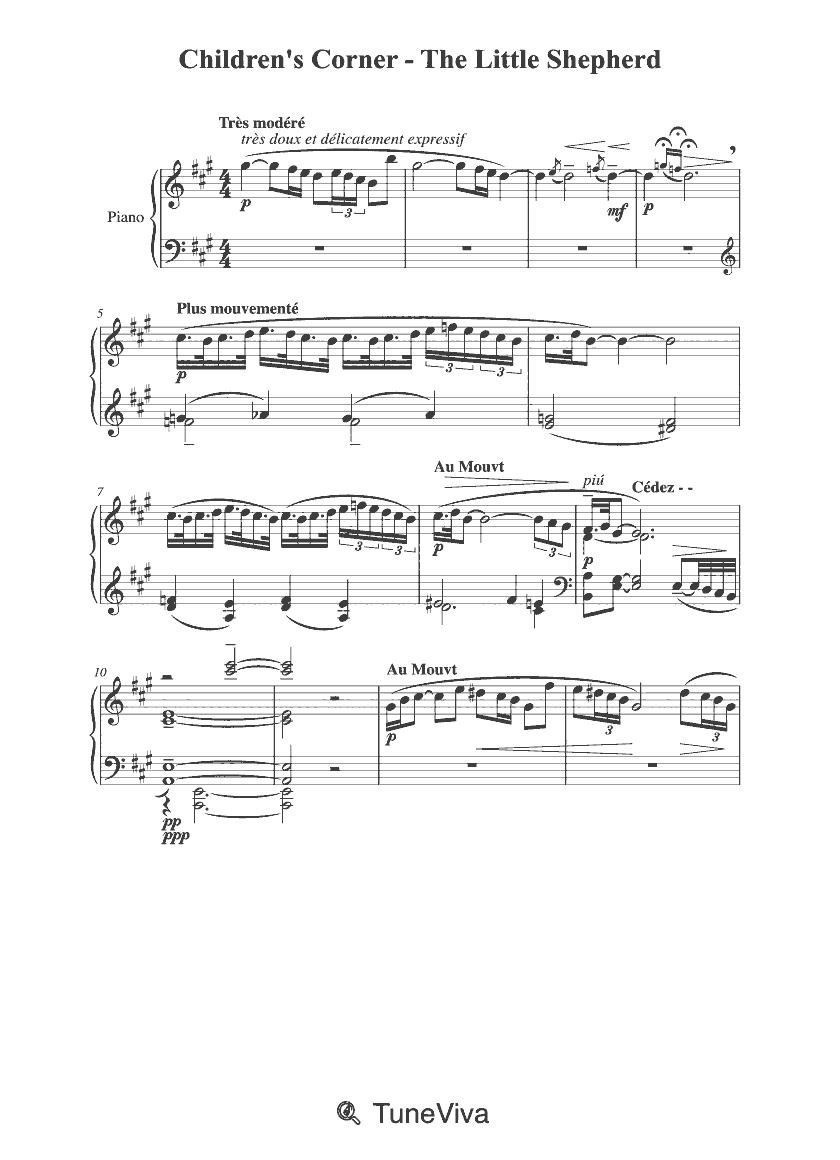
Claude Debussy
Piano · 4 min 31 sec
Open score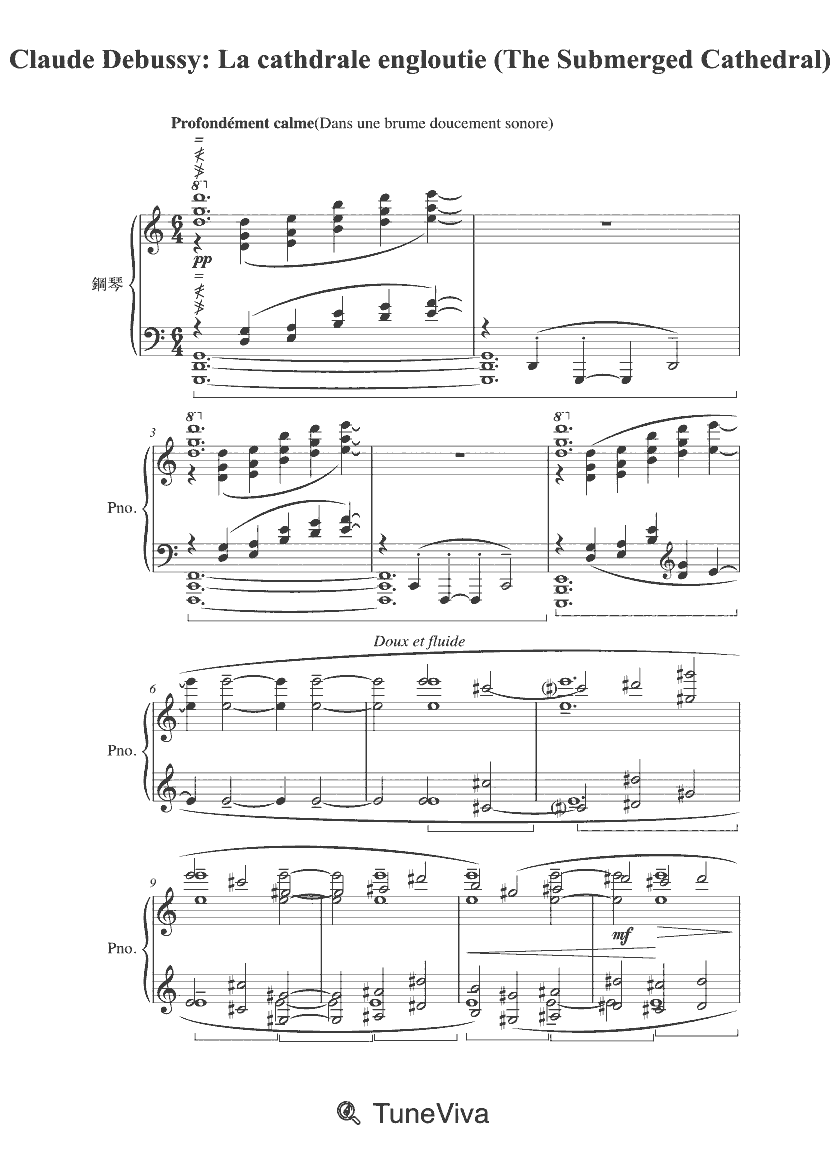
Claude Debussy
from Préludes Book I
鋼琴 · 5 min 56 sec
Open score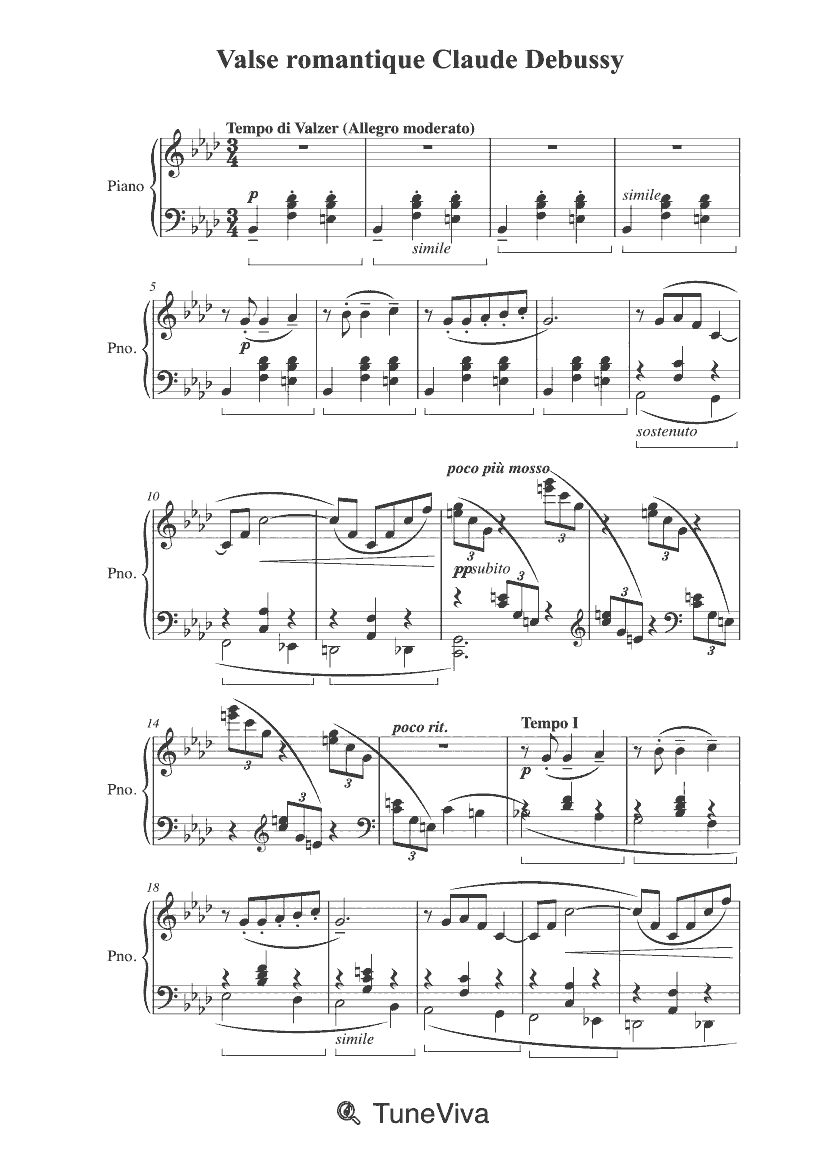
Claude Debussy
Piano · 3 min 55 sec
Open score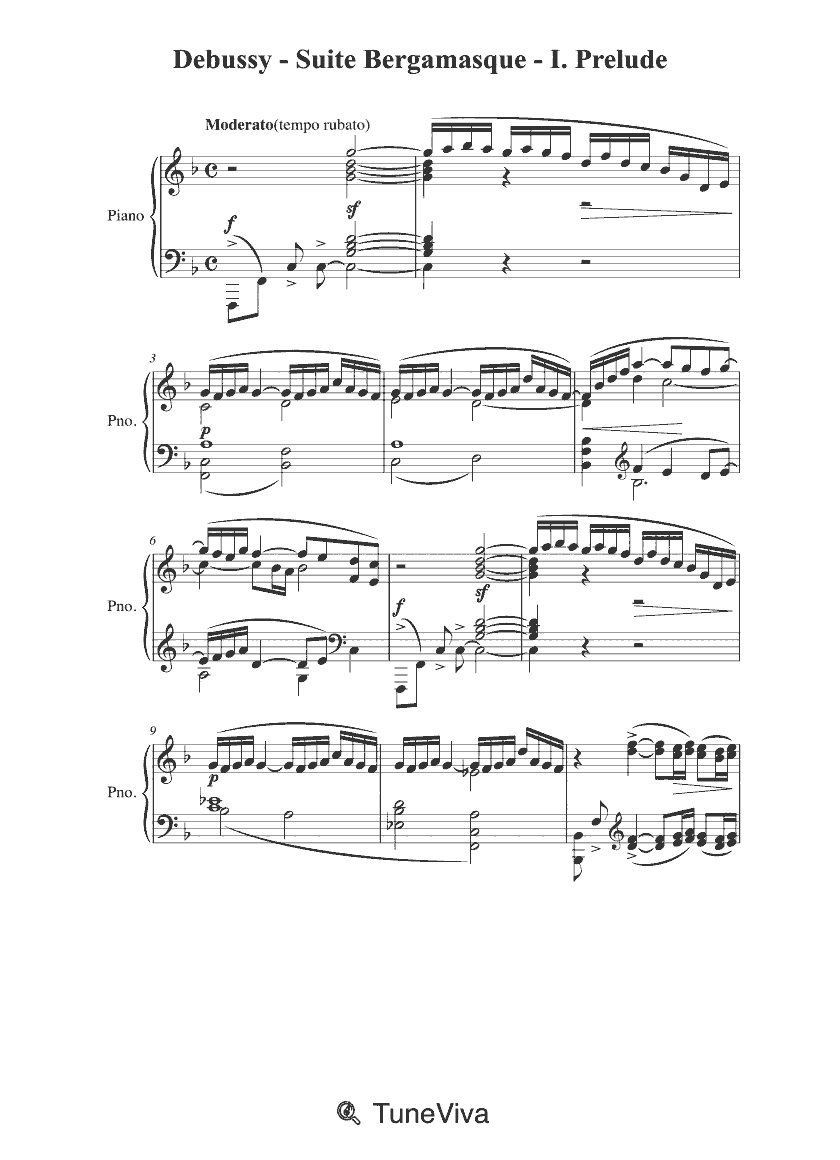
Claude Debussy
I. Prelude
Piano · 5 min 34 sec
Open score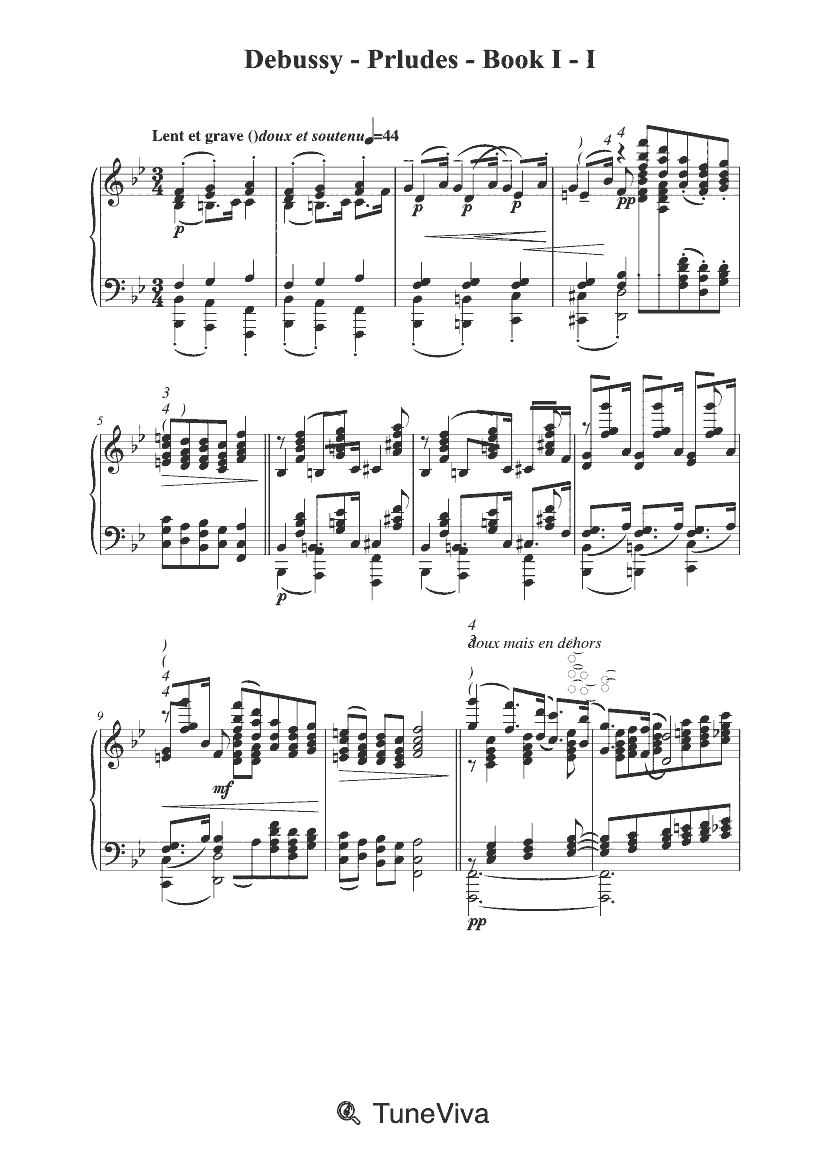
Claude Debussy
Danseuses de Delphes
Piano · 4 min 53 sec
Open score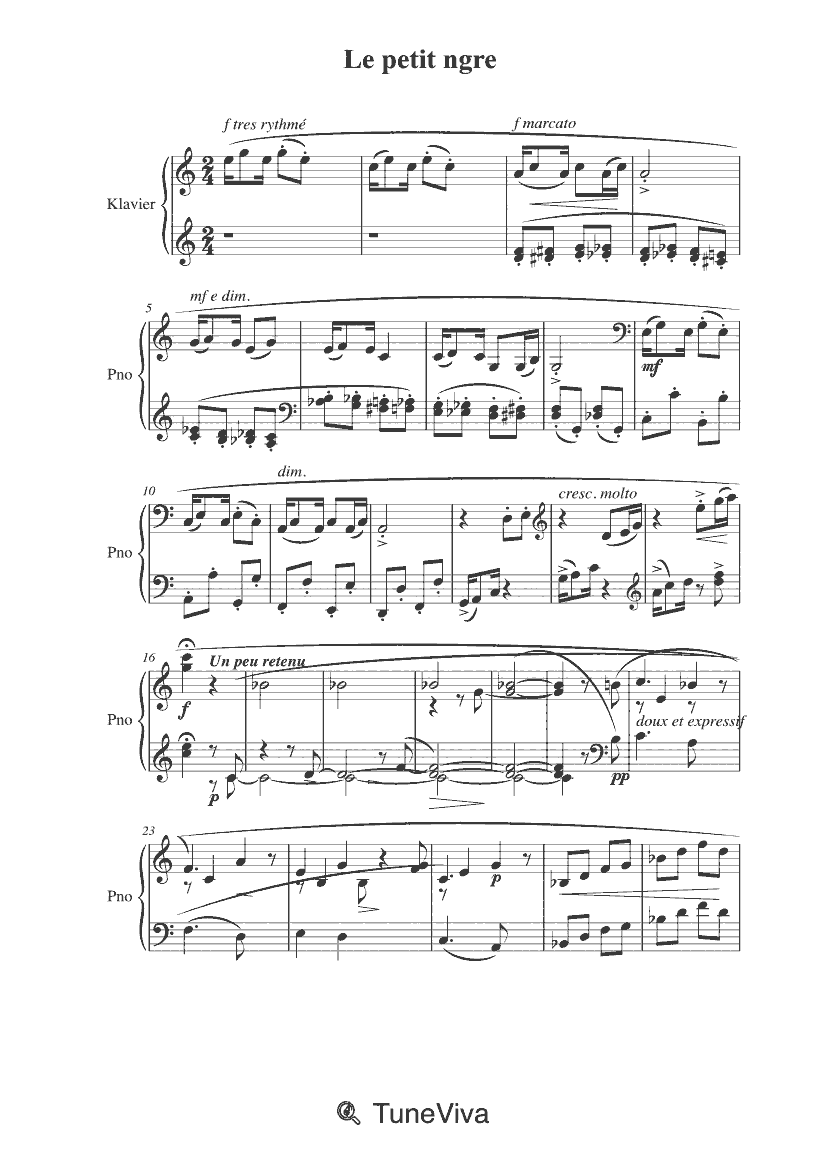
Claude Debussy
Klavier · 2 min 3 sec
Open score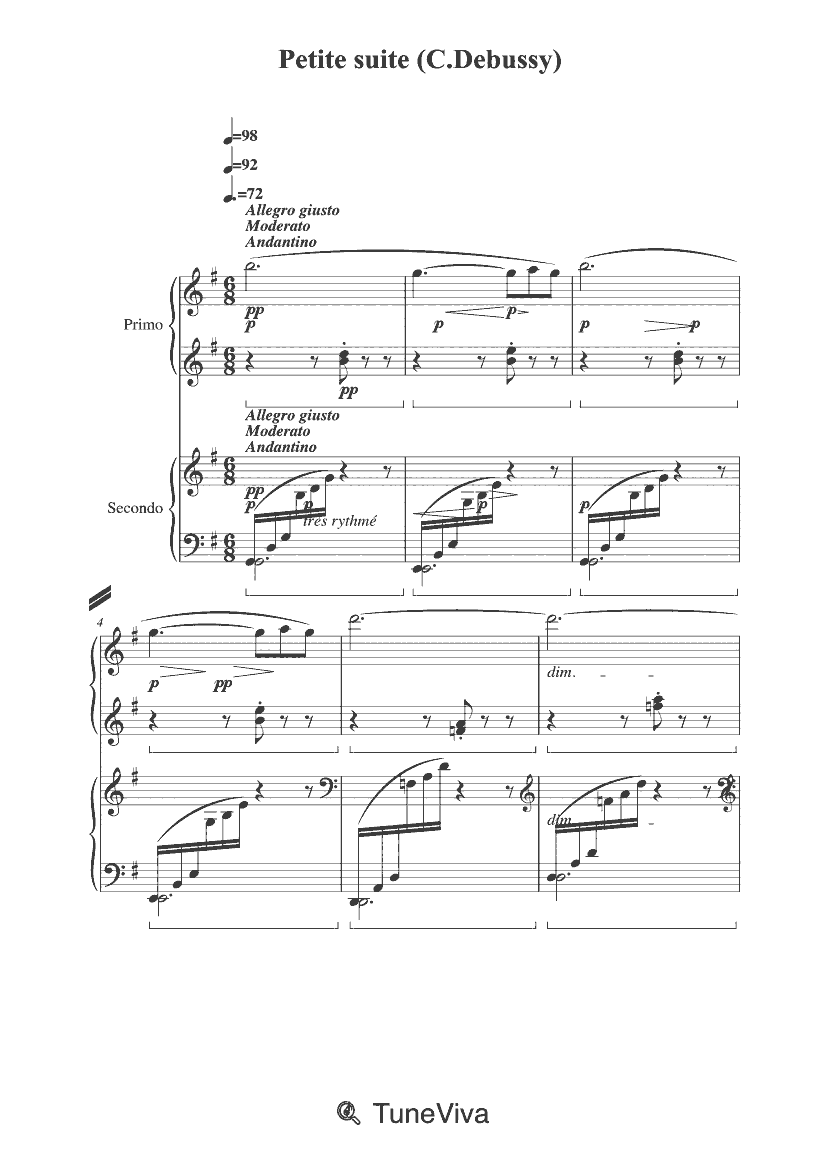
Claude Debussy
ⅠEn Bateau
Primo; Secondo · 10 min 9 sec
Open score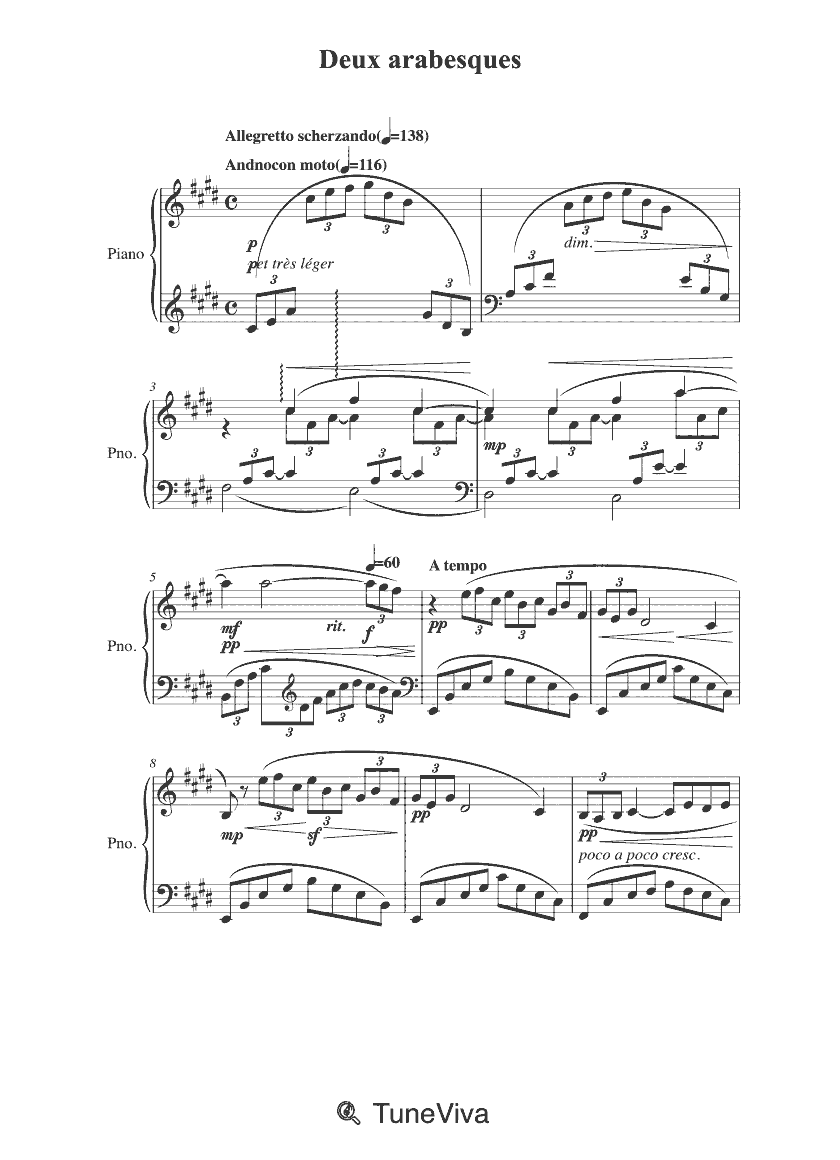
Claude Debussy
I.
Piano · 6 min 47 sec
Open score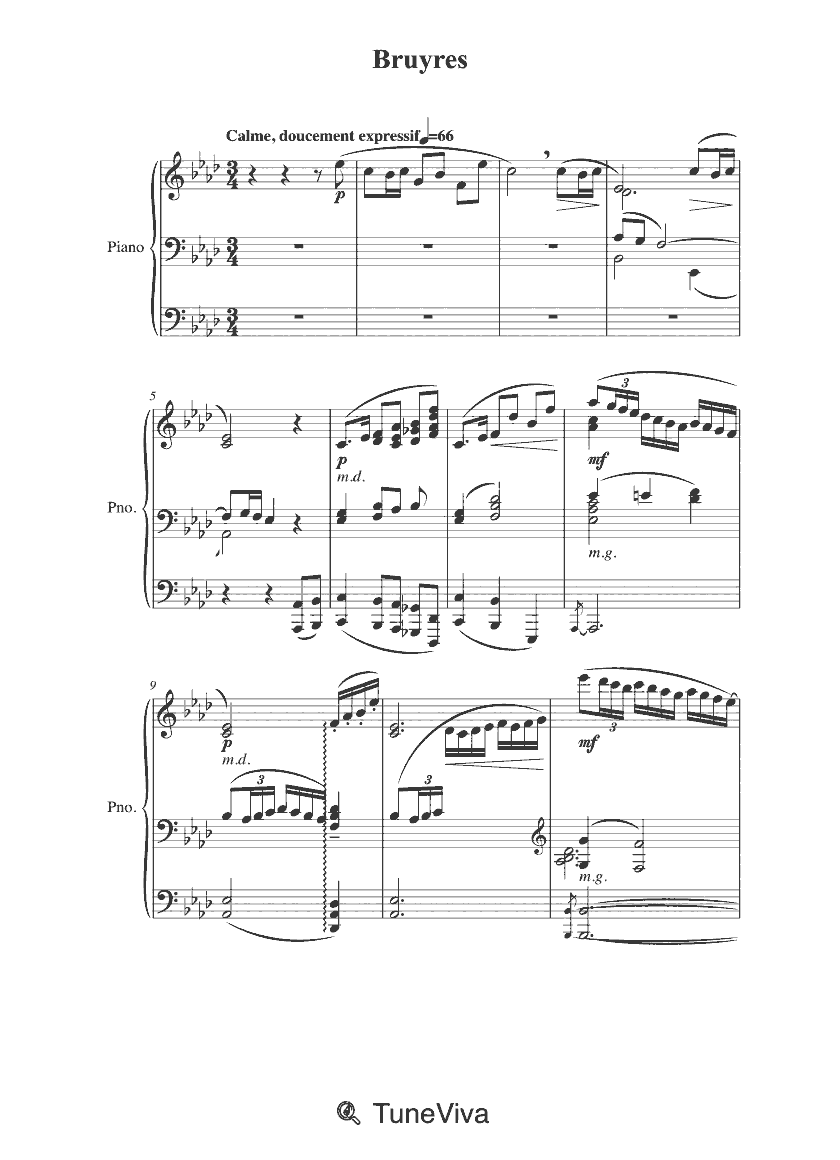
Claude Debussy
Préludes Livre 2
Piano · 2 min 18 sec
Open score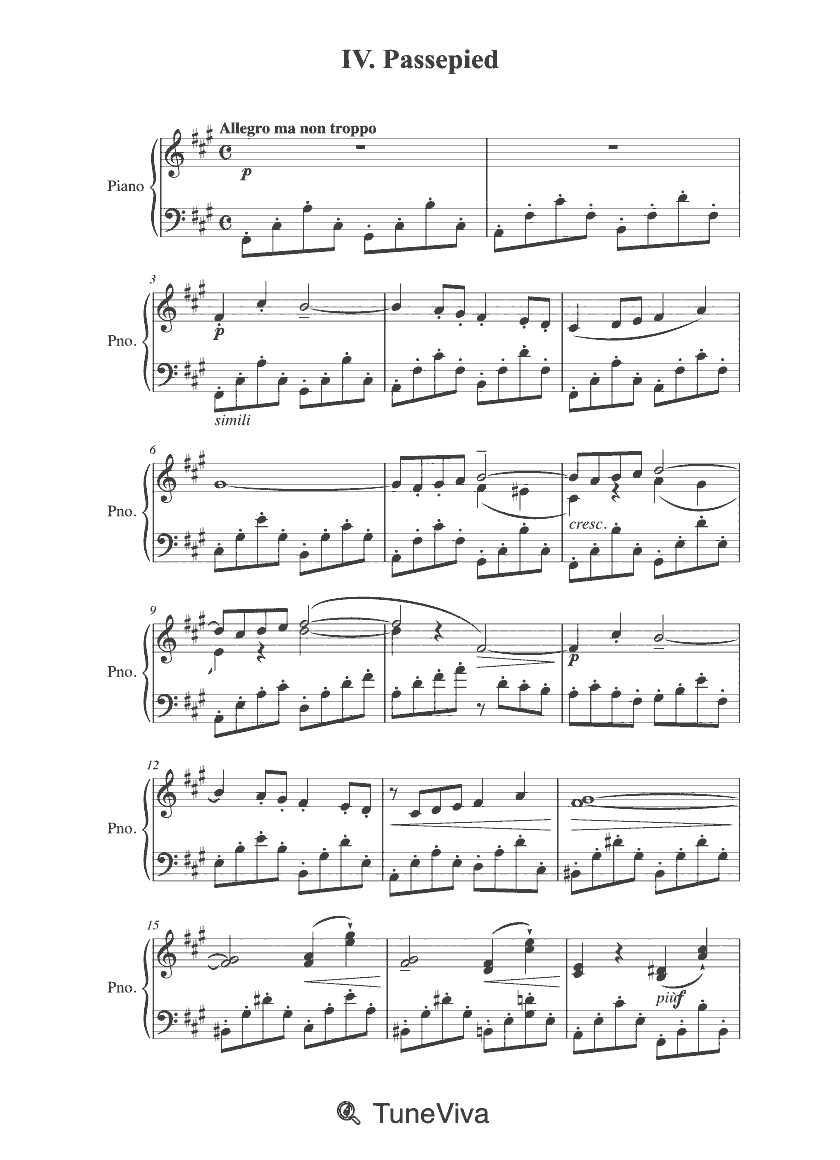
Claude Debussy
IV. Passpied
Piano · 3 min 33 sec
Open score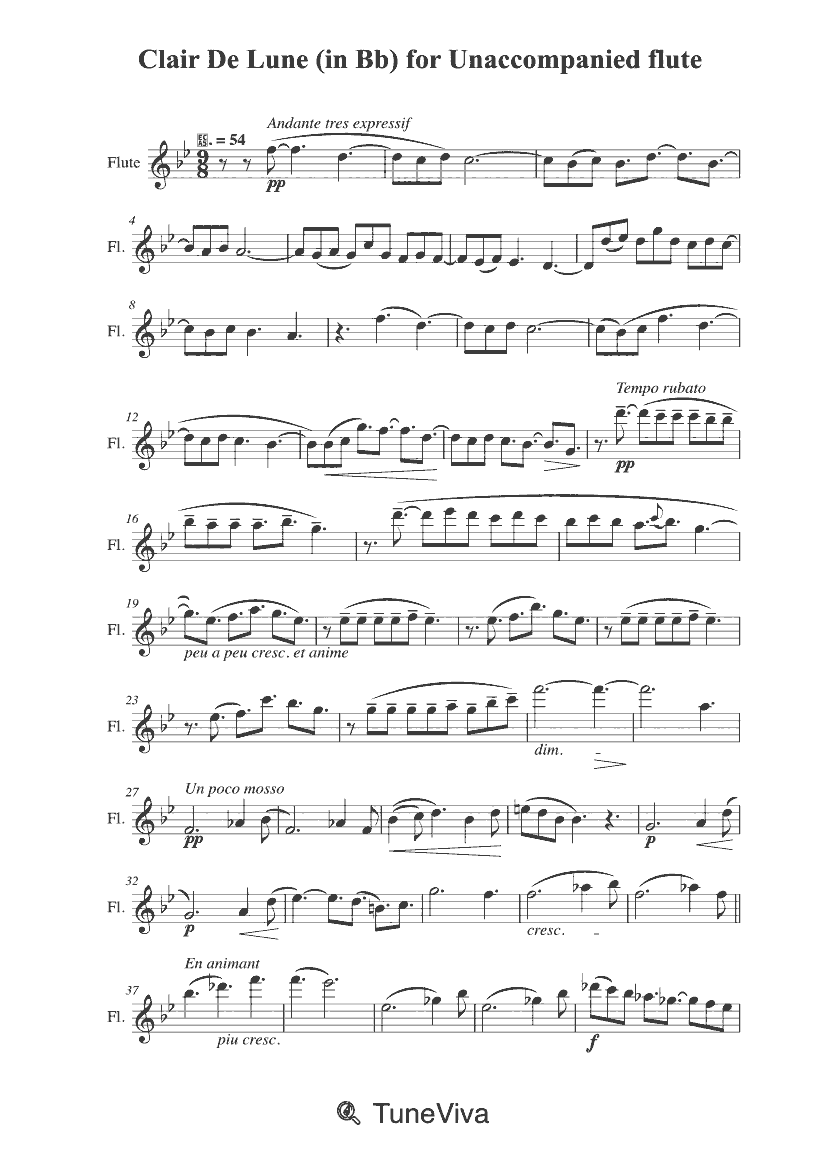
Claude Debussy
from Suite bergamasque(transposed to key of Bb)
Flute · 2 min 1 sec
Open score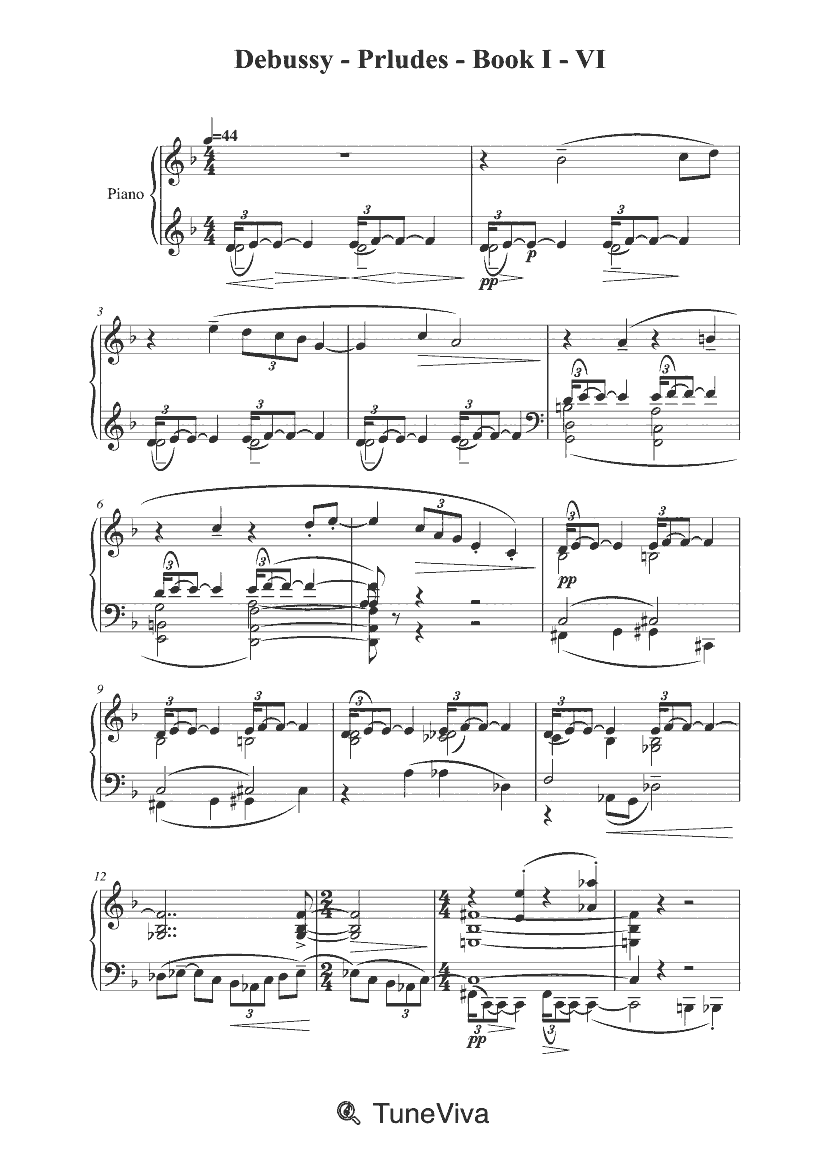
Claude Debussy
... Des pas sur la neige
Piano · 4 min 49 sec
Open score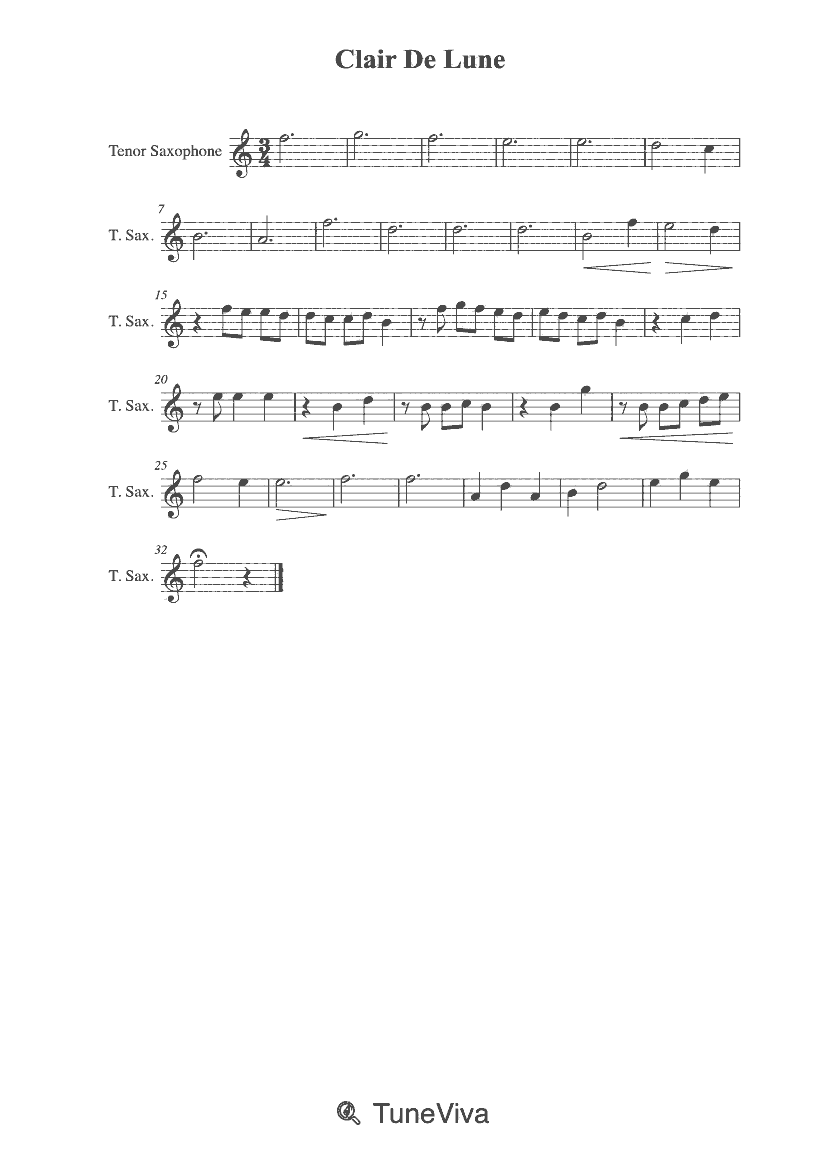
Claude Debussy
Tenor Saxophone · 47 sec
Open score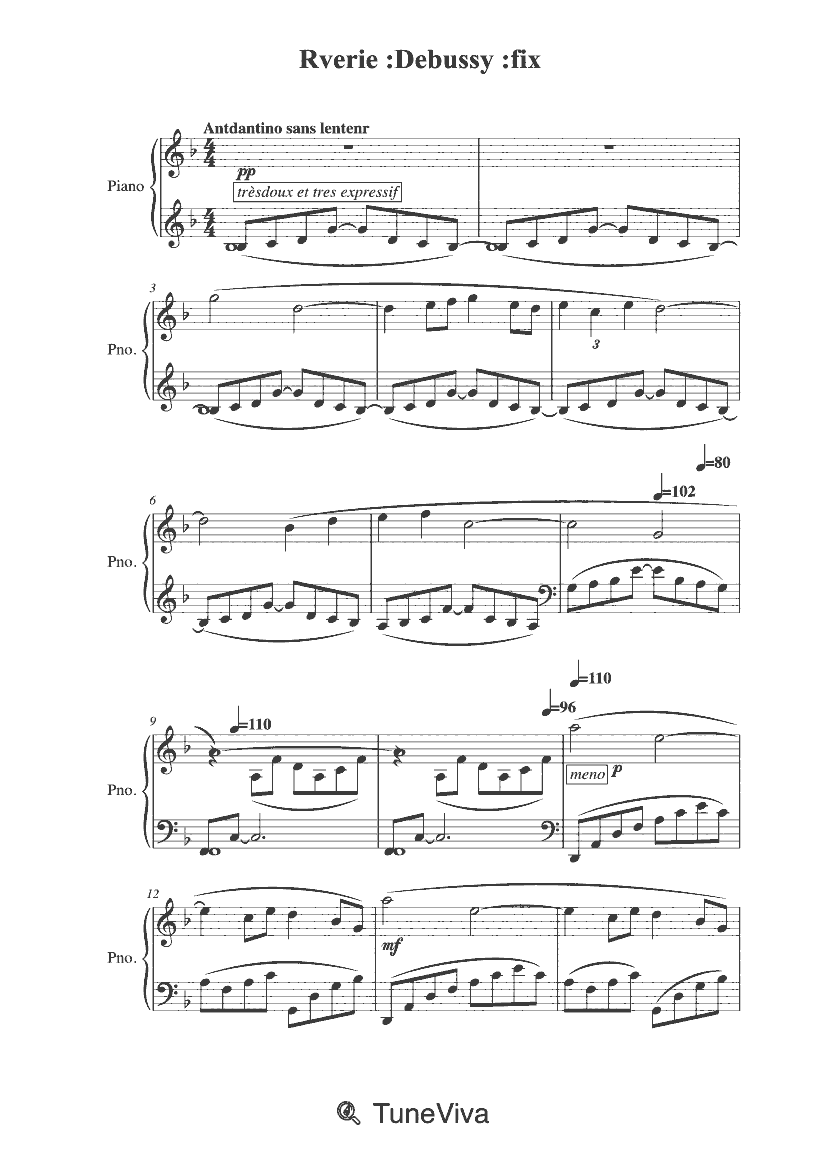
Claude Debussy
Piano · 5 min 34 sec
Open scorePage 1 of 6
Claude Debussy (1862–1918) was a French composer whose piano music includes Children's Corner, Suite bergamasque, the two books of Préludes and earlier pieces such as Rêverie and Valse romantique. This Claude Debussy sheet music collection brings together scores for solo piano, from single movements such as Clair de lune to sets such as Children’s Corner and individual Préludes. Children’s Corner was composed between 1906 and 1908 and published by Durand; Suite bergamasque was begun around 1890 and significantly revised before its 1905 publication. Use the titles and instrumentation to choose between an original piano work and an arrangement, and check the score itself for details that a catalogue description cannot settle.
Debussy was the eldest of five children; his father ran an unsuccessful china shop and later worked in a printing factory. At the Conservatoire he studied piano but found composition more compelling, despite the disapproval of its conservative professors. A Wagnerian phase in the late 1880s gave way to a style built on colour, whole-tone scales and chords used for their sound rather than their function. Prélude à l'après-midi d'un faune (1894) and La mer (1903-05) established him; the opera Pelléas et Mélisande made him famous in 1902. He died of cancer at his home in Paris in 1918.
The piano works cover two decades. Children's Corner was composed between 1906 and 1908, published by Durand, and dedicated to his daughter Claude-Emma, born in October 1905; Harold Bauer gave the first performance in Paris on 18 December 1908. Suite bergamasque was begun around 1890 and heavily revised before its 1905 publication; Clair de lune is its third movement. Book I of the Préludes was written between December 1909 and February 1910; La fille aux cheveux de lin, its eighth piece, is 39 bars in G-flat major after a poem by Leconte de Lisle, and La cathédrale engloutie is the tenth.
The 108 scores here total about 356 minutes and 142,748 notated notes, with 26 entries carrying lyrics. Many of the easier entries are arrangements of Clair de lune or Rêverie rather than original urtexts.
Choosing a work to study: Clair de lune is the third movement of Suite bergamasque and is one of Debussy’s most famous piano pieces. For a multi-movement set, Children’s Corner offers six character pieces: Doctor Gradus ad Parnassum is a finger study that sends up Clementi and Czerny, while Jimbo’s Lullaby is a lullaby with darker whole-tone passages. The Préludes are 24 pieces in two books, and early performers often played them in groups of three or four rather than as a complete set.
Debussy’s harmonic and pianistic character: Debussy’s music was to a considerable extent a reaction against Wagner and the German tradition, and his early influences included Chopin and Liszt. In the piano works, character changes quickly: Doctor Gradus ad Parnassum is a study in finger independence with a twentieth-century harmonic vocabulary, Jimbo’s Lullaby includes whole-tone writing, and Suite bergamasque moves from a legato F major opening to the fluttery embellishments of its A minor second movement and the 9/8 lyricism of Clair de lune.
Working with the Préludes: Book I of the Préludes was written between December 1909 and February 1910, and Book II between 1911 and 1912. The pieces do not follow a strict pattern of tonal centres, and Debussy placed the titles at the end of each work in the original editions so that performers could encounter the music before seeing them. Voiles, the second prelude of Book I, is a useful example of Debussy’s evocative titles: in French the word can mean either “veils” or “sails.”
Piano originals and arrangements: Debussy’s works exist in many arrangements, so check the instrumentation before choosing a score. Suite bergamasque has been orchestrated and arranged by many musicians, and Clair de lune has been arranged for a wide variety of instrumental combinations, including notable orchestrations by André Caplet, Leopold Stokowski and Lucien Cailliet. Orchestrations of the Préludes have focused especially on La fille aux cheveux de lin and La cathédrale engloutie.
Yes, it is the third of four movements. Debussy began the suite around 1890 and revised it before publication in 1905.
Rêverie and the slower movements of Children's Corner, such as Jimbo's Lullaby, are the most approachable of the popular titles, though none is a beginner piece. The easiest catalogue entries are usually arrangements.
Clair de lune is the third movement of Debussy’s Suite bergamasque, a piano suite he began around 1890 and significantly revised before its 1905 publication. The movement is in D-flat major and 9/8 time, marked andante très expressif, and its title comes from a poem by Paul Verlaine.
Children’s Corner is a six-movement suite for solo piano that Debussy composed between 1906 and 1908. Durand published the suite in 1908, and Debussy dedicated it to his daughter Claude-Emma, known as Chou-Chou, who was born on 30 October 1905. Harold Bauer gave the first performance in Paris on 18 December 1908.
Debussy’s Préludes are 24 pieces for solo piano divided into two books of 12. Book I was written between December 1909 and February 1910, and Book II between 1911 and 1912; unlike Chopin’s Op. 28 or Bach’s Well-Tempered Clavier, they do not follow a strict pattern of tonal centres.
La fille aux cheveux de lin is the eighth prelude in Book I of Debussy’s Préludes. The 39-measure piece is in G-flat major and takes its title from a poem by Leconte de Lisle, published in his 1852 collection Poèmes antiques as part of Chansons écossaises. Debussy completed the prelude in January 1910.
Voiles is the second prelude of Book I, and its French title can mean either “veils” or “sails”; the exact meaning is impossible to ascertain with certainty. In the original editions, Debussy placed each prelude’s title at the end of the work, allowing performers to encounter the music before seeing the title.
Doctor Gradus ad Parnassum is the opening movement of Children’s Corner and alludes to published piano exercise sets with that title, including those by Clementi and Czerny. It is a study in finger independence using a twentieth-century harmonic vocabulary, and the music becomes more frantic toward the end.
Clair de lune has been arranged for a wide variety of instrumental combinations, and Suite bergamasque as a whole has been orchestrated and arranged by many musicians. Notable orchestrations of Clair de lune include those by André Caplet, Leopold Stokowski and Lucien Cailliet. The original is the third movement for solo piano.