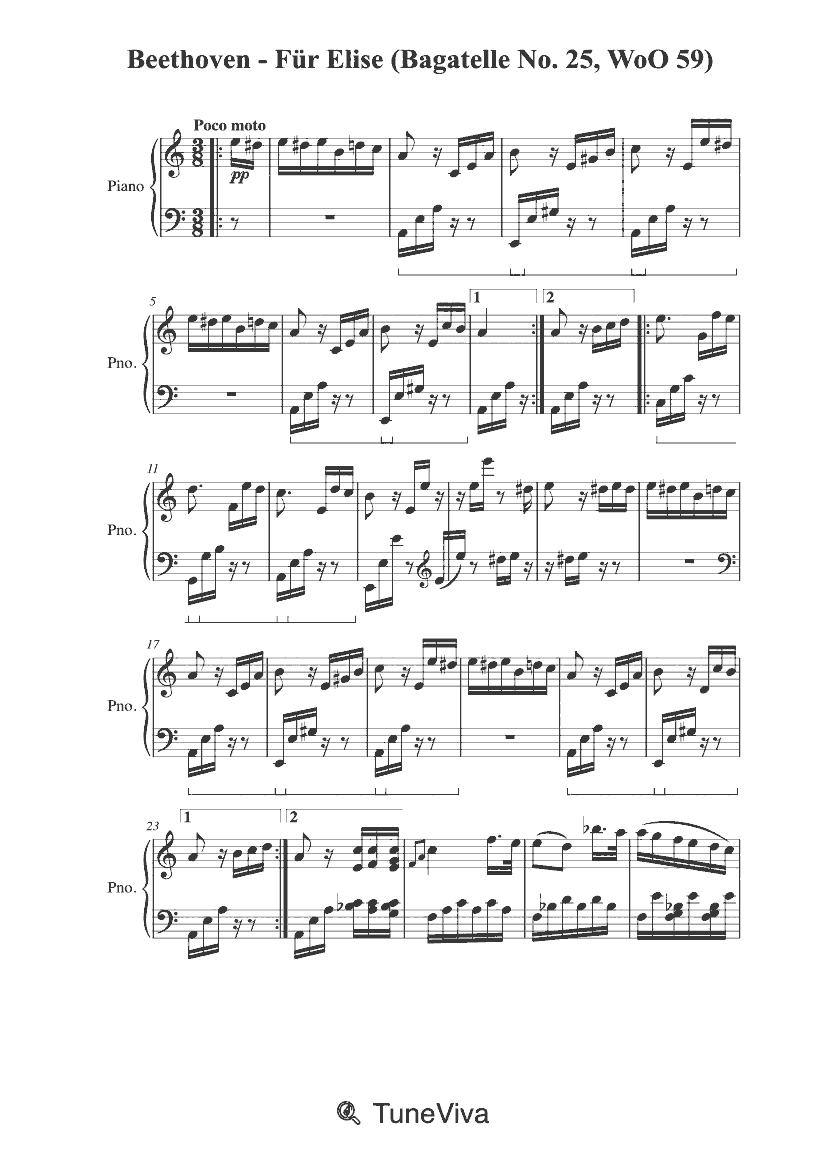
Beethoven - Für Elise (Bagatelle No. 25, WoO 59)
Ludwig van Beethoven
Follow the score, hear the music, then make it your own.
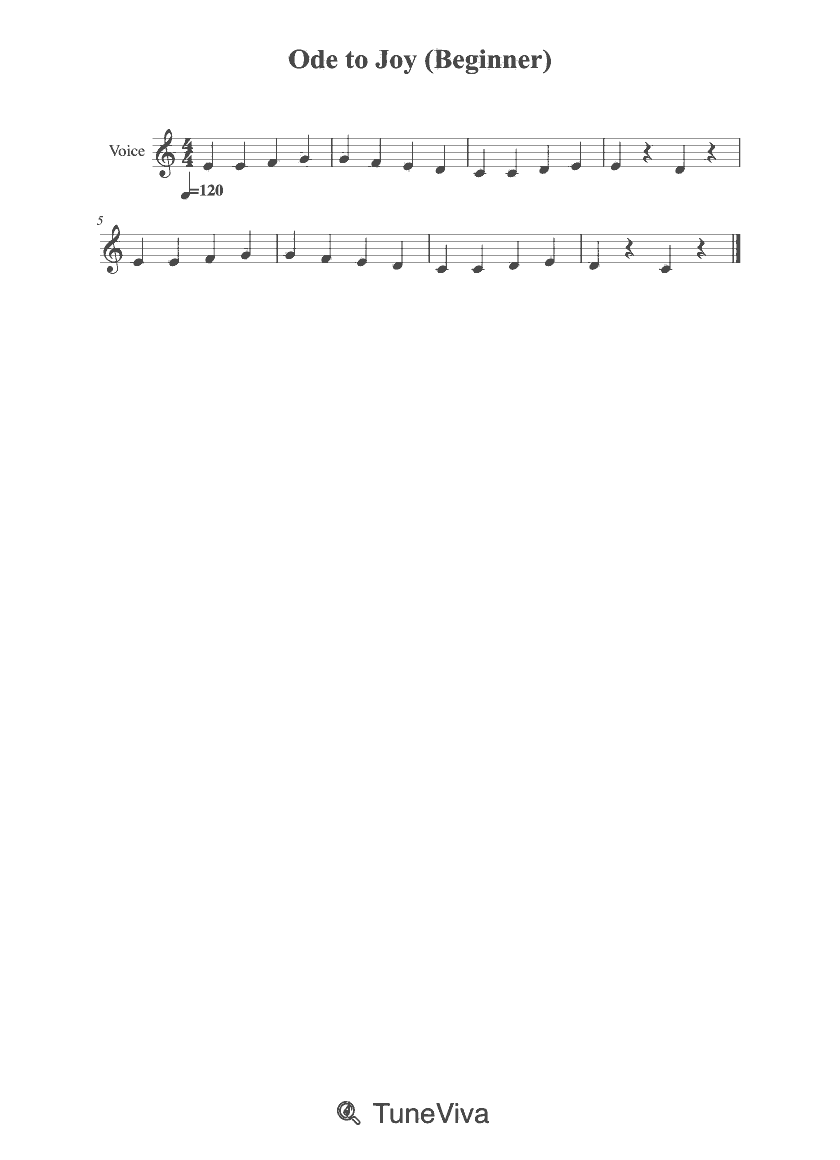
This beginner Ode to Joy score is an eight-bar version of the familiar melody from Beethoven’s Ninth Symphony. It has a single treble line in C major and 4/4. The range is just C to G, so it works as a short sight-reading example on piano or as an unaccompanied melody to sing.
Score parts: Voice. Opening key signature: No sharps or flats. Opening time signature: 4/4. Opening tempo: 120 BPM. Estimated playback time: 15 sec. Listen while following the notation, adjust playback speed, or open this score in practice mode.
Play the first bar as E, E, F, G, then answer it with G, F, E, D. Count one beat per note and keep the second E just as long as the first. On piano you can set your right thumb on middle C and keep one finger on each note up to G. Use the four-note group at the opening as a checkpoint and then try reading both bars without looking away from the page.
Bars three and seven both begin C, C, D, E. The first phrase stops on D, while the last answers it by descending to C. Practise those two endings in succession. Count through the space after the final notes so you hear each phrase reach its end and can start again on time. You can alternate singing the line and playing it to check that the two endings sound distinct.
The melody uses C, D, E, F and G, all in the same octave. A beginning pianist can play the whole line in one right-hand position.
The notation contains a single melody line labelled Voice. There are no written lyrics or backing part in this eight-bar score.
This is a short beginner version of the melody. It gives you the tune in eight bars for reading or playing along.
Ludwig van Beethoven
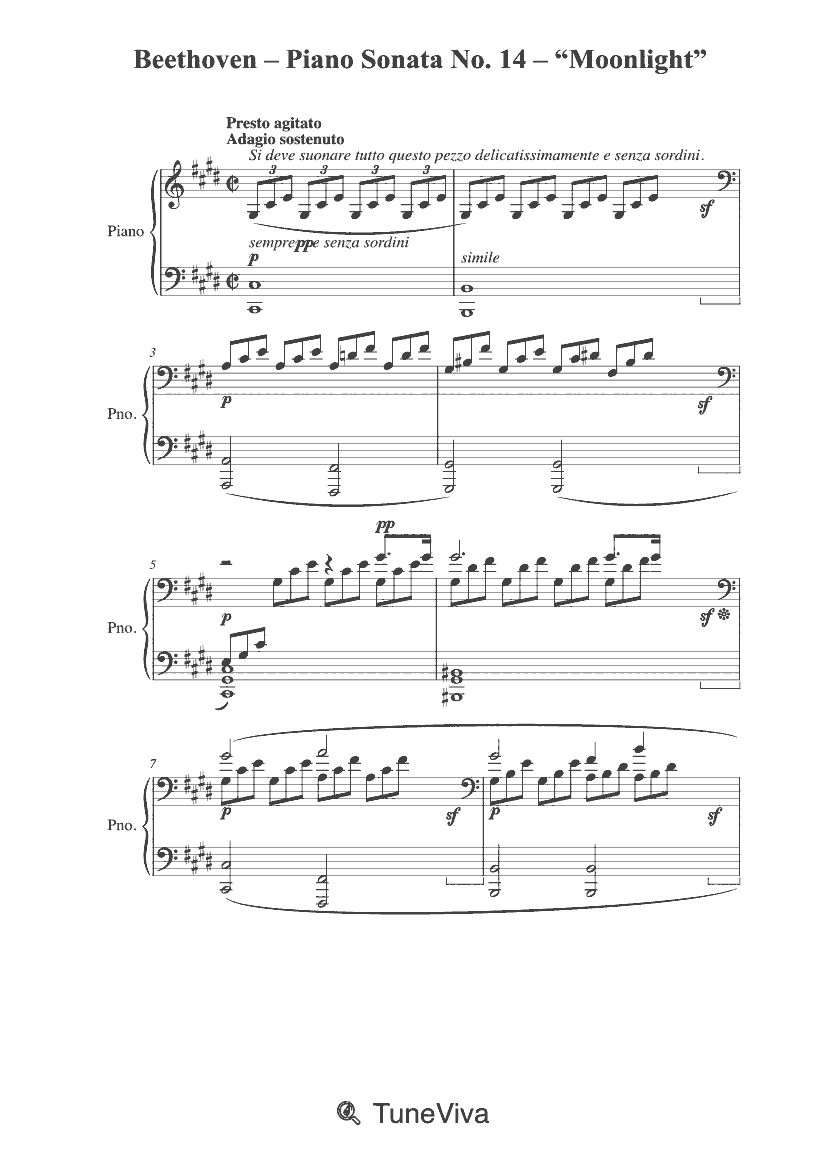
Ludwig van Beethoven
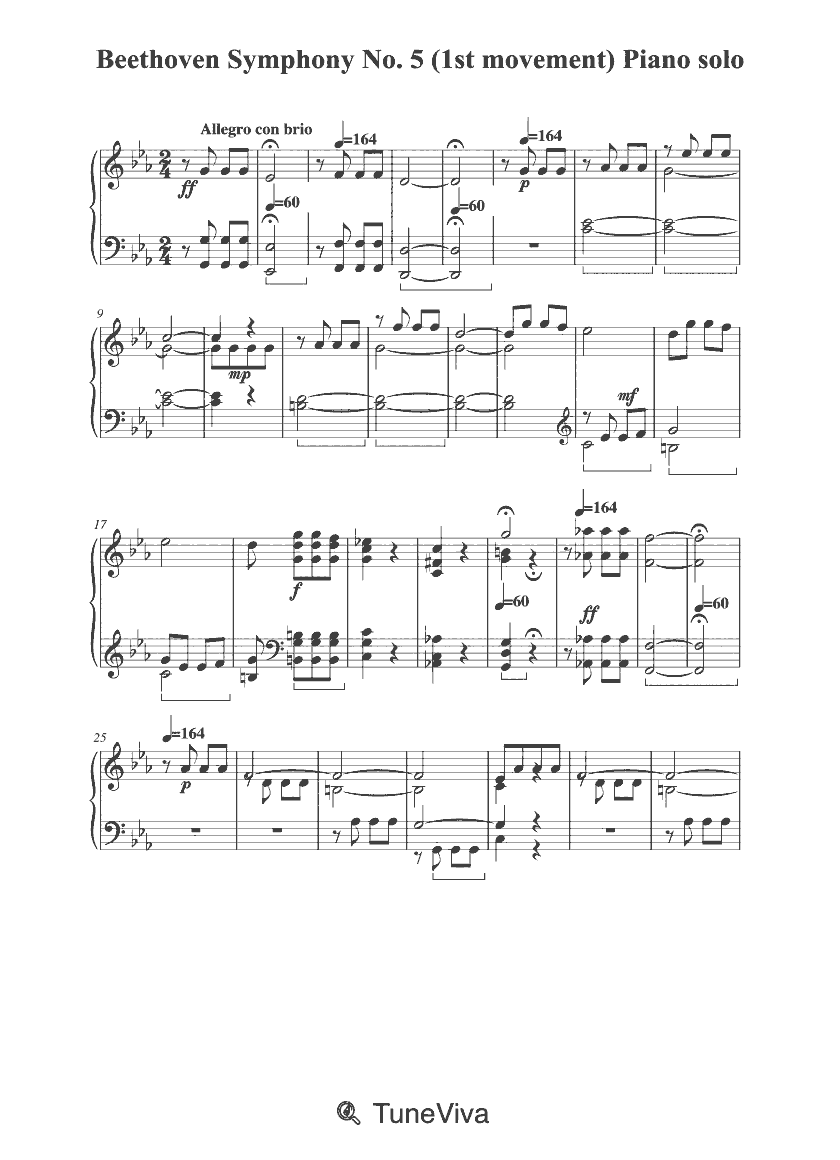
Ludwig van Beethoven