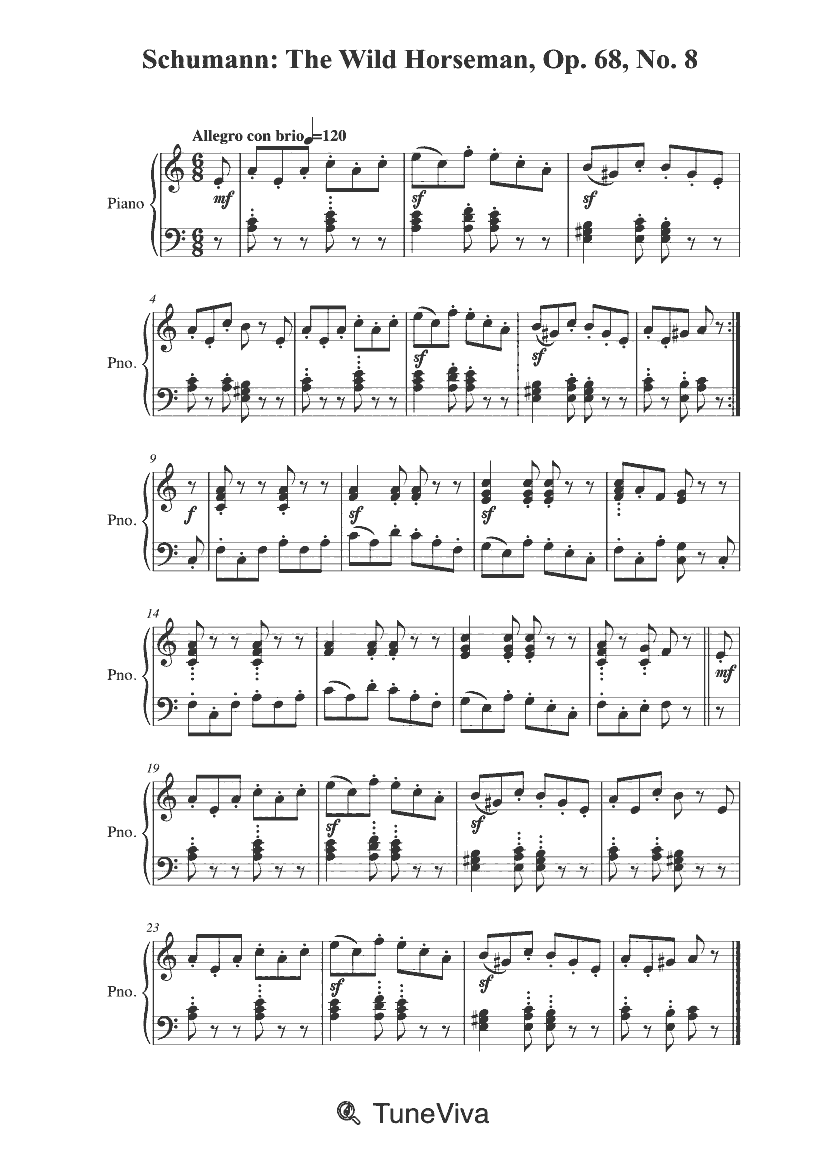
Schumann: The Wild Horseman, Op. 68, No. 8
Robert Schumann
No. 8 from Op. 68 Album for the Young
Piano · 24 sec
Open scoreThis page groups sheet music listed under Robert Schumann's Album für die Jugend, Op. 68. The available titles are 'The Wild Horseman, Op. 68, No. 8', 'The Merry Farmer, Op. 68, No. 10' and a score titled 'The happy farmer'. All are listed for piano. Score details give opening key signatures and time signatures, with an opening tempo of 120 BPM for the two numbered pieces.
Scores 1–20 of 29
Robert Schumann
No. 8 from Op. 68 Album for the Young
Piano · 24 sec
Open score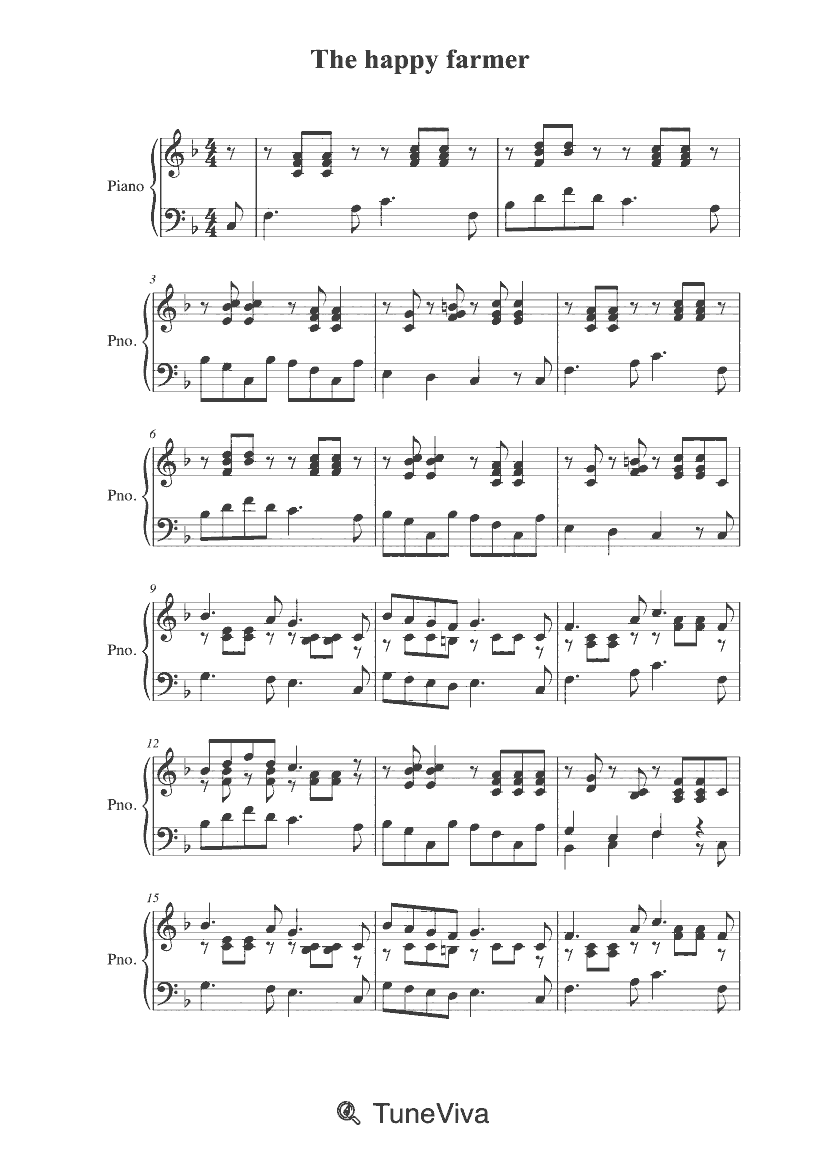
Robert Schumann
Piano · 56 sec
Open score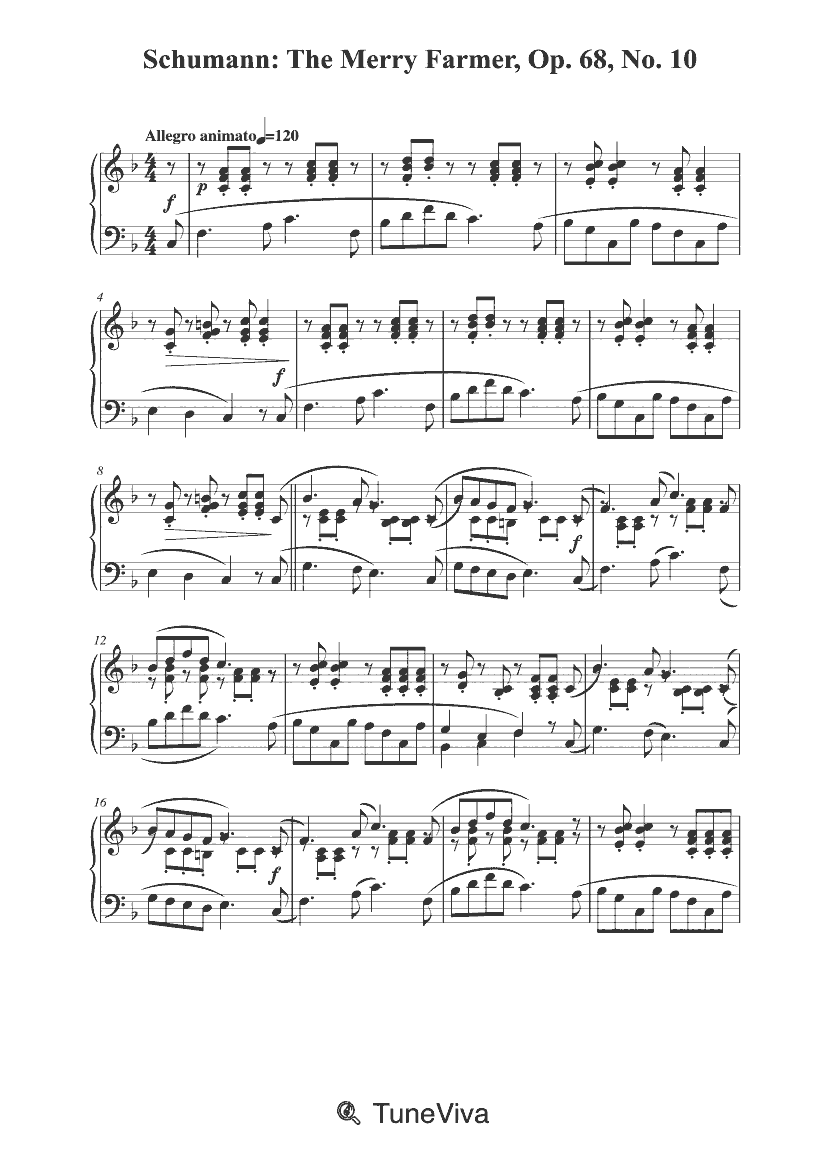
Robert Schumann
Op. 68 No. 10
Piano · 56 sec
Open score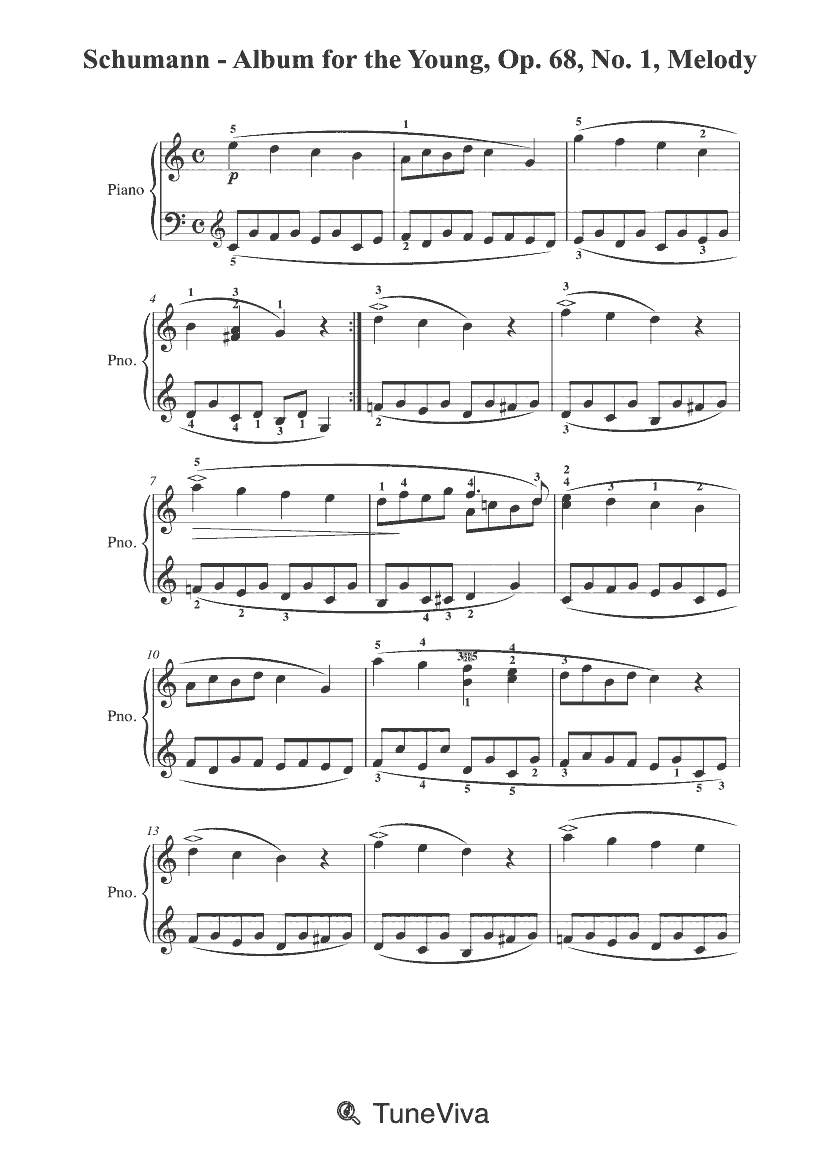
R. Schumann Op. 68 No. 1
Album for the Young
Piano · 48 sec
Open score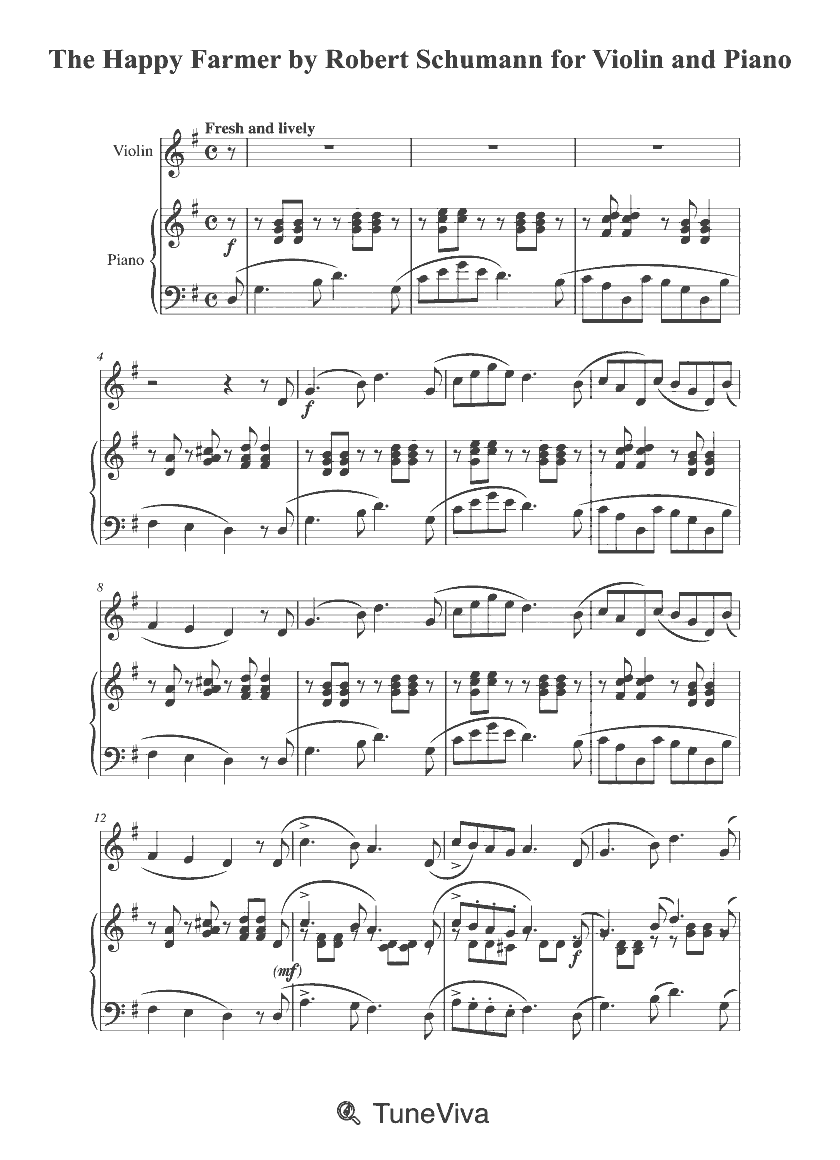
Robert Schumann
Fröhlicher Landmannvon der Arbeit zurückkehrendAlbum für die Jugend Op. 68 No 10
Violin; Piano · 57 sec
Open score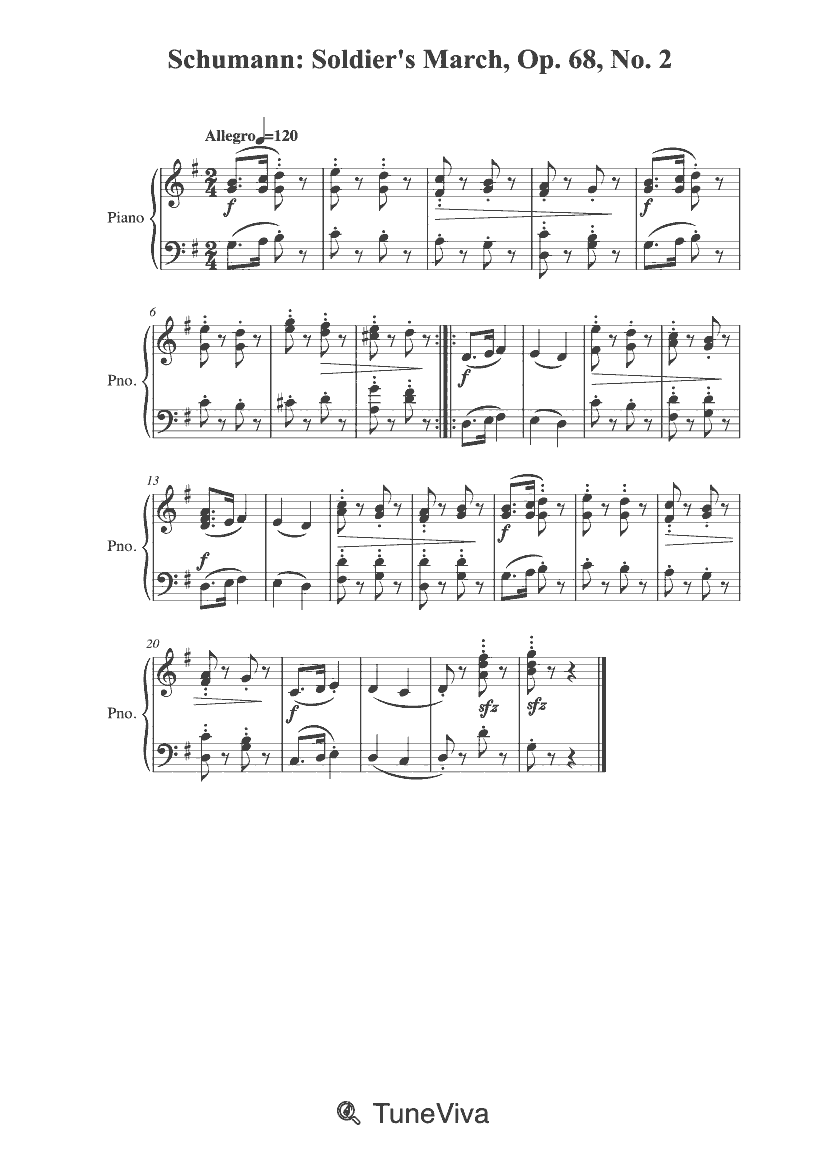
Robert Schumann
Album for the Young Op. 68. No. 2
Piano · 47 sec
Open score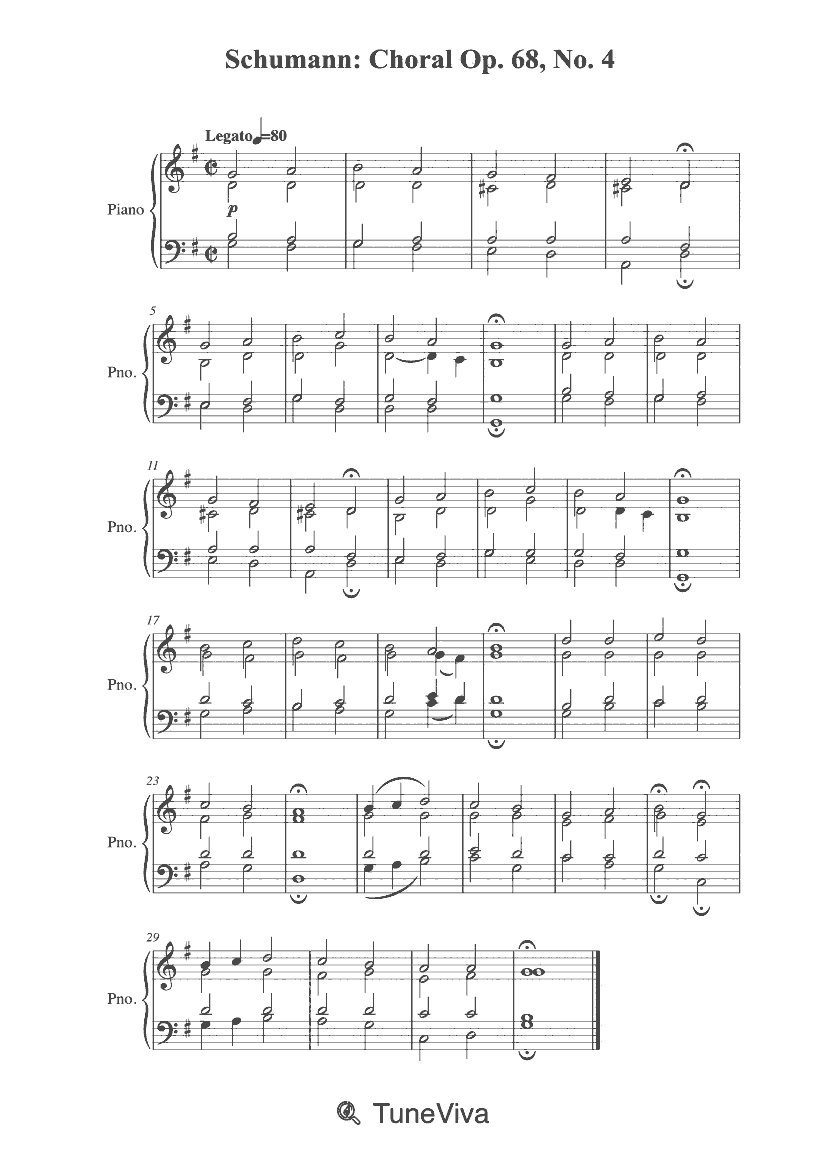
Robert Schumann
Op. 68 No. 4
Piano · 8 min 39 sec
Open score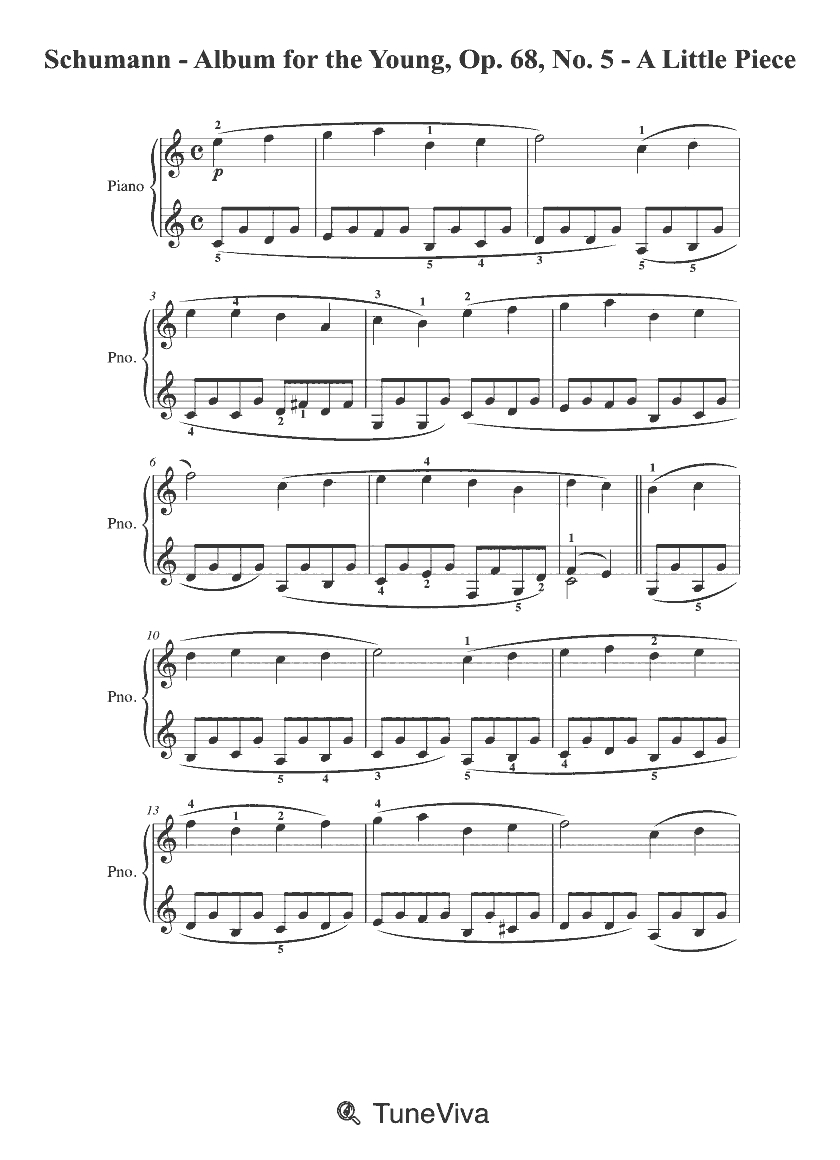
Robert Schumann Op. 68 No. 5
Album for the Young
Piano · 48 sec
Open score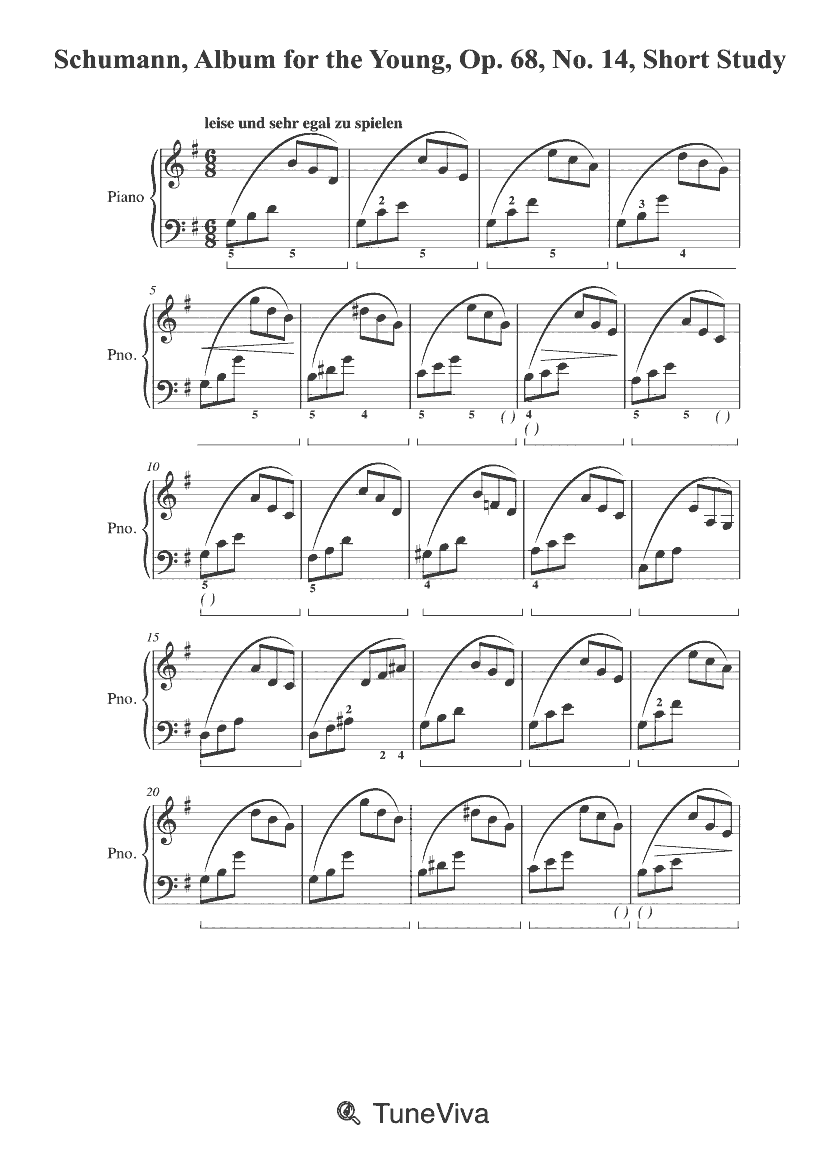
Schumann Op. 68 No. 14
Album for the Young
Piano · 1 min 21 sec
Open score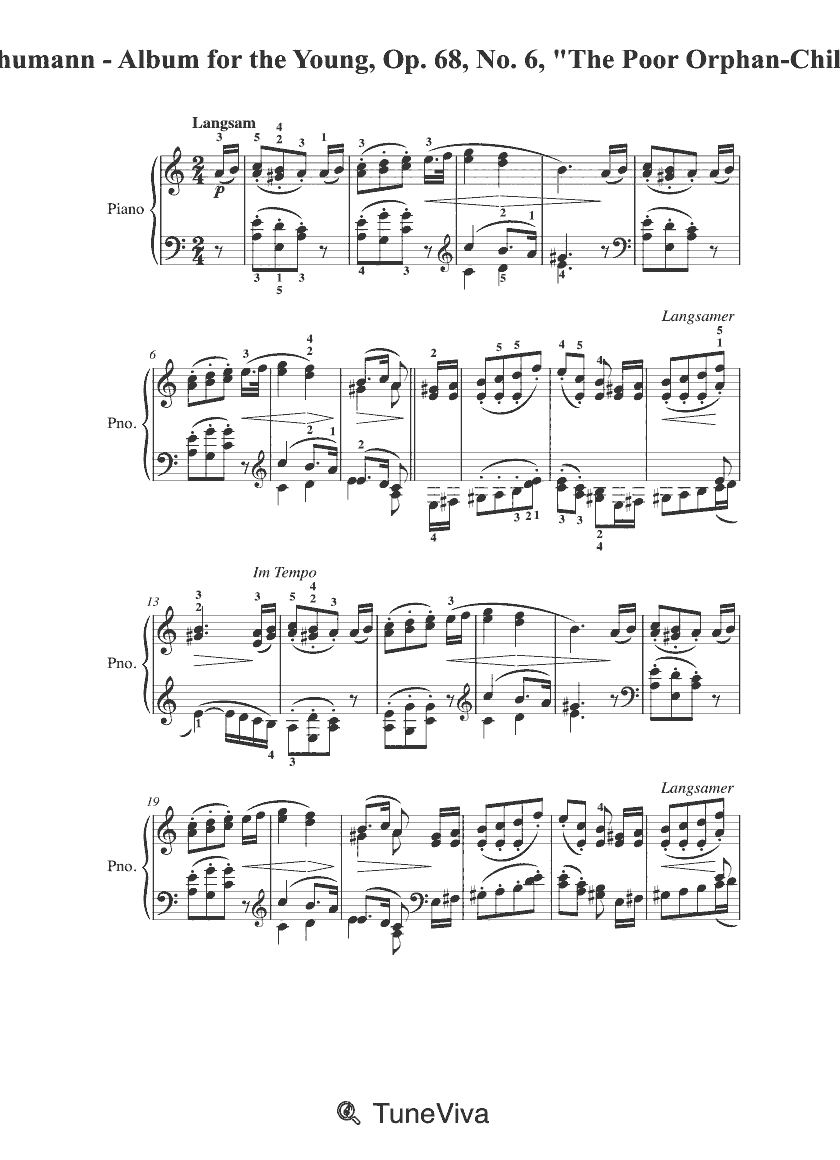
Robert Schumann Op. 68 No. 6
Album for the Young
Piano · 1 min 20 sec
Open score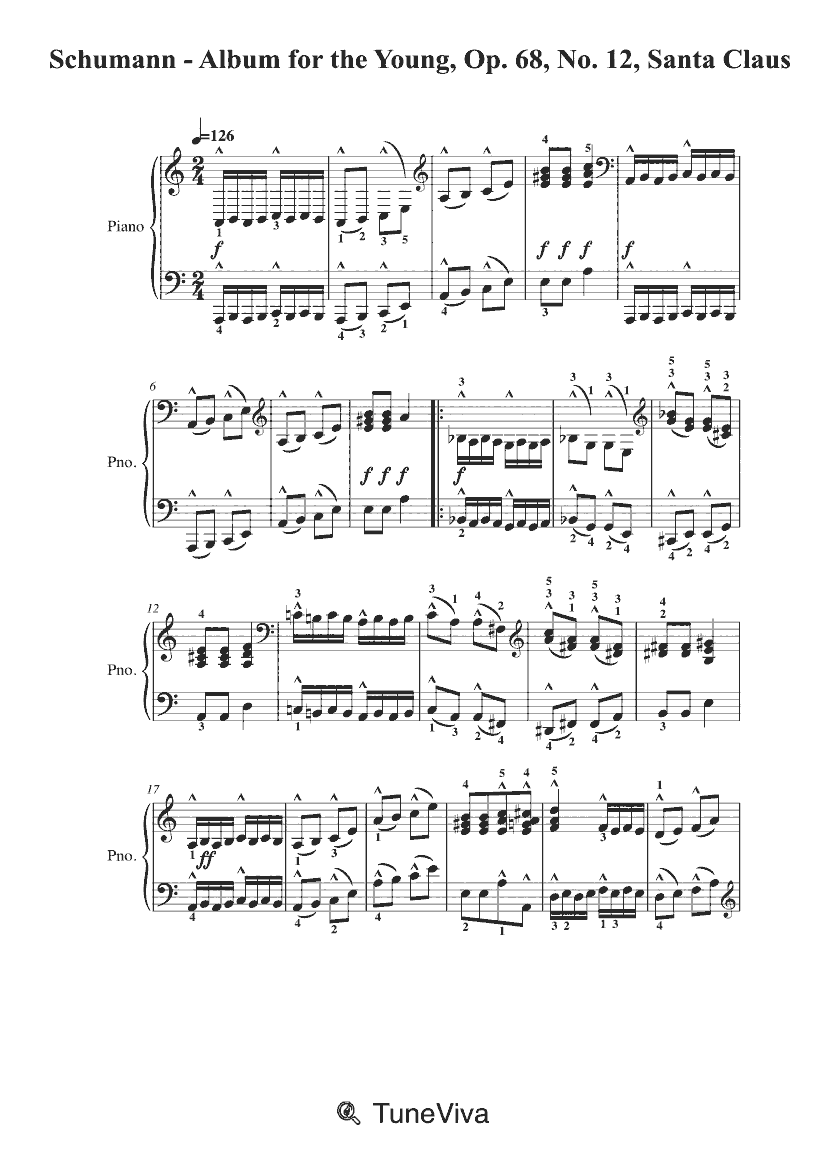
Schumann Op. 68 No. 12
Album for the Young
Piano · 1 min 47 sec
Open score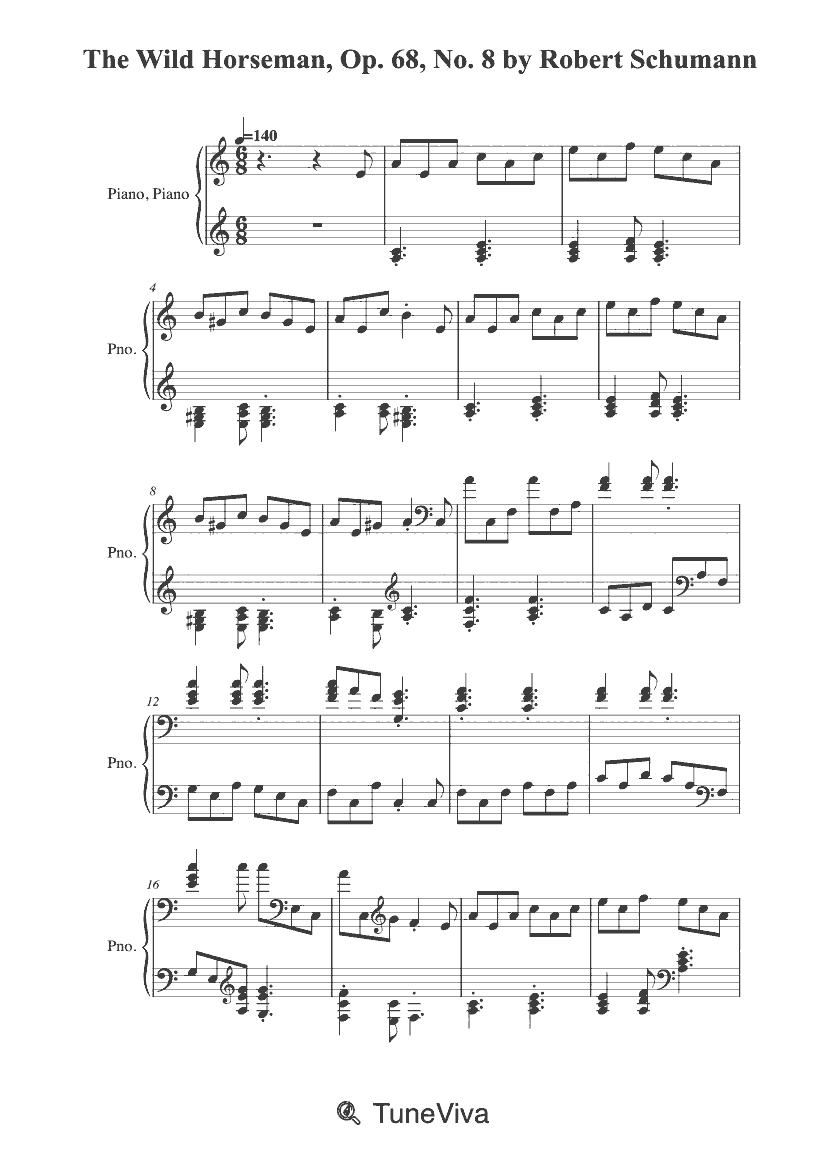
Robert Schumann
Piano, Piano · 16 sec
Open score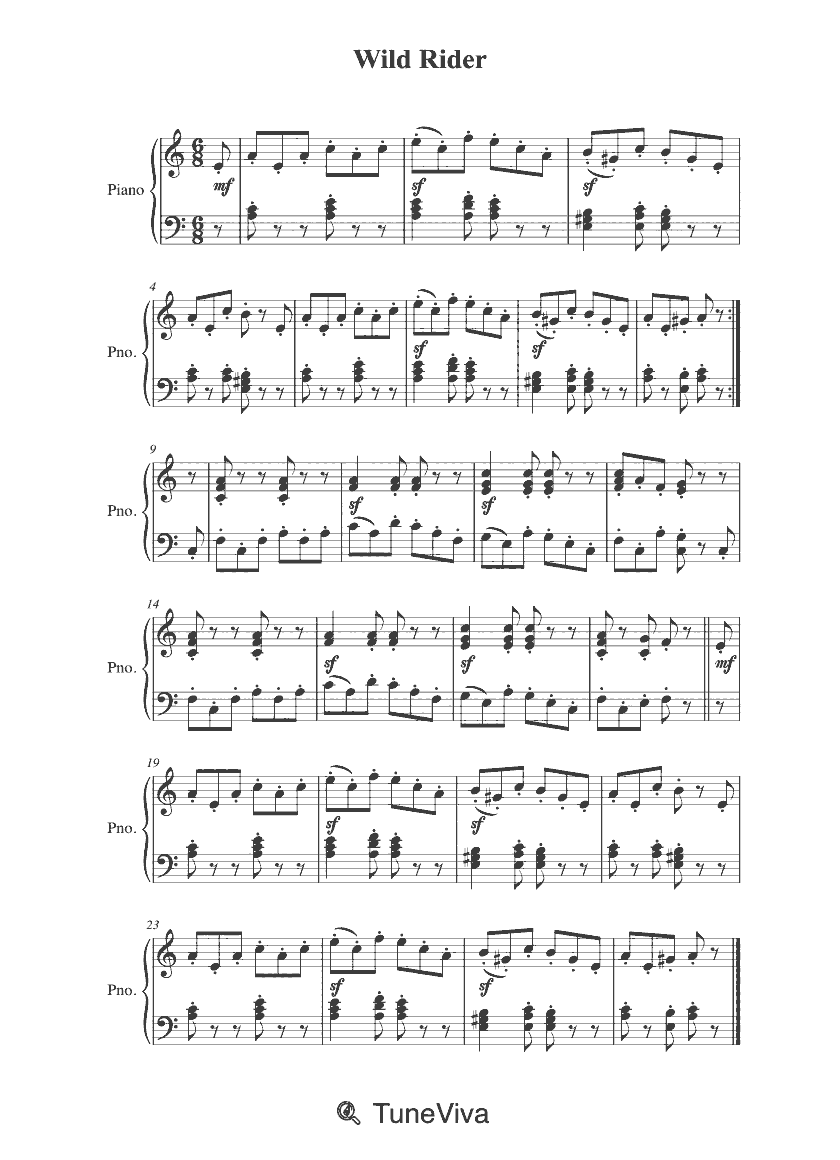
Robert Schumann
Album for the Young (Op. 68 No. 8)
Piano · 24 sec
Open score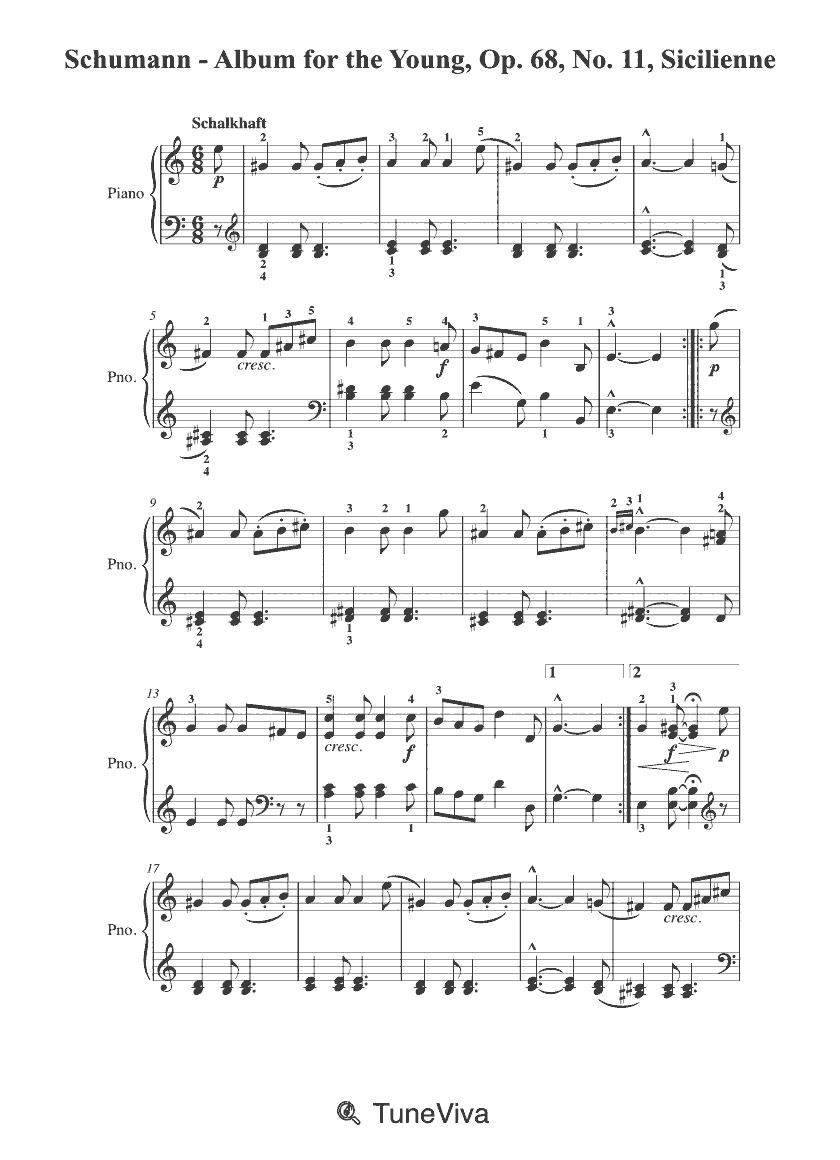
Robert Schumann Op. 68 No. 11
Ablum for the Young
Piano · 45 sec
Open score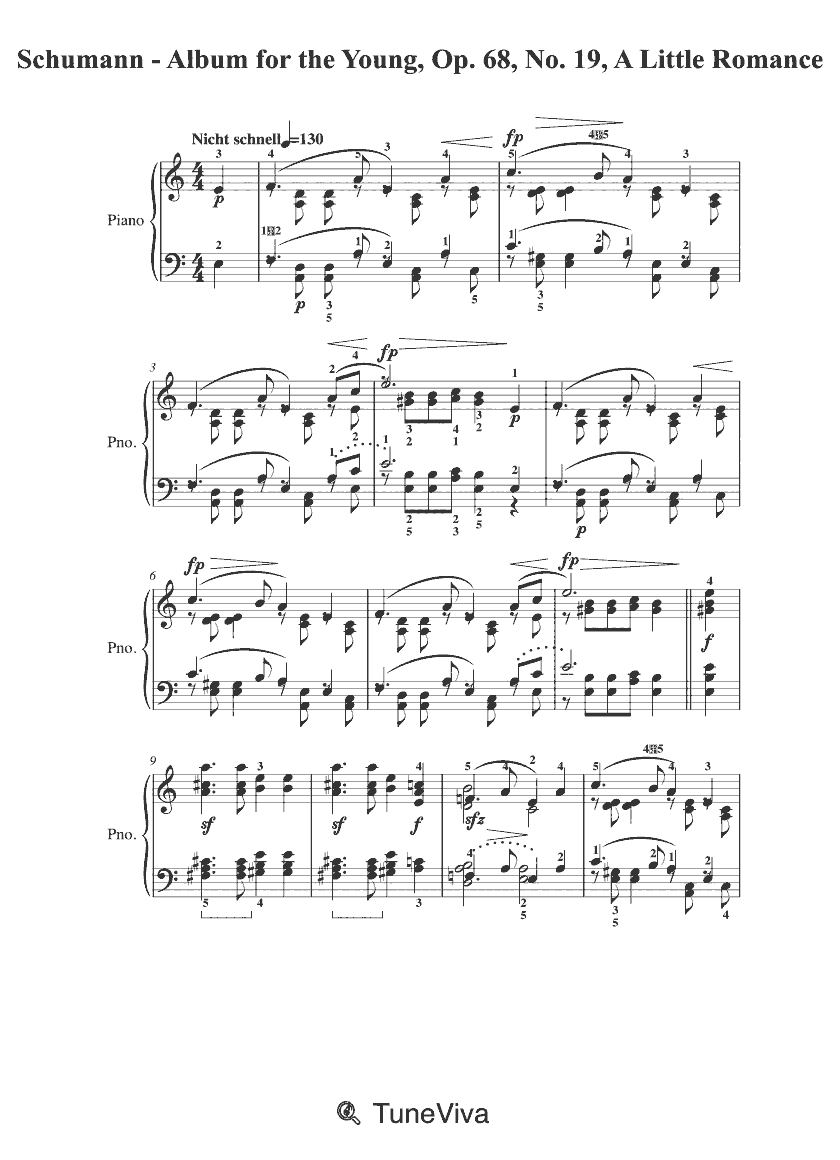
Schumann Op. 68 No. 19
Album for the Young
Piano · 36 sec
Open score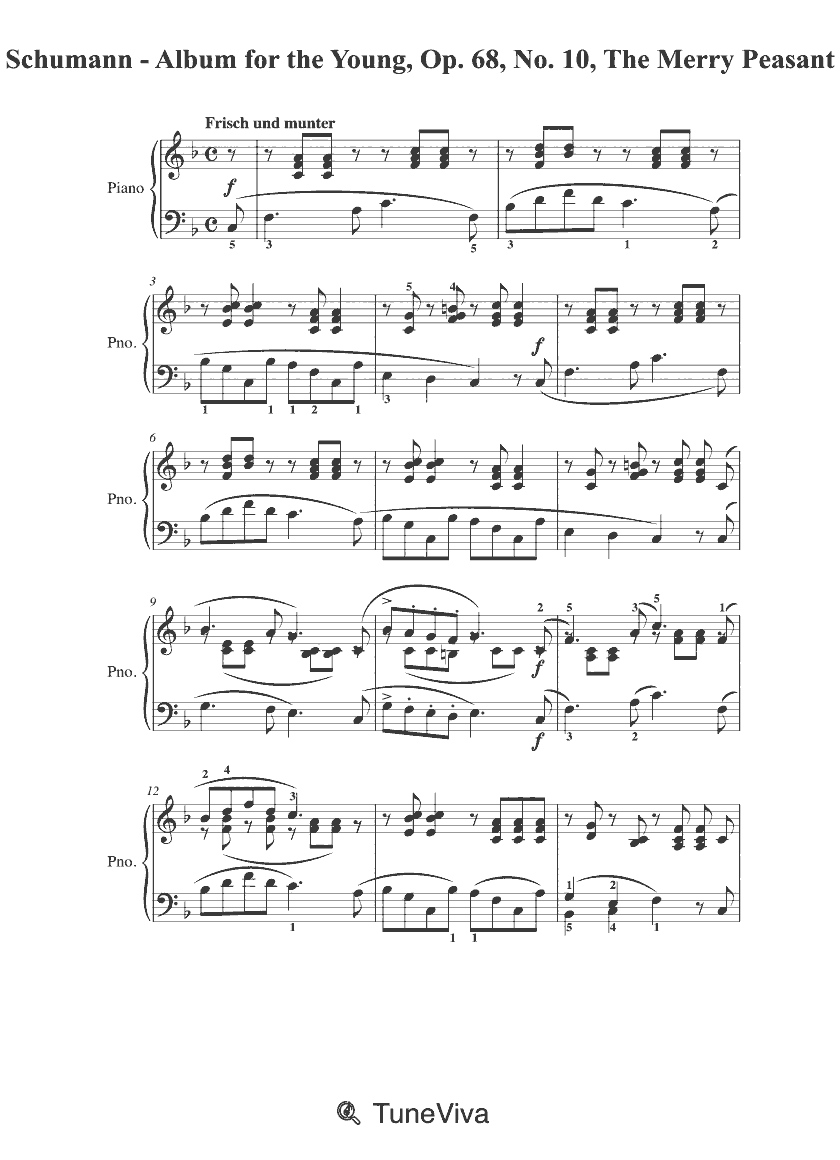
Robert Schumann Op. 68 No. 10
Album for the Young
Piano · 42 sec
Open score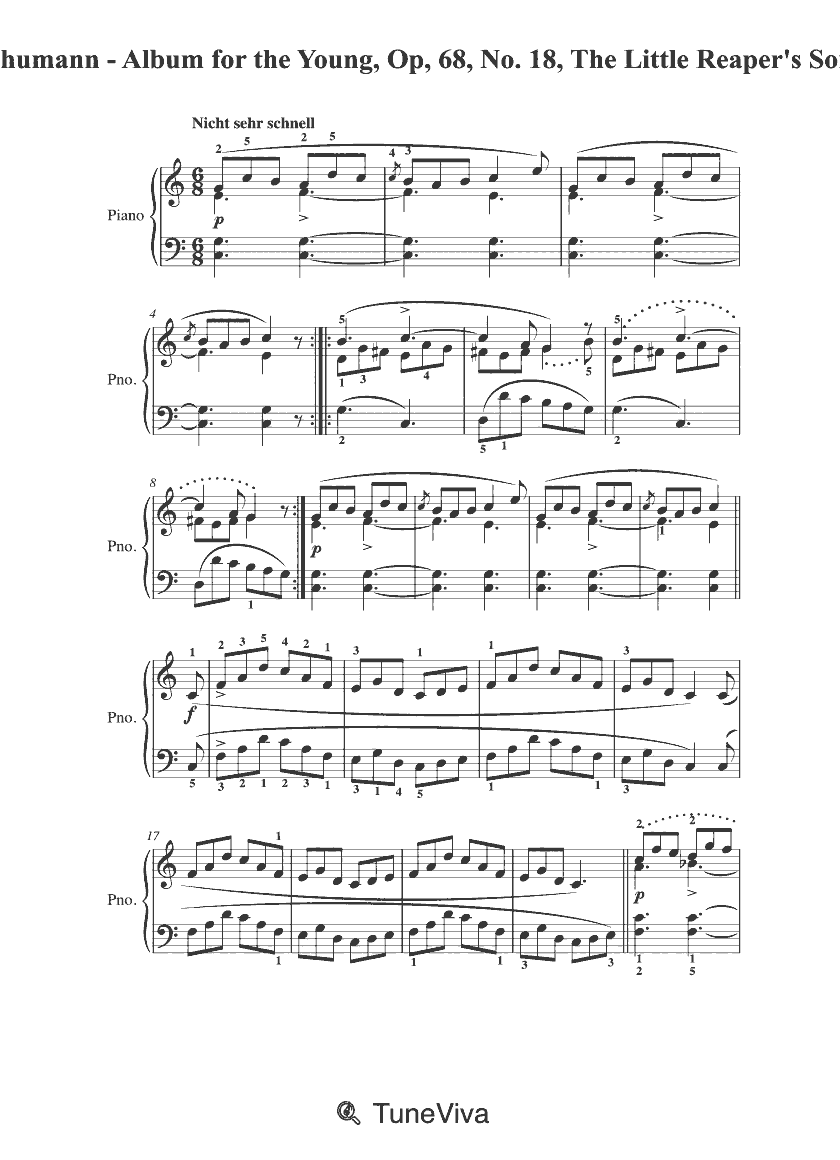
Schumann Op. 68 No. 18
Album for the Young
Piano · 35 sec
Open score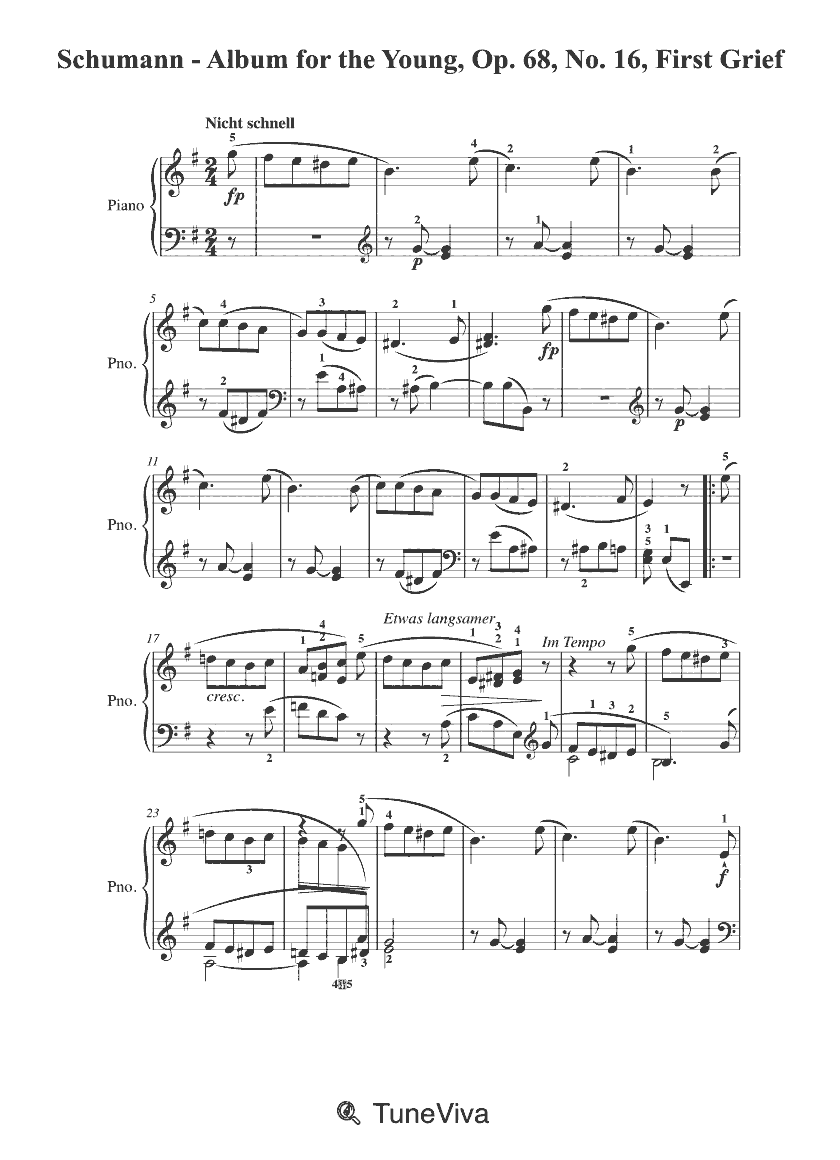
Schumann Op. 68 No. 16
Album for the Young
Piano · 1 min 0 sec
Open score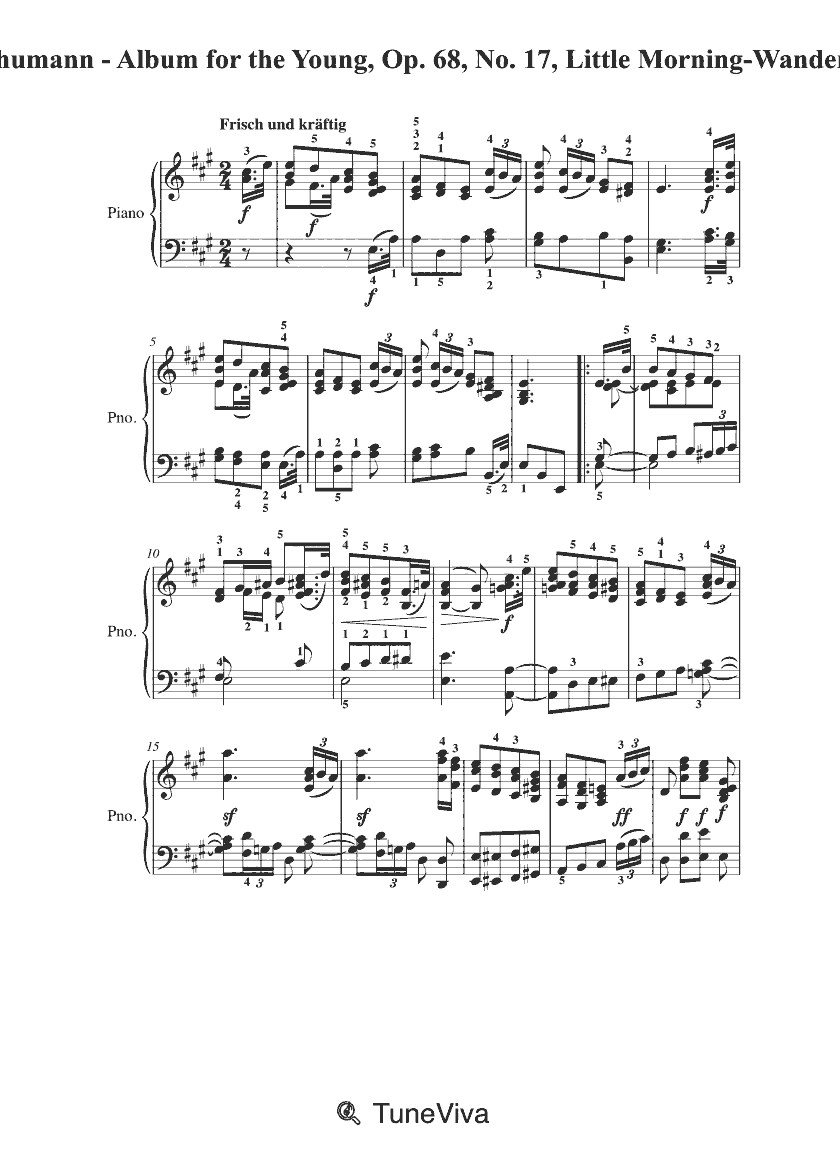
Schumann Op. 68 No. 17
Album for the Young
Piano · 1 min 3 sec
Open score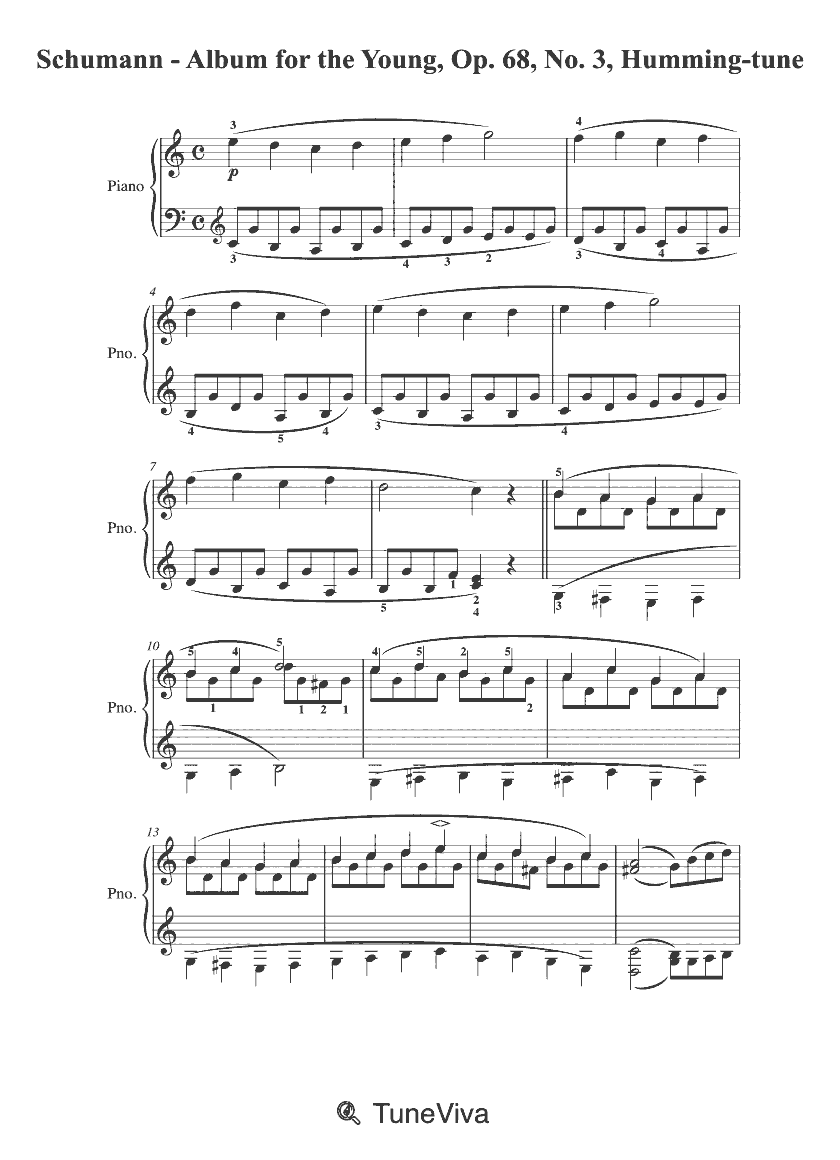
R. Schumann Op 68 No. 3
Album for the Young
Piano · 47 sec
Open scorePage 1 of 2
The page lists three piano scores attributed to Robert Schumann under Op. 68: 'The Wild Horseman, Op. 68, No. 8', 'The Merry Farmer, Op. 68, No. 10' and 'The happy farmer'. 'The Wild Horseman' opens with no sharps or flats in 6/8 at 120 BPM. 'The Merry Farmer' opens with one flat in 4/4 at 120 BPM. 'The happy farmer' is also in 4/4 with one flat; no tempo is given for that score. These details describe the scores, not a formal difficulty grade.
For a 6/8 piece, the listed option is 'The Wild Horseman'. For a 4/4 piece, the listed options are 'The Merry Farmer' and 'The happy farmer'. The two 4/4 titles share the same opening key signature and metre, which may point to alternate titles, but the scores do not confirm identical editions or arrangements. Compare the actual music before deciding whether they duplicate each other.
No sharps or flats can mean C major or A minor; one flat can mean F major or D minor. The score details do not name the key, so check the notes and cadences in the score. This is useful when comparing versions or choosing music in a particular key.
The page also does not confirm that every score listed under the title belongs to the same set, or that any score carries a particular grade. For scholarly or examination use, consult an authoritative edition.
Score parts: Piano. Catalogue duration 24 sec. Opening key signature: No sharps or flats. Opening time signature: 6/8. Opening tempo: 120 BPM.
Score parts: Piano. Catalogue duration 56 sec. Opening key signature: 1 flat. Opening time signature: 4/4.
Score parts: Piano. Catalogue duration 56 sec. Opening key signature: 1 flat. Opening time signature: 4/4. Opening tempo: 120 BPM.
Album für die Jugend, Op. 68 is the title under which this page groups piano scores attributed to Robert Schumann, including 'The Wild Horseman, Op. 68, No. 8' and 'The Merry Farmer, Op. 68, No. 10'. The available score details do not confirm the collection's complete contents, publication history or teaching purpose.
The scores shown under Album für die Jugend, Op. 68 are 'The Wild Horseman, Op. 68, No. 8', 'The Merry Farmer, Op. 68, No. 10' and a score titled 'The happy farmer', all attributed to Robert Schumann and listed for piano.
'The Wild Horseman, Op. 68, No. 8' is listed for piano with an opening key signature of no sharps or flats, 6/8 time and an opening tempo of 120 BPM. A key signature with no sharps or flats can indicate C major or A minor, so the notes in the score are needed to settle the key.
'The Merry Farmer, Op. 68, No. 10' is listed for piano with one flat in its opening key signature, 4/4 time and an opening tempo of 120 BPM. One flat can indicate F major or D minor; the notated music confirms which key is used.
Both 'The Merry Farmer, Op. 68, No. 10' and 'The happy farmer' are attributed to Robert Schumann and share a one-flat opening key signature and 4/4 time in the scores shown. Those details suggest a possible alternate title, but the scores do not confirm that the two are identical editions or arrangements, so compare the music before treating them as duplicates.
The scores shown under Album für die Jugend, Op. 68 are for piano. They are presented as piano music, not as ensemble or orchestral full scores.
The score details give key signature, metre and tempo but no formal difficulty grade. 'The Wild Horseman' is in 6/8 at 120 BPM; 'The Merry Farmer' is in 4/4 at 120 BPM. Tempo and metre alone do not establish a grade, so assess the notes, hand positions and required technique in the score itself.