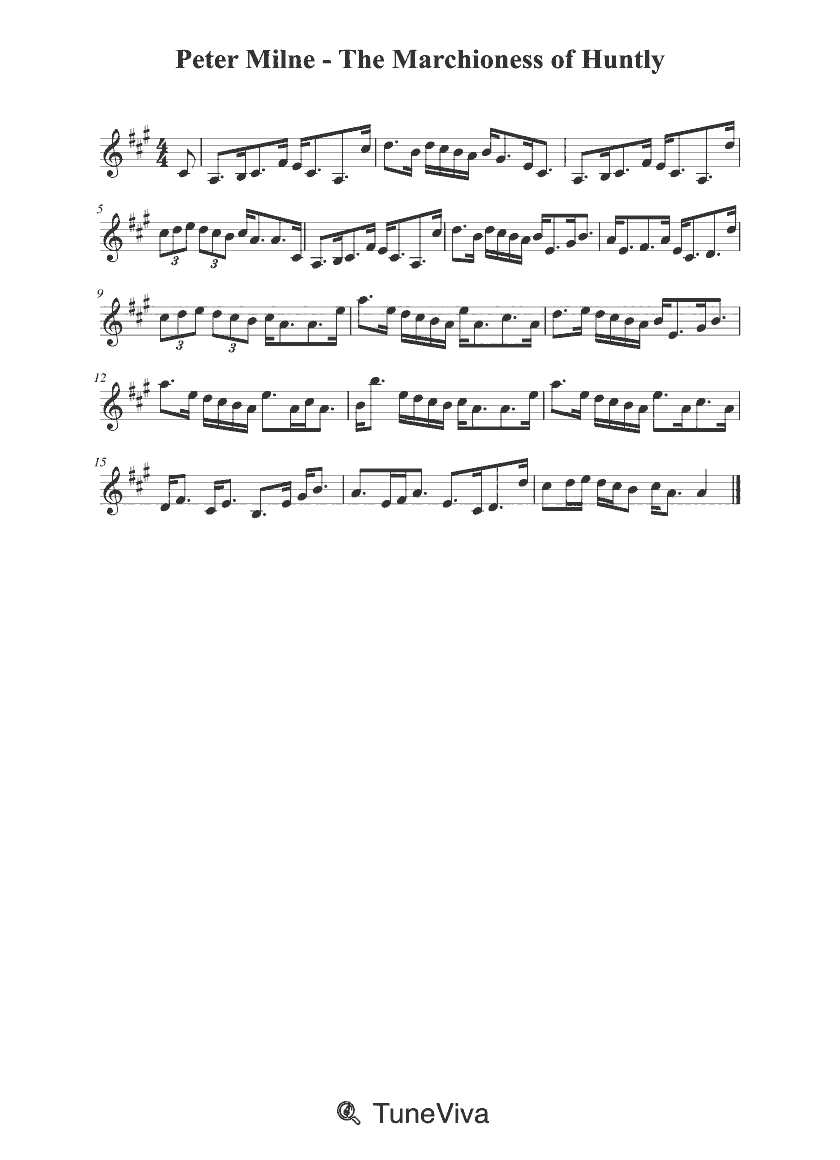
Peter Milne - The Marchioness of Huntly
Peter Milne
Aboyne Castle
32 sec · Score #124161
Open scoreThe Marchioness of Huntly sheet music on this page is listed in versions attributed to William Marshall and Peter Milne. One Marshall title calls the music a strathspey; another calls it a “Favorite Jig”; the Milne listing uses the tune name alone. The records provide opening key and time signatures for the individual scores, but they do not establish the tune’s origin, original instrumentation, or the relationship between the versions.
Scores 1–20 of 34
Peter Milne
Aboyne Castle
32 sec · Score #124161
Open score
William Marshall
1 min 4 sec · Score #122805
Open score
William Marshall
24 sec · Score #37925
Open score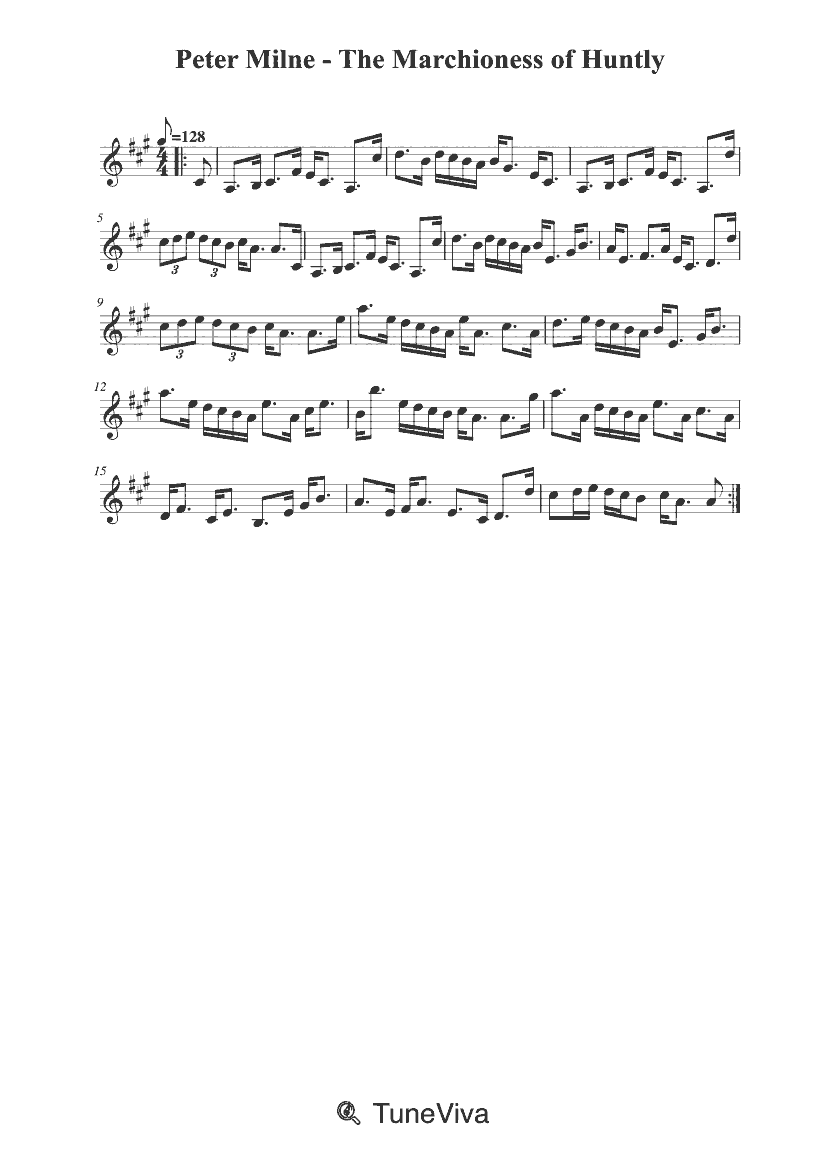
Peter Milne
Aboyne Castle
2 min 0 sec · Score #181258
Open score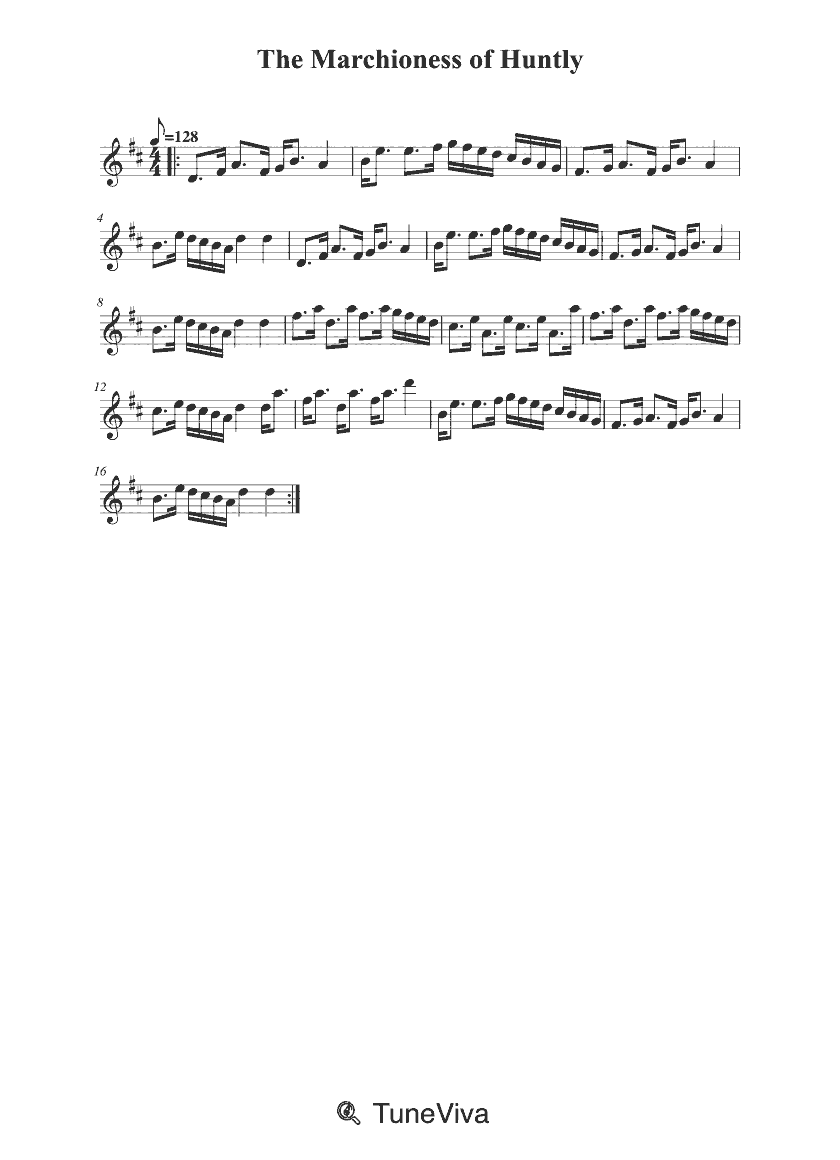
Misc tunes
1st setting
2 min 0 sec · Score #228393
Open score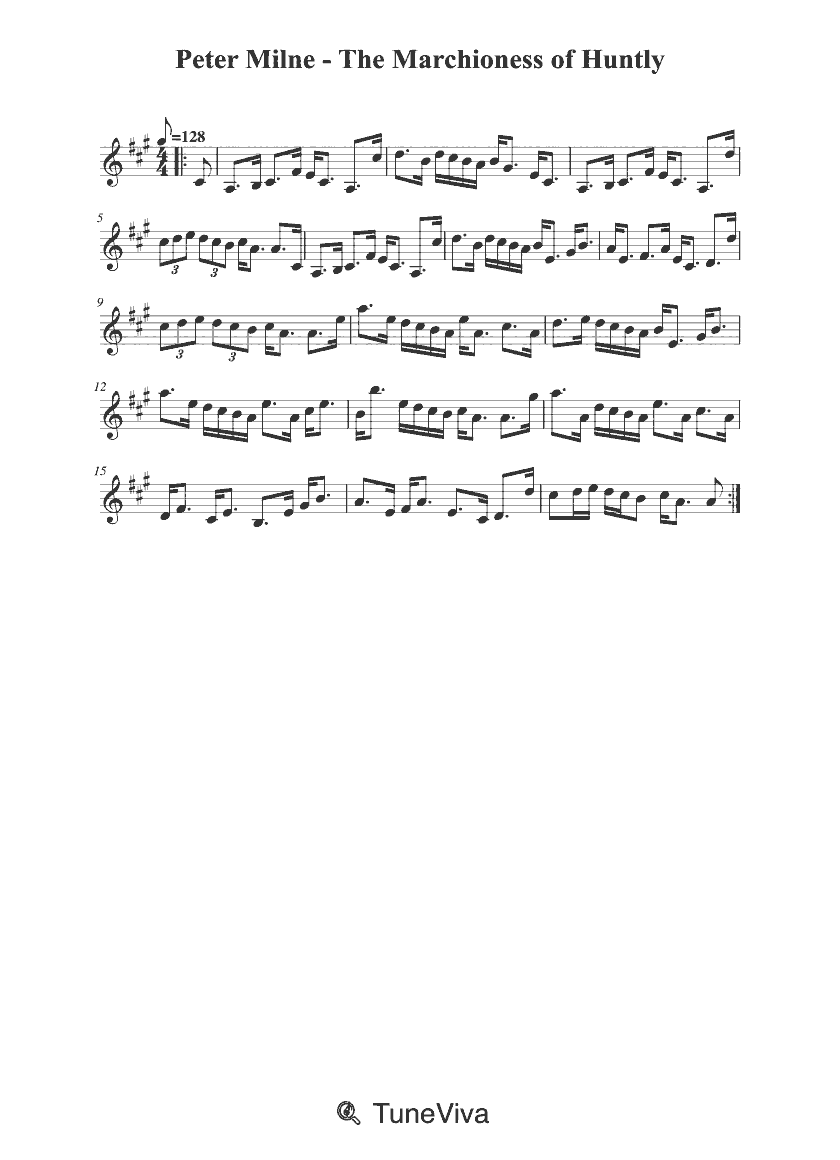
Peter Milne
Aboyne Castle
2 min 0 sec · Score #4030
Open score
William Marshall
36 sec · Score #46775
Open score
William Marshall
32 sec · Score #77080
Open score
William Marshall
24 sec · Score #155864
Open score
William Marshall
1 min 52 sec
Open score
William Marshall
32 sec · Score #92038
Open score
William Marshall
1 min 4 sec · Score #121015
Open score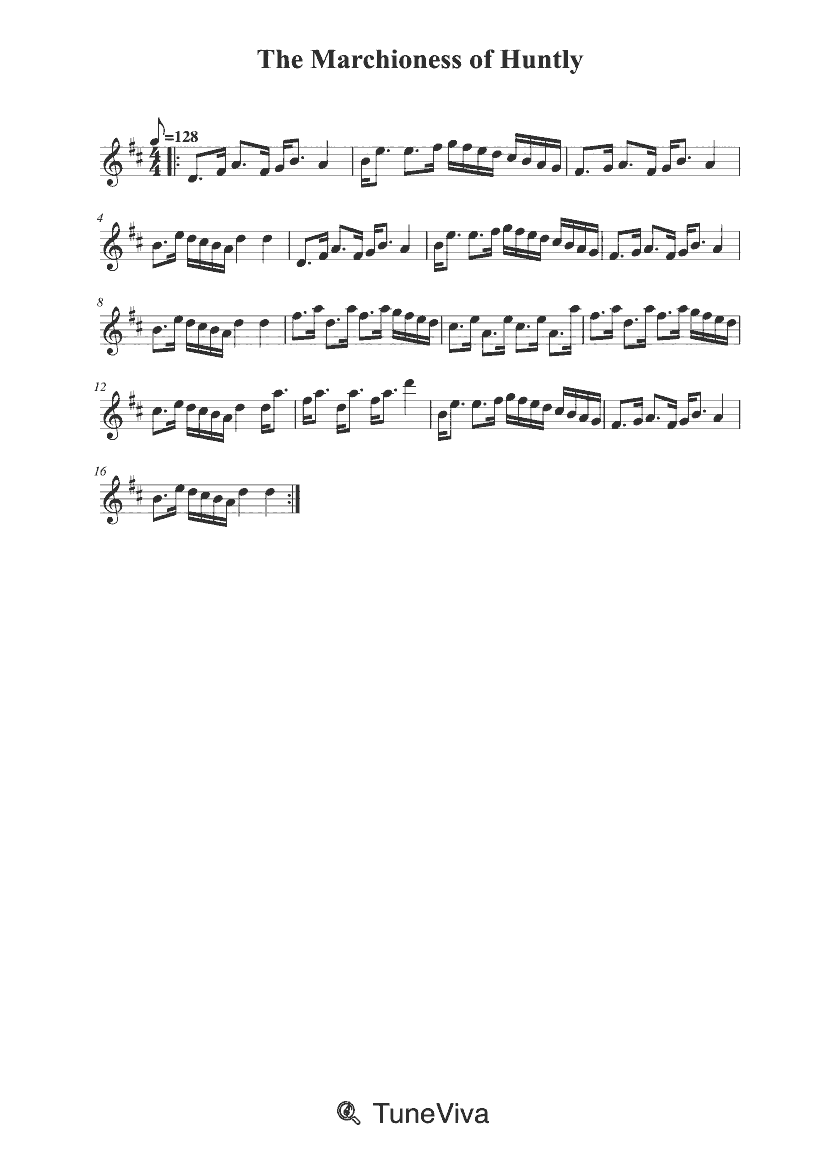
Misc tunes
1st setting
2 min 0 sec · Score #140740
Open score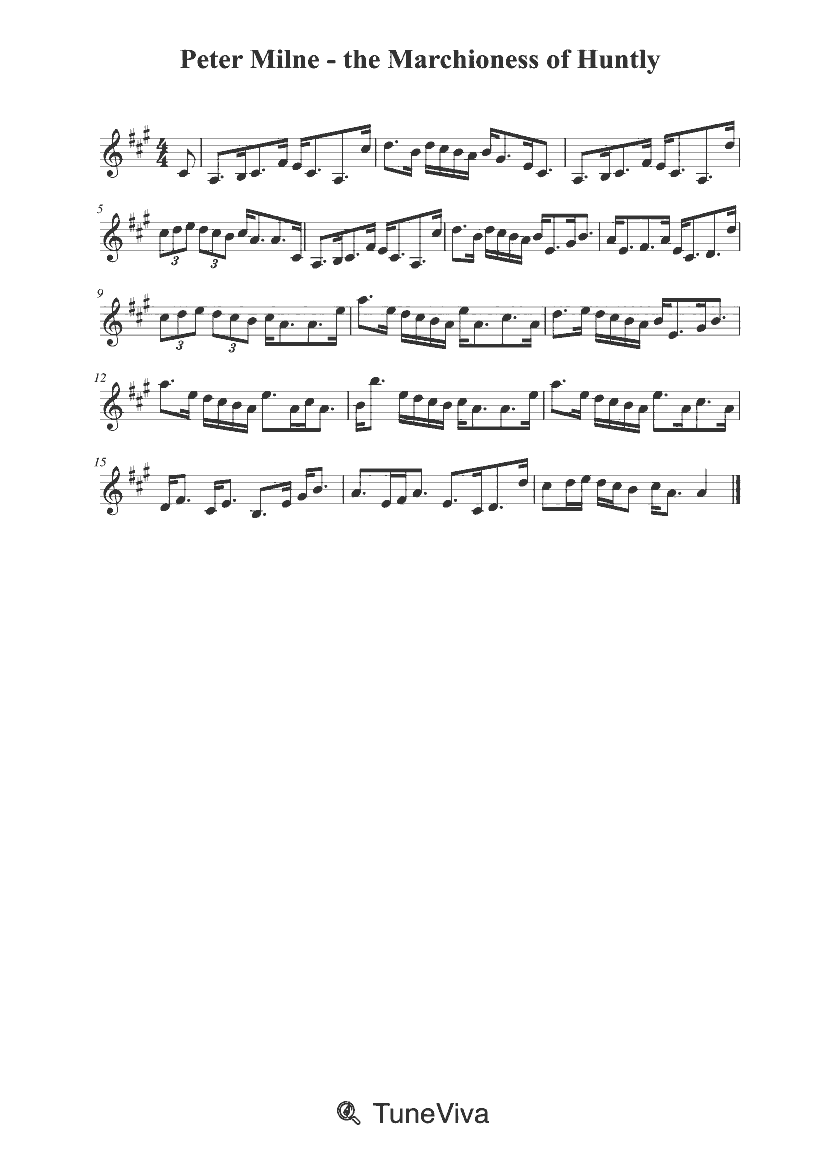
Peter Milne
Aboyne Castle
32 sec · Score #147491
Open score
William Marshall
32 sec
Open score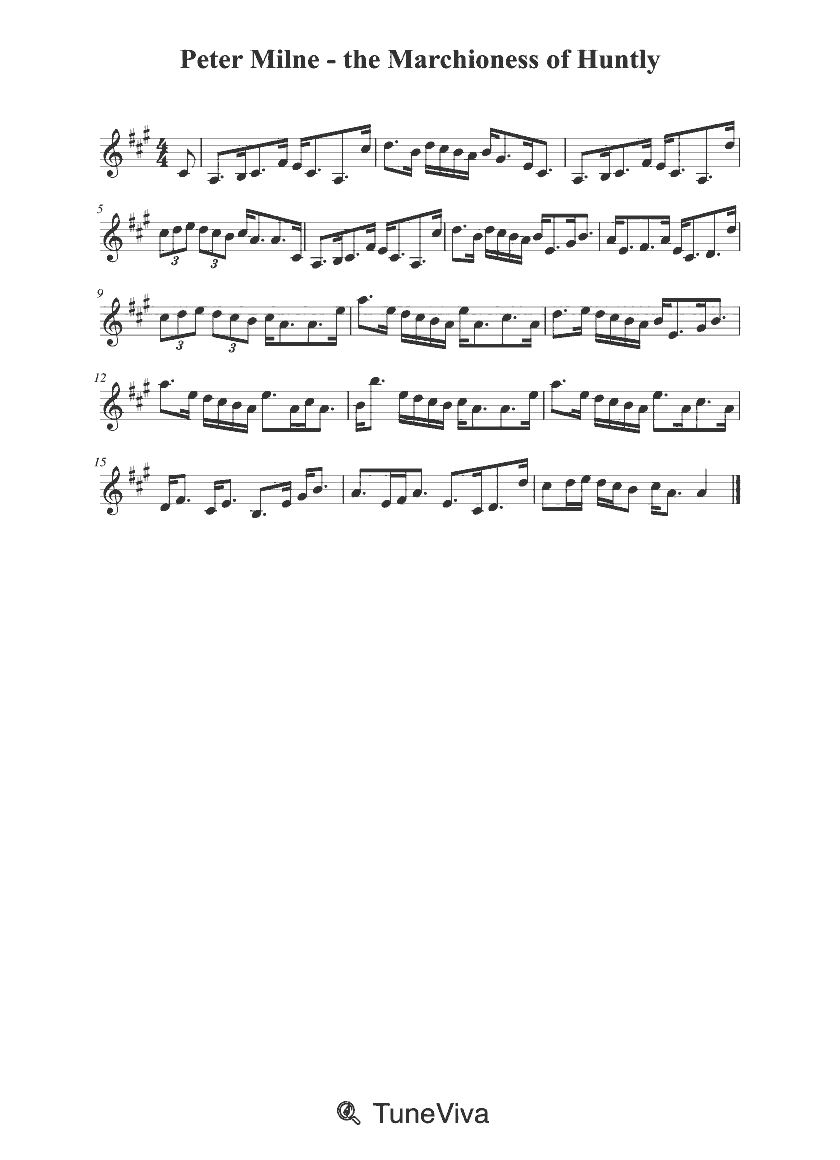
Peter Milne
Aboyne Castle
32 sec · Score #197502
Open score
William Marshall
36 sec · Score #201735
Open score
William Marshall
2 min 0 sec
Open score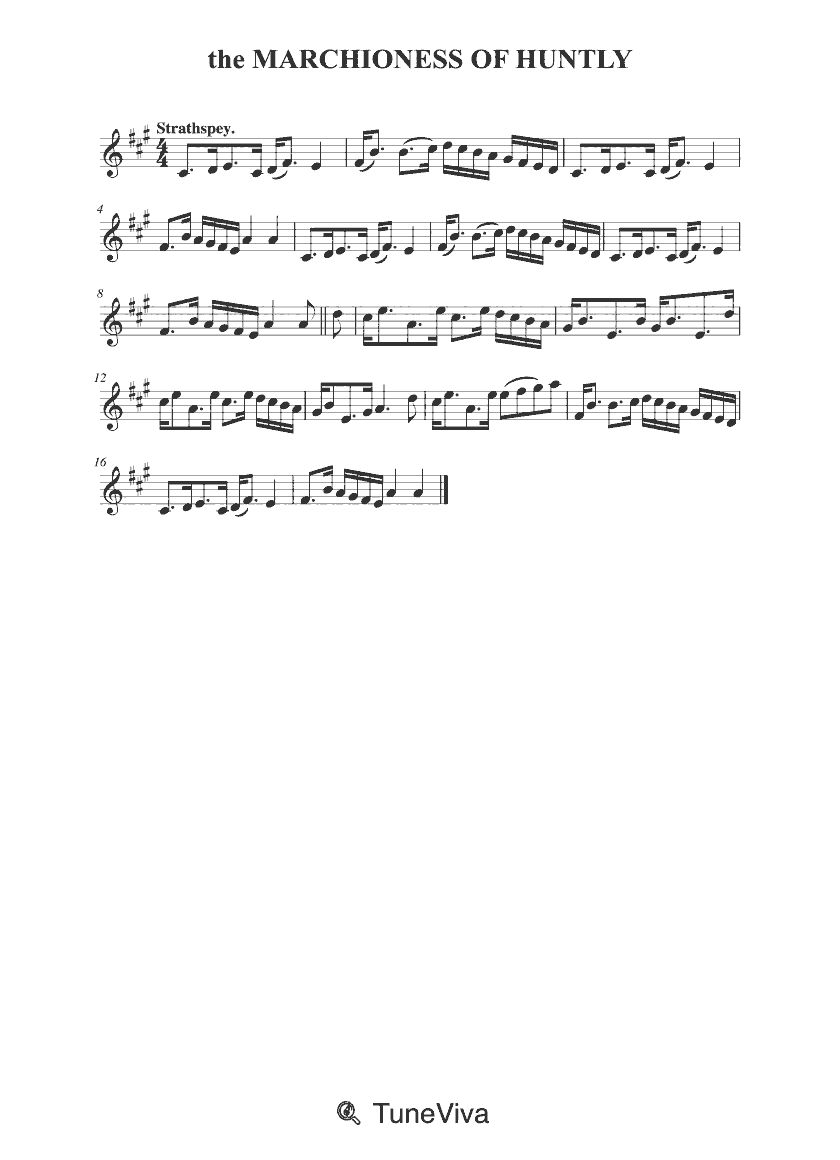
Misc tunes
32 sec · Score #65739
Open score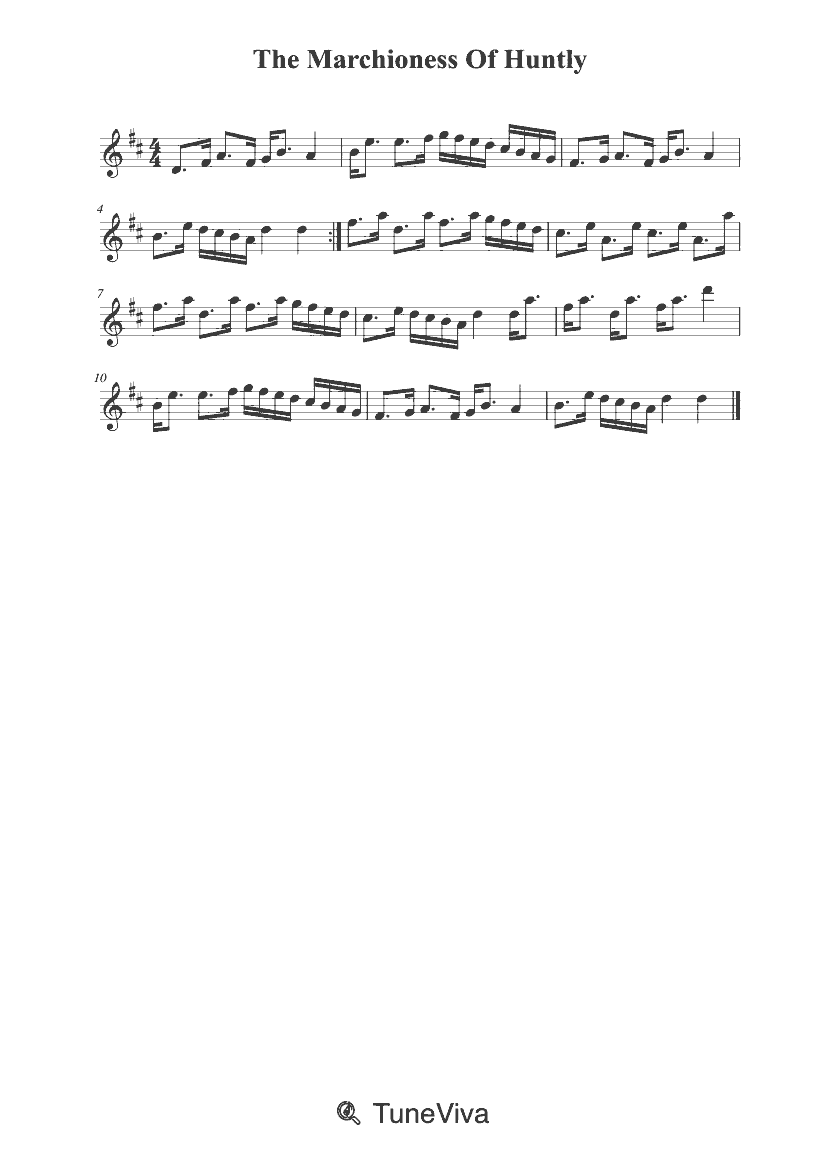
Misc tunes
32 sec · Score #129854
Open scorePage 1 of 2
The selected scores present The Marchioness of Huntly under three different titles. Two are associated with William Marshall: “The Marchioness of Huntley’s [1] Strathspey” and “The Marchioness of Huntly’s Favorite Jig.” A third is associated with Peter Milne and uses the tune name without a dance-form label. The spelling Huntley also appears, so check the title and notation rather than assuming every listing is identical.
The Marshall jig is listed with an opening key signature of three flats (C minor) and a 6/8 time signature. The Marshall strathspey is listed with two flats (B♭ major) and 2/2. The Milne version is listed with three sharps (A major) and 4/4. These details describe individual scores and may not reflect the whole piece; verify them against the notation before choosing or performing a version.
The clearest distinction in the available information is dance form and metre: a jig listed in 6/8, a strathspey listed in 2/2, and a Milne version listed in 4/4. Those details can guide an initial choice, but the listings do not confirm instrumentation, range, difficulty, or whether one version is an arrangement of another. Examine the actual score for those practical points.
The names William Marshall and Peter Milne appear in the score titles, but the available records do not show whether either person composed the tune, arranged it, or is simply named on that version. No original or authoritative edition is identified. Historical claims, dates, and biographical details are therefore omitted rather than inferred from the titles alone.
Catalogue duration 32 sec. Opening key signature: 3 sharps (A major). Opening time signature: 4/4.
Catalogue duration 1 min 4 sec. Opening key signature: 2 flats (B♭ major). Opening time signature: 2/2.
Catalogue duration 24 sec. Opening key signature: 3 flats (C minor). Opening time signature: 6/8.
The selected scores attribute The Marchioness of Huntly to William Marshall in two titles and to Peter Milne in one. Marshall’s titles name a strathspey and a “Favorite Jig”; Milne’s title gives the tune name without a dance form. The records do not establish whether these individuals composed the tune, arranged it, or are simply named on the version.
Among the selected scores, three listings appear: “William Marshall - The Marchioness of Huntley’s [1] Strathspey,” “William Marshall - the Marchioness of Huntly’s Favorite Jig,” and “Peter Milne - The Marchioness of Huntly.” They differ in title wording and in the opening key and time signatures recorded for each score.
The three selected scores show different opening details: the Marshall jig is listed in three flats (C minor) and 6/8; the Marshall strathspey in two flats (B♭ major) and 2/2; and the Milne version in three sharps (A major) and 4/4. These are score-level details and should be checked against the notation.
The title “The Marchioness of Huntley’s [1] Strathspey” uses “Strathspey” as part of the score’s name, identifying the dance-tune category named there. The available record does not describe the specific tempo, steps, or stylistic features of this version, so those details need to be checked in the score itself.
The listings treat them as separate titles under the same tune name, one called a jig and one a strathspey, with different opening keys and metres. The records do not show whether they are independent compositions, variants of one tune, or different arrangements; compare the scores before treating them as equivalent.
Choice depends on the dance form or metre you need: the Marshall jig is listed in 6/8, the Marshall strathspey in 2/2, and the Milne version in 4/4. Check the actual score for instrumentation, range, and technical demands, because the titles and attached details do not confirm those points.