classical
1 tracks
The catalogue holds 25 scores under William Jundī, about 19 minutes of music and 6,002 notated notes. Only three of the files carry lyrics, even though the repertoire is hymnody, and every entry is classed as classical. The titles are Arabic first lines, and several files append the credit twice, once in Latin letters and once as وليم جندي.
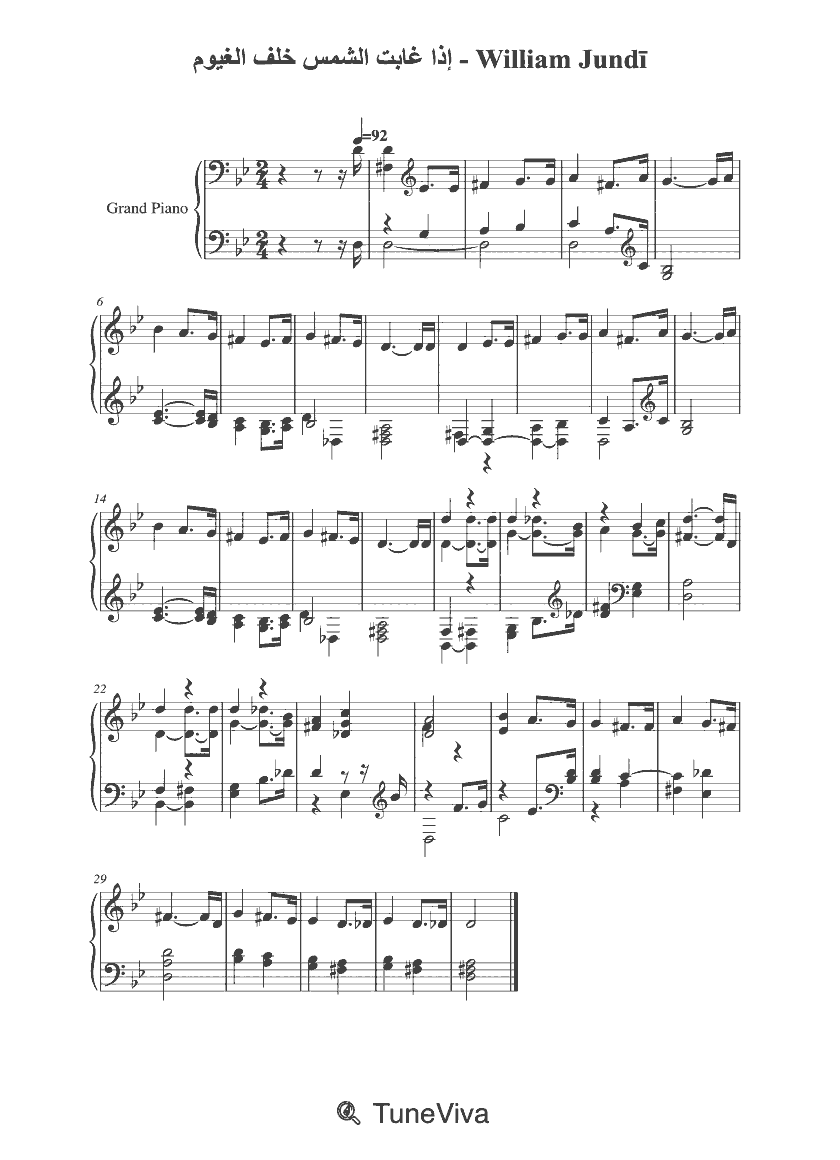
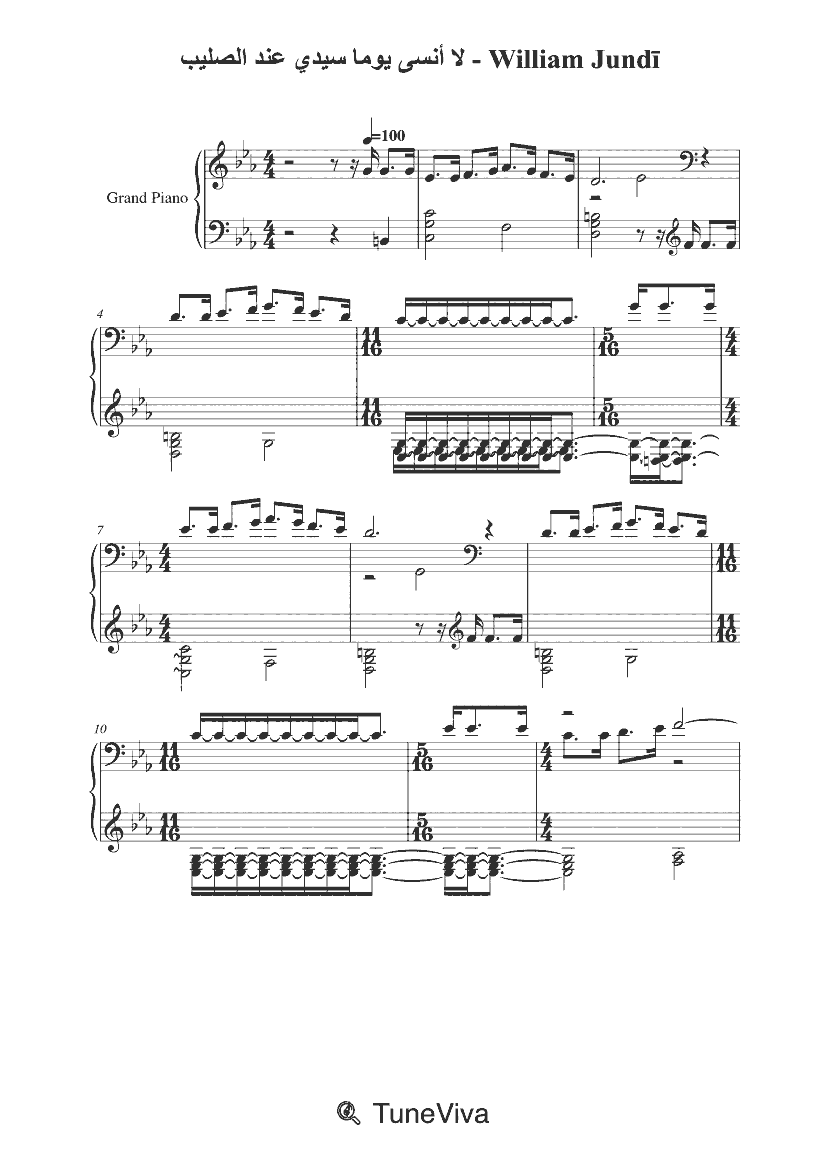
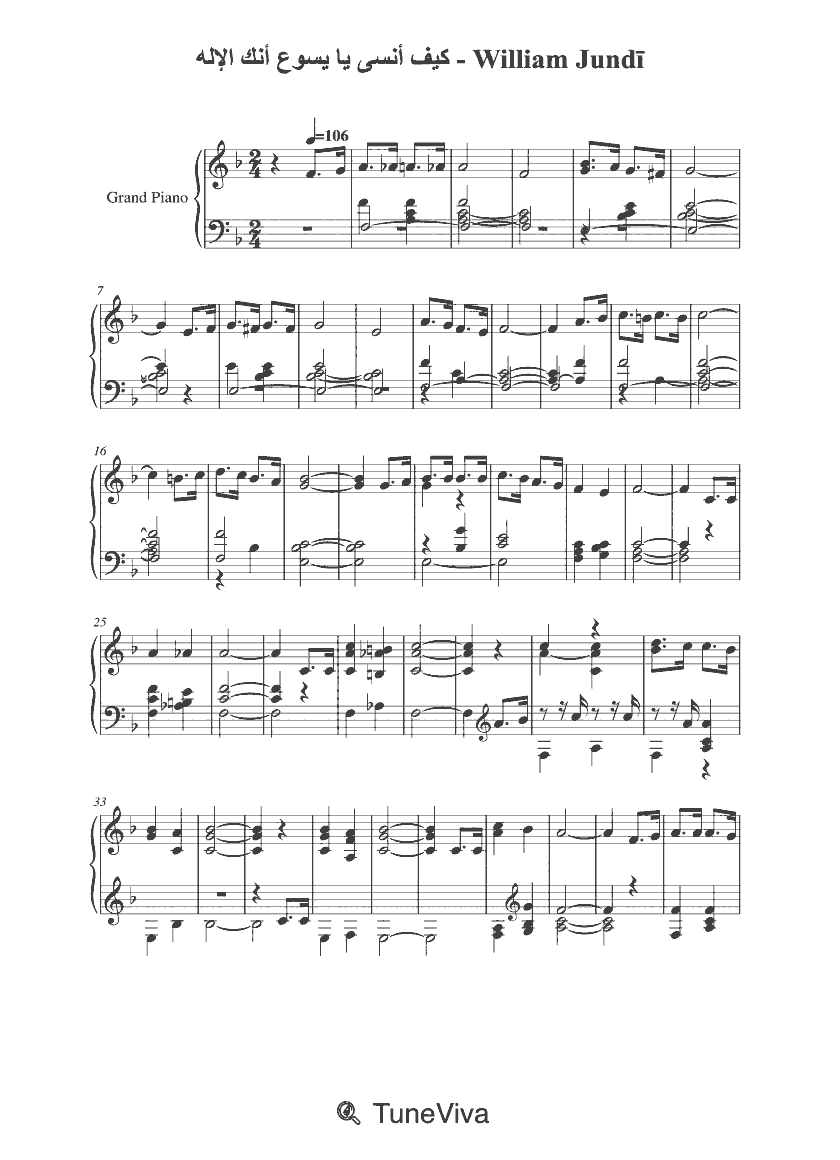
The most-viewed is “يا رب ما أحلى الحياة قربك”, followed by “إذا غابت الشمس خلف الغيوم” and “لا أنسى يوما سيدي عند الصليب”. Every score sits at complexity index 1 or 2 — seventeen at 1, eight at 2 — so the whole group is short and lightly figured.
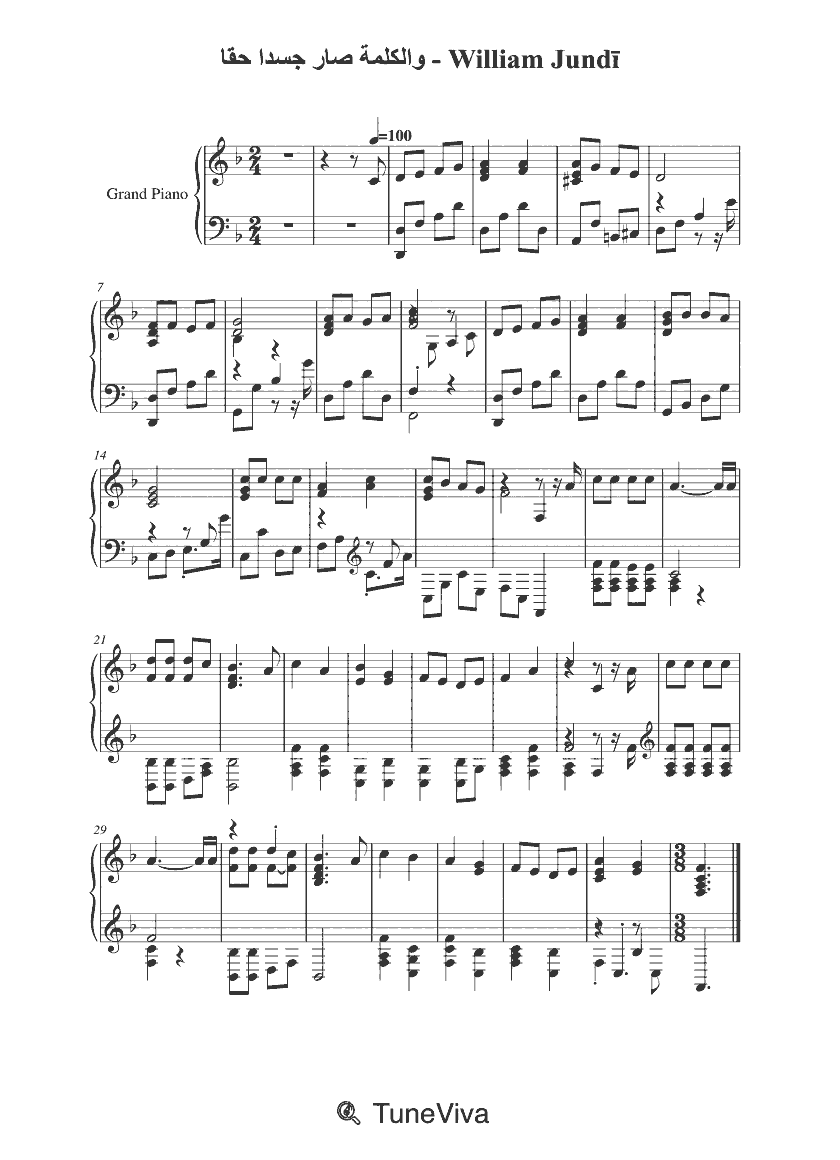
William Jundī is known through Arabic hymnody rather than through a biography. Hymn indexes list 22 hymn texts under his name, all in Arabic, and credit him with melodies as well; the earliest printed source they cite is the hymnal ترانيم الإيمان (Taraneem al-Iman, “Hymns of Faith”), published in 1990, which carries his texts at numbers 117, 246, 359, 376 and 409 and names him as composer of the tunes for 246, والكلمة صار جسدا حقا, and 338, قد مضى سيدي للسما.
A 1990 book is the earliest citation, not a date of writing; hymn indexes date an item to the book in which it is found, and the index records his text تبت إليك راجعا in three hymnals. Arabic hymn sites carry his words with the credit “ألحان: وليم جندي” (melodies: William Jundi), and one lists twelve hymns under his name, while an Egyptian church lyrics archive hosts at least one of them.
Nothing in these sources gives a birth or death date, a birthplace or a church posting. A photograph in the St-Takla Church archive in Alexandria labels a “Mr. William Jundi” among lay members visiting the Wadi al-Natrun monasteries; the identification is plausible but not stated. What the catalogue shows is a working hymn writer: short stanzas, a refrain that carries the title, and tunes simple enough for a congregation to learn by ear.
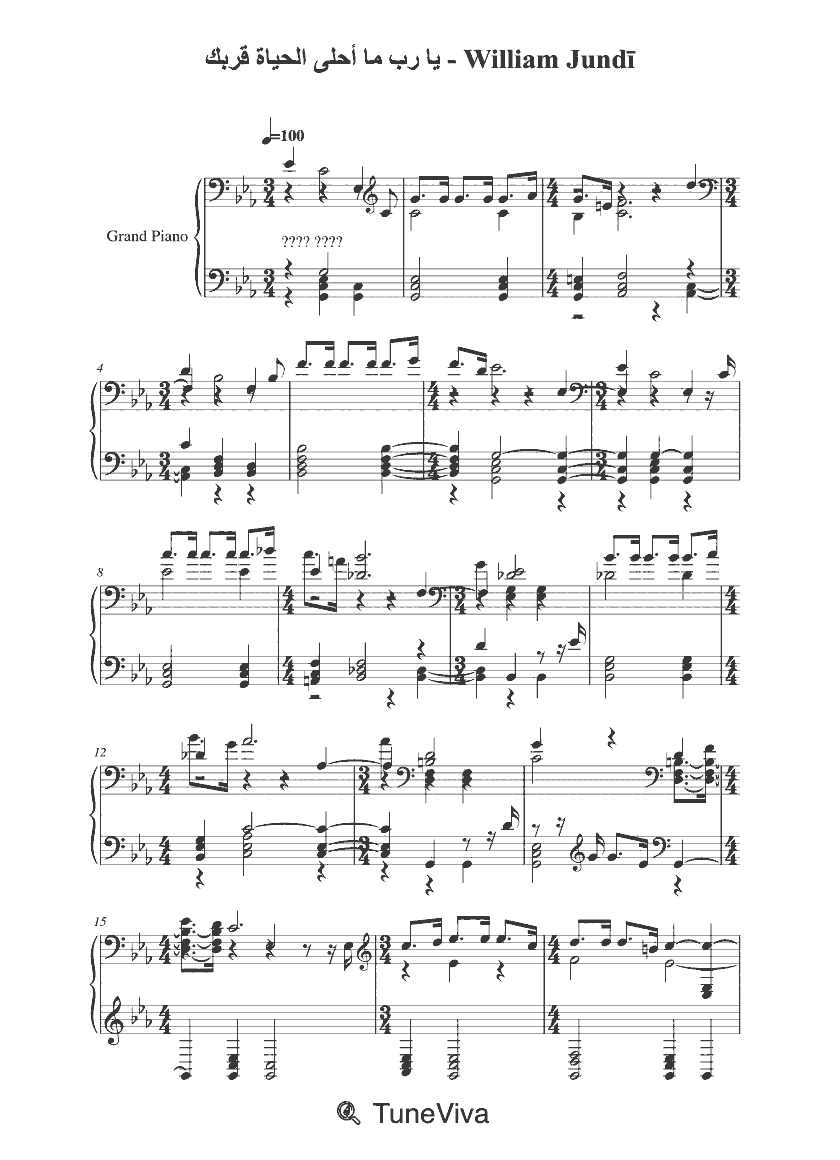
These are short strophic hymns with a refrain, and the refrain usually supplies the title by which the hymn is indexed — “كم أنت حلو لحياتي يا يسوع” for the file that begins “يا رب ما أحلى الحياة قربك”. Sing them in unison first; the harmony in the files is simple enough to add later. Arabic consonants carry the rhythm, so keep the text forward and the tone light, and do not let the refrain drag after the verse. Where a file has no lyrics, the melody alone shows the phrase shape.
The most-viewed Arabic file. Hymn indexes title it from its refrain, “كم أنت حلو لحياتي يا يسوع”, and place it at number 317 in ترانيم الإيمان.
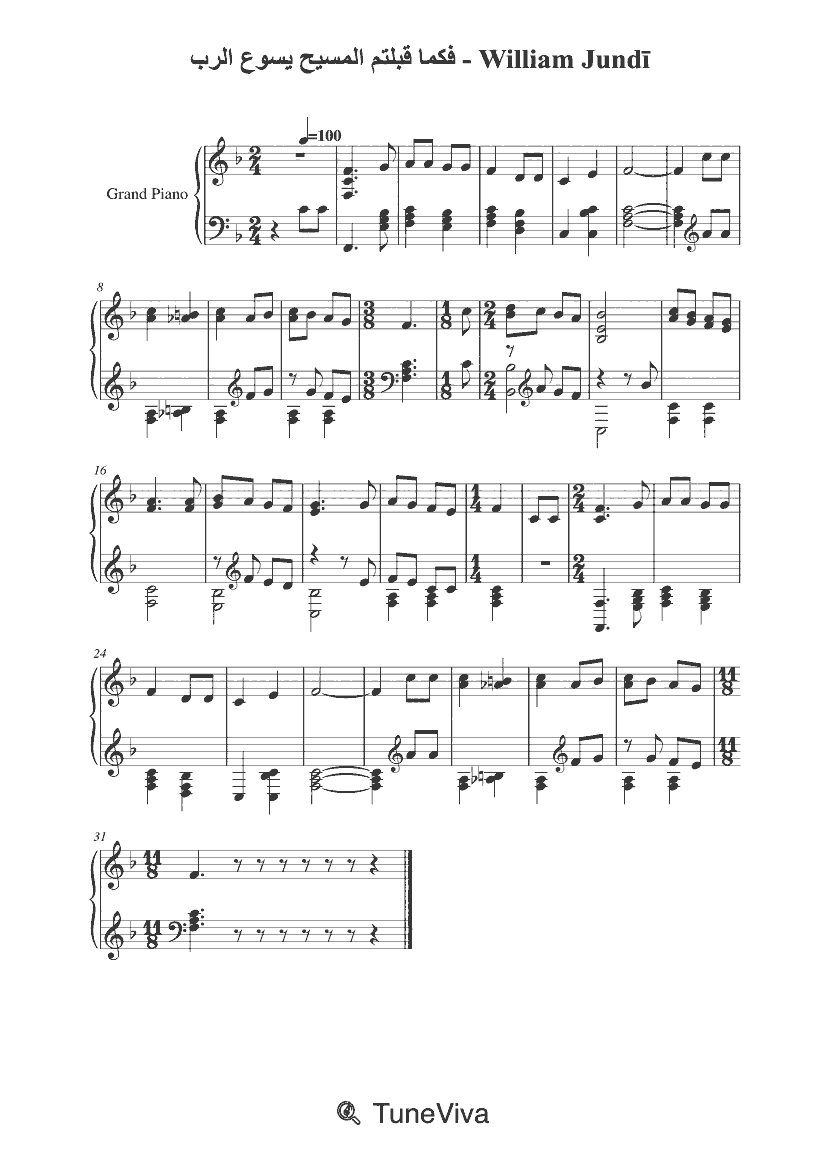
A hymn that opens with the sun disappearing behind cloud and turns to the nearness of Christ; it stands second in the twelve-hymn list on elkanisa.com.
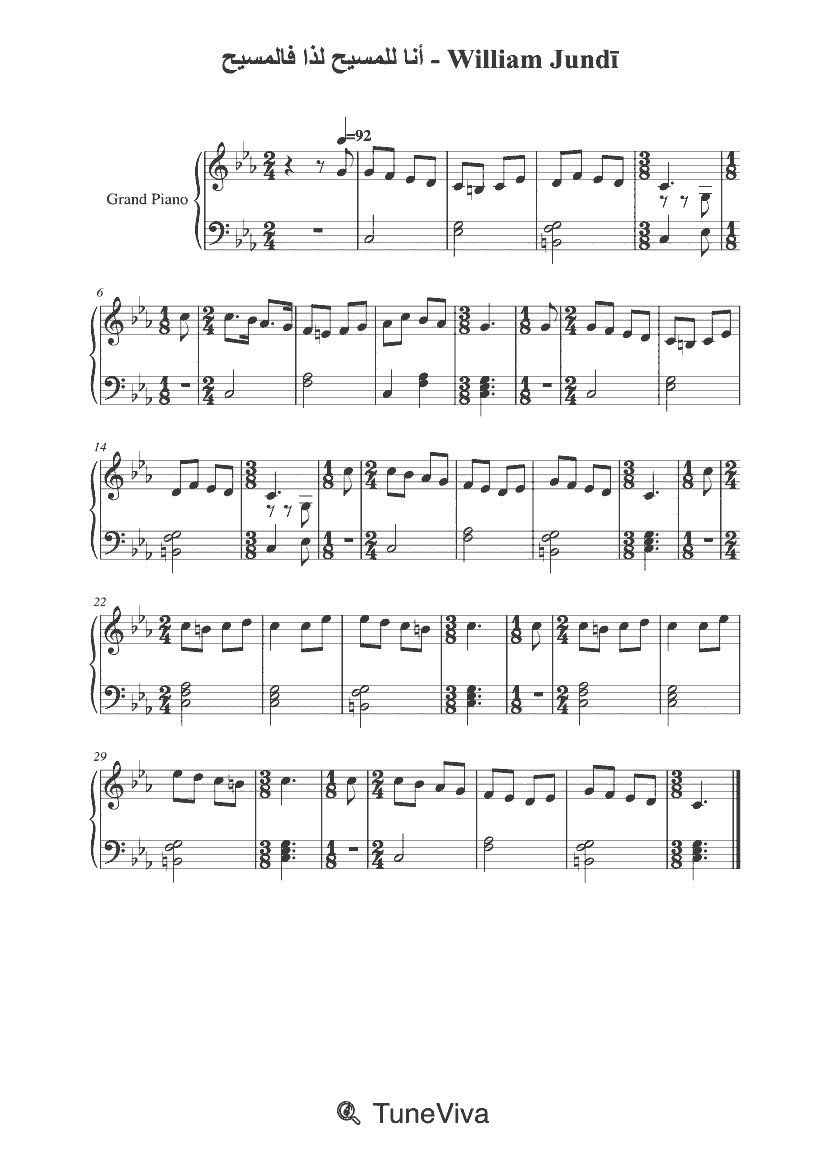
A Passion hymn on remembering the cross; one of the texts carried under his name in Arabic hymn collections.
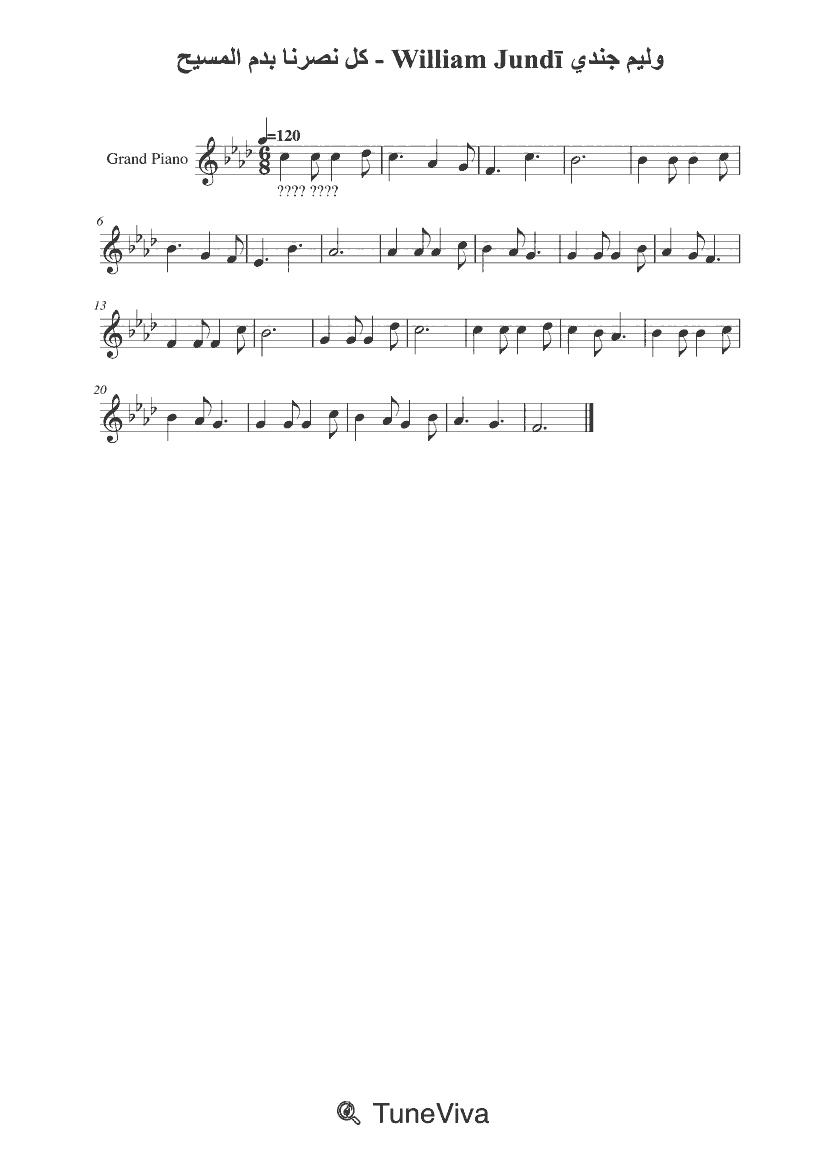
“All our victory is through the blood of Christ”, a short hymn of atonement; the file appends the Arabic form of his name, وليم جندي.
A three-stanza hymn with the refrain “كم عجيب حبك يا سيدي”; it opens the six-hymn selection on taranimarabia.org.
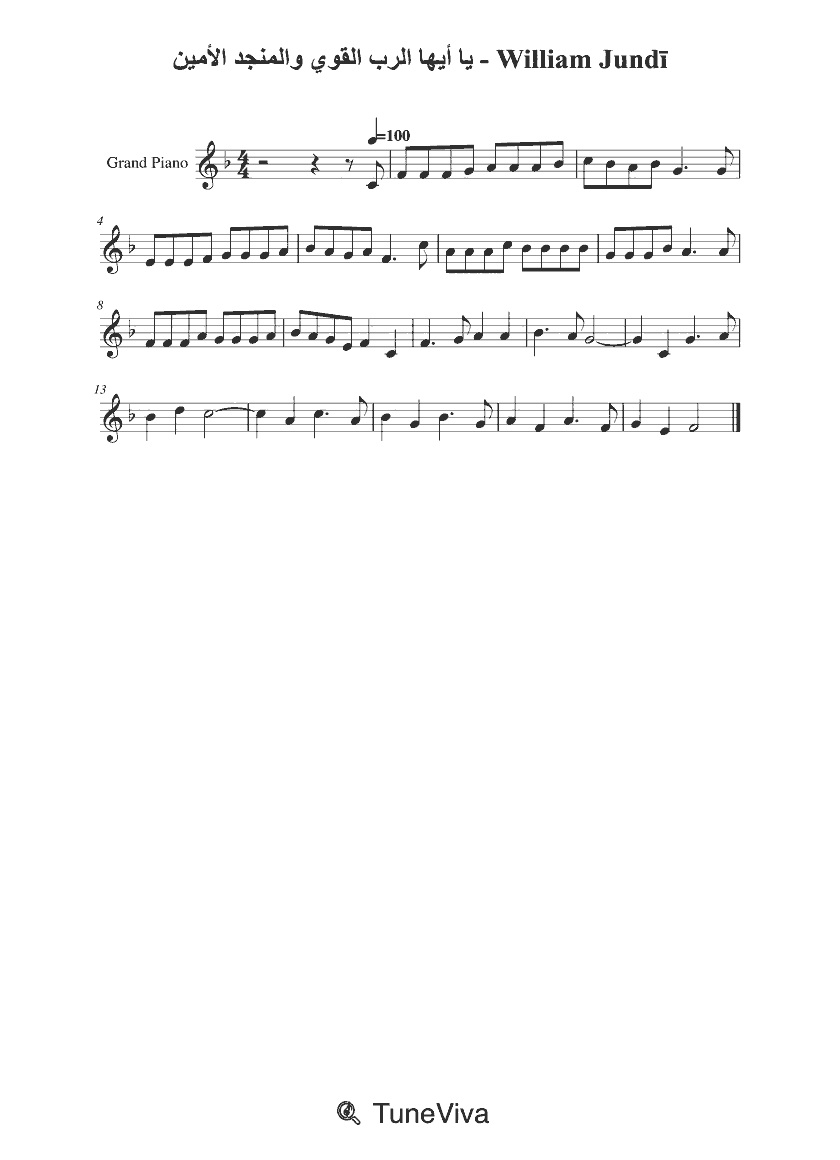
A hymn of gratitude addressed directly to Christ, in the syllabic style shared by the rest of the group.
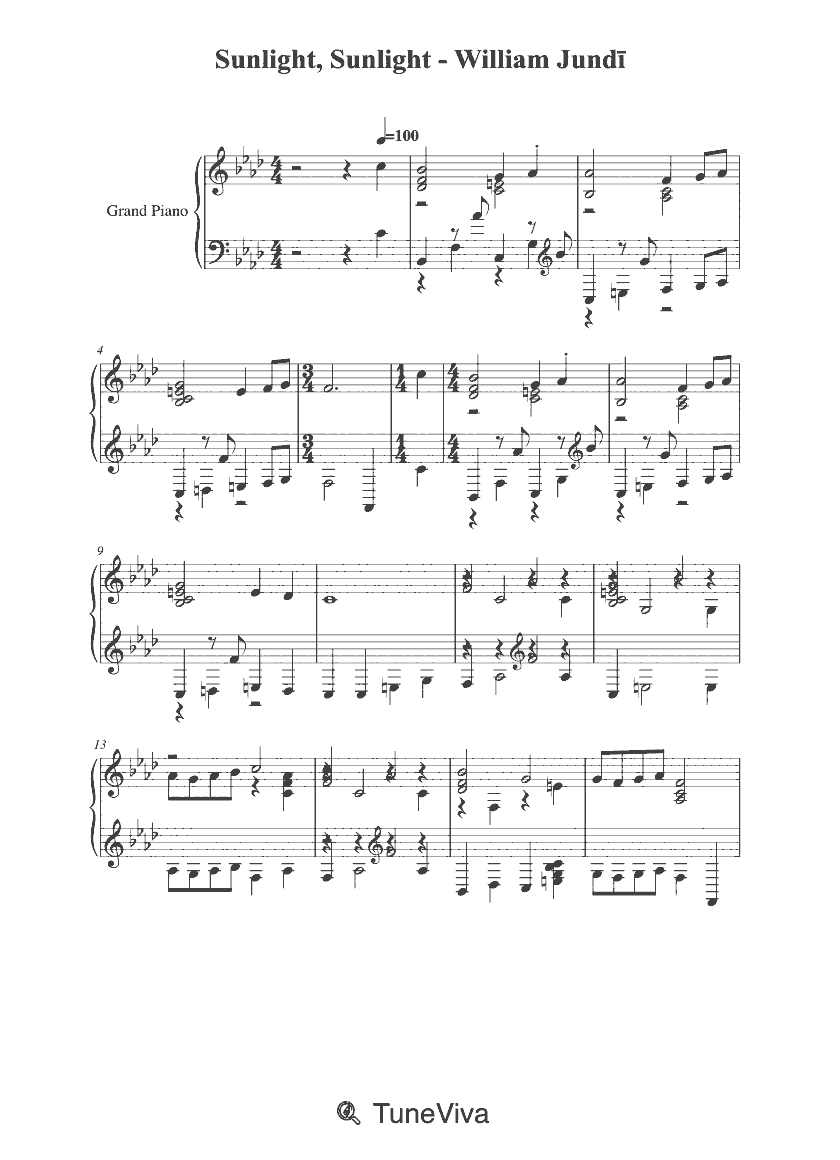
The only English title in the group. If it is the 1905 gospel song “Sunlight”, the words are J. W. Van DeVenter's and the tune W. S. Weeden's; the file records only Jundi's name.
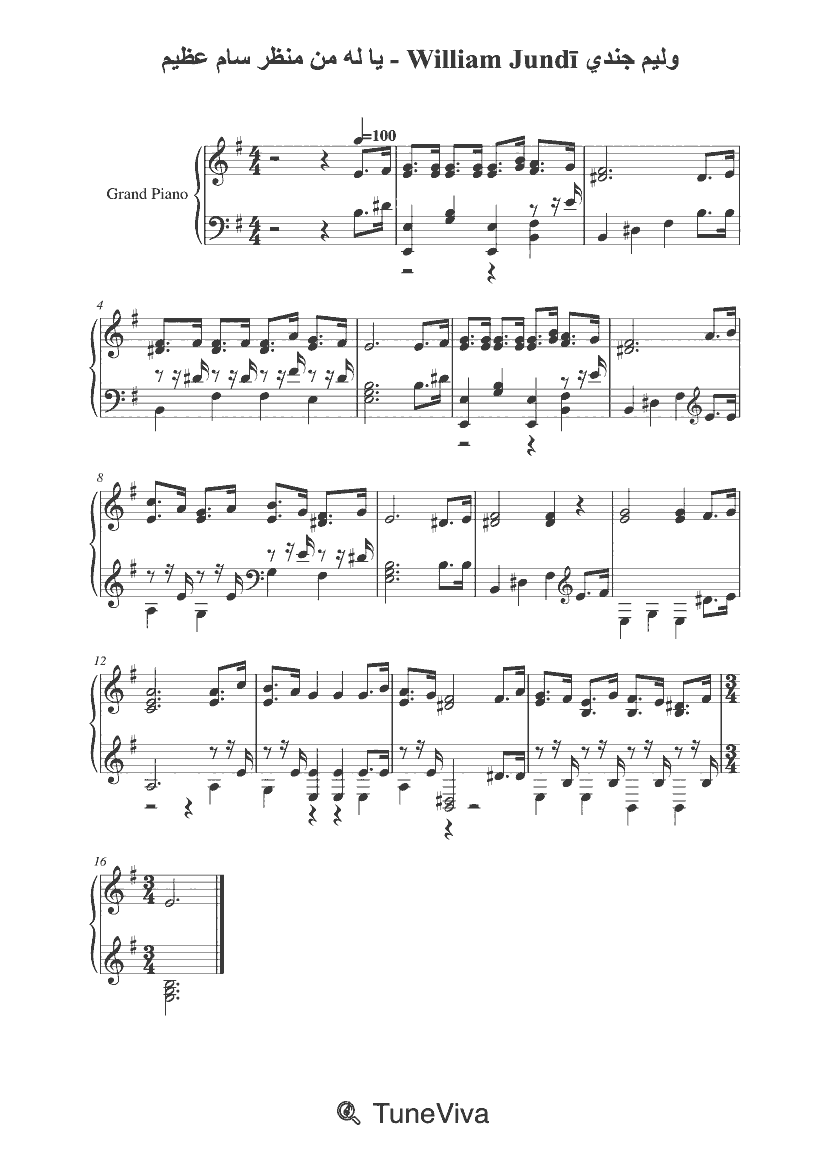
A hymn on the sight of the crucifixion, “what a high and wondrous scene”, in the measured refrain style of the 1990 hymnal.
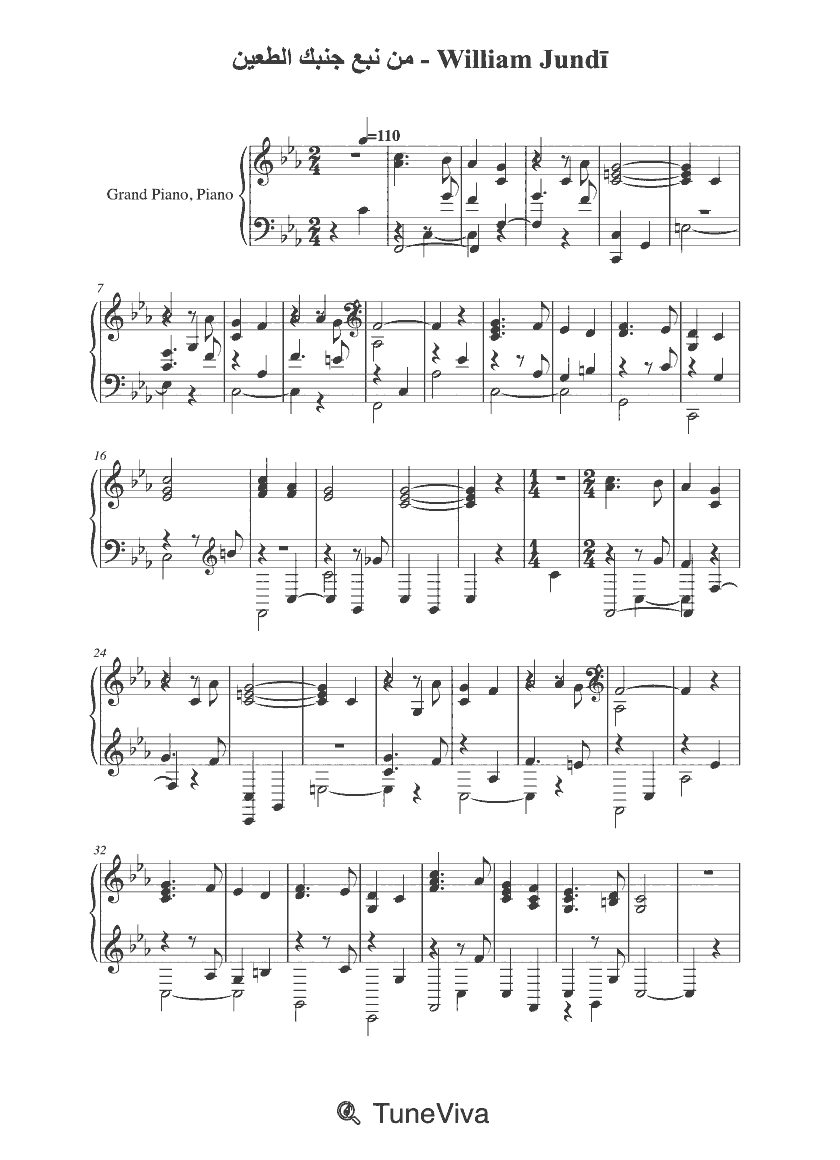
A Passion hymn on the water from the pierced side (John 19:34), among the eight entries at complexity index 2.
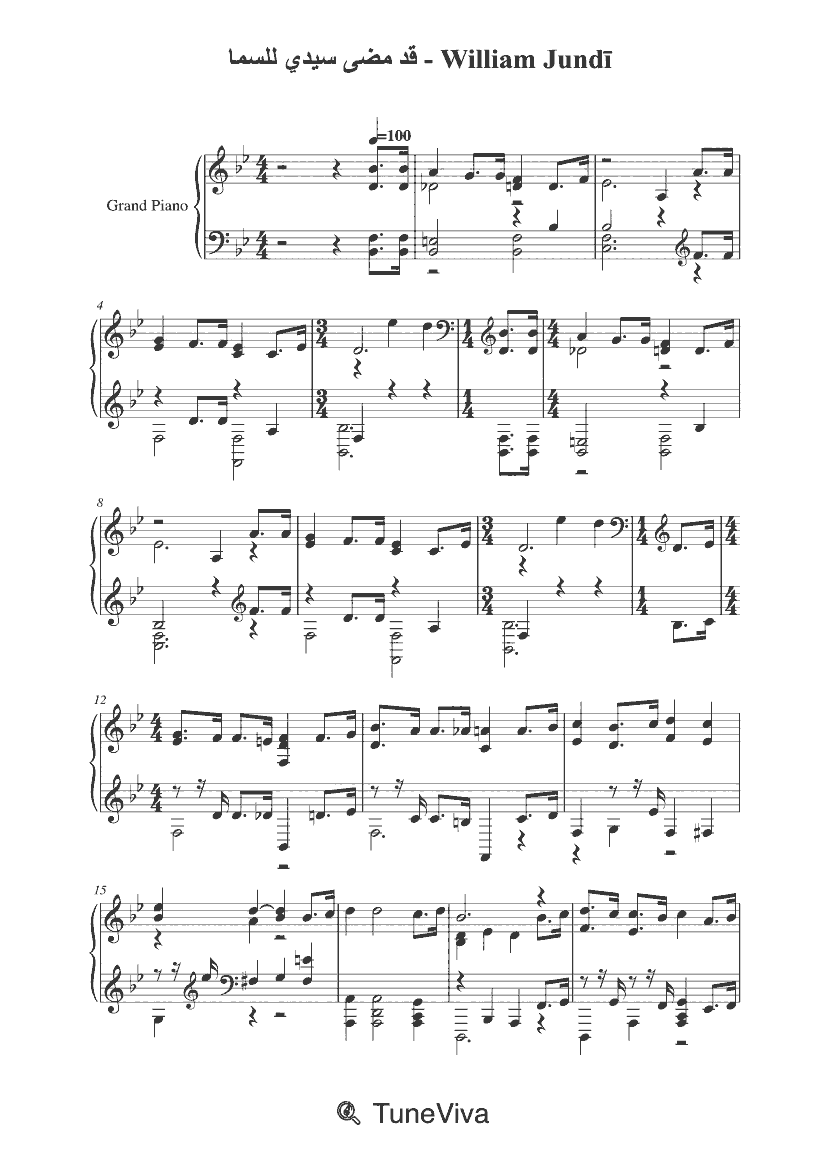
An ascension hymn; hymn indexes credit him with the tune at number 338 of ترانيم الإيمان.
25 after the merge with a duplicate profile, about 19 minutes of music and 6,002 notated notes. Three files carry lyrics, seventeen sit at complexity index 1 and eight at index 2.
An Arabic-language hymn writer and melody composer known from hymn indexes and Arabic hymn sites. No birth or death date has been traced, and none of the sources consulted names a city or a denomination.
The second profile duplicated the same name and repertoire, so the catalogue counts the two as one person. Merging them gives the 25 scores listed here.
It is the one English title. It may be the 1905 gospel song “Sunlight” by J. W. Van DeVenter and W. S. Weeden, possibly in an Arabic singing translation, but the file gives no credit beyond Jundi's name.
Uploads kept the credit in the title field, sometimes as “- William Jundī” and sometimes with وليم جندي added. The display titles here remove both.
Catalog editions and arrangements attributed to William Jundī.